Arranjo de Mobiliário com IA: Revolucionando Layouts de Ambientes com Tecnologia Inteligente
Descubra como ferramentas de arranjo de mobiliário com IA revolucionam layouts de ambientes, otimizando fluxo de tráfego, luz e função. Veja como a IA transforma seu espaço com design inteligente.
Por que o arranjo de mobiliário é mais difícil do que parece
A maioria das pessoas aborda o arranjo de mobiliário por intuição — coloque o sofá contra a maior parede, centralize o tapete sob a mesa de centro, incline uma poltrona em direção à vista da janela. Esses posicionamentos instintivos geralmente produzem resultados funcionais, mas raramente alcançam a verdadeira otimização. O processo de organizar um ambiente de forma eficaz é surpreendentemente complexo, tocando simultaneamente no conforto psicológico, equilíbrio estético e usabilidade prática.
Designers de interiores profissionais, em contraste, empregam uma metodologia sistemática. Eles consideram meticulosamente uma infinidade de variáveis: caminhos de fluxo de tráfego primário e secundário, distâncias ideais para conversação, pontos focais estratégicos, a direção e qualidade da luz natural, equilíbrio visual e distribuição de peso, e as proporções espaciais gerais do ambiente. Manter todos esses fatores interconectados em mente, avaliando potenciais conflitos e visualizando o resultado para cada arranjo possível, é um desafio cognitivo significativo. Não é de admirar que muitos proprietários se sintam sobrecarregados e se contentem com "bom o suficiente" em vez de "excelente".
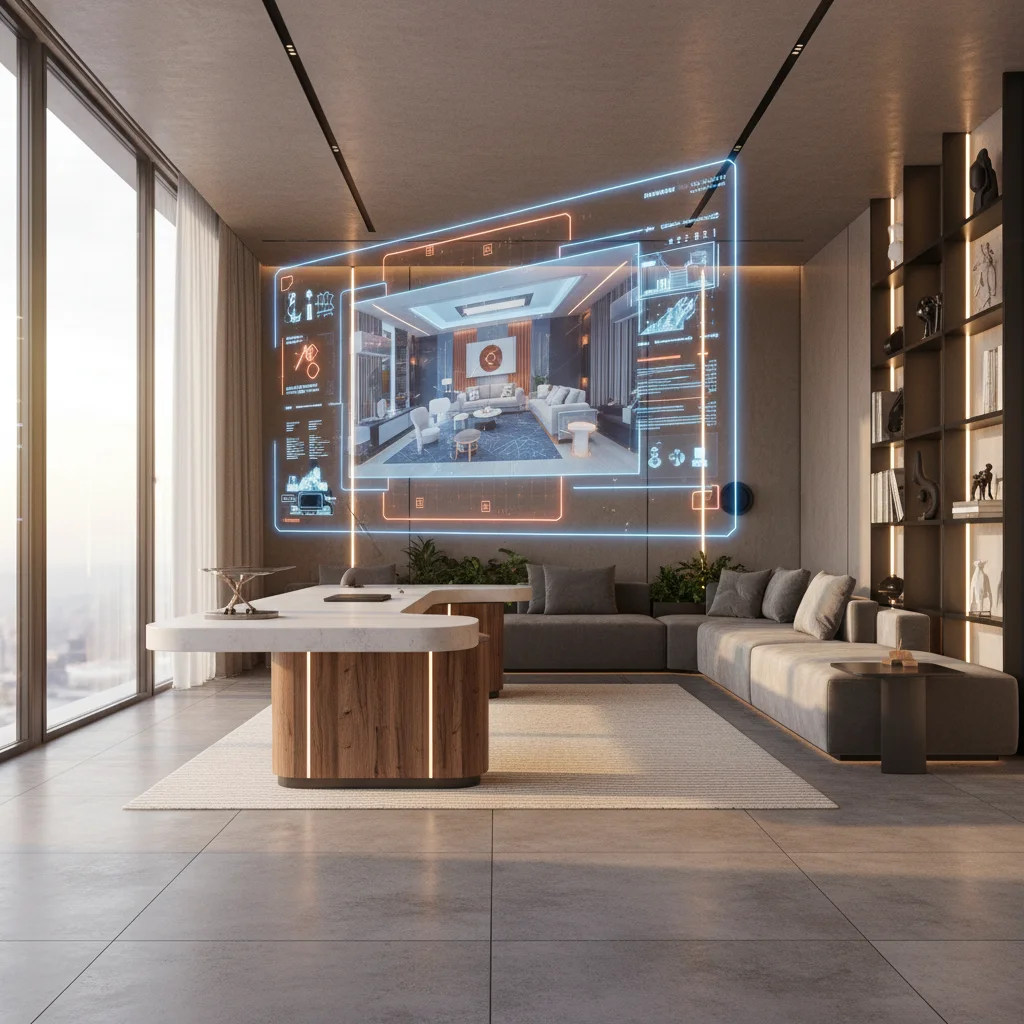
Essa intrincada teia de considerações é precisamente a classe de problema em que a IA se destaca. Uma ferramenta de layout com IA pode avaliar centenas, até milhares, de arranjos potenciais de mobiliário em meros segundos. Ela pontua cada configuração contra uma bateria de critérios objetivos — dimensões precisas de folga, linhas de visão desobstruídas, equilíbrio simétrico ou assimétrico e fluxo de tráfego eficiente. A IA então apresenta inteligentemente os arranjos que performam de forma otimizada em todos esses critérios simultaneamente. Essa poderosa capacidade não substitui o gosto pessoal ou as preferências estilísticas; em vez disso, ela reduz dramaticamente o tedioso e muitas vezes frustrante processo manual de tentativa e erro que tipicamente acompanha qualquer reconfiguração de ambiente. De fato, estudos mostram que um espaço de convivência bem projetado, como aqueles otimizados por IA, pode reduzir o estresse percebido em até 20% em comparação com layouts desordenados, promovendo uma maior sensação de calma e ordem.
O que as ferramentas de layout com IA realmente analisam?
Quando uma ferramenta de arranjo de mobiliário com IA empreende a tarefa de analisar um ambiente, sua operação começa com uma planta digital precisa. Esse projeto é incrivelmente detalhado, abrangendo não apenas as dimensões gerais do ambiente, mas também as posições exatas de janelas, aberturas de portas, características arquitetônicas estruturais como colunas ou embutidos, e as dimensões precisas de cada peça de mobiliário a ser colocada. O cerne dessa análise frequentemente envolve uma sofisticada **modelagem de folga**. Isso não se trata apenas de garantir que você possa andar pelo ambiente; é sobre manter larguras mínimas claras para várias passagens. Tipicamente, rotas de tráfego primárias (como de uma porta para um corredor) exigem pelo menos 90 centímetros de largura livre, enquanto caminhos secundários (para uma poltrona ou uma estante) podem exigir 60 centímetros. Crucialmente, a IA também garante que o mobiliário não obstrua a abertura de portas, bloqueie o acesso a janelas para ventilação ou limpeza, ou impeça a função de elementos embutidos. Para um design acessível, a IA pode até modelar requisitos específicos, garantindo caminhos largos o suficiente para cadeiras de rodas ou raios de giro para dispositivos de mobilidade.
Além das folgas puramente funcionais, as ferramentas de layout com IA aprofundam-se na **geometria da conversação**. As distâncias e ângulos nos quais as peças de assento se enfrentam influenciam profundamente a qualidade e a intimidade da interação social dentro de um ambiente. Assentos dispostos entre três e quatro metros e angulados dentro de quarenta e cinco graus um do outro geralmente definem uma área de conversação confortável e envolvente. Assentos posicionados além dessa faixa, ou dispostos paralelamente em vez de angulados, tendem a parecer estranhos, desconectados ou muito formais para uma interação fácil. As ferramentas de IA pontuam meticulosamente os layouts com base na eficácia com que estabelecem essas geometrias sociais ideais, equilibrando-as com as folgas funcionais necessárias.
Mas a análise se estende ainda mais. Ferramentas avançadas de IA podem avaliar o peso e o equilíbrio visual, garantindo que grandes peças de mobiliário sejam distribuídas harmoniosamente e não façam um lado do ambiente parecer "pesado". Elas podem identificar e otimizar pontos focais – seja uma lareira, uma televisão ou uma vista deslumbrante – garantindo que os assentos primários sejam orientados para aproveitá-los. Algumas plataformas sofisticadas podem até interpretar as preferências do usuário por estilos de design específicos, como minimalista ou boêmio, e gerar layouts que se alinham a esses princípios estéticos. Por exemplo, um layout minimalista pode priorizar o espaço aberto e linhas limpas, enquanto uma abordagem maximalista permitiria arranjos mais em camadas e diversos. Para entender mais sobre a tecnologia subjacente, você pode achar nossa postagem sobre [como o design de interiores com IA funciona](/blog/ai-interior-design-how-it-works) particularmente interessante.
O papel crítico da luz natural nas recomendações de layout com IA
A luz é inegavelmente uma das variáveis mais transformadoras no posicionamento de mobiliário, mas muitas vezes é uma reflexão tardia no arranjo manual. A maioria das pessoas não considera sistematicamente seu profundo impacto. As ferramentas de layout com IA equipadas com recursos de modelagem de luz natural representam um avanço significativo. Essas ferramentas podem analisar meticulosamente quais áreas de um ambiente recebem luz solar direta em diferentes momentos do dia e ao longo das várias estações. Essa modelagem avançada permite que a IA sugira posicionamentos de mobiliário que estrategicamente colocam áreas de trabalho (como uma mesa ou um canto de leitura) em zonas bem iluminadas, protegem telas de reflexos debilitantes e orientam assentos para maximizar vistas vantajosas, evitando simultaneamente o sol direto nos olhos dos ocupantes durante os períodos típicos de uso. Isso não apenas melhora o conforto, mas também impacta a produtividade e o humor.
Em quartos, a modelagem de luz prova ser particularmente inestimável. Considere uma cama colocada de modo que os raios diretos e fortes do sol da manhã atinjam o travesseiro; isso pode perturbar severamente os ciclos de sono e levar a uma experiência de despertar desagradável. Por outro lado, uma cama orientada para receber luz suave e difusa da tarde pode criar um despertar e um ambiente noturno dramaticamente diferentes, mais serenos. Essas considerações sutis, mas impactantes, são incrivelmente fáceis de serem negligenciadas em uma visão de planta estática e bidimensional. No entanto, elas são intrinsecamente capturadas e otimizadas por ferramentas de IA que modelam precisamente o caminho do sol para sua localização geográfica específica, orientação do ambiente e até a altura e o tipo de estruturas circundantes. Otimizar o posicionamento do mobiliário para a luz natural pode reduzir o uso de iluminação artificial diurna em uma média de 15-20%, contribuindo para a eficiência energética e um lar mais sustentável. A integração da IA para fatores ambientais tão nuances eleva verdadeiramente o design de interiores de meramente estético para profundamente funcional e experiencial.
Arranjo com IA versus tentativa e erro manual: Uma comparação marcante
A abordagem tradicional para o layout de ambientes é frequentemente sinônimo de tentativa e erro físico. Isso envolve o processo trabalhoso de mover mobiliário pesado, empurrar peças para frente e para trás, e contemplação interminável até que um arranjo "bom o suficiente" seja alcançado. Esse processo não é apenas fisicamente exigente, levando horas de esforço extenuante, mas também geralmente termina por pura exaustão, em vez de porque o arranjo verdadeiramente ótimo foi descoberto. Além disso, esse método torna impraticável explorar configurações genuinamente não convencionais ou inovadoras – imagine tentar flutuar um sofá pesado no centro do ambiente, organizar assentos em torno de duas áreas de conversação distintas, ou orientar uma grande mesa de jantar diagonalmente em um canto. O custo físico da experimentação é simplesmente muito alto. Em média, os proprietários gastam de 10 a 20 horas no arranjo manual de mobiliário ao longo de um ano, um processo que a IA pode reduzir a meros minutos.
É aqui que as ferramentas de IA transformam fundamentalmente o processo de design. Elas capacitam proprietários e designers a explorar uma vasta gama de configurações que a tentativa e erro físico quase certamente nunca alcançaria. Leva apenas trinta segundos para experimentar virtualmente uma mesa de jantar diagonal em uma ferramenta de layout com IA, descobrir se funciona ou não, e iterar. Compare isso com trinta minutos ou mais de mover fisicamente a mesa, perceber que não cabe e depois movê-la de volta. Essa liberdade sem precedentes para experimentar arranjos não convencionais, sem nenhum custo físico ou risco de danos, produz rotineiramente layouts que os habitantes nunca teriam concebido ou descoberto por meio de métodos tradicionais e trabalhosos. Ferramentas como Habitas permitem que você explore dezenas de configurações, visualize-as instantaneamente e refine suas escolhas com facilidade, levando a resultados mais rápidos e satisfatórios. Essa capacidade de prototipar e visualizar rapidamente diversas opções não apenas economiza tempo, mas também estimula a criatividade, ajudando você a liberar todo o potencial do seu ambiente. Para um aprofundamento sobre como a IA se compara aos métodos de design tradicionais, explore nosso artigo sobre [IA vs Designer de Interiores Humano](/blog/ai-vs-human-interior-designer).
Além do básico: Considerações avançadas de IA para o design espacial
As ferramentas modernas de layout com IA estão indo muito além da simples análise de folga e luz. Elas estão evoluindo para incorporar aspectos mais sutis do design de interiores, tornando suas recomendações cada vez mais sofisticadas e personalizadas.
Um avanço fundamental é a integração das preferências do usuário e estilos estéticos. Em vez de apenas sugerir layouts funcionais, a IA agora pode aprender com seus gostos expressos. Se você prefere um "canto de leitura aconchegante" ou deseja "maximizar o espaço aberto" para receber convidados, a IA pode priorizar esses objetivos em sua avaliação algorítmica. Ela pode até sugerir layouts que se alinhem com estilos de design específicos, seja os princípios minimalistas do Japandi, o charme eclético do Boêmio ou a elegância estruturada do design tradicional. Por exemplo, uma IA pode priorizar a simetria e arranjos de mobiliário clássicos para um estilo tradicional, enquanto opta por arranjos mais assimétricos, em camadas e com materiais mistos para um visual boêmio. Descobrir os [melhores estilos de design de interiores para 2026](/blog/best-interior-design-styles-2026) pode ajudá-lo a articular suas preferências a uma ferramenta de IA.
Além disso, a IA está se tornando hábil em lidar com **espaços multifuncionais**. Em casas ou apartamentos menores, um único ambiente muitas vezes precisa servir como sala de estar, home office e até mesmo um quarto de hóspedes. As ferramentas de IA podem analisar esses requisitos complexos e propor layouts flexíveis que permitem transições fáceis entre as funções, talvez sugerindo mobiliário modular ou zoneamento otimizado. Elas podem considerar o movimento necessário para um sofá-cama ou o posicionamento ideal de uma escrivaninha dobrável, garantindo que cada função seja suportada sem comprometer as outras. Essa capacidade é particularmente útil ao lidar com [formas de ambientes incomuns](/blog/awkward-room-shape-solutions) onde as soluções tradicionais muitas vezes ficam aquém.
Quem mais se beneficia com as ferramentas de arranjo de mobiliário com IA?
A utilidade do arranjo de mobiliário com IA se estende por uma gama diversa de usuários, cada um encontrando vantagens únicas em suas capacidades.
- **Proprietários de imóveis:** Para aqueles que embarcam em uma reforma, mudam para uma nova casa ou simplesmente desejam renovar um espaço existente, a IA oferece uma capacidade incomparável de visualizar mudanças antes de se comprometer com compras caras de mobiliário ou rearranjos físicos demorados. Ela desmistifica o processo de maximizar pequenos espaços ou adaptar-se a características arquitetônicas únicas. - **Inquilinos:** Dada a natureza muitas vezes temporária dos aluguéis, investir pesadamente em soluções permanentes de design de interiores pode não ser viável. As ferramentas de IA fornecem aos inquilinos uma maneira econômica e flexível de personalizar seus espaços, fazendo com que residências temporárias pareçam mais como um lar sem esforço físico ou compromisso extensivo. - **Corretores de Imóveis e Decoradores para Venda (Stagers):** No competitivo mercado imobiliário, a apresentação é fundamental. A IA permite que corretores e decoradores profissionais gerem rapidamente visuais de propriedades digitalmente ambientadas, mostrando todo o potencial de uma casa a compradores em potencial. Casas ambientadas com layouts de mobiliário otimizados vendem até 25% mais rápido e por 6-8% a mais, em média, uma vantagem competitiva significativa. Isso ajuda os compradores a se visualizarem no espaço, mesmo antes de entrarem. - **Pequenas Empresas e Escritórios:** Para empreendedores que estão montando novos escritórios, espaços de varejo ou estabelecimentos de hospitalidade, a IA pode otimizar layouts para produtividade de funcionários, fluxo de clientes e estética da marca. Ela garante configurações ergonômicas, uso eficiente do espaço e uma atmosfera convidativa, tudo isso enquanto adere a requisitos operacionais específicos.
Onde as ferramentas de layout com IA ainda falham
Embora as ferramentas de layout com IA ofereçam capacidades revolucionárias, é crucial reconhecer suas limitações atuais. Nenhum algoritmo de IA, por mais sofisticado que seja, pode contabilizar totalmente as intrincadas **qualidades experienciais de um espaço**. Ele não pode quantificar a sensação específica evocada por uma vista particular de um sofá, a qualidade única da luz que filtra em um canto em uma certa hora, ou a resposta emocional instintiva que se tem ao entrar em um ambiente pela primeira vez. Essas dimensões subjetivas, sensoriais e emocionais ainda exigem ocupar o espaço pessoalmente e interagir com ele em um nível humano. As ferramentas de IA se destacam na produção de pontos de partida fortes e funcionalmente otimizados e na eliminação de falhas óbvias de design, mas ainda não substituem a avaliação final e nuances por um ser humano que realmente viverá ou usará o ambiente.
A qualidade das recomendações de layout com IA também é inerentemente limitada pela **precisão e completude dos dados de entrada**. Este é o clássico princípio "lixo entra, lixo sai". Uma ferramenta de IA trabalhando com uma planta baixa aproximada e esboçada à mão inevitavelmente produzirá resultados menos precisos ou até impraticáveis do que uma alimentada com desenhos arquitetônicos precisos. Da mesma forma, dimensões de mobiliário inseridas aproximadamente em vez de exatamente podem levar a layouts que parecem perfeitos digitalmente, mas criam problemas frustrantes de folga física ou relações espaciais estranhas na realidade. A regra de "medir duas vezes, cortar uma vez" aplica-se profundamente às ferramentas de layout de ambientes com IA; dados de entrada meticulosos são inegociáveis para uma saída ótima. Além disso, embora a IA possa aprender com estilos de design existentes, ela ainda luta com a expressão artística verdadeiramente _inovadora_ ou com a previsão de tendências de design radicais e emergentes que ainda não foram codificadas em dados. A saída verdadeiramente "realista" da IA depende fortemente da qualidade desses dados, conforme destacado em nossa discussão sobre [projetos de ambientes gerados por IA: quão realistas são?](/blog/ai-generated-room-designs-realistic). Embora Habitas ofereça precisão e capacidades de visualização incomparáveis, o toque humano permanece essencial para imbuir um espaço com alma e narrativa pessoal.
O futuro da IA no design espacial: Preditivo e personalizado
A trajetória da IA no design espacial aponta para capacidades cada vez mais preditivas e personalizadas. Imagine uma IA que não apenas arranja seu mobiliário, mas também _aprende_ seus hábitos diários através da integração de casa inteligente, sugerindo ajustes que otimizam para seu estilo de vida único. Ela poderia recomendar girar sua cadeira de leitura para pegar o sol da tarde ou sugerir mover uma mesa para mais perto de uma janela durante horários específicos de trabalho.
Mais adiante, a IA pode se tornar hábil em prever tendências de design emergentes antes mesmo que se tornem mainstream, oferecendo sugestões de layout de vanguarda baseadas em mudanças sociológicas e inovações de materiais. A integração da realidade aumentada (RA) também desempenhará um papel fundamental, permitindo que os usuários não apenas visualizem, mas literalmente "vejam" arranjos de mobiliário gerados por IA sobrepostos em seu ambiente físico real através de um smartphone ou óculos de RA. Essa experiência imersiva e em tempo real preencherá a lacuna entre o planejamento digital e a realidade física, tornando as avaliações finais ainda mais intuitivas e precisas. O futuro promete uma IA que atua não apenas como um assistente de design, mas como um parceiro dinâmico e em evolução na criação de ambientes que se adaptam e aprimoram a vida humana.
Perguntas Frequentes
### Quão precisas são as ferramentas de arranjo de mobiliário com IA?
A precisão das ferramentas de arranjo de mobiliário com IA é diretamente proporcional à qualidade e precisão dos dados de entrada fornecidos. Quando alimentadas com dimensões exatas do ambiente, posicionamento preciso de características arquitetônicas (janelas, portas, tomadas) e medidas precisas de mobiliário, as ferramentas de IA podem gerar layouts altamente precisos e funcionais. A IA moderna pode modelar folgas até o centímetro, simular caminhos de luz e calcular distâncias ideais de conversação com notável precisão. No entanto, se os dados de entrada forem aproximados ou incompletos, as recomendações da IA serão menos confiáveis, levando a potenciais discrepâncias no espaço físico.
### As ferramentas de design com IA podem corresponder ao meu estilo pessoal?
Sim, cada vez mais, as ferramentas de design com IA são capazes de entender e integrar preferências de estilo pessoal. Muitas plataformas permitem que os usuários selecionem entre várias estéticas de design predefinidas (por exemplo, moderno, minimalista, boêmio, tradicional) ou insiram palavras-chave específicas que descrevam o visual e a sensação desejados. Modelos avançados de IA podem até analisar imagens de ambientes que você admira para inferir suas preferências de estilo e, em seguida, gerar layouts e escolhas de mobiliário que se alinhem a esses gostos. Embora a IA possa não inventar um estilo completamente novo, ela se destaca na aplicação e adaptação de estilos existentes ao seu espaço e preferências específicos.
### Usar IA para layout de ambiente é caro?
O custo de usar IA para layout de ambiente varia amplamente. Muitos planejadores de ambiente básicos alimentados por IA estão disponíveis gratuitamente ou como assinaturas de baixo custo, oferecendo funcionalidades de layout fundamentais. Plataformas mais avançadas, que incluem recursos como renderização 3D, modelagem de luz, integração de estilo personalizado e uma biblioteca mais ampla de mobiliário, geralmente vêm com uma taxa de assinatura mais alta. No entanto, mesmo essas ferramentas premium são geralmente significativamente mais acessíveis do que contratar um designer de interiores tradicional para um projeto completo de layout de ambiente. O investimento em ferramentas de IA é frequentemente rapidamente recuperado através do tempo economizado, da evitação de erros caros de rearranjo e da otimização de compras de mobiliário.
### Que dados as ferramentas de layout com IA precisam para funcionar de forma eficaz?
Para funcionar eficazmente, as ferramentas de layout com IA exigem várias informações chave:
1. **Dimensões do Ambiente:** Comprimento, largura e altura do teto precisos. 2. **Características Arquitetônicas:** Localizações e dimensões precisas de janelas, portas, tomadas elétricas, prateleiras embutidas, lareiras e quaisquer colunas estruturais. 3. **Dimensões do Mobiliário:** Comprimento, largura e altura exatos de cada peça de mobiliário que você pretende colocar. 4. **Preferências do Usuário:** Funcionalidade desejada para o ambiente (por exemplo, área de conversação, home office, sala de jantar), preferências de estilo estético e quaisquer requisitos específicos (por exemplo, acessibilidade para cadeira de rodas, zonas para animais de estimação). 5. **Localização Geográfica e Orientação:** Para modelagem avançada de luz, a IA precisa saber a localização geográfica do ambiente e sua orientação cardinal (norte, sul, leste, oeste).
### A IA pode ajudar com layouts de ambientes pequenos ou incomuns?
Com certeza. As ferramentas de arranjo de mobiliário com IA são particularmente poderosas para ambientes pequenos ou com formas incomuns, onde o planejamento manual pode ser extremamente desafiador. Esses ambientes frequentemente exigem soluções criativas para maximizar o espaço, garantir o fluxo adequado e integrar múltiplas funções. A IA pode explorar rapidamente inúmeras configurações para cantos apertados, passagens estreitas ou ambientes com ângulos incomuns, identificando as soluções mais eficientes e esteticamente agradáveis que os designers humanos poderiam negligenciar devido à carga cognitiva ou falta de tempo. Ela pode sugerir integrações de armazenamento inteligentes, arranjos de mobiliário flexíveis e estratégias de zoneamento ideais adaptadas às restrições únicas do espaço.
### A IA substitui completamente os designers de interiores humanos?
Não, a IA não substitui completamente os designers de interiores humanos. Em vez disso, ela serve como uma ferramenta poderosa que aumenta e aprimora o processo de design. A IA se destaca nos aspectos analíticos, repetitivos e orientados a dados do design, como otimização de folgas, luz e layouts funcionais. Ela pode gerar rapidamente múltiplas opções e visualizá-las, liberando os designers para se concentrarem nos aspectos mais subjetivos, criativos e experienciais – entender a psicologia do cliente, buscar peças únicas, criar elementos sob medida e adicionar a "alma" nuances que faz um espaço realmente parecer pessoal e convidativo. A IA cuida da mecânica, permitindo que os designers humanos elevem a arte e a conexão emocional de seu trabalho.