Ideas de Baños Costeros Modernos: Tu Retiro en la Playa
Crea un baño costero que se sienta como unas vacaciones permanentes en la playa.
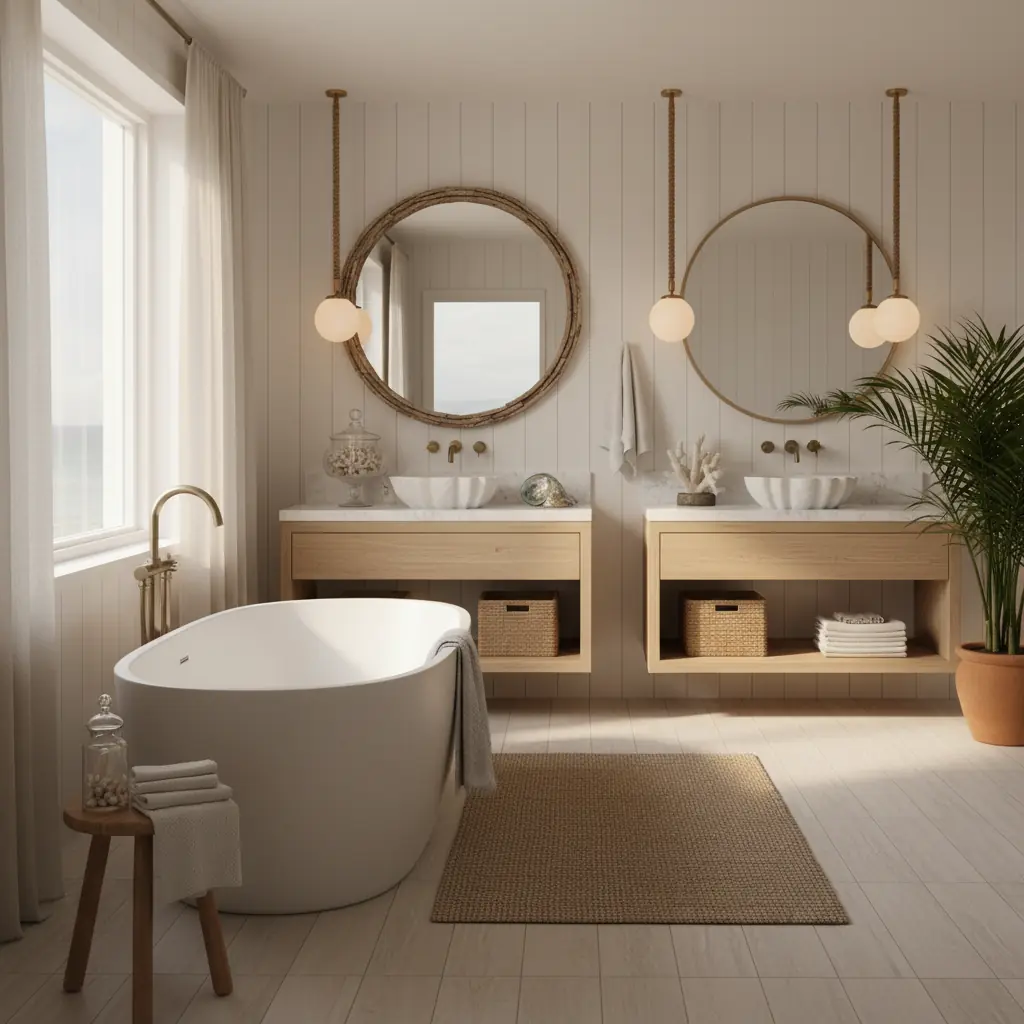
Por Qué el Baño es el Lienzo Perfecto para el Estilo Costero Moderno
El baño, por su propia naturaleza, es un santuario profundamente conectado con el agua y la renovación. Este vínculo intrínseco lo convierte en la habitación más natural para adoptar la estética tranquila y refrescante del diseño costero. Imagina un espacio donde el aire se siente ligero, los colores son relajantes y cada material susurra historias de costas bañadas por el sol y suaves brisas marinas. Añadir colores inspirados en el océano, texturas naturales y un estilismo fresco transforma cualquier baño en un retiro privado que se siente como unas vacaciones permanentes en la playa.
Pero, ¿qué significa exactamente "costero" en un contexto contemporáneo? Los baños costeros modernos han evolucionado elegantemente más allá de los clichés de conchas marinas literales, motivos de anclas y temas náuticos cursis. Hoy en día, el estilo se define por la sofisticación y la sutileza. Se trata de evocar la _sensación_ de la costa a través de materiales cuidadosamente elegidos como madera envejecida, azulejos de cristal marino y piedra natural, combinados con una paleta de colores curada que refleja el océano, la arena y el cielo. Se trata menos de imágenes directas y más de una experiencia inmersiva y atmosférica que defiende la elegancia discreta y la serenidad.
La Base: Creando Tu Paleta de Colores Costeros
La combinación de colores adecuada es primordial para establecer una atmósfera costera moderna. Olvídate de los azules primarios estridentes; piensa en un espectro sofisticado derivado directamente de la naturaleza.
### ¿Cuáles son los mejores colores para un baño costero?
El núcleo de una paleta costera se construye sobre neutros serenos y suaves tonos oceánicos. Comienza con una base de blancos nítidos, cremas suaves y beiges arena para paredes, azulejos más grandes y accesorios. Estos colores claros amplifican la luz natural, haciendo que el espacio se sienta amplio y ventilado, una característica distintiva de la vida junto a la playa.
Incorpora azules y verdes inspirados en el propio océano. Estos pueden variar desde verdes espuma de mar apagados y aguamarinas tranquilas hasta acentos azul marino profundo y azules cielo suaves y nebulosos. Considera un azul pálido empolvado en tus paredes, o usa un turquesa vibrante solo en dosis más pequeñas, quizás a través de una pieza de arte o un jarrón llamativo. Para mayor profundidad y calidez, introduce tonos de madera natural, marrones arena e incluso toques de gris suave, que recuerdan a la madera flotante o a los cielos tormentosos. Pequeños toques de coral, melocotón o incluso un terracota muy sutil y descolorido pueden imitar los tonos del atardecer o añadir un toque de calidez sin abrumar la calma. La clave es mantener la impresión general ligera, fresca y absolutamente relajante.
Azulejos: Donde los Baños Costeros Realmente Brillan
El azulejo es posiblemente el elemento más impactante en el diseño de un baño costero, ofreciendo tanto atractivo estético como durabilidad práctica. Es una oportunidad para infundir patrón, textura y color de una manera que se sienta inherentemente conectada con el océano.
### ¿Qué estilos de azulejos capturan la esencia del diseño costero?
- **Azulejos tipo Escama de Pescado (o Concha):** Estos azulejos distintivos, con forma de escamas de pescado superpuestas o colas de sirena, son quizás la elección más icónica para un baño costero moderno. Evocan bellamente las olas del océano y el movimiento del agua sin ser demasiado literales. Opta por azules suaves, verdes marinos o blancos impolutos en un acabado brillante o mate para realzar su textura única. Una pared de acento detrás del lavamanos o dentro de la cabina de ducha es un lugar ideal para estos. - **Azulejos Hexagonales:** En tonos oceánicos o blanco clásico, los azulejos hexagonales ofrecen un toque geométrico moderno que aún puede sentirse orgánico. Hexágonos de formato más grande en el piso pueden crear un sutil patrón de panal, mientras que azulejos hexagonales más pequeños en un nicho de ducha añaden detalles intrincados. - **Azulejos Subway Clásicos Blancos:** Una elección atemporal, los azulejos subway blancos proporcionan un fondo limpio y nítido que permite que otros elementos costeros destaquen. Su simplicidad actúa como el lienzo perfecto, reflejando la luz y manteniendo una sensación de amplitud. Considera un patrón escalonado o de pila vertical para un toque contemporáneo. - **Azulejos de Guijarros:** Para una experiencia verdaderamente orgánica y táctil, los azulejos de guijarros pueden usarse en el piso de la ducha o como una tira de acento. Proporcionan un masaje natural bajo los pies y conectan directamente el espacio con una playa rocosa o un lecho de río. Asegúrate de que estén correctamente sellados y rejuntados para higiene y durabilidad. - **Cerámica o Porcelana con Texturas Irregulares:** Busca azulejos con ligeras variaciones de color o textura, imitando cerámicas hechas a mano o piedra natural. Estas sutiles imperfecciones añaden carácter y una sensación artesanal, evitando que el espacio se sienta estéril.
**Estrategias de Aplicación:** Usa azulejos estampados como acento: una única pared principal, la parte trasera de un nicho de ducha o una franja decorativa. Mantén el resto del baño simple con azulejos lisos de gran formato o un color cohesivo para evitar abrumar los sentidos. Este uso estratégico del patrón evita que el baño se sienta recargado mientras captura el carácter costero. El color de la lechada también juega un papel; una lechada gris claro o blanca con azulejos azules mantiene una sensación de frescura, mientras que una lechada oscura contrastante puede añadir un toque gráfico si se desea.
Asentando el Espacio con Materiales Naturales
La incorporación de materiales naturales es fundamental en el diseño costero moderno, estableciendo una conexión táctil con los elementos orgánicos de los entornos de playa. Estos materiales añaden calidez, textura y autenticidad, evitando que el espacio se sienta frío o estéril.
### ¿Qué materiales naturales debo usar en un baño costero?
- **Madera Envejecida:** Esta es una piedra angular del estilo costero. Un lavamanos de madera envejecida, estanterías abiertas hechas de madera recuperada, o incluso una estantería de escalera decorativa de madera para toallas, aporta inmediatamente la sensación de madera flotante y paisajes naturales al interior. Las imperfecciones y la veta de la madera añaden carácter y una sensación de historia. Busca maderas de tonos claros como roble blanco, arce o incluso pino envejecido. Según un informe reciente de la industria, los hogares que incorporan elementos de madera natural, especialmente en baños y cocinas, experimentaron un aumento promedio del 7% en el valor percibido entre los posibles compradores en 2025. - **Ratán y Mimbre:** Estas fibras naturales tejidas son perfectas para cestas de almacenamiento, cestos de ropa sucia o incluso una pequeña silla de acento si el espacio lo permite. Añaden una capa de textura y una calidad aireada y relajada que evoca a los resorts de playa. - **Yute y Sisal:** Una alfombra de baño de yute o una alfombra de sisal pueden asentar el espacio, añadiendo suavidad bajo los pies y otra capa de fibra natural. Estos materiales son duraderos y complementan la paleta de colores arena. - **Cuerda y Cordel:** Sencillos pero efectivos, los espejos con marco de cuerda, los detalles de nudos decorativos o incluso los tiradores envueltos en cuerda en un lavamanos pueden insinuar sutilmente influencias náuticas sin ser excesivamente temáticos. - **Piedra Natural:** Mientras que un lavamanos de madera envejecida sirve como punto focal, las encimeras de piedra natural como mármol pulido, piedra caliza o un cuarzo de color claro con vetas sutiles pueden proporcionar una sensación lujosa pero orgánica. Estos materiales conectan con la belleza pura de los acantilados y las rocas erosionadas por el mar. - **Lino y Algodón:** Para cortinas de ducha, toallas y tratamientos de ventanas, opta por fibras naturales como el lino y el algodón. Sus texturas suaves y cualidades transpirables realzan el ambiente luminoso y ventilado.
Los acabados blancos y claros en todo el baño, desde la grifería hasta los colores de las paredes, funcionan en armonía con estos materiales naturales para mantener el espacio brillante y amplio. Incluso en un baño sin ventanas, un lavamanos blanco combinado con acentos de madera clara, superficies reflectantes y azulejos azules o verdes puede crear eficazmente la ilusión de abundante luz oceánica, transformando un espacio oscuro en un oasis acogedor.
Selección de Grifería, Herrajes e Iluminación
Los elementos funcionales de tu baño también contribuyen significativamente a su estética costera. Elegir los acabados y estilos adecuados puede elevar todo el diseño.
### ¿Qué tipo de grifería e iluminación se adaptan mejor a un baño costero?
- **Grifería:** Opta por acabados que complementen la paleta serena. El níquel cepillado, el cromo o incluso el negro mate pueden funcionar en un entorno costero moderno, especialmente cuando se combinan con líneas limpias. Para un aspecto costero más suave y tradicional, considera el cromo pulido o incluso el latón sin lacar que patinará naturalmente con el tiempo, añadiendo a la sensación de envejecido. Los diseños minimalistas realzarán la estética limpia y despejada. - **Herrajes:** Los tiradores de cajones y los pomos de gabinetes deben hacer eco de los acabados de grifería elegidos. Busca diseños sencillos y discretos. Los pomos de cerámica blanca pueden añadir un toque encantador, tipo casa de campo, mientras que los tiradores de cuero pueden introducir una textura inesperada, pero natural. - **Iluminación:** La iluminación por capas es crucial tanto para la función como para el ambiente. Maximiza la luz natural con cortinas o persianas transparentes que permitan el paso de luz difusa. Para la iluminación artificial, elige luminarias que proyecten un brillo cálido y acogedor. - **Iluminación del lavamanos:** Apliques a cada lado del espejo o una barra de luz superior con un diseño simple y limpio son ideales. Materiales como el metal cepillado, el blanco mate o incluso elementos tejidos pueden reforzar la sensación costera. - **Iluminación ambiental:** Una luminaria central empotrada o semi-empotrada proporciona iluminación general. Busca diseños que incorporen materiales naturales como cuentas de madera, ratán tejido o pantallas de vidrio opaco. - **Iluminación de acento:** Considera interruptores reguladores para toda la iluminación para ajustar el ambiente. Una pequeña lámpara en un estante o una luz tipo puck estratégicamente colocada puede destacar elementos decorativos. Recuerda que una buena iluminación puede cambiar drásticamente el tamaño percibido y la luminosidad de una habitación, especialmente importante para crear esa sensación costera de "aire libre". Para ayudarte a visualizar cómo las diferentes opciones de iluminación podrían impactar tu diseño costero, herramientas como Habitas te permiten experimentar con diversas luminarias y ver transformaciones instantáneas en la foto real de tu habitación.
Almacenamiento Reflexivo y Diseño Inteligente
Incluso en un baño costero relajado, la organización es clave. El desorden puede restar rápidamente a la atmósfera serena y tipo spa que intentas lograr.
### ¿Cómo puedo maximizar el almacenamiento en un baño costero?
- **Opciones de Lavamanos:** Un lavamanos simple e independiente con estanterías abiertas puede realzar la sensación de amplitud, perfecto para exhibir toallas enrolladas o cestas decorativas. Si se prefiere el almacenamiento cerrado, opta por un lavamanos con líneas limpias en tonos de madera envejecida o blanco, quizás con puertas estilo shaker para un toque clásico. Los lavamanos flotantes son excelentes para baños más pequeños, creando una ilusión de mayor espacio en el piso. - **Estanterías Abiertas:** En lugar de gabinetes voluminosos, instala estantes flotantes hechos de madera recuperada o bambú natural. Estos son ideales para exhibir toallas cuidadosamente dobladas, plantas pequeñas y artículos de decoración cuidadosamente seleccionados. - **Cestas Tejidas:** Las cestas de ratán, yute o junco marino son funcionales y decorativas. Úsalas para la ropa sucia, guardar toallas adicionales u organizar artículos de tocador discretamente debajo de un lavamanos o en estantes. - **Nichos Empotrados:** Incorpora nichos empotrados en la ducha o sobre la bañera para champú, jabón y otros elementos esenciales. Esto mantiene las superficies despejadas y la estética minimalista. - **Estanterías tipo Escalera:** Una estantería de madera decorativa tipo escalera apoyada contra una pared proporciona almacenamiento vertical para toallas y pequeños artículos decorativos, añadiendo un toque de encanto rústico sin ocupar mucho espacio en el piso.
**Para Baños Más Pequeños:** Crear un oasis costero en un espacio compacto requiere una planificación inteligente. Usa espejos grandes para expandir el espacio visual. Una paleta de colores más clara y una abundante luz natural (o buena iluminación artificial) son esenciales. Opta por lavamanos flotantes o de pedestal para liberar espacio en el piso. El uso estratégico de un solo azulejo costero impactante en una pared puede aportar carácter sin abrumar la habitación. Recuerda, un baño más pequeño aún puede sentirse amplio y sereno con las decisiones de diseño adecuadas. Las estadísticas muestran que los propietarios que realizan una renovación completa del baño, especialmente una con un tema de diseño cohesivo como el costero, pueden esperar recuperar aproximadamente el 60-70% de su inversión al revender, lo que lo convierte en una mejora valiosa.
Estilizando Tu Baño Costero: Menos es Más
La capa final del diseño costero se logra a través de un estilismo reflexivo. Aquí es donde infundes personalidad manteniendo la atmósfera deseada de calma y simplicidad.
### ¿Cuáles son las mejores formas de estilizar un baño costero moderno?
- **Textiles Suaves:** Toallas blancas enrolladas en una estantería de madera tipo escalera o cuidadosamente apiladas en estanterías abiertas. Una sencilla cortina de ducha con textura de panal en blanco o una tela suave tipo lino. Una alfombra de baño de yute o sisal añade calidez y textura bajo los pies. Estas fibras naturales mejoran el confort y contribuyen al ambiente relajado. - **Verdor:** Una sola suculenta en maceta o una planta de aire añade un toque de diseño biofílico, aportando vida y frescura al espacio sin requerir mucho cuidado. El eucalipto fresco colgado del cabezal de la ducha libera un aroma delicioso, tipo spa. Estos elementos naturales son clave para conectar el interior con el exterior. - **Aromas Sutiles:** Mejora la experiencia de spa con difusores que contengan aceites esenciales como lavanda, menta o un ligero aroma oceánico. Un frasco de vidrio decorativo lleno de sales de baño o jabones perfumados añade un toque lujoso. - **Decoración Curada:** Enfócate en la calidad sobre la cantidad. Una hermosa pieza de arte abstracto en azules y verdes, una pieza única de madera flotante, una colección de vidrio marino liso en un jarrón transparente o una pieza de cerámica escultural pueden servir como puntos focales. La clave es seleccionar elementos que evoquen la costa a través de su forma, material o color, en lugar de a través de imágenes literales. - **Superficies Reflectantes:** Un espejo simple y limpio con marco de madera natural o un diseño elegante y sin marco realza la luz y el espacio visual. Evita espejos demasiado ornamentados o con temas muy marcados.
**Qué Evitar:** Fundamentalmente, resiste la tentación de los accesorios temáticos. Nada de jaboneras en forma de concha, ganchos para toallas con anclas ni faros de cerámica. Estos elementos pueden transformar rápidamente un baño costero sofisticado en una estética cursi y anticuada. Deja que la belleza intrínseca de los materiales, la sutileza de los colores y las texturas cuidadosamente elegidas transmitan el mensaje costero, manteniendo el estilismo minimalista, fresco y acogedor. El objetivo es crear un espacio que _se sienta_ costero, en lugar de gritarlo explícitamente. Para más ideas sobre cómo integrar elementos naturales en tu hogar, nuestra guía sobre [diseño biofílico](/blog/biophilic-design-guide) podría serte inspiradora.
Costero Moderno para Cada Tamaño de Baño
Lograr una estética costera no es exclusivo de baños grandes y espaciosos. Con decisiones de diseño inteligentes, incluso el tocador más compacto puede capturar esa sensación fresca e inspirada en el océano.
### ¿Puede funcionar el estilo costero en un baño pequeño?
Absolutamente. De hecho, los principios del diseño costero (colores claros, materiales naturales y un enfoque en la apertura) son perfectamente adecuados para espacios más pequeños.
- **Paleta de Colores:** Apégate a una base predominantemente blanca o neutra muy pálida. Esto refleja la luz y hace que la habitación se sienta más grande. Introduce tus azules y verdes oceánicos a través de pequeños acentos: una franja de azulejos decorativos, toallas o una obra de arte. - **Superficies Reflectantes:** Un espejo grande es tu mejor amigo en un baño pequeño. Refleja la luz y crea la ilusión de profundidad. Considera un espejo simple y sin marco o uno con un marco de madera delgado y de tono claro. - **Iluminación:** Maximiza tanto la luz natural como la artificial. Si hay una ventana, mantén los tratamientos mínimos (persianas transparentes o sin cortinas). Para la luz artificial, usa iluminación de techo brillante y difusa y posiblemente apliques para eliminar sombras e iluminar cada rincón. - **Accesorios:** Opta por lavamanos montados en la pared o flotantes. Estos liberan espacio en el piso, haciendo que la habitación se sienta menos abarrotada. Un lavamanos de pedestal también puede ser una excelente opción para un tocador diminuto. - **Almacenamiento:** Opta por lo vertical. Instala estantes flotantes sobre el inodoro o un gabinete alto y estrecho. Cestas tejidas pueden deslizarse debajo de un lavamanos tipo consola o en estantes para almacenamiento oculto. Mantén los elementos de la encimera al mínimo absoluto para mantener un aspecto limpio y abierto. - **Azulejos:** Usa azulejos de formato más grande en el piso para reducir las líneas de lechada, que pueden hacer que un espacio pequeño se sienta más recargado. Para los azulejos de acento, considera una textura o patrón sutil en una sola pared (p. ej., detrás del lavabo o en el nicho de la ducha) en lugar de cubrir toda la habitación.
Un baño costero pequeño bien ejecutado puede sentirse tan lujoso y relajante como uno más grande. Todo se trata de intencionalidad y selección cuidadosa. Para aquellos que consideran una revisión completa, tengan en cuenta que el costo promedio de una remodelación de baño menor a mediana en 2026 suele oscilar entre $15,000 y $25,000, dependiendo de las elecciones de materiales y los costos de mano de obra en su región. Explorar opciones de diseño con una herramienta de IA puede ayudarte a visualizar el potencial retorno de la inversión.
Transforma Tu Baño con Diseño de IA
Unir todos estos elementos (el azulejo perfecto, los materiales adecuados, los colores serenos y un estilismo sofisticado) puede parecer un rompecabezas complejo. Aquí es donde las herramientas de diseño inteligentes pueden marcar una inmensa diferencia.
Sube la foto de tu baño a Habitas y selecciona el estilo 'Costero' para ver tu espacio transformado al instante con azulejos inspirados en el océano, materiales naturales y la paleta fresca que define los baños costeros modernos. Nuestra IA considera las dimensiones únicas de tu habitación y las características existentes para generar conceptos de diseño realistas y personalizados. Más allá de la inspiración, Habitas proporciona un plan de ejecución detallado, especificando y obteniendo cada elemento, desde el azulejo exacto hasta el lavamanos ideal, simplificando tu proceso de renovación. Esto te permite explorar innumerables posibilidades de diseño en minutos, en lugar de las semanas que podría llevar con las iteraciones de diseño tradicionales. Descubre cómo los [diseños de habitaciones generados por IA pueden ser increíblemente realistas](/blog/ai-generated-room-designs-realistic) e impulsar tu viaje de diseño.
Preguntas Frecuentes
### ¿Cómo puedo hacer que mi baño se sienta más como un spa con un tema costero?
Para infundir una tranquilidad tipo spa en tu baño costero, enfócate en las experiencias sensoriales. Incorpora toallas suaves y lujosas hechas de fibras naturales, y elige alfombras de baño que se sientan lujosas bajo los pies. Introduce aromas relajantes a través de difusores de aceites esenciales o velas aromáticas de alta calidad con notas de sal marina, lavanda o eucalipto. Añade verdor como una pequeña planta en maceta o ramas frescas de eucalipto en la ducha. Mantén las superficies despejadas, usando cestas naturales para el almacenamiento, y asegura una buena iluminación con reguladores para crear un ambiente relajante para los baños nocturnos.
### ¿Cuál es la diferencia entre el diseño de baño costero y náutico?
Si bien ambos estilos se inspiran en el océano, los diseños costero y náutico tienen diferencias distintas. El diseño náutico es más literal y típicamente presenta motivos marítimos explícitos como anclas, timones de barco, rayas y azules marinos profundos combinados con rojos y blancos nítidos, a menudo evocando un barco o la cabina de un capitán. El diseño costero, por otro lado, es mucho más sutil y sofisticado. Se enfoca en evocar la _sensación_ de la playa y el océano a través de texturas naturales (madera envejecida, ratán), una paleta de colores serena (azules suaves, verdes, neutros arena) y formas orgánicas en lugar de imágenes directas. Se trata de una atmósfera relajada y ventilada que recuerda a una casa de playa o un retiro junto al mar.
### ¿Cuáles son algunas formas económicas de añadir estilo costero a mi baño?
No necesitas una renovación completa para lograr un aspecto costero. Comienza con la pintura: una capa fresca de pintura blanca suave, verde espuma de mar o azul pálido puede transformar instantáneamente el ambiente. Reemplaza tu cortina de ducha por una de lino o de tejido de panal blanca. Añade texturas naturales con una alfombra de baño de yute, cestas de almacenamiento de ratán y un simple taburete de madera o estantería tipo escalera. Actualiza los elementos decorativos más pequeños como un espejo con marco de cuerda, un frasco de vidrio lleno de guijarros o vidrio marino, y una pequeña suculenta en maceta. Cambiar los herrajes de los gabinetes por pomos de cerámica blanca o níquel cepillado también puede tener un gran impacto sin gastar mucho.
### ¿Cómo elijo el azulejo costero adecuado para mi ducha?
Al seleccionar el azulejo costero para tu ducha, considera tanto la estética como la practicidad. Para una fuerte declaración costera, los azulejos tipo escama de pescado (o concha) en azul suave o verde crean un hermoso interés visual, especialmente en una pared principal. Si prefieres la sutileza, los azulejos subway blancos clásicos o los azulejos cerámicos mate de gran formato en tonos arena proporcionan un fondo limpio y aireado. Para el piso de la ducha, azulejos más pequeños como guijarros o azulejos hexagonales de mosaico ofrecen mejor agarre y drenaje. Prioriza siempre las opciones antideslizantes por seguridad. Asegúrate de que los azulejos sean adecuados para ambientes húmedos y elige un color de lechada que complemente el azulejo y la paleta costera general (gris claro o blanco suele funcionar mejor para mantener una sensación brillante y limpia).