Descubra o Encanto do Dark Academia: Um Guia Completo de design para Casa
Transforme sua casa em um refúgio sofisticado com a estética dark academia. Descubra como usar cores sombrias, materiais envelhecidos, elementos literários e iluminação atmosférica para criar um santuário intelectual e atemporal.
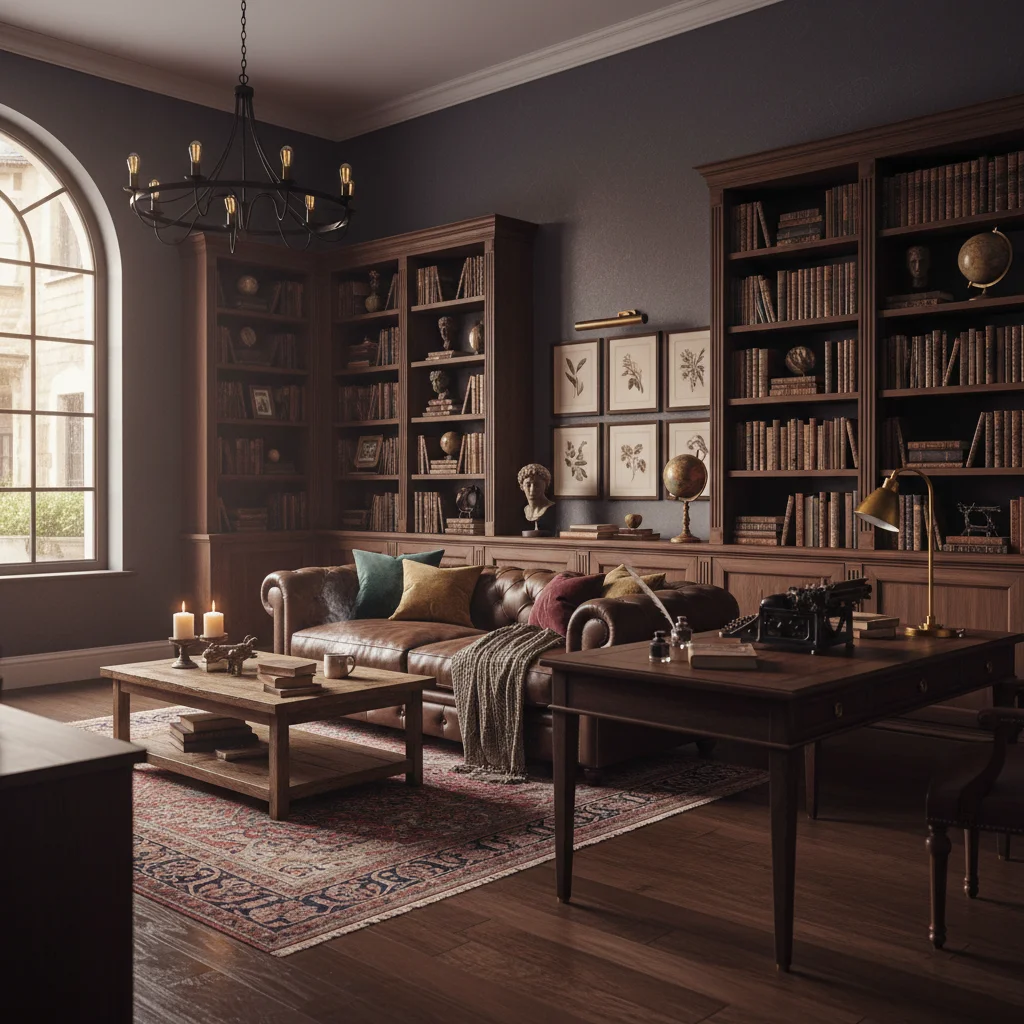
O Que Dark Academia Realmente Significa para o Interior da Sua Casa
Dark academia, em sua essência, é mais do que um estilo de decoração; é uma homenagem à busca intelectual, à reverência histórica e a uma profunda apreciação pelo mundo tátil dos livros e artefatos envelhecidos. Originário de círculos literários e de moda, ele canaliza a linguagem visual romantizada de campi universitários europeus do século XIX, bibliotecas antigas e a grandiosidade arquitetônica Gótica. Quando traduzido para o design de interiores, essa estética cria espaços que parecem profundamente pessoais, cheios de histórias e propícios à introspecção e ao aprendizado.
É caracterizado por um vocabulário visual específico: cores profundas e sombrias como verde floresta, vermelho oxblood e nogueira rica; materiais naturais com a idade e a pátina do tempo, como couro desgastado, madeiras escuras, latão e lã texturizada; abundantes camadas de livros e objetos cuidadosamente selecionados que denotam uma vida de conhecimento acumulado; e iluminação atmosférica e evocativa que sussurra a luz de velas em vez da modernidade austera.
O que realmente distingue os interiores dark academia de espaços meramente "escuros" ou minimalistas é sua narrativa inerente. Esses cômodos contam uma história – uma vida cuidadosamente dedicada à leitura, coleção, viagens e contemplação. Os livros que revestem as prateleiras não são apenas preenchimento decorativo; foram genuinamente lidos, suas lombadas irregulares, alguns talvez com orelhas ou sublinhados. Os mapas e gravuras botânicas nas paredes parecem ter sido coletados ao longo de décadas, em vez de adquiridos em uma única compra. Aquele sofá Chesterfield ao lado da lareira possui uma qualidade única de desgaste, cada vinco e arranhão marcando inúmeras horas de estudo tranquilo ou debate animado. A essência é um espaço habitado por uma sensibilidade intelectual distinta, meticulosamente curado não para uma sessão de fotos passageira, mas para uma ressonância pessoal duradoura. É um abraço à história e uma rebelião silenciosa contra a natureza transitória das tendências modernas.
Criando a Paleta de Cores Dark Academia para Suas Paredes
A paleta de cores fundamental do dark academia está profundamente enraizada no mundo natural, como se filtrada por velhas pinturas a óleo e pelos materiais envelhecidos de instituições antigas. Os tons principais incluem verde floresta profundo, vermelho oxblood rico, marrom caramelo quente, cinza ardósia contemplativo, pergaminho creme suave e o quase preto da nogueira envelhecida ou ébano. Estas são as cores historicamente encontradas em ambientes acadêmicos e institucionais do século XIX — o painel de madeira de um grandioso escritório vitoriano, as capas ricamente encadernadas de tomos antigos e as icônicas luminárias de banqueiro com abajur verde que iluminaram incontáveis mesas de bibliotecas universitárias.
As paredes em interiores genuinamente dark academia raramente são brancas. Optar por escolhas corajosas e saturadas como verde profundo, oxblood ou carvão estabelece instantaneamente a profundidade e a seriedade atmosféricas centrais à estética. Essas cores abraçam as sombras, fazendo um cômodo parecer íntimo e envolvente. Para aqueles que podem hesitar em se comprometer totalmente com paredes escuras em um cômodo inteiro, uma única parede de destaque — talvez em um verde biblioteca profundo ou um sofisticado oxblood — atrás de uma estante embutida ou uma mesa substancial pode criar um drama comparável em escala reduzida. Para evitar que esses tons profundos pareçam frios ou opressores, é crucial combiná-los com tons de madeira quentes, luminárias de latão envelhecido e têxteis macios e convidativos. Você pode até considerar uma sutil [técnica de color drenching](/blog/color-drenching-technique) onde paredes, rodapés e até o teto são pintados em diferentes tonalidades do mesmo tom profundo para criar uma experiência incrivelmente imersiva. Estudos mostram que a incorporação de paletas de cores ricas e sombrias, quando equilibradas de forma eficaz, pode criar uma sensação de calma e foco, tornando os espaços mais ancorados e menos distrativos, qualidades muito valorizadas em buscas intelectuais.
Mobiliário: O Envelhecido, o Herdado e o Legado Literário
Os móveis dark academia devem transmitir uma sensação de história e permanência. As peças devem parecer que fizeram parte de uma narrativa, transmitidas por gerações ou descobertas em uma biblioteca esquecida. Sofás Chesterfield e poltronas com capitonê de couro envelhecido — em marrons profundos, tons de caramelo ricos ou verdes-caçador escuros — são escolhas essenciais, incorporando conforto e um desgaste sofisticado. Procure sinais de pátina autêntica: rachaduras, desbotamento sutil e a maciez que vem com anos de uso.
Além dessas icônicas peças estofadas, mesas de madeira pesadas com pés lindamente torneados, escadas de biblioteca clássicas de madeira em trilhos rolantes, cadeiras Windsor robustas, globos antigos e mesas laterais estilo campanha se integram perfeitamente à estética. O princípio orientador aqui é uma mistura de idade, artesanato e utilidade. Não se trata de itens produzidos em massa e descartáveis; trata-se de móveis que parecem substanciais, bem feitos antes dos processos industriais modernos e destinados a durar.
Brechós, vendas de imóveis movimentadas e mercados de antiguidades curados são os principais locais de caça para móveis dark academia autênticos. Uma poltrona de couro lindamente desgastada de um espólio de um acadêmico falecido, talvez com o leve cheiro de papel velho, oferece muito mais autenticidade e caráter do que uma reprodução nova, muitas vezes por uma fração do custo. De fato, adquirir móveis de segunda mão para uma estética dark academia pode reduzir os custos em 40-60% em comparação com a compra de reproduções novas, ao mesmo tempo em que oferece uma história única. A pátina e o caráter distinto que só a idade pode produzir — uma mancha de tinta em uma mesa de madeira, o brilho sutil desgastado no apoio de braço de uma cadeira de couro, ou o rangido suave de uma estante muito usada — não são falhas, mas características preciosas dentro da narrativa dark academia. Ao considerar o layout dos móveis, uma [ferramenta de arranjo de móveis com IA](/blog/ai-furniture-arrangement-tool) pode ser incrivelmente útil para visualizar como essas peças substanciais se encaixarão em seu espaço existente, garantindo um fluxo e função ótimos.
Livros, Objetos e a Arte da Exposição Curada
Livros são mais do que meros acessórios em interiores dark academia; são pilares estruturais e espirituais. Uma parede de estantes do chão ao teto, densamente preenchidas com livros genuinamente lidos, é frequentemente a característica arquitetônica definidora. Suas lombadas devem ser irregulares em altura, cor e textura, indicando uma coleção que cresceu organicamente ao longo do tempo. Não hesite em misturar objetos ocasionais ou virar alguns livros de lado para quebrar a monotonia visual e sugerir uma coleção verdadeiramente vivida e ativa. A prática de organizar livros por cor, popular em alguns estilos contemporâneos, é um anátema aqui. Os livros devem ser organizados pela lógica do proprietário: por assunto, por autor, por significado pessoal — refletindo uma verdadeira jornada intelectual.
Os objetos aninhados entre os livros, artisticamente dispostos em uma grande mesa ou exibidos em um armário de curiosidades, são contadores de histórias vitais da vida intelectual. Imagine uma lupa de latão, um conjunto completo de escrita com tinteiro e selo de cera, uma bússola antiga, ilustrações botânicas emolduradas, um globo giratório, potes de espécimes, flores prensadas sob vidro ou intrincadas cartas astronômicas. Estes não são meramente itens decorativos; devem ser objetos que você realmente considere bonitos, significativos e historicamente intrigantes. Adquiridos ao longo do tempo de antiquários respeitáveis, sótãos de família e livrarias antigas e empoeiradas, essas peças carregam sua própria história e contribuem com camadas de autenticidade. Objetos dark academia que chegam pré-envelhecidos de um varejista genérico de artigos para casa raramente alcançam a profundidade e o caráter de achados verdadeiramente vintage ou antigos. Cada peça deve parecer uma descoberta, contribuindo para a rica tapeçaria de história pessoal e curiosidade intelectual do cômodo.
Iluminação Atmosférica: A Arma Secreta da Estética
A iluminação atmosférica é, sem dúvida, o coração técnico e emocional do dark academia. A estética referencia conscientemente uma era pré-elétrica — pense em luz de velas, lâmpadas a óleo bruxuleantes ou o brilho suave da luz a gás. Portanto, a iluminação artificial eficaz em um espaço dark academia deve evocar meticulosamente esse calor, direcionalidade e intimidade específicos. Priorize fontes de luz quentes: almeje um máximo de 2700 Kelvin (K) e, idealmente, 2400K para luminárias de mesa, luminárias de chão e iluminação de destaque. Lâmpadas estilo filamento, seja em vidro transparente ou âmbar, são excelentes escolhas, pois criam um brilho visível e suave que é inerentemente atmosférico e remanescente de fontes de luz anteriores.
Camadas de luz são absolutamente essenciais; depender de uma única luminária de teto, não importa quão quente seja sua luz, falhará em criar a atmosfera desejada. Em vez disso, combine uma luminária de mesa quente orientada para tarefas em sua escrivaninha, uma confortável luminária de chão ao lado de uma poltrona de leitura, elegantes arandelas flanqueando uma lareira ou uma estante substancial, e velas (reais ou alternativas de LED de alta qualidade) colocadas estrategicamente em lareiras, mesas de centro e aparadores. Um princípio fundamental é manter o teto em relativa sombra. Os cômodos dark academia são iluminados por baixo e pelos lados, em vez de uniformemente por cima. Essa direcionalidade específica é o que confere a qualidade dramática, quase teatral, que diferencia esses cômodos dos espaços convencionalmente iluminados. Estudos mostram consistentemente que a iluminação quente e em camadas pode reduzir a fadiga ocular em até 30% em comparação com a iluminação de teto forte e brilhante, e pode melhorar significativamente o humor e o relaxamento, tornando-a perfeita para um santuário intelectual.
Têxteis e Detalhes de Acabamento: Tecendo Calor e Caráter
Os têxteis dark academia são caracterizados por sua riqueza, profundidade e camadas. Pense em suntuosos tapetes persas e turcos — idealmente envelhecidos, ligeiramente desgastados e com padrões intrincados e complexos que sugerem viagens a terras distantes. Complemente-os com luxuosas mantas de lã em tons mesclados, xadrezes clássicos ou tricôs de cabo drapeados sobre cadeiras e sofás. Almofadas de veludo em tons de joia profunda como esmeralda, safira ou rubi adicionam um toque de opulência e conforto. Cortinas pesadas de linho ou veludo, em cores que combinam com a paleta de paredes profundas (verde floresta, oxblood, carvão), devem ser instaladas altas e largas, permitindo que se acumulem ligeiramente no chão, realçando a sensação de grandiosidade e isolamento do velho mundo. A estratificação estratégica desses têxteis é primordial; é o que cria o calor profundo, a absorção sonora e o aconchego envolvente que define a estética. Pisos nus e têxteis mínimos, embora às vezes dramáticos, resultarão em um cômodo que parece meramente escuro, em vez de genuinamente convidativo e aconchegante. De fato, a sobreposição de têxteis pode melhorar a qualidade acústica de um cômodo em 15-20%, reduzindo o eco e criando uma atmosfera mais íntima e silenciosa, propícia ao estudo tranquilo. Para explorar como diferentes têxteis e tratamentos de parede podem ficar em seu espaço, considere usar uma ferramenta de visualização com inteligência artificial como a Habitas para experimentar opções antes de se comprometer. [AI generated room designs realistic](/blog/ai-generated-room-designs-realistic) pode fornecer insights incríveis.
Trazendo Dark Academia para Cômodos Específicos
Embora os princípios centrais permaneçam consistentes, aplicar a estética dark academia a diferentes cômodos requer considerações personalizadas.
### A Sala de Estar: Um Centro de Conforto Intelectual
Na sala de estar, o objetivo é criar um espaço convidativo para discussões, leitura e relaxamento contemplativo. Concentre-se em um Chesterfield proeminente ou um sofá de couro profundo similar como peça central. Cerque-o com uma mesa de centro pesada de madeira antiga, talvez um velho baú de vapor, carregada de livros de arte pesados e um conjunto de xadrez. Estantes embutidas devem dominar pelo menos uma parede, preenchidas até a capacidade. Pense em uma grande lareira como ponto focal, ladeada por arandelas sombrias e talvez um retrato emoldurado. Tapetes persas ricos definem zonas, e cortinas pesadas garantem privacidade e um ambiente silencioso. Este espaço é menos sobre socialização brilhante e mais sobre conexão íntima.
### O Estudo ou Home Office: Seu Santuário Intelectual Privado
É aqui que o dark academia realmente brilha. Uma mesa substancial, talvez de parceiros ou de advogado, em madeira escura, é inegociável. Combine-a com uma cadeira de biblioteca clássica ou uma cadeira de banqueiro. Garanta iluminação de tarefa abundante com uma luminária de banqueiro com abajur verde e talvez um ou dois globos. Estantes de parede a parede são essenciais, idealmente alcançando o teto. Exiba suas coleções mais preciosas aqui – mapas antigos, instrumentos de escrita, textos filosóficos. Um canto de leitura confortável com uma poltrona de couro desgastada, um apoio para os pés e uma luminária de chão dedicada torna o espaço verdadeiramente funcional como um refúgio intelectual. Considere adicionar um pequeno carrinho de bar com um decantador para contemplação pós-expediente.
### O Quarto: Uma Paisagem Onírica de Reflexão Tranquila
No quarto, o dark academia se inclina para o conforto e a quietude. Opte por uma cor de tinta escura e rica nas paredes, talvez um azul-acinzentado profundo ou verde floresta, para promover o descanso. Uma estrutura de cama de madeira substancial, talvez um dossel, ancora o quarto. A estratificação de têxteis torna-se ainda mais importante aqui: roupa de cama de veludo ou linho, uma manta de lã pesada e tapetes de pelo alto criam um efeito de casulo. As mesas de cabeceira devem ser de madeira antiga, adornadas com luminárias de latão que projetam luz quente. Evite a desordem; em vez disso, exiba alguns livros valiosos, uma delicada gravura botânica ou uma pequena coleção de objetos significativos. O objetivo é um espaço sereno e envolvente que pareça um aposento privado para pensamentos profundos e sono tranquilo. Para ideias de design mais únicas, você pode explorar vários [melhores estilos de design de interiores 2026](/blog/best-interior-design-styles-2026) para ver como o dark academia se integra com outras tendências emergentes.
Pequenos Espaços e Dark Academia: Fazendo Funcionar
A percepção de que dark academia só se adapta a mansões espaçosas é um equívoco. Com aplicação cuidadosa, essa estética pode transformar dramaticamente cômodos menores, fazendo-os parecer mais íntimos, sofisticados e surpreendentemente amplos. A chave está nas escolhas estratégicas de materiais e no uso inteligente de luz e sombra.
Em vez de pintar todas as paredes de uma cor escura, considere uma única parede de destaque atrás de uma peça de mobiliário chave como uma mesa ou uma cama. Use elementos reflexivos como espelhos antigos com molduras ornamentadas para rebater a luz e criar uma ilusão de profundidade. Opte por móveis proporcionais ao cômodo, mas que ainda retenham a gravidade característica do dark academia — um Chesterfield de menor escala, talvez, ou uma escrivaninha compacta. O armazenamento vertical é seu melhor amigo: estantes altas e estreitas que direcionam o olhar para cima fazem um cômodo parecer mais alto. Abrace o maximalismo na curadoria, não necessariamente na quantidade. Alguns objetos bem escolhidos e significativos podem ter um impacto maior do que muitos menores e menos importantes. A iluminação sombria é particularmente eficaz em espaços pequenos, criando recantos aconchegantes e atraindo a atenção para características específicas, fazendo o cômodo parecer uma preciosa caixa de joias em vez de um espaço apertado.
Toque Moderno: Misturando o Antigo e o Novo no Dark Academia
Embora profundamente enraizado na história, o dark academia pode se integrar lindamente com elementos contemporâneos, criando uma estética renovada e altamente personalizada. Não se trata de diluir o estilo, mas sim de aprimorar sua funcionalidade e apelo para a vida moderna. Considere incorporar peças de mobiliário minimalistas e de linhas limpas que compartilhem os mesmos tons de madeira escura de seus achados antigos, oferecendo um contraste sutil. Uma luminária de mesa moderna e elegante pode ficar ao lado de um tinteiro vintage, ou uma peça de arte abstrata contemporânea em tons escuros pode ser pendurada ao lado de gravuras botânicas tradicionais.
O uso criterioso da tecnologia também pode ser integrado. Uma TV de tela plana discreta pode ser escondida atrás de um painel deslizante ou emoldurada dentro de uma parede de galeria. Sistemas de som modernos podem ser disfarçados dentro de armários antigos. A chave é o equilíbrio e a intencionalidade. O objetivo é reter a alma do dark academia — sua curiosidade intelectual e reverência pelo passado — enquanto desfruta dos confortos e conveniências do presente. Essa fusão cria um interior verdadeiramente atemporal que respeita a tradição sem ser aprisionado por ela. Ferramentas de design de interiores com IA como Habitas podem gerar conceitos de design e visualizações realistas em menos de 60 segundos, um contraste dramático com as 2 a 4 semanas que designers tradicionais podem levar para conceitos iniciais, tornando mais fácil misturar esses elementos antigos e novos de forma contínua.
Perguntas Frequentes
### Dark academia é adequado para cômodos pequenos?
Sim, absolutamente! Embora dark academia seja frequentemente associado a espaços grandes e expansivos, ele pode ser incrivelmente eficaz em cômodos menores. A chave é abraçar a intimidade. Use paredes de destaque escuras e estratégicas, superfícies reflexivas como espelhos antigos e dimensione os móveis apropriadamente. A iluminação quente e em camadas é especialmente impactante em espaços pequenos, criando recantos aconchegantes e uma sensação de profundidade. Concentre-se no armazenamento vertical e em objetos curados e significativos para evitar a desordem e aprimorar a estética.
### Como posso alcançar o dark academia com um orçamento limitado?
Alcançar o dark academia com um orçamento limitado é muito viável e muitas vezes resulta em um visual mais autêntico. Priorize brechós, vendas de imóveis e mercados de pulgas para móveis e decoração, que naturalmente fornecem a pátina envelhecida característica do estilo. Concentre-se em elementos chave como cores de tinta escuras (que são acessíveis), livros de segunda mão e opções de iluminação quente de baixo custo. Projetos DIY, como emoldurar impressões vintage ou envelhecer madeira nova, também podem ajudar a capturar a estética sem um alto preço. Lembre-se, a autenticidade vem da história acumulada, não do custo.
### Qual a diferença entre dark academia e design de interiores Gótico?
Embora ambos os estilos abracem estéticas escuras e influências históricas, dark academia é distintamente diferente do design de interiores Gótico. O estilo Gótico frequentemente enfatiza grandiosidade, drama e uma sensação mais pronunciada do macabro ou sobrenatural, com elementos como arcos pontiagudos, entalhes ornamentados, ferragens pesadas e uma atmosfera mais solene, quase austera. Dark academia, por outro lado, foca no intelectualismo, em um ambiente acadêmico acolhedor e no romance do aprendizado. Ele usa materiais mais macios e confortáveis (couro, lã), iluminação atmosférica e objetos relacionados ao estudo e à exploração, em vez de religiosidade ostensiva ou fantasia dramática.
### Existem interpretações modernas do dark academia?
Sim, interpretações modernas do dark academia estão se tornando cada vez mais populares. Essa abordagem mescla os pilares centrais da estética — cores ricas, materiais naturais e foco na literatura — com funcionalidade e sensibilidades de design contemporâneas. Você pode ver linhas mais limpas em móveis, mantendo os tons de madeira escura de móveis antigos, arte minimalista ao lado de mapas antigos e tecnologia de casa inteligente integrada e discretamente oculta. A ênfase é em criar um espaço que pareça historicamente ressonante, mas perfeitamente adequado para a vida moderna, garantindo conforto e utilidade junto com elegância atemporal.
### Que plantas combinam bem com a estética dark academia?
Para complementar a estética dark academia, escolha plantas que evoquem uma elegância clássica, ligeiramente misteriosa ou discreta. Considere plantas com folhagem verde escura ou hábitos pendentes. Excelentes escolhas incluem:
- **Hera (Hedera helix):** Clássica, pendente, evoca edifícios antigos. - **Lírio da Paz (Spathiphyllum):** Folhas escuras e elegantes, flores sutis. - **Fícus Lira (Ficus lyrata):** Se o espaço permitir, suas grandes e dramáticas folhas adicionam estrutura. - **Espada de São Jorge (Sansevieria trifasciata):** Arquitetônica, de baixa manutenção, variedades de verde escuro. - **Orquídeas (Phalaenopsis):** Uma única e elegante orquídea adiciona um toque de beleza refinada. - **Jiboia (Epipremnum aureum):** Fácil de cuidar, as trepadeiras podem cair das estantes. Essas plantas adicionam um toque de verde vital sem distrair da atmosfera geral sombria e contemplativa.