Mastering Moody Interiors: Dark Colors Without Shrinking Your Space
Unlock the secrets to designing with dark colors without making rooms feel small. Explore shades, balancing tips, room ideas, and use Habitas AI to preview your design.
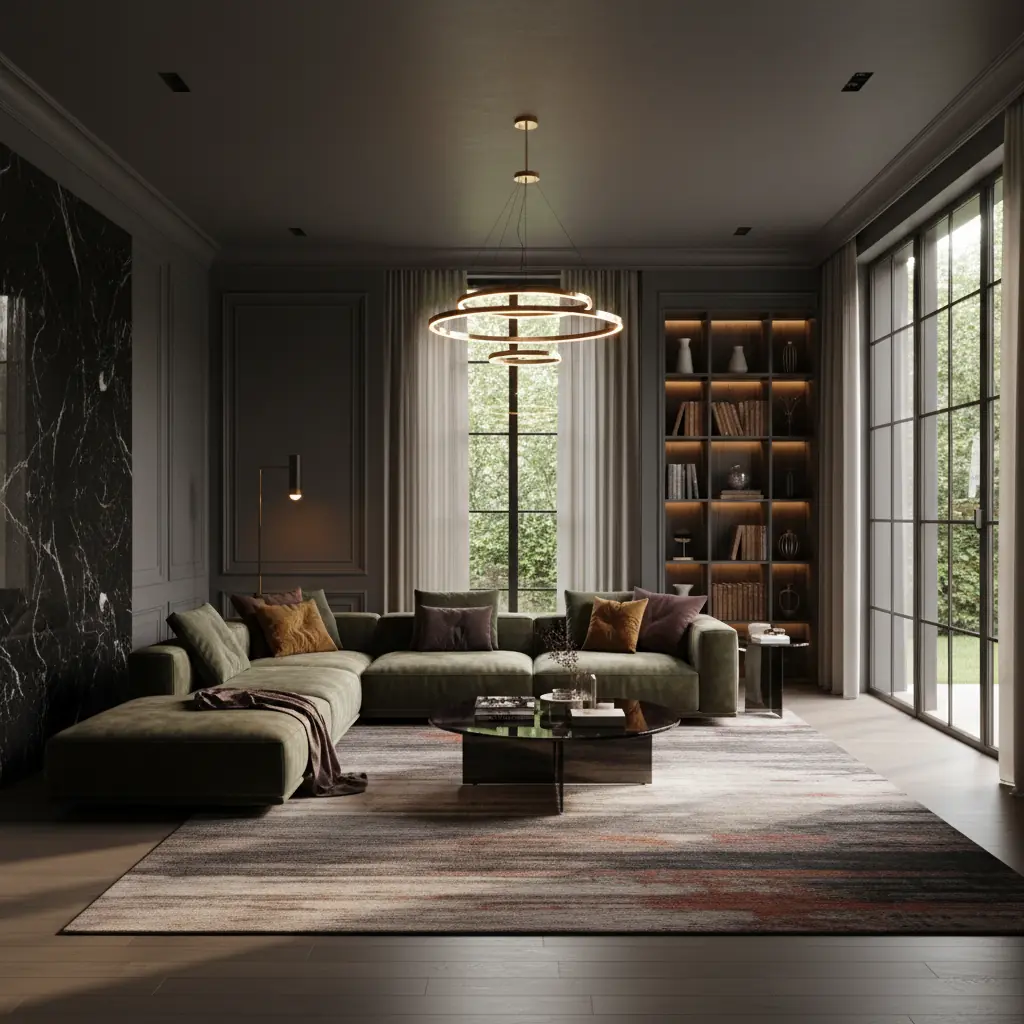
Why dark interiors are having a moment
For a decade, the dominant interior design narrative was "go light." White walls, pale wood, bright and airy everything. It made sense as a reaction to the heavy, dark-wood interiors of the early 2000s, which often felt dated and cluttered. But pendulums swing, and by 2025 the all-white room started feeling generic and sterile — a blank canvas that, paradoxically, showed no personality. Many homeowners, after years of bright minimalism, craved something with more depth and character, moving away from what felt like an aesthetic dictated by real estate listings rather than personal style. If you're looking to redefine your space beyond the ubiquitous bright trends, you might find inspiration in our guide to [all-white room design tips](/blog/all-white-room-design-tips) to see what you're leaving behind.
Dark interiors offer what white rooms cannot: atmosphere. A deep green living room feels like a private club. A navy bedroom feels like a cocoon. A charcoal dining room makes candlelight twice as dramatic. Dark colors create intimacy, drama, and a sense of being enclosed in something intentional rather than unfinished. The trend is not about making rooms darker for its own sake — it is about using color to create mood and character. In a recent survey by a leading design publication, nearly **60% of homeowners expressed interest in incorporating darker, moodier color palettes** into their homes in the coming year, a significant jump from five years ago, signaling a clear shift in aesthetic preferences towards depth and sophistication. This isn't just a fleeting trend; it's a profound re-evaluation of how color impacts our daily lives and emotional well-being within our personal spaces.
What are the best dark colors for 2026 interiors?
While 'dark' can conjure images of gloomy spaces, the truth is that the best dark colors for 2026 are deeply nuanced, rich, and surprisingly versatile. These aren't just colors; they are mood setters, bringing a sophisticated groundedness to any room.
**Deep Forest Green:** This is the undisputed star of moody interiors this year. Shades like Benjamin Moore Essex Green, Farrow & Ball Studio Green, or Sherwin-Williams Rookwood Dark Green create spaces that feel simultaneously sophisticated and organic. Green is the easiest dark color to live with because it is inherently natural — our brains associate it with lush landscapes, serene forests, and a sense of calm rather than impending darkness. It pairs beautifully with natural materials like raw wood, rattan, and terracotta, as well as metallic accents such as brass and gold, which truly pop against its depth. Consider it for a study or a nature-inspired living room for an immediate sense of grounded tranquility.
**Classic Navy Blue:** Navy blue remains a classic for good reason, offering a timeless elegance that feels both familiar and refined. It is universally flattering, works seamlessly with both warm and cool accent colors, and reads as elegant without trying too hard. Depending on its undertones, navy can evoke coastal calm or deep, scholarly gravitas. Picture it with crisp white trim for a nautical nod, or with rich jewel tones like emerald and ruby for a more opulent, dramatic effect. It's especially effective in formal living rooms or bedrooms, providing a serene backdrop that encourages rest and contemplation.
**Sophisticated Charcoal with Warm Undertones:** For something more contemporary than true black (which can feel oppressive and stark without careful application), try a deep charcoal with warm undertones. Think of a rich, almost-black gray like Benjamin Moore Wrought Iron, Farrow & Ball Railings, or Sherwin-Williams Peppercorn. These shades provide the drama of black without its harshness, offering a softer, more inviting intensity. Charcoal serves as an incredibly chic backdrop for vibrant artwork or sculptural furniture. Its warmth makes it adaptable to industrial, modern, or even transitional styles, especially when paired with natural stone, concrete elements, or textured fabrics.
**Emerging Chocolate Brown:** Riding the wave of warm minimalism and the "quiet luxury" aesthetic, chocolate brown is the emerging dark color for 2026. Rich, warm, and deeply comforting, it pairs beautifully with cream, camel, and brass, creating an inviting, enveloping atmosphere. It's the dark color that feels least "dramatic" and most naturally inviting — like being wrapped in a cashmere blanket or nestled in a cozy, leather-bound study. Chocolate brown works exceptionally well in spaces where comfort and warmth are paramount, such as dens, libraries, or family rooms, creating a sophisticated retreat. It harmonizes wonderfully with textured velvets, supple leathers, and polished dark woods.
How to balance dark walls and prevent shrinking a room
The number one rule for dark rooms that feel expansive rather than cave-like is simple: **contrast with intention.** Dark walls need lighter counterpoints — a cream sofa, a white marble coffee table, light oak flooring, or a pale rug. The eye needs landing points that reflect light and prevent the dark color from absorbing all visual energy. Think of it like painting a canvas; you need both darks and lights to create depth and dimension. This contrast can come from large furniture pieces, architectural details like crown molding and baseboards painted in a lighter shade, or even bold artwork with white matting.
**Strategic Use of Metallics:** Metallic accents are essential in dark rooms. Brass, gold, and copper catch and reflect light in ways that white accents cannot, scattering luminosity and adding a touch of glamour. A brass floor lamp, a gold-framed mirror, a copper pendant light, or even subtle metallic threads in throw pillows create points of warmth and brilliance against dark walls. This is why moody interiors often feel luxurious — the metal-on-dark combination reads as inherently elevated and refined. Don't be afraid to mix metals for an even richer, more curated look.
**Layered Lighting is Non-Negotiable:** Dark rooms demand more light sources, not necessarily brighter ones. Layer warm-toned lighting at multiple heights to create depth and eliminate dark corners:
- **Ambient Light:** Overhead fixtures like flush mounts or chandeliers provide general illumination. - **Task Light:** Table lamps and floor lamps offer focused light for reading or working. Consider integrating smart bulbs that allow you to adjust color temperature and brightness. - **Accent Light:** Wall sconces at eye level, picture lights, or even candles create focal points and enhance the mood.
Avoid cool-white bulbs (5000K+) in dark rooms — they clash with warm wall colors and create an unsettling, almost clinical contrast. Stick to 2700K-3000K for a cohesive, inviting, and intimate feel. Studies suggest that professionally designed lighting schemes can **reduce energy consumption by up to 30%** compared to basic, unlayered setups, making proper lighting not just aesthetic but also energy-efficient. For more insights on blending technology with design, explore how an [AI color palette generator](/blog/ai-color-palette-generator) can help you harmonize your lighting with your chosen paint colors.
**Embrace Texture and Depth:** Dark rooms benefit immensely from a variety of textures. Without varied textures, a dark space can feel flat. Introduce materials like plush velvet, soft linen, chunky knit throws, woven rattan, exposed brick, or polished wood. These tactile elements absorb and reflect light differently, adding visual interest and depth that prevents the room from feeling one-dimensional. A deep, dark wall can suddenly come alive with the play of light on a textured rug or a velvet sofa. This interplay of light and shadow on different surfaces is what makes a dark room truly dynamic and inviting.
Which rooms work best in dark colors?
While the versatility of dark colors means they can work in almost any space with the right approach, some rooms are particularly well-suited to embracing a moody palette.
**Bedrooms: Your Personal Retreat:** Bedrooms are the most natural fit for dark colors. You use the bedroom primarily at night when dark colors look their best under warm, layered lighting. A deep navy or forest green bedroom with crisp white linen bedding, natural wood accents, and brass bedside lamps is one of the most consistently successful dark color applications — it creates a retreat-like atmosphere that actually improves sleep by signaling to your brain that the space is for rest and relaxation. Darker colors can reduce visual distractions and create a sense of enclosure that promotes calm. If you're considering a full bedroom overhaul, check out our guide on a [bedroom redesign cost breakdown](/blog/bedroom-redesign-cost-breakdown) to plan your budget effectively.
**Powder Rooms and Small Bathrooms: Jewel Boxes of Design:** Powder rooms and small bathrooms are, counterintuitively, excellent candidates for dark colors. Because they are small and typically windowless, they already feel enclosed — leaning into that with a bold dark color transforms "cramped" into "jewel box." A dark green powder room with brass fixtures, a sleek pedestal sink, and a luxurious marble countertop feels intentionally opulent and high-end rather than accidentally small. Dark colors can make these small spaces feel grander and more deliberate. This approach offers an opportunity to be bold without committing to a large, high-traffic area. For more inspiration, see our [bathroom remodel ideas](/blog/bathroom-remodel-ideas).
**Dining Rooms: Intimacy for Gatherings:** Dining rooms work beautifully dark because most dinners happen in the evening, under controlled lighting. Dark walls make tablescapes more dramatic, candles more atmospheric, and conversation more intimate. A charcoal or deep chocolate brown dining room creates a sophisticated backdrop that encourages lingering and deep conversation. The rich backdrop also makes food and wine appear more vibrant and appealing. Pair with a striking chandelier and warm-toned art for a truly memorable dining experience.
**Living Rooms: Proceed with Thoughtful Design:** Living rooms can go dark, but proceed with more caution than with a bedroom or powder room. They are typically the largest room and the one used at all hours. If you want a dark living room, ensure it has good natural light from at least one large window, and use a lighter ceiling color to prevent the space from feeling top-heavy. Alternatively, try one dark accent wall behind the sofa rather than all four walls, or consider applying the dark color only up to a chair rail, painting the upper portion in a lighter hue. Large mirrors can also significantly help reflect light and expand the space visually.
**Home Offices & Studies: Cultivating Focus:** For those seeking a dedicated space for concentration, a dark home office or study can be incredibly effective. Deep blues or greens can evoke a sense of scholarly calm and professionalism, minimizing distractions and encouraging focus. The rich, enveloping color can make the space feel like a private den, fostering creativity and productivity. Pair with dark wood furniture, leather accents, and focused task lighting for a truly sophisticated and functional workspace.
Common fears about dark colors — debunked
Embracing dark colors often comes with a set of understandable anxieties. Let's address the most common concerns head-on.
**"Dark colors make rooms feel smaller."** This is perhaps the most persistent myth. Not exactly. Dark colors make rooms feel more intimate and enveloping, which is different from feeling smaller. In fact, a dark wall can sometimes blur the edges of a room, making it feel less defined and surprisingly expansive, especially if there's sufficient light reflection. A dark room with strategic lighting, lighter furnishings, and judicious use of mirrors can feel just as spacious and much more characterful than a stark white room — it simply has a different personality. The perceived size of a room depends far more on furniture scale, layout, light sources, and how well the space is designed than wall color alone. Using vertical elements like tall bookshelves or striped wallpaper can also draw the eye upwards, enhancing the feeling of height.
**"I will get tired of it."** This is a valid concern, and the answer is nuanced. You are more likely to tire of a trendy, highly saturated color (like hot pink or electric blue) than a classic, sophisticated dark tone. Forest green, navy, charcoal, and chocolate brown are not novelty colors — they are timeless foundations that designers have used for centuries, often seen in classic European interiors or traditional libraries. Their appeal endures because they are deep, complex, and pair well with a wide range of accent colors and styles. If you still worry, start with a room you can easily repaint, such as a bedroom, powder room, or home office. Alternatively, consider an accent wall or color drenching a smaller architectural feature before committing to a full room. For guidance on selecting colors with longevity, consult our recommendations for the [best paint colors 2026](/blog/best-paint-colors-2026).
**"It will be too dark to see anything."** Only if you ignore lighting. A well-lit dark room is dramatically beautiful; an under-lit dark room _is_ a cave. The solution is not avoiding dark colors — it is investing in proper, layered lighting. As discussed earlier, integrate ambient, task, and accent lighting at various heights, always opting for warm-toned bulbs (2700K-3000K). Consider dimmers for ultimate control over the mood and functionality of the space. Budget an extra $200-$400 for additional light fixtures and smart lighting controls when planning a dark room design, and you will never feel under-lit. This small investment ensures your dark room is not just functional but truly shines, offering flexibility from bright daytime activities to intimate evening ambiance.
Using AI to preview dark colors before committing
The biggest barrier to choosing dark colors is fear of the unknown. Paint swatches taped to a white wall give you almost no useful information about how an entire room will feel painted dark. Your brain cannot accurately extrapolate from a 2x2 inch swatch to four walls, a ceiling, and how these colors will interact with your existing furniture and lighting. This leap of faith is precisely what deters many from experimenting with bold, dark hues.
This is where AI visualization tools like **Habitas** change the equation entirely, democratizing access to professional-grade design previews. With Habitas, you can upload a photo of your actual room — your furniture, your lighting, your windows, your unique architectural details — and see it rendered instantly in deep green, navy, charcoal, or any dark color you are considering. The AI accurately simulates how light will interact with the new color, how your existing furniture will pop (or recede), and where additional light sources or lighter accents might be needed.
You can compare multiple options side by side, experiment with different accent colors, and even visualize new furniture pieces against dark walls. This eliminates the guesswork and the significant financial risk that has historically kept people from trying dark colors. Traditional design consultations for color selection alone can cost upwards of **$200-$500 for a few hours**, whereas AI tools like Habitas offer instant, comprehensive visualization for a fraction of that, or even free for basic previews. It's an investment in confidence, not just design. To understand more about how this technology works its magic, delve into [AI interior design: how it works](/blog/ai-interior-design-how-it-works) or compare its cost-effectiveness against traditional designers with [AI interior design vs. hiring cost](/blog/ai-interior-design-vs-hiring-cost). Habitas empowers you to design boldly, removing the fear of commitment and allowing your creativity to flourish.
Frequently Asked Questions
### How do I make a dark room feel brighter without repainting?
To brighten a dark room without repainting, focus on maximizing light reflection and adding contrast. Incorporate large mirrors, especially opposite windows, to bounce natural light around the space. Choose light-colored furniture, rugs, and textiles (like a cream sofa or white linen curtains) to create bright visual anchors. Introduce metallic accents (brass, gold, silver) which reflect light more effectively than matte surfaces. Layer your lighting with ambient, task, and accent fixtures, ensuring all bulbs are warm-toned (2700K-3000K). Finally, opt for reflective surfaces like glass coffee tables or high-gloss ceramics.
### What ceiling color should I use with dark walls?
For dark walls, the most common and effective ceiling color is a crisp white or a very pale, off-white. This creates a visual break, prevents the room from feeling "boxed in," and helps reflect light downwards, making the space feel taller and airier. If you want a more cohesive, enveloping look, especially in a bedroom or dining room, you can try painting the ceiling the same dark color as the walls (a technique called "color drenching"). However, this requires very deliberate lighting and lighter furnishings to avoid feeling overly dark. For most applications, a light ceiling is the safest and most effective choice.
### Are dark walls suitable for small spaces?
Yes, dark walls can be surprisingly effective in small spaces, especially powder rooms, small bathrooms, or cozy dens. Instead of making the room feel smaller, they can create a sense of intimacy and sophistication, transforming a "cramped" space into a "jewel box." The key is to embrace the enclosure rather than fight it. Use ample lighting (including reflective surfaces like mirrors and metallics), and incorporate lighter accents to provide contrast. Dark colors can also blur the edges of a small room, making its boundaries less defined and sometimes giving the illusion of depth.
### What type of flooring goes well with dark walls?
With dark walls, lighter flooring choices are generally recommended to create balance and prevent the room from feeling too heavy or overwhelming. Light-colored woods (like light oak, maple, or birch), pale grey or white tiles, or cream-colored carpeting can provide a bright foundation that grounds the room and offers a striking contrast. However, dark flooring can also work if you introduce sufficient lighter elements through rugs, furniture, and wall decor. The goal is always balance and intentional contrast. For a truly luxurious feel, a polished concrete floor or dark, wide-plank wood with a subtle sheen can also complement dark walls beautifully.
### How do I choose the right dark paint color for my home?