design de Cozinha e Sala Integradas: Crie Zonas e Fluxo Perfeitos
O conceito de ambientes integrados está em toda parte, mas acertar o design exige mais planejamento do que a maioria das pessoas espera. Um guia prático para zoneamento, materiais, iluminação e fluxo.
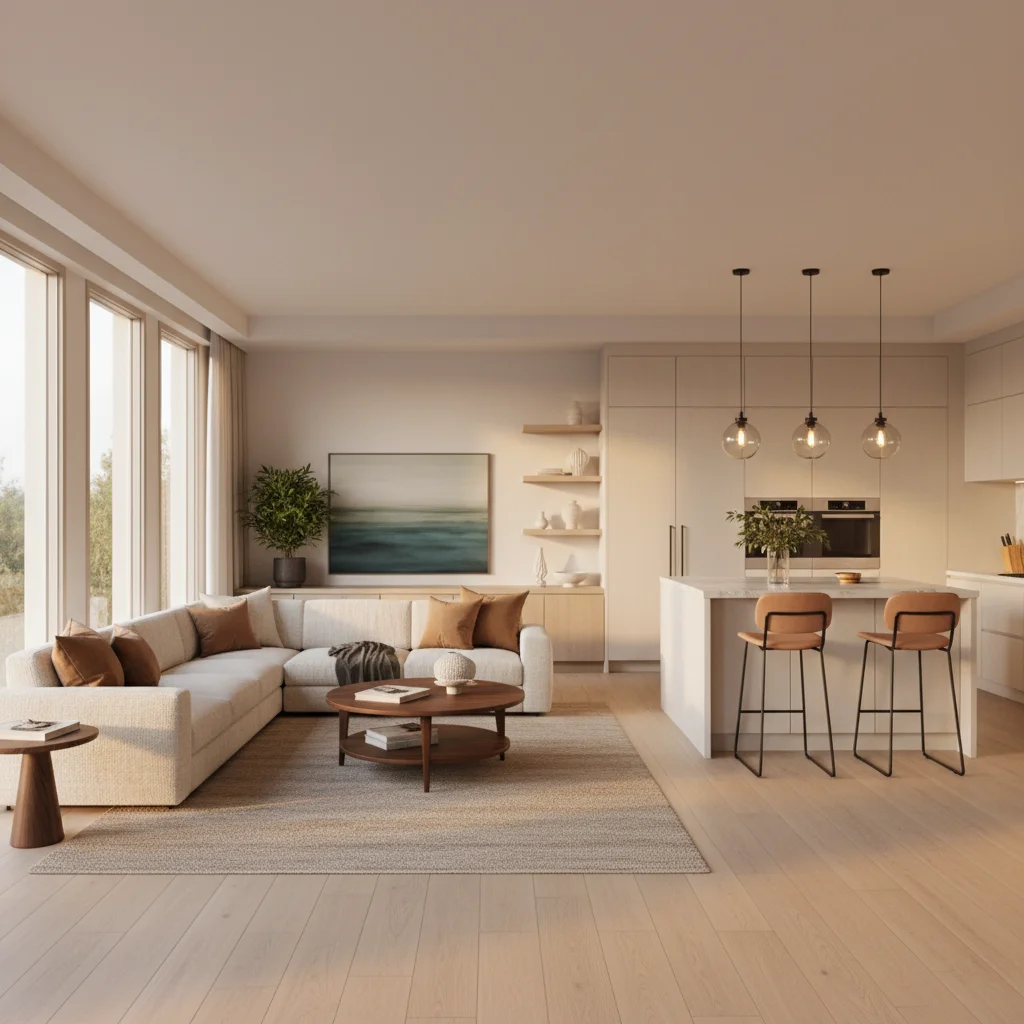
A Promessa e o Desafio dos Ambientes Integrados
Cozinhas e salas de estar integradas são uma característica marcante do design residencial moderno, cativando proprietários e compradores. Elas vendem casas, ficam lindas em fotos e contribuem para uma sensação de generosidade e sociabilidade, fazendo com que até mesmo uma metragem quadrada modesta pareça expansiva. De fato, tendências imobiliárias recentes indicam que **até 80% dos compradores de imóveis priorizam layouts de conceito aberto**, vendo-os como essenciais para estilos de vida e entretenimento contemporâneos. Essa preferência é particularmente forte entre as gerações mais jovens e famílias.
Mas sob o apelo inegável reside um dos problemas de design mais desafiadores em interiores residenciais: como criar zonas com funções distintas, diferentes ambientes e estéticas variadas – cozinhar, jantar, relaxar, talvez até mesmo um canto tranquilo para home office – dentro de um único espaço contínuo, sem as fronteiras tradicionais de paredes ou portas?
As casas que executam bem o conceito de ambientes integrados parecem sem esforço. As zonas são claras sem serem rígidas. Os materiais parecem conectados em todo o espaço sem serem monótonos. A iluminação serve a cada função sem entrar em conflito. Esses espaços exalam um fluxo natural e conforto que desmente o planejamento cuidadoso por trás deles. Em contraste, as casas que lutam parecem um armazém de móveis – grandes, indiferenciadas e estranhamente frias, apesar de sua escala. A diferença está quase inteiramente na execução de alguns princípios-chave do design, combinados com uma profunda compreensão de como as pessoas vivem e interagem em seu ambiente.
Estratégias de Zoneamento: Definindo Áreas Sem Paredes
Em um espaço de conceito aberto, estabelecer zonas distintas é fundamental para criar funcionalidade e conforto. Embora as paredes físicas estejam ausentes, ferramentas de design inteligentes podem criar limites claros que são práticos e esteticamente agradáveis.
Tapetes de área são a ferramenta de zoneamento mais poderosa disponível sem a necessidade de construção. Um tapete de tamanho adequado – grande o suficiente para que todos os móveis primários da sala de estar se apoiem nele, ou pelo menos as pernas da frente – cria instantaneamente um "cômodo dentro de um cômodo". Ele sinaliza visual e psicologicamente que você se moveu de uma área funcional para outra. A chave é o tamanho: em uma área de estar de conceito aberto típica, um tapete menor que 240 por 300 centímetros parecerá um selo postal, fazendo com que o espaço pareça desconexo em vez de coeso. Considere sobrepor tapetes para adicionar textura e aconchego, delineando ainda mais uma zona de estar confortável.
A disposição dos móveis reforça essas zonas de tapete. Um sofá posicionado com as costas para a cozinha, em vez de paralelo a ela, cria uma barreira suave que funciona como uma divisão sem bloquear a luz ou as linhas de visão. Mesas console ou estantes baixas atrás de um sofá podem aprimorar ainda mais esse limite, fornecendo superfícies para decoração, luminárias ou até mesmo funcionando como uma pequena área de bar. Uma mesa de jantar, naturalmente posicionada no ponto de transição entre cozinha e sala de estar, atua como uma zona tampão natural, definindo claramente a área de refeições. Para um mergulho mais profundo em layouts ideais, explore como uma [ferramenta de arranjo de móveis por IA](/blog/ai-furniture-arrangement-tool) pode ajudar você a experimentar diferentes configurações.
Mudanças de nível – um degrau para uma área de estar, ou um fosso de conversação rebaixado – são os dispositivos de zoneamento mais poderosos de todos, embora exijam construção em vez de apenas arranjo de móveis. Essas intervenções arquitetônicas criam distinções espaciais imediatas e inegáveis, adicionando um toque dramático e uma sensação de permanência a cada zona. Para aqueles que consideram mudanças estruturais mais significativas, uma meia parede bem posicionada ou uma lareira dupla face também podem servir como um divisor elegante, oferecendo privacidade enquanto mantêm uma sensação de abertura.
Continuidade de Materiais e Variação Planejada: Uma Paleta Harmoniosa
Em espaços de conceito aberto, o material do piso é frequentemente contínuo, o que cria unidade, mas pode, se não for tratado com cuidado, parecer monótono. Uma estratégia eficaz é usar um único material de piso em todo o ambiente – carvalho de pranchas largas, pedra de grande formato ou concreto polido – e introduzir variações através das zonas de tapete e tratamentos específicos da cozinha. Isso garante uma base consistente, permitindo pontos focais.
Considere uma cozinha com um material de bancada da ilha contrastante – talvez um mármore ricamente veiado contra uma bancada mais uniforme – ou um tratamento de azulejo diferente no piso da cozinha que separe visualmente a zona de cozimento. Isso cria distinção sem quebrar o fluxo geral. Por exemplo, um piso de concreto contínuo poderia fluir da sala para a cozinha, mas um backsplash de azulejos de cimento estampado ou uma ilha com borda em cascata única poderiam definir o espaço culinário.
A cor dos armários é outra alavanca poderosa no design de conceito aberto. Armários de cozinha em uma cor escura e saturada – azul-marinho, verde-floresta ou cinza-chumbo – ancoram visualmente a zona da cozinha e a fazem parecer um cômodo distinto mesmo sem paredes. Isso cria profundidade e personalidade. Uma cozinha com armários da mesma cor de suas paredes parece parte do cômodo maior; uma cozinha com armários de cores ou tons distintos parece sua própria entidade funcional dentro do espaço maior. Esse uso estratégico da cor pode transformar um layout simples em um ambiente dinâmico e visualmente envolvente. A incorporação de uma paleta de cores curada também pode unificar todo o espaço, e ferramentas como um [gerador de paleta de cores por IA](/blog/ai-color-palette-generator) podem fornecer inspiração.
Lembre-se de que uma reforma completa de cozinha custa tipicamente entre **US$ 20.000 e US$ 60.000**, então escolhas cuidadosas de materiais que resistam ao tempo e se integrem bem com a estética geral do conceito aberto são um investimento que vale a pena.
A Ilha como Âncora Espacial: Função e Forma
Uma ilha de cozinha em um espaço de conceito aberto realiza mais trabalho de design do que quase qualquer outro elemento individual. Funcionalmente, ela fornece espaço crítico para preparo, armazenamento adicional e assentos casuais. Espacialmente, atua como o principal marcador de limite entre as zonas da cozinha e da sala de estar – mais permeável que uma parede, mas clara o suficiente para definir o território. Bancos no lado da ilha voltado para a sala criam um ponto de transição natural: as pessoas podem sentar-se na ilha e participar da atividade da cozinha enquanto olham para a sala de estar, promovendo a interação social.
As dimensões da ilha são extremamente importantes tanto para a funcionalidade quanto para o fluxo. Uma ilha deve ter pelo menos 90 centímetros (aproximadamente 36 polegadas) de espaço livre em todos os lados ativos para um fluxo de tráfego confortável e fácil acesso a armários e eletrodomésticos. Se as pessoas passarão frequentemente enquanto a atividade da cozinha estiver ocorrendo, 120 centímetros (cerca de 48 polegadas) é o ideal. O balanço do balcão para assentos de banco deve ser de no mínimo 25 centímetros (10 polegadas), idealmente de 30 a 35 centímetros (12-14 polegadas) para um espaço confortável para os joelhos. Esses não são números arbitrários: eles são a diferença entre uma ilha que flui sem esforço e uma que cria atrito e desconforto constantes.
Além da funcionalidade básica, as ilhas podem se tornar elementos de design. Considere opções como uma ilha com borda em cascata para um visual elegante e moderno, ou uma ilha com prateleiras integradas para livros de receitas e itens decorativos. Os materiais podem variar de madeira maciça a quartzo, concreto ou aço inoxidável, cada um contribuindo para a estética geral. Esses elementos podem ser explorados e visualizados usando plataformas como Habitas, permitindo que você veja como diferentes designs de ilha se encaixam em sua visão geral de conceito aberto antes de tomar decisões caras.
Iluminando o Conceito Aberto: Três Zonas, Três Estratégias
A iluminação eficaz é talvez o elemento mais crítico, mas frequentemente subestimado, no design bem-sucedido de um espaço de conceito aberto. Não basta simplesmente iluminar o cômodo; você deve iluminar as _zonas_. Espaços de conceito aberto exigem três estratégias de iluminação distintas operando simultaneamente, cada uma adaptada à sua função específica.
1. **Zona da Cozinha:** Focada na tarefa, brilhante e muitas vezes tendendo a uma temperatura de cor mais fria (por exemplo, 4000K-5000K) para ótima visibilidade durante o preparo de alimentos. Isso inclui pendentes de destaque sobre a ilha (geralmente fornecendo luz ambiente e de tarefa), fitas de LED sob os armários para iluminar as superfícies de preparo e luminárias embutidas para iluminação geral de trabalho. Dimmers são cruciais aqui para suavizar a iluminação brilhante de tarefa quando a cozinha não está em uso ativo. 2. **Zona de Jantar:** Atmosférica, muitas vezes quente (por exemplo, 2700K-3000K), com um pendente ou lustre de destaque como ponto focal, pendurado baixo sobre o centro da mesa. Este acessório deve ser visualmente atraente e proporcionar um brilho suave e convidativo. Arandelas suplementares ou luzes embutidas com dimmers podem fornecer luz ambiente adicional para reuniões maiores, mas o foco deve ser criar uma experiência de jantar íntima. 3. **Zona de Estar:** Em camadas e flexível, combinando luz de teto ambiente com luminárias de piso e de mesa que podem ser usadas independentemente da iluminação principal do teto. Essa estratificação permite vários estados de espírito – iluminação geral brilhante para limpeza, iluminação de destaque mais suave para leitura, ou luz quente e suave para assistir a um filme. Spots para destacar obras de arte ou características arquitetônicas podem adicionar outra camada de sofisticação.
O requisito técnico crítico é que todas as três zonas operem em circuitos independentes, cada um controlado por interruptores e dimmers separados. Ser capaz de acender apenas a iluminação da sala de jantar para uma refeição noturna, ou apenas as luminárias de piso na área de estar para um filme, enquanto as luzes da cozinha e as luzes ambientes principais estão desligadas – isso é o que separa um espaço de conceito aberto profissionalmente projetado de um que parece perpetuamente superiluminado ou estranhamente escuro. Sistemas de iluminação inteligentes tornam essa flexibilidade disponível sem a necessidade de eletricistas para instalar circuitos adicionais extensos, oferecendo controle máximo via aplicativos ou comandos de voz.
Som e Privacidade: Os Desafios Ignorados
A vida em conceito aberto inerentemente apaga as barreiras sonoras tradicionais. O ruído da cozinha – exaustores, lava-louças, sons de cozimento, até mesmo o tilintar dos talheres – é transmitido diretamente para a área de estar. Conversas se espalham em todas as direções, e os sons de crianças brincando, música ou televisão podem invadir outras atividades. Para famílias ou lares com horários diferentes, isso pode ser um problema significativo de qualidade de vida que nenhuma quantidade de bom design resolve sem um planejamento acústico deliberado. Uma consideração honesta do som antes de se comprometer com uma reconfiguração de conceito aberto é primordial.
Mobiliário macio é o principal tratamento acústico disponível após a construção. Tapetes grossos, móveis estofados, cortinas ou persianas pesadas, almofadas decorativas e arte de parede (especialmente tapeçarias ou painéis acústicos emoldurados) absorvem o som em vez de refleti-lo. Espaços de conceito aberto com superfícies duras – tudo em pedra, azulejo, vidro e gesso – são acusticamente "vivos" e podem parecer exaustivos em volume devido ao excesso de eco. Introduzir material macio suficiente para absorver o eco, mantendo a estética desejada, requer uma seleção deliberada de materiais, em vez de ser uma reflexão tardia.
Além dos produtos macios, considere a incorporação de materiais de amortecimento de som durante a construção, como subcamada acústica sob pisos duros ou telhas de teto que absorvem o som em áreas específicas. Eletrodomésticos com baixos níveis de decibéis são outro investimento inteligente para cozinhas. Para uma sensação de privacidade visual ou um retiro tranquilo dentro do espaço maior, um divisor de ambiente habilmente colocado, uma estante alta ou até mesmo grandes plantas internas podem criar uma "tela" psicológica sem bloquear completamente o fluxo. Às vezes, simplesmente ter um "espaço analógico" dedicado ou um cômodo menor e fechado pode proporcionar o necessário alívio do burburinho constante de uma casa em conceito aberto, oferecendo uma solução moderna para a necessidade milenar de santuário.
Alcançando Coesão Visual e Estilo Pessoal
Embora o zoneamento e a funcionalidade sejam cruciais, um espaço de conceito aberto realmente brilha quando alcança coesão visual, ao mesmo tempo em que reflete o estilo pessoal do proprietário em todas as zonas. Isso envolve um delicado equilíbrio entre unidade e individualidade.
Comece com uma paleta de cores e um esquema de materiais fundamentais que fluam por todo o espaço. Isso não significa que tudo deve ter a mesma cor, mas sim que as cores e texturas devem se complementar. Por exemplo, se os armários da sua cozinha são de um azul-marinho profundo, talvez os seus toques na sala de estar possam ser em azuis mais claros, cinzas ou até metais quentes que capturem os subtons do azul-marinho. Usar um estilo arquitetônico consistente (por exemplo, moderno, minimalista, tradicional) ou um motivo de design compartilhado (por exemplo, padrões geométricos, formas orgânicas) também pode unir as zonas de forma harmoniosa. Habitas pode ajudar você a visualizar vários [melhores estilos de design de interiores para 2026](/blog/best-interior-design-styles-2026) em seu cômodo real.
Introduza elementos que se repetem ou ecoam em diferentes zonas. Isso pode ser um acabamento de madeira específico usado tanto para cadeiras de jantar quanto para um console na sala de estar, ou um acabamento metálico particular que aparece em ferragens da cozinha, luminárias e objetos decorativos na área de estar. A arte também pode desempenhar um papel vital. Uma coleção de arte curada que compartilha um tema comum, esquema de cores ou estilo artístico, estrategicamente colocada em todo o espaço aberto, guia o olhar e reforça a unidade visual.
Finalmente, permita a personalização dentro de cada zona. A cozinha pode apresentar utensílios de cozinha vibrantes ou plantas únicas, enquanto a área de estar exibe fotos de família queridas ou lembranças de viagens. Esses toques pessoais, quando integrados ao design coeso abrangente, evitam que o espaço pareça estéril ou genérico. O objetivo é um espaço que pareça intencionalmente projetado como um todo, mas que permita que cada área respire e expresse seu propósito e caráter únicos. Um espaço de conceito aberto bem projetado, assim como uma casa profissionalmente decorada, pode ter um **retorno sobre o investimento de 5-10% no valor de revenda**, simplesmente tornando-o mais atraente e funcional para potenciais compradores.
design para Fluxo e Movimento Contínuos
Além das zonas individuais e da coesão estética, o sucesso de um espaço de conceito aberto depende de sua capacidade de facilitar o fluxo e o movimento contínuos. Isso não é apenas evitar obstáculos; é criar caminhos intuitivos que guiam os ocupantes sem esforço de uma área para a próxima.
**Linhas de Visão e Caminhos Livres:** Certifique-se de que os caminhos principais através do espaço tenham pelo menos 90-100 centímetros (36-40 polegadas) de largura, livres de móveis que impeçam o movimento. Evite colocar grandes peças de mobiliário diretamente na linha de tráfego entre duas áreas frequentemente usadas, como a cozinha e a mesa de jantar, ou a área de estar e uma saída. Usar um [aplicativo de design de interiores por IA](/blog/ai-interior-design-apps-compared-2026) pode ajudar você a experimentar virtualmente diferentes layouts de móveis e visualizar caminhos de movimento.
**Agrupamento e Orientação de Móveis:** Organize os móveis em cada zona para que fiquem voltados para dentro, criando áreas de conversação convidativas. Na sala de estar, sofás e cadeiras devem naturalmente incentivar a interação, enquanto na área de jantar, as cadeiras devem ser facilmente movíveis ao redor da mesa. A orientação de peças-chave, como um sofá grande ou uma unidade de entretenimento, pode sutilmente direcionar a atenção e definir a "frente" de uma zona.
**Equilíbrio Visual:** Garanta que o peso visual dos móveis e da decoração esteja equilibrado em todo o espaço aberto. Uma peça muito pesada em um canto pode fazer o canto oposto parecer vazio. Use elementos mais altos como estantes, cortinas do chão ao teto ou grandes plantas para atrair o olhar para cima e adicionar interesse vertical, evitando que o espaço pareça muito disperso.
Ao planejar meticulosamente o fluxo e o movimento, você cria um ambiente de conceito aberto que não só parece bonito, mas também se sente natural, confortável e verdadeiramente habitável.
Perguntas Frequentes
### Quais são os maiores benefícios de uma cozinha e sala de estar integradas?
Cozinhas e salas de estar integradas oferecem inúmeras vantagens, principalmente melhorando a interação social e criando uma maior sensação de espaço. Elas permitem que os membros da família se conectem enquanto realizam diferentes atividades (por exemplo, cozinhar enquanto outros relaxam ou fazem a lição de casa), tornando o entretenimento muito mais fácil. Visualmente, a remoção de paredes faz com que os cômodos pareçam maiores, mais claros e mais expansivos, muitas vezes aumentando a penetração da luz natural em toda a casa. Esse layout é frequentemente preferido por famílias modernas que buscam um ambiente de vida dinâmico e conectado.
### Como faço para que meu espaço de conceito aberto pareça aconchegante e não cavernoso?
Para evitar que um espaço de conceito aberto pareça cavernoso, concentre-se em criar zonas distintas, camadas de texturas e usar iluminação quente. Defina áreas com grandes tapetes de área, móveis estrategicamente posicionados (como um sofá encostado em um console) e até mesmo plantas altas ou estantes. Introduza mobiliário macio, como cortinas grossas, móveis estofados e almofadas decorativas para absorver o som e adicionar calor. Use dimmers para toda a iluminação, permitindo que você crie focos de luz íntimos, especialmente à noite. Uma paleta de cores consistente e quente em todo o espaço também ajuda a unificá-lo e torná-lo mais aconchegante.
### Quais são os erros comuns a evitar no design de conceito aberto?
Um dos erros mais comuns é não conseguir definir zonas distintas, levando a um espaço vasto e indiferenciado. Outro é negligenciar as considerações acústicas, resultando em ambientes barulhentos e com eco. Muitos designers também ignoram a importância de uma paleta de materiais e cores coesa, o que pode fazer com que o espaço pareça desconexo em vez de unificado. Finalmente, um design de iluminação deficiente, onde todas as luzes estão em um único circuito ou a iluminação de tarefa é inadequada, pode diminuir severamente a funcionalidade e o ambiente de uma casa em conceito aberto.
### Como Habitas pode me ajudar a projetar minha cozinha e sala de estar integradas?
Habitas, como uma plataforma de design de interiores alimentada por IA, pode ajudar significativamente no design do seu espaço de conceito aberto. Você pode fazer upload de fotos do seu cômodo atual e usar nossas ferramentas para visualizar diferentes layouts, arranjos de móveis, escolhas de materiais e paletas de cores em tempo real. Isso permite que você experimente várias estratégias de zoneamento, veja como diferentes designs de ilha de cozinha podem ficar e visualize o posicionamento de luminárias sem nenhum esforço físico ou compromisso. Habitas oferece renderizações realistas que ajudam você a tomar decisões informadas, garantindo que seu design de conceito aberto seja bonito e altamente funcional antes de investir em reformas. Saiba mais sobre [como funciona o design de interiores por IA](/blog/ai-interior-design-how-it-works).
### Posso incorporar diferentes estilos de design de interiores em um layout de conceito aberto?
Sim, você pode absolutamente incorporar diferentes estilos de design de interiores, mas a chave é garantir que eles se complementem em vez de entrar em conflito. O efeito geral deve ser harmonioso. Isso é alcançado mantendo uma paleta de cores subjacente consistente, usando um material comum (por exemplo, o mesmo piso em todo o ambiente) ou repetindo certos elementos de design (como um acabamento metálico específico ou detalhe arquitetônico) em todas as zonas. Você pode então introduzir variações dentro desses parâmetros – por exemplo, uma cozinha minimalista moderna pode fazer a transição para uma área de estar com toques mais boêmios, desde que a história central da cor e o senso de fluxo sejam mantidos.