Lujo silencioso en diseño de interiores: menos obvio, más elevado
Cómo el movimiento del lujo silencioso se traduce en interiores: sin logotipos, sin ostentación, solo materiales excepcionales y diseño considerado.
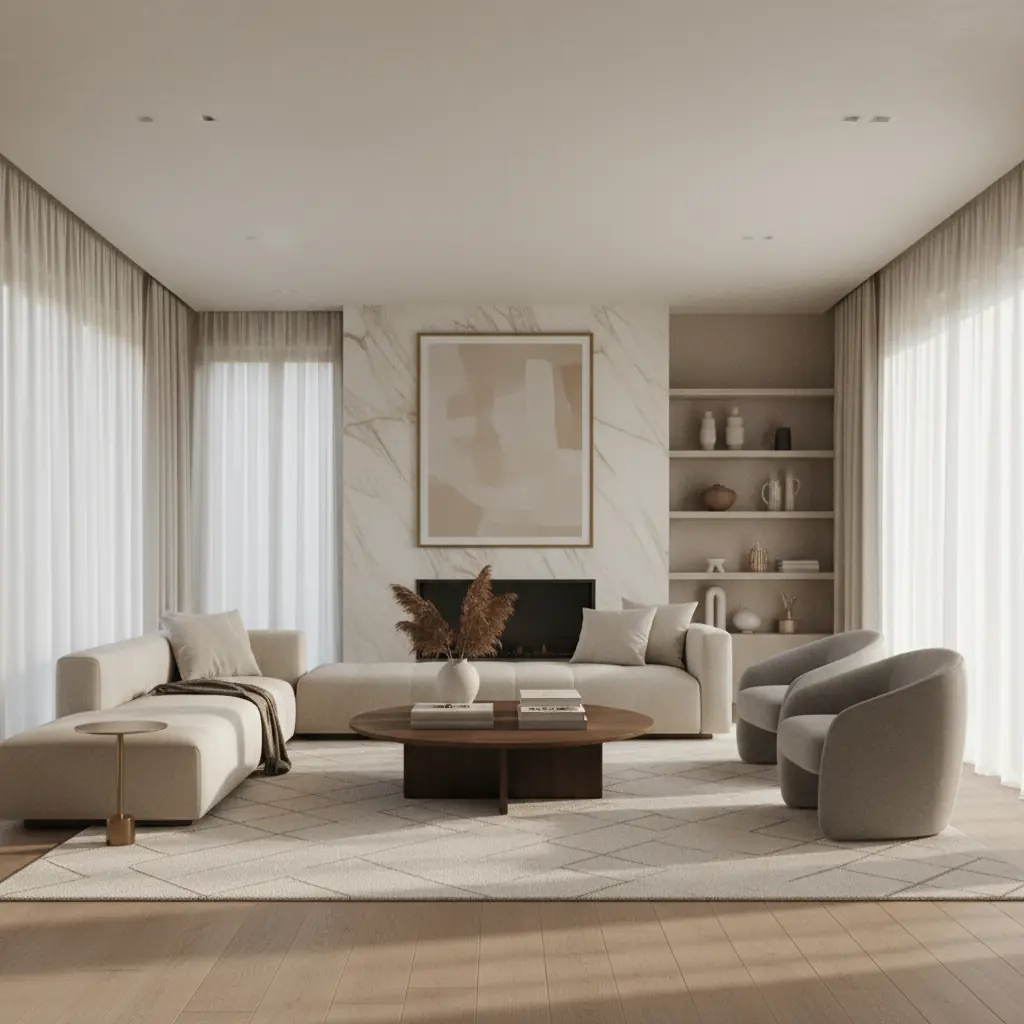
¿Qué define el lujo silencioso en el diseño de interiores?
En moda, el lujo silencioso significa un suéter de cachemira de $3,000 sin logotipo visible: la calidad es evidente para quienes la notan, e invisible para quienes no. La misma filosofía se traslada directamente al diseño de interiores: habitaciones que se sienten costosas no por lo que exhiben, sino por los materiales con los que están hechas. Nada de papel tapiz llamativo, muebles de diseñador con logotipos o siluetas reconocibles, ni piezas decorativas que griten "mírame". En cambio, la inversión se destina a la calidad del material, proporciones perfectas y detalles tan bien pensados que se funden con el entorno.
Una sala de estar de lujo silencioso podría tener un sofá que, a primera vista, parece sencillo: líneas limpias, color neutro, sin capitoné ni tachuelas decorativas. Pero al sentarse en él, se perciben muelles atados a mano en ocho direcciones, cojines rellenos de plumón y una tela que claramente no es poliéster. La mesa de centro es de nogal macizo, no de chapa. La alfombra es de lana anudada a mano, no fabricada a máquina. Nada grita; todo susurra. El efecto acumulativo es una habitación que se siente sofisticada sin esfuerzo y profundamente cómoda: no se puede señalar una cosa cara, pero se puede sentir que todo es _bueno_.
Esto es lo opuesto al enfoque de "pieza de inversión", donde un único elemento de diseñador dramático ancla una habitación que, de otro modo, sería modesta. El lujo silencioso consiste en elevar el nivel de todo. Los herrajes de las puertas, los interruptores de luz, el acabado de la pintura, los rieles de las cortinas, cada elemento es considerado y de calidad, no solo las piezas protagonistas. Se trata de un compromiso integral con la artesanía y el diseño reflexivo. Estudios demuestran que los muebles de calidad, en particular las piezas de madera maciza, pueden durar más de 50 años con el cuidado adecuado, en comparación con solo 5-10 años para muchas alternativas de chapa producidas en masa, lo que convierte al lujo silencioso en una inversión tanto en longevidad como en estética.
Esta filosofía de diseño enfatiza una sensación de permanencia y atemporalidad. Los hogares con interiores clásicos y atemporales, en lugar de estilos impulsados por tendencias, tienden a mantener su valor percibido de manera más efectiva, con algunos análisis inmobiliarios que sugieren un atractivo 10-15% mayor para los compradores potenciales en un período de 5 años. Se trata de crear espacios que no solo sean hermosos, sino también duraderos.
¿Qué paletas de color definen el lujo silencioso?
La paleta de colores se compone de neutros con profundidad. No un beige plano, sino neutros en capas que aportan algo diferente. Camello (el neutro cálido y dorado que evoca sofisticación sin esfuerzo), piedra (un gris-beige frío que ancla sin dominar), marfil (más cálido que el blanco, más suave que el crema) y gris cálido (la base de la paleta: un gris con suficiente matiz marrón para nunca sentirse frío). La elección de estos tonos es deliberada, buscando crear una atmósfera de calma y sofisticación discreta en lugar de un contraste marcado.
La clave es el rango tonal dentro de una franja estrecha. Una habitación de lujo silencioso podría usar seis tonos neutros diferentes —paredes de marfil, sofá color piedra, manta color camello, alfombra gris cálido, cortinas crema, cojines topo— pero todos pertenecen a la misma familia de neutros cálidos. El interés proviene de la sutil variación entre los matices y la interacción de diferentes texturas, no del contraste de color audaz. Es como mirar dunas de arena: cada superficie es "beige" pero no hay dos iguales, y el efecto general es rico, complejo y profundamente relajante. Si estás experimentando con cambios sutiles de color para crear este tipo de profundidad, un [generador de paletas de colores con IA](/blog/ai-color-palette-generator) puede ser una herramienta invaluable para asegurar la armonía entre los tonos elegidos.
Los colores de acento, cuando se utilizan, son apagados y derivados de la naturaleza: verde oliva oscuro (no verde brillante), burdeos empolvado (no rojo), azul marino (nunca azul brillante). Aparecen en pequeñas dosis: un juego de cojines decorativos, un jarrón, una pila de libros o quizás una obra de arte. El acento nunca domina; proporciona un signo de puntuación discreto en una habitación de tonos, atrayendo la mirada sutilmente sin alterar la sensación general de tranquilidad.
¿Qué materiales definen los interiores de lujo silencioso?
Los materiales son el punto central. En el lujo silencioso, la experiencia táctil es tan importante como la visual. Cachemira y lana merina para mantas y cojines, no mezclas acrílicas que se llenan de bolitas después de una temporada. Estas fibras naturales ofrecen una suavidad y una caída incomparables, desarrollando un carácter rico con el tiempo. Mármol (natural, no cultivado o sintético) para superficies donde la piedra es apropiada: mesas de centro, tocadores de baño, revestimientos de chimeneas. La piedra natural aporta un patrón orgánico y un toque fresco y lujoso que las alternativas fabricadas simplemente no pueden replicar.
Madera maciza (nogal, roble blanco, teca) para muebles, nunca MDF, nunca chapa si el presupuesto permite madera maciza. El peso, la veta y la durabilidad de la madera maciza hablan por sí solos sobre la calidad. Latón cepillado o bronce sin lacar para los herrajes, metales que desarrollan una pátina rica y viva con el tiempo en lugar de permanecer artificialmente brillantes. Este sutil envejecimiento añade a la historia y al carácter de la pieza, abrazando la imperfección como parte de su belleza.
El cuero en el lujo silencioso es anilina o semianilina: cuero de grano completo que muestra marcas naturales, desarrolla carácter con el uso y se siente cálido al tacto. No cuero aglomerado, ni cuero de grano corregido con una superficie uniforme y plástica. El cuero debe verse y sentirse mejor en cinco años que hoy, envejeciendo con gracia junto a su dueño. El lino se usa en todas partes —cortinas, tapicería, ropa de cama, servilletas— porque su textura natural, su hermosa caída y sus cualidades transpirables señalan calidad sin necesidad de decoración. Algodón percal de alto número de hilos (400+) para la ropa de cama, no satén, porque el acabado nítido y mate del percal se percibe como discretamente costoso y limpio, mientras que el brillo del satén puede dar la impresión de que se está esforzando demasiado. Una encuesta reciente indicó que el 68% de los propietarios de viviendas priorizan materiales naturales como la madera, la piedra y el lino en la decoración de su hogar por sus beneficios estéticos y para la salud, lo que subraya su valor inherente.
¿Es el lujo silencioso lo mismo que el minimalismo? Entendiendo la distinción.
Esta distinción es significativamente importante. Si bien ambas estéticas comparten el amor por las líneas limpias y los espacios despejados, sus filosofías subyacentes divergen. El minimalismo se trata fundamentalmente de reducción: menos objetos, menos ruido visual, máximo espacio negativo. La pregunta central que se hace un minimalista es: "¿Puedo eliminar esto?"
El lujo silencioso, por otro lado, se trata de elevación: no necesariamente menos objetos, sino objetos _mejores_. La pregunta guía es: "¿Es esta la mejor versión de esto?" Un dormitorio minimalista podría presentar solo un colchón sobre una plataforma sencilla, una mesita de noche y nada más. Un dormitorio de lujo silencioso, por el contrario, podría tener una cama completamente vestida con ropa de cama en capas y de alta calidad, dos mesitas de noche con exquisitas lámparas de cerámica, un banco cuidadosamente elegido a los pies, una pieza de arte sutil y significativa en la pared y cortinas de lino perfectamente drapeadas. Cada elemento está hecho de materiales excepcionales, proporcionado con cuidado y contribuye a una sensación general de riqueza y comodidad, incluso si el número total de elementos es mayor que en un espacio minimalista.
Ciertamente pueden superponerse: el lujo silencioso a menudo es visualmente limpio porque el desorden socava el sentido de intencionalidad y calidad. Sin embargo, el principio motivador es diferente. Puedes tener una habitación de lujo silencioso que esté completa y en capas, siempre que cada capa sea considerada y de alta calidad. Y, por el contrario, puedes tener una habitación minimalista que no sea en absoluto de lujo silencioso, simplemente porque los pocos objetos restantes son de baja calidad o producidos en masa. La diferencia crítica radica en el énfasis en el _valor inherente_ y la _artesanía_ sobre la mera simplicidad. Este enfoque holístico se extiende a cómo se organizan los muebles para optimizar el flujo y crear una sensación de calma; usar una [herramienta de organización de muebles con IA](/blog/ai-furniture-arrangement-tool) puede ayudarte a equilibrar perfectamente las proporciones y crear un diseño intuitivo y lujoso.
Marcas y referencias que vale la pena estudiar para inspirarse en el lujo silencioso
Para comprender verdaderamente la esencia del lujo silencioso, es beneficioso estudiar ejemplos de marcas que encarnan esta estética. Para muebles, explora líneas de B&B Italia, Poliform, Molteni&C, e incluso las colecciones de gama alta de Restoration Hardware. El objetivo no es necesariamente comprar (aunque si puedes, estas piezas son inversiones excepcionales), sino entrenar tu ojo en proporciones perfectas, materiales sublimes y detalles discretos. Observa cómo los muebles de lujo silencioso evitan los trucos visuales: nada de patas de horquilla de moda, capitoné exagerado o combinaciones experimentales de materiales que priorizan la novedad sobre la longevidad. Las formas son clásicas, refinadas y sobrias; la distinción reside enteramente en la calidad superior del material y la artesanía meticulosa.
Para los textiles para el hogar, busca marcas como Tekla (conocida por su excepcional ropa de cama y baño), The Citizenry (textiles elaborados éticamente con un fuerte énfasis en la integridad del material y la artesanía global) y Hay (diseño danés que equilibra maravillosamente la accesibilidad con una calidad de diseño genuina y bien pensada). Para la iluminación, Apparatus, Workstead y Roll & Hill crean luminarias que parecen esculturas sin llamar la atención, utilizando a menudo materiales naturales como alabastro, latón y vidrio soplado a mano.
Más allá de las marcas individuales, estudia los interiores de hoteles de lujo. Cadenas como Edition, Aman y 1 Hotels ejecutan constantemente el lujo silencioso a gran escala. Sus habitaciones son fotografiadas meticulosamente en línea y ofrecen una clase magistral en la aplicación de estos principios para crear ambientes verdaderamente tranquilos y sofisticados. Presta atención a cómo superponen texturas, utilizan iluminación sutil y priorizan la comodidad y el diseño duradero sobre las tendencias pasajeras.
Lograr el estilo de lujo silencioso con un presupuesto realista
El lujo silencioso al precio de venta al público de marcas de alta gama es, sin duda, caro; esa es la incómoda verdad. Sin embargo, la estética y la _sensación_ de lujo silencioso son absolutamente alcanzables por una fracción de los precios de diseñador si priorizas correctamente y tomas decisiones inteligentes. Lo que tradicionalmente tomaba a los diseñadores de interiores de 2 a 4 semanas para renderizar, ahora se puede lograr en minutos con plataformas impulsadas por IA como Habitas, lo que hace que la exploración del diseño sea más rápida y accesible para visualizar tu lujo asequible.
**Prioriza los elementos táctiles**: Invierte en cosas que tocas a diario: la tela del sofá, la ropa de cama, la alfombra bajo los pies. Estos elementos táctiles definen la "sensación" del lujo silencioso más que cualquier cosa visual. Puedes encontrar alfombras de lana maciza, cortinas de lino genuino y ropa de cama de algodón de calidad de marcas como Quince, Parachute y Cultiver a un 20-30% de los precios de venta de lujo. Invertir en estos artículos, incluso si cuestan un poco más al principio, rinde frutos en comodidad y durabilidad. Si bien el costo inicial puede ser mayor para piezas de calidad, invertir en artículos duraderos y de alta calidad puede ahorrar a los propietarios entre un 30% y un 50% en una década al reducir la necesidad de reemplazos frecuentes de alternativas más económicas.
**Aprovecha el mercado de segunda mano**: Para muebles, el mercado de segunda mano es tu mayor aliado. Los muebles de madera maciza de los años 60 a 80 (piensa en el diseño danés de mediados de siglo, el estilo Shaker americano o incluso piezas tradicionales bien hechas) son genuinamente de mayor calidad que la mayoría de los muebles nuevos al mismo precio. Una mesa de comedor de nogal vintage encontrada en Chairish, Etsy o una venta de patrimonio local a menudo tendrá mejor madera y ensamblaje que una nueva al doble de precio. No temas restaurar o retapizar si es necesario; la estructura es más importante que el acabado existente.
**Mejoras inteligentes**: En lugar de una renovación completa, concéntrate en mejoras clave. Reemplazar interruptores de luz y tomacorrientes de plástico baratos por unos de metal sólido (como latón cepillado o negro mate) puede elevar significativamente la sensación de una habitación. Mejorar los herrajes de las puertas o agregar rieles de cortina sustanciales y bien hechos puede marcar una gran diferencia. Para aquellos curiosos sobre las posibilidades, explorar [diseños de habitaciones generados con IA](/blog/ai-generated-room-designs-realistic) puede ofrecer una inspiración increíble para lograr este aspecto refinado sin un presupuesto masivo.
Usa Habitas para visualizar el efecto general antes de comprar piezas individuales. Sube tu habitación y describe la estética de lujo silencioso que buscas. Ver una vista previa fotorrealista de tu espacio con materiales mejorados y una paleta de neutros tonales te ayuda a priorizar qué compras tendrán el mayor impacto, para que inviertas en los lugares correctos en lugar de diluir un presupuesto limitado en todo. Además, abordar una renovación de lujo silencioso no tiene por qué significar empezar de cero. Muchos elementos pueden mejorarse con el tiempo. Si trabajas con un presupuesto limitado y quieres ver cómo pequeños cambios pueden crear un gran impacto, nuestra guía sobre [decoración de apartamentos con presupuesto limitado](/blog/apartment-decorating-budget) ofrece consejos prácticos que se alinean con muchos principios del lujo silencioso. Para una verdadera transformación que encarne el lujo silencioso, podrías considerar cómo pequeños ajustes pueden llevar a mejoras drásticas, similar a los conocimientos encontrados en [transformaciones de habitaciones antes y después](/blog/ai-interior-design-before-and-after) utilizando IA.
Preguntas Frecuentes
### ¿Cuáles son los principios fundamentales del lujo silencioso en el diseño de interiores?
Los principios fundamentales del lujo silencioso en el diseño de interiores giran en torno a la calidad sobre la cantidad, la elegancia discreta y un enfoque en la artesanía. Esto significa priorizar materiales naturales excepcionales (como madera maciza, piedra natural, lana, lino), proporciones perfectas y detalles meticulosos. El diseño debe sentirse atemporal y refinado, en lugar de excesivamente moderno o llamativo, con énfasis en crear una atmósfera cómoda, duradera y sofisticada sin esfuerzo.
### ¿Cómo puedo hacer que mi hogar luzca más lujoso con un presupuesto limitado?
Lograr un aspecto lujoso con un presupuesto limitado implica una priorización estratégica. Enfoca tu inversión en elementos táctiles con los que interactúas con frecuencia, como ropa de cama de alta calidad, mantas suaves y una alfombra duradera. Opta por muebles de madera maciza de segunda mano en lugar de piezas nuevas de chapa de baja calidad, y no dudes en restaurar. Mejoras sutiles como reemplazar herrajes baratos por versiones de metal sólido o elegir una paleta de pintura sofisticada y apagada también pueden realzar drásticamente el valor percibido de un espacio.
### ¿Es el lujo silencioso una tendencia pasajera o un estilo duradero?
El lujo silencioso, aunque actualmente es tendencia, encarna principios intrínsecamente atemporales, lo que sugiere que es más un estilo duradero que una moda pasajera. Su énfasis en materiales de calidad, artesanía y diseño clásico asegura la longevidad, resistiendo la rápida obsolescencia de la moda rápida en interiores. Al centrarse en la belleza y la comodidad duraderas, el lujo silencioso se alinea con un enfoque sostenible del diseño que valora la permanencia sobre la novedad, lo que lo convierte en una sabia elección estética a largo plazo.
### ¿Cuál es la paleta de colores ideal para un hogar de lujo silencioso?
La paleta de colores ideal para un hogar de lujo silencioso es una gama sofisticada de neutros en capas. Piensa en grises cálidos, marfiles suaves, camellos profundos y tonos piedra relajantes. La clave es crear profundidad e interés a través de sutiles variaciones tonales y texturas contrastantes dentro de esta estrecha gama de colores, en lugar de depender de contrastes de color audaces. Cuando se utilizan acentos, son apagados e inspirados en la naturaleza, como el verde oliva empolvado, el azul marino intenso o el burdeos, utilizados con moderación para proporcionar una puntuación discreta.