Maximiza el Retorno de Inversión (ROI) en Propiedades de Alquiler: Mejoras Inteligentes Que Rinden Frutos
Una guía basada en datos sobre mejoras en propiedades de alquiler: qué mejoras realmente aumentan la renta y la calidad del inquilino, y cuáles son un pozo sin fondo.
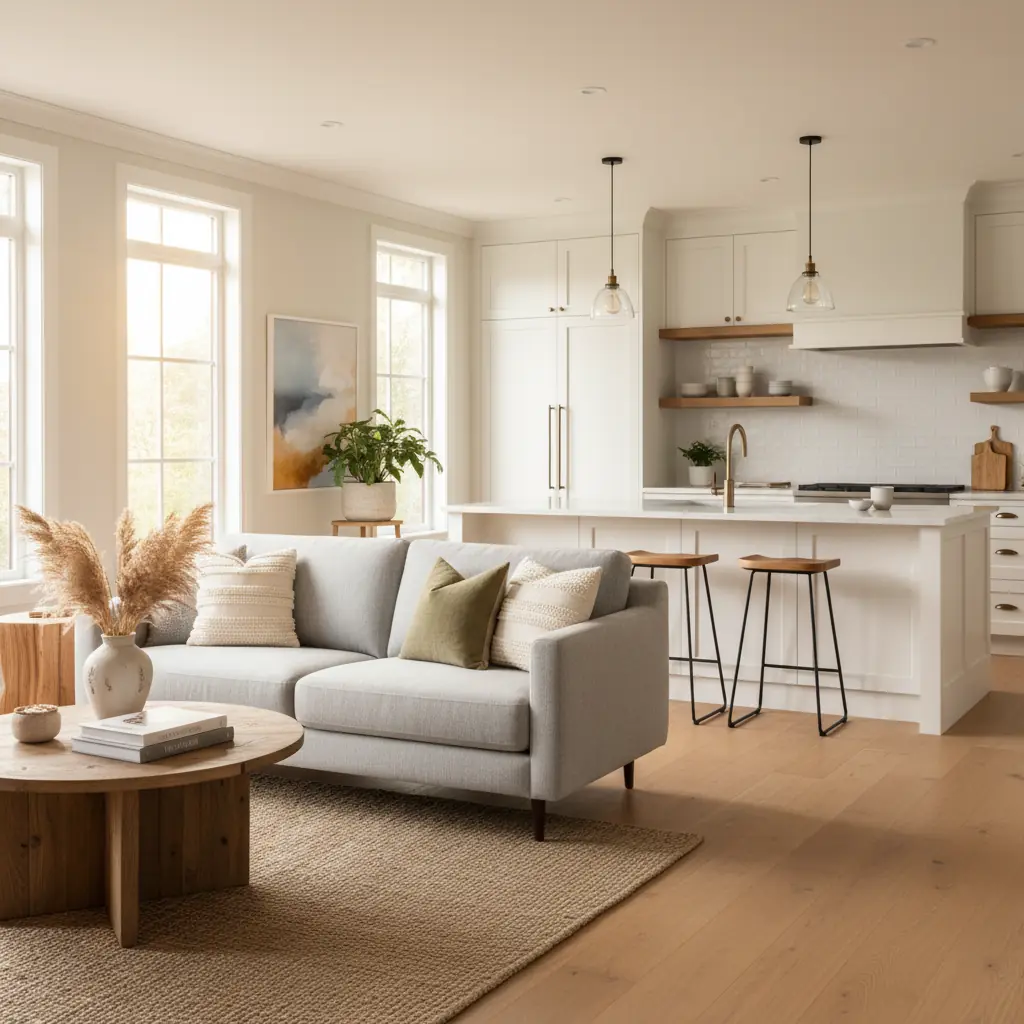
Mejoras de Mayor ROI: Gran Impacto por Menos de $500
A menudo, son los cambios pequeños y estratégicos los que producen los retornos más significativos en propiedades de alquiler. Estas "renovaciones cosméticas" están diseñadas para crear una impresión positiva inmediata sin vaciar tu bolsillo.
### Pintura Fresca: El Transformador de Espacios por Excelencia
Una capa de pintura fresca en tonos neutros y modernos es, sin duda, la mejora más impactante y rentable que puedes hacer. Ilumina, limpia y moderniza instantáneamente cualquier espacio, cubriendo años de desgaste, rozaduras y colores anticuados.
- **Costo**: Para una unidad típica de 80-90 m², la pintura y los suministros de bricolaje cuestan entre $200 y $400. La pintura profesional podría costar entre $500 y $1,000, dependiendo de la ubicación y el tamaño de la unidad. - **Prima de Alquiler**: Espera un aumento mensual de la renta de $25 a $75, lo que significa que la inversión a menudo se recupera en 6 a 12 meses. - **Por qué funciona**: Colores neutros como Sherwin-Williams Agreeable Gray, Benjamin Moore Simply White o Farrow & Ball Wimborne White (para un blanco más suave) proporcionan un lienzo limpio y versátil que permite a los posibles inquilinos visualizar fácilmente sus propias pertenencias y estilo. Hacen que los espacios se sientan más grandes y acogedores. Los estudios muestran que el **72% de los posibles inquilinos son más propensos a alquilar una propiedad que se siente "limpia y fresca"**, y la pintura es el principal impulsor de esta percepción. Para más ideas sobre opciones de color impactantes, explora nuestra guía sobre los [mejores colores de pintura para 2026](/blog/best-paint-colors-2026).
### Luminarias Actualizadas: Iluminando Percepciones
Los plafones anticuados y básicos, a menudo llamados "boob lights" por su forma, son un indicador inmediato de una propiedad antigua y descuidada. Cambiarlos por luminarias modernas, empotradas o semi-empotradas mejora drásticamente la estética de una unidad.
- **Costo**: Las luminarias individuales varían entre $30 y $80. Para un apartamento de tres dormitorios con 6-8 luminarias, el costo total es de $200 a $600. - **Impacto**: La iluminación moderna proporciona una mejor luz, reduce las sombras y crea una atmósfera más contemporánea y sofisticada. Es una forma económica de elevar el valor percibido de una habitación, especialmente en áreas comunes como salas, pasillos y cocinas.
### Nuevos Herrajes para Gabinetes y Puertas: La Joyería del Hogar
Este pequeño detalle tiene un impacto enorme. Cambiar los pomos de latón anticuados de los años 90 o principios de los 2000 por tiradores de color negro mate o níquel cepillado moderniza instantáneamente cocinas, baños y puertas interiores.
- **Costo**: Los tiradores y pomos suelen costar $2-$5 por pieza. Una cocina promedio y dos baños podrían requerir 20-30 piezas, totalizando $40-$150. Las manijas de las puertas son un poco más caras, alrededor de $15-$30 cada una. - **Impacto**: Esta mejora se realiza en una tarde y ofrece una increíble relación calidad-precio, creando un aspecto cohesivo y actualizado en toda la unidad. Es una señal sutil pero poderosa de una propiedad bien mantenida y cuidada.
### Espejos de Baño Modernos y Luces de Tocador
A menudo pasados por alto, un espejo de baño y una luz de tocador mejorados pueden transformar un baño anticuado por un costo mínimo. Deshazte del espejo sin marco y la vieja tira de luces.
- **Costo**: Un espejo con marco elegante se puede encontrar por $50-$150, y una luz de tocador moderna por $40-$100. - **Impacto**: Estos elementos elevan instantáneamente la estética del baño, haciéndolo sentir más como un refugio tipo spa que como un espacio puramente funcional.
Estas tres (¡o cuatro!) mejoras, cuando se implementan juntas, pueden justificar cómodamente un aumento mensual de la renta de $50 a $100, a menudo recuperando la inversión en un año.
ROI de Nivel Medio: Mejoras de $500 a $5,000 Que Vale la Pena Considerar
Una vez que se abordan las victorias rápidas, considera mejoras que requieren una inversión ligeramente mayor, pero que aún brindan sólidos retornos a través de una mayor durabilidad, atractivo y reducción del mantenimiento a largo plazo.
### Reemplazo de Pisos: La Base del Atractivo y la Durabilidad
El piso es uno de los elementos más críticos en una propiedad de alquiler. Una alfombra vieja y manchada o un laminado desgastado pueden ser grandes desmotivadores.
- **Piso Vinílico de Lujo (LVP)**: Este es el campeón indiscutible para propiedades de alquiler. Cuesta entre $3 y $7 por pie cuadrado instalado, lo que lo hace increíblemente rentable. - **Beneficios**: El LVP es prácticamente indestructible en entornos de alquiler: - **Impermeable**: Derrames, accidentes de mascotas y pequeñas inundaciones no son problema. - **Resistente a arañazos**: Soporta el alto tráfico, mascotas y movimientos de muebles con facilidad. - **Duradero**: Dura 15-25 años con el cuidado adecuado, significativamente más que la alfombra (que generalmente necesita ser reemplazada cada 5-7 años, costando alrededor de $2-$4/pie cuadrado cada vez). - **Estético**: El LVP moderno imita de manera convincente la madera, ofreciendo un aspecto deseable y de alta gama. - **ROI**: Para un apartamento de 84 metros cuadrados (900 pies cuadrados), el costo total es de $2,700-$6,300. La prima de alquiler suele ser de $75-$150 por mes, con una recuperación en 2-4 años, además de ahorros significativos en costos de mantenimiento y rotación. Una rotación de inquilinos típica cuesta a los propietarios **$1,750 en promedio**, una cifra muy influenciada por las necesidades de limpieza y reparación, incluido el piso.
### Accesorios de Baño Actualizados: Un Nuevo Comienzo
Los baños son habitaciones clave para la toma de decisiones de los inquilinos. Un baño limpio y moderno sugiere un hogar bien cuidado.
- **Qué mejorar**: Concéntrate en el mueble de tocador, el grifo, el espejo y la iluminación. Si el revestimiento de la bañera/ducha es funcional pero anticuado, considera el re-esmaltado en lugar de un reemplazo completo por una fracción del costo ($300-$600 frente a $3,000+). - **Costo**: Un nuevo mueble de tocador (lavabo y gabinete), grifo, espejo e iluminación suelen costar entre $500 y $1,500 por baño. - **Impacto**: Estas actualizaciones afectan significativamente la percepción del inquilino sobre la calidad general de la unidad. Combinado con pintura fresca y herrajes nuevos, un baño renovado puede aumentar significativamente el atractivo del alquiler. Para obtener información más detallada, consulta nuestras [ideas para remodelar el baño](/blog/bathroom-remodel-ideas).
### Reemplazo de Encimeras de Cocina: Líneas Limpias, Sensación Moderna
Las cocinas son otra área de alto impacto. Encimeras anticuadas, manchadas o de azulejos con lechada desmoronada son un gran inconveniente.
- **Elección inteligente**: Las encimeras laminadas que imitan la piedra (granito o cuarzo) ofrecen un excelente equilibrio entre costo, durabilidad y estética. - **Costo**: El reemplazo de encimeras laminadas cuesta entre $1,000 y $2,000 para una cocina promedio. - **Impacto**: Esto elimina el azulejo anticuado o las superficies desgastadas, creando un espacio de trabajo limpio y moderno. Si bien el granito se considera un lujo, el laminado ha avanzado mucho en apariencia y ofrece una resistencia superior a los arañazos y las manchas para alquileres. Agregar un salpicadero simple y neutro de azulejos tipo metro ($200-$500) mejora aún más el aspecto. **Las cocinas y baños actualizados pueden aumentar el valor percibido del alquiler en un 10-15% y atraer inquilinos un 50% más rápido**, según estudios inmobiliarios.
### Actualización de Electrodomésticos: Funcionalidad y Consistencia Estética
Si bien el reemplazo completo de electrodomésticos puede ser costoso, asegurar que todos los electrodomésticos principales sean funcionales, estén limpios y sean razonablemente modernos puede ser una victoria de nivel medio.
- **Estrategia**: Reemplaza solo los electrodomésticos realmente rotos o muy antiguos. Céntrate en modelos de acero inoxidable de gama media de marcas confiables como Whirlpool, GE o Frigidaire. Asegúrate de que todos los electrodomésticos (lavavajillas, estufa, refrigerador, microondas) coincidan en color/acabado para un aspecto cohesivo. - **Costo**: Reemplazar uno o dos electrodomésticos clave podría costar entre $1,000 y $3,000. - **Impacto**: Los inquilinos esperan electrodomésticos funcionales y limpios. El acero inoxidable a juego ofrece una sensación moderna y de alta gama sin la etiqueta de precio de lujo.
### Cubiertas para Ventanas: Mejorando la Privacidad y el Estilo
Las cubiertas para ventanas simples y modernas mejoran la estética, la privacidad y la eficiencia energética.
- **Recomendación**: Persianas de imitación madera de 2 pulgadas o estores enrollables en un color neutro. Evita las persianas verticales endebles o las cortinas pesadas y anticuadas. - **Costo**: $30-$70 por ventana, dependiendo del tamaño. Un total de $200-$500 para una unidad con varias ventanas. - **Impacto**: Proporciona un aspecto pulido, controla la luz y ofrece privacidad inmediata, que los inquilinos valoran mucho.
Estas mejoras de nivel medio ayudan significativamente a atraer inquilinos de mayor calidad que se quedan por más tiempo, reduciendo esos costosos gastos de rotación.
Trampas de Bajo ROI: Dónde los Propietarios Desperdician Dinero
No todas las mejoras son iguales, especialmente en el mercado de alquiler. Algunas inversiones simplemente no generarán suficiente renta adicional para justificar su costo, convirtiéndose en "pozos sin fondo".
### Sobre-personalización y Acabados de Lujo
La mayor trampa para los propietarios es mejorar en exceso una propiedad en relación con su segmento de mercado.
- **Ejemplos**: Encimeras de granito o cuarzo, salpicaderos personalizados, electrodomésticos de alta gama (por ejemplo, Sub-Zero, Wolf), trabajos de azulejería elaborados, gabinetes a medida o accesorios de diseño. - **Por qué falla**: Un inquilino que paga $1,200-$1,800/mes espera funcionalidad, limpieza y modernidad razonable. _No_ espera acabados de lujo, y es casi seguro que no pagará $100-$300 adicionales por mes para cubrir el costo de $10,000-$20,000 de estas mejoras. Reserva los acabados premium para unidades donde la renta de mercado realmente los soporte (por ejemplo, condominios de lujo en áreas urbanas principales). Para la mayoría de los mercados, **las mejoras cosméticas menores pueden generar un ROI estimado del 100-200% en el aumento de la renta mensual dentro del primer año**, mientras que las renovaciones de lujo importantes a menudo tienen dificultades para recuperar la inversión.
### Tecnología para el Hogar Inteligente (Smart Home)
Aunque atractiva en hogares ocupados por el propietario, la tecnología para el hogar inteligente a menudo tiene dificultades en entornos de alquiler.
- **Problemas**: - **Mantenimiento**: Los inquilinos con frecuencia tienen problemas con la configuración, la conectividad y la resolución de problemas. Esto lleva a constantes llamadas de servicio para el propietario. - **Preocupaciones de seguridad/privacidad**: Algunos inquilinos desconfían de los dispositivos conectados. - **Durabilidad**: Los termostatos inteligentes, cerraduras o sistemas de iluminación pueden romperse o usarse indebidamente fácilmente. - **ROI**: Rara vez justifica una renta más alta en los mercados de alquiler estándar. Los inquilinos priorizan la funcionalidad básica y la comodidad sobre los dispositivos tecnológicos. Si bien las herramientas impulsadas por IA como Habitas pueden agilizar _tu_ proceso de diseño, implementar tecnología de hogar inteligente para _inquilinos_ es una ecuación diferente.
### Colores de Moda o Elecciones de Diseño Atrevidas
Si bien son divertidas para hogares ocupados por el propietario, las elecciones de diseño únicas o altamente personalizadas pueden alienar a una parte significativa de tu posible grupo de inquilinos.
- **Por qué falla**: Una pared de acento llamativa, una paleta de colores muy específica o un estilo de diseño de nicho (por ejemplo, "dark academia", maximalista) atrae a un segmento muy estrecho del mercado. Esto aumenta el tiempo de vacancia y te obliga a bajar la renta para atraer a _cualquier_ inquilino. - **Mejor práctica**: Apégate a colores neutros, acabados clásicos y elementos de diseño atemporales. El objetivo es el atractivo general. Incluso elementos de diseño sutiles como los discutidos en [consejos de diseño de habitaciones totalmente blancas](/blog/all-white-room-design-tips) ofrecen un atractivo más amplio que los tonos muy saturados o de moda.
### Mejoras Excesivas en Relación con el Vecindario
La falacia de la "casa más bonita de la cuadra" se aplica fuertemente a los alquileres.
- **Escenario**: Si todas las demás unidades de la cuadra se alquilan por $1,300, gastar $15,000 en mejoras para intentar cobrar $1,800 es poco probable que funcione. Simplemente tendrás el mejor apartamento en un mercado de $1,300, lo que resultará en vacantes más largas y, en última instancia, tendrás que bajar tu precio. - **Solución**: Realiza una investigación de mercado exhaustiva. Comprende la renta típica, las comodidades y los acabados de propiedades comparables en tu vecindario específico. Tus mejoras deben apuntar a estar en la cima de ese segmento de mercado, no significativamente por encima.
### Remodelaciones Completas de Cocina/Baño (Sin Justificación)
A menos que una cocina o un baño estén realmente deteriorados, no funcionales o representen un peligro para la seguridad, una renovación completa a menudo no tiene sentido financiero para un alquiler estándar.
- **Costo**: Una renovación completa de la cocina puede costar fácilmente entre $15,000 y $30,000, y una remodelación del baño entre $5,000 y $15,000. - **ROI**: El aumento de la renta generado rara vez cubrirá estos costos significativos dentro de un período de recuperación razonable (por ejemplo, 3-5 años). Concéntrate primero en las mejoras de nivel medio (pintura, herrajes, LVP, encimeras laminadas, tocador actualizado) que pueden lograr el 80% de la mejora estética por el 20% del costo.
Materiales Duraderos Que Sobreviven a los Inquilinos
La selección de materiales para propiedades de alquiler es fundamentalmente diferente a la de los hogares ocupados por el propietario. Tu prioridad debe ser la relación durabilidad-costo, minimizando futuros gastos de mantenimiento y reemplazo.
### Pisos: El LVP es el Rey
Como se mencionó, el Piso Vinílico de Lujo (LVP) es el rey.
- **Por qué**: Es impermeable, resistente a los arañazos, fácil de limpiar y soporta el tráfico pesado y el posible desgaste de los inquilinos mejor que casi cualquier otra opción. No necesita ser restaurado, a diferencia de la madera dura.
### Acabados de Pintura: Fáciles de Limpiar
- **Recomendación**: Los acabados de pintura semibrillante o satinada son significativamente más fáciles de limpiar que los planos o mates. Resisten mejor las rozaduras y permiten una simple limpieza de marcas y suciedad. - **Evita**: Las pinturas planas o mates absorben las manchas y muestran cada imperfección, requiriendo retoques frecuentes o repintados completos.
### Superficies de Baño: Porcelanato y Acrílico
- **Pisos y Paredes**: El porcelanato es increíblemente duradero, resistente al agua y de larga duración. Elige azulejos de tamaño estándar (por ejemplo, 30x60 cm) y un color de lechada neutro para minimizar la apariencia de la suciedad. - **Revestimientos de Ducha**: Los revestimientos de ducha de acrílico o fibra de vidrio suelen ser más prácticos y duraderos que las duchas con azulejos en alquileres. Son sin juntas, lo que significa que no hay líneas de lechada que limpiar o reparar, y resisten el moho y los hongos de manera más efectiva.
### Electrodomésticos: Fiabilidad de Gama Media
- **Estrategia**: Selecciona electrodomésticos de acero inoxidable de gama media de fabricantes confiables como Whirlpool, GE o Frigidaire. Estos ofrecen el mejor equilibrio entre atractivo para el inquilino, longevidad y facilidad de servicio. - **Evita**: - **Gama baja**: Los electrodomésticos de marcas desconocidas o modelos muy básicos a menudo se rompen rápidamente, lo que genera costosas llamadas de servicio y reemplazos. - **Gama alta**: Los inquilinos generalmente no tratan un refrigerador de $3,000 de manera diferente a uno de $800. La inversión adicional rara vez se traduce en un mayor cuidado o renta.
### Gabinetes: Robustos y Resistentes
- **Recomendación**: Si vas a reemplazar, opta por gabinetes prefabricados de buena calidad (módulos de MDF o contrachapado con frentes laminados o termoformados) que sean fáciles de limpiar y resistentes a la humedad. Para gabinetes existentes, repintar con una pintura duradera específica para gabinetes (por ejemplo, Benjamin Moore Advance) y nuevos herrajes puede extender su vida útil. - **Evita**: Maderas blandas que se abollan fácilmente o diseños personalizados e intrincados que son difíciles de reparar o reemplazar.
### Durabilidad de las Ventanas: Persianas de Imitación Madera
- **Recomendación**: Las persianas de imitación madera son mucho más duraderas que las persianas de tela o las lamas verticales, que se rompen o ensucian fácilmente. Son fáciles de limpiar con un paño y resisten la deformación en ambientes húmedos.
Renovación vs. Remodelación: Un Marco de Decisión
Antes de gastar dinero, aborda las mejoras con un marco de decisión claro. Esto asegura que cada inversión se alinee con tus objetivos financieros y las realidades del mercado.
### Las Tres Preguntas Críticas:
1. **¿Esta mejora aumentará la renta lo suficiente como para recuperarse en 3 años?** - Esta es la principal prueba financiera. Calcula: (Aumento Mensual Esperado de la Renta x 36 meses) / Costo de la Mejora. Si esta relación es menor que 1, la mejora es principalmente un elemento de mantenimiento o un reductor de vacantes, no un generador de ganancias. Si la condición actual está causando largas vacantes o atrayendo inquilinos de menor calidad, la mejora aún podría valer la pena, pero categorízala de manera diferente. 2. **¿La mejora es lo suficientemente duradera como para durar varios inquilinos, o necesitará ser reemplazada después de cada rotación?** - Piensa en el costo a largo plazo. La alfombra, la pintura barata y los accesorios endebles pueden parecer económicos inicialmente, pero cuestan una fortuna en reemplazos y mantenimiento repetidos. Elegir materiales duraderos como el LVP o la pintura semibrillante reduce tus gastos operativos significativamente con el tiempo. 3. **¿La mejora atrae a la mayor cantidad posible de inquilinos para tu mercado?** - Evita las preferencias personales o las tendencias de nicho. Busca una estética neutra, limpia y moderna que la mayoría de las personas encuentren atractiva. Esto maximiza tu grupo de solicitantes y reduce los períodos de vacancia.
### Escenarios de "Remodelación" vs. "Renovación":
- **"Remodelación" (Cosmética y Mantenimiento)**: - **Costo**: $500-$2,000 (por unidad) - **Alcance**: Pintura, herrajes actualizados, luminarias modernas, limpieza profunda, reparaciones menores (por ejemplo, parchar paneles de yeso, volver a sellar bañeras), persianas nuevas. - **Cuándo**: Debe hacerse en cada rotación de inquilinos, o al menos cada 3-5 años, para mantener el atractivo de la propiedad y obtener la renta del mercado. Esto evita que los problemas pequeños se conviertan en problemas más grandes y costosos.
- **"Renovación" (Estructural y Actualizaciones Mayores)**: - **Costo**: $3,000-$15,000+ (por unidad) - **Alcance**: Reemplazo de pisos (por ejemplo, LVP), reemplazo de encimeras de cocina, tocador/accesorios de baño actualizados, mejoras de electrodomésticos. - **Cuándo**: Solo ocurre cuando el estado actual está afectando activamente tus ingresos por alquiler (por ejemplo, la alfombra vieja está causando quejas/vacantes constantes) o cuando estás reposicionando estratégicamente la unidad para un segmento de mercado diferente y de mayor pago. Esto requiere un análisis de mercado y proyecciones financieras cuidadosas.
Antes de comprometerte con cualquier renovación importante, visualiza los posibles cambios. Herramientas como Habitas pueden ayudarte a comparar diferentes caminos de mejora en las fotos reales de tu habitación, proporcionando diseños realistas generados por IA. Esto te permite ver si solo el piso nuevo realmente transforma el espacio, o si es necesaria una actualización de cocina más completa para lograr el resultado deseado. Explorar [diseños de habitaciones generados por IA](/blog/ai-generated-room-designs-realistic) puede darte una vista previa poderosa, ahorrándote tiempo y costosos errores de diseño.
Al adoptar un enfoque estratégico y basado en datos para las mejoras de propiedades de alquiler, los propietarios pueden mejorar significativamente el atractivo de su propiedad, atraer inquilinos de mayor calidad, reducir la rotación y, en última instancia, maximizar su retorno de inversión.
Preguntas Frecuentes
### ¿Cuál es la mejora más rentable para una propiedad de alquiler?
Sin lugar a dudas, una capa de pintura fresca en colores neutros y modernos es la mejora más rentable. Con una inversión de $200-$1,000, puede transformar instantáneamente un espacio anticuado, hacerlo sentir más limpio y grande, y justificar un aumento mensual de la renta de $25-$75, recuperándose en 6-12 meses.
### ¿Con qué frecuencia debo renovar una propiedad de alquiler?
Una "remodelación" (pintura, herrajes, limpieza profunda, reparaciones menores) idealmente debería ocurrir en cada rotación de inquilinos, o al menos cada 3-5 años. Las "renovaciones" importantes (como el reemplazo de pisos o encimeras) son menos frecuentes, generalmente cada 7-15 años, o cuando un componente específico está significativamente dañado, no funcional o está dificultando activamente tu capacidad para atraer inquilinos a las tarifas del mercado.
### ¿Las características de hogar inteligente aumentan los ingresos por alquiler?
En la mayoría de los mercados de alquiler estándar, las características de hogar inteligente como termostatos o cerraduras inteligentes no aumentan significativamente los ingresos por alquiler como para justificar su costo y los continuos dolores de cabeza de mantenimiento. Los inquilinos priorizan la funcionalidad básica, la limpieza y la comodidad. Para alquileres de lujo de alta gama, podrían ser una expectativa, pero para la mayoría de las propiedades, el ROI es bajo.
### ¿Qué piso es mejor para propiedades de alquiler?
El Piso Vinílico de Lujo (LVP) es ampliamente considerado la mejor opción de piso para propiedades de alquiler. Es altamente duradero, impermeable, resistente a los arañazos, fácil de limpiar y estéticamente atractivo, imitando la apariencia de la madera dura sin el alto costo o las exigencias de mantenimiento. Supera significativamente a la alfombra y a la madera dura tradicional en un entorno de alquiler.
### ¿Cuánto cuesta realmente la rotación de inquilinos para un propietario?
La rotación de inquilinos es un gasto significativo. Una rotación típica, que incluye la pérdida de renta durante la vacancia, limpieza, reparaciones, marketing y re-evaluación de nuevos inquilinos, cuesta a los propietarios un estimado de $1,750 en promedio, pero puede oscilar entre $1,500 y $3,000 dependiendo de la propiedad y el mercado. Las mejoras estratégicas y rentables que atraen inquilinos de mayor calidad y que permanecen más tiempo son cruciales para reducir estos costos.