Tendencias de Diseño de Interiores para Restaurantes 2026: Creando Experiencias que Cautivan a los Comensales
Descubra las tendencias de diseño de interiores para restaurantes que definirán el 2026: elementos biofílicos, iluminación cálida por capas, cocinas abiertas y soluciones acústicas esenciales. Atraiga a más comensales con un ambiente excepcional.
El Efecto Instagram en el Diseño de Restaurantes: Más Allá del Muro para Selfies
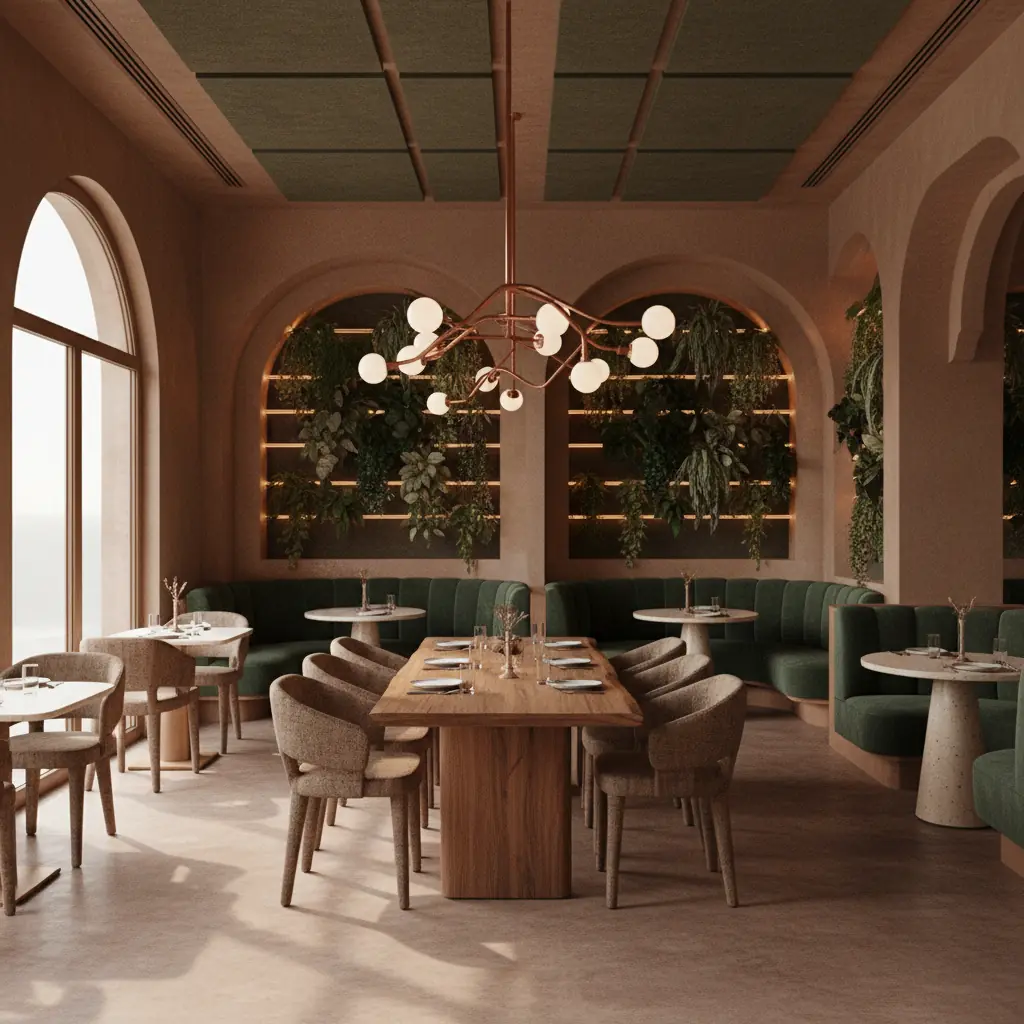
La relación entre las redes sociales y el diseño de restaurantes ha madurado significativamente desde la temprana era de Instagram, con sus letreros de neón y muros de aguacate tostado. En 2026, los interiores de restaurantes más exitosos están diseñados magistralmente para ofrecer una atmósfera genuina y una experiencia auténtica, en lugar de obvias oportunidades para fotos puntuales. Los comensales aún comparten fotos, por supuesto, pero comparten espacios que se sienten orgánicamente bellos y acogedores, en lugar de meramente "instagramables" de forma performativa. El cambio es de telones de fondo fabricados a un entorno tan cuidadosamente elaborado que cada ángulo ofrece una imagen cautivadora.
Los restaurantes que invierten en una calidad de materiales consistente, una iluminación cálida por capas bien pensada y un lenguaje de diseño cohesivo descubren que los clientes comparten más fotos —y, crucialmente, más auténticas— que los establecimientos que instalan un único telón de fondo fotogénico sobre paredes de otro modo anodinas. El diseño en sí mismo se convierte en el contenido. La investigación indica que los restaurantes con una estética cohesiva y de alta calidad a menudo experimentan hasta un **30% más de tasa de interacción en redes sociales**, lo que lleva a un mayor alcance orgánico y un potente marketing boca a boca. Ya no se trata de un "muro para selfies"; se trata de un comedor que consistentemente cuenta una historia a través de su diseño, invitando a los huéspedes a sumergirse y compartir su experiencia de forma natural.
Comedor Biofílico: Trayendo el Exterior al Interior
El diseño biofílico ha evolucionado de un concepto de nicho a una fuerza dominante e imprescindible en los interiores de hospitalidad. Esta tendencia no se trata solo de añadir unas cuantas macetas; se trata de integrar sin problemas elementos y patrones naturales en el entorno construido para fomentar una conexión con la naturaleza. Muros verdes de plantas vivas, intrincadas macetas colgantes, árboles en maceta e incluso huertos de hierbas integrados (a veces suministrando directamente a la cocina, imagine "su guarnición estaba creciendo en la pared hace cinco minutos") crean ambientes que se sienten vivos, dinámicos y profundamente relajantes.
Los materiales naturales son la base del diseño biofílico. Mesas de madera rústica, detalles de madera con borde natural, mostradores de piedra tallada, paredes de yeso de arcilla táctil, sillas de ratán y servilletas de lino orgánico refuerzan esta conexión vital con la naturaleza. Más allá de la mera estética, esta tendencia se sustenta en sólidos principios psicológicos. Los estudios demuestran consistentemente que los elementos biofílicos en los ambientes de comedor aumentan la percepción de la calidad de la comida, extienden el tiempo de permanencia (lo que a menudo se traduce en mayores ingresos por mesa) y mejoran significativamente los índices de satisfacción del cliente. Además, las plantas mejoran naturalmente la calidad del aire interior al filtrar toxinas y proporcionan una excelente absorción acústica, abordando dos desafíos prácticos críticos simultáneamente.
Para cafeterías y restaurantes más pequeños, implementar el diseño biofílico no requiere una renovación completa. Adiciones modestas pueden ser altamente efectivas: algunas plantas en maceta estratégicamente ubicadas con hojas texturizadas, una pared de acento revestida con madera natural recuperada, encimeras de piedra o concreto, y baldosas de terracota o cerámica terrosa. La clave es la autenticidad: elija materiales reales que envejezcan con gracia y cuenten una historia, en lugar de plantas artificiales o superficies de vinilo que imitan madera y que pueden parecer baratos y temporales. Para profundizar en la incorporación de elementos naturales, explore nuestras guías sobre [principios del diseño biofílico](/blog/biophilic-design-guide) y las [mejores plantas para diseño de interiores](/blog/best-plants-for-interior-design).
La Iluminación como Elemento Protagonista: Creando Ambiente con Iluminación
La iluminación es, posiblemente, el elemento de diseño más importante en los restaurantes, ejerciendo un poder inmenso para moldear el estado de ánimo, la percepción y el confort. El consenso de 2026 es claro: la iluminación debe ser cálida, tenue y meticulosamente dispuesta por capas. La temperatura de color objetivo (CCT) es de 2700K como máximo; cualquier valor más frío, y el espacio corre el riesgo de sentirse clínico, estéril o incluso duramente fluorescente. Muchos restaurantes de alta gama están optando por temperaturas aún más cálidas, de 2400K, creando un brillo acogedor de "hora dorada" que hace que la comida luzca más apetitosa, los tonos de piel parezcan más saludables y los interiores se sientan inherentemente más lujosos.
La iluminación por capas significa combinar estratégicamente múltiples fuentes a diferentes alturas e intensidades. Esto incluye:
- **Lámparas colgantes** sobre mesas individuales o áreas de bar, proporcionando iluminación focalizada. - **Apliques de pared** a la altura de los ojos, ofreciendo luz ambiental e interés visual. - **Velas o pequeñas lámparas de mesa** directamente sobre las mesas, creando un brillo íntimo y personal. - **Tiras LED ocultas** para acentos arquitectónicos, retroiluminación de estanterías o para bañar paredes con luz suave. - **Iluminación ascendente** para llamar la atención sobre características arquitectónicas o superficies texturizadas.
El objetivo final es eliminar por completo la iluminación cenital dura de una sola fuente. Los interruptores reguladores de intensidad (dimmers) en cada circuito son innegociables; el servicio de almuerzo exige un ambiente más brillante y vigorizante que una cena íntima. Los restaurantes más fotogénicos y exitosos han dominado el arte de hacer que cada asiento se sienta como si tuviera su propio halo de luz cálida y halagadora perfectamente calibrado. Un diseño de iluminación estratégico, especialmente el uso de temperaturas más cálidas (2400K-2700K) y fuentes por capas, puede extender el tiempo promedio de permanencia del comensal en un **15-20%**, impactando directamente en los ingresos por mesa. Además, la actualización a iluminación LED en espacios comerciales puede reducir el consumo de energía hasta en un **75%**, ofreciendo importantes ahorros operativos junto con una atmósfera mejorada.
El Teatro de la Cocina Abierta y Paletas de Colores en Evolución
### El Arte de la Cocina Abierta
La cocina abierta ha evolucionado significativamente. Lo que comenzó como una declaración de transparencia ("vea cuán limpios somos") ha madurado hasta convertirse en una característica de diseño sofisticada y un potente elemento de entretenimiento. En 2026, las mejores cocinas abiertas se enmarcan como un escenario culinario: un mostrador o pasaplatos distinto que separa el comedor de la zona de cocción, lámparas colgantes cuidadosamente elegidas que resaltan la acción y, a menudo, asientos de barra que ofrecen vistas de primera fila a la maestría de los chefs. La energía visual de la cocina, el parpadeo de las llamas y el ajetreo organizado de la cocina añaden una atmósfera dinámica que una cocina cerrada simplemente no puede proporcionar. Se debe prestar especial atención a la ventilación, el control del ruido dentro del área de la cocina y la limpieza visual de las estaciones de preparación para asegurar que el "teatro" mejore, en lugar de restar valor, a la experiencia gastronómica.
### Calidez en el Color: Tonos Tierra y Acentos Joya
Las paletas de colores en el diseño de restaurantes de 2026 se inclinan fuertemente hacia tonos tierra orgánicos y reconfortantes. Terracota, arcilla cálida, verde salvia, oliva profundo, arena, tono champiñón y sutiles toques óxido dominan, creando espacios que se sienten enraizados, acogedores e intrínsecamente sofisticados. Estos colores base se complementan maravillosamente con acentos estratégicos en tonos joya —verde azulado profundo, naranja quemado intenso o un lujoso rojo vino— que a menudo se encuentran en tapicerías lujosas, azulejos estampados o piezas de arte impactantes.
Este cambio marca una clara partida de las paletas de blancos puros y grises industriales que caracterizaron la era de 2015 a 2020. Los comensales modernos buscan calidez, confort y autenticidad. Estas paletas orgánicas resuenan con la tendencia biofílica, creando ambientes cohesivos que se sienten elegantes y profundamente acogedores a la vez. Al considerar la paleta de su restaurante, herramientas como el [generador de paletas de color con IA](/blog/ai-color-palette-generator) de Habitas pueden ayudarlo a visualizar cómo interactuarán estos tonos en su espacio específico, proporcionando inspiración y asegurando la armonía. Para más inspiración, explore nuestras ideas sobre los [mejores colores de pintura para 2026](/blog/best-paint-colors-2026).
El Problema del Ruido: Dominando el Diseño Acústico para el Confort del Comensal
El ruido se clasifica consistentemente como la principal queja entre los comensales de restaurantes. Crucialmente, este es un problema de diseño, no meramente un problema de volumen. Las superficies duras y reflectantes —como suelos de concreto, paredes de ladrillo visto, techos metálicos y grandes ventanales de vidrio— hacen rebotar las ondas sonoras, amplificando la conversación hasta que todos tienen que gritar para ser escuchados. El resultado es una experiencia gastronómica que podría parecer enérgica desde el exterior, pero que a menudo es agotadora y frustrante para cualquiera que intente tener una conversación genuina.
La solución reside en un tratamiento acústico inteligente, y no tiene por qué ser antiestético o utilitario. Las soluciones acústicas modernas se integran sin problemas con un diseño de interiores sofisticado. Considere:
- **Paneles acústicos de fieltro:** Disponibles en una vasta gama de colores y formas arquitectónicas, pueden organizarse como impactantes obras de arte mural o elementos de techo. - **Banquetas y sillas tapizadas:** Los asientos cubiertos de tela absorben significativamente más sonido que las sillas duras y los bancos de madera. - **Paneles o nubes acústicas de tela para techo:** Se cuelgan discretamente, absorbiendo el sonido sin ser visualmente obvios. - **Paneles de madera perforada o yeso acústico:** Ofrecen una estética natural a la vez que proporcionan una excelente absorción acústica. - **Cortinajes pesados y alfombras:** Los muebles suaves añaden calidez y absorben el sonido. - **Plantas colgantes densas:** Como se mencionó en el diseño biofílico, estas cumplen un doble propósito.
La regla general para el equilibrio acústico es simple: cada superficie dura y reflectante en un restaurante debe equilibrarse con una superficie suave y absorbente cercana. Un piso de concreto pulido necesita una pared de asientos tapizada. Un techo metálico necesita paneles de tela estratégicamente ubicados o plantas colgantes densas. El ruido es consistentemente citado como la principal queja de los comensales de restaurantes, con estudios que muestran que los ambientes acústicos confortables aumentan la satisfacción del cliente en más de un **25%** y fomentan las visitas repetidas. La implementación de soluciones acústicas efectivas puede reducir los niveles de ruido ambiental en **5-10 decibelios**, mejorando significativamente el confort del comensal sin sacrificar una atmósfera enérgica.
Consejos de Diseño para Pequeños Restaurantes y Cafeterías: Maximizando Cada Metro Cuadrado
Los espacios pequeños, típicamente de menos de 140 metros cuadrados (1,500 pies cuadrados), presentan desafíos de diseño únicos. Cada metro cuadrado debe ser aprovechado al máximo, y la habitación puede sentirse estrecha si el diseño no se considera cuidadosamente. El objetivo es crear una ilusión de amplitud mientras se mantiene la funcionalidad y el encanto.
- **Uso Estratégico de Espejos:** Los espejos son el mejor amigo de un diseñador en espacios pequeños. Colocados frente a ventanas o en pasillos estrechos, duplican visualmente el espacio y amplifican la luz natural. Considere espejos antiguos o con marcos personalizados para una apariencia elevada. - **Mobiliario Multifuncional y Reconfigurable:** Elija muebles que se adapten. Mesas para dos personas que se puedan unir fácilmente para grupos más grandes, sillas apilables para noches de eventos o mesas abatibles de pared para horas pico son invaluables. Las banquetas empotradas con almacenamiento oculto también son excelentes para la eficiencia. - **Maximización del Espacio Vertical:** ¡Mire hacia arriba! Utilice estanterías altas para exhibición o almacenamiento, instale plantas altas y esbeltas o cuelgue elementos decorativos para dirigir la mirada hacia arriba y crear una sensación de grandeza. - **Soluciones de Almacenamiento Inteligentes:** Gabinetes integrados, almacenamiento bajo los asientos y estanterías discretas mantienen el desorden a raya, lo cual es crucial para mantener una sensación de amplitud.
En las cafeterías, la experiencia en la barra/mostrador es primordial. Esta zona —que abarca la exhibición de pastelería, la pizarra de menú y el área de pedidos— es a menudo la primera impresión del comensal y un recuerdo duradero. Invierta desproporcionadamente en esta área: mejor iluminación de trabajo, materiales de primera calidad para encimeras y vitrinas, señalización clara y estéticamente agradable, y suficiente espacio para que la fila no bloquee a los comensales sentados ni cree un cuello de botella.
Tanto para restaurantes como para cafeterías, especialmente durante la crucial fase de planificación, plataformas como Habitas pueden ser increíblemente valiosas. Utilizar una plataforma impulsada por IA como Habitas permite a los propietarios experimentar virtualmente con innumerables distribuciones, paletas de colores y combinaciones de materiales, ahorrando tiempo significativo y reduciendo errores costosos durante la construcción física que son difíciles y caros de revertir. Explore soluciones para [formas de habitación incómodas](/blog/awkward-room-shape-solutions) y [decoración de apartamentos con un presupuesto ajustado](/blog/apartment-decorating-budget) para más inspiración sobre la utilización inteligente del espacio.
Más Allá del Comedor Principal: Mejorando los Espacios Auxiliares
Mientras que el área principal del comedor ocupa el centro del escenario, el diseño de los espacios auxiliares impacta profundamente la experiencia general del huésped. Descuidar estas áreas puede socavar incluso el comedor más hermoso.
### Diseño de Baños: Un Reflejo Crucial de la Calidad
Los baños son a menudo un punto de contacto pasado por alto pero crítico. Un baño limpio y bien diseñado dice mucho sobre la atención al detalle y la calidad general de un restaurante. Invierta en accesorios de calidad, iluminación bien pensada (tonos cálidos similares a los del comedor) y quizás un pequeño elemento biofílico como una planta en maceta o un acento de musgo preservado. Una buena ventilación y jabones de manos de alta calidad y fragantes pueden elevar la experiencia de meramente funcional a genuinamente lujosa. La experiencia debe sentirse cohesiva, desde la llegada hasta la partida.
### Áreas de Entrada y Espera: La Primera Impresión
El momento en que un comensal cruza la puerta establece el tono. Una entrada bien diseñada debe ser acogedora, clara en su navegación y ofrecer un área de espera cómoda y atractiva si es necesario. Asientos bien pensados, iluminación adecuada y un podio de recepción que sea funcional y estéticamente agradable contribuyen a una primera impresión positiva. Esta es una oportunidad para insinuar sutilmente la narrativa de diseño que se desarrolla en el espacio principal del comedor.
### Comedores al Aire Libre: Extendiendo la Experiencia
Con las cambiantes preferencias gastronómicas y el deseo de aire fresco, los espacios de comedor al aire libre son más importantes que nunca. El diseño debe crear una transición perfecta del interior al exterior. Esto significa integrar elementos de diseño similares, asientos cómodos (resistentes a la intemperie, por supuesto), protección eficaz contra el clima (sombrillas, toldos) y quizás sistemas integrados de calefacción o refrigeración. Una iluminación estratégica y sutiles toques biofílicos pueden hacer que un patio exterior se sienta como una extensión natural del interior del restaurante.
Sostenibilidad y Abastecimiento Ético: Diseño con Propósito
Los comensales modernos, particularmente las generaciones más jóvenes, son cada vez más conscientes del impacto ambiental y las prácticas éticas. Integrar la sostenibilidad en el diseño de restaurantes ya no es solo una tendencia; es una expectativa.
- **Materiales:** Priorice los materiales reciclados, recuperados o de origen local siempre que sea posible. Esto incluye madera recuperada, vidrio reciclado, pinturas de bajo COV (Compuestos Orgánicos Volátiles) y linóleo natural. - **Eficiencia Energética:** Más allá de la iluminación LED, considere sistemas de climatización (HVAC) energéticamente eficientes, termostatos inteligentes y electrodomésticos con altas calificaciones Energy Star. - **Conservación del Agua:** Grifos y sanitarios de bajo flujo, junto con lavavajillas eficientes en el uso del agua, contribuyen a un diseño responsable. - **Reducción de Residuos:** Diseñe pensando en la durabilidad para reducir la necesidad de reemplazos frecuentes. Abastezca muebles y decoración de empresas comprometidas con prácticas laborales éticas.
Al elegir conscientemente elementos sostenibles y de origen ético, los restaurantes no solo contribuyen positivamente al planeta, sino que también construyen una imagen de marca más fuerte que resuena con un segmento creciente de su base de clientes.
El Futuro es Flexible: Espacios Adaptables para Necesidades en Evolución
El panorama de los restaurantes es dinámico, y los diseños exitosos en 2026 incorporan flexibilidad. Los espacios diseñados para uso multiuso —que transicionan sin problemas de un local luminoso y bullicioso para brunch a un ambiente acogedor e íntimo para cenas, o incluso albergan eventos privados y co-working durante horas de menor afluencia— ofrecen el máximo retorno de la inversión.
Esta tendencia se facilita mediante:
- **Tabiques móviles:** Mamparas deslizantes o cortinas que pueden reconfigurar una sala grande en zonas más pequeñas y privadas. - **Mobiliario reconfigurable:** Mesas que se pueden reorganizar fácilmente para diferentes tamaños de grupos y unidades de asientos modulares. - **Controles de iluminación inteligentes:** Escenas preprogramadas que cambian instantáneamente el estado de ánimo y la funcionalidad de un espacio.
Diseñar pensando en la flexibilidad garantiza que un restaurante pueda adaptarse a las cambiantes demandas del mercado y maximizar su utilidad a lo largo del día y la semana, asegurando su relevancia y rentabilidad para los años venideros.
Preguntas Frecuentes
### ¿Cómo puede el diseño de restaurantes mejorar la retención de clientes?
El diseño de restaurantes impacta significativamente la retención de clientes al crear una experiencia memorable y confortable. Un espacio bien diseñado fomenta un ambiente acogedor que promueve tiempos de permanencia más largos y visitas repetidas. Los elementos clave incluyen asientos cómodos, iluminación estratégica que realza tanto la comida como a los clientes, soluciones acústicas efectivas que permiten una conversación confortable y una coherencia estética que refuerza la identidad de marca del restaurante. Cuando los comensales se sienten cómodos física y emocionalmente, es más probable que regresen y recomienden el establecimiento.
### ¿Cuáles son los errores de diseño comunes que deben evitarse en un restaurante?
Los errores de diseño comunes incluyen descuidar la acústica, lo que resulta en una experiencia gastronómica ruidosa y desagradable; usar iluminación dura y poco favorecedora (especialmente luces cenitales demasiado frías o brillantes); elegir mobiliario incómodo o poco práctico; crear una distribución que obstaculice el flujo de clientes o la eficiencia del personal; y la falta de una marca o temática cohesiva que haga que el espacio se sienta genérico. Además, ignorar el diseño de los baños y las entradas puede dejar una impresión negativa duradera.
### ¿Cuánto debería presupuestar un restaurante para el diseño interior y la renovación?
El presupuesto para el diseño interior y la renovación de un restaurante puede variar enormemente según la ubicación, el tamaño, el alcance y el nivel de los acabados. Un equipamiento completo para una pequeña cafetería podría oscilar entre **$50,000 y $150,000**, mientras que la renovación de un restaurante de tamaño mediano podría costar fácilmente entre **$200,000 y $750,000**. Las construcciones de alta gama o desde cero para establecimientos más grandes pueden superar el **$1 millón**. Aproximadamente el 10-20% del presupuesto total debe asignarse específicamente a servicios de diseño de interiores y acabados de calidad, separado de los costos de construcción y equipo.
### ¿Cuáles son los elementos clave de un diseño biofílico eficaz para restaurantes?
Un diseño biofílico eficaz para restaurantes integra elementos naturales para mejorar el bienestar y la conexión con la naturaleza. Los elementos clave incluyen muros verdes de plantas vivas, macetas colgantes o árboles en maceta; el uso de materiales naturales como madera, piedra y arcilla; maximizar la luz natural o usar iluminación que imite los ciclos naturales; incorporar patrones y texturas naturales; y asegurar una buena calidad del aire. El objetivo es crear un ambiente relajante y refrescante que reduzca sutilmente el estrés y mejore el estado de ánimo.
### ¿Cómo pueden las pequeñas cafeterías hacer que sus interiores se sientan más amplios y acogedores?
Las pequeñas cafeterías pueden maximizar el espacio utilizando espejos estratégicos para reflejar la luz y crear profundidad, seleccionando mobiliario multifuncional o reconfigurable, utilizando el espacio vertical para estanterías o elementos colgantes, y manteniendo un ambiente libre de desorden. Una paleta de colores cohesiva de tonos más claros y cálidos también puede hacer que un espacio se sienta más grande, mientras que una iluminación bien pensada puede crear zonas distintas y evitar una sensación de estrechez. Invertir en una experiencia de barra/mostrador atractiva también es vital, ya que a menudo es el punto focal.
### ¿Por qué es tan importante el diseño acústico en los restaurantes modernos?
El diseño acústico es crucial porque el ruido excesivo es la principal queja entre los comensales de restaurantes, impactando directamente la satisfacción y retención del cliente. Una acústica deficiente dificulta la conversación, crea un ambiente agotador y puede disuadir las visitas repetidas. Un diseño acústico eficaz, mediante el uso estratégico de materiales fonoabsorbentes y diseños bien pensados, garantiza una experiencia gastronómica confortable donde los huéspedes pueden relajarse y conversar, mejorando su disfrute tanto de la comida como de la compañía.