Sustainable Interior Design: Smart Choices for a Greener Home
Cut through the greenwashing — real sustainable interior design choices that reduce environmental impact without sacrificing style.
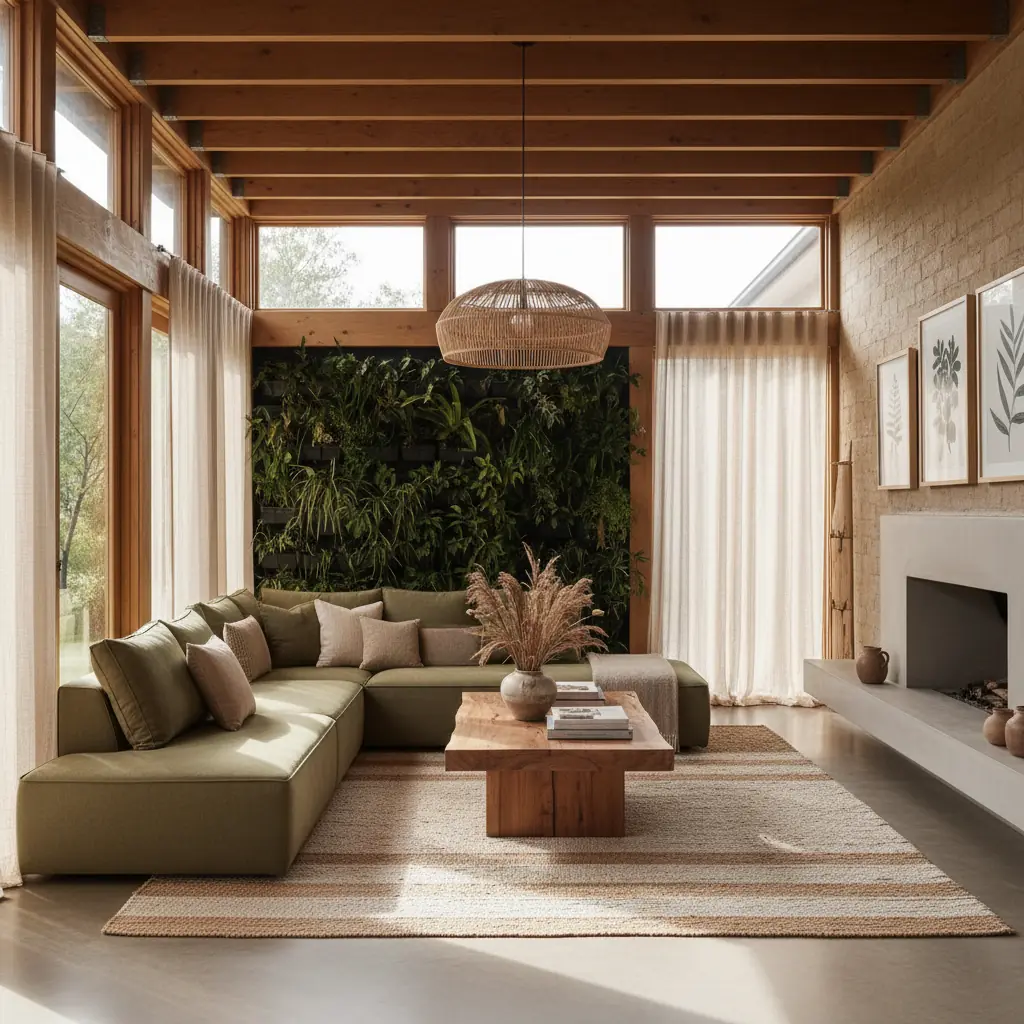
What sustainable design actually means, and why it matters
Sustainable interior design is not merely an aesthetic; it's a profound commitment to making conscious decisions about every element within a space. This includes understanding where materials originate, how they're produced, their expected lifespan, and their ultimate fate at the end of their utility. Whether a room exudes a minimalist modern vibe or a cozy rustic charm, its style is secondary to its environmental footprint. The true measure of sustainability lies in the integrity of its supply chain, the energy efficiency of its design, and its contribution to a healthier planet and healthier occupants.
The biggest misconception is that sustainability is solely about purchasing products labeled "eco" or "green." While such products can play a role, the most impactful sustainable choice often involves utilizing what already exists. Prioritizing repair, refurbishment, or sourcing secondhand items is almost always superior to buying new. Consider a vintage oak dresser: it has already "spent" its carbon budget, requiring no new resources for its creation. In contrast, even a new "sustainable" dresser crafted from FSC-certified wood still necessitated energy for harvesting, manufacturing, and shipping, contributing to its embodied carbon footprint. This lifecycle thinking is crucial; it means evaluating the entire journey of a product, from raw material extraction to disposal, rather than just its initial appearance or marketing claims. It's an approach that drastically reduces waste, a critical issue given that building and demolition activities account for a significant portion of landfill waste—**globally, construction and demolition waste accounts for over 35% of all waste generated**, much of which could be diverted through thoughtful design and material choices.
Material choices that genuinely reduce environmental impact
Navigating the world of "green" materials can be complex, as not all are created equal. Here’s a breakdown of choices that offer genuine environmental benefits:
### Sustainable Wood and Wood Alternatives
- **FSC-certified Hardwood**: This is a strong baseline. The Forest Stewardship Council (FSC) certification ensures that wood products come from responsibly managed forests, adhering to strict environmental, social, and economic standards. This includes replanting initiatives, protection of biodiversity, and respect for indigenous communities. While better than uncertified tropical timber, it still involves harvesting new materials. - **Reclaimed Wood**: The gold standard for timber. Sourced from old barns, factories, or demolished buildings, reclaimed wood bypasses the need for new harvesting altogether. It repurposes existing resources, saving old-growth forests and reducing landfill waste. While supply can be limited and prices may run 30-50% higher than new lumber due to processing, its unique character and minimal environmental impact often justify the investment. - **Engineered Wood (Low-VOC)**: For certain applications, engineered wood products like plywood or MDF made with low or zero-VOC (Volatile Organic Compound) adhesives can be a more resource-efficient choice than solid wood, especially when sourced responsibly. Look for certifications like NAUF (No Added Urea Formaldehyde) or ULEF (Ultra-Low Emitting Formaldehyde).
### Eco-Conscious Flooring Options
- **Cork**: Harvested from the bark of cork oak trees without harming the tree itself, cork is a rapidly renewable resource. It's also naturally insulating, soft underfoot, and resistant to mold and mildew. Its lifecycle emissions are significantly lower than many conventional flooring options. - **Linoleum (True Linoleum)**: Distinct from vinyl, genuine linoleum is made from oxidized linseed oil, pine resin, wood flour, cork dust, and natural pigments, typically backed with jute. It's biodegradable, renewable, and incredibly durable, often lasting 30-40 years. It consistently outperforms bamboo on lifecycle emissions and offers excellent resistance to wear and tear. - **Natural Stone and Concrete (Mindfully Used)**: While both concrete and natural stone are carbon-intensive to produce initially, their exceptional longevity and minimal maintenance requirements can justify their upfront carbon cost – _provided they are planned for decades of use_. For concrete, consider options with recycled aggregate content or specify locally sourced materials to reduce transportation emissions. When integrating [concrete in interior design](/blog/concrete-in-interior-design), its thermal mass benefits can also reduce energy consumption over time.
### Recycled Metals and Natural Textiles
- **Recycled Metals**: Using recycled steel, aluminum, brass, or copper in lighting fixtures, hardware, and furniture components carries a substantially lower environmental footprint than virgin metals. For instance, **recycled aluminum production requires 95% less energy and produces 95% fewer greenhouse gas emissions** compared to primary aluminum production. Prioritizing these materials significantly reduces mining impacts and energy consumption. - **Organic Textiles**: Fabrics like GOTS-certified (Global Organic Textile Standard) cotton, linen, hemp, and Tencel/Lyocell offer substantial environmental advantages. GOTS certification ensures organic status from harvesting of the raw materials through environmentally and socially responsible manufacturing. Conventional cotton is notoriously water-intensive and pesticide-heavy; choosing organic options significantly reduces water waste and chemical runoff. Linen and hemp require far less water and pesticides to grow than cotton, making them excellent choices. - **Innovative Bio-based Materials**: The future of sustainable materials is rapidly evolving. Consider emerging options like mushroom-based mycelium composites for decorative elements or insulation, bio-resins derived from agricultural waste, or even "vegan leather" made from pineapple leaves or cactus. These materials push the boundaries of waste reduction and renewable resource utilization.
### Paints and Finishes for Healthier Interiors
- **Low-VOC and Zero-VOC Paints**: Conventional paints release Volatile Organic Compounds (VOCs) into the air for months, contributing to poor indoor air quality, headaches, and respiratory issues. Brands like Benjamin Moore Natura, Sherwin-Williams Harmony, and AFM Safecoat offer low-VOC and zero-VOC options that eliminate these toxic off-gassing issues, creating a much healthier living environment. The good news is that these paints are often comparable in price to conventional options, making it an easy and impactful switch. When considering a fresh coat of paint, exploring an [AI color palette generator](/blog/ai-color-palette-generator) can help you visualize the perfect, healthy hue for your space.
The secondhand-first approach: A treasure hunt for the planet
Before committing to any new purchase, make the secondhand market your first stop. Embracing pre-owned items is arguably the single most impactful choice you can make in sustainable design. Every piece of furniture or decor you acquire secondhand means one less item produced from virgin materials and one less item heading to a landfill. It's a powerful statement against fast furniture culture.
Platforms like Facebook Marketplace, Chairish, AptDeco, 1stdibs, and local estate sales are veritable gold mines for high-quality furniture and unique decor at 40-70% off retail prices. Beyond the environmental benefit, secondhand items often boast superior craftsmanship and materials compared to modern mass-produced goods. A solid wood dresser from the 1960s will likely outlast several particleboard equivalents. Furthermore, buying secondhand gives your space character and history that new items simply cannot replicate.
The key to successful secondhand sourcing lies in patience and precision. Know your exact measurements, understand your desired style, and be willing to wait for the right piece to appear. Set alerts on marketplace apps for specific items, and don't be afraid to travel a bit for a truly exceptional find. For clients utilizing Habitas, we advocate generating your ideal room design first using our AI tools. This provides specific dimensions, styles, and functional requirements, making the subsequent secondhand search much more targeted and efficient. Our [AI furniture arrangement tool](/blog/ai-furniture-arrangement-tool) can even help you visualize how a potential secondhand find might fit into your existing layout.
Consider the staggering scale of waste: **an estimated 12 million tons of furniture and furnishings end up in U.S. landfills annually**, with much of it still usable. By opting for secondhand, you're directly combating this environmental challenge, giving beautiful, well-made pieces a second life and reducing the demand for new production.
Energy-efficient design strategies beyond appliances
Sustainable design extends far beyond material choices; it deeply intertwines with how a room passively uses and conserves energy. Thoughtful design can drastically reduce reliance on heating, ventilation, and air conditioning (HVAC) systems.
- **Optimizing Windows for Passive Heating and Cooling**: In the Northern Hemisphere, strategically placed south-facing windows can provide significant "free" heating in winter months by allowing sunlight to penetrate and warm interior spaces. In summer, these same windows can be managed with external overhangs, awnings, or deciduous trees that provide shade when leaves are full, yet allow sun through in winter. For all windows, consider double or triple-pane glazing to minimize heat transfer. - **Leveraging Thermal Mass**: Materials like concrete floors, stone walls, brick fireplaces, or even a substantial plaster wall have "thermal mass" – the ability to absorb and store heat energy. During the day, these surfaces absorb heat, slowly releasing it back into the room as temperatures drop in the evening, naturally moderating indoor temperatures and reducing the need for active heating or cooling. Explore designs that expose or integrate these materials. - **Superior Insulation: The Unsung Hero**: Often overlooked because it's hidden, proper insulation is arguably the most impactful energy-saving upgrade. Adding insulation to walls, attic spaces, and crawl spaces can cut heating and cooling costs by a significant **20-40%**, delivering a strong return on investment within a few years. Explore eco-friendly insulation options like recycled denim, cellulose (from recycled paper), or mineral wool. - **Maximizing Natural Light (Daylighting)**: Light-colored walls and ceilings have high reflectance values, bouncing natural daylight deeper into rooms and reducing the need for artificial lighting during daytime hours. Strategically placed mirrors can further amplify this effect. Also, consider light tubes or solar tunnels for interior spaces without direct window access. This reduces energy consumption and also enhances well-being through access to natural light, a core principle of [biophilic design](/blog/biophilic-design-guide). - **Efficient Artificial Lighting**: When artificial lighting is necessary, opt for LED (Light Emitting Diode) bulbs. They consume up to 80% less energy than traditional incandescent bulbs and last 25 times longer. Incorporate smart lighting controls, dimmers, and occupancy sensors to ensure lights are only on when and where needed.
Greenwashing red flags and certifications that genuinely matter
In the quest for sustainable design, separating genuine claims from misleading "greenwashing" is paramount. Greenwashing refers to the practice of making unsubstantiated or misleading claims about the environmental benefits of a product, service, or company.
**Common Greenwashing Red Flags:**
- **Vague Claims**: Watch out for terms like "eco-friendly," "natural," "green," "sustainable," or "earth-friendly" without specific details or third-party verification. These terms are often unregulated and can be meaningless. A "natural" fiber rug could still be dyed with toxic chemicals and shipped halfway across the world, negating any perceived "natural" benefit. - **Hidden Trade-offs**: A product might boast one impressive eco-feature while ignoring more significant environmental impacts. For example, a product made from "recycled content" but manufactured using highly polluting processes or shipped from a distant country. - **No Proof/Lack of Certifications**: If a brand cannot point to specific, third-party certifications or provide clear data to back up its claims, its sustainability deserves scrutiny. - **Irrelevant Claims**: Highlighting an environmentally benign attribute that is already common. For example, claiming a product is "CFC-free" when CFCs (chlorofluorocarbons) are already banned by law. - **Lesser of Two Evils**: Presenting a slightly more sustainable version of an inherently unsustainable product (e.g., "eco-friendly cigarettes").
**Certifications Worth Trusting:**
These third-party certifications provide independent verification that products meet specific environmental and social standards.
- **FSC (Forest Stewardship Council)**: For wood and paper products, ensuring responsible forest management. - **GOTS (Global Organic Textile Standard)**: The leading standard for textiles made from organic fibers, covering ecological and social criteria throughout the entire supply chain. - **GREENGUARD Gold**: Certifies that products (furniture, finishes, building materials) have low chemical emissions, contributing to healthier indoor air quality. - **Cradle to Cradle Certified®**: This rigorous certification assesses products across five categories: material health, material reutilization, renewable energy and carbon management, water stewardship, and social fairness. It promotes circular design principles. - **OEKO-TEX Standard 100**: Assures textiles are tested for harmful substances, guaranteeing that they are safe from a human-ecological perspective. - **Declare Label (Living Building Challenge)**: A transparent ingredients label for building products, allowing consumers to see what's in a product, where it came from, and where it goes at the end of its life, akin to a nutrition label. - **Environmental Product Declarations (EPDs)**: Provide verified, transparent, and comparable information about the life-cycle environmental performance of products.
Cost comparison: Sustainable vs. conventional design (and where Habitas fits in)
The perception that sustainable materials are always prohibitively expensive is often a narrow view, focusing only on upfront costs. While it's true that some sustainable materials might carry a 10-25% higher initial price tag – FSC hardwood flooring might run $6-12 per square foot versus $4-8 for conventional, or organic linen curtains costing $80-200 per panel versus $40-100 for polyester blends – this rarely tells the whole story. Low-VOC paint, notably, is often on par with or even cheaper than conventional paint, making it an immediate no-brainer.
The long-term financial and environmental math frequently favors sustainable choices.
- **Durability and Longevity**: Quality secondhand furniture, solid wood pieces, natural stone countertops, and durable metals are built to last 20-50 years or more, vastly outperforming particleboard or fast-furniture equivalents that often degrade in 3-7 years. When you calculate the "cost-per-year-of-use," the "expensive" sustainable option almost always emerges as the more economical choice over its lifespan. - **Resale Value**: Well-made, timeless pieces from quality materials often hold their value or even appreciate, especially if they are unique or from renowned designers. Fast furniture, by contrast, has virtually no resale value. - **Health and Well-being**: Investing in low-VOC materials, organic textiles, and natural finishes reduces exposure to harmful chemicals, leading to better indoor air quality and fewer health issues. The health benefits, while harder to quantify in dollars, are invaluable. - **Energy Savings**: Passive design strategies and energy-efficient materials translate directly into lower utility bills for years to come. Adding insulation, choosing efficient windows, and optimizing for natural light are investments that pay dividends in reduced heating and cooling costs. - **Consumer Demand**: There's a growing market appreciation for sustainable homes. **Surveys indicate that over 70% of consumers are willing to pay more for sustainable products**, reflecting a societal shift towards valuing environmental responsibility. This can translate into higher property value and quicker sales for sustainably designed homes.
The shift isn't about spending more; it's about spending differently and investing in quality, longevity, and environmental responsibility. Tools like Habitas can significantly simplify this process. By helping you visualize designs with specific materials and furniture – even incorporating secondhand finds – Habitas empowers you to make informed, sustainable choices that align with your aesthetic and your values, streamlining your journey toward a greener home. For a clearer picture of how AI can enhance your design process sustainably, you might be interested in [AI interior design vs hiring cost](/blog/ai-interior-design-vs-hiring-cost).
Biophilic Design: Connecting with Nature Indoors
An integral aspect of sustainable interior design, biophilic design focuses on connecting occupants with the natural environment. This approach goes beyond just adding a few houseplants; it integrates natural elements, patterns, and processes into the built environment to improve health and well-being.
- **Natural Light and Views**: Maximize natural light and provide views of nature outside. This reduces the need for artificial lighting and positively impacts mood and productivity. - **Natural Materials**: Incorporate wood, stone, cork, and other organic textures. These materials not only have lower embodied energy when sourced sustainably but also create a sense of warmth and authenticity. - **Living Greenery**: Integrate [best plants for interior design](/blog/best-plants-for-interior-design) not just as decor, but as functional elements that purify air and enhance the biophilic connection. Living walls and large potted plants can transform a space. - **Water Features**: The sight and sound of water can be calming and help regulate humidity. - **Natural Patterns and Forms**: Use patterns found in nature, such as fractal patterns, varied textures, and organic shapes, to create a more soothing and stimulating environment.
By intentionally weaving these elements into a design, biophilic principles enhance both the aesthetic and ecological value of a space, fostering human health and resilience alongside environmental sustainability.
Frequently Asked Questions
### What is the difference between sustainable and eco-friendly design?
While often used interchangeably, "sustainable" and "eco-friendly" have nuanced differences. "Eco-friendly" generally refers to products or practices that are not harmful to the environment. It's a broad term focusing on reducing negative impacts. "Sustainable" design, on the other hand, is a more comprehensive concept. It not only aims to reduce harm but also strives to meet the needs of the present without compromising the ability of future generations to meet their own needs. This encompasses a wider range of considerations including social equity, economic viability, and the entire lifecycle of a product or building, aiming for regenerative rather than just less harmful outcomes.
### How can I make my rental apartment more sustainable without major renovations?
Even in a rental, significant sustainable changes are possible. Focus on what you can easily change or take with you. Prioritize secondhand furniture and decor. Choose organic or recycled textiles for bedding, curtains, and rugs. Use low-VOC or zero-VOC paints (check with your landlord first). Swap out old light bulbs for energy-efficient LEDs. Incorporate smart power strips to reduce phantom load from electronics. Add plenty of plants to improve air quality and connect with nature. Optimize natural light and use thermal curtains to help with insulation. Every small choice contributes to a greener living space.
### Are sustainable materials always more expensive than conventional ones?
Not always, and often not in the long run. While some sustainable materials may have a higher upfront cost, this is frequently offset by their durability, longevity, and reduced need for replacement. For instance, quality secondhand furniture is often significantly cheaper than new, less durable alternatives. Low-VOC paints are often comparable in price to conventional options. Furthermore, choosing energy-efficient design elements like insulation and LED lighting leads to substantial savings on utility bills over time. When considering the total cost of ownership, including health benefits and environmental impact, sustainable choices often prove to be more economical.
### What are some common greenwashing tactics to watch out for?
Common greenwashing tactics include using vague, unregulated terms like "eco-friendly," "natural," or "green" without specific certifications or data to back them up. Another tactic is the "hidden trade-off," where a brand highlights one small eco-benefit while ignoring a larger environmental impact (e.g., a "natural" product shipped across the globe). Marketers might also make irrelevant claims, boasting about being "CFC-free" for products where CFCs have long been banned. Always look for transparent, third-party certifications (like FSC, GOTS, GREENGUARD Gold) and demand clear, verifiable information about a product's lifecycle and environmental impact.
### How does Habitas help simplify sustainable design choices for homeowners?
Habitas streamlines the sustainable design process by leveraging AI to help you visualize and plan your space effectively. Our platform allows you to generate realistic room designs based on your actual room photos, making it easier to experiment with layouts and styles that prioritize longevity and efficiency. For example, you can visualize how different materials, including reclaimed wood or low-VOC finishes, would look in your space before committing. We empower you to source furniture by providing specific dimensions and style guides, making the secondhand search more efficient. By simplifying the visualization and planning stages, Habitas helps you make informed decisions that align with sustainable principles, ultimately making it easier to create a greener, healthier home without sacrificing style or budget.