Dominando lo Vintage y lo Moderno: Tu Guía para Mezclar Eras de Diseño
Desbloquea un estilo único mezclando muebles vintage y modernos. Descubre la regla 80/20, las mejores combinaciones de épocas, consejos inteligentes para encontrar piezas y cómo Habitas IA te ayuda a visualizar tu mezcla perfecta.
Por qué los Interiores Curados Cuentan una Mejor Historia
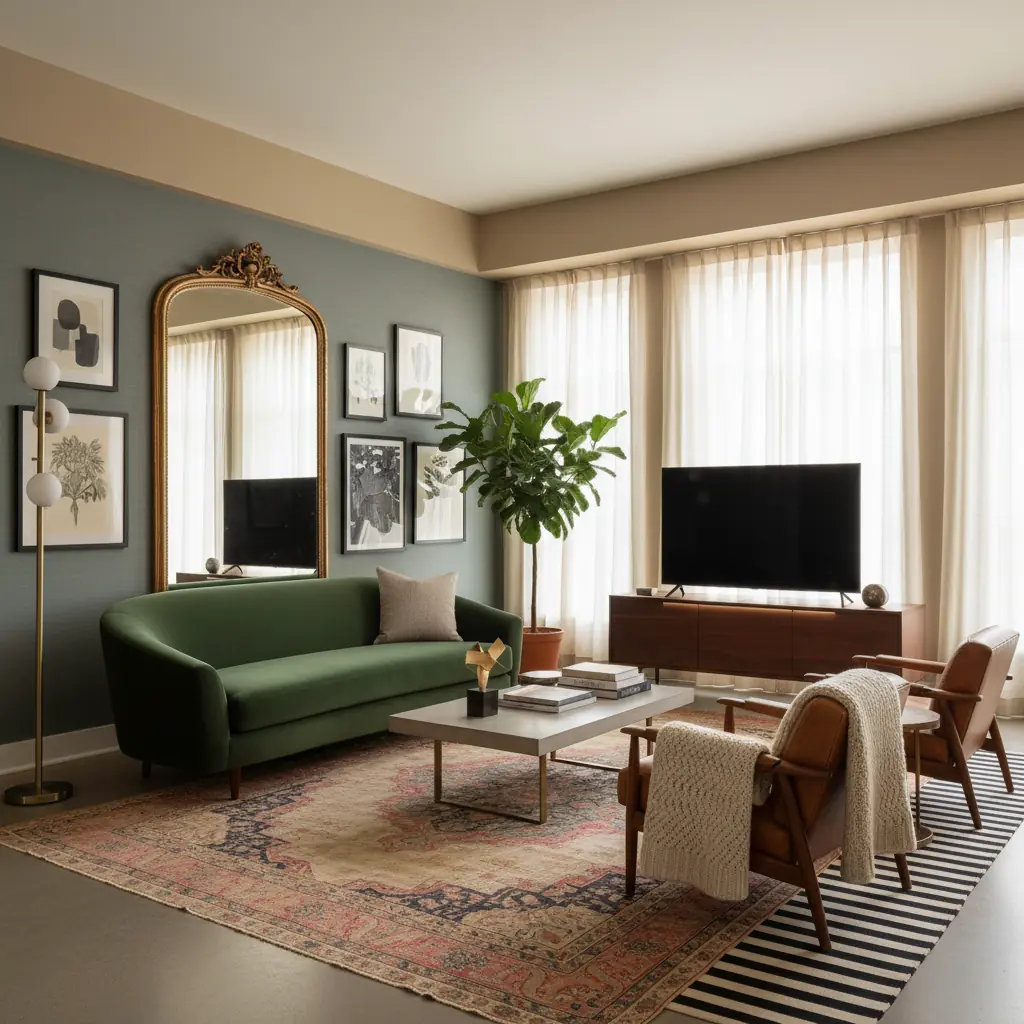
Entra en una habitación donde cada pieza fue comprada del mismo catálogo y notarás algo: se ve bien, pero es olvidable. Como una habitación de hotel — agradable, funcional, con cero personalidad. Ahora, entra en una habitación con un aparador de teca de los años 60 junto a un sofá de lino moderno con una alfombra persa vintage debajo. Esa habitación cuenta una historia. Tiene capas. Susurra sobre viajes, hallazgos atesorados y una vida vivida con intención.
El cambio de los juegos de muebles a juego hacia interiores curados y de épocas mezcladas es uno de los cambios más significativos en la forma en que las personas decoran. Refleja un valor cultural más amplio: autenticidad sobre perfección, sostenibilidad sobre desechabilidad. Una habitación llena de carácter vale más —emocional, estética e incluso financieramente— que una habitación llena de piezas coordinadas de una sola marca. Estudios demuestran que los espacios diseñados con esmero, especialmente aquellos con elementos únicos, pueden aumentar el valor percibido. Por ejemplo, las casas con puesta en escena profesional, que a menudo incorporan toques curados, se venden en promedio un **25% más rápido** y por un **6% más** que las casas sin puesta en escena. Esto habla del poder de una habitación que se siente vivida y única, en lugar de simplemente decorada.
Mezclar piezas vintage y modernas no es solo una tendencia; es una filosofía de diseño duradera que celebra la individualidad, la artesanía y la belleza del contraste. Permite que tu hogar evolucione contigo, incorporando piezas recolectadas a lo largo del tiempo en lugar de confinarse a un solo momento o estilo.
Dominando la Regla 80/20 para Mezclar Eras de Diseño
El marco más confiable para un espacio armonioso y de épocas mezcladas es la regla 80/20. Este principio sugiere que permitas que una época domine aproximadamente el 80% de los elementos de la habitación, utilizando otra época para el 20% restante como un contraste estratégico. Este enfoque evita que el espacio se sienta caótico o como una colección al azar de un mercado de pulgas, logrando en cambio un aspecto equilibrado e intencional.
### Cuando lo Moderno Domina (80% Moderno, 20% Vintage)
Si tu base es predominantemente moderna – piensa en sofás de líneas limpias, luminarias minimalistas, una paleta de colores neutros y arte contemporáneo – introduce 1 o 2 piezas vintage que destaquen. Estas podrían ser:
- **Un Sillón Mid-century Modern:** Una clásica silla lounge Eames o un sillón de teca danés puede añadir calidez, un toque de diseño histórico y un elemento escultural y cómodo a una sala de estar elegante y contemporánea. - **Una Mesa Auxiliar Antigua:** Una delicada mesa auxiliar de estilo Provincial Francés o una consola Art Déco ornamentada puede proporcionar detalles intrincados y un toque de encanto del viejo mundo contra un telón de fondo de muebles minimalistas. - **Una Pintura al Óleo o Tapiz Vintage:** Una impresionante obra de arte vintage enmarcada puede convertirse instantáneamente en un punto focal, inyectando color, textura y un sentido de historia en un ambiente sobrio. - **Un Carrito de Bar Retro:** Un brillante carrito de bar de latón y cristal de los años 60 puede añadir un toque divertido y sofisticado a un comedor o sala de estar moderno.
Las piezas vintage actúan como anclas, evitando que el espacio moderno se sienta frío o estéril.
### Cuando lo Vintage Domina (80% Vintage, 20% Moderno)
Por el contrario, si tu base es más vintage o tradicional – quizás con detalles arquitectónicos originales, un juego de comedor antiguo sustancial, espejos ornamentados o paneles de madera tradicionales – unas pocas piezas modernas bien elegidas pueden evitar que la habitación se sienta como un museo. Considera integrar:
- **Una Luminaria Contemporánea:** Una lámpara colgante elegante y escultural o un candelabro abstracto puede modernizar instantáneamente un comedor formal o recibidor, atrayendo la mirada hacia arriba. - **Una Consola Minimalista:** Una consola de hormigón crudo o metal pulido puede proporcionar un contraste marcado y anclador a un espejo antiguo ricamente detallado o a una pared de galería con retratos vintage. - **Textiles Modernos:** Introduce almohadas decorativas contemporáneas, un sofá de lino de color liso o cortinas con estampados abstractos para refrescar piezas vintage tapizadas o suavizar una habitación llena de muebles de madera pesada. - **Arte Abstracto:** Un gran lienzo abstracto sin enmarcar puede romper la simetría tradicional de un espacio vintage, añadiendo un punto focal que se siente fresco e inesperado.
El contraste es lo que hace que ambos elementos brillen. Sin el contrapunto moderno, la pieza vintage podría simplemente parecer vieja. Sin el ancla vintage, la pieza moderna podría parecer genérica.
La división 80/20 es un punto de partida muy efectivo, no una ley inquebrantable. A medida que desarrolles confianza y un ojo más agudo para el equilibrio, podrías inclinarte hacia una mezcla ecléctica de 60/40 o incluso una verdadera 50/50, donde ambas épocas tienen un peso significativo. Para experimentos iniciales, sin embargo, el 80/20 mantiene tu diseño fundamentado y asegura una estética cohesiva.
¿Cuáles Son las Mejores Combinaciones Vintage-Modernas para mi Hogar?
Seleccionar las épocas adecuadas para mezclar es crucial para un interior vintage-moderno exitoso. Ciertos períodos se complementan naturalmente debido a principios compartidos, estéticas contrastantes o un compromiso similar con la artesanía.
### 1. Mid-century Modern (1940s-1960s) con Minimalismo Contemporáneo
Esta es, sin duda, la combinación más fácil y popular de lograr. Las líneas limpias, las formas orgánicas y el enfoque funcional de los muebles mid-century —piensa en sillas Eames, bancos Nelson, aparadores de nogal y mesas de inspiración Scandinavian— encajan naturalmente junto a piezas minimalistas modernas. Ambos estilos priorizan la simplicidad y la premisa de que la forma sigue a la función.
- **Por qué funciona:** Las piezas vintage añaden calidez, tonos ricos de madera y el innegable encanto del diseño icónico que a menudo carecen los muebles minimalistas nuevos. Introducen textura y un sutil toque retro sin abrumar la sensación contemporánea. - **Elementos clave:** Combina un sofá contemporáneo elegante y de perfil bajo con una clásica mesa de centro mid-century. Mezcla la iluminación de riel moderna con un candelabro Sputnik vintage. Utiliza una alfombra contemporánea neutra para anclar una colección de sillas mid-century. - **Consejo Habitas:** Si no estás seguro de cómo se vería una pieza vintage como una [consola mid-century modern](/blog/best-interior-design-styles-2026) específica en tu sala de estar contemporánea, Habitas puede generar renders realistas para ayudarte a visualizarla.
### 2. Antiguo/Tradicional (siglos XVIII-XIX) con Industrial
Esta combinación crea una tensión cautivadora a través de contrastes marcados. Los detalles ornamentados, las maderas ricas y la gravitas histórica de los muebles antiguos se encuentran con los materiales crudos y expuestos y la estética utilitaria del diseño industrial.
- **Por qué funciona:** Los bordes ásperos de las piezas industriales (ladrillo visto, acero, hormigón) proporcionan un contrapunto arraigado y masculino a la elegancia refinada de las antigüedades. Las piezas antiguas, a su vez, suavizan la posible dureza de los elementos industriales, añadiendo calidez y sofisticación. - **Elementos clave:** Imagina una mesa de comedor rústica tipo casa de campo con patas de horquilla de hierro, rodeada de sillas de comedor antiguas tapizadas. O un gran espejo victoriano sobre una mesa consola de hormigón crudo. Los apliques de latón vintage pueden iluminar estanterías de acero visto, mezclando el encanto del viejo mundo con la elegancia industrial. - **Enfoque material:** Piensa en maderas oscuras y ricas (nogal, caoba) para las antigüedades, combinadas con metales crudos (acero, hierro), madera recuperada y hormigón para los toques industriales.
### 3. Art Déco (1920s-1930s) con Glam Moderno
Para espacios que demandan sofisticación y un toque de dramatismo, el Art Déco combinado con el glam moderno es una elección exquisita. El Art Déco se caracteriza por patrones geométricos, simetría audaz, materiales opulentos (cromo, vidrio, espejos, laca) y una sensación de lujo.
- **Por qué funciona:** Ambos estilos se deleitan en la elegancia y una cierta teatralidad. El glam moderno se basa en la fundación del Art Déco de materiales lujosos y acabados pulidos, pero simplifica las formas para un atractivo más contemporáneo. - **Elementos clave:** Esta combinación funciona maravillosamente en comedores, recibidores y dormitorios principales. Considera un candelabro de latón geométrico, sillas vintage tapizadas en terciopelo y superficies espejadas mezcladas con una arquitectura contemporánea limpia. La clave es la moderación: una pieza Art Déco destacada por habitación, como un llamativo mueble bar o un [espejo de pared geométrico](/blog/art-deco-interior-design), en lugar de una recreación completa de Gatsby. - **Paleta de colores:** Negro, blanco, dorado y tonos joya profundos (verde esmeralda, azul zafiro) son perfectos para esta mezcla dramática.
### 4. Rústico/Estilo Granja (Diversas Épocas) con Escandinavo Contemporáneo
Esta combinación une el confort y la calidez de la estética rústica o de estilo granja con el diseño limpio, luminoso y funcional del estilo Scandinavian.
- **Por qué funciona:** Ambos estilos valoran los materiales naturales y el confort. El rústico/estilo granja proporciona textura, robustez y un sentido de herencia, mientras que el diseño Scandinavian introduce luz, espacio abierto y formas simples y elegantes. - **Elementos clave:** Una mesa de comedor de madera recuperada (rústica) combinada con sillas minimalistas de roble blanco (Scandinavian). Un sofá de lino acogedor y de gran tamaño (contemporáneo) adornado con mantas de punto grueso y almohadas bordadas vintage. Las paredes encaladas y la abundante luz natural del lado Scandinavian proporcionan un telón de fondo sereno para un arcón de madera vintage o una colección de cerámica antigua.
### 5. Tradicional (siglos XVIII-XX) con Contemporáneo Minimalista
Esta es una mezcla más audaz que puede producir resultados asombrosos cuando se hace con cuidado. Implica combinar muebles tradicionales clásicos, a menudo ornamentados, con la marcada simplicidad y las líneas limpias del diseño minimalista.
- **Por qué funciona:** El contraste es marcado pero convincente. Las piezas tradicionales proporcionan peso histórico, artesanía y detalles intrincados, mientras que los elementos minimalistas eliminan el exceso, creando espacio visual para respirar y destacando la belleza de las formas tradicionales. - **Elementos clave:** Una gran repisa de chimenea tradicionalmente tallada podría estar flanqueada por dos sillones ultramodernos y de perfil bajo. Una alfombra persa antigua puede anclar una habitación con una mesa de centro de cristal minimalista y un sofá modular blanco contemporáneo. La clave es permitir que las piezas tradicionales sean celebradas como formas de arte, en lugar de sentirse abarrotadas.
Dónde Encontrar Piezas Vintage de Calidad
Adquirir muebles vintage únicos es parte de la aventura de crear un hogar con curaduría. Si bien requiere paciencia y un ojo perspicaz, la recompensa en términos de carácter y sostenibilidad es inmensa. El mercado de muebles vintage está en auge; se estima que el mercado global de muebles de segunda mano está creciendo a una tasa de crecimiento anual compuesta de **~8.5%**, alcanzando casi 20 mil millones de dólares para 2027. Esto indica no solo una fuerte demanda, sino también una creciente oferta de piezas de calidad.
### Ventas de Garaje y Liquidación de Fincas: El Secreto Mejor Guardado
Las ventas de garaje (o liquidación de fincas) son a menudo el estándar de oro para encontrar piezas vintage auténticas y de alta calidad a precios negociables. Por lo general, estás comprando directamente de un hogar, lo que significa que las piezas a menudo tienen una historia y un relato.
- **Cómo encontrarlas:** Sitios web como EstateSales.net y EstateSale.com listan ventas próximas por código postal. Muchas casas de subastas locales también realizan ventas de liquidación. - **Consejos para el éxito:** - **Llega temprano el primer día:** Para la mejor selección y las piezas más deseables. - **Visita el último día:** A menudo, los precios se rebajan en un 50% o más, lo que lo hace ideal para hallazgos económicos, especialmente artículos grandes. - **Inspecciona a fondo:** Busca integridad estructural, signos de daños por agua, reparaciones importantes o problemas de plagas. Revisa cajones, uniones y tapicería. - **Negocia:** No tengas miedo de hacer una oferta, especialmente en artículos grandes o compras múltiples. - **Lleva ayuda:** Para cargar artículos grandes, y mide tu vehículo de antemano.
### Mercados en Línea: La Comodidad se Une a la Curaduría
El panorama digital para los hallazgos vintage ha madurado significativamente, ofreciendo una gran variedad de opciones.
- **1stDibs:** Este es el extremo premium, con piezas antiguas y vintage de alta gama autenticadas de los mejores distribuidores de todo el mundo. Espera una curaduría exquisita y precios a juego. Ideal para piezas de inversión. - **Chairish:** Se sitúa en el término medio, ofreciendo una amplia gama de vendedores verificados, precios razonables y buenas políticas de devolución. Puedes encontrar de todo, desde aparadores mid-century hasta espejos antiguos. Sus filtros de búsqueda son robustos. - **Pamono & VNTG:** Excelentes fuentes de muebles vintage y antiguos europeos, a menudo especializados en períodos específicos como Scandinavian o Art Déco. El envío puede ser un factor, pero la selección es única. - **Etsy Vintage:** Un tesoro para artículos decorativos más pequeños, iluminación y piezas de mobiliario de menor tamaño. Los artículos deben tener más de 20 años para calificar como vintage en Etsy. Sé específico con tus términos de búsqueda. - **Facebook Marketplace y Craigslist:** El "Salvaje Oeste" de la búsqueda en línea. Puedes encontrar ofertas increíbles, pero requiere una búsqueda diligente, fuertes habilidades de negociación y un compromiso con la inspección en persona. Siempre reúnete en un lugar seguro y público para artículos pequeños, o lleva un amigo cuando visites hogares. - **Sitios Especializados por Época:** Muchos distribuidores en línea se especializan en épocas particulares, como muebles de la era atómica de los años 50 o decoración victoriana. Una búsqueda rápida de "muebles vintage [época]" puede revelar sitios especializados.
### Tiendas de Antigüedades Locales y Tiendas de Consignación: Construyendo Relaciones
No pases por alto las tiendas físicas. Estos establecimientos suelen tener un inventario único que cambia con frecuencia.
- **Beneficios:** Puedes inspeccionar físicamente las piezas, lo que te evita sorpresas. Muchas tiendas también ofrecen servicios de restauración. - **Construyendo relaciones:** Visita regularmente y preséntate al propietario. Describe lo que estás buscando, y a menudo te llamarán directamente cuando llegue algo que coincida. Esta conexión interna puede ser invaluable. - **Precios:** Espera un margen de beneficio (típicamente 30-60%) sobre las ventas de liquidación, ya que estás pagando por su curaduría, gastos generales y, a veces, una ligera restauración.
### Qué Inspeccionar al Comprar Vintage
Independientemente de dónde adquieras tus piezas vintage, siempre realiza una inspección exhaustiva:
- **Estructura:** Verifica si hay bamboleos, juntas sueltas, grietas o daños significativos. Para las sillas, siéntate en ellas. Para las mesas, apóyate en ellas. - **Madera:** Busca arañazos profundos, marcas de agua, daños en el enchapado y señales de carcoma. Autentica el tipo de madera si es posible (ej., nogal vs. enchapado). - **Tapicería:** Inspecciona rasgaduras, manchas, desgaste excesivo, olores y el estado de los resortes o cojines. Retapizar puede ser costoso, así que tenlo en cuenta en tu precio de compra. - **Herrajes:** Verifica si los herrajes originales están presentes y funcionan. Los tiradores faltantes o que no coinciden pueden restar valor. - **Puertas y Cajones:** Asegúrate de que abran y cierren suavemente, sin atascos ni espacios excesivos. - **Olor:** Un olor a humedad puede indicar moho o humedad prolongada. Los olores fuertes a humo también son difíciles de eliminar.
Consejos Prácticos de Estilismo y Uso de IA para Previsualizar tu Visión
Más allá de la regla 80/20 y la búsqueda de piezas, el éxito al mezclar épocas se reduce a un estilismo hábil.
### Ancla con una Pieza Vintage Protagonista
En la mayoría de las habitaciones, una pieza vintage protagonista bien elegida es intencional e impactante. Tres o más pueden empezar a parecer una tienda de segunda mano. Deja que esta pieza ancla sea el tema de conversación y mantén el resto de la habitación sereno y complementario.
- **En una sala de estar:** Podría ser un aparador mid-century que funciona como consola multimedia, un sillón antiguo ricamente tapizado o una mesa de centro escultural Art Déco. - **En un dormitorio:** Una mesa de noche antigua a un lado de la cama, un tocador retro o una cómoda vintage bellamente restaurada. - **En un comedor:** Una mesa de comedor vintage grande y sólida, o un juego de sillas de comedor vintage únicas que contrasten con una mesa moderna.
### Usa Elementos Unificadores: Color, Textura y Forma
Para evitar que la mezcla se sienta al azar, busca hilos compartidos que unan sutilmente las diferentes épocas.
- **Hilo Conductor de Color:** Si tu sofá moderno es color carbón, busca una pieza vintage con tonos carbón o similares — una mesa auxiliar de laca negra, una estantería de nogal oscuro o una obra de arte con una paleta profunda y complementaria. Un [esquema de color](/blog/ai-color-palette-generator) consistente puede crear armonía visual entre objetos diversos. - **Juego de Texturas:** Mezcla lo áspero con lo suave, lo blando con lo duro. Un arcón rústico de madera junto a una lámpara de cristal elegante, o un sillón vintage de terciopelo suave combinado con una mesa auxiliar de acero minimalista. La superposición de texturas variadas evita que cualquier elemento se sienta fuera de lugar. - **Formas Repetidas:** ¿Notas una forma geométrica recurrente (círculos, cuadrados, arcos) o una calidad de línea específica (curva, rectilínea) tanto en tus piezas vintage como modernas? Enfatízala. Por ejemplo, si tienes un sofá moderno redondeado, busca una pieza vintage con curvas suaves y orgánicas.
### Juega con la Escala y Proporción
Mezclar épocas a menudo significa mezclar piezas de diferentes escalas. Un gran armario antiguo podría empequeñecer una mesa auxiliar minimalista si no se equilibra correctamente. Asegúrate de que las piezas dominantes no abrumen la habitación y de que las piezas más pequeñas no se pierdan. Utiliza artículos vintage más grandes en habitaciones con techos altos o amplio espacio, y equilíbralos con piezas contemporáneas que tengan un peso visual más ligero.
### Superpone Textiles e Iluminación
Los textiles son una forma fácil de unir épocas. Una alfombra persa vintage puede anclar una sala de estar moderna, o una manta decorativa contemporánea puede actualizar un sofá antiguo. Utiliza textiles para introducir patrones, colores y texturas que unan piezas dispares.
La iluminación también juega un papel crucial. Una iluminación de riel moderna puede resaltar una obra de arte vintage, mientras que una lámpara de mesa clásica puede suavizar un escritorio contemporáneo austero. Mezcla iluminación empotrada con candelabros, lámparas de pie e iluminación de tarea para crear diferentes zonas y ambientes.
### Curar el Arte y Accesorios con Cuidado
El arte y los accesorios son los toques finales. Una pared de galería que mezcla estampados modernos con paisajes vintage puede ser increíblemente efectiva. De manera similar, combinar jarrones antiguos con esculturas modernas y elegantes, o una colección de libros vintage con decoración contemporánea, añade profundidad sin el compromiso de grandes piezas de mobiliario. Recuerda que la regla 80/20 también se aplica aquí: deja que un estilo guíe tus elecciones de accesorios, con unos pocos acentos sorprendentes de otra época.
### Visualiza con IA: Elimina las Incógnitas
Una de las partes más difíciles de mezclar épocas es la incertidumbre: ¿ese aparador vintage realmente se verá bien en mi habitación moderna? ¿Ese espejo antiguo chocará con mi decoración contemporánea? Aquí es donde las herramientas de visualización de IA como Habitas se vuelven realmente útiles, revolucionando la forma en que abordamos el diseño de interiores.
En lugar de adivinar o cometer errores costosos, puedes cargar una foto de tu habitación actual, describir la pieza vintage que estás considerando (o cargar una foto de ella), y Habitas generará renders realistas que muestran exactamente cómo se vería en tu espacio. Esta tecnología elimina las conjeturas y la ansiedad de "espero que esto funcione" al comprar vintage sin ver. Puedes experimentar con varias combinaciones, [probar diferentes distribuciones de muebles](/blog/ai-furniture-arrangement-tool), e incluso previsualizar [diseños de habitaciones generados por IA](/blog/ai-generated-room-designs-realistic) con tus acentos vintage elegidos antes de comprometerte con una compra. Con Habitas, ganas confianza en tus elecciones de diseño, asegurando que tu espacio de épocas mezcladas realmente cuente tu historia única. La capacidad de iterar en diseños en minutos en lugar de días o semanas ofrece una flexibilidad y eficiencia de costos incomparables, lo que potencialmente ahorra a los propietarios **cientos o miles de dólares** en consultas de diseño o tarifas de envío de devolución.
Preguntas Frecuentes
### ¿Cómo evito que mi habitación de épocas mezcladas se vea abarrotada o como un mercado de pulgas?
La clave es la intencionalidad y el equilibrio. Adhiérete a la regla 80/20, permitiendo que una época domine y otra proporcione contraste. Utiliza elementos unificadores como una paleta de colores consistente, acabados de materiales similares (ej., todas maderas cálidas, o todos metales pulidos), o formas repetidas para crear cohesión. Evita sobrecargar el espacio; prioriza unas pocas piezas vintage impactantes sobre muchas pequeñas. Despeja regularmente y asegúrate de que cada pieza cumpla un propósito o aporte valor estético.
### ¿Cuáles son los errores comunes al mezclar muebles vintage y modernos?
Un error común es la falta de equilibrio, ya sea con demasiadas épocas compitiendo o demasiadas piezas protagonistas que luchan por la atención. Otro es ignorar la escala y la proporción, lo que lleva a piezas que parecen demasiado grandes o demasiado pequeñas para la habitación. Las personas a veces también descuidan los elementos unificadores como el color o la textura, lo que hace que la habitación se sienta inconexa. Por último, no inspeccionar a fondo las piezas vintage puede llevar a comprar artículos dañados que se convierten en proyectos costosos.
### ¿Es más caro mezclar muebles vintage y modernos?
No necesariamente. Si bien las piezas vintage de alta gama pueden ser costosas, mezclarlas te permite equilibrar piezas de inversión con hallazgos económicos. A menudo, una pieza vintage de calidad comprada en una venta de garaje puede ser significativamente más barata que un artículo nuevo y producido en masa de calidad comparable. Además, las piezas vintage tienden a mantener su valor o incluso a apreciarse, ofreciendo un mejor retorno de la inversión a largo plazo en comparación con los muebles nuevos que se deprecian rápidamente.
### ¿Cómo puede la IA ayudarme a visualizar piezas vintage en mi hogar actual?
Las plataformas de diseño de interiores con IA como Habitas te permiten subir una foto de tu habitación existente. Luego puedes describir una pieza vintage que estás considerando o subir su imagen. La IA generará imágenes realistas de tu habitación con el artículo vintage integrado, mostrándote exactamente cómo se vería, encajaría y complementaría tu decoración actual. Esto elimina las conjeturas, te ayuda a experimentar con diferentes estilos y ubicaciones, y ahorra tiempo y posibles errores de compra costosos.