¿Qué es el Ecobrutalismo? La Fusión de Hormigón Crudo y Vegetación Exuberante en 2026
Descubre el auge del ecobrutalismo en 2026. Explora cómo la arquitectura de hormigón crudo se encuentra con el diseño biofílico para crear interiores modernos y sostenibles.
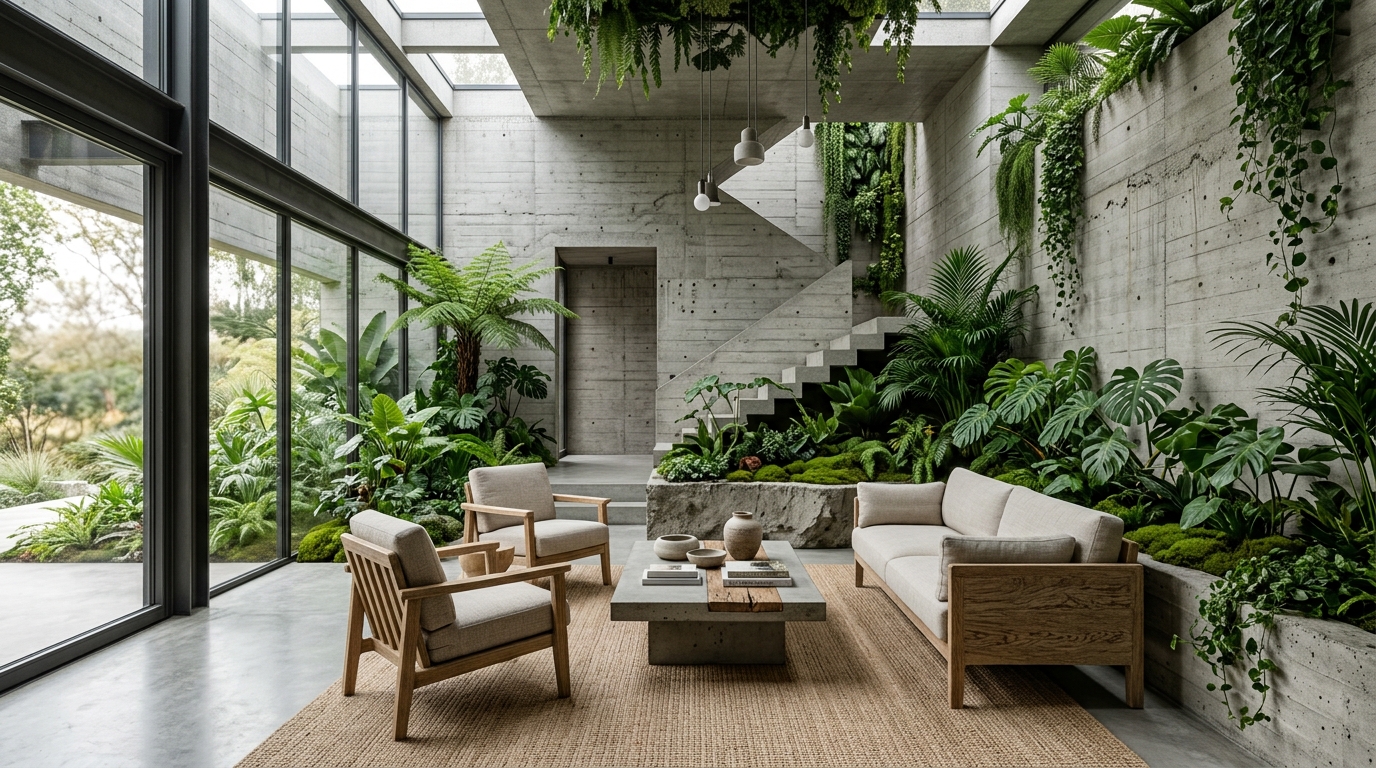
¿Qué es el Ecobrutalismo y Por Qué es Tendencia Ahora?
El ecobrutalismo es un estilo arquitectónico y de diseño de interiores que fusiona los principios estructurales del Brutalismo tradicional —caracterizado por formas monolíticas, materiales crudos y "beton brut" (hormigón crudo)— con los principios del diseño biofílico. Es la representación visual de la naturaleza reclamando el entorno construido.
Mientras que el Brutalismo tradicional de las décadas de 1950 y 1960 fue a menudo criticado por ser frío o "desgarrador para el alma", la evolución de 2026 es todo lo contrario. El componente "Eco" introduce una calidez vital. Según informes de mercado recientes, la demanda de espacios residenciales con integración biofílica ha crecido un 34% desde 2024, ya que los propietarios buscan entornos que alivien el estrés urbano.
La tendencia está de moda ahora porque habla de nuestro momento cultural actual. Anhelamos la permanencia y seguridad de la piedra (hormigón), pero nos damos cuenta de que nuestra supervivencia depende de una profunda conexión con la Tierra (vegetación). Es la máxima expresión de la arquitectura sostenible que no sacrifica un borde audaz y modernista.
Los Elementos Clave: Hormigón, Luz y Vida
Para dominar la estética ecobrutalista, hay que entender los tres pilares que la sustentan. No basta con simplemente colocar una planta en maceta en un garaje; requiere un diálogo arquitectónico deliberado entre los materiales.
1. **Texturas crudas y expuestas:** Esto incluye hormigón visto, piedra sin pulir y metales mates. El objetivo es mostrar la "honestidad" de los materiales de construcción. 2. **Vegetación colgante y en cascada:** Las plantas en el ecobrutalismo no son solo acentos; son elementos estructurales. Piense en la hiedra, Pothos o Ficus lyrata que se desbordan por los balcones o envuelven los pilares. 3. **Luz natural abundante:** Las ventanas grandes, a menudo de suelo a techo, son esenciales. En el ecobrutalismo, la luz actúa como un catalizador, creando sombras de alto contraste en las superficies de hormigón y alimentando el crecimiento de la jungla interior.
Cuando estos elementos se unen, la "pesadez" del hormigón se equilibra con la "ligereza" del follaje. Este equilibrio es algo que a menudo ayudamos a los usuarios a visualizar en Habitas, donde nuestros [diseños de habitaciones generados por IA crean previsualizaciones realistas](/blog/ai-generated-room-designs-realistic) de cómo estas texturas en conflicto interactuarán en un espacio específico.
Arquitectura Sostenible: El Impacto Ambiental de la Tendencia
Una crítica común al Brutalismo es la huella de carbono del hormigón. Sin embargo, el movimiento ecobrutalista de 2026 está profundamente arraigado en la innovación de materiales. Estamos viendo un cambio masivo hacia el "Hormigón Verde" —mezclas que utilizan áridos reciclados y tecnología de captura de carbono.
Estadísticamente, los edificios diseñados con principios ecobrutalistas a menudo experimentan una reducción del 12-18% en los costos de HVAC. La masa térmica del hormigón expuesto actúa como un disipador de calor natural, absorbiendo calor durante el día y liberándolo por la noche, mientras que la densa vegetación interior mejora la calidad del aire y proporciona una refrigeración evaporativa natural.
Muchos diseñadores también están buscando alternativas a las losas tradicionales. Por ejemplo, la comparación entre [muros de cob impresos en 3D vs paneles de yeso tradicionales](/blog/3d-printed-cob-walls-vs-traditional-drywall-comparison) destaca cómo los materiales de baja emisión de carbono y terrosos pueden imitar el aspecto monolítico del hormigón, a la vez que ofrecen un aislamiento superior y un menor impacto ecológico.
Cómo Lograr el Estilo Ecobrutalista en Interiores Existentes
No necesita vivir en un búnker de hormigón hecho a medida para adoptar esta tendencia. Puede "adaptar" el ambiente ecobrutalista a distribuciones residenciales estándar centrándose en el "Micro-Brutalismo".
* **Acentos de hormigón:** Si no puede dejar sus paredes en bruto, utilice enlucidos de cal con efecto hormigón o revestimientos de microcemento. Esto proporciona el peso visual del hormigón sin la reforma estructural. * **Junglas verticales:** Utilice estanterías integradas o macetas colgantes del techo para asegurar que su vegetación tenga un patrón de crecimiento "hacia abajo", imitando el aspecto de un acantilado forestal. * **Mobiliario geométrico:** Elija piezas con ángulos marcados y siluetas pesadas. Evite los estilos delicados u ornamentados. Piense en mesas de centro de madera maciza o zócalos de piedra de gran tamaño.
Al utilizar [aplicaciones de diseño de interiores con IA comparadas en 2026](/blog/ai-interior-design-apps-compared-2026), puede trazar dónde deben ir estos elementos pesados para asegurarse de que no abrumen su plano.
El Papel de la IA en el Dominio del Equilibrio Hormigón-Vegetación
Diseñar un espacio ecobrutalista es un delicado acto de equilibrio. Demasiado hormigón y la habitación se siente como un sótano; demasiada vegetación y se siente como un invernadero descuidado. Aquí es donde el diseño impulsado por IA se convierte en una herramienta esencial para el propietario moderno.
En Habitas, nuestra plataforma permite a los usuarios introducir las dimensiones de sus habitaciones y activar los parámetros "Ecobrutalista". La IA calcula la ubicación óptima para las "zonas verdes" basándose en datos de luz y puntos de carga estructural. Debido a que el ecobrutalismo se basa tan fuertemente en la luz y la sombra, ver un render de alta fidelidad es la única manera de asegurar que el espacio se sentirá "expansivo" en lugar de "opresivo".
La capacidad de intercambiar materiales al instante —cambiar una pared estándar por un acabado texturizado— cambia las reglas del juego. Para aquellos curiosos sobre cómo se ven estas transiciones en la vida real, consultar las galerías de [diseño de interiores con IA antes y después](/blog/ai-interior-design-before-and-after) puede proporcionar la inspiración necesaria para comprometerse con un estilo tan audaz.
Iluminando el Vacío: La Importancia de la Integración Biométrica
En un hogar ecobrutalista, la iluminación es más que una utilidad; es el latido del diseño. Los huecos profundos y los tonos grises del hormigón requieren una estrategia de iluminación sofisticada para evitar que el espacio se sienta sombrío en días nublados.
La tendencia en 2026 se dirige hacia la [iluminación biométrica impulsada por IA para el bienestar mental](/blog/ai-driven-biometric-lighting-for-mental-wellness). Estos sistemas se sincronizan con su ritmo circadiano, pasando de una luz fría y de tono azul durante el día (que realza los tonos gris-azulados del hormigón) a un resplandor cálido y ámbar por la noche (que suaviza los bordes duros y hace que el espacio se sienta acogedor).
Además, las luces LED de crecimiento integradas a menudo se ocultan dentro de las molduras arquitectónicas. Esto asegura que la parte "Eco" de su diseño prospere incluso en áreas del hogar que no reciben luz solar directa, manteniendo la estética exuberante durante todo el año.
La Economía del Ecobrutalismo: Costos y Valor
¿Es el ecobrutalismo una tendencia costosa? Si bien los materiales crudos como el hormigón y la piedra son relativamente asequibles, la mano de obra para el hormigón "acabado" puede ser más alta que la de los acabados tradicionales.
* **Pisos de hormigón pulido:** El costo promedio en 2026 oscila entre $10 y $20 por pie cuadrado. * **Acabados de microcemento en paredes:** Puede oscilar entre $12 y $25 por pie cuadrado, dependiendo de la complejidad de la textura. * **Mantenimiento de la vegetación:** El mantenimiento profesional de un "muro vivo" puede costar entre $200 y $500 al mes, aunque muchos propietarios en 2026 están optando por sistemas de autorriego monitoreados por IA para reducir costos.
A pesar de la inversión inicial, las casas ecobrutalistas están experimentando un aumento significativo en el valor de reventa. Las propiedades inmobiliarias de alta gama que presentan elementos arquitectónicos biofílicos actualmente pasan un 22% menos de tiempo en el mercado en comparación con las casas de lujo "tradicionales". Los inversores ven la durabilidad de los materiales y la atemporalidad de la vegetación como un activo "a prueba de futuro".
Preparación para el Futuro: ¿Hacia Dónde se Dirige la Tendencia en 2027?
A medida que nos acercamos a finales de la década de 2020, se espera que el ecobrutalismo se vuelva aún más "inteligente". Ya estamos viendo la integración de "materiales vivos" —hormigón que contiene bacterias latentes capaces de autorreparar grietas al exponerse al agua, y muros de musgo que actúan como sistemas naturales de filtración de aire conectados al centro inteligente del hogar.
La estética probablemente se alejará de la paleta puramente "gris y verde". Estamos empezando a ver el "Terrabrutalismo", que utiliza las mismas formas masivas y crudas, pero incorpora arcillas rojas, tierra apisonada y tonos terracota.
Para mantenerse a la vanguardia de estos cambios, muchos diseñadores están experimentando con [baldosas cerámicas personalizadas generadas por IA vs baldosas artesanales](/blog/ai-generated-custom-ceramic-tiles-vs-artisanal-tiles-comparison) para añadir textura localizada a sus monolitos de hormigón.
Preguntas Frecuentes: Todo lo que Necesita Saber sobre el Ecobrutalismo
**¿Es difícil de mantener el ecobrutalismo?** El lado "brutalista" es increíblemente de bajo mantenimiento, ya que el hormigón es duradero y fácil de limpiar. El lado "eco" requiere más atención. Sin embargo, con el riego inteligente moderno y la tecnología de plantas de la era de 2026, mantener una jungla interior es significativamente más fácil de lo que era hace una década.
**¿El ecobrutalismo hace que una habitación se sienta fría?** Físicamente, el hormigón puede ser frío al tacto, lo cual es excelente para climas cálidos. Visualmente, puede sentirse frío si no está equilibrado. La clave es usar vegetación "cálida" (hojas anchas), acentos de madera natural e iluminación estratégica para crear una sensación de "sanctuary" en lugar de "celda".
**¿Puedo lograr este estilo en un apartamento pequeño?** Sí. Use papel tapiz con textura de hormigón o pintura a la cal en una sola pared focal y complételo con un denso grupo de plantas colgantes. El aspecto "monolítico" en realidad puede hacer que un espacio pequeño se sienta más grande al reducir el desorden visual.
**¿Cuáles son las mejores plantas para la estética ecobrutalista?** Monstera Deliciosa, Ficus lyrata (Árbol Lira), Strelitzia (Ave del Paraíso) y varias especies de hiedra colgante son favoritas. El objetivo es elegir plantas con hojas estructurales y arquitectónicas que puedan resistir el peso del hormigón.
**¿Es mejor usar plantas reales o artificiales?** En 2026, el "Eco" en ecobrutalismo implica un beneficio ecológico funcional. Si bien existen plantas artificiales de alta calidad, se prefieren las plantas reales por sus cualidades purificadoras del aire y su capacidad de crecer y cambiar, lo que proporciona un contraste necesario con la naturaleza "estática" del hormigón.
Conclusión: Abrazando el Monumento Viviente
El ecobrutalismo es más que una tendencia pasajera; es una filosofía de permanencia y crecimiento. Nos desafía a ver nuestros espacios vitales no como cajas para decorar, sino como entornos para cultivar. Al combinar la fuerza inquebrantable de los materiales crudos con la vitalidad implacable de la naturaleza, creamos hogares que se sienten tanto arraigados como aspiracionales.
Ya sea que esté comenzando una renovación completa o simplemente buscando añadir un poco de "jungla industrial" a su home office, recuerde que el secreto reside en el contraste. Deje que el hormigón sea pesado, que las plantas sean salvajes y que la luz sirva de puente entre ambos.
¿Listo para ver cómo luce el ecobrutalismo en su espacio? Utilice la plataforma Habitas para visualizar su próximo proyecto y únase al movimiento de diseñadores que están definiendo la estética de la década de 2020. Desde [herramientas de organización de muebles con IA](/blog/ai-furniture-arrangement-tool) hasta complejos renders estructurales, el futuro de su hogar está a solo un clic.