Descubre el Encanto de la Academia Oscura: Una Guía Completa de Diseño para el Hogar
Transforma tu hogar en un refugio sofisticado con la estética de academia oscura. Descubre cómo usar colores sombríos, materiales envejecidos, elementos literarios y una iluminación atmosférica para crear un santuario atemporal e intelectual.
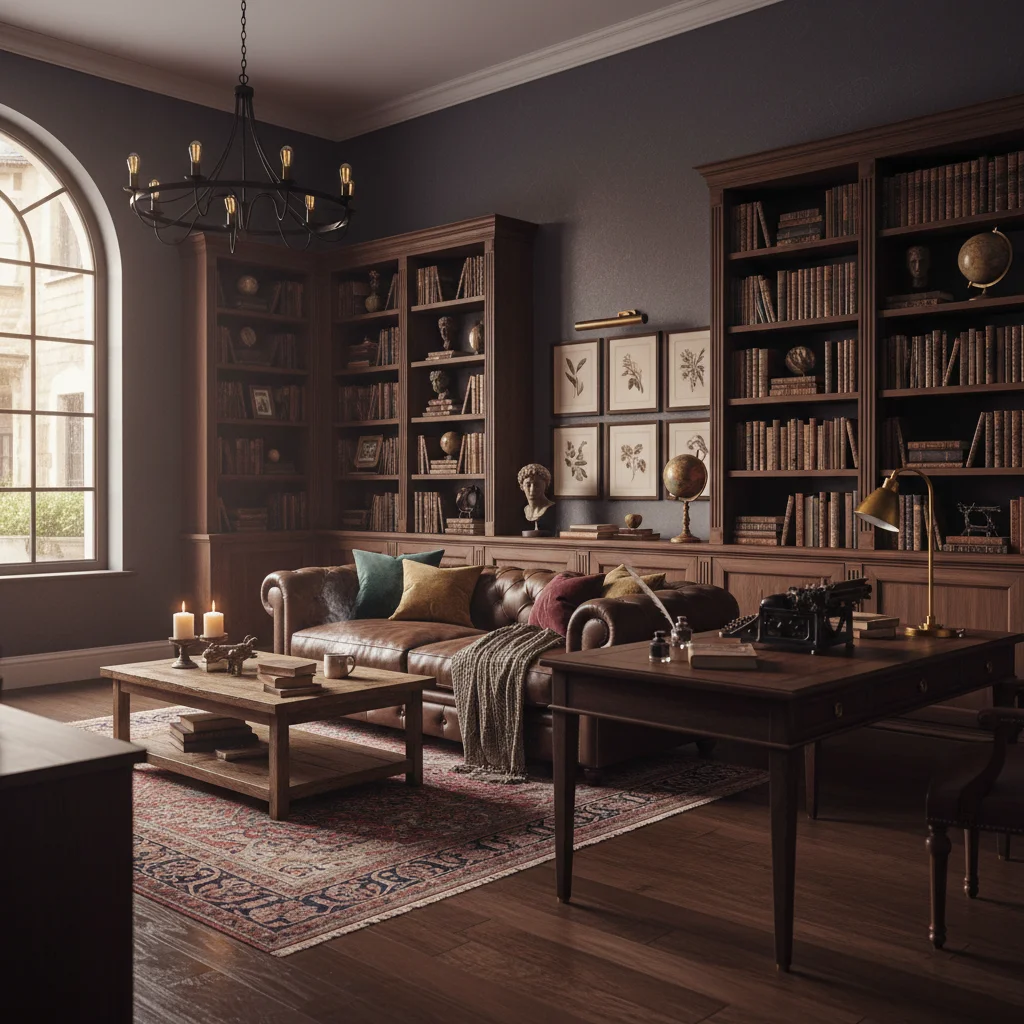
Qué Significa Realmente la Academia Oscura para el Interior de tu Hogar
La academia oscura, en su esencia, es más que un simple estilo de decoración; es un homenaje a la búsqueda intelectual, la reverencia histórica y un profundo aprecio por el mundo táctil de los libros y los artefactos envejecidos. Originada en círculos literarios y de moda, canaliza el lenguaje visual romanticizado de los campus universitarios europeos del siglo XIX, las bibliotecas antiguas y la grandeza arquitectónica gótica. Cuando se traduce al diseño de interiores, esta estética crea espacios que se sienten profundamente personales, llenos de historias y propicios para la introspección y el aprendizaje.
Se caracteriza por un vocabulario visual específico: colores profundos y melancólicos como el verde bosque, el rojo sangre de buey (oxblood) y el nogal intenso; materiales naturales impregnados de edad y pátina como el cuero gastado, maderas oscuras, latón y lana texturizada; abundantes capas de libros y objetos curados que hablan de una vida de conocimiento acumulado; y una iluminación atmosférica y evocadora que susurra a la luz de las velas en lugar de una modernidad austera.
Lo que realmente distingue los interiores de academia oscura de los espacios meramente "oscuros" o minimalistas es su narrativa inherente. Estas habitaciones cuentan una historia: una vida dedicada a la lectura, la colección, los viajes y la contemplación. Los libros que forran las estanterías no son solo rellenos decorativos; han sido leídos genuinamente, sus lomos son irregulares, algunos quizás con las esquinas dobladas o subrayados. Los mapas y grabados botánicos en las paredes parecen haber sido coleccionados durante décadas, en lugar de adquiridos en una sola compra. Ese sofá Chesterfield junto a la chimenea exhibe una calidad de desgaste única, cada pliegue y rasguño marcando incontables horas de estudio tranquilo o debate animado. La esencia es un espacio habitado por una sensibilidad intelectual distinta, meticulosamente curado no para una sesión de fotos fugaz, sino para una resonancia personal duradera. Es un abrazo a la historia y una rebelión silenciosa contra la naturaleza transitoria de las tendencias modernas.
Creando la Paleta de Colores de Academia Oscura para Tus Paredes
La paleta de colores fundamental de la academia oscura está profundamente arraigada en el mundo natural, como si estuviera filtrada a través de antiguas pinturas al óleo y los materiales envejecidos de instituciones antiguas. Los tonos clave incluyen el verde bosque profundo, el rico rojo sangre de buey (oxblood), el cálido marrón caramelo del cuero, el contemplativo gris pizarra, el suave pergamino crema y el casi negro del nogal o ébano envejecido. Estos son los colores que se encontraban históricamente en los entornos académicos e institucionales del siglo XIX: los paneles de madera de un gran estudio victoriano, las cubiertas ricamente encuadernadas de tomos antiguos y las icónicas lámparas de banquero con pantalla verde que iluminaron innumerables escritorios de bibliotecas universitarias.
Las paredes en interiores genuinos de academia oscura rara vez son blancas. Optar por opciones audaces y saturadas como el verde profundo, el oxblood o el carbón vegetal establece instantáneamente la profundidad atmosférica y la seriedad central de la estética. Estos colores abrazan las sombras, haciendo que una habitación se sienta íntima y envolvente. Para aquellos que duden en comprometerse por completo con paredes oscuras en toda una habitación, una sola pared de acento —quizás en un verde biblioteca profundo o un sofisticado oxblood— detrás de una estantería empotrada o un escritorio sustancial puede crear un drama comparable a menor escala. Para evitar que estos tonos profundos se sientan fríos u opresivos, es crucial combinarlos con tonos de madera cálidos, accesorios de latón envejecido y textiles suaves y acogedores. Incluso podrías considerar una sutil [técnica de baño de color](/blog/color-drenching-technique) donde las paredes, molduras e incluso el techo se pintan en diferentes tonos de la misma tonalidad profunda para crear una experiencia increíblemente inmersiva. Los estudios demuestran que incorporar paletas de colores ricas y melancólicas, cuando se equilibran eficazmente, puede crear una sensación de calma y concentración, haciendo que los espacios se sientan más arraigados y menos distractores, cualidades muy valoradas en las búsquedas intelectuales.
Muebles: Lo Envejecido, lo Heredado y el Legado Literario
Los muebles de academia oscura deben transmitir una sensación de historia y permanencia. Las piezas deben parecer como si hubieran sido parte de una narrativa, transmitidas de generación en generación o descubiertas en una biblioteca olvidada. Los sofás Chesterfield y los sillones con respaldo de botones elaborados con cuero envejecido —en marrones profundos, tostados ricos o verdes cazador oscuros— son opciones por excelencia, que encarnan la comodidad y el desgaste sofisticado. Busca signos de pátina auténtica: grietas, un sutil desvanecimiento y la suavidad que viene con años de uso.
Más allá de estas icónicas piezas tapizadas, los escritorios de madera maciza con patas bellamente torneadas, las clásicas escaleras de biblioteca de madera con rieles rodantes, las robustas sillas Windsor, los soportes para globos terráqueos antiguos y las mesas auxiliares estilo campaña se integran perfectamente en la estética. El principio rector aquí es una mezcla de antigüedad, artesanía y utilidad. No se trata de artículos desechables producidos en masa; se trata de muebles que se sienten sustanciales, bien hechos antes de los procesos industriales modernos y destinados a perdurar.
Las tiendas de segunda mano, las concurridas ventas de propiedades y los mercados de antigüedades curados son los principales lugares de búsqueda de muebles auténticos de academia oscura. Un sillón de cuero bellamente gastado de la herencia de un académico fallecido, quizás con el tenue aroma a papel viejo, ofrece mucha más autenticidad y carácter que una reproducción nueva, a menudo por una fracción del costo. De hecho, adquirir muebles de segunda mano para una estética de academia oscura puede reducir los costos entre un 40 y un 60% en comparación con la compra de reproducciones nuevas, al tiempo que ofrece una historia única. La pátina y el carácter distintivo que solo la edad puede producir —una mancha de tinta en un escritorio de madera, el brillo sutil gastado en el reposabrazos de una silla de cuero, o el suave crujido de una estantería muy querida— no son defectos, sino características preciadas dentro de la narrativa de la academia oscura. Al considerar la disposición de los muebles, una [herramienta de organización de muebles con IA](/blog/ai-furniture-arrangement-tool) puede ser increíblemente útil para visualizar cómo estas piezas sustanciales encajarán en tu espacio existente, asegurando un flujo y función óptimos.
Libros, Objetos y el Arte de la Exhibición Curada
Los libros son más que simples accesorios en los interiores de academia oscura; son pilares estructurales y espirituales. Una pared de estanterías de suelo a techo, densamente llenas de libros leídos genuinamente, es a menudo la característica arquitectónica definitoria. Sus lomos deben ser irregulares en altura, color y textura, indicando una colección que ha crecido orgánicamente con el tiempo. No dudes en mezclar objetos ocasionales o colocar algunos libros de lado para romper la monotonía visual y sugerir una colección verdaderamente habitada y activa. La práctica de organizar libros por color, popular en algunos estilos contemporáneos, es anatema aquí. Los libros deben organizarse según la lógica del propietario: por tema, por autor, por significado personal, reflejando un verdadero viaje intelectual.
Los objetos anidados entre los libros, dispuestos artísticamente en un gran escritorio o exhibidos en un gabinete de curiosidades, son narradores vitales de la vida intelectual. Imagina una lupa de latón, un juego completo de escritura de cartas con tintero y sello de lacre, una brújula antigua, ilustraciones botánicas enmarcadas, un globo terráqueo giratorio, frascos de especímenes, flores prensadas bajo cristal o intrincados mapas astronómicos. Estos no son meros elementos decorativos; deben ser objetos que realmente encuentres hermosos, significativos e históricamente intrigantes. Adquiridas con el tiempo de anticuarios de renombre, desvanes familiares y viejas librerías polvorientas, estas piezas llevan su propia historia y contribuyen con capas de autenticidad. Los objetos de academia oscura que llegan preenvejecidos de una tienda genérica de artículos para el hogar rara vez logran la profundidad y el carácter de los hallazgos verdaderamente vintage o antiguos. Cada pieza debe sentirse como un descubrimiento, contribuyendo al rico tapiz de historia personal y curiosidad intelectual de la habitación.
Iluminación Atmosférica: El Arma Secreta de la Estética
La iluminación atmosférica es, sin duda, el corazón técnico y emocional de la academia oscura. La estética hace referencia conscientemente a una era pre-eléctrica: piensa en la luz de las velas, las lámparas de aceite parpadeantes o el suave resplandor de la luz de gas. Por lo tanto, una iluminación artificial efectiva en un espacio de academia oscura debe evocar meticulosamente esa calidez, direccionalidad e intimidad específicas. Prioriza las fuentes de luz cálida: apunta a un máximo de 2700 Kelvin (K), e idealmente 2400K para lámparas de mesa, lámparas de pie y luces de acento. Las bombillas de estilo filamento, ya sea con pantallas de vidrio transparente o ámbar, son excelentes opciones, ya que crean un brillo visible y suave que es inherentemente atmosférico y recuerda a las fuentes de luz anteriores.
Las capas de luz son absolutamente esenciales; depender de una única luminaria de techo, por muy cálida que sea su luz, no logrará crear la atmósfera deseada. En su lugar, combina una lámpara de mesa cálida orientada a la tarea en tu escritorio, una cómoda lámpara de pie junto a una silla de lectura, elegantes apliques de pared flanqueando una chimenea o una estantería sustancial, y velas (reales o alternativas LED de alta calidad) colocadas estratégicamente en repisas, mesas de centro y aparadores. Un principio clave es mantener el techo en relativa sombra. Las habitaciones de academia oscura se iluminan desde abajo y desde los lados, en lugar de uniformemente desde arriba. Esta direccionalidad específica es lo que confiere la calidad dramática, casi teatral, que distingue estas habitaciones de los espacios iluminados convencionalmente. Los estudios muestran consistentemente que una iluminación cálida y en capas puede reducir la fatiga visual hasta en un 30% en comparación con la iluminación cenital dura y brillante, y puede mejorar significativamente el estado de ánimo y la relajación, haciéndola perfecta para un santuario intelectual.
Textiles y Detalles de Acabado: Tejiendo Calidez y Carácter
Los textiles de academia oscura se caracterizan por su riqueza, profundidad y estratificación. Piensa en suntuosas alfombras persas y turcas —idealmente envejecidas, ligeramente gastadas y que ostentan patrones intrincados y complejos que insinúan viajes a tierras lejanas. Complementa estas con lujosas mantas de lana en tonos jaspeados, tartanes clásicos o tejidos de punto trenzado (cable knits) cubriendo sillas y sofás. Cojines de terciopelo en tonos joya profundos como esmeralda, zafiro o rubí añaden un toque de opulencia y confort. Las cortinas de lino pesado o terciopelo, en colores que combinen con la paleta profunda de las paredes (verde bosque, oxblood, carbón), deben instalarse altas y anchas, permitiendo que se acumulen ligeramente en el suelo, realzando la sensación de grandeza del viejo mundo y aislamiento. La estratificación estratégica de estos textiles es primordial; es lo que crea la profunda calidez, absorción de sonido y la acogedora intimidad que define la estética. Suelos desnudos y textiles mínimos, aunque a veces dramáticos, darán como resultado una habitación que parece meramente oscura, en lugar de sentirse genuinamente acogedora y confortable. De hecho, la superposición de textiles puede mejorar la calidad acústica de una habitación entre un 15 y un 20%, reduciendo el eco y creando una atmósfera más íntima y silenciosa propicia para el estudio tranquilo. Para explorar cómo diferentes textiles y tratamientos de pared podrían verse en tu espacio, considera usar una herramienta de visualización con IA como Habitas para experimentar con opciones antes de tomar una decisión. Los [diseños de habitaciones generados por IA realistas](/blog/ai-generated-room-designs-realistic) pueden proporcionar una visión increíble.
Llevando la Academia Oscura a Habitaciones Específicas
Mientras que los principios básicos permanecen consistentes, aplicar la estética de academia oscura a diferentes habitaciones requiere consideraciones personalizadas.
### La Sala de Estar: Un Centro de Confort Intelectual
En la sala de estar, el objetivo es crear un espacio acogedor para la discusión, la lectura y la relajación contemplativa. Céntrate en un prominente sofá Chesterfield o similar de cuero con asientos profundos como pieza central. Rodéalo con una mesa de centro de madera pesada y antigua, quizás un viejo baúl de vapor, cargada con pesados libros de arte y un juego de ajedrez. Las estanterías empotradas deben dominar al menos una pared, llenas hasta el tope. Piensa en una gran chimenea como punto focal, flanqueada por apliques de pared de ambiente melancólico y quizás un retrato enmarcado. Ricas alfombras persas definen zonas, y las cortinas pesadas aseguran privacidad y un ambiente silencioso. Este espacio es menos sobre la socialización brillante y más sobre la conexión íntima.
### El Estudio o Home Office: Tu Santuario Intelectual Privado
Aquí es donde la academia oscura realmente brilla. Un escritorio sustancial, quizás de socios o de abogado, en madera oscura es innegociable. Combínalo con una silla de biblioteca clásica o una silla de banquero. Asegura una amplia iluminación de trabajo con una lámpara de banquero de pantalla verde y quizás uno o dos globos terráqueos. Las estanterías de pared a pared son esenciales, idealmente llegando hasta el techo. Exhibe tus colecciones más preciadas aquí: mapas antiguos, instrumentos de escritura, textos filosóficos. Un cómodo rincón de lectura con un sillón de cuero gastado, un reposapiés y una lámpara de pie dedicada hace que el espacio sea verdaderamente funcional como un retiro intelectual. Considera añadir un pequeño carrito de bar con una licorera para la contemplación después de horas.
### El Dormitorio: Un Paisaje Onírico de Reflexión Tranquila
En el dormitorio, la academia oscura se inclina hacia el confort y la quietud. Opta por un color de pintura oscuro y rico en las paredes, quizás un gris azulado profundo o verde bosque, para promover el descanso. Un marco de cama de madera sustancial, quizás un dosel, ancla la habitación. La estratificación de textiles se vuelve aún más importante aquí: ropa de cama de terciopelo o lino, una manta de lana pesada y alfombras de pelo profundo crean un efecto envolvente. Las mesas de noche deben ser de madera antigua, adornadas con lámparas de latón que proyecten una luz cálida. Evita el desorden; en su lugar, exhibe unos pocos libros preciados, un delicado grabado botánico o una pequeña colección de objetos significativos. El objetivo es un espacio sereno y envolvente que se sienta como una cámara privada para el pensamiento profundo y el sueño tranquilo. Para ideas de diseño más únicas, podrías explorar varios [mejores estilos de diseño de interiores 2026](/blog/best-interior-design-styles-2026) para ver cómo la academia oscura se integra con otras tendencias emergentes.
Espacios Pequeños y Academia Oscura: Haciéndolo Funcionar
La percepción de que la academia oscura solo es adecuada para mansiones extensas es un error. Con una aplicación cuidadosa, esta estética puede transformar dramáticamente habitaciones más pequeñas, haciéndolas sentir más íntimas, sofisticadas y sorprendentemente amplias. La clave reside en la elección estratégica de materiales y un uso inteligente de la luz y la sombra.
En lugar de pintar todas las paredes de un color oscuro, considera una sola pared de acento detrás de una pieza clave de mobiliario como un escritorio o una cama. Utiliza elementos reflectantes como espejos antiguos con marcos ornamentados para reflejar la luz y crear una ilusión de profundidad. Opta por muebles proporcionados a la habitación, pero que aún conserven la gravedad distintiva de la academia oscura —un Chesterfield de menor escala, quizás, o un escritorio de escritura compacto. El almacenamiento vertical es tu mejor amigo: estanterías altas y estrechas que dirigen la mirada hacia arriba hacen que una habitación parezca más alta. Abraza el maximalismo en la curación, no necesariamente en la cantidad. Unos pocos objetos bien elegidos y significativos pueden tener un mayor impacto que muchos más pequeños y menos importantes. La iluminación tenue es particularmente efectiva en espacios pequeños, creando rincones acogedores y atrayendo la atención a características específicas, haciendo que la habitación se sienta como una preciosa caja de joyas en lugar de un espacio apretado.
Un Toque Moderno: Mezclando lo Antiguo y lo Nuevo en la Academia Oscura
Aunque profundamente arraigada en la historia, la academia oscura puede integrarse bellamente con elementos contemporáneos, creando una estética renovada y altamente personalizada. No se trata de diluir el estilo, sino de mejorar su funcionalidad y atractivo para la vida moderna. Considera incorporar piezas de mobiliario minimalistas y de líneas limpias que compartan los mismos tonos de madera oscura que tus hallazgos antiguos, ofreciendo un sutil contraste. Una elegante lámpara de escritorio moderna podría sentarse junto a un tintero vintage, o una pieza de arte abstracto contemporáneo en tonos oscuros podría colgar junto a grabados botánicos tradicionales.
El uso juicioso de la tecnología también puede integrarse. Un televisor de pantalla plana discreto podría ocultarse detrás de un panel deslizante o enmarcarse dentro de una pared de galería. Los sistemas de sonido modernos pueden camuflarse dentro de gabinetes antiguos. La clave es el equilibrio y la intencionalidad. El objetivo es retener el alma de la academia oscura —su curiosidad intelectual y reverencia por el pasado— mientras se disfrutan las comodidades y conveniencias del presente. Esta fusión crea un interior verdaderamente atemporal que respeta la tradición sin quedar atrapado por ella. Herramientas de diseño de interiores con IA como Habitas pueden generar conceptos de diseño y visualizaciones realistas en menos de 60 segundos, un contraste dramático con las 2-4 semanas que los diseñadores tradicionales podrían tardar en los conceptos iniciales, facilitando la mezcla de estos elementos antiguos y nuevos de forma fluida.
Preguntas Frecuentes
### ¿Es la academia oscura adecuada para habitaciones pequeñas?
¡Sí, absolutamente! Si bien la academia oscura a menudo se asocia con espacios grandes y expansivos, puede ser increíblemente efectiva en habitaciones más pequeñas. La clave es abrazar la intimidad. Utiliza paredes de acento oscuras estratégicas, superficies reflectantes como espejos antiguos y escala los muebles de manera adecuada. La iluminación cálida y en capas es especialmente impactante en espacios pequeños, creando rincones acogedores y una sensación de profundidad. Concéntrate en el almacenamiento vertical y objetos curados y significativos para evitar el desorden y realzar la estética.
### ¿Cómo puedo lograr la estética de academia oscura con un presupuesto limitado?
Lograr la academia oscura con un presupuesto limitado es muy factible y a menudo resulta en un aspecto más auténtico. Prioriza las tiendas de segunda mano, las ventas de propiedades y los mercados de pulgas para muebles y decoración, que naturalmente proporcionan la pátina envejecida característica del estilo. Concéntrate en elementos clave como colores de pintura oscuros (que son asequibles), libros de segunda mano y opciones de iluminación cálida y de bajo costo. Los proyectos de bricolaje, como enmarcar grabados vintage o envejecer madera nueva, también pueden ayudar a capturar la estética sin un precio elevado. Recuerda, la autenticidad proviene de la historia acumulada, no del gasto.
### ¿Cuál es la diferencia entre la academia oscura y el diseño de interiores gótico?
Aunque ambos estilos adoptan estéticas oscuras e influencias históricas, la academia oscura es claramente diferente del diseño de interiores gótico. El estilo gótico a menudo enfatiza la grandeza, el drama y un sentido más pronunciado de lo macabro o sobrenatural, con elementos como arcos ojivales, tallas ornamentadas, herrajes pesados y una atmósfera más solemne, casi austera. La academia oscura, por el contrario, se centra en el intelectualismo, un ambiente académico cálido y el romance del aprendizaje. Utiliza materiales más suaves y cómodos (cuero, lana), iluminación atmosférica y objetos relacionados con el estudio y la exploración en lugar de una religiosidad abierta o una fantasía dramática.
### ¿Existen interpretaciones modernas de la academia oscura?
Sí, las interpretaciones modernas de la academia oscura son cada vez más populares. Este enfoque fusiona los principios fundamentales de la estética —colores ricos, materiales naturales y un enfoque en la literatura— con la funcionalidad y las sensibilidades de diseño contemporáneas. Podrías ver líneas más limpias en los muebles manteniendo los tonos de madera oscura, arte minimalista junto a mapas antiguos y tecnología de hogar inteligente integrada discretamente oculta. El énfasis está en crear un espacio que resuene históricamente pero que esté perfectamente adaptado a la vida moderna, asegurando confort y utilidad junto con una elegancia atemporal.
### ¿Qué plantas combinan bien con la estética de academia oscura?
Para complementar la estética de academia oscura, elige plantas que evoquen una elegancia clásica, ligeramente misteriosa o sobria. Considera plantas con follaje verde oscuro o hábitos colgantes. Excelentes opciones incluyen:
- **Hiedra (Hedera helix):** Clásica, colgante, evoca edificios antiguos. - **Lirio de la Paz (Spathiphyllum):** Hojas oscuras elegantes, flores sutiles. - **Higuera Lira (Ficus lyrata):** Si el espacio lo permite, sus hojas grandes y dramáticas añaden estructura. - **Planta Serpiente (Sansevieria trifasciata):** Arquitectónica, de bajo mantenimiento, variedades verde oscuro. - **Orquídeas (Phalaenopsis):** Una sola orquídea elegante añade un toque de belleza refinada. - **Potos (Epipremnum aureum):** Fácil de cuidar, las enredaderas colgantes pueden desbordarse de las estanterías. Estas plantas añaden un toque de verdor vital sin distraer de la atmósfera general melancólica y contemplativa.