Diseño de Cocina-Sala Integrados: Crea Zonas y Flujo Perfectos
Los espacios de concepto abierto están en todas partes, pero lograr un buen diseño requiere más reflexión de lo que la mayoría espera. Una guía práctica sobre zonificación, materiales, iluminación y flujo.
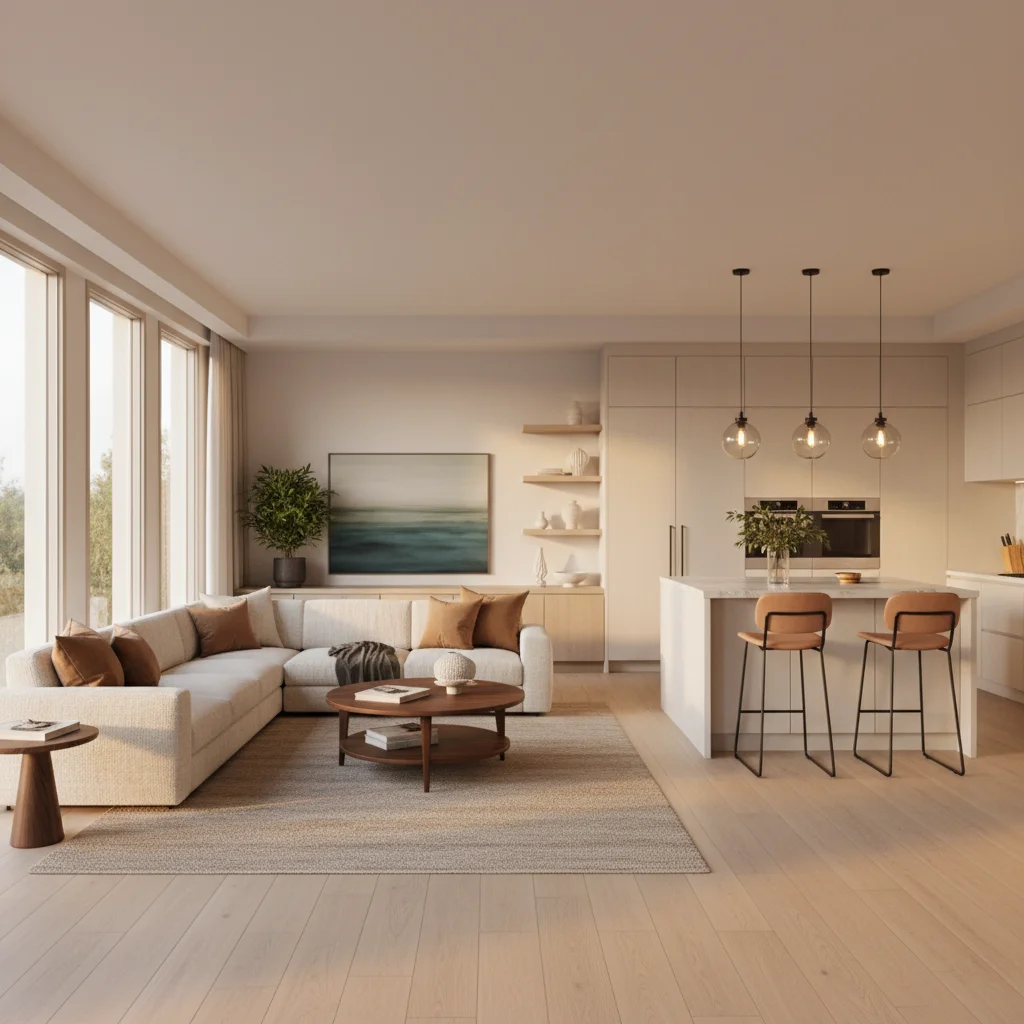
La Promesa y el Desafío de los Espacios de Concepto Abierto
Las cocinas y salas de estar de concepto abierto son un sello distintivo del diseño residencial moderno, cautivando tanto a propietarios como a compradores. Venden casas, lucen hermosas en fotografías y contribuyen a una sensación de amplitud y sociabilidad, haciendo que incluso los metros cuadrados modestos se sientan expansivos. De hecho, las tendencias inmobiliarias recientes indican que **hasta el 80% de los compradores de vivienda priorizan los diseños de concepto abierto**, considerándolos esenciales para estilos de vida y entretenimiento contemporáneos. Esta preferencia es particularmente fuerte entre las generaciones más jóvenes y las familias.
Pero bajo su innegable atractivo yace uno de los problemas de diseño más desafiantes en interiores residenciales: ¿cómo se crean zonas con funciones distintas, diferentes ambientes y estéticas variadas —cocinar, cenar, relajarse, quizás incluso un rincón tranquilo para trabajar— dentro de un único espacio continuo sin los límites tradicionales de paredes o puertas?
Las casas que ejecutan bien el concepto abierto se sienten sin esfuerzo. Las zonas son claras sin ser rígidas. Los materiales se sienten conectados en todo el espacio sin ser monótonos. La iluminación cumple cada función sin crear conflictos. Estos espacios exudan un flujo y confort naturales que desmienten la cuidadosa planificación que hay detrás. En contraste, las casas que luchan se sienten como un almacén de muebles: grandes, indiferenciadas y extrañamente frías a pesar de su escala. La diferencia radica casi por completo en la ejecución de unos pocos principios clave de diseño, combinados con una profunda comprensión de cómo las personas viven e interactúan dentro de su entorno.
Estrategias de Zonificación: Definiendo Áreas Sin Paredes
En un espacio de concepto abierto, establecer zonas distintas es fundamental para crear funcionalidad y confort. Si bien las paredes físicas están ausentes, herramientas de diseño inteligentes pueden crear límites claros que son tanto prácticos como estéticamente agradables.
Las alfombras son la herramienta de zonificación más poderosa disponible sin necesidad de construcción. Una alfombra de escala adecuada —una lo suficientemente grande como para que todos los muebles principales de la sala se asienten sobre ella, o al menos las patas delanteras— crea instantáneamente una "habitación dentro de una habitación". Señaliza visual y psicológicamente que se ha pasado de un área funcional a otra. La clave es el tamaño: en una sala de estar de concepto abierto típica, una alfombra más pequeña de 240 por 300 centímetros parecerá un sello postal, haciendo que el espacio se sienta fragmentado en lugar de cohesivo. Considera superponer alfombras para añadir textura y calidez, delimitando aún más una acogedora zona de estar.
La disposición de los muebles refuerza estas zonas delimitadas por alfombras. Un sofá colocado de espaldas a la cocina, en lugar de paralelo a ella, crea una barrera suave que se percibe como una división sin bloquear la luz o las líneas de visión. Las mesas consola o estanterías bajas detrás de un sofá pueden mejorar aún más este límite, proporcionando superficies para la decoración, lámparas o incluso sirviendo como una pequeña área de bar. Una mesa de comedor, naturalmente posicionada en el punto de transición entre la cocina y la sala, actúa como una zona de amortiguación natural, definiendo claramente el área para comer. Para una exploración más profunda de diseños óptimos, descubre cómo una [herramienta de organización de muebles con IA](/blog/ai-furniture-arrangement-tool) puede ayudarte a experimentar con diferentes configuraciones.
Los cambios de nivel —un escalón hacia un área de estar, o un foso de conversación hundido— son los dispositivos de zonificación más potentes de todos, aunque requieren construcción en lugar de solo arreglos de muebles. Estas intervenciones arquitectónicas crean distinciones espaciales inmediatas e innegables, añadiendo un toque dramático y una sensación de permanencia a cada zona. Para aquellos que consideran cambios estructurales más significativos, una media pared bien ubicada o una chimenea de doble cara también pueden servir como un elegante divisor, ofreciendo privacidad mientras se mantiene una sensación de apertura.
Continuidad de Materiales y Variación Planificada: Una Paleta Armoniosa
En los espacios de concepto abierto, el material del piso suele ser continuo, lo que crea unidad pero, si no se maneja con cuidado, puede resultar monótono. Una estrategia efectiva es usar un solo material para el piso en todo el espacio —roble de tablas anchas, piedra de gran formato o concreto pulido— e introducir variación a través de las zonas de alfombras y tratamientos específicos en la cocina. Esto asegura una base consistente al tiempo que permite puntos focales.
Considera una cocina con un material de encimera de isla contrastante —quizás un mármol ricamente veteado contra una encimera más uniforme— o un tratamiento de azulejos diferente en el piso de la cocina que separe visualmente la zona de cocción. Esto crea distinción sin romper el flujo general. Por ejemplo, un piso de concreto continuo podría fluir de la sala a la cocina, pero un salpicadero de azulejos de cemento con patrón o una isla con borde tipo cascada único podrían definir el espacio culinario.
El color de los gabinetes es otra palanca poderosa en el diseño de concepto abierto. Los gabinetes de cocina en un color oscuro y saturado —azul marino, verde bosque o gris carbón— anclan visualmente la zona de la cocina y hacen que se sienta como una habitación distinta incluso sin paredes. Esto crea profundidad y carácter. Una cocina con gabinetes del mismo color que sus paredes se lee como parte de la habitación más grande; una cocina con gabinetes de color o tono distinto se lee como su propia entidad funcional dentro del espacio más grande. Este uso estratégico del color puede transformar un diseño simple en un entorno dinámico y visualmente atractivo. Incorporar una paleta de colores curada también puede unir todo el espacio, y herramientas como un [generador de paletas de colores con IA](/blog/ai-color-palette-generator) pueden proporcionar inspiración.
Recuerda que una renovación completa de la cocina suele costar entre **$20,000 y $60,000**, por lo que las elecciones de materiales bien pensadas que perduren en el tiempo y se integren bien con la estética general de concepto abierto son una inversión que vale la pena.
La Isla como Ancla Espacial: Función y Forma
Una isla de cocina en un espacio de concepto abierto realiza más trabajo de diseño que casi cualquier otro elemento individual. Funcionalmente, proporciona un espacio de preparación crítico, almacenamiento adicional y asientos casuales. Espacialmente, actúa como el marcador de límite principal entre las zonas de cocina y sala, más permeable que una pared, pero lo suficientemente claro como para definir el territorio. Los taburetes en el lado de la isla que da a la sala de estar crean un punto de transición natural: las personas pueden sentarse en la isla y participar en la actividad de la cocina mientras miran hacia el espacio de la sala, fomentando la interacción social.
Las dimensiones de la isla importan enormemente tanto para la funcionalidad como para el flujo. Una isla debe tener al menos 90 centímetros (aproximadamente 36 pulgadas) de espacio libre en todos los lados activos para un flujo de tráfico cómodo y fácil acceso a gabinetes y electrodomésticos. Si las personas van a pasar con frecuencia mientras se realiza la actividad de la cocina, 120 centímetros (aproximadamente 48 pulgadas) es ideal. El voladizo de la encimera para los asientos de taburete debe ser de un mínimo de 25 centímetros (10 pulgadas), idealmente de 30 a 35 centímetros (12-14 pulgadas) para un espacio cómodo para las rodillas. Estos no son números arbitrarios: son la diferencia entre una isla que fluye sin esfuerzo y una que crea fricción e incomodidad constantes.
Más allá de la funcionalidad básica, las islas pueden convertirse en declaraciones de diseño. Considera opciones como una isla con borde tipo cascada para un aspecto elegante y moderno, o una isla con estanterías integradas para libros de cocina y artículos decorativos. Los materiales pueden variar desde bloques de carnicero hasta cuarzo, concreto o acero inoxidable, cada uno contribuyendo a la estética general. Estos elementos se pueden explorar y visualizar utilizando plataformas como Habitas, lo que te permite ver cómo los diferentes diseños de islas encajan en tu visión general de concepto abierto antes de tomar decisiones costosas.
Iluminación en Espacios de Concepto Abierto: Tres Zonas, Tres Estrategias
Una iluminación efectiva es quizás el elemento más crítico, pero a menudo subestimado, para diseñar con éxito un espacio de concepto abierto. No basta con simplemente iluminar la habitación; debes iluminar las _zonas_. Los espacios de concepto abierto requieren tres estrategias de iluminación distintas que operen simultáneamente, cada una adaptada a su función específica.
1. **Zona de Cocina:** Enfocada en la tarea, brillante y a menudo inclinada hacia una temperatura de color más fría (p. ej., 4000K-5000K) para una visibilidad óptima durante la preparación de alimentos. Esto incluye colgantes llamativos sobre la isla (que a menudo proporcionan luz ambiental y de tarea), luces de tira debajo de los gabinetes para iluminar las superficies de preparación, y luces empotradas para la luz de trabajo general. Los reguladores de intensidad (dimmers) son cruciales aquí para suavizar la brillante iluminación de tarea cuando la cocina no está en uso activo. 2. **Zona de Comedor:** Atmosférica, a menudo cálida (p. ej., 2700K-3000K), con un colgante o candelabro llamativo como punto focal, colgado bajo sobre el centro de la mesa. Este accesorio debe ser visualmente atractivo y proporcionar un brillo suave y acogedor. Los apliques de pared suplementarios o las luces empotradas con reguladores pueden proporcionar luz ambiental adicional para reuniones más grandes, pero el enfoque debe estar en crear una experiencia gastronómica íntima. 3. **Zona de Estar:** En capas y flexible, combinando luz de techo ambiental con lámparas de pie y lámparas de mesa que pueden usarse independientemente de la iluminación principal del techo. Esta estratificación permite varios ambientes: iluminación general brillante para limpiar, iluminación de acento más suave para leer, o luz tenue y cálida para ver una película. Los focos para resaltar obras de arte o características arquitectónicas pueden añadir otra capa de sofisticación.
El requisito técnico crítico es que las tres zonas operen en circuitos independientes, cada una controlada por interruptores y reguladores separados. Poder encender solo la iluminación del comedor para una cena, o solo las lámparas de pie en la sala para una película, mientras se dejan apagadas las luces de la cocina y las principales luces ambientales —esto es lo que separa un espacio de concepto abierto diseñado profesionalmente de uno que se siente perpetuamente demasiado iluminado o incómodamente tenue. Los sistemas de iluminación inteligentes hacen que esta flexibilidad esté disponible sin la necesidad de que los electricistas instalen amplios circuitos adicionales, ofreciendo el control definitivo a través de aplicaciones o comandos de voz.
Sonido y Privacidad: Los Desafíos Ignorados
La vida en espacios de concepto abierto inherentemente elimina las barreras de sonido tradicionales. El ruido de la cocina —extractores, lavavajillas, sonidos de cocción, incluso el tintineo de los cubiertos— se transmite directamente a la sala de estar. Las conversaciones se escuchan en todas direcciones, y los sonidos de niños jugando, música o televisión pueden interferir con otras actividades. Para familias o hogares con horarios diferentes, esto puede ser un problema significativo de calidad de vida que ninguna cantidad de buen diseño resuelve sin una planificación acústica deliberada. Una consideración honesta del sonido antes de comprometerse con una reconfiguración de concepto abierto es primordial.
Los muebles blandos son el principal tratamiento acústico disponible después de la construcción. Alfombras gruesas, muebles tapizados, cortinas o visillos pesados, cojines decorativos y arte de pared (especialmente tapices o paneles acústicos enmarcados) absorben el sonido en lugar de reflejarlo. Los espacios de concepto abierto con superficies duras —todo de piedra, baldosas, vidrio y yeso— son acústicamente "vivos" y pueden resultar agotadores a volumen debido al eco excesivo. Introducir suficiente material blando para absorber el eco mientras se mantiene la estética deseada requiere una selección de materiales deliberada en lugar de una ocurrencia tardía.
Más allá de los elementos blandos, considera incorporar materiales que amortigüen el sonido durante la construcción, como una capa base acústica debajo de pisos duros o placas de techo fonoabsorbentes en áreas específicas. Los electrodomésticos con bajos niveles de decibelios son otra inversión inteligente para las cocinas. Para una sensación de privacidad visual o un retiro tranquilo dentro del espacio más grande, un divisor de ambientes inteligentemente colocado, una estantería alta o incluso grandes plantas de interior pueden crear una "pantalla" psicológica sin bloquear por completo el flujo. A veces, simplemente tener un "espacio analógico" dedicado o una sala de estar más pequeña y cerrada puede proporcionar el respiro necesario del constante bullicio de un hogar de concepto abierto, ofreciendo una solución moderna a la antigua necesidad de un santuario.
Logrando Cohesión Visual y Estilo Personal
Si bien la zonificación y la funcionalidad son cruciales, un espacio de concepto abierto realmente brilla cuando logra cohesión visual sin dejar de reflejar el estilo personal del propietario en todas las zonas. Esto implica un delicado equilibrio entre unidad e individualidad.
Comienza con una paleta de colores y un esquema de materiales fundamentales que fluyan por todo el espacio. Esto no significa que todo deba ser del mismo color, sino que los colores y las texturas deben complementarse entre sí. Por ejemplo, si los gabinetes de tu cocina son de un azul marino intenso, quizás los acentos de tu sala de estar podrían ser en azules más claros, grises o incluso metales cálidos que recojan los matices del azul marino. Usar un estilo arquitectónico consistente (por ejemplo, moderno, minimalista, tradicional) o un motivo de diseño compartido (por ejemplo, patrones geométricos, formas orgánicas) también puede unir las zonas sin problemas. Habitas puede ayudarte a visualizar varios [mejores estilos de diseño de interiores para 2026](/blog/best-interior-design-styles-2026) en tu propia habitación.
Introduce elementos que se repitan o resuenen en diferentes zonas. Esto podría ser un acabado de madera específico utilizado tanto para las sillas del comedor como para una consola en la sala de estar, o un acabado metálico particular que aparezca en los herrajes de la cocina, las luminarias y los objetos decorativos en la sala. Las obras de arte también pueden desempeñar un papel vital. Una colección curada de arte que comparte un tema común, una paleta de colores o un estilo artístico, estratégicamente colocada en todo el espacio abierto, guía la vista y refuerza la unidad visual.
Finalmente, permite la personalización dentro de cada zona. La cocina podría presentar utensilios de cocina vibrantes o plantas únicas, mientras que la sala de estar exhibe fotos familiares preciadas o recuerdos de viaje. Estos toques personales, cuando se integran dentro del diseño cohesivo general, evitan que el espacio se sienta estéril o genérico. El objetivo es un espacio que se sienta intencionalmente diseñado como un todo, pero que permita que cada área respire y exprese su propósito y carácter únicos. Un espacio de concepto abierto bien diseñado, al igual que una casa profesionalmente escenificada, puede ver un **retorno de la inversión del 5-10% en el valor de reventa**, simplemente haciéndolo más atractivo y funcional para los compradores potenciales.
Diseñando para un Flujo y Movimiento Armoniosos
Más allá de las zonas individuales y la cohesión estética, el éxito de un espacio de concepto abierto depende de su capacidad para facilitar un flujo y movimiento fluidos. Esto no se trata solo de evitar obstáculos; se trata de crear caminos intuitivos que guíen a los ocupantes sin esfuerzo de un área a la siguiente.
**Líneas de Visión y Caminos Claros:** Asegúrate de que los caminos principales a través del espacio tengan al menos 90-100 centímetros (36-40 pulgadas) de ancho, libres de muebles que impidan el movimiento. Evita colocar piezas grandes de mobiliario directamente en la línea de tráfico entre dos áreas de uso frecuente, como la cocina y la mesa del comedor, o la sala de estar y una salida. Usar una [aplicación de diseño de interiores con IA](/blog/ai-interior-design-apps-compared-2026) puede ayudarte a experimentar virtualmente con diferentes distribuciones de muebles y visualizar los caminos de movimiento.
**Agrupación y Orientación de Muebles:** Organiza los muebles en cada zona para que miren hacia adentro, creando áreas de conversación acogedoras. En la sala de estar, los sofás y las sillas deben fomentar naturalmente la interacción, mientras que en el comedor, las sillas deben ser fácilmente movibles alrededor de la mesa. La orientación de piezas clave, como un sofá grande o un centro de entretenimiento, puede dirigir sutilmente la atención y definir el "frente" de una zona.
**Equilibrio Visual:** Asegúrate de que el peso visual de los muebles y la decoración esté equilibrado en todo el espacio abierto. Una pieza muy pesada en una esquina podría hacer que la esquina opuesta se sienta vacía. Usa elementos más altos como libreros, cortinas de suelo a techo o plantas grandes para atraer la vista hacia arriba y añadir interés vertical, evitando que el espacio se sienta demasiado disperso.
Al planificar meticulosamente el flujo y el movimiento, creas un ambiente de concepto abierto que no solo se ve hermoso sino que también se siente natural, cómodo y verdaderamente habitable.
Preguntas Frecuentes
### ¿Cuáles son los mayores beneficios de una cocina y sala de estar de concepto abierto?
Las cocinas y salas de estar de concepto abierto ofrecen numerosas ventajas, principalmente mejorando la interacción social y creando una mayor sensación de espacio. Permiten a los miembros de la familia conectar mientras realizan diferentes actividades (por ejemplo, cocinar mientras otros se relajan o hacen la tarea), haciendo que el entretenimiento sea mucho más fácil. Visualmente, eliminar paredes hace que las habitaciones se sientan más grandes, luminosas y expansivas, a menudo aumentando la penetración de luz natural en todo el hogar. Este diseño es a menudo preferido por las familias modernas que buscan un ambiente de vida dinámico y conectado.
### ¿Cómo hago para que mi espacio de concepto abierto se sienta acogedor y no cavernoso?
Para evitar que un espacio de concepto abierto se sienta cavernoso, concéntrate en crear zonas distintas, superponer texturas y usar iluminación cálida. Define áreas con alfombras grandes, muebles estratégicamente colocados (como un sofá respaldado por una consola) e incluso plantas altas o estanterías. Introduce elementos textiles suaves como cortinas gruesas, muebles tapizados y cojines decorativos para absorber el sonido y añadir calidez. Usa reguladores de intensidad (dimmers) para toda la iluminación, permitiéndote crear focos de luz íntimos, especialmente por la noche. Una paleta de colores consistente y cálida en todo el espacio también ayuda a unificarlo y hacerlo más acogedor.
### ¿Cuáles son los errores comunes a evitar en el diseño de concepto abierto?
Uno de los errores más comunes es no definir zonas distintas, lo que lleva a un espacio extenso y sin diferenciación. Otro es descuidar las consideraciones acústicas, lo que resulta en ambientes ruidosos y con eco. Muchos diseñadores también pasan por alto la importancia de una paleta de materiales y colores cohesiva, lo que puede hacer que el espacio se sienta desarticulado en lugar de unificado. Finalmente, un mal diseño de iluminación, donde todas las luces están en un solo circuito o la iluminación de tarea es inadecuada, puede disminuir gravemente la funcionalidad y el ambiente de un hogar de concepto abierto.
### ¿Cómo puede Habitas ayudarme a diseñar mi cocina y sala de estar de concepto abierto?
Habitas, como plataforma de diseño de interiores impulsada por IA, puede ser de gran ayuda en el diseño de tu espacio de concepto abierto. Puedes subir fotos de tu habitación actual y usar nuestras herramientas para visualizar diferentes distribuciones, arreglos de muebles, elecciones de materiales y paletas de colores en tiempo real. Esto te permite experimentar con varias estrategias de zonificación, ver cómo se verían diferentes diseños de islas de cocina y previsualizar la colocación de luminarias sin ningún esfuerzo físico ni compromiso. Habitas proporciona renderizaciones realistas que te ayudan a tomar decisiones informadas, asegurando que tu diseño de concepto abierto sea hermoso y altamente funcional antes de invertir en renovaciones. Aprende más sobre [cómo funciona el diseño de interiores con IA](/blog/ai-interior-design-how-it-works).
### ¿Puedo incorporar diferentes estilos de diseño de interiores en un diseño de concepto abierto?