A Revolução da IA no design de Interiores: Transformando Espaços para Sempre
Descubra como a IA está transformando o design de interiores — desde a democratização do acesso até o aprimoramento dos fluxos de trabalho profissionais e a reformulação de toda a indústria.
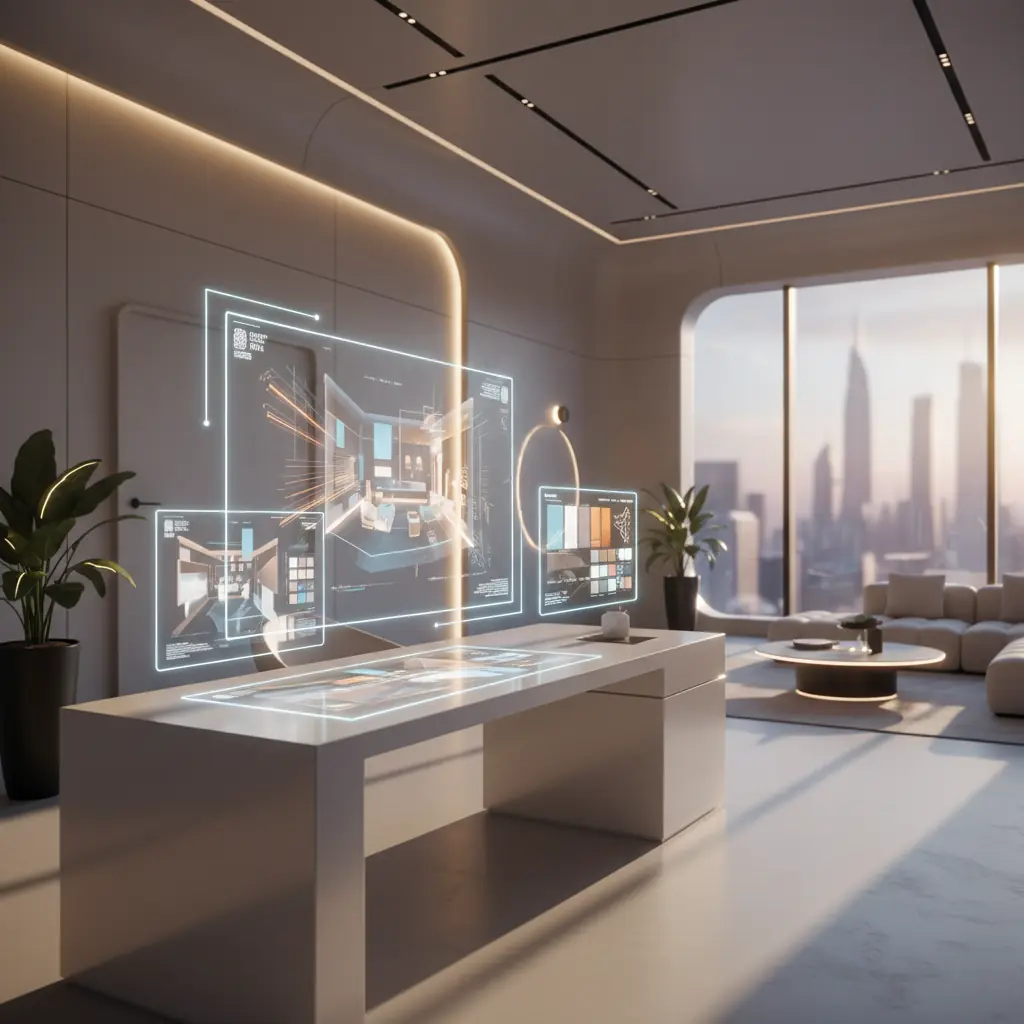
Como a IA já está transformando os fluxos de trabalho profissionais de design?
O cenário do design de interiores está passando por uma profunda transformação, impulsionada pela rápida integração da inteligência artificial. Uma pesquisa inovadora de 2026 da American Society of Interior Designers (ASID) revelou que impressionantes 82% dos designers profissionais agora incorporam rotineiramente ferramentas de IA em várias partes de seu fluxo de trabalho. Esse número representa um salto exponencial de menos de 15% apenas dois anos antes, em 2024, demonstrando uma curva de adoção mais íngreme e impactante do que até as previsões mais otimistas.
Essa rápida adoção da IA não é simplesmente uma novidade; é um testemunho da sofisticação e dos resultados tangíveis que essas ferramentas agora oferecem. Os dias de lutar com saídas rudimentares de IA estão, em grande parte, no passado. As plataformas de design impulsionadas por IA de hoje produzem conceitos realistas e convincentes o suficiente para serem apresentados diretamente aos clientes, agilizando significativamente o processo criativo inicial.
A mudança fundamental não é sobre a IA substituindo a criatividade humana, mas sim recalibrando onde os designers investem seu ativo mais valioso: sua expertise. Em vez de gastar horas laboriosas esboçando mood boards iniciais do zero ou compilando manualmente paletas de materiais intermináveis, os designers agora podem gerar dezenas de conceitos diversos de IA em meros minutos. Essa capacidade revolucionária os liberta para dedicar sua apurada sensibilidade de design e seu olhar apurado para refinar, combinar e adaptar as ideias mais promissoras. O papel criativo evoluiu da ideação de tela em branco para uma abordagem mais estratégica, curatorial e focada no refinamento, aumentando a eficiência e expandindo as possibilidades criativas. Ao descarregar tarefas repetitivas e demoradas, os designers relatam recuperar até 70% do tempo gasto anteriormente na geração de conceitos iniciais e na criação de mood boards, permitindo-lhes focar em serviços de maior valor e assumir mais clientes.
Como a IA democratiza o design de interiores para todos?
Talvez o efeito cascata mais impactante da IA no design seja a democratização sem precedentes do acesso à estética de qualidade profissional. Historicamente, contratar um designer de interiores tem sido um serviço de luxo, com custos para um único cômodo começando em vários milhares de dólares, tornando-o inacessível para a grande maioria dos proprietários e inquilinos.
Ferramentas de IA, no entanto, remodelaram fundamentalmente essa barreira. Plataformas como Habitas permitem que qualquer pessoa com um smartphone carregue uma foto de seu cômodo existente e, em minutos, o veja transformado em múltiplos estilos de qualidade profissional. Essa capacidade surpreendente vem a uma fração do custo tradicional, tornando o design sofisticado acessível a um público muito mais amplo. Essa democratização significa que os proprietários podem acessar ideias de design sofisticadas por uma fração do custo tradicional, muitas vezes gastando menos de US$ 100 para várias variações de cômodo, em comparação com milhares por um único projeto de cômodo de um profissional humano.
O impacto se estende para além da mera acessibilidade; trata-se de promover confiança e clareza. Indivíduos que talvez nunca tivessem considerado contratar um designer agora possuem um vocabulário visual robusto para articular suas aspirações de design. Eles podem entrar em uma loja de móveis ou navegar online sabendo precisamente o estilo, a paleta de cores e as proporções que procuram, munidos de uma clara referência visual. A barreira de intimidação que historicamente impedia muitas pessoas de se envolverem com o design profissional evaporou em grande parte. Para saber mais sobre como essa tecnologia funciona, confira nosso post sobre [IA no design de Interiores: Como Funciona](/blog/ai-interior-design-how-it-works).
Os efeitos cascata positivos ressoam em todo o ecossistema de melhorias domésticas. Empreiteiros de reforma, por exemplo, estão relatando cada vez mais que os clientes chegam com expectativas muito mais claras e escopos de projeto mais realistas, apoiados por visualizações tangíveis de IA. Isso se traduz em menos mudanças no meio do projeto, redução de falhas de comunicação, construções mais eficientes e, em última análise, melhores resultados e maior satisfação para todos os envolvidos. Para os proprietários, isso significa entender os resultados potenciais antes de se comprometer, reduzindo significativamente o risco do processo de reforma.
A IA substituirá os designers de interiores ou os aprimorará?
A apreensão inicial de que a IA substituiria completamente os designers de interiores humanos, em sua maior parte, não se materializou. Em vez disso, o que estamos testemunhando é uma profunda evolução da profissão. Tarefas que antes ocupavam designers juniores — gerar conceitos iniciais, criar mood boards básicos, pesquisar e obter opções de mobiliário e até mesmo esboçar layouts preliminares — agora são cada vez mais tratadas pela IA. Essa libertação de tarefas rotineiras, muitas vezes repetitivas, não é uma ameaça, mas uma oportunidade.
Isso liberta os designers experientes para se concentrarem nos aspectos em que se destacam e que a IA não pode replicar. Isso inclui compreender profundamente os estilos de vida, preferências e necessidades psicológicas dos clientes, resolver problemas espaciais e arquitetônicos complexos, navegar em projetos de reforma intrincados, gerenciar orçamentos e cronogramas, e curar experiências verdadeiramente sob medida infundidas com ressonância emocional. O toque humano, a empatia, a intuição que transforma uma casa em um lar, permanece o domínio exclusivo do designer humano.
Na verdade, muitas das principais empresas de design relatam que a integração da IA não apenas tornou seus processos mais eficientes, mas também aumentou ativamente sua receita. Tarefas que antes exigiam 20 horas de desenvolvimento de conceito intensivo em trabalho agora podem ser concluídas em uma fração desse tempo, talvez 2-4 horas, com a IA gerando os pontos de partida visuais. Essa eficiência permite que os designers assumam um maior volume de projetos, ofereçam preços mais competitivos para certos serviços ou dediquem mais tempo a relacionamentos premium e de alto contato com clientes. Eles agora podem oferecer aos clientes um processo de iteração rápido, apresentando inúmeras direções de design rapidamente, permitindo uma tomada de decisão e progressão do projeto mais rápidas. Quer ver alguns exemplos impressionantes? Visite nosso [Guia de Transformação de Ambientes Antes e Depois](/blog/before-after-room-transformation-guide).
Como é o pipeline de design-à-compra de IA ponta a ponta?
Um dos desenvolvimentos mais emocionantes e transformadores no horizonte é o pipeline emergente de design-à-compra de ponta a ponta. Visualize um futuro onde a jornada da inspiração à instalação é praticamente perfeita: você escaneia seu cômodo existente com seu telefone, recebe uma variedade de conceitos de redesign gerados por IA adaptados ao seu espaço e estilo, toca em um móvel ou item de decor dentro da renderização para visualizar instantaneamente o produto exato, seu preço, disponibilidade e até mesmo fazer o pedido diretamente – tudo dentro de uma única sessão digital unificada.
Este pipeline completo não é uma fantasia distante; seus componentes individuais já existem em várias plataformas e estão convergindo rapidamente. Aqui está um detalhamento dos elementos-chave:
1. **Escaneamento 3D de Ambientes:** A proliferação da tecnologia LiDAR, agora padrão em iPhones e iPads recentes, permite escaneamentos 3D de espaços interiores notavelmente precisos. Esses escaneamentos capturam dimensões exatas, relações espaciais e até mesmo móveis existentes, fornecendo um rico conjunto de dados para a IA. 2. **Geração de Redesign por IA:** Algoritmos avançados de IA generativa aproveitam esses dados 3D, combinados com a entrada do usuário (preferências de estilo, paletas de cores, necessidades funcionais), para produzir conceitos de redesign hiper-realistas. Esses designs podem aplicar instantaneamente várias estéticas, desde [design de interiores Art Deco](/blog/art-deco-interior-design) até minimalista moderno, completos com novos layouts, móveis e decor. 3. **Identificação e Combinação de Produtos:** Esta é uma inovação crucial. Sistemas de visão de IA analisam os designs gerados para identificar e combinar móveis, iluminação e itens decorativos com produtos reais disponíveis para compra. Isso pode envolver a vinculação a SKUs de produtos exatos ou a sugestão de alternativas muito semelhantes, completas com especificações e preços. 4. **E-commerce e Logística Integrados:** A peça final é a capacidade de adicionar itens selecionados diretamente a um carrinho, comparar preços de diferentes varejistas e organizar a entrega e até mesmo a montagem. Algumas plataformas estão até explorando parcerias com empreiteiros locais para a instalação de itens maiores ou para o gerenciamento de reformas em larga escala.
Quando este pipeline atingir uma verdadeira fluidez, o atrito inerente entre a inspiração visual e a aquisição acionável cairá para quase zero. Essa eficiência revoluciona a forma como as pessoas se envolvem com melhorias domésticas, tornando as decisões de design e mobiliário de nível profissional mais rápidas, simples e acessíveis do que nunca. Propriedades virtualmente encenadas com designs aprimorados por IA podem vender até 9% mais rápido e por um preço mais alto do que casas não encenadas, de acordo com algumas análises imobiliárias, destacando o imenso valor da pré-visualização realista.
Como AR, VR e Computação Espacial estão mudando a visualização de design?
A computação espacial, que engloba Realidade Aumentada (AR) e Realidade Virtual (VR), está adicionando uma dimensão inteiramente nova à visualização do design de interiores. Com a crescente sofisticação e a adoção generalizada de dispositivos como Apple Vision Pro e Meta Quest, designers e proprietários de casas estão indo além de imagens estáticas para experiências imersivas e interativas.
Imagine-se de pé em sua sala de estar real e, através de um headset ou até mesmo da tela de um smartphone, vendo um redesign gerado por IA sobreposto ao seu espaço existente em tempo real. Os novos móveis são dimensionados para proporções do mundo real, as paredes são pintadas com a cor escolhida, e a luz interage realisticamente com os elementos virtuais. Você pode "caminhar" pelo seu redesign Japandi proposto, observar como a luz incide através de suas janelas reais nos elementos virtuais e até mesmo interagir com objetos virtuais. Este nível de imersão proporciona uma sensação de presença incomparável e permite uma compreensão muito mais intuitiva de como um design se sentirá na realidade. Essa tecnologia reduz significativamente o risco de cometer erros caros, pois você pode virtualmente "experimentar antes de comprar" em grande escala. Por exemplo, você poderia testar virtualmente vários [esquemas de cores para salas de estar](/blog/color-schemes-for-living-rooms) diretamente em seu espaço.
Embora essa tecnologia ainda esteja em seus estágios iniciais para adoção em massa pelo consumidor — os custos dos headsets permanecem relativamente altos, e a experiência exige um certo grau de conforto técnico — a trajetória é inequivocamente clara. Dentro de três a quatro anos, visualizar um redesign complexo em realidade aumentada provavelmente se tornará tão natural e comum quanto vê-lo em uma foto estática de alta qualidade é hoje. Isso transformará as apresentações aos clientes, permitirá que os proprietários tomem decisões mais confiantes e fornecerá aos designers uma ferramenta incrivelmente poderosa para a resolução de problemas espaciais. É um salto de simplesmente ver um design para realmente _experimentá-lo_.
Previsões Chave para a IA no Design: 2027 a 2030
O ritmo da inovação em IA não mostra sinais de desaceleração, prometendo um futuro ainda mais integrado e sofisticado para o design de interiores. Aqui estão algumas previsões chave para os próximos anos:
- **Final de 2027:** Os designs de ambientes gerados por IA se tornarão virtualmente indistinguíveis de fotografias profissionais. A fidelidade atingirá um ponto em que discernir entre uma imagem renderizada e uma foto cuidadosamente encenada no mundo real será extremamente difícil, aprimorando ainda mais as apresentações a clientes e materiais de marketing. Confira como eles podem ser realistas agora em nosso post sobre [Designs de Ambientes Gerados por IA são Realistas?](/blog/ai-generated-room-designs-realistic). - **Início de 2028:** A precisão na correspondência de produtos – a capacidade da IA de identificar e vincular a itens compráveis exatos ou quase exatos dentro de designs gerados – atingirá 90% de confiabilidade. Essa melhoria significativa solidificará o pipeline de design-à-compra de ponta a ponta, tornando-o um recurso confiável tanto para designers quanto para consumidores. - **Meados de 2028:** A estimativa de custos automatizada para reformas, aproveitando a capacidade da IA de analisar materiais, mão de obra e dados de preços regionais, se tornará precisa o suficiente para orçamentos preliminares. Isso fornecerá aos proprietários expectativas financeiras realistas muito mais cedo no processo de planejamento, reduzindo surpresas com preços e melhorando a previsão de projetos. - **Final de 2028:** A IA começará a desempenhar um papel significativo no **design sustentável**. Ao analisar propriedades de materiais, avaliações de ciclo de vida e disponibilidade local, as ferramentas de IA recomendarão as opções mais ecológicas e energeticamente eficientes, auxiliando os designers na criação de espaços verdadeiramente sustentáveis. A capacidade da IA de otimizar a seleção de materiais e o planejamento espacial poderia levar a uma redução de 10-20% no desperdício de material em projetos de reforma em grande escala até 2030. - **2029:** Espere ver o surgimento do **design hiperpersonalizado**, onde a IA não apenas gera designs com base nas preferências declaradas, mas também aprende com as interações do usuário, compras anteriores e até mesmo dados biométricos (com consentimento) para criar espaços que antecipam e respondem às necessidades e humores individuais. Isso poderia envolver o ajuste dinâmico de iluminação, temperatura ou até mesmo perfis de fragrância. - **Até 2030:** Antecipamos o advento de plataformas de reforma totalmente integradas. Imagine escanear um ambiente, escolher uma direção de design (talvez entre [os melhores estilos de design de interiores de 2026](/blog/best-interior-design-styles-2026)), receber preços precisos para todo o projeto, contratar empreiteiros locais verificados e acompanhar o progresso do projeto – tudo através de uma interface intuitiva. Designers evoluirão cada vez mais para "estrategistas de design", focando nos elementos profundamente humanos que a IA não pode replicar: entender como uma família realmente vive, antecipar necessidades cinco ou dez anos no futuro, fomentar conexões emocionais com espaços e navegar pelas complexidades do gerenciamento de projetos centrado no ser humano.
O futuro do design de interiores não é sobre IA versus designers; é sobre a IA amplificando o que um bom design pode ser, tornando-o mais acessível, eficiente e profundamente personalizado do que nunca. Trata-se de empoderar a criatividade e aprimorar a conexão humana em nossos ambientes construídos.
Perguntas Frequentes
### A IA vai substituir os designers de interiores?
Não, a IA não deve substituir os designers de interiores. Em vez disso, ela está aumentando suas capacidades e transformando a profissão. As ferramentas de IA lidam com tarefas repetitivas e demoradas, como geração de conceitos iniciais, criação de mood boards e busca de mobiliário. Isso liberta os designers humanos para se concentrarem em atividades de maior valor que exigem habilidades unicamente humanas: entender a psicologia do cliente, resolver problemas espaciais complexos, gerenciar projetos intrincados e curar espaços com ressonância emocional. A profissão está evoluindo, com os designers se tornando mais estratégicos e focados no cliente.
### Quanto custa o design de interiores com IA em comparação com os serviços de design tradicionais?
As ferramentas de design de interiores com IA oferecem uma alternativa significativamente mais acessível aos serviços de design tradicionais. Enquanto contratar um designer de interiores profissional pode custar milhares de dólares por um único cômodo, plataformas de IA como a Habitas geralmente cobram uma pequena fração disso, muitas vezes menos de US$ 100 por múltiplas variações de design. Essa eficiência de custo democratiza o acesso a ideias de design de qualidade profissional para um público muito mais amplo, incluindo proprietários e inquilinos com orçamento limitado.
### Quais são os benefícios de usar a IA para o design de casas?
Os benefícios de usar a IA para o design de casas são numerosos. Ela democratiza o acesso a visualizações de qualidade profissional, tornando o design sofisticado acessível para todos. A IA acelera dramaticamente o processo de design, gerando múltiplos conceitos em minutos em comparação com semanas para métodos tradicionais. Ela ajuda os proprietários a visualizar mudanças com confiança, reduzindo erros caros e falhas de comunicação durante as reformas. Para profissionais, a IA aumenta a eficiência, permitindo-lhes assumir mais clientes e focar nos aspectos criativos e centrados no ser humano de seu trabalho.
### Quão precisos são os designs de ambientes gerados por IA?
Os designs de ambientes modernos gerados por IA são notavelmente precisos e hiper-realistas. Com os avanços na IA generativa e na renderização 3D, as saídas podem ser virtualmente indistinguíveis de fotografias profissionais até o final de 2027. Eles aplicam com precisão os estilos escolhidos, integram móveis em escala e até simulam condições de iluminação realisticamente dentro da foto do seu ambiente real. Este alto nível de fidelidade permite que os usuários visualizem verdadeiramente como um espaço ficará e se sentirá antes de fazer qualquer compromisso.
### A IA pode me ajudar a escolher móveis e decor?
Com certeza. As ferramentas de IA estão se tornando cada vez mais sofisticadas para ajudar os usuários a escolher móveis e decor. Além de apenas gerar conceitos de design, o pipeline de IA ponta a ponta emergente permitirá que você toque em itens específicos dentro de uma renderização gerada por IA para ver o produto exato, seu preço e disponibilidade. A IA também pode aprender suas preferências de estilo para recomendar peças adequadas, ajudando você a curar seu espaço com uma facilidade e confiança sem precedentes. Isso simplifica significativamente o processo da inspiração à compra.