Luxo Discreto no Design de Interiores: Menos Óbvio, Mais Elevado
Como o movimento do luxo discreto se traduz nos interiores — sem logotipos, sem ostentação, apenas materiais excepcionais e um design bem pensado.
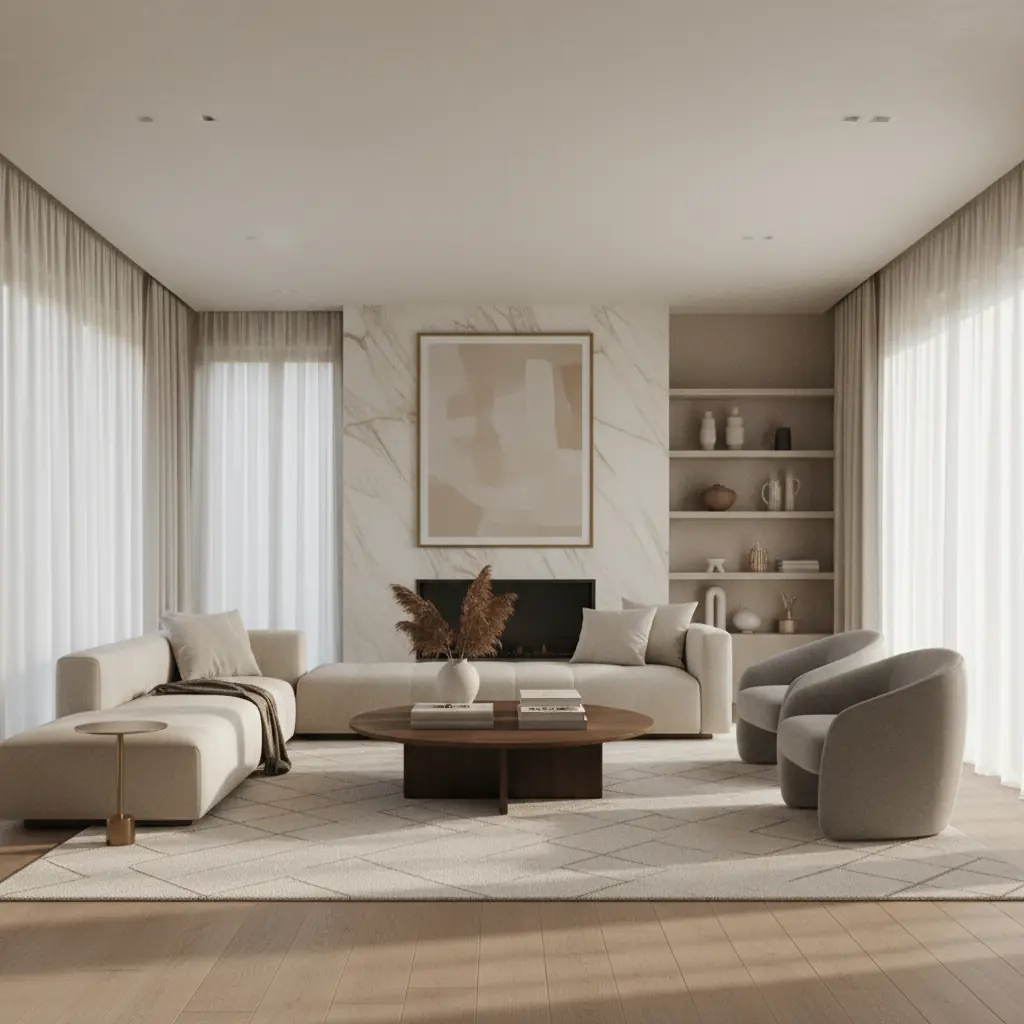
O que define o luxo discreto no design de interiores?
O luxo discreto na moda significa um suéter de cashmere de US$ 3.000 sem logotipo visível — a qualidade é evidente para quem percebe, invisível para quem não. A mesma filosofia se traduz diretamente para o design de interiores: ambientes que parecem caros não pelo que exibem, mas pelo que são feitos. Nada de papel de parede chamativo, móveis de design de marca com silhuetas reconhecíveis, ou peças de destaque que gritam "olhe para mim". Em vez disso, o investimento é direcionado à qualidade do material, proporções perfeitas e detalhes tão bem pensados que se integram ao ambiente.
Uma sala de estar de luxo discreto pode ter um sofá que parece simples à primeira vista — linhas limpas, cor neutra, sem tufos ou pregos decorativos. Mas sente-se nele e você sentirá molas de oito vias amarradas à mão, almofadas envoltas em plumas e um tecido que claramente não é poliéster. A mesa de centro é de nogueira maciça, não folheada. O tapete é de lã amarrado à mão, não feito à máquina. Nada grita; tudo sussurra. O efeito cumulativo é um ambiente que parece elevado sem esforço e profundamente confortável — você não consegue apontar uma única coisa cara, mas sente que tudo é _bom_.
Este é o oposto da abordagem da "peça de investimento", onde um item de design dramático ancora um ambiente de outra forma modesto. O luxo discreto trata de elevar o nível de tudo. As ferragens das portas, os interruptores de luz, o acabamento da pintura, os varões de cortina — cada elemento é considerado e de qualidade, não apenas as peças principais. É um compromisso holístico com o artesanato e o design bem pensado. Estudos mostram que móveis de qualidade, especialmente peças de madeira maciça, podem durar mais de 50 anos com os devidos cuidados, em comparação com apenas 5 a 10 anos para muitas alternativas folheadas produzidas em massa, tornando o luxo discreto um investimento em longevidade, bem como em estética.
Esta filosofia de design enfatiza um senso de permanência e atemporalidade. Casas com interiores clássicos e atemporais, em vez de estilos impulsionados por tendências, tendem a manter seu valor percebido de forma mais eficaz, com algumas análises imobiliárias sugerindo um apelo 10-15% maior para potenciais compradores em um período de 5 anos. Trata-se de criar espaços que não são apenas bonitos, mas duradouros.
Que paletas de cores definem o luxo discreto?
A paleta de cores é composta por neutros com profundidade. Não um bege "chapado" — mas neutros em camadas que cada um traz algo diferente. Camel (o neutro quente e dourado que transmite sofisticação sem esforço), pedra (um cinza-bege frio que ancora sem dominar), marfim (mais quente que o branco, mais suave que o creme) e cinza quente (a espinha dorsal da paleta — um cinza com subtons marrons suficientes para nunca parecer frio). A escolha desses tons é deliberada, visando criar uma atmosfera de calma e sofisticação discreta, em vez de um contraste marcante.
A chave é a gama tonal dentro de uma faixa estreita. Um ambiente de luxo discreto pode usar seis tons neutros diferentes — paredes em marfim, sofá cor de pedra, manta camel, tapete cinza quente, cortinas creme, almofadas em tons de taupe — mas todos pertencem à mesma família de neutros quentes. O interesse vem da variação sutil entre os tons e da interação de diferentes texturas, não do contraste de cores fortes. É como olhar para dunas de areia: cada superfície é "bege", mas nenhuma é igual, e o efeito geral é rico, complexo e profundamente relaxante. Se você está experimentando mudanças sutis de cor para criar esse tipo de profundidade, um [gerador de paleta de cores com IA](/blog/ai-color-palette-generator) pode ser uma ferramenta inestimável para garantir a harmonia entre os tons escolhidos.
Cores de destaque, quando usadas, são suaves e derivadas da natureza: verde-oliva profundo (não verde-brilhante), bordô empoeirado (não vermelho), azul-marinho (nunca azul-brilhante). Elas aparecem em pequenas doses — um único conjunto de almofadas, um vaso, uma pilha de livros ou talvez uma peça de arte. O destaque nunca domina; ele oferece uma pontuação discreta em um ambiente que é, de outra forma, tonal, atraindo o olhar sutilmente sem perturbar a sensação geral de tranquilidade.
Que materiais definem os interiores de luxo discreto?
Os materiais são o ponto principal. No luxo discreto, a experiência tátil é tão importante quanto a visual. Cashmere e lã merino para mantas e almofadas — não misturas acrílicas que formam bolinhas após uma estação. Essas fibras naturais oferecem maciez e caimento inigualáveis, desenvolvendo um caráter rico ao longo do tempo. Mármore (natural, não cultivado ou sintético) para superfícies onde a pedra é apropriada — mesas de centro, bancadas de banheiro, lareiras. A pedra natural traz um padrão orgânico e um toque frio e luxuoso que as alternativas fabricadas simplesmente não conseguem replicar.
Madeira maciça (nogueira, carvalho branco, teca) para móveis — nunca MDF, nunca folheado se o orçamento permitir madeira maciça. O peso, o grão e a durabilidade da madeira maciça falam muito sobre qualidade. Latão escovado ou bronze sem laca para ferragens — metais que desenvolvem uma pátina rica e viva ao longo do tempo, em vez de permanecerem artificialmente brilhantes. Este envelhecimento sutil adiciona à história e ao caráter da peça, abraçando a imperfeição como parte de sua beleza.
O couro no luxo discreto é anilina ou semianilina — couro de flor integral que mostra marcas naturais, desenvolve caráter com o uso e tem um toque quente. Não couro reconstituído, nem couro de grão corrigido com uma superfície uniforme e plastificada. O couro deve parecer e sentir-se melhor em cinco anos do que hoje, envelhecendo graciosamente junto com seu proprietário. O linho é usado em todo lugar — cortinas, estofados, roupas de cama, guardanapos — porque sua textura natural, belo caimento e qualidades respiráveis indicam qualidade sem decoração. Algodão percal de alta contagem de fios (400+) para roupas de cama, não cetim, porque o acabamento nítido e fosco do percal transmite uma sensação de limpeza e de caro de forma discreta, enquanto o brilho do cetim pode parecer excessivo. Uma pesquisa recente indicou que 68% dos proprietários priorizam materiais naturais como madeira, pedra e linho na decoração de suas casas, tanto por benefícios estéticos quanto de saúde, sublinhando seu valor inerente.
Luxo discreto é o mesmo que minimalismo? Compreendendo a distinção.
Esta distinção é significativamente importante. Embora ambas as estéticas compartilhem um apreço por linhas limpas e espaços desobstruídos, suas filosofias subjacentes divergem. O minimalismo é fundamentalmente sobre redução — menos objetos, menos ruído visual, máximo espaço negativo. A pergunta central que um minimalista faz é: "Posso remover isso?"
O luxo discreto, por outro lado, trata de elevação — não necessariamente menos objetos, mas objetos _melhores_. A pergunta orientadora é: "Esta é a melhor versão disso?" Um quarto minimalista pode apresentar apenas um colchão em uma plataforma simples, um criado-mudo e nada mais. Um quarto de luxo discreto, ao contrário, pode ter uma cama totalmente arrumada com roupas de cama em camadas de alta qualidade, dois criados-mudos com lâmpadas de cerâmica requintadas, um banco cuidadosamente escolhido aos pés da cama, uma peça de arte sutil e significativa na parede e cortinas de linho perfeitamente drapeadas. Cada elemento é feito de materiais excepcionais, proporcionado com cuidado e contribui para uma sensação geral de riqueza e conforto, mesmo que o número total de itens seja maior do que em um espaço minimalista.
Eles podem, sem dúvida, se sobrepor — o luxo discreto é frequentemente visualmente limpo porque a desordem mina o senso de intencionalidade e qualidade. No entanto, o princípio motivador é diferente. Você pode ter um ambiente de luxo discreto que é cheio e em camadas, desde que cada camada seja considerada e de alta qualidade. E, inversamente, você pode ter um ambiente minimalista que não é luxo discreto de forma alguma, simplesmente porque os poucos objetos restantes são de baixa qualidade ou produzidos em massa. A diferença crítica reside na ênfase no _valor inerente_ e no _artesanato_ em detrimento da mera simplicidade. Essa abordagem holística se estende à forma como os móveis são organizados para otimizar o fluxo e criar uma sensação de calma; usar uma [ferramenta de arranjo de móveis com IA](/blog/ai-furniture-arrangement-tool) pode ajudá-lo a equilibrar perfeitamente as proporções e criar um layout intuitivo e luxuoso.
Marcas e referências que valem a pena estudar para inspiração de luxo discreto
Para realmente entender a essência do luxo discreto, é benéfico estudar exemplos de marcas que epitomizam essa estética. Para móveis, explore as linhas da B&B Italia, Poliform, Molteni&C e até mesmo as coleções de alto padrão da Restoration Hardware. O objetivo não é necessariamente comprar (embora, se você puder, essas peças sejam investimentos excepcionais), mas treinar seu olhar para proporções perfeitas, materiais sublimes e detalhes discretos. Observe como o mobiliário de luxo discreto evita truques visuais — nada de pernas hairpin da moda, tufos exagerados ou combinações experimentais de materiais que priorizam a novidade em detrimento da longevidade. As formas são clássicas, refinadas e contidas; a distinção está inteiramente na qualidade superior do material e no artesanato meticuloso.
Para estofados e tecidos, observe marcas como Tekla (conhecida por suas roupas de cama e banho excepcionais), The Citizenry (têxteis feitos eticamente com forte ênfase na integridade do material e no artesanato global) e Hay (design dinamarquês que equilibra lindamente a acessibilidade com a qualidade genuína e pensada do design). Para iluminação, Apparatus, Workstead e Roll & Hill criam luminárias que parecem esculturas sem chamar a atenção, frequentemente usando materiais naturais como alabastro, latão e vidro soprado à mão.
Além das marcas individuais, estude interiores de hotéis de luxo. Redes como Edition, Aman e 1 Hotels consistentemente executam o luxo discreto em grande escala. Seus quartos são meticulosamente fotografados online e oferecem uma aula magistral na aplicação desses princípios para criar ambientes verdadeiramente tranquilos e sofisticados. Preste atenção em como eles sobrepõem texturas, usam iluminação sutil e priorizam o conforto e o design duradouro em vez de tendências passageiras.
Alcançando o visual de luxo discreto com um orçamento realista
O luxo discreto com preço de varejo integral de marcas de alta qualidade é, sem dúvida, caro — essa é a verdade incômoda. No entanto, a estética e a _sensação_ de luxo discreto são absolutamente alcançáveis por uma fração dos preços de design se você priorizar corretamente e fizer escolhas inteligentes. O que tradicionalmente levava 2 a 4 semanas para designers de interiores renderizarem pode agora ser alcançado em minutos com plataformas impulsionadas por IA como a Habitas, tornando a exploração do design mais rápida e acessível para visualizar seu luxo econômico.
**Priorize elementos táteis**: Invista em coisas que você toca diariamente: o tecido do sofá, a roupa de cama, o tapete sob os pés. Esses elementos táteis definem a "sensação" do luxo discreto mais do que qualquer coisa visual. Você pode encontrar tapetes de lã maciça, cortinas de linho genuíno e roupas de cama de algodão de qualidade de marcas como Quince, Parachute e Cultiver por 20-30% dos preços de varejo de luxo. Investir nesses itens, mesmo que custem um pouco mais inicialmente, compensa em conforto e durabilidade. Embora o custo inicial possa ser maior para peças de qualidade, investir em itens duráveis e de alta qualidade pode economizar aos proprietários de 30-50% ao longo de uma década, reduzindo a necessidade de substituições frequentes de alternativas mais baratas.
**Abrace o mercado de segunda mão**: Para móveis, o mercado de segunda mão é seu maior aliado. Móveis de madeira maciça das décadas de 1960 a 1980 (pense no design dinamarquês de meados do século, American Shaker ou até mesmo peças tradicionais bem feitas) são genuinamente de qualidade superior à maioria dos móveis novos pelo mesmo preço. Uma mesa de jantar vintage de nogueira encontrada no Chairish, Etsy ou em um leilão local geralmente terá madeira e encaixes melhores do que uma nova pelo dobro do preço. Não tenha medo de restaurar ou reformar se necessário — a estrutura importa mais do que o acabamento existente.
**Atualizações inteligentes**: Em vez de uma reforma completa, concentre-se em atualizações-chave. Substituir interruptores de luz e tomadas de plástico baratos por outros de metal maciço (como latão escovado ou preto fosco) pode elevar significativamente a sensação de um ambiente. Aprimorar as ferragens das portas ou adicionar varões de cortina substanciais e bem feitos pode fazer uma grande diferença. Para aqueles curiosos sobre as possibilidades, explorar [projetos de ambientes gerados por IA](/blog/ai-generated-room-designs-realistic) pode oferecer uma inspiração incrível para alcançar este visual refinado sem um orçamento enorme.
Use o Habitas para visualizar o efeito geral antes de comprar peças individuais. Carregue seu ambiente e descreva a estética de luxo discreto que você busca. Ver uma prévia fotorrealista do seu espaço com materiais aprimorados e uma paleta de neutros tonais ajuda você a priorizar quais compras terão o maior impacto – para que você invista nos lugares certos, em vez de espalhar um orçamento limitado demais em tudo. Além disso, abordar uma renovação de luxo discreto não precisa significar começar do zero. Muitos elementos podem ser atualizados ao longo do tempo. Se você está trabalhando com um orçamento limitado e quer ver como pequenas mudanças podem criar um grande impacto, nosso guia sobre [decoração de apartamento com orçamento](/blog/apartment-decorating-budget) oferece dicas práticas que se alinham com muitos princípios do luxo discreto. Para uma verdadeira transformação que incorpora o luxo discreto, você pode considerar como pequenos ajustes podem levar a melhorias dramáticas, semelhante aos insights encontrados em [transformações de ambientes antes e depois](/blog/ai-interior-design-before-and-after) utilizando IA.
Perguntas Frequentes
### Quais são os princípios centrais do luxo discreto no design de interiores?
Os princípios centrais do luxo discreto no design de interiores giram em torno de qualidade em vez de quantidade, elegância discreta e um foco no artesanato. Isso significa priorizar materiais naturais excepcionais (como madeira maciça, pedra natural, lã, linho), proporções perfeitas e detalhes meticulosos. O design deve parecer atemporal e refinado, em vez de abertamente moderno ou chamativo, com ênfase na criação de uma atmosfera confortável, duradoura e sofisticada sem esforço.
### Como posso fazer minha casa parecer mais luxuosa com um orçamento limitado?
Alcançar um visual luxuoso com um orçamento envolve priorização estratégica. Concentre seu investimento em elementos táteis com os quais você interage frequentemente, como roupas de cama de alta qualidade, mantas macias e um tapete durável. Opte por móveis de madeira maciça de segunda mão em vez de peças folheadas novas e de baixa qualidade, e não hesite em restaurar. Atualizações sutis, como substituir ferragens baratas por versões de metal maciço ou escolher uma paleta de pintura sofisticada e discreta, também podem aumentar dramaticamente o valor percebido de um espaço.
### O luxo discreto é uma tendência passageira ou um estilo duradouro?
O luxo discreto, embora atualmente em alta, incorpora princípios inerentemente atemporais, sugerindo que é mais um estilo duradouro do que uma tendência passageira. Sua ênfase em materiais de qualidade, artesanato e design clássico garante longevidade, resistindo à rápida obsolescência do fast fashion em interiores. Ao focar na beleza e conforto duradouros, o luxo discreto se alinha a uma abordagem sustentável do design que valoriza a permanência em vez da novidade, tornando-o uma escolha estética inteligente a longo prazo.
### Qual é o esquema de cores ideal para uma casa com luxo discreto?
O esquema de cores ideal para uma casa com luxo discreto é uma gama sofisticada de neutros em camadas. Pense em cinzas quentes, marfins suaves, camel profundos e tons de pedra calmos. A chave é criar profundidade e interesse através de variações tonais sutis e texturas contrastantes dentro desta faixa de cor estreita, em vez de depender de contrastes de cores fortes. Quando os detalhes são usados, eles são suaves e inspirados na natureza, como verde-oliva empoeirado, azul-marinho profundo ou bordô, usados com moderação para fornecer uma pontuação discreta.