Dominando o Vintage e o Moderno: Seu Guia para Misturar Eras de design
Desvende um estilo único misturando móveis vintage e modernos. Descubra a regra 80/20, as melhores combinações de eras, dicas inteligentes de garimpo e como a IA da Habitas te ajuda a visualizar sua mistura perfeita.
Por Que Interiores Curados Contam uma História Melhor
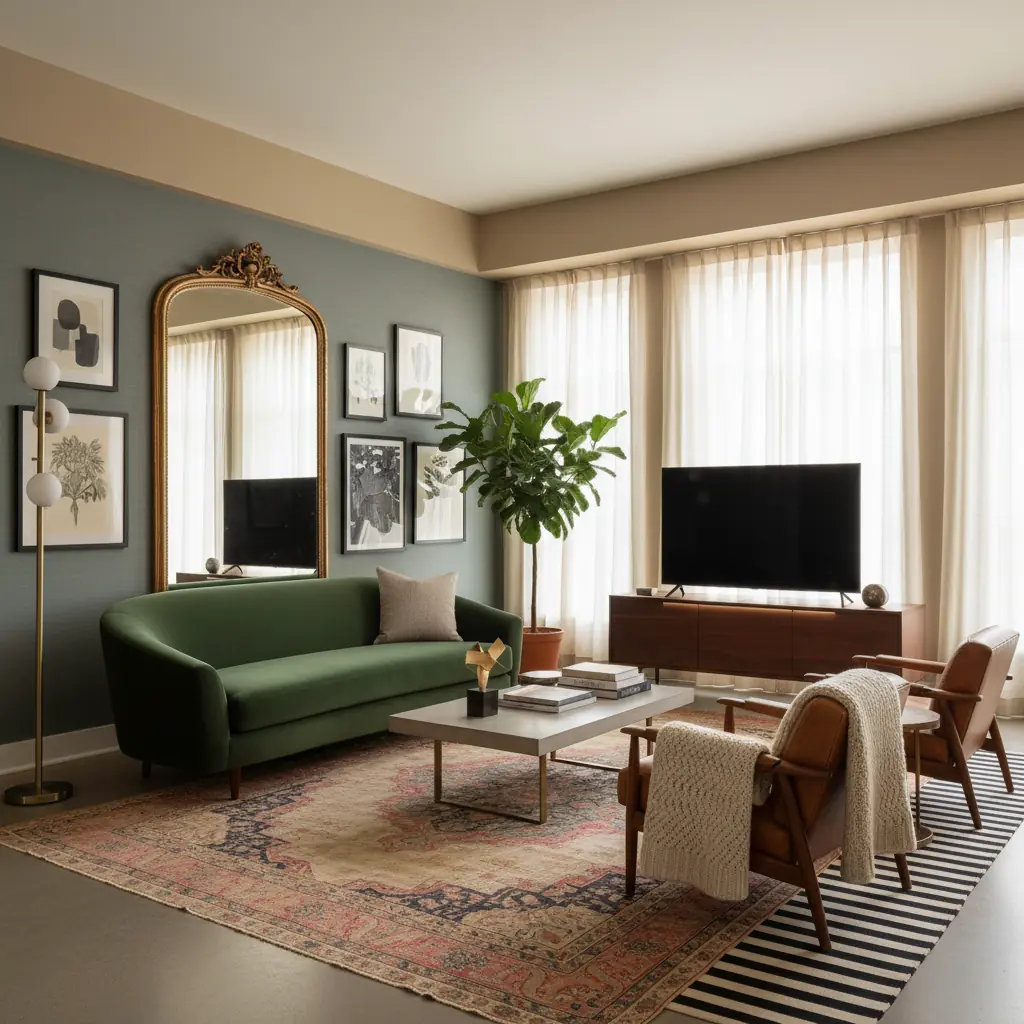
Entre em um cômodo onde cada peça foi comprada do mesmo catálogo e você notará algo: parece bom, mas é esquecível. Como um quarto de hotel – agradável, funcional, sem personalidade. Agora, entre em um cômodo com uma credenza de teca dos anos 1960 ao lado de um sofá moderno de linho com um tapete persa vintage. Esse cômodo conta uma história. Ele tem camadas. Sussurra sobre viagens, achados preciosos e uma vida vivida com intenção.
A mudança de conjuntos de móveis combinando para interiores curados e de eras mistas é uma das alterações mais significativas na forma como as pessoas decoram. Reflete um valor cultural mais amplo: autenticidade sobre perfeição, sustentabilidade sobre descartabilidade. Um cômodo cheio de personalidade vale mais — emocional, estética e até financeiramente — do que um cômodo cheio de peças coordenadas de uma única marca. Estudos mostram que espaços cuidadosamente projetados, especialmente aqueles com elementos únicos, podem aumentar o valor percebido. Por exemplo, casas profissionalmente encenadas (staged), que frequentemente incorporam toques curados, vendem em média **25% mais rápido** e por **6% mais** do que casas não encenadas. Isso fala sobre o poder de um cômodo que parece habitado e único, em vez de simplesmente decorado.
Misturar peças vintage e modernas não é apenas uma tendência; é uma filosofia de design duradoura que celebra a individualidade, o artesanato e a beleza do contraste. Permite que sua casa evolua com você, incorporando peças colecionadas ao longo do tempo, em vez de se limitar a um único momento ou estilo.
Dominando a Regra 80/20 para Misturar Eras de design
A estrutura mais confiável para um espaço harmonioso e de eras mistas é a regra 80/20. Este princípio sugere que você deixe uma era dominar aproximadamente 80% dos elementos do cômodo, usando outra era para os 20% restantes como um contraste estratégico. Essa abordagem evita que o espaço pareça caótico ou uma coleção aleatória de um mercado de pulgas, alcançando em vez disso um visual equilibrado e intencional.
### Quando o Moderno Domina (80% Moderno, 20% Vintage)
Se sua base é predominantemente moderna – pense em sofás de linhas limpas, luminárias minimalistas, uma paleta de cores neutras e arte contemporânea – introduza 1-2 peças vintage de destaque. Estas podem ser:
- **Uma Poltrona Mid-century Modern:** Uma clássica poltrona Eames lounge ou uma poltrona dinamarquesa de teca pode adicionar calor, um toque de design histórico e um elemento escultural e confortável a uma sala de estar elegante e contemporânea. - **Uma Mesa Lateral Antiga:** Uma delicada mesa lateral French Provincial ou um console Art Deco ornamentado pode proporcionar detalhes intrincados e um toque de charme do velho mundo em um cenário de móveis minimalistas. - **Uma Pintura a Óleo ou Tapeçaria Vintage:** Uma impressionante obra de arte vintage emoldurada pode instantaneamente se tornar um ponto focal, injetando cor, textura e um senso de história em um ambiente mais discreto. - **Um Carrinho de Bar Retrô:** Um carrinho de bar de latão e vidro brilhante dos anos 60 pode adicionar um toque divertido e sofisticado a uma área de jantar ou sala de estar moderna.
As peças vintage atuam como âncoras, impedindo que o espaço moderno pareça frio ou estéril.
### Quando o Vintage Domina (80% Vintage, 20% Moderno)
Por outro lado, se sua base é mais vintage ou tradicional – talvez apresentando detalhes arquitetônicos originais, um substancial conjunto de jantar antigo, espelhos ornamentados ou painéis de madeira tradicionais – algumas peças modernas bem escolhidas podem evitar que o cômodo pareça um museu. Considere integrar:
- **Uma Luminária Contemporânea:** Um elegante pendente escultural ou um lustre abstrato pode modernizar instantaneamente uma sala de jantar formal ou um hall de entrada, direcionando o olhar para cima. - **Uma Mesa Console Minimalista:** Um console de concreto bruto ou metal elegante pode proporcionar um contraste marcante e sólido a um espelho antigo ricamente detalhado ou a uma parede de galeria de retratos vintage. - **Têxteis Modernos:** Introduza almofadas contemporâneas, um sofá de linho de cor sólida ou cortinas com padrões abstratos para renovar peças vintage estofadas ou suavizar um cômodo repleto de móveis de madeira pesados. - **Arte Abstrata:** Uma grande tela abstrata sem moldura pode quebrar a simetria tradicional de um espaço vintage, adicionando um ponto focal que parece fresco e inesperado.
O contraste é o que faz ambos os elementos brilharem. Sem o contraponto moderno, a peça vintage pode parecer apenas velha. Sem a âncora vintage, a peça moderna pode parecer genérica.
A divisão 80/20 é um ponto de partida altamente eficaz, não uma lei inquebrável. À medida que você desenvolve confiança e um olhar mais apurado para o equilíbrio, pode avançar para uma mistura de 60/40 ou até mesmo uma mistura eclética 50/50, onde ambas as eras têm peso significativo. Para experimentos iniciais, no entanto, a regra 80/20 mantém seu design fundamentado e garante uma estética coesa.
Quais São as Melhores Combinações Vintage-Moderno Para Meu Home Office?
Selecionar as eras certas para misturar é crucial para um interior vintage-moderno bem-sucedido. Certos períodos se complementam naturalmente devido a princípios compartilhados, estéticas contrastantes ou um compromisso similar com o artesanato.
### 1. Mid-century Modern (1940s-1960s) com Minimalismo Contemporâneo
Esta é, sem dúvida, a combinação mais fácil e popular de se conseguir. As linhas limpas, formas orgânicas e o foco funcional dos móveis mid-century — pense em cadeiras Eames, bancos Nelson, credenzas de nogueira e mesas de inspiração Scandinavian — se encaixam naturalmente ao lado de peças minimalistas modernas. Ambos os estilos priorizam a simplicidade e a forma segue a função.
- **Por que funciona:** As peças vintage adicionam calor, tons ricos de madeira e o charme inegável do design icônico que os novos móveis minimalistas frequentemente não possuem. Elas introduzem textura e um toque retrô sutil sem sobrecarregar a sensação contemporânea. - **Elementos chave:** Combine um sofá contemporâneo elegante e de perfil baixo com uma mesa de centro clássica mid-century. Misture iluminação de trilho moderna com um lustre Sputnik vintage. Use um tapete contemporâneo neutro para ancorar uma coleção de cadeiras mid-century. - **Dica Habitas:** Se você não tem certeza de como uma peça vintage, como um [aparador mid-century modern](/blog/best-interior-design-styles-2026) específico, ficaria em sua sala de estar contemporânea, a Habitas pode gerar renders realistas para ajudá-lo a visualizá-lo.
### 2. Antigo/Tradicional (Séculos XVIII-XIX) com Industrial
Esta combinação cria uma tensão cativante através de contrastes marcantes. Os detalhes ornamentados, madeiras ricas e a gravitas histórica dos móveis antigos encontram os materiais brutos e expostos e a estética utilitária do design industrial.
- **Por que funciona:** As arestas rústicas das peças industriais (tijolos expostos, aço, concreto) proporcionam um contraponto sólido e masculino à elegância refinada das antiguidades. As peças antigas, por sua vez, suavizam a possível aspereza dos elementos industriais, adicionando calor e sofisticação. - **Elementos chave:** Imagine uma mesa de jantar rústica de fazenda com pernas de grampo de ferro, cercada por cadeiras de jantar antigas estofadas. Ou um grande espelho Vitoriano acima de uma mesa console de concreto bruto. Arandelas de latão vintage podem iluminar estantes de aço exposto, mesclando o charme do velho mundo com o chique industrial. - **Foco em materiais:** Pense em madeiras escuras e ricas (nogueira, mogno) para antiguidades, combinadas com metais brutos (aço, ferro), madeira de demolição e concreto para toques industriais.
### 3. Art Deco (Anos 1920-1930) com Glam Moderno
Para espaços que exigem sofisticação e um toque de drama, o Art Deco combinado com o glam moderno é uma escolha requintada. O Art Deco é caracterizado por padrões geométricos, simetria ousada, materiais opulentos (cromo, vidro, espelhos, laca) e uma sensação de luxo.
- **Por que funciona:** Ambos os estilos se deleitam com a elegância e uma certa teatralidade. O glam moderno baseia-se na fundação do Art Deco de materiais luxuosos e acabamentos polidos, mas simplifica as formas para um apelo mais contemporâneo. - **Elementos chave:** Esta combinação funciona lindamente em salas de jantar, halls de entrada e quartos principais. Considere um lustre de latão geométrico, cadeiras vintage estofadas em veludo e superfícies espelhadas misturadas com arquitetura contemporânea limpa. A chave é a moderação: uma peça de destaque Art Deco por cômodo, como um marcante bar ou um [espelho de parede geométrico](/blog/art-deco-interior-design), em vez de uma recriação completa do Gatsby. - **Paleta de cores:** Preto, branco, dourado e tons de joias profundos (verde esmeralda, azul safira) são perfeitos para esta mistura dramática.
### 4. Rústico/Farmhouse (Várias Eras) com Scandinavian Contemporâneo
Esta combinação reúne o conforto e o calor das estéticas rústicas ou de fazenda com o design limpo, brilhante e funcional do estilo Scandinavian.
- **Por que funciona:** Ambos os estilos valorizam materiais naturais e conforto. O rústico/farmhouse proporciona textura, robustez e um senso de herança, enquanto o design Scandinavian introduz luz, espaço aberto e formas simples e elegantes. - **Elementos chave:** Uma mesa de jantar de madeira de demolição (rústica) combinada com cadeiras minimalistas de carvalho branco (Scandinavian). Um sofá de linho aconchegante e oversized (contemporâneo) adornado com mantas de tricô grosso e almofadas vintage bordadas. Paredes caiadas e abundante luz natural do lado Scandinavian fornecem um pano de fundo sereno para um baú de madeira vintage ou uma coleção de cerâmica antiga.
### 5. Tradicional (Séculos XVIII-XX) com Contemporâneo Minimalista
Esta é uma mistura mais ousada que pode render resultados impressionantes quando feita com cuidado. Envolve a combinação de móveis tradicionais clássicos, muitas vezes ornamentados, com a simplicidade marcante e as linhas limpas do design minimalista.
- **Por que funciona:** O contraste é marcante, mas cativante. Peças tradicionais proporcionam peso histórico, artesanato e detalhes intrincados, enquanto elementos minimalistas removem o excesso, criando espaço visual para respirar e destacando a beleza das formas tradicionais. - **Elementos chave:** Uma imponente lareira tradicionalmente esculpida pode ser ladeada por duas poltronas ultramodernas e de perfil baixo. Um tapete persa antigo pode ancorar um cômodo com uma mesa de centro de vidro minimalista e um sofá modular branco contemporâneo. A chave é permitir que as peças tradicionais sejam celebradas como formas de arte, em vez de parecerem abarrotadas.
Onde Encontrar Peças Vintage de Qualidade
Garimpar móveis vintage únicos faz parte da aventura de criar um home office curado. Embora exija paciência e um olhar perspicaz, o retorno em termos de caráter e sustentabilidade é imenso. O mercado de móveis vintage está em plena expansão; estima-se que o mercado global de móveis de segunda mão esteja crescendo a uma taxa de crescimento anual composta de aproximadamente **8,5%**, atingindo quase 20 bilhões de dólares até 2027. Isso indica não apenas uma forte demanda, mas também uma oferta crescente de peças de qualidade.
### Leilões de Patrimônio (Estate Sales): O Segredo Mais Bem Guardado
Os leilões de patrimônio (estate sales) são frequentemente o padrão ouro para encontrar peças vintage autênticas e de alta qualidade a preços negociáveis. Você geralmente está comprando diretamente de uma casa, o que significa que as peças frequentemente têm uma história e um passado.
- **Como encontrá-los:** Websites como EstateSales.net e EstateSale.com listam vendas futuras por CEP. Muitas casas de leilão locais também conduzem leilões de patrimônio. - **Dicas para o sucesso:** - **Chegue cedo no primeiro dia:** Para a melhor seleção e as peças mais desejáveis. - **Visite no último dia:** Frequentemente, os preços são reduzidos em 50% ou mais, tornando-o ideal para achados econômicos, especialmente itens maiores. - **Inspecione minuciosamente:** Procure por integridade estrutural, sinais de danos por água, grandes reparos ou problemas de pragas. Verifique gavetas, junções e estofamento. - **Negocie:** Não tenha medo de fazer uma oferta, especialmente em itens maiores ou compras múltiplas. - **Traga ajuda:** Para carregar itens grandes, e meça seu veículo de antemão.
### Marketplaces Online: Conveniência e Curadoria
O cenário digital para achados vintage amadureceu significativamente, oferecendo uma vasta gama de opções.
- **1stDibs:** Este é o segmento premium, apresentando peças antigas e vintage autênticas e de alta qualidade de grandes revendedores de todo o mundo. Espere uma curadoria requintada e preços correspondentes. Ótimo para peças de investimento. - **Chairish:** Situa-se em um nível intermediário, oferecendo uma ampla gama de vendedores verificados, preços razoáveis e boas políticas de devolução. Você pode encontrar de tudo, desde credenzas mid-century até espelhos antigos. Seus filtros de busca são robustos. - **Pamono & VNTG:** Excelentes fontes de móveis vintage e antigos europeus, muitas vezes especializados em períodos específicos como Scandinavian ou Art Deco. O frete pode ser um fator, mas a seleção é única. - **Etsy Vintage:** Um tesouro para itens decorativos menores, iluminação e peças de mobiliário menores. Os itens devem ter mais de 20 anos para serem qualificados como vintage no Etsy. Seja específico com seus termos de busca. - **Facebook Marketplace & Craigslist:** O "Velho Oeste" do garimpo online. Você pode encontrar ofertas incríveis, mas exige pesquisa diligente, fortes habilidades de negociação e um compromisso com a inspeção presencial. Sempre encontre-se em um local público e seguro para itens menores, ou traga um amigo ao visitar casas. - **Sites de Períodos Específicos:** Muitos revendedores online são especializados em eras particulares, como móveis da era atômica dos anos 1950 ou decoração Vitoriana. Uma busca rápida por "móveis vintage [era]" pode revelar sites de nicho.
### Lojas de Antiguidades Locais e Brechós de Consignação: Construindo Relacionamentos
Não ignore as lojas físicas. Essas lojas frequentemente têm um estoque único que muda com frequência.
- **Benefícios:** Você pode inspecionar fisicamente as peças, evitando surpresas. Muitas lojas também oferecem serviços de restauração. - **Construindo relacionamentos:** Visite regularmente e apresente-se ao proprietário. Descreva o que você procura, e eles frequentemente o ligarão diretamente quando algo correspondente chegar. Esta "pista interna" pode ser inestimável. - **Preços:** Espere uma margem de lucro (tipicamente 30-60%) acima dos leilões de patrimônio, pois você está pagando pela curadoria, custos operacionais e, às vezes, restauração leve.
### O Que Inspecionar ao Comprar Vintage
Independentemente de onde você garimpe suas peças vintage, sempre realize uma inspeção minuciosa:
- **Estrutura:** Verifique se há oscilações, juntas soltas, rachaduras ou danos significativos. Para cadeiras, sente-se nelas. Para mesas, apoie-se nelas. - **Madeira:** Procure por arranhões profundos, manchas de água, danos no folheado e sinais de cupins. Autentique o tipo de madeira, se possível (ex: nogueira vs. folheado). - **Estofamento:** Inspecione por rasgos, manchas, desgaste excessivo, odores e a condição das molas ou almofadas. Reestofar pode ser caro, então leve isso em consideração no preço de compra. - **Ferragens:** Verifique se as ferragens originais estão presentes e funcionais. Puxadores faltando ou desparelhados podem diminuir o valor. - **Portas e Gavetas:** Certifique-se de que abrem e fecham suavemente, sem emperrar ou ter folgas excessivas. - **Cheiro:** Um odor de mofo pode indicar bolor ou umidade prolongada. Odores fortes de fumaça também são difíceis de remover.
Dicas Práticas de Estilo e Como Usar IA para Pré-Visualizar Sua Visão
Além da regra 80/20 e do garimpo, o sucesso na mistura de eras se resume a um design habilidoso.
### Ancore com Uma Peça Vintage de Destaque
Na maioria dos cômodos, uma peça vintage de destaque bem escolhida é intencional e impactante. Três ou mais podem começar a parecer uma loja de segunda mão. Deixe que esta peça âncora seja o início da conversa, e mantenha o resto do cômodo calmo e complementar.
- **Na sala de estar:** Isso pode ser uma credenza mid-century funcionando como console de mídia, uma poltrona antiga ricamente estofada ou uma mesa de centro Art Deco escultural. - **No quarto:** Um criado-mudo antigo de um lado da cama, uma penteadeira retrô ou uma cômoda vintage lindamente restaurada. - **Na sala de jantar:** Uma grande mesa de jantar vintage maciça, ou um conjunto de cadeiras de jantar vintage únicas que contrastam com uma mesa moderna.
### Use Elementos Unificadores: Cor, Textura e Forma
Para evitar que a mistura pareça aleatória, procure por elementos comuns que sutilmente unam as diferentes eras.
- **Fio Condutor de Cor:** Se seu sofá moderno é cinza-carvão, procure uma peça vintage com tons cinza-carvão ou similares — uma mesa lateral de laca preta, uma estante de nogueira escura ou uma obra de arte com uma paleta profunda e complementar. Um [esquema de cores](/blog/ai-color-palette-generator) consistente pode criar harmonia visual entre objetos diversos. - **Jogo de Texturas:** Misture áspero com liso, macio com duro. Um baú de madeira rústico ao lado de uma elegante luminária de vidro, ou uma poltrona vintage de veludo luxuoso combinada com uma mesa lateral minimalista de aço. A sobreposição de texturas variadas evita que qualquer elemento pareça deslocado. - **Repetição de Formas:** Percebe uma forma geométrica recorrente (círculos, quadrados, arcos) ou uma qualidade de linha específica (curva, retilínea) tanto em suas peças vintage quanto nas modernas? Dê ênfase a isso. Por exemplo, se você tem um sofá moderno arredondado, procure uma peça vintage com curvas suaves e orgânicas.
### Brinque com Escala e Proporção
Misturar eras frequentemente significa misturar peças de diferentes escalas. Um grande armário antigo pode ofuscar uma mesa lateral minimalista se não for equilibrado corretamente. Certifique-se de que as peças dominantes não sobrecarreguem o cômodo e que as peças menores não se percam. Use itens vintage maiores em cômodos com tetos altos ou espaço amplo, e equilibre-os com peças contemporâneas que tenham um peso visual mais leve.
### Camada de Têxteis e Iluminação
Os têxteis são uma maneira fácil de unir eras. Um tapete persa vintage pode ancorar uma sala de estar moderna, ou uma manta contemporânea pode atualizar um sofá antigo. Use têxteis para introduzir padrões, cores e texturas que unem peças díspares.
A iluminação também desempenha um papel crucial. Uma luminária de trilho moderna pode destacar uma obra de arte vintage, enquanto um abajur clássico pode suavizar uma mesa contemporânea austera. Misture iluminação embutida com lustres, luminárias de chão e iluminação de tarefa para criar diferentes zonas e ambientes.
### Crie Uma Curadoria de Arte e Acessórios com Cuidado
Arte e acessórios são os toques finais. Uma parede de galeria misturando estampas modernas com paisagens vintage pode ser incrivelmente eficaz. Da mesma forma, combinar vasos antigos com esculturas modernas elegantes, ou uma coleção de livros vintage com decoração contemporânea, adiciona profundidade sem o compromisso com grandes peças de mobiliário. Lembre-se que a regra 80/20 também se aplica aqui: deixe um estilo guiar suas escolhas de acessórios, com alguns toques surpreendentes de outra era.
### Visualize com IA: Elimine as Dúvidas
Uma das partes mais difíceis de misturar eras é a incerteza — aquela credenza vintage realmente ficará boa no meu cômodo moderno? Aquele espelho antigo entrará em conflito com minha decoração contemporânea? É aqui que as ferramentas de visualização de IA como a Habitas se tornam genuinamente úteis, revolucionando a forma como abordamos o design de interiores.
Em vez de adivinhar ou cometer erros caros, você pode carregar uma foto do seu cômodo atual, descrever a peça vintage que está considerando (ou carregar uma foto dela), e a Habitas gerará renders realistas mostrando exatamente como ela ficaria no seu espaço. Esta tecnologia elimina as suposições e a ansiedade de "espero que isso funcione" ao comprar vintage sem ver. Você pode experimentar várias combinações, [testar diferentes arranjos de móveis](/blog/ai-furniture-arrangement-tool) e até mesmo pré-visualizar [designs de cômodos gerados por IA](/blog/ai-generated-room-designs-realistic) com seus detalhes vintage escolhidos antes de se comprometer com uma compra. Com a Habitas, você ganha confiança em suas escolhas de design, garantindo que seu espaço de eras mistas realmente conte sua história única. A capacidade de iterar designs em minutos, em vez de dias ou semanas, oferece flexibilidade e custo-eficiência inigualáveis, potencialmente economizando aos proprietários **centenas ou milhares de dólares** em consultorias de design ou taxas de envio de devolução.
Perguntas Frequentes
### Como evito que meu cômodo de eras mistas pareça desorganizado ou um mercado de pulgas?
A chave é a intencionalidade e o equilíbrio. Adira à regra 80/20, permitindo que uma era domine e outra forneça contraste. Use elementos unificadores como uma paleta de cores consistente, acabamentos de materiais semelhantes (por exemplo, todas as madeiras quentes, ou todos os metais polidos), ou formas repetidas para criar coesão. Evite superlotar o espaço; priorize algumas peças vintage impactantes em vez de muitas pequenas. Desentulhe regularmente e certifique-se de que cada peça sirva a um propósito ou traga valor estético.
### Quais são os erros comuns que as pessoas cometem ao misturar móveis vintage e modernos?
Um erro comum é a falta de equilíbrio, seja tendo muitas eras conflitantes ou muitas peças de destaque que disputam atenção. Outro é ignorar escala e proporção, levando a peças que parecem grandes ou pequenas demais para o cômodo. As pessoas às vezes também negligenciam elementos unificadores como cor ou textura, o que faz o cômodo parecer desconjunto. Por fim, não inspecionar peças vintage minuciosamente pode levar à compra de itens danificados que se tornam projetos caros.
### É mais caro misturar móveis vintage e modernos?
Não necessariamente. Embora peças vintage de alto padrão possam ser caras, misturar permite equilibrar peças de investimento com achados mais acessíveis. Muitas vezes, uma peça vintage de qualidade comprada em um leilão de patrimônio pode ser significativamente mais barata do que um item novo, produzido em massa, de qualidade comparável. Além disso, peças vintage tendem a manter seu valor ou até mesmo a valorizar, oferecendo um melhor retorno sobre o investimento a longo prazo em comparação com móveis novos que se depreciam rapidamente.
### Como a IA pode me ajudar a visualizar peças vintage no meu home office atual?
Plataformas de design de interiores com IA como a Habitas permitem que você carregue uma foto do seu cômodo existente. Você pode então descrever uma peça vintage que está considerando ou carregar sua imagem. A IA gerará imagens realistas do seu cômodo com o item vintage integrado, mostrando exatamente como ele ficaria, se encaixaria e complementaria sua decoração atual. Isso elimina suposições, ajuda você a experimentar diferentes estilos e posicionamentos, e economiza tempo e potenciais erros de compra caros.