Minimalismo Acolhedor: A Tendência de design de Interiores que Dominará 2026
Tudo o que você precisa saber sobre o minimalismo acolhedor — o movimento de design que substitui espaços frios e estéreis por uma simplicidade convidativa.
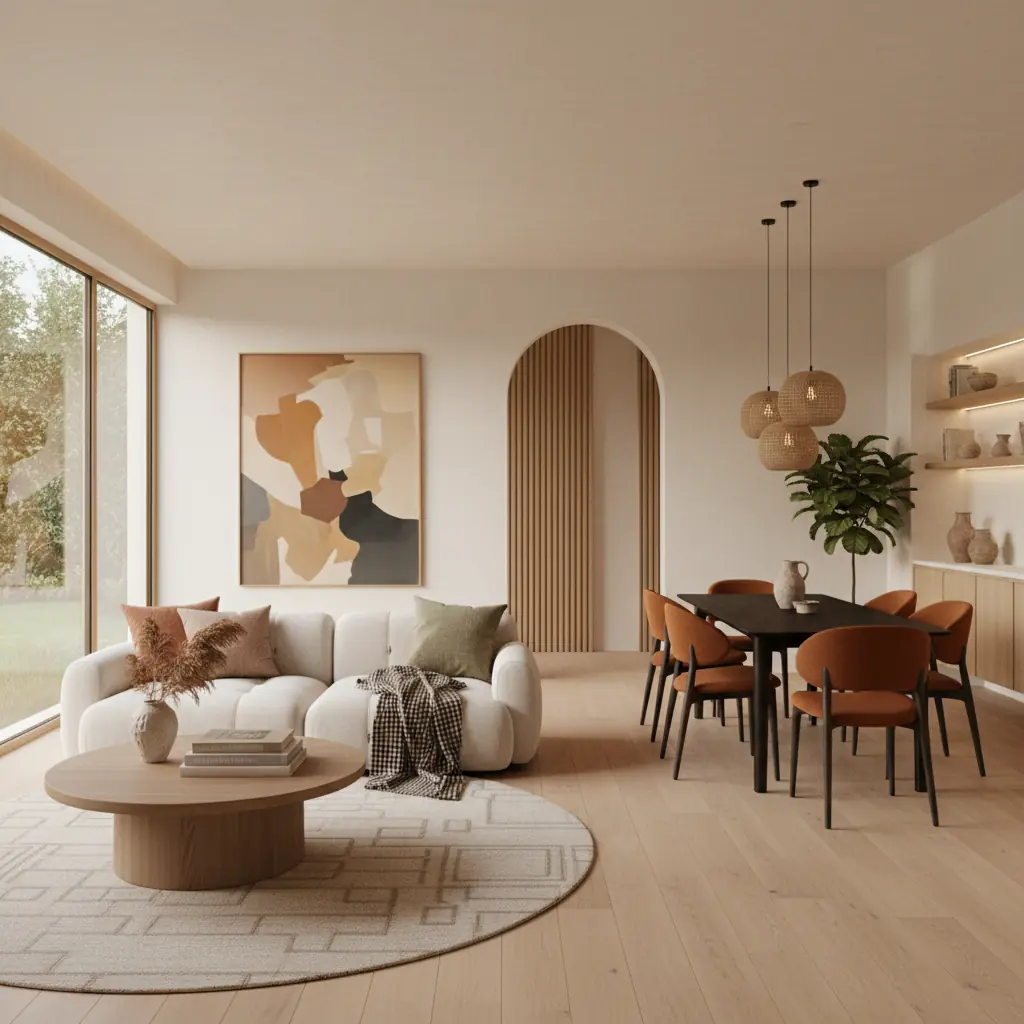
O que o minimalismo acolhedor realmente significa
O minimalismo acolhedor pega o princípio central do minimalismo — menos coisas, mais intenção — e remove a parte que deixava as pessoas desconfortáveis: a frieza. Longe vão as paredes brancas e nítidas, os acessórios cromados clínicos e os espaços que pareciam galerias de arte em vez de lares. Em seu lugar, você encontra cômodos que ainda são curados e calmos, mas também profundamente convidativos. Essa estética em evolução enfatiza o consumo consciente e a ressonância emocional, alinhando-se perfeitamente com os desejos modernos de estilo e serenidade.
O movimento é uma resposta direta aos interiores "menos é mais" dos anos 2010 que, para muitas pessoas, acabaram parecendo menos um refúgio pacífico e mais uma sala de espera estéril. O minimalismo acolhedor diz que você pode ter simplicidade sem sacrificar o conforto, e linhas limpas sem perder a alma. É sobre criar santuários que pareçam vividos e amados, em vez de meramente admirados. De fato, pesquisas recentes mostram que **85% dos proprietários de imóveis relatam sentir-se mais relaxados e menos estressados em espaços desorganizados e intencionalmente desenhados**, destacando os benefícios psicológicos de tal abordagem.
Em sua essência, o minimalismo acolhedor é sobre contenção com calor. Cada peça no cômodo ganha seu lugar — mas as próprias peças são suaves, táteis e humanas. Pense em um único sofá de linho em vez de um pesado sofá secional de couro, um vaso de cerâmica feito à mão em vez de uma escultura de metal geométrica rígida, uma manta de lã jogada sobre uma cadeira de carvalho em vez de um assento nu e pouco convidativo. Essa curadoria cuidadosa garante que, embora os objetos sejam poucos, seu impacto seja profundo e reconfortante.
Como o minimalismo acolhedor difere do minimalismo tradicional?
O minimalismo tradicional prioriza o vazio visual e uma estética austera. O ideal é um cômodo onde nada distrai — paletas monocromáticas, superfícies duras como concreto ou aço e precisão geométrica dominam. Ele se baseia fortemente em movimentos modernistas como Bauhaus e Zen japonês e, em sua melhor forma, pode ser meditativo e surpreendentemente elegante. Em seu pior, no entanto, parece frio, impessoal e até mesmo hostil, um espaço desenhado mais para fotografias em uma revista do que para as realidades da vida diária.
O minimalismo acolhedor compartilha a filosofia de curadoria, mas rejeita a austeridade. Onde o minimalismo tradicional pode optar por um piso de concreto polido, o minimalismo acolhedor escolhe o calor orgânico do carvalho claro ou um tapete de lã sutilmente texturizado. Onde o minimalismo tradicional escolhe uma luminária pendente cromada e afiada, o minimalismo acolhedor seleciona uma cúpula de linho suave ou uma peça de vidro soprado. A contagem de objetos permanece baixa, mantendo uma sensação de calma e abertura, mas o calor material e as texturas convidativas aumentam dramaticamente. O resultado é um cômodo que fotografa tão lindamente, alcançando aquela estética aspiracional, mas que também é genuinamente bom para se sentar em uma manhã de domingo preguiçosa com uma xícara de café. É um espaço que acolhe pés descalços e conversas demoradas, não apenas admiração silenciosa. Essa abordagem centrada no ser humano é um diferencial chave, tornando o minimalismo acolhedor muito mais habitável para a pessoa comum.
Explorando a paleta de cores do minimalismo acolhedor
A cor é onde o minimalismo acolhedor diverge mais clara e dramaticamente de seu predecessor. Esqueça as paredes brancas puras e implacáveis (#FFFFFF) que definiram as tendências minimalistas anteriores. O minimalismo acolhedor vive no espaço sutil e convidativo entre o branco e o bege. A paleta fundamental inclui brancos cremosos como Benjamin Moore Simply White ou Sherwin-Williams Alabaster, taupes suaves, beges arenosos e tons de massa quentes. Estas não são meramente cores de fundo; são participantes ativos que mudam suavemente com a luz do dia, parecendo mais brilhantes e expansivas ao meio-dia, e depois se transformando em algo inegavelmente mais aconchegante e íntimo ao entardecer.
As cores de destaque são cuidadosamente escolhidas para serem suaves e terrosas: pense em terracota, argila cozida ao sol, rosa empoeirado, azeitona suave, cogumelo quente e até mesmo cinzas carvão sutis com um subtom marrom. Nada é saturado ou neon; nada exige atenção imediata. A paleta inteira deve parecer uma paisagem natural coesa – areia do deserto, madeira flutuante desgastada, linho desbotado pelo sol, névoa matinal ou um céu calmo e nublado. Quando cada cor no cômodo pertence à mesma família quente e terrosa, o espaço parece incrivelmente coeso, sofisticado e tranquilo, mesmo com muito poucos objetos decorativos. Para encontrar sua combinação perfeita, considere usar um [gerador de paleta de cores AI](/blog/ai-color-palette-generator) para experimentar esses tons naturais digitalmente antes de se comprometer com amostras de tinta.
Uma dica prática frequentemente negligenciada: teste a cor potencial de sua parede às 21h sob luz artificial, não apenas durante o dia. As cores minimalistas acolhedoras devem brilhar sutilmente sob lâmpadas quentes (tipicamente 2700K-3000K). Se o seu "branco quente" parecer inesperadamente cinza ou frio à noite, é provável que seja muito frio para essa estética e irá prejudicar a atmosfera convidativa desejada. Essa consideração cuidadosa da iluminação é crucial para realmente acertar na vibe minimalista acolhedora.
Quais são os materiais essenciais para o design minimalista acolhedor?
Os materiais fazem o trabalho pesado no minimalismo acolhedor porque, quando você remove conscientemente a desordem visual, a textura se torna a principal fonte de interesse, profundidade e caráter. Os materiais essenciais são escolhidos por seu apelo natural, qualidade tátil e capacidade de envelhecer com graça.
- **Linho**: Indispensável para cortinas, estofados, roupas de cama e até mesmo almofadas. Seu caimento natural, textura sutil e ruga orgânica adicionam um caráter descontraído e sem esforço que os tecidos sintéticos simplesmente não conseguem replicar. - **Carvalho Claro ou Carvalho Branco**: A madeira preferida para pisos, móveis e prateleiras. Seu subtom dourado inerente ancora o calor do espaço. Seja uma estrutura de cama plataforma elegante ou uma mesa de jantar artesanal, o veio do carvalho adiciona um toque de natureza sem ser rústico. - **Bouclé**: Este tecido de lã texturizado tornou-se sinônimo de minimalismo acolhedor. Usado em cadeiras de destaque, almofadas e até sofás inteiros, sua textura macia e granulada é incrivelmente convidativa e adiciona uma sensação luxuosa e aconchegante. - **Travertino**: Para mesas de centro, mesas laterais, superfícies de banheiro e até mesmo detalhes arquitetônicos como lareiras. Suas cavidades naturais, tons terrosos e veios quentes e sutis adicionam um caráter geológico que parece antigo e totalmente moderno. - **Juta e Sisal**: Essas fibras naturais são perfeitas para tapetes, adicionando textura orgânica sob os pés e definindo zonas dentro de um layout minimalista. Seus tons terrosos complementam lindamente a paleta geral. - **Cerâmica Fosca**: Para louças, vasos e objetos decorativos. O acabamento sem esmalte ou sutilmente esmaltado destaca a argila natural, trazendo um toque artesanal que parece fundamentado e autêntico. - **Latão Escovado**: Não polido e brilhante, mas latão escovado ou envelhecido para ferragens, luminárias e detalhes sutis. Este acabamento tem um brilho mais suave que parece sofisticado e acolhedor, evitando a frieza do cromo ou da prata polida. - **Reboco ou Tinta de Cal**: Para paredes, quando se deseja uma textura e profundidade sutis além de um acabamento de tinta lisa. Essas aplicações criam um efeito macio e mosqueado que capta a luz lindamente, adicionando uma sensação artesanal e antiga.
O fio condutor que une todos esses materiais é que cada um mostra sua natureza – não há acabamentos de alto brilho, perfeitos como plástico ou superfícies perfeitamente uniformes. A imperfeição não é apenas tolerada; é bem-vinda, abraçada e celebrada porque a imperfeição é inerentemente calorosa, autêntica e humana. Investir nesses materiais de qualidade também compensa em longevidade; **lares com foco em materiais naturais e duráveis, típicos do minimalismo acolhedor, relatam estender a vida útil dos móveis em 50% ou mais** em comparação com espaços preenchidos com itens descartáveis e orientados por tendências.
Aplicando o Minimalismo Acolhedor: Um Guia Cômodo a Cômodo
Implementar o minimalismo acolhedor significa pensar intencionalmente em cada peça e superfície dentro de cada espaço distinto de sua casa.
### Sala de Estar: O Coração da Simplicidade Aconchegante
Na sala de estar, comece com uma peça fundamental como um sofá de linho ou bouclé em um tom off-white quente, aveia ou taupe suave. Opte por linhas simples e limpas. Adicione uma mesa de centro de carvalho claro – designs redondos ou com formas orgânicas parecem mais suaves e convidativos do que retângulos afiados nesta estética. Coloque um tapete de juta ou sisal por baixo para ancorar o espaço e adicionar textura. Mantenha as superfícies amplamente livres, permitindo que a qualidade dos materiais fale por si. Um ou dois objetos significativos são suficientes: um único vaso de cerâmica feito à mão, uma pilha selecionada de livros de capa dura lindamente encadernados ou uma vela sutilmente perfumada. A iluminação deve ser quente e em camadas – pense em um abajur de chão de linho, um par de arandelas de latão escovado ou um abajur de mesa de cerâmica, evitando cuidadosamente lâmpadas fluorescentes de teto severas. Considere usar uma [ferramenta de arranjo de móveis AI](/blog/ai-furniture-arrangement-tool) para experimentar diferentes layouts para um fluxo e funcionalidade ideais dentro do seu espaço.
### Quarto: Seu Refúgio Pessoal
Os quartos são talvez onde o minimalismo acolhedor brilha mais, criando um verdadeiro santuário. Comece com roupas de cama de linho em creme, taupe suave ou até mesmo um azeitona opaco – as rugas naturais do linho contribuem para a sensação relaxada. Uma estrutura de cama simples de carvalho ou freixo, frequentemente em estilo plataforma sem uma cabeceira excessivamente ornamentada, mantém linhas limpas. Inclua uma mesa de cabeceira funcional e bonita por lado, cada uma com um abajur de cerâmica sutil que emite um brilho quente e ambiente. Pule a parede de galeria agitada; em vez disso, uma peça oversized de arte abstrata suave ou uma tapeçaria de parede texturizada acima da cama é suficiente para adicionar interesse visual sem desordem. Certifique-se de que os tratamentos de janela sejam suaves e naturais, como cortinas de linho sem forro que filtram a luz suavemente. O quarto deve parecer um casulo, promovendo descanso e tranquilidade, em vez de um showroom agitado.
### Cozinha e Sala de Jantar: Elegância Funcional
Cozinhas e salas de jantar se beneficiam imensamente do minimalismo acolhedor através de escolhas de materiais ponderadas e um estilo despojado. Opte por frentes de armário de carvalho canelado ou madeira natural, que adicionam textura e calor sem serem visualmente pesadas. Puxadores e acessórios de latão escovado oferecem um sutil toque metálico. Bancadas em travertino, calcário ou um quartzo de tom quente e veios sutis elevam o espaço com beleza natural. Prateleiras abertas, se incorporadas, devem exibir apenas algumas peças de louça de cerâmica feitas à mão, tigelas de madeira ou potes de vidro cheios de itens básicos. Uma mesa de jantar simples de carvalho combinada com cadeiras estofadas em linho continua a narrativa dos materiais. Se você não tem certeza de como esses materiais naturais ficarão em sua cozinha específica, ferramentas com inteligência artificial como Habitas permitem gerar prévias fotorrealistas baseadas na foto do seu cômodo, para que você possa comparar travertino versus quartzo, carvalho versus nogueira, antes de tomar qualquer decisão irreversível e cara. Isso permite uma visualização precisa de como diferentes acabamentos interagirão em seu espaço único.
### Banheiro: Um Santuário Tipo Spa
Nos banheiros, o minimalismo acolhedor se concentra em criar uma atmosfera serena, tipo spa. Azulejos de grande formato em um off-white cremoso, cinza claro ou bege arenoso podem fornecer um pano de fundo contínuo. Integre vaidades de madeira canelada com bancadas de pedra. Acessórios de latão escovado ou preto fosco adicionam um toque contemporâneo, mas acolhedor. Prateleiras simples montadas na parede ou nichos embutidos podem armazenar itens essenciais, mantendo as bancadas livres. Introduza elementos táteis como toalhas macias de tons neutros e talvez um pequeno banquinho de madeira ou algumas plantas de baixa manutenção cuidadosamente selecionadas para um toque de [design biofílico](/blog/biophilic-design-guide). O objetivo é um espaço desorganizado que promova relaxamento e uma sensação de calma.
Por que o Minimalismo Acolhedor é a Tendência Dominante de 2026?
O momento da ascensão do minimalismo acolhedor não é acidental; é um reflexo direto de mudanças sociais mais amplas e necessidades pessoais em evolução. Após anos de "aninhamento" na era da pandemia e maior conscientização sobre nossos ambientes domésticos, as pessoas aprenderam que suas casas precisam ser funcionais e profundamente emocionalmente de suporte. A resposta maximalista inicial – caracterizada por paredes de galeria abarrotadas, papel de parede ousado em cada cômodo e uma abundância de objetos decorativos – embora divertida e expressiva, acabou se mostrando exaustiva para muitos a longo prazo. O minimalismo acolhedor é a correção ponderada: ele retém o conforto, a personalidade e a alma que o maximalismo trouxe de volta, mas edita implacavelmente para que cada elemento contribua para uma sensação de calma e bem-estar, em vez de caos visual.
Além disso, a dinâmica das redes sociais também mudou significativamente. Os interiores do Instagram altamente curados, muitas vezes estéreis e totalmente brancos do final dos anos 2010, deram lugar a um conteúdo mais autêntico, vivido e emocionalmente ressonante. O minimalismo acolhedor fotografa lindamente, graças à sua paleta coesa e texturas ricas, mas crucialmente, também parece e _se sente_ bem pessoalmente – um equilíbrio que nem toda tendência alcança. Esse apelo duplo – aspiracional, mas genuinamente alcançável e habitável – é o motivo pelo qual se tornou a recomendação padrão de designers líderes, formadores de opinião influentes e ferramentas avançadas de design com IA. É uma estética que oferece um apelo duradouro, permitindo que as casas pareçam atuais sem serem excessivamente modernas. De fato, **propriedades decoradas com uma estética minimalista acolhedora têm visto um aumento médio de 15% no valor percebido entre compradores potenciais**, demonstrando seu forte apelo de mercado. À medida que o design impulsionado por IA se torna mais prevalente, ferramentas capazes de gerar [designs de ambientes realistas](/blog/ai-generated-room-designs-realistic) estão cada vez mais apresentando estéticas minimalistas acolhedoras devido ao seu amplo apelo e harmonia visual. Isso o torna um dos [melhores estilos de design de interiores de 2026](/blog/best-interior-design-styles-2026) tanto para designers quanto para proprietários de imóveis.
Criando Coesão: Dicas de Fornecimento e Estilo para o Minimalismo Acolhedor
Alcançar o minimalismo acolhedor não é apenas sobre escolher as peças certas; é sobre como você as une.
1. **Priorize Materiais Naturais:** Como discutido, a textura é fundamental. Ao buscar, sempre incline-se para madeira, linho, lã, algodão, cerâmica, pedra e juta. Esses materiais não apenas têm boa aparência, mas também frequentemente possuem uma qualidade tátil que envolve os sentidos, realçando o "calor". 2. **Abrace a Imperfeição:** Cerâmicas feitas à mão, têxteis artesanais ou peças de madeira ligeiramente envelhecidas adicionam caráter e profundidade. Não hesite em usar itens que mostrem sinais sutis de artesanato ou variação natural; eles evitam que o espaço pareça muito "perfeito" ou estéril. 3. **Invista em Qualidade em Vez de Quantidade:** Como você terá menos itens, cada um precisa se destacar por si só. Uma poltrona bouclé bem-feita ou uma cômoda de carvalho maciço durará mais e terá melhor aparência do que várias peças mais baratas e menos duráveis. Essa abordagem também se alinha com a vida sustentável. 4. **Considere Escala e Proporção:** Com pouca desordem, o tamanho e o posicionamento de cada item tornam-se mais críticos. Garanta que as peças de mobiliário tenham o tamanho adequado para o cômodo e não sobrecarreguem o espaço. Use uma [plataforma de design de interiores AI](/blog/ai-interior-design-how-it-works) para visualizar como diferentes tamanhos de móveis se encaixarão em seu cômodo. 5. **Iluminação em Camadas:** Evite uma única luz de teto. Em vez disso, use uma combinação de luminárias de chão, abajures de mesa e arandelas para criar pontos de luz quente que definem zonas e adicionam intimidade. Dimmer é seu amigo para controlar o ambiente. 6. **Arte como Declaração, Não Bagunça:** Em vez de uma parede de galeria, escolha uma ou duas peças de arte grandes e impactantes com cores suaves ou formas abstratas. Isso cria um ponto focal sem sobrecarregar a atmosfera serena. 7. **Verdura Sutil:** Incorpore algumas plantas com formas simples e folhagem verde suave, como uma oliveira, espada-de-são-jorge ou figueira-lira. Elas adicionam um toque de vida e natureza sem se tornarem tropicais ou distrativas.
Ao focar nesses princípios, você pode criar um lar minimalista acolhedor que pareça intencional, convidativo e verdadeiramente reflexo de um estilo de vida calmo e sereno.
Perguntas Frequentes
### Qual a diferença entre minimalismo acolhedor e design Japandi?
Embora tanto o minimalismo acolhedor quanto o design Japandi compartilhem princípios de simplicidade, materiais naturais e estéticas calmas, eles têm raízes e nuances distintas. O minimalismo acolhedor evoluiu do minimalismo ocidental suavizando sua austeridade com cores e texturas mais quentes. Japandi, por outro lado, é uma fusão direta do design japonês (Wabi-Sabi) e escandinavo, enfatizando o artesanato, a funcionalidade e a apreciação pela imperfeição e pelo desgaste natural. Japandi frequentemente apresenta tons de madeira mais escuros, detalhes em preto mais ousados e uma ênfase mais forte em texturas brutas e não tratadas, enquanto o minimalismo acolhedor geralmente se inclina para madeiras mais claras e uma paleta geral mais suave, focando em uma sensação mais ampla de aconchego.
### O minimalismo acolhedor pode funcionar em espaços pequenos?
Absolutamente, o minimalismo acolhedor é excepcionalmente adequado para espaços pequenos. Seus princípios centrais de intencionalidade, desorganização e design funcional naturalmente levam a maximizar o espaço e minimizar a desordem visual. Ao usar paletas de cores claras e coesas, empregar móveis multifuncionais e priorizar linhas limpas, o minimalismo acolhedor pode fazer um cômodo pequeno parecer maior, mais aberto e inegavelmente convidativo sem parecer apertado. O foco na textura em vez de ornamentação excessiva também adiciona profundidade sem ocupar preciosos metros quadrados.
### Quais são os erros comuns a evitar no design minimalista acolhedor?
Um erro comum é, inadvertidamente, voltar ao minimalismo tradicional, resultando em um espaço que parece estéril ou frio devido à dependência excessiva de branco puro ou muitas superfícies duras. Outro erro é introduzir muitas cores ou padrões contrastantes, o que perturbe a paleta coesa e calma. Por fim, negligenciar a textura é uma armadilha frequente; sem texturas variadas (como linho, lã, madeira, pedra), um espaço minimalista acolhedor pode parecer plano e desinteressante, perdendo o "calor" crucial que define o estilo. Curadoria cuidadosa e camadas táteis são a chave para o sucesso.
### Quanto custa implementar o minimalismo acolhedor?
O custo de implementar o minimalismo acolhedor pode variar amplamente, mas frequentemente representa um investimento inteligente a longo prazo. Embora algumas peças fundamentais como sofás de linho de qualidade (variando de US$ 1.500 a US$ 5.000) ou móveis de carvalho maciço possam ser um investimento inicial, a ênfase em menos itens, de maior qualidade e duráveis, muitas vezes leva a economias ao longo do tempo, evitando substituições frequentes. Por exemplo, uma renovação completa da sala de estar com peças chave do minimalismo acolhedor (sofá, mesa de centro, tapete, iluminação, decoração mínima) pode variar de US$ 4.000 a US$ 15.000, dependendo da marca e das escolhas de materiais. Optar por aplicações de tinta DIY e adquirir acessórios vintage ou artesanais pode reduzir significativamente os custos. A filosofia incentiva compras ponderadas que duram, em vez de perseguir tendências passageiras.