Tendencia de Muebles Curvos 2026: Por Qué las Formas Suaves Definen los Interiores Modernos
Descubre por qué los muebles curvos son la tendencia principal en diseño de interiores de 2026. Explora la psicología de las formas suaves, piezas clave, consejos de estilo y cómo integrar formas orgánicas en tu hogar con Habitas.
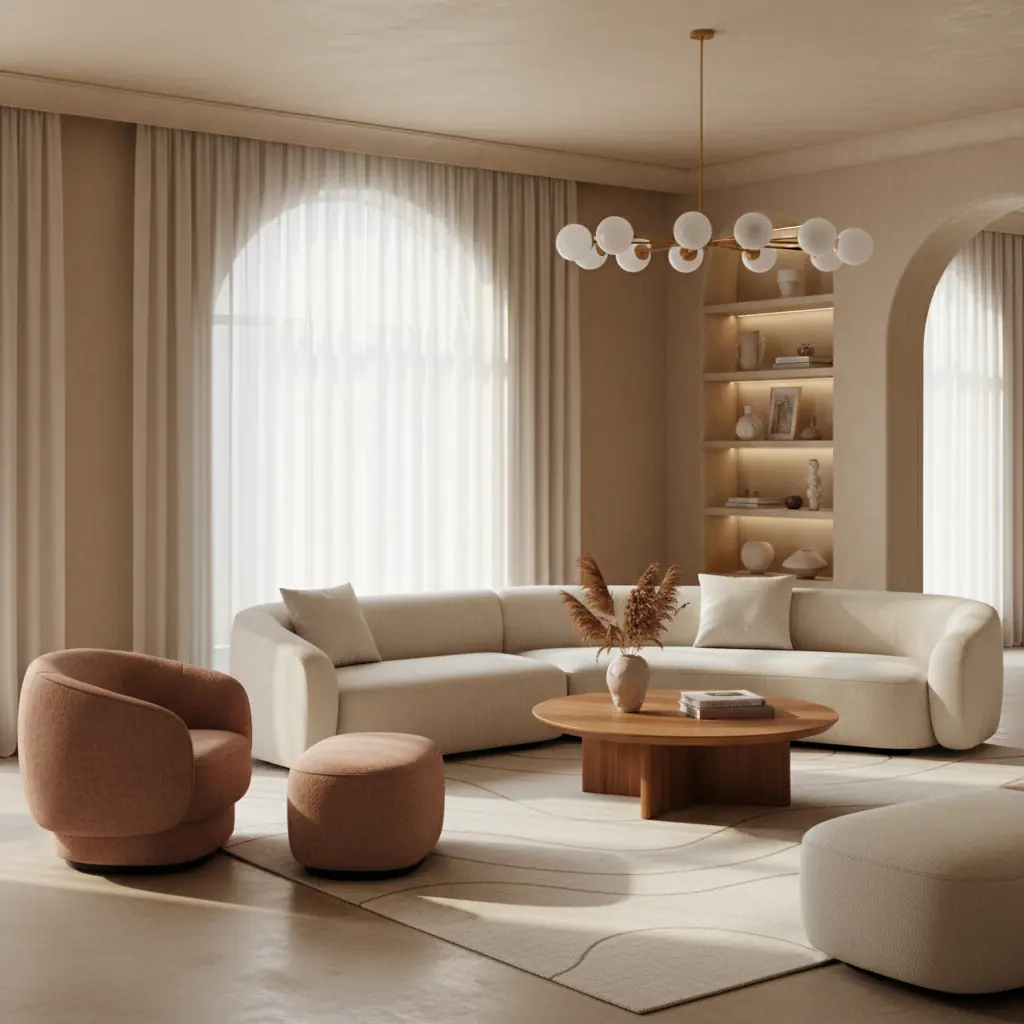
La Revolución Suave: Del Ángulo Agudo al Flujo Orgánico
Durante más de una década, los interiores contemporáneos se han definido por una estricta adhesión a la geometría. Piensa en líneas marcadas y limpias: sofás cuadrados, mesas de centro rectangulares, estanterías minimalistas de bordes rectos y piezas decorativas de esquinas afiladas. Esta era, caracterizada por la preferencia por la precisión y la sobriedad, está retrocediendo con gracia. En 2026, una estética más suave y acogedora ha tomado el centro del escenario: las curvas están en todas partes, remodelando nuestros espacios habitables con su gentil abrazo.
Esto es más que un cambio fugaz; es una profunda evolución del diseño. Desde sofás serpenteantes que invitan a la relajación hasta mesas de comedor ovales que fomentan la conexión, y desde vanos sutilmente arqueados hasta divertidas mesas de centro en forma de riñón, la transición de lo angular a lo orgánico es innegable. Esto no es meramente una tendencia cíclica, aunque los giros pendulares del diseño entre extremos cada 8 a 12 años son ciertamente parte de la ecuación. Más bien, refleja un anhelo cultural más profundo de comodidad, autenticidad y un distanciamiento de la omnipresente rigidez de nuestras vidas digitales. Después de años de optimizar cada aspecto de nuestra existencia —desde el tiempo frente a la pantalla y los horarios hasta las métricas de productividad—, existe un deseo colectivo de suavidad, calidez y humanidad en nuestros entornos físicos. Las curvas, con su gracia inherente, lo ofrecen sin sacrificar un ápice de sofisticación.
¿El resultado inmediato? Interiores que se sienten inherentemente accesibles, verdaderamente vividos y profundamente reconfortantes, en lugar de intimidantemente perfectos o estérilmente parecidos a un showroom. Un sofá curvo no solo se ve bien; extiende una invitación abierta a hundirse, relajarse y quedarse un rato. En contraste, una pieza rígida y rectangular, aunque quizás estéticamente agradable, a menudo comunica una directriz más formal, de admirar desde la distancia. Esta revolución suave marca un regreso a espacios que nutren el alma tanto como complacen la vista.
La Psicología Profunda Detrás de Nuestra Atracción por las Curvas
Más allá de la mera estética, nuestra inclinación hacia las formas curvas está profundamente arraigada en nuestra psicología humana. Existe un sustancial respaldo científico de por qué encontramos las formas orgánicas tan atractivas. Estudios en psicología ambiental demuestran consistentemente que las personas perciben los espacios y muebles curvos como inherentemente más acogedores, seguros y significativamente más relajantes que los entornos dominados por geometrías afiladas y angulares. Esto no es solo una cuestión de preferencia; es un vestigio evolutivo. Nuestros cerebros primarios asocian los ángulos agudos con posibles amenazas: un depredador al acecho, una roca dentada o un arma puntiaguda. Las curvas, por otro lado, señalan comodidad, apertura y seguridad, reminiscentes de paisajes naturales, la forma humana o el abrazo protector de un vientre.
**Dato Clave 1:** Investigaciones publicadas en el _Journal of Environmental Psychology_ encontraron que las habitaciones que presentaban predominantemente muebles curvos fueron calificadas, en promedio, como **20% más atractivas y relajantes** por los participantes en comparación con sus contrapartes angulares.
Los muebles curvos también desempeñan un papel sutil pero poderoso en la mejora de la dinámica social dentro de un espacio. Imagina un sofá rectangular tradicional que obliga a los ocupantes a sentarse en línea recta, lo que a menudo resulta en incómodos giros de cuello para mantener el contacto visual. Un sofá redondeado o serpenteante, por su propio diseño, naturalmente orienta a las personas unas hacia otras, fomentando una conversación más íntima y promoviendo una sensación de conexión. De manera similar, una mesa de comedor redonda es un ecualizador social; elimina la jerarquía tradicional de "cabecera de mesa", asegurando que todos se sientan igualmente incluidos y haciendo de cada asiento el mejor asiento. Estas no son solo distinciones estéticas menores; son poderosas elecciones de diseño que dan forma activamente a cómo las personas se comportan, interactúan y se sienten dentro de una habitación. Esta comodidad subconsciente y el fomento del compromiso social son razones fundamentales por las que las formas orgánicas resuenan tan profundamente con nuestro deseo de entornos que nos nutran.
La Conexión Biofílica: La Influencia de la Naturaleza en el Diseño Curvo
El auge de la popularidad de los muebles curvos está intrínsecamente ligado al creciente movimiento del diseño biofílico. La biofilia, la tendencia humana innata a conectar con la naturaleza, encuentra una expresión perfecta en las formas orgánicas. La naturaleza rara vez nos presenta líneas rectas perfectas o ángulos agudos; en cambio, ofrece las suaves ondulaciones de las colinas, las curvas fluidas de los ríos, las formas redondeadas de las piedras y el suave arco de la rama de un árbol. Al introducir curvas en nuestros hogares, traemos inconscientemente elementos del mundo natural al interior, creando espacios que se sienten más armoniosos, relajantes y profundamente conectados con el entorno.
Esta conexión con la naturaleza se extiende más allá de la forma. Influye en la elección de materiales, las paletas de colores e incluso el diseño de la iluminación, todo trabajando en conjunto para crear una experiencia holística y sensorial. Los muebles curvos a menudo se combinan maravillosamente con materiales naturales como madera, piedra, lino y lana, amplificando aún más el efecto biofílico. Integrar curvas en tu hogar es una forma tangible de crear un "espacio analógico" —un respiro del mundo digital y hostil—, fomentando una sensación de paz y bienestar. Para más información sobre cómo crear tales refugios, explora nuestra guía sobre [diseño de espacios analógicos](/blog/analog-spaces-tech-free-rooms).
**Dato Clave 2:** Estudios en neurociencia ambiental han indicado que la exposición a formas y patrones naturales, incluidas las curvas suaves, puede reducir los marcadores de estrés fisiológico hasta en un **10%** y mejorar la función cognitiva, lo que subraya los beneficios para el bienestar del diseño biofílico.
En Foco: Piezas Clave que Impulsan la Tendencia de Muebles Curvos
El resurgimiento de las formas orgánicas es evidente en casi todas las categorías de muebles, con varias piezas heroicas liderando la carga.
### El Icónico Sofá Curvo
El sofá curvo es, sin duda, la pieza central indiscutible de este movimiento, actuando como un centro de gravedad para el diseño de toda la habitación. No se trata solo de sofás tradicionales con bordes redondeados; abarcan un espectro de diseños que van desde sutiles medialunas hasta dramáticas disposiciones serpenteantes y modulares. Marcas como la atemporal Ligne Roset (cuyo sofá Togo sigue siendo un ícono de confort orgánico), CB2, Article e incluso talleres personalizados, ofrecen ahora una impresionante variedad de estilos. Encontrarás de todo, desde sofás individuales en forma de medialuna hasta seccionales expansivos de múltiples segmentos que permiten configuraciones flexibles. Los precios varían ampliamente, típicamente desde $1,200 para un sofá curvo de acento más pequeño y bien diseñado hasta más de $8,000 para piezas modulares de diseñador de alta gama. El punto óptimo para una calidad-precio excepcional, que a menudo presenta tapicería duradera sobre una estructura de madera maciza, generalmente se encuentra en el rango de $2,000 a $3,500. Al planificar tu distribución, herramientas como Habitas pueden ayudarte a visualizar cómo las diferentes configuraciones de sofás curvos encajarán en tu habitación real, ayudándote a tomar decisiones informadas antes de comprar.
### Espejos Arqueados: Gran Impacto, Bajo Compromiso
Si un gran sofá se siente como un salto demasiado grande, un espejo arqueado ofrece un punto de entrada de alto impacto pero relativamente bajo compromiso a la estética curva. Un solo espejo de piso arqueado ($150-$600) puede suavizar instantáneamente los ángulos de toda una habitación, reflejando la luz y añadiendo una sensación de altura elegante. Ya sea apoyado casualmente contra una pared en una sala de estar, adornando una entrada o anclando un dormitorio, estos espejos transforman superficies planas en elementos esculturales. Su sutil curva introduce un detalle arquitectónico clásico que complementa varios estilos de diseño.
### Mesas de Comedor Redondas: Fomentando la Conexión
La mesa de comedor redonda ha tenido un regreso significativo, celebrada por su capacidad para fomentar la conversación íntima y eliminar la jerarquía de asientos. Marcas como West Elm, Crate & Barrel y reproducciones de mesas Saarinen de mediados de siglo ofrecen una amplia selección, con precios que suelen oscilar entre $800 y $3,000, dependiendo de los materiales y el tamaño. Son particularmente efectivas en espacios de comedor más pequeños, ya que la falta de esquinas afiladas puede hacer que una habitación se sienta menos abarrotada y permitir una navegación más fácil.
### Mesas de Centro en Forma de Riñón y Orgánicas
Una vez una encantadora reliquia de mediados de siglo, la mesa de centro en forma de riñón (u otras formas libres y orgánicas) ha regresado con fuerza. Las interpretaciones modernas presentan materiales sofisticados como travertino cremoso, delicado vidrio estriado, elegante laca mate y cálido nogal. Estas mesas sirven como puntos focales escultóricos, inyectando personalidad y una sensibilidad artística en cualquier sala de estar. Sus formas asimétricas proporcionan un suave contrapunto a las disposiciones de asientos más estructuradas.
### Más Allá de las Piezas Grandes: Integrando Curvas Más Pequeñas
Para aquellos con un presupuesto más ajustado o simplemente probando las aguas, comenzar con accesorios más pequeños es una excelente estrategia. Introduce el lenguaje de las curvas con cojines redondos, hermosos jarrones de cerámica o vidrio curvos, y bandejas ovaladas o circulares. Estas sutiles adiciones introducen formas orgánicas sin requerir una gran inversión en muebles, permitiéndote aumentar gradualmente tu comodidad con la tendencia.
Fusionando Mundos: Mezclando Curvas con Muebles Existentes de Línea Recta
Definitivamente no necesitas renovar toda tu casa para adoptar la tendencia de muebles curvos. De hecho, algunas de las habitaciones más atractivas y visualmente interesantes combinan magistralmente líneas rectas y curvas. La clave es el equilibrio y la intencionalidad. Una regla general útil es permitir que una forma domine sutilmente —alrededor del 60-70% de tus piezas principales— y usar la otra como un contraste reflexivo.
Imagina un llamativo sofá curvo posicionado contra una elegante estantería de líneas rectas. O una mesa de comedor redonda sustancial que proporciona un anclaje suave en una cocina definida por gabinetes lineales. Estas yuxtaposiciones crean tensión visual y profundidad, evitando que una habitación se sienta demasiado rígida o demasiado amorfa. Evita el error común de agrupar todas tus piezas curvas en un área y todas tus piezas angulares en otra; en su lugar, distribúyelas cuidadosamente para que la vista viaje suavemente por todo el espacio. Una lámpara de pie elegantemente curvada junto a una mesa auxiliar rectangular, o un espejo redondo colgado sobre una mesa consola recta, establece un delicioso diálogo visual entre formas opuestas. Esta integración armoniosa evita que un espacio se sienta monótono, invitando al ojo a explorar diferentes texturas y formas.
**Consejo Habitas:** Aquí es donde las herramientas de diseño digital se vuelven invaluables. Habitas te permite subir fotos de tu habitación real y colocar virtualmente diferentes piezas curvas —sofás, espejos, mesas— junto a tus muebles de línea recta existentes. Puedes experimentar con varias combinaciones, visualizar cómo interactúan y generar renders realistas de tu espacio renovado antes de comprometerte con cualquier compra. Esto reduce significativamente el riesgo de costosos errores de diseño y te ayuda a lograr una estética perfectamente equilibrada.
Entendiendo la Inversión: Qué Esperar de los Precios
Es una consideración importante que los muebles curvos, debido a sus complejidades de fabricación inherentes, generalmente tienen un precio ligeramente más alto que las piezas equivalentes de línea recta. En promedio, podrías esperar pagar **entre un 15 y un 30% más** por un artículo curvo. Esta prima se debe a varios factores: doblar marcos de madera según especificaciones precisas, crear cojines con formas personalizadas y confeccionar paneles de tapicería curvos, todo ello requiere mano de obra, maquinaria más especializada y, a menudo, más desperdicio de material durante la producción. Por ejemplo, un sofá de tres plazas de línea recta de alta calidad podría venderse por $1,500, mientras que una versión curva comparable podría costar entre $1,800 y $2,000.
**Dato Clave 3:** El análisis de mercado indica que, si bien la prima de costo existe, está disminuyendo. Impulsado por un **crecimiento interanual del 15%** en el interés de los consumidores por los muebles curvos desde 2024, los fabricantes están invirtiendo en nuevas herramientas y procesos, lo que sugiere que estos artículos se volverán más accesibles con el tiempo.
Sin embargo, la prima de costo está disminuyendo gradualmente a medida que crece la demanda de formas orgánicas y más fabricantes equipan sus líneas de producción para diseños curvos. Si el presupuesto es una preocupación principal, un enfoque estratégico es clave. Invierte en las piezas centrales que realmente definen la habitación —típicamente el sofá o la mesa de comedor— en sus versiones curvas. Para muebles secundarios como mesas auxiliares, consolas multimedia y escritorios (home office), optar por formas más simples y de línea recta puede ayudar a equilibrar tu gasto mientras logras un aspecto bellamente curado que se inclina hacia la estética curva. Recuerda, el objetivo es una integración reflexiva, no un enfoque de todo o nada.
Eligiendo las Curvas Adecuadas para tu Espacio
Integrar las curvas de manera efectiva no se trata solo de comprar un sofá redondeado; se trata de comprender la escala, la proporción y cómo estas formas interactúan con las dimensiones específicas de tu habitación.
**Considera el Tamaño de la Habitación:** En espacios más grandes y de planta abierta, los sofás serpenteantes dramáticos o los módulos curvos múltiples pueden crear zonas distintas y guiar el flujo. En habitaciones más pequeñas, sin embargo, un sillón de acento curvo elegante, un espejo arqueado o una mesa de centro redonda pueden introducir suavidad sin abrumar el espacio. Una mesa de comedor redonda, por ejemplo, a menudo se siente menos voluminosa que una rectangular en un área de comedor compacta.
**La Proporción es Clave:** Asegúrate de que las curvas que introduces sean proporcionales a otros elementos de la habitación. Un sofá curvo masivo y fuertemente tapizado podría dominar una consola delicada de patas rectas. Por el contrario, un pequeño otomano redondo podría perderse en una habitación con una arquitectura angular grandiosa. Usa herramientas como Habitas para visualizar estas proporciones y asegurarte de que todo se sienta armonioso.
**Flujo de Tráfico:** Las curvas son excelentes para mejorar el flujo de una habitación. Un seccional curvo puede dirigir naturalmente el tráfico a su alrededor, creando un camino más intuitivo. Sin esquinas afiladas que navegar, el movimiento se siente más suave y fluido, mejorando la comodidad y la usabilidad general del espacio.
Materiales y Texturas: Realzando la Suavidad de las Curvas
La belleza de los muebles curvos a menudo se amplifica por los materiales y texturas elegidos para terminarlos. Estas elecciones juegan un papel crucial en realzar la suavidad inherente y la naturaleza acogedora de las formas orgánicas.
**Tapicería:** Para sofás y sillas curvos, considera telas con texturas suaves como bouclé, terciopelo, chenilla o linos ricamente texturizados. Estos materiales no solo se sienten lujosos, sino que también absorben la luz de manera diferente, realzando los suaves contornos de los muebles. Evita telas excesivamente rígidas o estampadas que puedan restar fluidez a las curvas.
**Acabados de Madera:** La madera natural, especialmente en tonos más claros como el roble o el nogal, complementa maravillosamente las formas curvas. Busca piezas con marcos de madera curvada expuestos o bordes redondeados que resalten la veta y la calidez del material. Un acabado mate o satinado en la madera puede realzar aún más su atractivo orgánico, en contraste con una superficie de alto brillo y reflectante.
**Piedra y Metal:** Para mesas de centro, mesas auxiliares o acentos decorativos, las piedras naturales como el travertino, el mármol o el ónix, con sus vetas únicas y acabados lisos, añaden un toque de lujo orgánico sofisticado. Los metales suaves y cepillados como el latón o el bronce también pueden introducir curvas sutiles en las luminarias o las bases de los muebles sin sentirse fríos o industriales.
**Alfombras y Textiles:** Extiende la estética curva a tu piso con alfombras redondas o de formas irregulares. Las alfombras suaves y mullidas de fibras naturales anclarán la habitación y añadirán otra capa de suavidad, realzando la experiencia táctil general.
Estilos de Diseño que Abrazan las Formas Orgánicas
Si bien la tendencia de los muebles curvos es lo suficientemente versátil como para integrarse en muchas estéticas, ciertos estilos de diseño prosperan particularmente con las formas orgánicas:
- **Orgánico Moderno:** Este estilo es casi sinónimo de curvas, enfatizando materiales naturales, paletas de colores terrosos y una mezcla perfecta de elementos interiores y exteriores. Las curvas son esenciales para lograr su sensación fluida e inspirada en la naturaleza. - **Japandi:** Una fusión de minimalismo japonés y calidez escandinava, el diseño Japandi abraza la simplicidad, los materiales naturales y las curvas sutiles para una estética serena y funcional. Los bordes suavemente redondeados en los muebles y las líneas limpias y orgánicas son sellos distintivos. Para más información sobre esta tendencia minimalista, explora [los mejores estilos de diseño de interiores de 2026](/blog/best-interior-design-styles-2026). - **Lujo Contemporáneo:** Caracterizado por materiales sofisticados, paletas de colores sobrias y elegancia discreta, el lujo contemporáneo a menudo utiliza piezas curvas escultóricas como puntos focales para añadir suavidad y fluidez a espacios que de otro modo serían elegantes. - **Resurgimiento Art Déco:** Este opulento estilo histórico, conocido por sus patrones geométricos, colores ricos y materiales lujosos, también presentaba en gran medida curvas y arcos elegantes, lo que lo convierte en un ajuste natural para la tendencia actual. - **Diseño Biofílico:** Como se mencionó, este enfoque defiende la conexión con la naturaleza, haciendo de las formas orgánicas un pilar fundamental.
La Longevidad de la Tendencia de Muebles Curvos: ¿Moda o Cambio Duradero?
Con cualquier tendencia de diseño prominente, inevitablemente surge la pregunta: ¿es esto una moda pasajera o representa un cambio duradero en la preferencia estética? Si bien la intensidad del "boom de los muebles curvos" puede fluctuar, el atractivo fundamental de las formas orgánicas está profundamente arraigado y es poco probable que desaparezca por completo.
El cambio hacia las curvas no se trata solo de novedad; es una respuesta a los deseos humanos fundamentales de comodidad, conexión y un entorno de vida más amable. Los beneficios psicológicos de las curvas —promover la relajación, la seguridad y la interacción social— son atemporales. A medida que nuestras vidas se vuelven cada vez más digitales y exigentes, la necesidad de espacios que ofrezcan un respiro y una conexión con la naturaleza solo se fortalecerá.
**Dato Clave 4:** Los pronosticadores de la industria predicen que, si bien los muebles angulares siempre tendrán un lugar, la cuota de mercado de los diseños orgánicos y curvos se proyecta que aumentará entre un **25% y un 30% en los próximos cinco años**, lo que indica un interés sostenido en lugar de temporal.
Esta tendencia también está respaldada por un movimiento más amplio hacia una vida más sostenible y consciente. Las formas orgánicas a menudo se alinean con la artesanía y el uso de materiales naturales y duraderos, lo que contribuye a una sensación de calidad atemporal en lugar de desechabilidad. Por lo tanto, si bien las iteraciones específicas de muebles curvos pueden evolucionar, el principio subyacente de integrar formas suaves y acogedoras en nuestros hogares está aquí para quedarse, consolidando las curvas como un elemento fundamental del diseño de interiores moderno en los años venideros.
Preguntas Frecuentes
### ¿Qué es la tendencia de muebles curvos en diseño de interiores?
La tendencia de muebles curvos es un cambio significativo en el diseño de interiores hacia formas suaves, orgánicas y redondeadas, alejándose de los ángulos agudos y las líneas rectas que dominaron durante la última década. Incluye desde sofás serpenteantes y mesas de comedor redondas hasta espejos arqueados y mesas de centro en forma de riñón, con el objetivo de crear espacios más acogedores, cómodos y visualmente fluidos.
### ¿Por qué las formas orgánicas y las curvas son populares en el diseño de interiores ahora mismo?
Las formas orgánicas y las curvas son populares debido a una combinación de factores. Psicológicamente, los humanos perciben las curvas como más acogedoras y seguras, una respuesta evolutiva a las formas de la naturaleza. Culturalmente, existe un anhelo post-digital de suavidad, comodidad y una conexión con la naturaleza (diseño biofílico) en nuestros hogares. Las tendencias de diseño también son cíclicas, con un retorno natural a la suavidad después de un período de dominio angular.
### ¿Cómo puedo incorporar muebles curvos en mi hogar con un presupuesto limitado?
Incorporar curvas con un presupuesto limitado es posible comenzando con piezas más pequeñas y asequibles. Considera cojines redondos, jarrones curvos, bandejas ovaladas o un solo espejo de pie arqueado. Busca mesas de centro vintage o de segunda mano en forma de riñón, o considera proyectos de bricolaje para acentos más pequeños. Prioriza una pieza curva clave, como un sillón de acento, y usa accesorios para reforzar el tema en todo tu espacio.
### ¿Es la tendencia de muebles curvos un cambio de diseño duradero o una moda pasajera?
Aunque la intensidad de cualquier tendencia puede fluctuar, el movimiento hacia los muebles curvos se considera ampliamente un cambio duradero más que una moda pasajera. Su atractivo se basa en la psicología humana fundamental (comodidad, seguridad, conexión con la naturaleza) y un deseo cultural más amplio de espacios de vida más suaves y auténticos. La versatilidad de las curvas y su integración en varios estilos de diseño sugieren su continua presencia en el diseño de interiores durante años.
### ¿Qué estilos de diseño complementan mejor los muebles curvos?
Los muebles curvos se integran maravillosamente con varios estilos de diseño. Son un pilar del **Orgánico Moderno** y el **Diseño Biofílico**, realzando sus estéticas inspiradas en la naturaleza. El **Japandi** (fusión japonés-escandinava) utiliza curvas sutiles para un minimalismo sereno. El **Lujo Contemporáneo** a menudo emplea piezas curvas escultóricas para una elegancia sofisticada, y el **Resurgimiento Art Déco** abraza naturalmente el glamour inherente de los arcos y las formas orgánicas.
### ¿Cómo mezclo con éxito muebles curvos y de línea recta en una habitación?
La clave para mezclar muebles curvos y de línea recta es un equilibrio reflexivo. Busca que un estilo domine ligeramente (por ejemplo, 60-70% curvas) y utiliza el otro como un acento contrastante. Distribuye las formas por toda la habitación en lugar de aislarlas. Por ejemplo, un sofá curvo puede contrastar bellamente una estantería lineal, o una mesa de comedor redonda puede suavizar una cocina con gabinetes de líneas marcadas. Las herramientas de visualización como Habitas pueden ayudarte a experimentar con diferentes combinaciones para lograr resultados armoniosos.