10 Trucos de Experto para Iluminar al Instante una Sala Oscura
Estrategias prácticas para iluminar una sala oscura — desde la ubicación de espejos y colores de pintura hasta la iluminación en capas y materiales reflectantes.
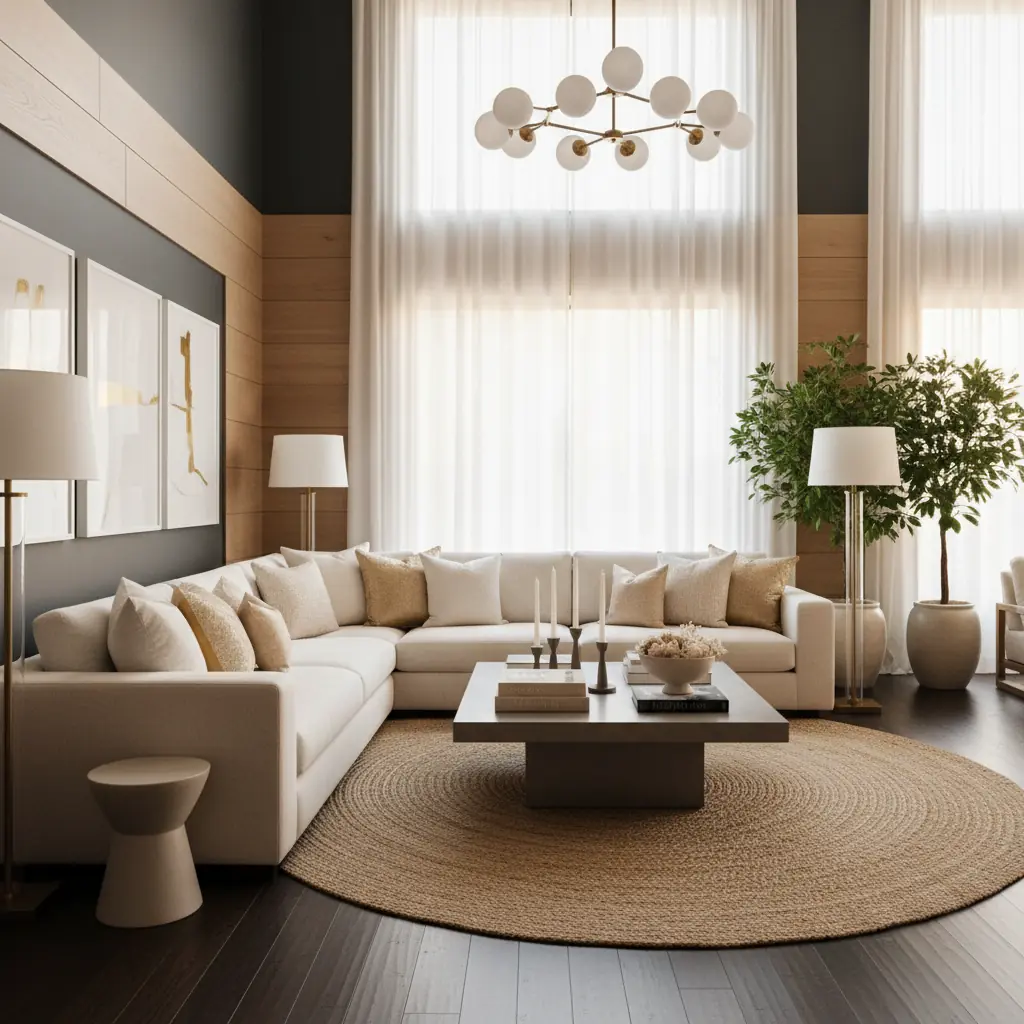
¿Por qué tu sala se siente oscura? Diagnosticando la causa raíz
No todas las habitaciones oscuras tienen el mismo problema, y diagnosticar el tuyo con precisión es inmensamente importante antes de empezar a comprar pintura o muebles. Comprender la fuente de la penumbra es el primer paso hacia una iluminación efectiva.
**Factores Externos:**
- **Orientación de Ventanas:** Las habitaciones orientadas al norte, por ejemplo, reciben luz consistente pero indirecta durante todo el día – más suave, fría y tenue que sus equivalentes orientadas al sur, que se inundan de sol cálido y directo. Las habitaciones orientadas al este reciben luz brillante por la mañana, mientras que las orientadas al oeste disfrutan de un sol intenso por la tarde. - **Aperturas Limitadas:** Ventanas pequeñas o escasas obviamente restringen la cantidad de luz natural que puede entrar. Las ventanas grandes y arquitectónicas suelen ser un lujo. - **Obstrucciones Externas:** El factor más pasado por alto suele ser el contexto externo. Un edificio vecino alto, un voladizo profundo en un porche, árboles maduros con follaje denso o incluso un muro de contención adyacente pueden bloquear una porción significativa de la luz disponible. Estudios sugieren que estas barreras externas pueden reducir la entrada de luz natural entre un **60% y un 80%**, incluso cuando las ventanas son de tamaño generoso.
**Factores Interiores:** Las elecciones de diseño de interiores a menudo agravan el problema. Los pisos oscuros, ya sean de madera noble de tono profundo o una alfombra gris carbón, absorben la luz en lugar de reflejarla de vuelta en la habitación. Las cortinas pesadas, los muebles voluminosos colocados directamente frente a las ventanas y las paredes con acabado mate actúan como "sumideros de luz", atrapando fotones en lugar de reflejarlos. Incluso la falta de líneas de visión abiertas puede hacer que un espacio se sienta más cerrado y, en consecuencia, más oscuro. La buena noticia: la mayoría de estos problemas se pueden solucionar sin costosas renovaciones.
Antes de cambiar cualquier cosa, tómate un día completo para observar cómo se mueve la luz a través de tu sala. Anota cuándo alcanza su punto máximo, dónde aterriza y dónde persisten obstinadamente las sombras. Esta observación de primera mano te dirá qué trucos de los siguientes serán más importantes en tu espacio específico, asegurando que tus esfuerzos sean dirigidos e impactantes.
Ubicación estratégica de espejos: Cómo amplificar la luz natural
Los espejos son, sin duda, la herramienta más efectiva para iluminar una habitación oscura, pero la ubicación lo es todo. El consejo clásico — "pon un espejo frente a una ventana" — es correcto pero incompleto. Lo que realmente quieres es colocar un espejo grande donde pueda captar la _máxima luz disponible_ y redirigirla más profundamente en la habitación.
- **Frente a la Fuente de Luz:** Si tu ventana está en la pared norte, un espejo grande en la pared sur, directamente enfrente, capturará esa luz difusa y la reflejará. - **Ubicación Perpendicular:** Si la luz entra en ángulo (por ejemplo, desde una ventana adyacente o una entrada), posiciona el espejo en la pared perpendicular a la fuente de luz, ligeramente inclinado para reflejarla hacia la esquina más oscura de la habitación. Esto puede crear la ilusión de una nueva ventana. - **Más Allá de la Ventana:** No solo lo coloques enfrente; considera colocarlo en una pared adyacente, ligeramente desfasado de la ventana, para captar luz y vistas, "extendiendo" visualmente la ventana.
**La Escala y el Estilo Importan:** La escala importa mucho más de lo que la gente espera. Un espejo decorativo pequeño casi no hace nada por la luminosidad. Necesitas al menos 60x90 cm, idealmente más grande. Un espejo de cuerpo entero (aproximadamente 60x180 cm o más grande) apoyado contra la pared opuesta o adyacente a tu fuente de luz principal puede transformar la habitación, haciéndola sentir significativamente más luminosa y grande. La investigación sugiere que los espejos estratégicamente colocados pueden hacer que una habitación se sienta **hasta un 50% más luminosa y grande** al expandir visualmente el espacio y multiplicar las fuentes de luz. Para un efecto máximo, usa un espejo con un borde delgado, metálico o sin marco – los marcos pesados y ornamentados reducen la superficie reflectante.
Más allá de los espejos grandes individuales, considera una pared galería que incluya varios espejos entre obras de arte, o incorpora piezas de mobiliario espejadas como una mesa de consola o una mesa auxiliar espejada. Estas distribuyen superficies reflectantes por toda la habitación en lugar de concentrarlas en un solo punto, creando un juego dinámico de luces. Para ayudarte a visualizar diferentes ubicaciones de espejos y su impacto en tu diseño, considera usar una [herramienta de organización de muebles con IA](/blog/ai-furniture-arrangement-tool) para experimentar virtualmente.
Paleta de colores claros que realmente funciona: Más allá del blanco
Las paredes blancas son la respuesta obvia para iluminar una habitación, pero el _blanco específico_ (y otros colores claros) importa enormemente en un espacio oscuro. No todos los blancos son iguales, especialmente cuando la luz natural es escasa.
- **El Matiz del Blanco:** Los blancos fríos (con matices azules, grises o verdes) pueden, irónicamente, verse sucios, sombríos o incluso sutilmente morados con poca luz, especialmente en habitaciones orientadas al norte con su iluminación intrínsecamente fría. Lo que buscas son **blancos cálidos** – aquellos con matices amarillos, beige o, a veces, incluso un toque de melocotón o rosa. Ejemplos como Benjamin Moore Simply White, Farrow & Ball White Tie o Sherwin-Williams Alabaster se perciben como genuinamente brillantes y acogedores en habitaciones con luz natural limitada porque sus matices cálidos compensan el tono frío de la luz indirecta. Esta elección estratégica puede aumentar la luminosidad percibida entre un **10% y un 15%** en comparación con un blanco frío en una habitación con poca luz. - **Más Allá del Blanco:** No te limites al blanco. Cremas pálidas, amarillos suaves y mantecosos, "greiges" muy claros, o incluso azules y verdes apenas perceptibles también pueden ser efectivos. La clave es su **Valor de Reflectancia Lumínica (VRL)** – una medida de cuánta luz refleja un color. Apunta a colores con un VRL de 70 o superior. Habitas te permite experimentar con una [amplia gama de colores](/blog/ai-color-palette-generator) en las fotos de tu habitación antes de comprometerte. - **La "Quinta Pared":** Tu techo debe ser la superficie más clara de la habitación. Si tus paredes son de un blanco cálido, pinta el techo de un blanco puro brillante. Esto crea un sutil gradiente que dirige la mirada hacia arriba y hace que la habitación se sienta más alta y abierta. - **Molduras Reflectantes:** Las molduras y zócalos con acabado semibrillante o satinado (en lugar de mate) añaden otra capa de reflectividad sin parecer excesivamente brillantes o distractores. Estos destellos sutiles ayudan a rebotar la luz. - **Desde el Suelo:** El piso es tu tercera palanca. Si tienes pisos de madera oscura o alfombra, una alfombra grande de color claro (crema, yute natural, gris pálido, o incluso un azul o verde suave) puede recuperar una sorprendente cantidad de luminosidad, actuando como una gran superficie reflectante en el plano del suelo.
Para más inspiración sobre cómo usar colores claros de manera efectiva, explora nuestra guía sobre [consejos de diseño para habitaciones completamente blancas](/blog/all-white-room-design-tips) o descubre los [mejores colores de pintura de 2026](/blog/best-paint-colors-2026) para una luminosidad óptima.
Plan de iluminación en capas: Iluminando cada rincón
Una única luz de techo es la peor iluminación posible para una habitación oscura. Crea un halo de luz áspero y aislante en el centro y deja las esquinas en profunda sombra, haciendo que la habitación se sienta más pequeña, austera y, en última instancia, más oscura de lo que es. Un plan de iluminación en capas es esencial para crear un espacio luminoso, acogedor y funcional. Esto significa combinar tres tipos de iluminación:
1. **Iluminación Ambiental (Luz General de la Habitación):** Esta proporciona iluminación general. En lugar de una sola luminaria de techo, considera múltiples fuentes a diferentes alturas. - **Cenital:** Un plafón, una luminaria semi-empotrada o incluso iluminación empotrada proporcionan una capa base. - **Lámparas de Pie y de Mesa:** Añade 2-3 lámparas de mesa o de pie distribuidas estratégicamente por la habitación. Coloca una en cada esquina oscura para eliminar sombras y expandir el espacio percibido. Las lámparas de pie altas pueden imitar la luz natural que entra por una ventana. - **Apliques de Pared:** Estos añaden una hermosa luz ambiental a la altura de los ojos, haciendo que las paredes se sientan más brillantes y contribuyendo a una atmósfera sofisticada.
2. **Iluminación de Tarea (Luz Funcional):** Esta es luz enfocada para actividades específicas. - Una lámpara de pie ajustable junto al sofá o sillón es perfecta para leer. - Una lámpara de escritorio en una mesa auxiliar proporciona luz focalizada para pasatiempos o trabajo. - Las luces para cuadros pueden resaltar obras de arte, contribuyendo sutilmente a la iluminación general de la habitación.
3. **Iluminación de Acento (Resaltar Características y Añadir Calidez):** Esta es el arma secreta para las habitaciones oscuras, eliminando vacíos oscuros sin añadir luminarias visibles. - Tiras de luces LED detrás de un mueble de TV, debajo de estantes flotantes o dentro de libreros, emiten un brillo cálido que hace que estas áreas se sientan integradas en lugar de sombrías. - Uplighters (pequeñas luces de suelo que brillan hacia arriba) detrás de plantas o en esquinas pueden bañar las paredes con luz, añadiendo profundidad. - Velas, particularmente en candelabros reflectantes, proporcionan un brillo suave y acogedor.
**Consideraciones Críticas:**
- **Temperatura de Color:** Elige bombillas en el rango de 2700K-3000K (blanco cálido) para una sensación acogedora y atractiva. Evita cualquier cosa por encima de 4000K en una sala – se siente clínica y estéril. - **Índice de Reproducción Cromática (IRC):** Busca bombillas con un IRC alto (90+) para una representación precisa del color, haciendo que tu decoración realmente resalte. - **Los Reguladores de Luz son Indispensables:** Invierte en bombillas y interruptores regulables en todas partes. Poder aumentar los niveles de luz durante el día para combatir la penumbra y disminuirlos por la noche para la intimidad te brinda una habitación que se siente luminosa cuando la necesitas y acogedoramente íntima cuando lo deseas. Un plan de iluminación en capas bien diseñado puede reducir la dependencia de una única luminaria de techo en un **80%**, mejorando significativamente el estado de ánimo y potencialmente reduciendo el consumo de energía en **hasta un 20%** con reguladores LED inteligentes.
Superficies y materiales reflectantes: Maximizando cada fotón
Cada superficie en una habitación oscura está ayudando o perjudicando tu objetivo de luminosidad. Los acabados mate absorben la luz, haciendo que una habitación se sienta más plana y tenue. Los acabados satinados, semibrillantes y metálicos, sin embargo, rebotan la luz, distribuyéndola por todo el espacio. Esto no significa que tu habitación deba parecer una nave espacial; la reflectividad sutil es el objetivo.
- **Muebles y Accesorios:** - **Vidrio:** Una mesa de centro con tapa de vidrio, gabinetes con frentes de vidrio o incluso piezas de mobiliario de acrílico transparente permiten que la luz pase y se refleje. - **Metales:** Lámparas metálicas o de latón, acentos cromados, objetos decorativos de plata pulida o incluso una consola multimedia lacada, todos contribuyen con pequeñas cantidades de reflexión de luz que se acumulan en la habitación. - **Acabados de Alto Brillo:** Los muebles con un acabado de pintura o laca de alto brillo reflejarán más luz que la madera mate. - **Textiles y Telas:** - **Tonos Más Claros:** Las telas de los muebles también importan. Si bien el terciopelo puede ser hermoso, absorbe mucha luz debido a su pelo profundo. El lino, el algodón y el cuero en tonos más claros son generalmente más reflectantes. - **Traslúcidas y Brillantes:** Para los tratamientos de ventanas, opta por cortinas traslúcidas o semi-traslúcidas en un color claro. Estas permiten la máxima penetración de luz al tiempo que ofrecen algo de privacidad. Busca telas con un ligero brillo, como seda, satén o incluso un cojín o manta con hilo metálico, que añade chispa sin parecer ostentoso. - **Arte y Decoración:** - **Arte Enmarcado:** Elige obras de arte con cubiertas de vidrio o acrílico, especialmente si el arte en sí es de tono más claro. - **Floreros y Esculturas:** Floreros de cerámica esmaltada, esculturas de piedra pulida o incluso cuencos metálicos brillantes añaden puntos reflectantes pequeños pero importantes. - **Acentos Espejados:** Más allá de los grandes espejos de pared, considera pequeñas bandejas espejadas, marcos de fotos u objetos decorativos.
El efecto acumulativo de elegir materiales reflectantes sobre absorbentes en toda la habitación es sorprendentemente significativo. Si bien no reemplazará una ventana, aprovecha al máximo cada fotón que tienes, aumentando potencialmente la luz ambiental entre un **5% y un 10%** solo con elementos decorativos.
Cuándo abrazar la oscuridad: Adoptando la estética "moody"
Aquí está la verdad contraintuitiva: algunas habitaciones oscuras, especialmente aquellas con limitaciones severas de luz natural, en realidad deberían permanecer oscuras. Si tu sala recibe muy poca luz natural sin importar lo que hagas, intentar simular luminosidad con pintura blanca brillante y espejos infinitos puede sentirse forzado, estéril o incluso clínico – más como una sala de espera de hospital que un hogar acogedor.
La alternativa es abrazar la atmósfera "moody" y crear un espacio que se sienta intencionadamente sofisticado, íntimo y envolvente. Este enfoque convierte una debilidad percibida en una poderosa declaración de diseño.
- **Paletas de Colores Profundos y Ricos:** En lugar de luchar contra la penumbra, inclínate por colores de pintura profundos como gris carbón, azul marino oscuro, verde bosque, ciruela intenso o tonos joya ricos. Estos colores pueden crear un telón de fondo dramático y lujoso. El truco es combinarlos con acentos metálicos cálidos (latón, oro, cobre) y texturas más claras y contrastantes para evitar que la habitación se sienta opresiva. - **Texturas Lujosas:** La textura es lo que da profundidad a las habitaciones oscuras en lugar de planitud. Capa texturas lujosas abundantemente: mantas de punto grueso, cojines de terciopelo, una alfombra de pelo profundo, sillones de cuero y muebles de madera oscura. Estos elementos táctiles absorben el sonido, haciendo que la habitación se sienta más tranquila y envolvente. - **Iluminación Estratégica y Cálida:** En una habitación diseñada para ser oscura, cada fuente de luz debe sentirse cálida, deliberada y escultórica. Evita por completo los fluorescentes de techo ásperos. Opta por apliques de pared a la altura de los ojos, varias lámparas de mesa y de pie cálidas con pantallas opacas o de color oscuro para dirigir la luz, y muchas velas. Una lámpara de pie imponente con un brillo difuso y cálido puede convertirse en un punto focal. - **Arte y Acentos Reflectantes:** Incluso en una habitación oscura, necesitas algunos puntos de luz. Elige obras de arte que "resalten" contra las paredes oscuras, quizás con iluminación integrada o elementos metálicos. Las habitaciones oscuras también pueden beneficiarse de [soluciones para habitaciones con formas incómodas](/blog/awkward-room-shape-solutions) donde la intención no es iluminar, sino optimizar la funcionalidad y la calidez.
Herramientas como Habitas te permiten probar ambos enfoques: sube la foto de tu habitación y genera una variante luminosa y una variante "moody". Ver ambas opciones renderizadas en tu espacio real facilita significativamente la decisión, permitiéndote elegir la estética que realmente resuene con el carácter único de tu hogar.
Preguntas Frecuentes
### ¿Cuáles son los mejores colores de pintura para una sala oscura?
Para salas oscuras, los mejores colores de pintura son los blancos cálidos con matices amarillos, beige o sutiles melocotón (por ejemplo, Benjamin Moore Simply White, Sherwin-Williams Alabaster). Estos matices cálidos contrarrestan el tono frío de la luz natural limitada, haciendo que la sala se sienta genuinamente más luminosa y acogedora. Otras excelentes opciones incluyen cremas muy pálidas, "greiges" suaves o amarillos mantecosos claros, todos elegidos por su alto Valor de Reflectancia Lumínica (VRL) superior a 70. Evita los blancos fríos con matices azules o grises, ya que pueden parecer sucios u opacos con poca luz.
### ¿Cómo puedo iluminar una sala sin ventanas?
Iluminar una sala sin ventanas requiere un enfoque multifacético. Prioriza la iluminación en capas con múltiples fuentes (ambiental, de tarea, de acento), incluyendo lámparas de pie, lámparas de mesa y tiras de luces LED estratégicamente colocadas. Usa espejos grandes para crear la ilusión de profundidad y reflexión, colocándolos donde puedan imitar una ventana o reflejar la luz artificial existente. Opta por una paleta de colores claros y cálidos en paredes, techo y revestimientos de piso. Incorpora muchas superficies reflectantes como vidrio, metales pulidos y acabados de alto brillo para rebotar la luz. También puedes usar "ventanas falsas" con retroiluminación o grandes obras de arte que representen escenas exteriores brillantes.
### ¿Cuál es la mejor iluminación para una sala oscura?
La mejor iluminación para una sala oscura es un plan en capas que combine iluminación ambiental, de tarea y de acento. Evita depender de una única luminaria de techo. En su lugar, distribuye varias fuentes de luz por toda la habitación, incluyendo lámparas de pie, lámparas de mesa, apliques de pared y luces empotradas. Elige bombillas con una temperatura de color blanco cálido (2700K-3000K) y un alto Índice de Reproducción Cromática (IRC 90+) para una representación precisa del color. Fundamentalmente, instala reguladores de luz en todas las luces para permitir flexibilidad al ajustar el brillo y crear diferentes ambientes a lo largo del día y la noche.
### ¿Puede funcionar el mobiliario oscuro en una habitación oscura?
Sí, los muebles oscuros pueden funcionar absolutamente en una habitación oscura, especialmente si buscas una estética "moody" y sofisticada. La clave es equilibrarlo con otros elementos. Elige muebles con texturas ricas como terciopelo, cuero o vetas de madera oscura para añadir profundidad y lujo. Combina piezas oscuras con textiles más claros y contrastantes (como cojines decorativos crema o una alfombra clara) y acentos metálicos (latón, oro) para proporcionar rupturas visuales y sutiles reflejos. Asegúrate de que tu plan de iluminación sea robusto, con fuentes de luz cálidas e intencionadas que destaquen las áreas y eviten que la habitación se sienta como una cueva. El uso de herramientas como Habitas puede ayudarte a visualizar cómo aparecerían los muebles oscuros en tu espacio específico antes de realizar una compra.