Design a Home Gym: Elevate Your Fitness Space with Interior Design Principles
Home gyms that are actually used are ones you want to spend time in. Design principles, material choices, and layout strategies for creating a fitness space that feels like part of your home.
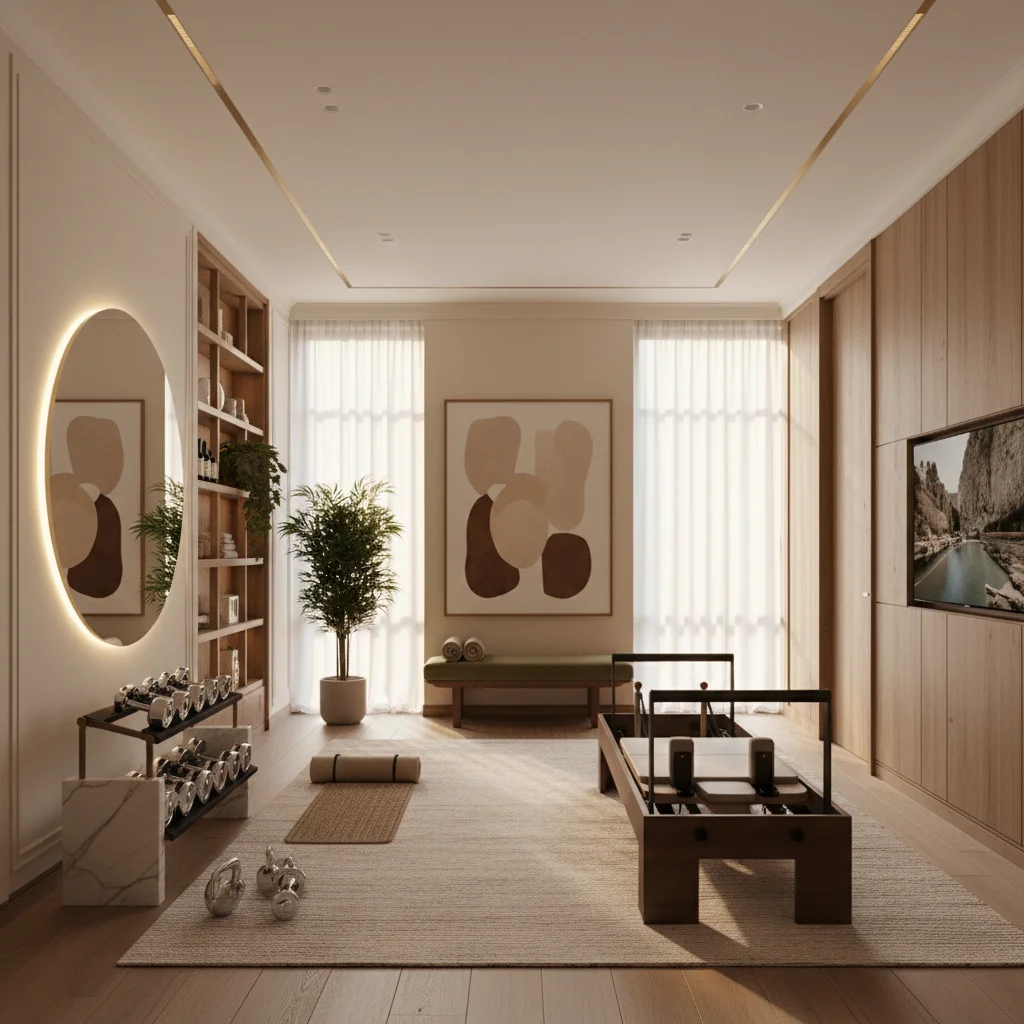
Why most home gyms feel wrong and how to fix it
Most home gyms are assembled rather than designed. A treadmill arrives, then a set of dumbbells, then a bench, then a rack. Each piece is chosen for function alone and placed wherever it fits. The result looks like a storage room that happens to contain exercise equipment — utilitarian, aesthetically disconnected from the rest of the home, and deeply uninviting. People stop using these gyms not because they lack discipline but because the space offers them nothing beyond the equipment itself. In fact, studies show that environmental cues significantly impact habit formation; a visually appealing and functional space can boost workout consistency by up to 40%.
A well-designed home gym functions on the same principles as every other room in a well-designed home: it has a clear material palette, consistent lighting, considered storage, and an aesthetic identity that makes you want to enter it. The difference is that function is a more demanding constraint — the flooring must protect against weight drops, the mirrors must be correctly placed for form checking, the storage must accommodate equipment at multiple scales. Good design works within these constraints rather than ignoring them, transforming a mere exercise area into a true extension of your living space.
What flooring options elevate a home gym's aesthetic and function?
Flooring defines the visual character of a home gym more than any other element. The default choice — rubber interlocking tiles in black or grey — is functional but aesthetically resigned. It signals "this is a gym" immediately and makes the space feel separate from the rest of the home. Alternative flooring choices that perform equally well while reading as designed spaces:
- **Natural rubber sheeting:** Available in warm terracotta, forest green, deep blue, or even speckled designs, this option offers superior impact absorption and durability without the stark, institutional feel. It's often seen in high-end commercial gyms and offers a seamless look. Opt for rolls that can be glued down for a more permanent and refined finish. - **Wood-effect luxury vinyl plank (LVP) with a rubber underlay:** This combination provides the aesthetic warmth of wood without sacrificing the necessary protection. The LVP itself is durable and easy to clean, while a high-density rubber underlayment (typically 6-12mm thick) provides crucial impact absorption for weights and reduces noise transmission to other areas of the home. This blend can cost around $5-10 per square foot for materials and installation, a worthwhile investment for a truly integrated look. - **Cork flooring:** A sustainable and inherently warm material, cork is excellent for areas focused on yoga, stretching, or bodyweight exercises. It offers natural cushioning, is soft underfoot, and provides good acoustic insulation, dampening sound. Its earthy tones integrate beautifully with biophilic design principles.
Consider zoning the flooring where different activities occur. A dedicated stretching and yoga area in warm wood or cork, a weightlifting platform in premium rubber, and a cardio area that can be standard concrete or tile (most cardio equipment has its own vibration absorption) creates visual and functional differentiation within the space. These zone boundaries also help organize the room spatially — the transitions communicate which area you are in and what activity it is for. Before installing any specialized flooring, ensure your subfloor is level and properly prepared, as this is critical for longevity and performance.
How do mirrors enhance both function and spatial design in a home gym?
Mirrors in a gym serve a technical purpose — checking form during lifts and movements — but their design impact is equally significant. A full-height mirror along one wall makes any room feel larger, brighter, and more open. In a small home gym, a wall of mirrors can double the apparent volume of the space, a crucial advantage for smaller footprints often found in home conversions. The question is how to make mirrors feel designed rather than institutional.
The framing and placement of mirrors makes the difference. Mirrors mounted in a substantial wooden frame, or panels of mirror set within a grid of thin oak or black steel dividers, read as architectural elements rather than gym equipment. A single oversized frameless mirror — rather than multiple smaller panels — has the premium quality of a hotel fitness facility rather than the improvised quality of a home conversion. Ensure mirrors are securely installed with proper gym-grade adhesive and J-channels, especially if located near heavy lifting areas.
Position mirrors strategically to reflect the nicest view in the room: a window, a vibrant plant, or a well-lit motivational wall. Avoid placing mirrors where they reflect clutter or an unflattering angle of equipment. Think about the sightlines from different workout stations. Tools like Habitas allow you to visualize these mirror placements on your actual room photos, helping you determine the most impactful arrangement before installation.
What are the best strategies for equipment selection and smart storage?
The most important equipment decision for a home gym that looks designed is choosing pieces with a consistent visual language. Mismatched equipment in different colors and materials is the fastest route to a chaotic aesthetic. Choose a primary color for equipment — black, matte grey, or warm wood and chrome for a premium look — and stick to it across all purchases. Many equipment manufacturers now offer premium aesthetic lines specifically for home gym markets that prioritize design alongside function. For instance, brands like Tonal or Peloton integrate sleek designs and minimal footprints, seamlessly blending into modern interiors.
Consider multi-functional equipment that minimizes clutter. Adjustable dumbbells, smart home gym systems that use resistance bands or cables, or fold-away benches can be excellent choices for maximizing space without compromising utility. When selecting larger pieces like treadmills or ellipticals, prioritize models with streamlined profiles and integrated screens over bulky, exposed mechanisms.
Storage is the element most neglected in home gym design. Dumbbells on the floor, resistance bands draped over equipment, and foam rollers leaning against walls create visual clutter that makes even well-designed spaces feel disorganized. Invest in a proper dumbbell rack with a consistent finish, a wall-mounted storage system for smaller accessories like resistance bands, jump ropes, and yoga mats, and dedicated shelving or cabinetry for items used less frequently. Custom built-ins can elegantly conceal a surprising amount of equipment, making the room feel like any other part of your home when not in use. Consider integrating a storage bench that doubles as seating or an ottoman with hidden compartments for smaller items. When equipment is stored, the room reads as designed space; when it is scattered, it reads as a mess regardless of what else is done. For creative arrangements, an [AI furniture arrangement tool](/blog/ai-furniture-arrangement-tool) could help optimize your space for both equipment and storage.
How to use layered lighting for motivation, focus, and recovery?
Gym lighting serves two different purposes that traditional residential lighting does not usually need to balance: it must be bright enough for safe, focused exercise — you need to see your form clearly in mirrors, see the display on equipment — while also being adjustable for the lower, warmer light that morning stretching or cool-down yoga calls for. The solution is layered lighting on dimmers.
- **Task/Overhead Lighting:** Install bright overhead lighting (5000K to 6500K LED for energy and alertness) on one circuit. Recessed pot lights or sleek track lighting provide ample illumination without being visually intrusive. This bright, cool light is ideal for high-intensity workouts, promoting focus and energy. - **Ambient/Accent Lighting:** On a separate circuit, incorporate warmer ambient or strip lighting (2700K to 3000K) for recovery work, stretching, or mindful movement. LED strips hidden in coves, behind mirrors, or along the baseboards can create a soft, inviting glow. Wall sconces with dimmers can also contribute to a serene atmosphere. - **Natural Light:** Natural light dramatically improves the experience of a home gym. A gym with a window — even a small one — feels fundamentally different from a gym in a basement or interior room. Natural light regulates circadian rhythms and boosts mood. If natural light is not available, full-spectrum light therapy panels that simulate natural light spectra can partially substitute, though they typically cost upwards of $100 for a quality unit. Window treatments like sheer roller blinds or smart glass can offer privacy while still allowing diffused light to enter.
The color temperature and brightness of light has documented effects on energy, focus, and mood during exercise; treating it as a design afterthought rather than a central design element is a missed opportunity. Research indicates that exercising under bright, cool light can improve performance, while warmer, softer light is better for relaxation and recovery.
How can you integrate acoustics and technology for a superior workout experience?
Beyond the visual, the sensory experience of your home gym significantly impacts your motivation and comfort.
**Acoustics:** Noise management is crucial, especially in shared living spaces. Impact noise from weights dropping or cardio equipment vibrating can be disruptive.
- **Flooring underlayment:** As mentioned, a high-density rubber underlayment beneath your main flooring will absorb significant impact noise. - **Wall treatments:** Consider acoustic panels, upholstered wall panels, or even thick tapestries to dampen echo and absorb sound. These can be designed to blend seamlessly with your decor. - **Heavy drapes:** If you have windows, heavy drapes can help absorb sound within the room.
**Technology Integration:** Modern home gyms are increasingly smart.
- **Integrated sound systems:** Ditch portable speakers. Install built-in ceiling or wall-mounted speakers that connect to your home's audio system for immersive sound during workouts. This eliminates visual clutter and provides superior audio quality. - **Smart displays/TVs:** A wall-mounted smart TV or a dedicated fitness display (like those from Peloton or Tonal) can be used for guided workouts, virtual classes, or entertainment. Ensure wiring is concealed within the walls for a clean look. - **Smart home integration:** Connect your lighting, temperature control, and sound system to a smart home hub. This allows you to set pre-programmed "workout modes" that adjust lighting, temperature, and music with a single command.
Making the gym feel like part of the home: The final touches
The final consideration is continuity with the rest of your home. A home gym that could belong to anyone, in any home, feels less like yours. Small design gestures that personalize the space — a framed print that matters to you, a plant that introduces life and organic form, a speaker system integrated into the wall rather than placed on the floor, a motivational object or photograph — these make a gym feel inhabited rather than installed. Personal touches increase your emotional connection to the space, which in turn boosts usage. Indeed, a recent survey found that 68% of homeowners reported using their home gym more often when it reflected their personal style.
Color on at least one wall moves the space decisively away from institutional. A deep saturated color — forest green, matte black, dark navy, or even a rich terracotta — on the feature wall behind the main equipment reads as a designed decision. Paired with warm lighting, natural materials in the flooring, and stored-away accessories, this single choice transforms the space from a functional room with equipment into a room you genuinely look forward to entering. For inspiration, explore different [color schemes for living rooms](/blog/color-schemes-for-living-rooms) that can be adapted for a gym space. For personalized options, an [AI color palette generator](/blog/ai-color-palette-generator) can help you find shades that complement your home's existing aesthetic.
Consider adding elements that promote well-being beyond exercise: a small, comfortable chair for post-workout stretching or meditation, a diffuser for essential oils, or a water station. These thoughtful additions elevate the space from purely functional to a holistic wellness sanctuary, ensuring your home gym is not just used, but cherished.
Frequently Asked Questions
### What is the ideal size for a functional home gym?
The ideal size for a functional home gym varies based on your fitness goals and equipment. A dedicated space of at least 8x8 feet (64 sq ft) is generally recommended for basic equipment like a yoga mat, dumbbells, and a bench. If you plan for larger equipment like a treadmill, elliptical, or a power rack, aim for 10x12 feet (120 sq ft) or more to allow for safe movement and comfortable use. Remember to account for clearance space around equipment.
### How much does it cost to design a stylish home gym?
The cost of designing a stylish home gym can range widely, from a few hundred dollars for aesthetic upgrades to existing equipment and flooring, to over $10,000 for a complete overhaul with high-end materials, custom storage, and integrated technology. A mid-range budget of $2,000-$5,000 can cover quality flooring, a basic set of aesthetically pleasing equipment, and improved lighting and storage solutions. Custom built-ins and premium smart gym equipment will increase the investment significantly.
### Can a home gym be integrated into a multi-purpose room?
Absolutely. Integrating a home gym into a multi-purpose room like a guest bedroom or home office requires strategic planning. Focus on collapsible or hidden equipment (e.g., fold-away benches, adjustable dumbbells stored in a cabinet, wall-mounted resistance systems). Consider a uniform flooring choice throughout the room, or use a rug to define the workout zone. Smart storage that conceals equipment when not in use is critical to maintaining the room's primary function and aesthetic.
### What are common mistakes to avoid when designing a home gym?
Common mistakes include neglecting proper flooring for impact absorption and noise reduction, overlooking storage solutions leading to clutter, failing to incorporate layered and adjustable lighting, and choosing mismatched equipment that creates visual chaos. Another frequent error is isolating the gym aesthetically from the rest of the home, making it feel less inviting. Prioritize thoughtful design over simply accumulating equipment.