How to Design an AI-Optimized Luxury Walk-In Closet for Maximum Efficiency
Learn how to integrate AI technology, smart inventory systems, and modular design into your luxury walk-in closet for the ultimate dressing experience.
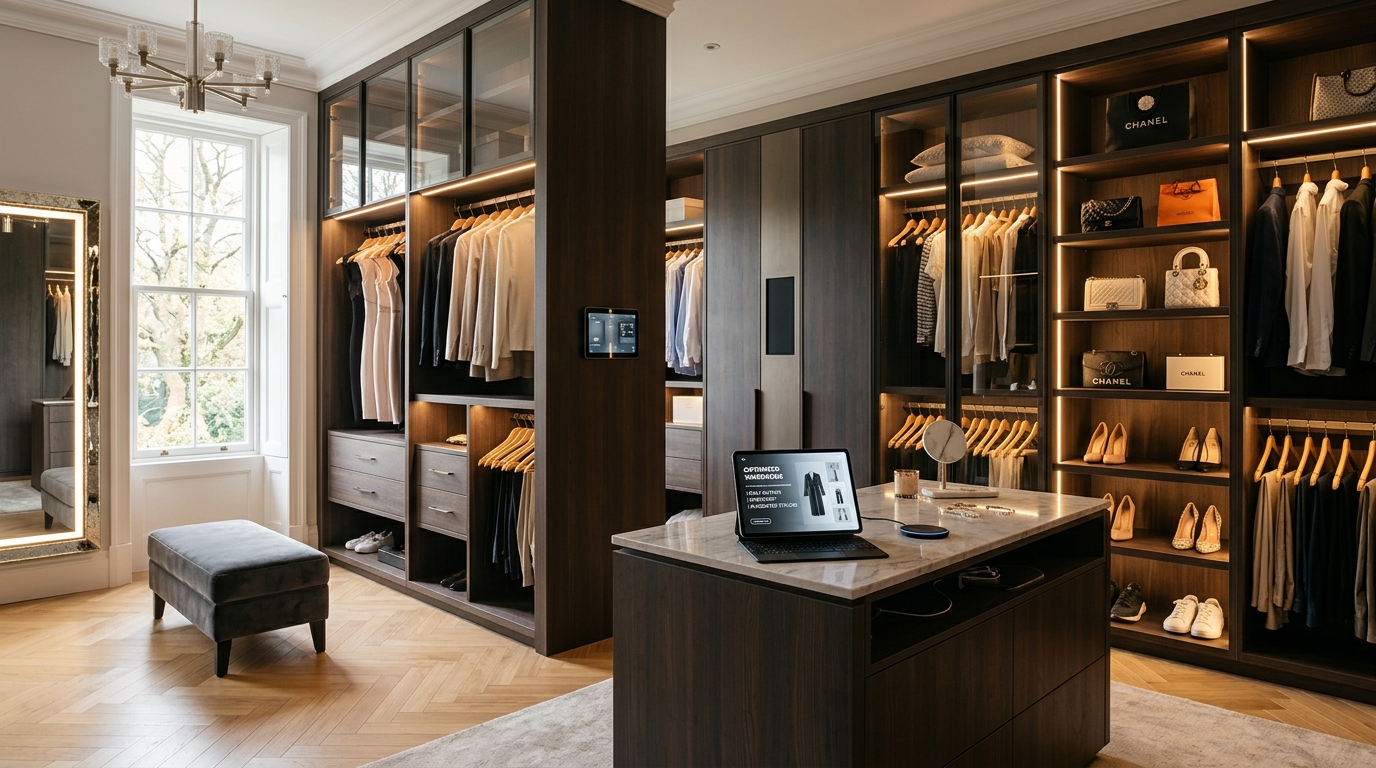
Why Traditional Closet Design is Failing Modern Lifestyles
Traditional closets are static. They are built based on generalized assumptions about how many shoes or hanging items a person might own. However, our wardrobes are fluid, and our time is increasingly valuable. According to recent lifestyle studies, the average professional spends approximately 15 to 20 minutes per day deciding what to wear. Over a lifetime, that equates to nearly a full year of lost time.
Beyond time, there is the issue of "closet blindness." Most people only regularly wear 20% of their wardrobe because the other 80% is obscured by poor lighting or inefficient layouts. A luxury closet without AI optimization is simply an expensive storage unit. To achieve maximum efficiency, we must integrate systems that bring visibility, accessibility, and intelligence to the dressing experience.
The Core Elements of a Luxury AI-Optimized Walk-In Closet
To build a closet that truly serves you, you must look beyond the aesthetics of marble islands and velvet-lined drawers. The modern luxury closet relies on three technological pillars:
1. **Digital Inventory Management:** Using RFID tags or image-recognition cameras to track every item in your collection. 2. **Smart Lighting Systems:** Lighting that adjusts based on the time of day or the specific colors of your garments. 3. **Climate and Textile Preservation:** AI-driven sensors that monitor humidity and temperature to prevent the degradation of high-end fabrics like silk, leather, and cashmere.
By integrating these elements during the design phase, you ensure that the physical space supports the digital tools you will use daily.
How to Use AI Interior Design Apps to Map Your Space
The planning phase is where most closet designs succeed or fail. Utilizing modern tools like [Habitas](https://habitas.ai) allows you to visualize the spatial flow before a single piece of wood is cut. AI-powered platforms can analyze your specific inventory—how many linear feet of hanging space you need, the height of your tallest boots, and the volume of your accessory collection—to generate an optimized layout.
When you use [AI interior design apps compared in 2026](/blog/ai-interior-design-apps-compared-2026), you can simulate different configurations to see how traffic flows through the room. Does the island block access to the shoe wall? Is the vanity positioned for the best natural light? AI allows you to "stress test" your closet's efficiency in a virtual environment.
AI-Automated Floor Plans vs. Architectural Drafting: Which is Better for Small Spaces?
For those working with limited square footage, every millimeter counts. Traditional architectural drafting can be slow and often lacks the iterative speed required to find the "perfect" fit for complex modular systems.
When comparing [AI-automated floor plans vs. architectural drafting](/blog/ai-automated-floor-plan-vs-architectural-drafting), the AI approach often wins for interior retrofits. AI algorithms can run thousands of permutations to find the most efficient shelf-to-rod ratio, ensuring that a 100-square-foot space feels like 200. This is particularly useful when integrating hidden automated features, such as motorized overhead racks that lower at the touch of a button.
Modular Shelving Layouts: The Backbone of Efficiency
The key to a long-lasting luxury closet is adaptability. Your wardrobe in five years will not look like your wardrobe today. Modular shelving systems are the "hardware" that supports your AI "software."
Search for systems that offer: * **Integrated Power Tracks:** These allow you to add LED lighting or charging stations to any shelf without visible wiring. * **Hidden RFID Scanners:** These scan items as you pull them from the shelf, updating your digital wardrobe app in real-time. * **Adjustable Vertical Standards:** Ensuring that as hemlines change or boot heights shift, your closet can evolve with you.
A modular approach ensures that your investment remains relevant, regardless of fashion trends.
Integrating Biometric Lighting for Ultimate Visual Clarity
One of the most overlooked aspects of luxury design is the quality of light. In a walk-in closet, the wrong color temperature can make a navy suit look black or a cream dress look yellow. This is where [AI-driven biometric lighting for mental wellness](/blog/ai-driven-biometric-lighting-for-mental-wellness) becomes a functional necessity.
Biometric lighting systems sync with your body’s circadian rhythm but can also be "tricked" into simulating different environments. With a voice command or a tap on your smart mirror, you can change the closet's lighting to mimic "Office Fluorescent," "Evening Gala," or "Outdoor Sunlight." This ensures that you look exactly as intended once you step out the door. Furthermore, AI sensors can detect which section of the closet you are approaching and illuminate only those specific shelves, reducing energy consumption and protecting textiles from unnecessary light exposure.
The Role of AI Wardrobe Planning in Daily Productivity
The "Optimized" part of an AI-optimized closet refers to the software that runs the space. High-end dressing rooms now feature integrated "Smart Mirrors"—large-scale displays that overlay digital information onto your reflection.
These systems connect to your digital inventory and your calendar. If you have a board meeting at 9:00 AM and the weather forecast predicts rain, the mirror will highlight your water-resistant trench coat and suggest a professional ensemble that fits the occasion. According to market data from 2025, homeowners who implement AI wardrobe planning save an average of 120 hours per year on morning preparation. That is three full work weeks returned to your schedule.
Sustainable Materials: 3D Printed Panels and Modern Wallcoverings
Luxury in 2026 is synonymous with sustainability and customization. When designing the aesthetic backdrop of your closet, consider moving away from traditional heavy millwork toward more innovative materials.
For example, comparing [AI digital wallpaper vs. traditional textured wallcoverings](/blog/ai-digital-wallpaper-vs-traditional-textured-wallcoverings) reveals that digital options can incorporate embedded OLED filaments for ambient glow. Additionally, many designers are now using 3D-printed acoustic panels to dampen sound, creating a whisper-quiet environment that feels like a private boutique. These materials are often lighter, easier to install, and can be customized with AI-generated patterns that are unique to your home.
Estimating the ROI: Is a Smart Closet Worth the Investment?
The cost of a luxury AI-optimized walk-in closet can range significantly based on the level of automation and the quality of materials.
* **Entry-Level Luxury:** $15,000 – $25,000 (Modular systems, basic smart lighting, and inventory apps). * **Mid-Tier Smart Closet:** $30,000 – $60,000 (Custom millwork, integrated smart mirrors, automated carousels). * **Ultra-High-End:** $100,000+ (Full biometric integration, climate-controlled zones, and AI-driven robotic retrieval systems).
While the upfront cost is higher than a standard closet, the ROI is found in two places: home resale value and personal productivity. Real estate data suggests that "high-tech primary suites" can increase a luxury home's valuation by 3-5%, often recouping the full cost of the closet renovation upon sale.
A Step-by-Step Guide to Your AI Closet Transformation
If you are ready to upgrade, follow this workflow to ensure your design is optimized for maximum efficiency:
1. **The Digital Audit:** Use a mobile app to photograph and categorize your current wardrobe. This data provides the "specs" for your physical design. 2. **The AI Concept Phase:** Use a tool like Habitas to generate 3D renderings of your space. Test different layouts to see which provides the best ergonomics. 3. **The Infrastructure Check:** Ensure your closet has dedicated high-speed Wi-Fi and sufficient electrical outlets behind the walls for smart mirrors and motorized components. 4. **Lighting Calibration:** Install high-CRI (Color Rendering Index) LED lighting that can be controlled via an AI hub. 5. **Inventory Tagging:** Apply small, discreet RFID tags to your high-value items to enable automated tracking. 6. **The Software Sync:** Connect your smart mirror to your calendar, weather app, and fashion styling AI.
The Future of the Automated Dressing Room
As we move toward 2030, the "automated dressing room" will likely move into the realm of robotic assistance. We are already seeing the emergence of robotic arms that can steam-clean a garment and return it to its designated slot. While this may seem futuristic, the foundations—the AI floor plans, the smart lighting, and the digital inventory—must be laid today.
By focusing on efficiency rather than just storage, you transform a utilitarian space into a powerhouse of personal productivity. An AI-optimized closet doesn't just hold your clothes; it prepares you for the world.
People Also Ask (FAQ)
### 1. How does an AI closet actually save me time? AI closets save time by removing the decision fatigue associated with dressing. By syncing with your calendar and weather data, the system suggests outfits instantly. Additionally, digital inventory tracking means you never spend time searching for a "lost" item of clothing.
### 2. Is RFID tagging my clothes difficult? Not at all. For most users, RFID tagging is reserved for high-value or frequently used items. The tags are tiny, washable, and can be hidden inside hems or behind brand labels. Once tagged, the closet's sensors do the rest of the work.
### 3. Can I upgrade an existing closet to be AI-optimized? Yes. You don't need to tear down walls. Many AI optimizations—like smart mirrors, LED power tracks, and inventory software—can be retrofitted into existing luxury closets. Using an AI design tool can help you visualize how to integrate these tech layers into your current footprint.
### 4. What is the most important tech feature to start with? If you are on a budget, start with smart, high-CRI lighting and a digital inventory app. Lighting changes the entire "feel" of the space, while an inventory app begins the process of data-driven wardrobe management without requiring expensive hardware.
### 5. Does smart technology in a closet require a lot of maintenance? Modern smart closet systems are designed to be "low-touch." Most software updates happen automatically over Wi-Fi, and LED lighting has a lifespan of 20+ years. The primary maintenance involves ensuring your digital inventory stays updated when you purchase new items.
By embracing these AI-driven design principles, you can ensure your luxury walk-in closet is more than just a beautiful room—it becomes a sophisticated tool that enhances your daily life and protects your fashion investments for years to come.