Marble vs Quartz: The Definitive 2026 Countertop Guide
An honest side-by-side comparison of marble and quartz countertops — cost, durability, maintenance, and resale value.
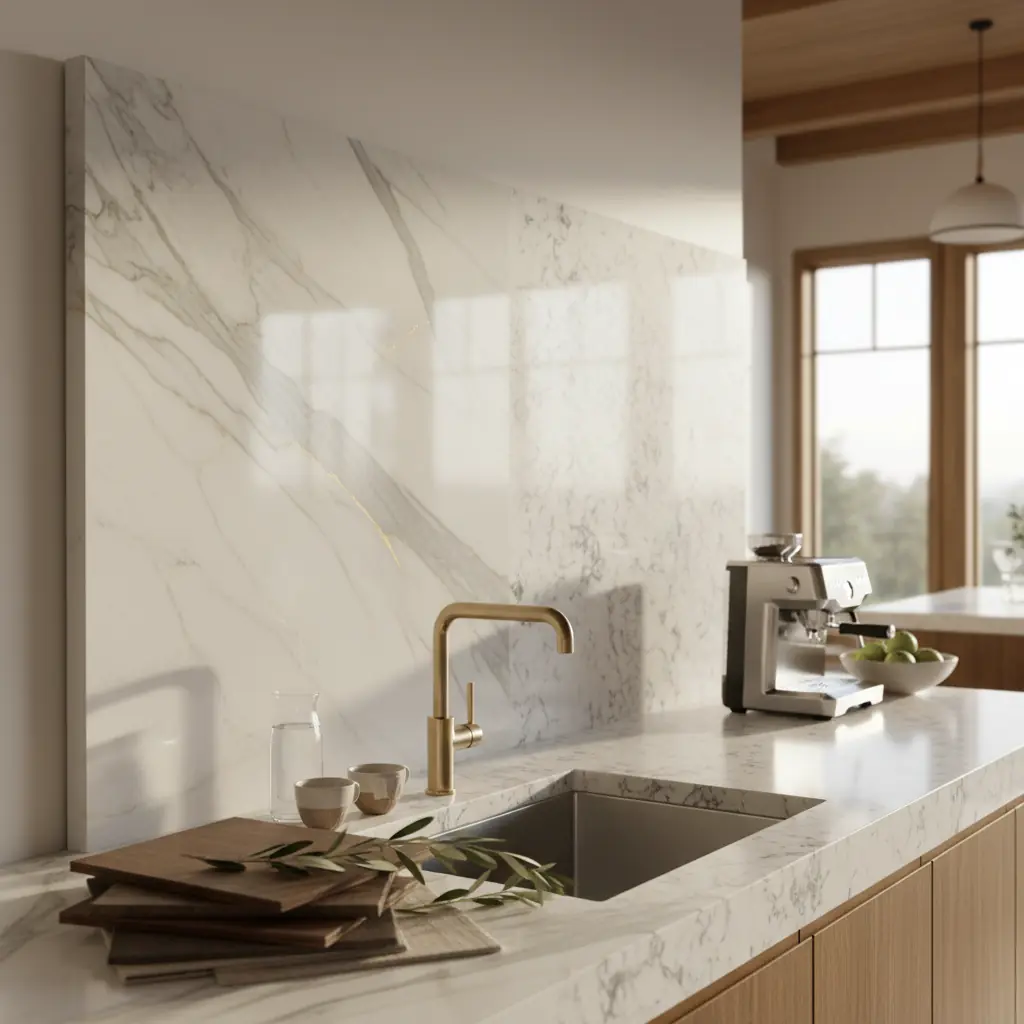
What are the true costs of marble and quartz countertops?
Understanding the actual investment required for new countertops goes beyond the per-square-foot material price. It encompasses fabrication, installation, and often, the removal of existing surfaces. A full kitchen renovation typically ranges from $25,000 to $75,000 in 2026, with countertops often representing 10-15% of that budget, making it a significant decision point.
Marble countertops range from $50 to $200 per square foot installed, with the price determined almost entirely by the specific stone's rarity, origin, and veining characteristics. Carrara marble — the most common variety with soft gray veining on a white background — sits at the lower end, typically $50 to $100 per square foot. This Italian classic is accessible and offers timeless elegance. Calacatta marble, known for its bolder, more dramatic veining and often brighter white background, commands $100 to $200 per square foot. Statuario, the rarest of the Italian whites with distinct, striking grey patterns, can exceed $200 per square foot for premium slabs. Exotic marbles from other regions, perhaps with unique colorations or unusual patterns, can also push prices into the higher tiers.
Quartz countertops, by comparison, range from $50 to $150 per square foot installed. Entry-level quartz from established brands like Silestone or LG Viatera starts around $50 to $70 per square foot, providing a durable and attractive option for budget-conscious renovators. Premium lines from industry leaders like Caesarstone and Cambria, or the highly sought-after marble-look collections from MSI and Dekton, often reach $100 to $150. These higher-end quartz products invest heavily in advanced manufacturing techniques to mimic natural stone with remarkable accuracy. It's important to note a market trend: quartz prices have dropped approximately 15 to 20 percent since 2023 as manufacturing scale has increased and competition among brands has intensified, making premium options more accessible than ever.
Beyond the raw material, factor in fabrication and installation costs. These are comparable for both materials, typically ranging from $30 to $50 per square foot, but can escalate for complex designs. Elements like specialized edge profiles (e.g., ogee, waterfall), intricate cutouts for undermount sinks, cooktops, and pop-up outlets, or integrated backsplash additions, add further cost. Additionally, don't forget the expense of removing and disposing of your old countertops, which can add several hundred dollars. For a typical kitchen with 40 square feet of countertop, budget $3,200 to $10,000 for quality marble or $3,200 to $8,000 for quality quartz — including fabrication and installation. Always get multiple quotes, and ensure they are comprehensive, detailing all aspects from templating to final sealing.
How do marble and quartz compare in terms of everyday durability?
This is where the comparison becomes notably lopsided. Quartz, an engineered material, is approximately 90 to 94 percent ground natural quartz minerals bound with polymer resins, pigments, and additives. This precise engineering eliminates most of the inherent weaknesses of natural stone, making it exceptionally robust for daily living.
- **Stain Resistance:** Quartz does not stain. Its non-porous surface means substances like red wine, coffee, lemon juice, olive oil, or turmeric simply sit on top. Wipe them up, and the surface remains unchanged, making it a worry-free choice for busy kitchens. - **Etch Resistance:** Acidic substances that would permanently dull or "etch" a marble surface have no effect on quartz. This means you don't have to panic over spilled vinegar or a forgotten lemon wedge. - **Sealing:** Quartz does not need sealing. Ever. This is a significant advantage for homeowners seeking a truly low-maintenance material. - **Heat Resistance:** While highly resistant, quartz is not entirely impervious to extreme heat. Placing extremely hot pans directly on the surface (above 300 degrees Fahrenheit) can cause the resin to discolor or scorch, leading to permanent damage. Always use trivets. - **Scratch & Chip Resistance:** Quartz is very hard, making it highly resistant to scratches and chips. However, extreme force or sharp impacts can still cause damage.
Marble, by contrast, is a calcium-based natural stone, primarily calcium carbonate, which reacts chemically with acids. This fundamental property dictates its performance in a kitchen environment:
- **Etching:** A drop of lemon juice, a splash of wine, or even certain cleaning products left for ten minutes will etch the surface — creating a dull, lighter spot that is permanent unless professionally polished out. These etches are not stains; they are a corrosive reaction to the stone itself. - **Staining:** Red wine, coffee, oil, and highly pigmented foods can stain marble within hours if not wiped up promptly. Its porous nature allows these liquids to penetrate the surface, even if sealed. - **Sealing:** Marble requires regular sealing, typically every six to twelve months, with a quality impregnating sealer. This helps to reduce porosity and minimize the risk of staining, but it does not protect against etching from acidic substances. - **Heat Resistance:** Marble is generally heat resistant, but rapid temperature changes can cause thermal shock, potentially leading to cracks. - **Scratch & Chip Resistance:** Marble is a softer stone than quartz and is more susceptible to scratching from knives or abrasive materials. Chips can also occur from heavy impacts.
The practical reality is that marble kitchens demand either meticulous habits (immediate cleanup, cutting boards always, coasters always) or an acceptance of patina. Some homeowners genuinely love the lived-in look of etched and stained marble — they see it as character, like worn leather, evolving with the home's story. Others find it stressful, regrettable, and a constant source of anxiety. Be honest with yourself about which camp you fall into before choosing marble for a high-traffic area like a kitchen. For those seeking durability without compromise, quartz wins decisively.
Where does natural beauty reign: Marble vs. Quartz aesthetics?
For all its practical shortcomings, marble offers something quartz manufacturers have spent decades trying to replicate: organic, unrepeatable beauty. Every marble slab is unique. The intricate veining patterns, subtle color variations, and translucent depth of natural marble create a visual richness that even the best engineered quartz cannot fully match. Hold a flashlight behind a thin marble edge, and it glows — that unique translucency is impossible to engineer into quartz. The way light interacts with the crystalline structure of marble gives it an inherent luminosity and "movement" that is highly prized. This is particularly evident in bookmatched slabs, where two consecutively cut slabs are opened and mirrored to create a dramatic, continuous pattern, often used for large islands or feature walls.
That said, quartz has closed the aesthetic gap dramatically. The latest marble-look quartz collections use advanced full-slab digital printing technology to create incredibly realistic veining patterns that do not repeat across a typical kitchen installation. Brands like Caesarstone (Empira White, Statuario Maximus), Cambria (Brittanicca, Skara Brae), and MSI (Calacatta Laza, Calacatta Vicenza) produce surfaces that fool most people at a glance. They offer a diverse palette, from crisp whites with delicate grey veins to bolder, more dramatic patterns and even colors that mimic exotic stones. The telltale difference is visible mainly at close range and in how light interacts with the surface — quartz tends to have a more uniform, slightly flatter appearance compared to marble's three-dimensional depth and varying translucency.
Both materials also come in various finishes beyond the traditional polished shine. Honed (matte), leathered (textured matte), and brushed finishes are increasingly popular, offering different tactile experiences and visual effects. A honed marble, for example, can hide etching more effectively than polished marble, though it may be more susceptible to staining if not properly sealed. Similarly, quartz in a honed finish can further enhance its natural stone imitation while providing a softer aesthetic. When making your selection, consider how these finishes complement your overall kitchen design and lifestyle. Tools like Habitas allow you to [preview different material options in your actual space](/blog/ai-generated-room-designs-realistic), helping you see how a polished Calacatta marble might contrast with a honed quartz before committing.
What's the commitment: Maintenance and long-term care?
The difference in long-term care between marble and quartz is significant and often the deciding factor for homeowners.
Quartz maintenance is essentially zero beyond daily cleaning. Clean with soap and water or any non-abrasive household cleaner. For tougher spills, a non-abrasive scrub pad can be used. Avoid placing extremely hot pans directly on the surface (as mentioned, the resin can discolor above 300 degrees Fahrenheit), but otherwise, quartz is virtually maintenance-free for its 25-plus-year lifespan. It doesn't require special products, and its non-porous nature means you don't have to worry about bacteria growth within the material itself.
Marble maintenance, however, is ongoing and requires a consistent regimen.
- **Sealing:** The surface must be sealed every 6 to 12 months with a penetrating sealer like Tenax Ager or StoneTech BulletProof. This is not a surface coating but a liquid that soaks into the stone's pores, making it less absorbent. The process involves cleaning the surface, applying the sealer, letting it penetrate, and then wiping off any excess. - **Daily Cleaning:** Clean daily with a pH-neutral stone cleaner. Crucially, avoid acidic or alkaline cleaners such as vinegar, Windex, or most all-purpose cleaners, which will damage the surface over time, leading to etching and dullness. Use soft cloths or sponges. - **Addressing Etching:** For minor etches, marble polishing powder (typically tin oxide based) can be applied with a damp cloth in circular motions to lightly buff out the dull spot. For deeper or widespread etching, professional re-polishing may be required. - **Deep Stains:** Deep stains may require a poultice — a paste of an absorbent material (like baking soda or diatomaceous earth) mixed with a chemical agent (like hydrogen peroxide for organic stains or acetone for oil-based stains) applied overnight under plastic wrap. This draws the stain out of the stone.
The maintenance burden is the single biggest reason homeowners switch from marble to quartz during kitchen renovations. It is not that marble maintenance is difficult — it is that it is constant and unforgiving. One forgotten lemon slice, one wine glass ring, or a moment of inattention, and you have a permanent mark unless you intervene quickly and correctly. According to industry reports, customer satisfaction with quartz countertops largely stems from their low maintenance, with over 85% of owners reporting ease of care as a key benefit.
What about resale value and buyer perception?
Both marble and quartz are considered premium countertop materials by home buyers and appraisers. Opting for either material significantly elevates a kitchen's perceived value compared to laminates or entry-level solid surfaces. According to a recent Houzz study, kitchen renovations consistently yield among the highest ROI for home improvements, with upgraded countertops being a key factor cited by 80% of homeowners.
Marble carries a slight edge in perceived luxury and prestige. The word "marble" in a listing description often triggers an immediate association with high-end finishes and classic elegance, creating a genuine wow factor, especially if the stone is well-maintained and showcased. However, savvy buyers (and their home inspectors) also know that marble requires maintenance and careful handling, which can be a negative for buyers who want a move-in-ready, stress-free home. For some, the thought of ongoing sealing and potential etching might detract from its appeal.
Quartz has become the default "upgraded kitchen" material in new construction and renovations, especially in mid-to-high-end homes, which means it consistently meets buyer expectations without necessarily exceeding them. Its reputation for durability, hygiene, and low maintenance makes it a highly desirable feature for modern lifestyles. Approximately 65% of potential homebuyers list an updated kitchen as a "very important" or "essential" feature when searching for a new home, and quartz often perfectly aligns with these expectations.
The resale difference between the two is often marginal. In a high-end luxury market where design aesthetic and material provenance are paramount, well-chosen and impeccably maintained marble might command a premium of perhaps 1 to 2 percent of home value. In mid-range markets, the practical benefits of quartz often outweigh the perceived luxury of marble, making the resale difference negligible. Ultimately, both materials contribute positively to home value, making the choice more about personal preference and lifestyle rather than a significant financial differentiator.
Why consider a hybrid approach: Using both strategically?
The smartest approach for many homeowners is to use each material where it performs best, leveraging the strengths of both marble and quartz to create a beautiful yet functional space. This strategic pairing allows you to enjoy the unparalleled beauty of natural stone without sacrificing the practicality needed for daily life.
Consider the following applications:
- **Kitchen Countertops:** Quartz for the primary kitchen countertops, especially around the sink and cooking areas, where durability, stain resistance, and low maintenance matter most. This ensures a worry-free surface for meal prep and daily spills. - **Kitchen Island or Baking Station:** Marble for a dedicated kitchen island, a baking station, or a less-used section of the perimeter. Marble's naturally cool surface is ideal for pastry work, and an island can be a stunning focal point. If it's not subject to heavy cooking spills, the maintenance burden is significantly reduced. - **Bathroom Vanities:** Marble for bathroom vanities, where acidic food and drink are less of a concern, and the surface generally sees gentler use. The luxurious feel of marble in a bathroom can create a spa-like retreat. For those considering a full bathroom overhaul, understanding the [typical costs of a bathroom renovation in 2026](/blog/bathroom-renovation-cost-2026) can help budget for such premium materials. - **Backsplash:** A marble backsplash in the kitchen gives you the beauty of natural stone in a vertical application where staining and etching are minimal concerns. This allows you to incorporate marble's exquisite veining without the high-traffic surface risk. - **Accent Pieces:** A marble-topped accent table, bar cart, or fireplace surround provides the luxury aesthetic without the constant vigilance required for high-traffic countertops.
This hybrid approach allows for design flexibility, cost optimization, and a balanced lifestyle. If you are planning a renovation and want to visualize how different countertop materials and combinations will look in your specific kitchen or bathroom, Habitas lets you upload photos of your actual space and see realistic previews with different material options — including various marble and quartz variations — before visiting a single stone yard. AI design visualization tools like Habitas can generate realistic room designs in minutes, a dramatic reduction from the 2-4 weeks it might take to get initial concepts from a traditional designer, making your decision process far more efficient.
Ultimately, the marble vs quartz decision is not about which material is objectively better in all aspects. Quartz is undeniably more practical and durable for high-traffic areas. Marble is more beautiful in its raw, natural form, offering a unique aesthetic that many designers and homeowners adore. Your choice should reflect your lifestyle, your tolerance for maintenance, and whether you find marble patina charming or distressing. Neither answer is wrong, and with careful planning, both materials can contribute to a stunning and functional home.
Frequently Asked Questions
### Is quartz better than marble for kitchens?
For most modern kitchens, quartz is generally considered "better" due to its superior durability and low maintenance. Its non-porous surface makes it highly resistant to stains and etching from common kitchen acids, and it never needs sealing. Marble, while beautiful, is softer and reactive to acids, requiring meticulous care and regular sealing to prevent permanent damage. However, if aesthetic uniqueness and natural patina are paramount, marble might be preferred.
### What is the main disadvantage of marble countertops?
The main disadvantage of marble countertops is their susceptibility to etching and staining. Being a calcium carbonate-based stone, marble reacts chemically with acidic substances (like lemon juice, wine, or vinegar), causing dull spots or "etches" that are difficult to remove. It is also porous and can absorb oils and pigmented liquids, leading to stains if not wiped up immediately and regularly sealed. This demands a higher level of vigilance and maintenance compared to engineered materials.
### How long do marble and quartz countertops last?
Both marble and quartz countertops are highly durable and can last for decades, often exceeding 25-50 years with proper care. Quartz, being engineered, offers consistent performance against stains and scratches throughout its lifespan. Marble, if well-maintained and sealed regularly, can also last indefinitely; however, its appearance may change over time as it develops a unique patina from etching and minor wear, which some consider part of its charm.
### Can you put hot pans directly on quartz or marble?
It is generally not recommended to place extremely hot pans directly on either quartz or marble countertops. For quartz, the polymer resins binding the quartz particles can scorch or discolor when exposed to temperatures above approximately 300°F (150°C), leading to permanent damage. For marble, while naturally heat resistant, sudden and extreme temperature changes can cause thermal shock, potentially leading to cracks. Always use trivets or hot pads under hot cookware to protect your countertops.
### Is marble still in style for kitchens in 2026?
Yes, marble remains a highly sought-after and stylish material for kitchens in 2026, especially for those seeking a luxurious and timeless aesthetic. Its natural beauty, unique veining, and classic appeal ensure it never truly goes out of fashion. While quartz has grown in popularity for its practicality, marble continues to be a premium choice in high-end design, often used for statement islands or in combination with more durable materials to create a balanced, elegant, and functional space.