Natural Wood in Interior Design: Types, Costs, & Timeless Beauty
Explore the best wood types for interior design — oak, walnut, maple, cherry, teak, and pine. Compare costs, durability, and ideal uses room by room.
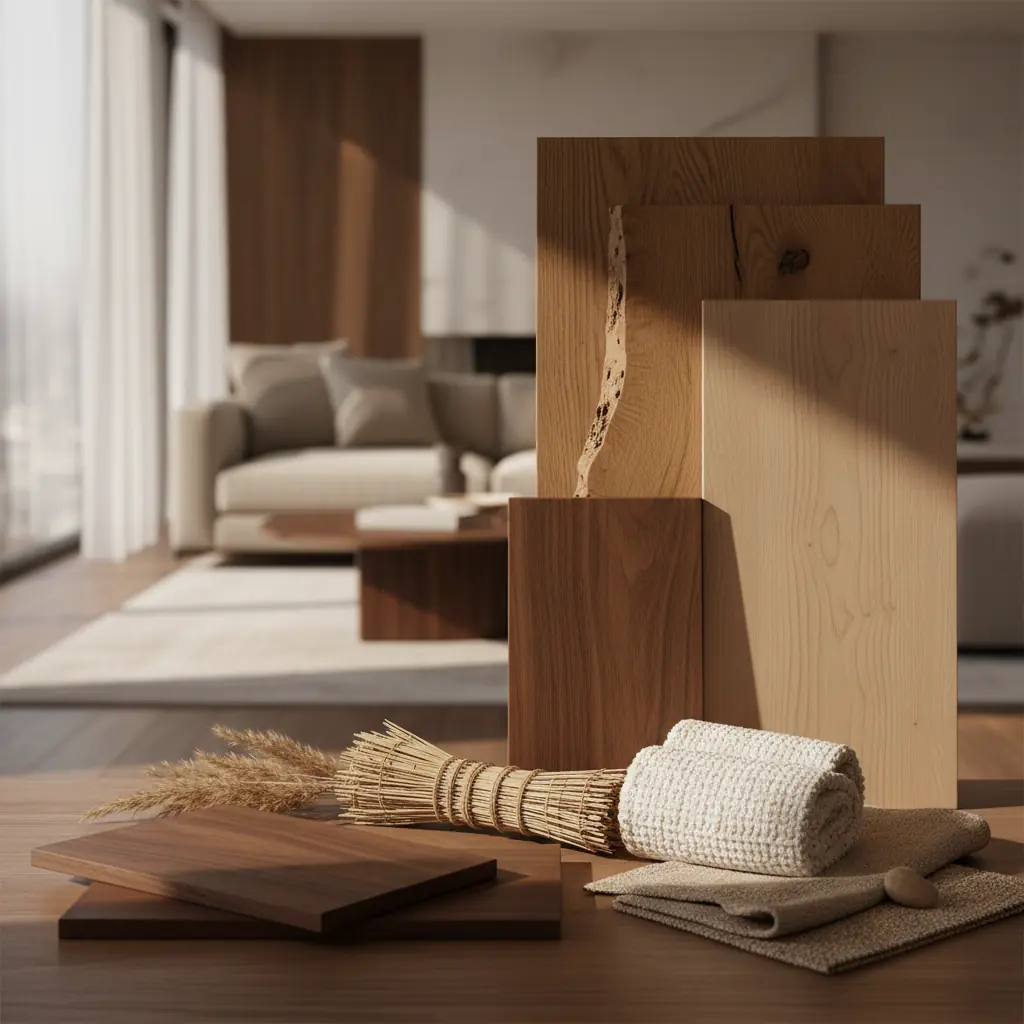
Unveiling the Essential Six: Top Wood Types for Interiors
Natural wood brings an unparalleled warmth, texture, and authenticity to any interior space, transforming rooms from merely functional to inviting havens. But with so many options, how do you choose the right wood? The decision extends beyond aesthetics; it encompasses durability, cost, maintenance, and even the environmental impact. As expert interior design strategists at Habitas, we've identified six essential wood types that consistently excel in residential and commercial applications, each offering unique characteristics to consider for your next project.
Not all wood is created equal, and choosing the right species for a specific application is the difference between a piece that ages beautifully and one that disappoints within a year. Understanding these distinctions is key to making informed design choices and ensuring your investment stands the test of time and style.
### 1. Oak: The Versatile Workhorse
Oak is the undisputed workhorse of interior design — hard, durable, and available in red and white varieties. White oak is often the more versatile choice for modern interiors, boasting a tighter, often straighter grain pattern and natural water resistance that makes it suitable for everything from resilient flooring to elegant bathroom vanities. Its lighter, often grayish-brown hue accepts stains beautifully, allowing for a wide range of finishes from natural blonde to deep espresso, complementing both minimalist and richly textured spaces. Red oak, while slightly softer, offers a distinctive open grain and a warmer, pinkish undertone that’s favored in more traditional or transitional designs. It's often more readily available and slightly less expensive than white oak. **Oak remains the perennial favorite, accounting for over 50% of hardwood flooring sales in North America, a testament to its enduring appeal and performance.** Expect to pay $6 to $12 per board foot for quality white oak lumber, while red oak might range from $5 to $10. Its Janka hardness rating of around 1290 (white oak) makes it highly resistant to dents and wear, ensuring longevity in high-traffic areas.
### 2. Walnut: The Epitome of Luxury
Walnut sits at the premium end of domestic hardwoods, prized for its rich, deep chocolate-brown color that can vary to lighter reddish-browns, and its beautifully flowing, often wavy grain patterns. This inherent variation gives each piece a unique character that exudes sophistication. At $10 to $18 per board foot, it is expensive but delivers a warmth and opulence that few other woods can match. Walnut is best reserved for statement pieces — grand dining tables, luxurious headboards, bespoke cabinetry, or striking shelving — where its inherent beauty and unique character truly justify the investment. Its medium density means it's relatively easy to work with for skilled craftsmen, yet it's durable enough for everyday use. Walnut darkens slightly with age and exposure to light, deepening its already opulent hue, adding to its allure over time.
### 3. Maple: The Clean Canvas
Maple offers a lighter alternative to walnut at $5 to $10 per board foot, with exceptional hardness (Janka rating around 1450 for hard maple) that makes it ideal for high-traffic flooring, durable kitchen countertops, and robust cutting boards. Its fine, uniform grain and light, creamy color make it an excellent choice for contemporary, minimalist, and Scandinavian interiors where a clean, bright, and uncluttered aesthetic is desired. Maple is particularly good for painting or for a natural, un-stained look that brightens a space. It resists dents well but can be challenging to stain evenly due to its tight grain, often requiring a pre-conditioner to prevent blotchiness and ensure a consistent finish.
### 4. Cherry: The Living Finish
Cherry is truly the chameleon of hardwoods: it starts as a pale pinkish-brown and undergoes a stunning transformation, darkening dramatically with sunlight exposure to reach a deep, rich reddish-amber within six months to a year. This aging process is one of its most beautiful attributes, creating a sense of history and warmth that develops uniquely over time. However, this photo-sensitivity means you cannot rearrange furniture on cherry flooring or leave objects on a cherry surface for extended periods without revealing lighter, un-aged patches underneath. This "sun-tanning" effect requires consideration during initial design and furniture placement. Priced similarly to maple, around $6 to $12 per board foot, cherry offers a fine, uniform grain and excellent workability, making it a favorite for traditional furniture, cabinetry, and elegant millwork.
### 5. Teak: The Moisture Master
Teak, at $15 to $30 per board foot, is the gold standard for moisture-prone areas — bathrooms, outdoor-adjacent spaces, kitchens near sinks, and marine applications. Its exceptionally high natural oil content gives it unparalleled resistance to water, rot, mold, and insects without any chemical treatment. Teak's beautiful golden-brown hue develops a distinct silver-gray patina when left untreated outdoors, a highly sought-after aesthetic for exterior furnishings. For interior use, it maintains its warm color and requires minimal maintenance, though occasional oiling can enrich its luster and deep tones. Due to its high demand and environmental concerns, **it's crucial to source FSC-certified or plantation-grown teak to ensure sustainability and ethical harvesting practices.** Uncertified teak can contribute to deforestation and illegal logging.
### 6. Pine: The Rustic Charmer & Budget-Friendly Option
Pine rounds out the list as the budget option at $3 to $7 per board foot, offering a distinct rustic character with prominent knots and a softer texture that dents and scratches easily. While less durable than hardwoods, this characteristic often adds to its charm in farmhouse, Scandinavian, or casual interior aesthetics, where a "lived-in" feel is embraced and celebrated. Pine is lightweight, easy to work with, and takes paint and stain well, making it a popular choice for custom built-ins, painted furniture, ceiling paneling, and temporary or DIY projects. Its rapid growth makes it a highly renewable resource, often sourced locally, contributing to a lower carbon footprint.
Solid Wood vs. Engineered Wood vs. Veneer: Making the Smart Choice for Longevity and Budget
The solid-wood-or-nothing mentality often costs homeowners money unnecessarily and limits design flexibility. Each wood construction type serves a distinct purpose, offering different benefits in terms of stability, cost, and aesthetic potential for specific applications.
### When is Solid Wood the Best Choice?
Solid wood is ideal for furniture that will be refinished multiple times over decades — a heirloom dining table, a sturdy dresser, or a robust bookshelf that can withstand generations of use. Its ability to be sanded down and re-stained countless times gives it unmatched longevity and adaptability. Artisans also prefer solid wood for intricate carvings and joinery, where the consistency of the material is paramount. However, solid wood, particularly in large panels or long planks, is susceptible to expansion and contraction with changes in humidity and temperature. This can lead to warping, gapping, or cracking, especially in climates with extreme seasonal shifts. For this reason, solid wood is generally not recommended for wide applications like flooring over concrete slabs or radiant heating systems, where stability is paramount.
### Why is Engineered Wood Often Superior for Flooring?
For flooring, engineered wood is objectively superior in most situations. Engineered hardwood consists of a real wood top layer (typically 2 to 6 millimeters thick, also known as the "wear layer") bonded to multiple cross-ply layers of plywood or high-density fiberboard (HDF) core. This cross-grain construction significantly resists moisture-induced expansion and contraction far better than solid planks, making it incredibly stable. It can be installed over concrete slabs, in basements, and crucially, over radiant heating systems without concern for warping or gapping. **The global engineered wood flooring market is projected to grow by 6% annually, reflecting its increasing adoption due to this superior stability and versatility.** Engineered wood also costs 20 to 40 percent less than equivalent solid hardwood flooring, making high-end wood species more accessible and providing a cost-effective alternative, a strategy often explored when comparing [AI interior design vs. hiring costs](/blog/ai-interior-design-vs-hiring-cost). While you can typically refinish engineered wood 1-3 times depending on the wear layer thickness, it offers an excellent balance of durability, aesthetics, and performance for modern homes.
### Demystifying Veneer: A Modern Design Solution
Veneer gets an undeserved bad reputation, often associated with flimsy, cheap furniture. However, modern, high-quality veneers are a sophisticated design solution, far removed from the peeling laminate of the 1990s. High-quality veneer furniture uses real wood slices (0.5 to 1 millimeter thick) meticulously bonded to a stable substrate like MDF or plywood. This technique allows manufacturers and designers to utilize dramatic, highly figured grain patterns — such as burl, figured, or intricately bookmatched designs — that would be prohibitively expensive or structurally impossible to achieve with solid wood. The key distinction is between genuine wood veneer (good) and printed vinyl wrap or laminate made to _look_ like wood (avoid). Always check the edges and grain continuity: real veneer shows authentic wood grain on all visible surfaces, while vinyl wrap often has visible seams, a repetitive pattern, or a distinctly plasticky feel at corners. Veneer also contributes to sustainable design by maximizing the use of a single log, allowing more surface area to be covered with less raw material, thus reducing the demand for raw timber.
For most homes, the smart approach is a combination: solid wood for key furniture pieces you want to last a lifetime, engineered wood for stable flooring and built-ins where moisture or temperature fluctuations are a concern, and high-quality veneer for large surface areas like wall paneling, expansive cabinet fronts, or custom millwork where solid wood would be unnecessarily expensive, prone to warping, or simply not feasible for complex designs.
Optimal Wood Selections for Every Room: Balancing Form and Function
Choosing the right wood for each room is a strategic decision that balances aesthetics, durability, and practical considerations. The specific environmental conditions and expected usage of a space should heavily influence your material choices.
### What Wood Types Work Best in Kitchens?
In the kitchen, durability and resistance to moisture and impacts are paramount. White oak and maple dominate for good reason. Both are exceptionally hard, able to resist dents from dropped pots and pans, and close-grained enough to limit moisture absorption from spills, making them hygienic and easy to clean. Their neutral tones complement a wide range of cabinet colors and design styles, from traditional to ultra-modern. For kitchen islands and dining tables, walnut provides a stunning contrast against white or light gray cabinetry, adding a touch of sophisticated drama and warmth. For a kitchen floor, engineered white oak is an excellent choice, offering stability against humidity fluctuations common in cooking areas. **Kitchen renovations, where wood often plays a starring role, average between $25,000 to $60,000, making material choices critical for both budget and longevity.** Avoid softwoods like pine for primary kitchen surfaces unless you fully embrace the wabi-sabi aesthetic of a well-worn, character-filled surface. Consider a sealed butcher block of maple or oak for a warm, functional countertop that can withstand daily use.
### Designing Living Rooms with Varied Wood Tones and Textures
Living rooms offer the most creative freedom when it comes to wood selections. Here, the emphasis shifts from purely utilitarian to creating specific moods, visual interest, and a sense of inviting comfort. A rich walnut coffee table paired with lighter oak or maple flooring creates immediate depth and contrast through opposing wood tones, adding visual layers. Cherry built-in shelving adds a traditional warmth to a room with cooler gray or blue walls, infusing personality and a sense of timeless elegance. For media consoles, side tables, and decorative accents, even budget-friendly exotic woods like acacia or mango work beautifully — their wild, often iridescent grain patterns add significant visual interest at a fraction of the cost of walnut or teak. In a living room, you can truly experiment with various species and finishes to tell a unique design story. Consider how different wood tones can complement your existing palette; for instance, a light ash console can brighten a darker space, while a darker mahogany accent can ground a vibrant one. This creative freedom can be further enhanced by understanding broader aesthetic movements and how wood plays into them, such as exploring [the best interior design styles for 2026](/blog/best-interior-design-styles-2026) for inspiration.
### Durable and Aesthetic Wood for Bathrooms
Bathrooms require water-resistant species above all. Teak is the undisputed champion for vanity tops, shower benches, bath trays, and slatted flooring because its natural oils inherently handle extreme moisture without sealing. Its resistance to rot, mold, and mildew makes it exceptionally low maintenance in these demanding environments. White oak is a solid and more budget-friendly alternative for vanities and shelving, though it absolutely requires proper sealing with a marine-grade finish and periodic maintenance to prevent water damage and ensure its longevity. For a unique touch, consider thermally modified ash or cedar, which have undergone a heat treatment process to enhance their water resistance and stability, making them viable for bathroom applications where traditional woods might struggle. Remember that good ventilation is key to preserving any wood in a bathroom setting, regardless of species. Consider also how these wood choices might integrate into a broader renovation, such as planning a complete [bathroom remodel](/blog/bathroom-remodel-ideas) where wood elements can create a spa-like retreat.
### Creating Comfort and Style in Bedrooms
For bedroom furniture, the choice is predominantly aesthetic, focusing on creating a serene and comfortable atmosphere that promotes relaxation. Walnut headboards, with their deep, enveloping tones, create a cocooning warmth perfect for a cozy retreat. Maple dressers and nightstands feel clean, modern, and distinctly Scandinavian, contributing to a bright, airy feel. Pine bed frames and accent pieces deliver rustic charm at a budget-friendly price, perfect for farmhouse or bohemian styles that embrace natural imperfections. Consider lighter woods like birch or ash for a minimalist bedroom, or dark cherry for a more classic, luxurious feel that develops character over time. The bedroom is where personal preference can truly shine without the same stringent functional constraints as kitchens or bathrooms, allowing for more emphasis on mood and visual appeal.
The Art of Wood Finishes: Protecting and Enhancing Natural Beauty
The finish you choose affects the look of wood as much as the species itself, acting as both protector and aesthetic enhancer. Understanding the various options is crucial for achieving your desired style and ensuring the longevity of your wood pieces.
### Matte, Satin, and Gloss: Visual Impact
The sheen level of a finish significantly impacts the perception of the wood. Matte and satin finishes are the current standard in contemporary interiors — they let the natural grain and texture of the wood show through without the glossy, plasticky sheen that often screams 1990s or reflects too much distracting light. A matte finish absorbs light, creating a soft, understated elegance and a very organic look, while a satin finish offers a subtle sheen that reflects just enough light to highlight the wood's character without being overtly shiny. Gloss finishes, while less common for entire surfaces due to their tendency to show imperfections, can be incredibly effective on accent pieces, custom details, or within a specific design style (like Art Deco) for a dramatic, high-impact look that demands attention.
### Oil Finishes: Natural Look and Feel
Oil finishes (such as tung oil, Danish oil, or hard wax oil) penetrate the wood rather than sitting on top, creating a natural look and feel that truly highlights the grain texture and depth. They provide a beautiful, organic aesthetic and are relatively easy to spot-repair from scratches or minor damage, as you can often reapply to specific areas without needing to refinish the entire piece. This makes them ideal for tables or countertops that might see frequent, localized wear. However, oil finishes require more frequent reapplication — typically every one to two years on high-use surfaces like dining tables or countertops — to maintain their protective qualities and luster, compared to film-forming finishes.
### Polyurethane Finishes: Durable Protection
Polyurethane finishes create a hard, protective surface film that resists scratches, abrasions, and moisture far better than oil finishes, making them a popular and robust choice for floors and high-wear furniture. Water-based polyurethane dries clear and does not yellow over time, making it the best choice for preserving the natural lightness of woods like maple, white oak, and ash, maintaining their bright, contemporary appearance. Oil-based polyurethane adds a slight amber warmth that beautifully complements and deepens the tones of walnut and cherry, enhancing their inherent richness, but it will continue to yellow further with age — an effect that can be desirable for a classic look or problematic if you're aiming for a consistently cool palette.
### The Rise of Hard Wax Oils for Flooring
For flooring specifically, hard wax oil finishes (like Rubio Monocoat or Osmo Polyx) have become the professional standard for their blend of durability and natural aesthetic. They offer a super-matte, natural look and feel that enhances the wood's texture, combined with impressive wear resistance. Critically, they offer the ability to spot-repair scratched or worn areas without the need to refinish the entire floor — something impossible with traditional polyurethane finishes, which require re-coating the entire surface for a seamless repair. This significantly simplifies maintenance and extends the life of the floor. The trade-off is that hard wax oil floors typically require more frequent maintenance, such as a refresher coat every one to two years, compared to polyurethane floors that can go five to ten years between professional refinishing, but the ease of localized repair often outweighs this.
Sustainable Sourcing: Making Eco-Conscious Wood Choices for Your Home
The environmental impact of our material choices is more critical than ever, influencing not only the planet but also the health and ethics of our living spaces. Not all wood is harvested responsibly, and the species you choose, along with its origin, matters environmentally.
### Understanding Certification and Responsible Forestry
FSC (Forest Stewardship Council) certification is the most reliable indicator of sustainable forestry practices — always look for the FSC label when purchasing lumber or wood furniture. This globally recognized certification ensures that wood is harvested from forests managed in an environmentally appropriate, socially beneficial, and economically viable manner. It’s not just about replanting trees; it's about preserving biodiversity, protecting waterways, maintaining forest ecosystems, and respecting the rights of indigenous communities and local workers. **FSC-certified forests ensure that at least 80% of timber comes from sustainably managed sources, making it a crucial differentiator for eco-conscious consumers seeking to minimize their environmental footprint.**
Domestically sourced hardwoods (oak, maple, cherry, walnut) from North American forests generally have strong sustainability credentials, as these forests are managed with stringent replanting requirements, harvest limits, and often, decades of conservation efforts. Supporting local suppliers can also reduce transportation emissions.
### The Nuance of Tropical Hardwoods
Tropical hardwoods like teak and mahogany deserve extra scrutiny. While their unique properties are often unmatched for specific applications (e.g., teak's water resistance), their sourcing history can be fraught with environmental devastation. Plantation-grown teak from sustainably managed farms in Indonesia, Costa Rica, and Myanmar, often bearing FSC certification, is a responsible choice. However, old-growth teak harvested from natural rainforests is not, as it directly contributes to deforestation, habitat loss for endangered species, and often illegal logging practices. Always verify the source and look for verifiable certifications to ensure your tropical wood choices are ethical and sustainable.
### The Appeal of Reclaimed and Salvaged Wood
Reclaimed wood offers perhaps the most environmentally friendly option, as it diverts usable material from landfills and eliminates the need for new harvesting. Salvaged barn beams, old factory flooring, decommissioned ship timber, or even vintage furniture planks carry an unparalleled character, history, and patina that new wood cannot replicate. Each piece tells a story, imbued with imperfections, nail holes, and historical marks that add unique charm and a sense of timelessness. Beyond its aesthetic appeal, choosing reclaimed wood significantly reduces carbon emissions associated with logging, processing, and transportation of new timber. This practice aligns perfectly with a [biophilic design guide](/blog/biophilic-design-guide), integrating natural and salvaged elements that connect a space to the outdoors and to history, fostering a deeper appreciation for natural materials and sustainable living.
Mastering the Art of Mixing Wood Tones in Your Home
The outdated rule that all wood in a room must match is, thankfully, dead. Mixing wood tones creates depth, visual interest, and a more sophisticated, collected-over-time aesthetic. It allows a room to feel lived-in and layered rather than just decorated. But doing it well requires some thoughtful guidelines to ensure harmony rather than chaos.
### The Rule of Consistent Undertones
First, vary the tone (lightness/darkness) but strive to maintain a consistent undertone. Woods with warm, yellow, or red undertones (walnut, cherry, golden oak, some pines) mix beautifully together, creating a rich and cohesive palette that feels inviting and cozy. Woods with cool or neutral undertones (white oak, ash, natural maple, gray-stained woods) pair naturally, evoking a serene, contemporary, and often minimalist feel. Mixing warm and cool undertones is trickier but absolutely workable if you use one as the dominant tone (e.g., 70 percent of wood surfaces) and the other as a deliberate accent. For example, a dominant white oak floor (cool/neutral) can be elegantly accented by a single, striking walnut (warm) coffee table, creating a focal point without clashing.
### Varying Scale and Texture for Visual Interest
Second, vary the scale and texture of your wood elements. If your flooring is one dominant wood tone, choose a contrasting tone for large furniture pieces (a dining table, a credenza, a large bookcase), and then introduce a third, perhaps lighter or more textured, wood for smaller accents (a picture frame, a a decorative bowl, a small side table). This layered approach prevents any single wood from overpowering the space and creates a dynamic visual hierarchy that feels curated rather than matched from a catalog. Consider also mixing finishes — a matte oak floor with a satin walnut cabinet, or a heavily distressed pine console alongside a smooth, polished cherry lamp base. This interplay of surface quality adds another dimension of visual interest.
### The Unifying Element: Bringing It All Together Harmoniously
Third, use a unifying element to tie the different woods together, ensuring the room feels cohesive despite the variety. This could be a consistent finish (e.g., all matte, or all natural oil finishes throughout), a shared color in the non-wood elements (e.g., upholstery, paint colors, textiles in a common hue that complements both wood tones), or even a consistent design style that allows the varied wood to coexist harmoniously. For instance, a minimalist aesthetic might use light ash and dark walnut, unified by clean lines, negative space, and a neutral paint palette. Similarly, a rustic aesthetic might embrace varied reclaimed woods, tied together by organic textiles, earthy tones, and a common distressed finish. This careful integration ensures your mixed wood tones create a sophisticated, intentional design. This creative approach can be further inspired by understanding [the best interior design styles for 2026](/blog/best-interior-design-styles-2026) and how wood plays into them.
When visualizing how different wood combinations will look in your actual space, especially when considering a significant investment like flooring or custom cabinetry, tools like Habitas can be surprisingly useful. Upload a photo of your room and experiment with different wood tones and furniture styles for flooring, large furniture pieces, and accents before committing to purchases — because returning a solid walnut dining table is significantly more painful than changing a digital preview. This virtual experimentation, facilitated by [Habitas's AI furniture arrangement tool](/blog/ai-furniture-arrangement-tool), can help you refine your choices and ensure a harmonious blend that suits your personal aesthetic and the room's overall design intent, saving you time, money, and potential design regrets.
Frequently Asked Questions
### What is the most durable wood for high-traffic areas like flooring?
For high-traffic areas such as flooring, hardwoods like White Oak and Hard Maple are consistently recommended due to their exceptional Janka hardness ratings (1290 for white oak, 1450 for hard maple) and superior resistance to dents and wear. Engineered versions of these woods offer even greater stability, especially when installed over radiant heating or concrete, making them ideal for long-term performance in busy homes.
### How do I choose between solid wood, engineered wood, and veneer for my project?
Choose solid wood for heirloom furniture pieces you intend to refinish multiple times over decades, appreciating its timeless durability and substantial feel. Opt for engineered wood for flooring, especially over concrete or radiant heating, due to its superior stability and resistance to moisture fluctuations, often at a more accessible price point. Select high-quality wood veneer for large surface areas like wall paneling or cabinet fronts, where it offers access to dramatic, expensive grain patterns while using wood resources more efficiently.
### Can different wood tones be mixed in one room?
Absolutely, mixing wood tones is a hallmark of sophisticated interior design! The key is to vary the tone (light vs. dark) but maintain a consistent undertone (all warm like walnut and cherry, or all cool/neutral like white oak and maple). Introduce different wood species through varying scales – dominant flooring, contrasting large furniture, and lighter accents. A unifying element like a consistent finish or complementary non-wood colors will tie the whole look together for a cohesive, collected aesthetic.
### What are the most eco-friendly wood choices for interiors?
The most eco-friendly wood choices include reclaimed or salvaged wood, which repurposes existing materials and reduces waste. For new wood, look for FSC (Forest Stewardship Council) certified species, which guarantee responsible forest management. Domestically sourced hardwoods like oak, maple, and cherry generally have strong sustainability credentials due to regulated forestry practices. When considering tropical hardwoods like teak, always prioritize plantation-grown and FSC-certified options to avoid contributing to deforestation.
### How do wood finishes impact the look and maintenance of my furniture?