Diseño de sala de estar de concepto abierto: Estrategias magistrales de zonificación
Desbloquea el potencial de tu sala de estar de concepto abierto. Aprende estrategias expertas para definir zonas distintas usando muebles, alfombras, iluminación y color para un espacio cohesivo e intencional.
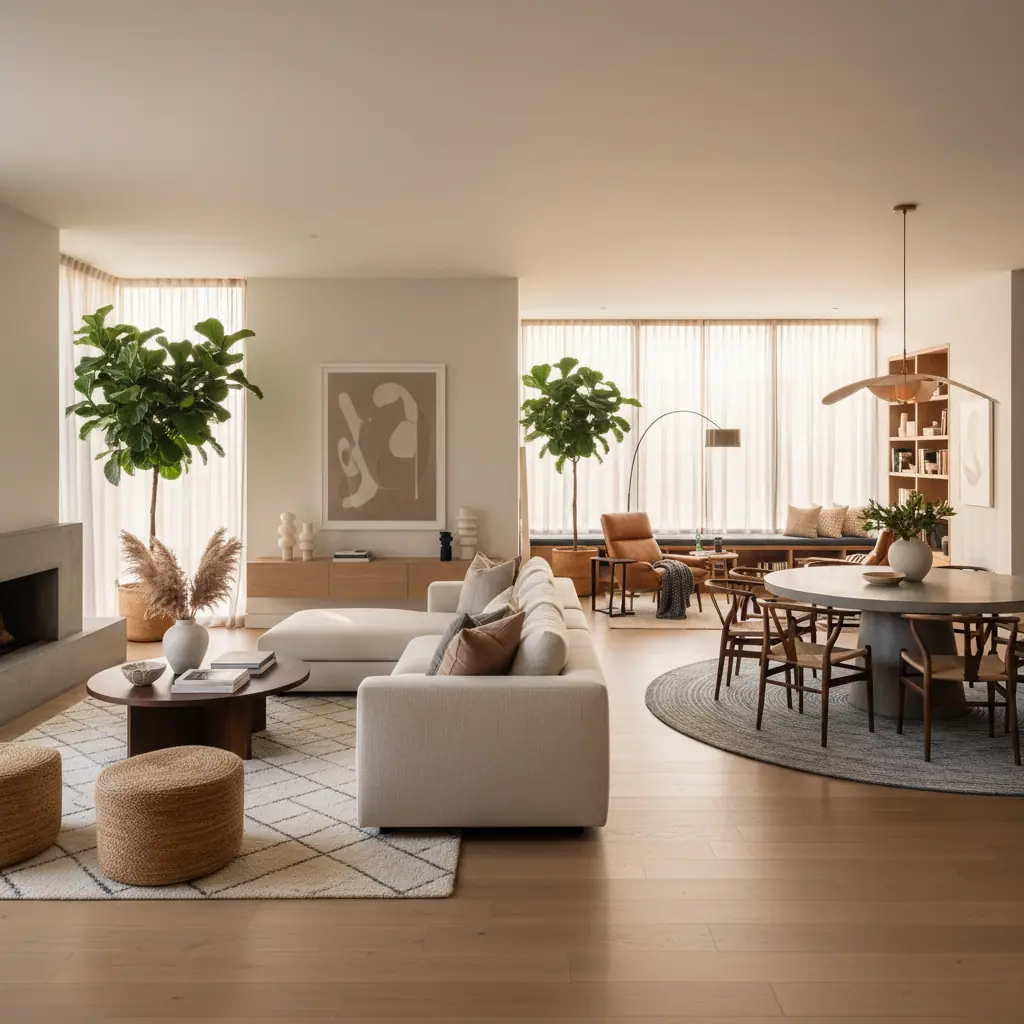
¿Cuál es la paradoja del plano abierto en el diseño de interiores?
Los planos de planta abiertos son valorados por su amplitud, abundante luz natural y fluidez, características muy codiciadas en la vida moderna. Sin embargo, esta misma apertura presenta un desafío de diseño único: sin paredes tradicionales que delimiten las habitaciones, ¿cómo se crean áreas distintas que se sientan con propósito, íntimas y funcionales? Esta es la "paradoja del plano abierto". Un espacio abierto sin desarrollar puede sentirse fácilmente como una sala de exposición de muebles extensa y sin enfoque, una colección de elementos en lugar de un hogar cohesivo.
La verdadera solución radica en dominar la _arquitectura invisible_: el arte de usar elementos de diseño como muebles, alfombras, iluminación y color para establecer límites psicológicos. Estos límites guían el movimiento, definen zonas y crean una sensación de estructura e intención sin las barreras físicas de las paredes. El objetivo no es dividir el espacio, sino darle a cada área su propia identidad y propósito, manteniendo el flujo armonioso que hace que los planos abiertos sean tan atractivos.
¿Cómo pueden los muebles definir zonas sin paredes?
Los muebles son, sin duda, la herramienta más poderosa para crear zonas distintas dentro de una sala de estar de concepto abierto. Piensa en las piezas grandes no solo como asientos o almacenamiento, sino como elementos arquitectónicos que esculpen tu espacio.
El respaldo de un sofá, por ejemplo, es un divisor de ambientes instantáneo. Coloca un sofá seccional sustancial o un par de sofás mirando hacia un punto focal como una chimenea o un televisor, con su respaldo intencionalmente orientado hacia el comedor o la cocina. Esto crea instantáneamente una zona de estar dedicada. Para mejorar esta separación y añadir funcionalidad, considera colocar una mesa consola estrecha o una estantería baja y abierta detrás del sofá. Esto crea una ruptura visual limpia, ofrece espacio de superficie adicional para lámparas u objetos decorativos, y refuerza el límite sin bloquear la luz o las líneas de visión.
Más allá de los sofás, otras piezas de mobiliario destacan como sutiles divisores:
- **Estanterías y unidades de estanterías abiertas:** Son campeonas de la doble funcionalidad. Las unidades de estanterías altas y de respaldo abierto pueden separar físicamente los espacios mientras permiten el paso de la luz, manteniendo esa sensación de amplitud. Las librerías bajas o las credenzas proporcionan una ruptura visual a la altura de los ojos al tiempo que ofrecen valioso espacio de almacenamiento o exhibición. Eficazmente, separan un área de otra sin aislarla por completo. - **Credenzas y aparadores:** Colocada estratégicamente, una credenza puede marcar la transición entre un comedor y una sala de estar, proporcionando almacenamiento para la vajilla mientras ancla visualmente la zona de comedor. - **Bancos o otomanas de acento:** Un banco largo colocado al borde de un área de asientos puede sugerir sutilmente un límite, especialmente cuando se combina con una alfombra. - **Escritorios flotantes o estaciones de trabajo:** En un espacio abierto multifuncional, un elegante escritorio flotante puede definir un rincón compacto para el "home office".
Al seleccionar muebles, considera su escala y proporción en relación con todo el espacio abierto. Las piezas demasiado voluminosas pueden abrumar, mientras que demasiados elementos pequeños pueden hacer que el área se sienta desordenada. La clave es seleccionar piezas de tamaño adecuado y dispuestas para apoyar su zona designada sin interrumpir el flujo general. Para ayudar a visualizar estas disposiciones, herramientas como la [herramienta de organización de muebles con IA](/blog/ai-furniture-arrangement-tool) pueden ser invaluables, permitiéndote experimentar con diseños virtualmente.
¿Cómo ayudan las alfombras a definir zonas distintas en un concepto abierto?
Las alfombras son las heroínas anónimas del diseño de concepto abierto, definiendo zonas en el plano del suelo con una efectividad notable. Piensa en ellas como "paredes de suelo" suaves y flexibles que señalan una nueva área al cerebro sin interrumpir las líneas de visión.
La estrategia es simple pero impactante: cada zona principal debe tener su propia alfombra. Una alfombra grande y de tamaño adecuado ancla la zona principal de asientos, asegurando que al menos las patas delanteras de todas las piezas tapizadas principales (sofá, sillones) descansen sobre ella. Esto crea una "isla" unificada para la conversación y la relajación. Un pasillero puede entonces delinear un camino, un punto de entrada o un corredor de transición. Para la zona de comedor, una alfombra lo suficientemente grande como para acomodar la mesa de comedor y todas las sillas (incluso cuando están separadas) define claramente el espacio para comer. Una alfombra decorativa más pequeña podría marcar un rincón de lectura o un rincón de meditación dedicado.
Para una estética cohesiva en todo el plano abierto, es crucial mantener la armonía en la elección de tus alfombras. Si bien cada alfombra define un área distinta, deben sentirse conectadas. Esto se puede lograr mediante:
- **Familia de colores:** Optando por alfombras dentro de la misma paleta de colores, quizás variando tonos o saturaciones. - **Cohesión de materiales:** Usando alfombras hechas de fibras naturales similares (por ejemplo, yute, lana) o con texturas comparables. - **Repetición/contraste de patrones:** Empleando alfombras con patrones sutiles y complementarios, u optando por una mezcla de lisos y patrones que compartan una temática de color.
El objetivo es que los cambios en el plano del suelo señalen una "nueva área" sin hacer que el espacio general se sienta desconectado. Las alfombras deben funcionar juntas como una sinfonía, no como una cacofonía. Estudios demuestran que un espacio bien definido, incluso sin paredes físicas, mejora enormemente la capacidad de un propietario para apreciar y utilizar su entorno. Se estima que el 82% de los agentes de compradores dicen que la preparación de una casa, que a menudo incluye la colocación estratégica de alfombras para definir áreas, facilita que un comprador visualice la propiedad como un futuro hogar.
¿Cómo la iluminación estratégica crea atmósfera y define zonas?
Una iluminación diferente en cada zona es, posiblemente, la forma más sofisticada de crear separación y adaptar el ambiente dentro de un espacio de planta abierta. La iluminación ofrece una flexibilidad inigualable, transformando la atmósfera de brillante y enérgica durante el día a acogedora e íntima por la noche, todo con solo accionar un interruptor.
Cada zona debe tener su propio esquema de iluminación dedicado, que comprenda una mezcla de iluminación ambiental, de tarea y de acento:
- **Iluminación ambiental:** Proporciona iluminación general para el espacio. En un plano abierto, la iluminación empotrada o una luminaria de techo central pueden proporcionar luz general, pero las zonas específicas se beneficiarán de sus propias fuentes ambientales. - **Iluminación de tarea:** Esencial para las actividades dentro de una zona. Una luz colgante o araña sobre la mesa de comedor, una lámpara de pie o de mesa junto a un sillón de lectura en la sala de estar, o iluminación debajo de los gabinetes en una zona de cocina son ejemplos clave. - **Iluminación de acento:** Destaca características arquitectónicas, obras de arte o elementos decorativos, añadiendo profundidad e interés visual. Imagina luces para cuadros sobre obras de arte o luces de pie estratégicamente colocadas para plantas.
Considera estas aplicaciones específicas:
- **Sala de estar:** Enfócate en la calidez y el confort. Combina una iluminación superior suave con múltiples lámparas de pie y de mesa para crear puntos de luz que inviten a la relajación. - **Comedor:** Una lámpara colgante o araña llamativa sobre la mesa de comedor no solo proporciona iluminación de tarea esencial, sino que también sirve como ancla visual, atrayendo la mirada y marcando claramente la zona de comedor. - **Rincón de trabajo:** La iluminación de tarea es primordial aquí. Una lámpara de escritorio enfocada, posiblemente combinada con una pequeña luz superior, asegura la productividad sin derramar luz fuerte en las zonas adyacentes. - **Entrada:** Una lámpara de techo decorativa o un par de apliques de pared pueden definir el espacio de transición, ofreciendo una cálida bienvenida.
Los reguladores de intensidad (dimmers) no son solo un lujo; son esenciales en los planos abiertos. Te otorgan un control preciso sobre la intensidad de la luz en cada zona, permitiéndote atenuar las luces de la cocina durante la cena, iluminar la sala de estar para conversar, o crear un brillo suave y acogedor en todo el espacio. Esta capacidad de manipular la luz te permite crear el enfoque y el ambiente que las paredes proporcionarían de otra manera, cambiando fundamentalmente cómo se siente y funciona el espacio durante el día y la noche. La integración de sistemas de iluminación inteligentes puede mejorar aún más este control, permitiendo escenas preestablecidas y ajustes automatizados. Para inspirarte en esquemas de color y luz cohesivos, explora recursos como el [generador de paleta de colores con IA](/blog/ai-color-palette-generator).
Unificando con paletas de colores y materiales: Cohesión y contraste
Mientras que los muebles, las alfombras y la iluminación definen zonas individuales, una cuidadosa paleta de colores y materiales actúa como el hilo conductor, tejiendo todo el espacio de planta abierta en un conjunto armonioso. El objetivo es crear una sensación de cohesión que permita que la vista fluya sin esfuerzo de un área a la siguiente, al mismo tiempo que se utilizan variaciones sutiles para delimitar las zonas.
### Creando una base armoniosa
Comienza con una paleta de colores base consistente –típicamente neutros como blancos, cremas, grises o tonos tierra suaves– aplicados en la mayoría de las paredes y piezas de mobiliario más grandes. Esta capa fundamental crea continuidad visual y evita que el espacio se sienta desarticulado. Dentro de esta base, puedes introducir sutiles cambios:
- **Tonos variados:** Utiliza tonos ligeramente más oscuros o más claros del mismo neutro en zonas adyacentes. Por ejemplo, un blanco roto cálido en la sala de estar podría transicionar a un beige ligeramente más profundo en el comedor. - **Paredes de acento (aplicadas con criterio):** Una única pared de acento en una zona clave, como detrás del sofá o dentro de un rincón de lectura, puede añadir definición sin abrumar la apertura. Elige un color que complemente tu paleta base. - **Elementos repetidos:** Incorpora un color de acento específico o un material distintivo (por ejemplo, madera cálida, metal frío, lino texturizado) en pequeñas dosis en diferentes zonas a través de objetos decorativos, textiles o detalles de muebles. Esto crea un ritmo visual que conecta los espacios.
### Materialidad para la definición
Así como el color unifica, la textura y las elecciones de materiales pueden definir sutilmente. Imagina una mesa de centro de madera rústica en la sala de estar complementada por una elegante mesa de comedor de metal en la zona adyacente. Ambos son distintos, pero si comparten un elemento común como un acabado de madera cálida o un acento metálico particular en sus accesorios, mantienen la conexión.
- **Pisos:** Aunque un material de piso consistente (madera dura, baldosas de gran formato) en todo un plano abierto es ideal para un flujo continuo, incluso aquí, las alfombras introducen una "ruptura" material que ayuda a definir. - **Acabados de muebles:** Una mezcla de tonos de madera, metales pulidos y diversas telas de tapicería añade profundidad. Asegúrate de que haya un elemento recurrente, quizás un marco de metal negro utilizado en estanterías y patas de sillas, para unificar todo. - **Textiles:** Introduce diferentes texturas dentro de cada zona: un sofá de terciopelo suave en la sala de estar, cortinas de lino nítido en el comedor, una manta de punto grueso en un rincón de lectura. Estas diferencias táctiles contribuyen a la identidad única de cada espacio.
Al seleccionar y aplicar cuidadosamente tus paletas de colores y materiales, creas un concepto abierto que se siente distinto en sus partes y cohesivo como un todo, reflejando una sofisticada sensibilidad de diseño.
Accesorios y decoración estratégicos: Reforzando la identidad de la zona
Los accesorios y la decoración son los toques finales que aportan personalidad y propósito a cada zona definida dentro de una sala de estar de concepto abierto. Mientras que elementos más grandes como muebles y alfombras establecen los límites, los artículos más pequeños refuerzan la identidad y funcionalidad de cada área.
Piensa en los accesorios como elementos que inician conversaciones para zonas individuales:
- **Sala de estar:** Agrupa elementos decorativos en mesas de centro y mesas auxiliares que inviten a la relajación y la conversación. Esto podría incluir una pila de libros de diseño, una vela aromática, un tazón escultural o una pequeña colección de recuerdos personales. Las obras de arte en la pared deben realzar la atmósfera cómoda y acogedora. - **Comedor:** Los centros de mesa en la mesa de comedor, ya sea un jarrón con flores frescas, un tazón de frutas o un elegante arreglo de velas, establecen firmemente este lugar como un espacio para reuniones y comidas. El arte de pared aquí podría ser más energético o artístico, complementando la experiencia culinaria. - **Rincón de trabajo:** Mantén los accesorios funcionales e inspiradores. Un elegante portalápices, una pequeña planta, una lámina motivacional enmarcada o una selección curada de libros pueden personalizar el espacio de trabajo y contribuir a la concentración. - **Entrada:** Un espejo decorativo, un cuenco para llaves, una pequeña pieza de arte o una planta acogedora pueden definir la zona de entrada, proporcionando elementos prácticos al tiempo que establecen el tono del hogar.
La clave es mantener un _lenguaje de diseño_ consistente en todo el espacio abierto, incluso al diferenciar con accesorios. Por ejemplo, si tu estilo general es minimalista, tus accesorios deben reflejar esa simplicidad. Si es ecléctico, asegúrate de que el eclecticismo se sienta curado, no caótico. Repetir ciertos materiales (por ejemplo, acentos de latón, cerámica texturizada) o colores en diferentes zonas a través de accesorios ayuda a vincularlos visualmente. Sin embargo, cada zona también debe tener algunas piezas únicas que realmente hablen de su propósito. Este equilibrio crea interés y evita que el espacio se sienta estéril o demasiado temático.
Optimizando el flujo de tráfico y los pasillos en planos abiertos
Uno de los aspectos más críticos, pero a menudo pasados por alto, del diseño de una sala de estar de concepto abierto es asegurar un flujo de tráfico óptimo. Sin paredes, los caminos pueden volverse ambiguos, lo que lleva a una navegación incómoda o a cuellos de botella. La disposición cuidadosa de los muebles es primordial para guiar el movimiento de forma natural y sin esfuerzo.
Considera las rutas principales que las personas tomarán a través de tu espacio abierto:
- **De la entrada a las áreas principales:** ¿Hay un camino claro y sin obstrucciones desde la puerta principal hasta la sala de estar, el comedor y la cocina? - **Entre zonas:** ¿Puedes moverte fácilmente de la sala de estar al comedor, o de la cocina a un rincón de trabajo, sin tener que apretujarte entre los muebles? - **Alrededor de los muebles:** Asegúrate de que haya suficiente espacio libre alrededor de sofás, mesas y sillas. Una regla general es permitir al menos 75-90 cm (30-36 pulgadas) para los pasillos principales y 45-60 cm (18-24 pulgadas) para los pasillos secundarios (por ejemplo, entre una mesa de centro y un sofá).
**Estrategias para caminos claros:**
- **"Flotar" los muebles:** En lugar de empujar todos los muebles contra las paredes, flota estratégicamente piezas más grandes (como sofás) en el centro de la habitación para crear pasillos distintos detrás de ellos. - **Anclar zonas:** Coloca las piezas de mobiliario más grandes (sofá, mesa de comedor) para anclar sus respectivas zonas, luego organiza los elementos más pequeños a su alrededor, dejando un amplio espacio para el movimiento. - **Evita obstrucciones:** Ten cuidado de no colocar plantas altas, lámparas de pie o biombos decorativos directamente en las vías de tráfico principales. - **Señales visuales:** Las alfombras también pueden servir como señales visuales para los caminos. Un pasillero puede atraer naturalmente la vista y guiar el movimiento a lo largo de una ruta particular. - **Considera puertas y ventanas:** Asegúrate de que la ubicación de los muebles no obstruya el acceso a puertas exteriores ni bloquee la luz natural de las ventanas.
Un flujo de tráfico deficiente puede hacer que incluso el espacio abierto más bellamente diseñado se sienta incómodo e ineficiente. Al planificar y visualizar cuidadosamente tus patrones de movimiento, puedes crear un concepto abierto que no solo sea visualmente impresionante, sino también altamente funcional e intuitivo de navegar. Las plataformas de diseño impulsadas por IA como Habitas pueden ayudarte a visualizar estos caminos y posibles obstrucciones, permitiéndote refinar los diseños antes de realizar cualquier cambio físico. Esto es particularmente útil ya que un proceso de diseño de interiores tradicional puede tomar semanas o incluso meses para revisiones de planos, mientras que la visualización con IA puede generar diseños de habitaciones realistas y ajustes de diseño en menos de 60 segundos.
Gestión del ruido y la acústica en un concepto abierto
Si bien los planos abiertos destacan por promover la conexión y la luz, a menudo presentan un desafío significativo: el control del ruido. El sonido viaja libremente sin paredes, lo que significa que las conversaciones, la televisión, la música o las actividades de la cocina pueden fácilmente propagarse entre zonas, afectando la comodidad y la privacidad. Una encuesta encontró que el 60% de los propietarios con planos de planta abiertos identificaron el control del ruido como un desafío significativo. Sin embargo, el diseño estratégico puede mitigar estos problemas acústicos.
Así es como puedes introducir la "arquitectura acústica" en tu concepto abierto:
- **Los textiles son tus aliados:** Los muebles suaves absorben las ondas sonoras, reduciendo el eco y la reverberación. - **Alfombras de área:** Cuantas más alfombras, mejor. Las alfombras grandes y gruesas (especialmente de lana o pelo alto) debajo de cada zona son increíblemente efectivas. - **Cortinas/drapería pesadas:** Las cortinas de suelo a techo hechas con telas sustanciales pueden amortiguar drásticamente el sonido, particularmente alrededor de las ventanas. - **Muebles tapizados:** Los sofás, sillones y otomanas con mucha tapicería son mejores absorbedores de sonido que los muebles elegantes de superficie dura. - **Cojines y mantas:** La superposición de estos elementos suaves en los asientos contribuye a la absorción del sonido. - **Paneles acústicos y arte:** Los paneles acústicos modernos ya no son solo para estudios de grabación. Paneles elegantes revestidos de tela pueden integrarse en obras de arte de pared o incluso en tratamientos de techo, ofreciendo tanto atractivo estético como propiedades significativas de amortiguación del sonido. - **Colocación estratégica de plantas:** Las plantas grandes y frondosas (como el _Ficus lyrata_ o la _Monstera deliciosa_) pueden ayudar a romper las ondas sonoras y añadir un toque de diseño biofílico. Agrupar varias plantas grandes puede crear una sutil barrera acústica. - **Divisores de ambientes y biombos:** Si bien el objetivo es evitar las paredes, los biombos decorativos, las particiones de madera laminada o incluso las estanterías altas y abiertas pueden ofrecer un grado de difusión del sonido y privacidad visual sin encerrar completamente un espacio. - **Materiales fonoabsorbentes:** Al seleccionar acabados, considera materiales como pisos de corcho, papel tapiz acústico o incluso ciertos tipos de yeso texturizado para las paredes.
Al incorporar conscientemente elementos fonoabsorbentes y ubicaciones estratégicas, puedes transformar tu espacio de concepto abierto en un entorno que se sienta expansivo y acústicamente cómodo, permitiendo que diferentes actividades coexistan armoniosamente.
El poder de la verticalidad: Aportando altura e interés
En un espacio de concepto abierto, donde la expansividad horizontal es un hecho, introducir diferentes niveles de verticalidad es crucial. Sin paredes que interrumpan las líneas de visión, la falta de interés vertical puede hacer que una habitación se sienta plana, indiferenciada y abrumadora. El uso estratégico de la altura atrae la mirada hacia arriba, crea intriga visual y define aún más las zonas.
Considera estos elementos para construir capas verticales:
- **Luminarias llamativas:** Una lámpara de araña dramática sobre la mesa de comedor, una lámpara colgante de gran tamaño en la sala de estar o una lámpara de pie escultural pueden actuar como un ancla aérea para una zona, atrayendo la mirada hacia arriba y marcando claramente sus límites. - **Estanterías o muebles empotrados de piso a techo:** Las estanterías altas, ya sean hechas a medida o independientes, proporcionan no solo un inmenso almacenamiento, sino también una importante definición vertical. Pueden servir como fondos impresionantes, almacenar colecciones o incluso albergar una configuración de "home office" oculta. - **Plantas y árboles altos:** Las plantas de interior grandes son fantásticas para añadir altura y textura orgánica. Una imponente _Ficus lyrata_ o un elegante olivo pueden romper grandes extensiones de pared, llenar esquinas vacías y añadir un toque de diseño biofílico, haciendo que un espacio se sienta más vibrante y vivo. - **Muebles de respaldo alto:** Si bien la mayoría de los muebles definen las zonas horizontalmente, un sofá o un sillón con un respaldo particularmente alto puede ofrecer un elemento vertical sutil, creando una sensación de encierro sin bloquear completamente la vista. - **Características arquitectónicas:** Si tu espacio lo permite, considera añadir molduras decorativas, revestimientos o incluso un sutil cambio en la altura del techo (por ejemplo, un techo bandeja) para delimitar las zonas de una manera más permanente y arquitectónica. - **Colocación de obras de arte:** Colgar obras de arte a diferentes alturas, o elegir piezas de gran tamaño, puede atraer la mirada a través de diferentes planos verticales. Una pared de galería que se extiende hacia arriba puede añadir peso visual a una zona.
Al incorporar cuidadosamente elementos que aportan altura e interés visual, evitas el efecto de "sala de exposición de muebles" y creas una sala de estar de concepto abierto que se siente dinámica, acogedora y con capas. Esta cuidadosa atención al diseño vertical asegura que, si bien el espacio permanece abierto, también posee una rica profundidad y personalidad.
Abrazando tu estilo en un concepto abierto: Cohesión a través del lenguaje de diseño
Una idea errónea común es que un espacio de concepto abierto fuerza un estilo de diseño único y monolítico. Por el contrario, si bien la cohesión es clave, un plano abierto permite una exploración matizada de tu estética personal, siempre que haya un lenguaje de diseño subyacente que lo conecte todo. El desafío es permitir que cada zona se exprese sin chocar con sus vecinas.
Así es como se mantiene la coherencia del estilo al mismo tiempo que se permite el carácter individual de cada zona:
- **Define tu estilo central:** Antes de sumergirte en los detalles, identifica el estilo de diseño general que prefieres para tu hogar (por ejemplo, Moderno Minimalista, Bohemio Ecléctico, Calidez Scandinavian, Chic Industrial). Este estilo central será tu principio guía. - **Elementos consistentes:** - **Paleta de colores:** Como se mencionó, una paleta de colores base unificada es fundamental. Puedes introducir colores de acento que varíen ligeramente por zona, pero que aún pertenezcan al mismo esquema general. - **Materialidad:** Decide sobre 2-3 materiales principales (por ejemplo, madera clara, metal negro mate, telas de lino) que aparecerán consistentemente en todas las zonas, aunque en diferentes formas. - **Detalles arquitectónicos:** Si hay elementos arquitectónicos fijos (por ejemplo, chimenea, vigas expuestas), asegúrate de que tus elecciones de diseño los complementen. - **Variaciones sutiles dentro de las zonas:** - **Formas de muebles:** Si bien el _estilo_ general de los muebles debe alinearse, puedes variar las _formas_. Para una estética moderna, podrías tener un sofá elegante y de perfil bajo en la sala de estar y una mesa de comedor con patas esculturales en la zona de comedor. - **Juego de accesorios:** Aquí es donde la personalidad de la zona individual realmente puede brillar. Una sala de estar bohemia podría presentar textiles y plantas de inspiración global, mientras que un comedor adyacente podría tener cerámica artesanal y una lámpara colgante única, todo ello compartiendo un fondo neutro común y elementos de madera natural. - **Obras de arte:** Las obras de arte en cada zona pueden ser distintas, pero deben encajar con el ambiente general y la historia de color. Por ejemplo, piezas abstractas en la sala de estar y grabados botánicos en el comedor, todo dentro de un estilo de marco similar. - **Piezas de transición:** Emplea muebles o decoración que unan estilos o zonas de forma natural. Una pieza de arte abstracta grande que incorpore colores de la sala de estar y el comedor puede servir como un vínculo visual.
Recuerda, el objetivo no es la uniformidad estricta, sino un diálogo reflexivo entre los espacios. Tu concepto abierto debe contar una historia cohesiva sobre tu estética, al tiempo que permite que cada capítulo (o zona) tenga su propia voz. Si tienes dificultades para visualizar cómo diferentes estilos podrían funcionar juntos en tu espacio, Habitas puede ayudarte. Sube una foto de tu espacio de vida abierto y obsérvalo rediseñado con una definición de zona adecuada, un estilo cohesivo y una disposición de muebles que dé vida a tu estilo elegido. Esto te permite experimentar con varios estilos y ver [diseños de habitaciones generados por IA de forma realista](/blog/ai-generated-room-designs-realistic) antes de comprometerte con cualquier cambio. Los hogares con puesta en escena profesional, que define meticulosamente las zonas y un estilo coherente, se venden un 25% más rápido en promedio, lo que subraya el poder de una intención espacial clara.
Visualiza tu plano abierto rediseñado con Habitas
El diseño de planta abierta, con sus innumerables posibilidades y posibles inconvenientes, puede ser increíblemente difícil de visualizar a partir de un simple plano o incluso de un tablero de inspiración. La interacción de muebles, alfombras, iluminación y color, combinada con consideraciones de flujo de tráfico y acústica, requiere una visión holística que a menudo es difícil de lograr sin herramientas especializadas.
Aquí es precisamente donde Habitas transforma el proceso de diseño. En lugar de adivinar cómo un nuevo sofá seccional podría definir tu sala de estar o qué alfombra ancla mejor tu comedor, puedes subir una foto de tu espacio de vida abierto real a Habitas. Nuestra plataforma impulsada por IA proporciona al instante rediseños realistas. Observa tu espacio reimaginado con una definición de zona óptima, un estilo cohesivo y la disposición precisa de los muebles que hace que los planos abiertos no solo sean funcionales, sino verdaderamente espectaculares. Ya sea que estés experimentando con diferentes diseños de muebles, explorando nuevas paletas de colores o tratando de refinar tu estética elegida, Habitas ofrece una solución visual inmediata. Descubre cómo [funciona el diseño de interiores con IA](/blog/ai-interior-design-how-it-works) y empodérate para crear un hogar de concepto abierto bellamente zonificado, intencional y acogedor.
Preguntas frecuentes
### ¿Cuáles son los principales beneficios de una sala de estar de concepto abierto?
Las salas de estar de concepto abierto ofrecen numerosos beneficios, principalmente una mayor luz natural, un mejor flujo y conectividad entre los espacios, y una mayor sensación de amplitud. Promueven la interacción social, facilitando la conexión familiar mientras se realizan diferentes actividades. Los planos abiertos también pueden hacer que una casa más pequeña se sienta más grande y expansiva. Los estudios muestran que los diseños de concepto abierto pueden aumentar el valor percibido de una casa entre un 7 y un 10%, lo que refleja su popularidad entre los compradores de viviendas.
### ¿Cómo se logra que una sala de estar de concepto abierto se sienta acogedora?
Lograr que un concepto abierto se sienta acogedor implica equilibrar su amplitud inherente con elementos que inviten a la intimidad y la calidez. Usa alfombras de área grandes y suaves para definir zonas y añadir una textura lujosa. Incorpora muchos muebles suaves como sofás tapizados, cojines y mantas. Capa la iluminación, utilizando reguladores de intensidad para la iluminación ambiental y de acento para crear zonas de luz cálida. Elige una paleta de colores cálida y acogedora, e introduce materiales naturales como madera y lana. Finalmente, añade toques personales como obras de arte, libros y plantas para hacer que el espacio se sienta vivido y confortable.
### ¿Qué muebles son mejores para un plano de planta abierto?
Para planos de planta abiertos, elige muebles que sirvan para múltiples propósitos o que puedan actuar como sutiles divisores de ambientes. Los sofás seccionales son excelentes para definir un área de estar, mientras que las mesas consola colocadas detrás de los sofás añaden definición y superficie. Las estanterías bajas y abiertas o las credenzas proporcionan almacenamiento y separación visual sin bloquear la luz. Opta por piezas que estén escaladas adecuadamente al tamaño general de la habitación; demasiado pequeñas, se perderán; demasiado grandes, abrumarán. Considera muebles con un respaldo acabado si van a estar flotando en la habitación. Invertir en piezas fundacionales de calidad para un concepto abierto, como un sofá seccional grande o una alfombra destacada, puede oscilar entre $2,000 y $10,000+, pero son cruciales para una zonificación efectiva.
### ¿Cómo se maneja el ruido en una sala de estar de concepto abierto?
Gestionar el ruido es un desafío clave en el concepto abierto. Las mejores estrategias implican incorporar materiales fonoabsorbentes. Utiliza abundantes muebles suaves: alfombras de área grandes y gruesas, cortinas o persianas pesadas y muebles tapizados. Introduce paneles acústicos de pared, que vienen en varios estilos decorativos. Las plantas altas y frondosas también pueden ayudar a difundir las ondas sonoras. La disposición estratégica de los muebles puede crear barreras "suaves" que absorban parte del ruido. Finalmente, considera añadir divisores de ambientes decorativos o biombos de lamas que ofrezcan una separación visual y acústica parcial sin encerrar completamente los espacios.
### ¿Se pueden tener diferentes estilos de diseño en una sala de estar de concepto abierto?