Rattan & Wicker Design: Natural Texture for Elevated Interiors
How to use rattan, wicker, and cane in your home — key pieces, style pairings, maintenance, and price ranges.
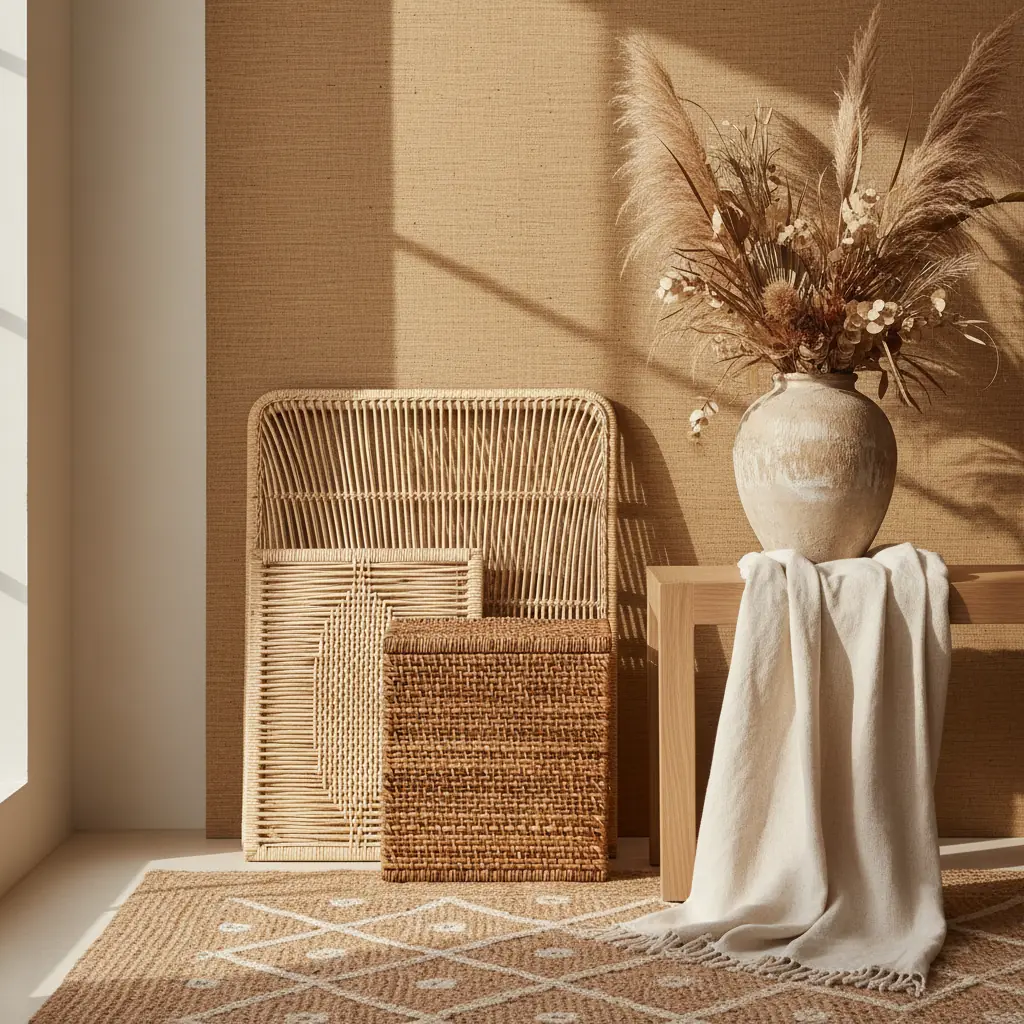
Rattan vs wicker vs cane: clearing up the confusion
These three terms are frequently used interchangeably in casual conversation, yet they refer to distinct aspects of a beloved natural aesthetic. Understanding these distinctions is crucial not only for informed shopping but also for appreciating the craftsmanship and design potential each offers.
**Rattan** is the material itself — a remarkable climbing palm indigenous to the tropical rainforests of Africa, Asia, and Australasia. Known for its incredible strength and flexibility, rattan grows in long, solid poles that can be steamed and bent into robust furniture frames. Alternatively, its outer skin can be peeled into thin strips, while the inner core can be processed into "wicker cane" or "split rattan" for weaving. Its dense, yet porous structure makes it durable and relatively lightweight, a natural marvel that has been utilized in furniture making for centuries.
**Wicker** is not a material but an ancient **technique** of weaving flexible strands of material into a rigid, structured form. While rattan is a common material used in wicker weaving, the technique itself can employ a wide array of other natural fibers such as bamboo, willow, seagrass, paper cord, or even synthetic resins. This means a wicker chair might be crafted from natural rattan, but it could also be made from synthetic resin for outdoor durability, or from dried grasses for a softer, more rustic look. The beauty of wicker lies in its intricate patterns and the textural richness it brings, regardless of the fiber chosen. This weaving process, dating back to ancient Egypt, allows for immense creativity in form and function.
**Cane** refers specifically to a refined weaving pattern made from the outer bark of the rattan palm. This bark is peeled into thin, uniform strips and then meticulously woven into the characteristic open hexagonal or octagonal mesh patterns. You'll most commonly encounter cane webbing on chair backs, cabinet doors, headboards, and decorative screens. Its delicate yet strong structure offers an airy, almost transparent quality that is lighter and more visually sophisticated than the thicker weaves often associated with full wicker construction. This inherent refinement lends cane a distinctly mid-century modern aesthetic, contrasting with the more casual, often beachy or bohemian feel of chunkier wicker constructions.
Understanding these distinctions significantly impacts your design choices, affecting durability, appearance, price point, and maintenance. Solid rattan frames with dense wicker weaving offer the most robust natural option for indoor furniture. Cane webbing, while visually striking and elegant, is inherently more delicate and requires gentler handling. For true outdoor use in variable climates, synthetic wicker — often marketed as resin wicker or all-weather wicker — is the only viable option, sacrificing natural authenticity for unparalleled weather resistance.
Why natural fibers are trending: more than a passing fad
The undeniable surge in rattan and wicker popularity over the past decade reflects a profound shift in interior design — a collective craving for authenticity, texture, and a deeper connection to the natural world. After an era dominated by smooth, machine-perfect surfaces like glossy lacquer, seamless Corian, and minimalist powder-coated metals, there’s a renewed appreciation for visual imperfection and the tactile warmth that only natural materials provide. Rattan and wicker deliver this in abundance, offering an organic counterpoint to sterile modernism.
This isn't merely a fleeting trend; it's deeply rooted in the growing influence of **biophilic design**. Biophilia, the innate human tendency to connect with nature, is now a cornerstone of modern interior design. Introducing natural elements like rattan, with its organic forms and earthy textures, helps create spaces that feel calming, restorative, and intrinsically linked to the outside world. This connection is proven to reduce stress and enhance well-being. To explore this concept further, consider diving into our [biophilic design guide](/blog/biophilic-design-guide).
The **sustainability** angle is another genuine and compelling factor driving this demand. Rattan is an exceptionally renewable resource. It grows rapidly, sometimes up to 200 meters in its lifetime, and can be harvested without killing the parent plant, allowing it to regrow. **In fact, rattan grows significantly faster than most hardwoods, maturing in just 2-5 years compared to 20-50 years for timber, making it an exceptionally renewable resource.** When sourced responsibly from managed forests, primarily in Southeast Asia, rattan furniture boasts a significantly lower environmental footprint than many timber alternatives, appealing to eco-conscious consumers.
Moreover, **texture** is increasingly recognized as the "secret ingredient" in spaces that feel intentional, inviting, and visually rich. A room can possess the perfect color palette, impeccable proportions, and ideal lighting, yet if every surface is smooth and uniform, the space can feel flat and unlived-in. The introduction of even one or two rattan or wicker elements immediately adds a layer of visual complexity and tactile interest that makes the entire room feel richer and more nuanced, even if the pieces themselves are modest in scale or cost. It's about building layers that engage the eye and evoke a sense of comfort and lived-in warmth.
Key pieces: where rattan and wicker make the biggest impact
Strategic placement of rattan and wicker pieces can profoundly transform a room, injecting warmth and character.
**Woven Pendant Lighting:** Arguably the single highest-impact rattan piece you can add, a woven pendant light acts as a sculptural focal point. Hung over a dining table, kitchen island, or nestled in a living room corner, these fixtures create mesmerizing dappled light patterns on surrounding walls and ceilings. This unique interplay of light and shadow adds an undeniable warmth and dynamic movement to any space, making it feel more intimate and inviting. Expect to pay $80 to $300 for quality rattan pendants from brands like Made Goods, Serena and Lily, and Kouboo, which offer well-constructed options at various price points. Larger, more intricate designs can exceed $500.
**Statement Seating:**
- The **peacock chair**, that iconic high-backed woven throne, has re-emerged as a powerful statement piece. Whether placed in a bedroom, nursery, or a living room corner, it commands attention and offers a whimsical, bohemian touch. Original vintage peacock chairs from the 1970s can fetch $300 to $800 depending on condition, while new reproductions range from $150 to $500. - **Dining Chairs & Armchairs:** Rattan and cane chairs, with the Bauhaus-inspired Cesca chair being a timeless example, pair beautifully with tables crafted from wood, marble, or concrete. This material contrast prevents dining areas from feeling monotonous and adds an unexpected layer of texture. Accent chairs, often featuring intricate back patterns or curved frames, bring sculptural interest to living rooms or entryways.
**Cane Headboards:** For the bedroom, cane headboards offer a breath of fresh air, introducing texture without overwhelming the space. A natural cane headboard set against a crisp white wall is one of the simplest yet most effective design moves for cultivating a relaxed, coastal-meets-modern aesthetic. They create an immediate sense of lightness and openness, ideal for serene sleeping environments. For more inspiration, explore our [bohemian bedroom ideas](/blog/bohemian-bedroom-ideas).
**Versatile Storage and Decor:**
- **Wicker baskets** remain the most accessible entry point to this material trend. Use oversized baskets as stylish plant holders, practical blanket storage beside a sofa, or chic toy bins in a family room. They introduce essential texture at floor level, where rooms often need it most to feel grounded. - **Rattan-wrapped mirrors** add organic shape and texture to walls, softening harder lines in a bathroom or entryway. - **Cane-front cabinets and sideboards** merge practicality with elegance, offering storage with a refined, airy touch. - **Wicker bar carts** introduce a playful, vintage-inspired element perfect for entertaining. - **Rattan-framed daybeds and benches** provide flexible seating options, perfect for sunrooms, guest rooms, or spacious living areas.
These key pieces demonstrate the versatility of rattan and wicker, proving they are far more than just "patio furniture" and can truly anchor an interior space.
What design styles perfectly complement rattan and wicker?
The enduring assumption that rattan belongs exclusively in bohemian or coastal interiors vastly underestimates its versatility. Rattan and wicker pieces seamlessly integrate into a surprising array of design aesthetics, adding warmth, texture, and an organic touch.
**Bohemian Interiors:** Here, rattan and wicker are foundational. They blend effortlessly with macrame-adjacent wall hangings, layered textiles, global-inspired patterns, and an abundance of houseplants. Think of a grand peacock chair as the centerpiece, surrounded by poufs, floor cushions, and an assortment of woven baskets and pendant lights. It’s all about creating an eclectic, free-spirited, and well-traveled vibe.
**Coastal Design:** Natural and whitewashed rattan, along with natural-toned wicker, are essential for reinforcing the beachy, breezy atmosphere of coastal homes. Paired with linen upholstery, blue-and-white palettes, weathered wood, and nautical accents, these materials evoke a relaxed seaside elegance. Consider a [coastal living room ideas](/blog/coastal-living-room-ideas) guide for more specific inspiration.
**Scandinavian Interiors:** In these minimalist, light-filled spaces, rattan provides crucial natural warmth and organic shape that perfectly counterbalances clean lines, muted tones, and functional design. A single rattan pendant, a cane dining chair, or a simple rattan accent stool can add significant visual interest and a touch of "hygge" without introducing clutter. It's about subtle texture and natural materials creating a cozy, inviting atmosphere.
**Tropical and Resort-Style Spaces:** In settings inspired by lush getaways, rattan is practically mandatory. It pairs exquisitely with vibrant plants, natural stone, dark wood accents, and breezy textiles, contributing to an effortless sense of luxury and relaxation. Here, rattan often takes on larger, more sculptural forms, reinforcing the connection to exotic locales.
**Mid-Century Modern (MCM):** This is where cane truly shines. With its roots in 20th-century design masters like Marcel Breuer (Cesca chair), cane furniture provides the sleek lines and functional elegance characteristic of MCM. A cane-front credenza, a cane-backed dining chair, or a rattan armchair with clean, geometric lines fits perfectly within an MCM aesthetic, offering a lighter, more organic alternative to heavier wood pieces.
**Modern and Contemporary Spaces:** Perhaps most surprisingly, rattan works beautifully in modern and contemporary settings. A cane-front sideboard against a minimalist concrete wall, or a sculptural rattan armchair in an otherwise sparse room, creates a compelling tension between organic texture and geometric precision. This deliberate contrast between raw, natural fibers and polished, man-made materials feels sophisticated and intentional, adding depth to otherwise stark environments. For more on integrating different looks, check out our insights on [best interior design styles 2026](/blog/best-interior-design-styles-2026).
The one aesthetic where rattan truly struggles is highly traditional or overly formal design — think opulent Georgian, heavily carved Victorian, or gilded French Provincial. These styles favor upholstered, highly embellished, and formal elements where rattan's inherently casual and natural character would feel out of place. In nearly every other context, however, rattan and wicker can be successfully introduced by selecting the right piece and scale.
Maintenance tips and indoor vs. outdoor considerations
Ensuring the longevity and beauty of your rattan and wicker furniture requires understanding its specific needs, especially concerning its intended environment.
**Natural Rattan: An Indoor Material Only** Despite its tropical origins, untreated natural rattan is exclusively an indoor material. Its fibers are highly susceptible to damage from the elements. Exposure to rain, prolonged direct sunlight, sustained high humidity, or extreme temperature fluctuations will cause natural rattan to crack, warp, fade, and eventually mold. If you desire the rattan aesthetic for outdoor living, you **must** opt for synthetic resin wicker. Products from reputable brands like Dedon, Gloster, and even well-designed IKEA outdoor lines are engineered to handle sun, rain, and temperature shifts without degradation, offering remarkable durability and colorfastness.
**Indoor Rattan Maintenance: Simple Yet Essential** Maintaining natural rattan indoors is minimal but crucial for preserving its appearance and structural integrity:
1. **Regular Dusting:** Dust is the primary enemy. It settles deep into the weave and can become difficult to remove if left to accumulate. Dust weekly with a soft, dry cloth, a feather duster, or use a vacuum cleaner with a brush attachment to gently suction dust from crevices. 2. **Occasional Cleaning:** For general cleaning or light spills, wipe the rattan surface occasionally with a damp (not wet) cloth and a small amount of mild soap (e.g., dish soap diluted in water). Avoid abrasive cleaners or harsh chemicals, which can strip the natural oils and dry out the fibers. Always wipe dry immediately afterward to prevent moisture absorption. 3. **Humidity Control:** Keep natural rattan furniture away from direct heat sources like heating vents, radiators, and fireplaces. Excessive dry heat will dehydrate the fibers, leading to brittleness and cracking. In very dry climates, a room humidifier can help maintain adequate moisture levels. Conversely, in highly humid environments, ensure good airflow to prevent mold and mildew growth. 4. **Rehydration for Dryness:** If your rattan starts to look dry, dull, or shows signs of minor cracking, you can rehydrate the fibers. Apply a light coat of boiled linseed oil or furniture oil with a soft cloth. Allow it to soak in for a few hours, then wipe off any excess. This process restores flexibility and luster.
**Cane Webbing: Delicate Care** Cane webbing, being thinner and more fragile than full rattan poles, requires extra care:
1. **Gentle Handling:** Avoid sitting or leaning heavily on cane chair backs, as sustained pressure can cause stretching or breakage. 2. **Addressing Sagging:** If cane webbing starts to sag over time, you can often restore its tautness. Lightly mist the cane with water using a spray bottle (ensure it doesn't soak the surrounding wood frame). Allow it to air dry completely. As natural cane dries, it tightens, often regaining its original firmness. This trick doesn't work for synthetic cane. 3. **Protection from Impact:** For cane panels on cabinet doors and headboards, regular dusting is usually sufficient. Be mindful of impact damage, as cane can tear if struck sharply.
**A well-maintained rattan or wicker piece isn't just aesthetically pleasing; it's a long-term investment. In fact, consistently maintaining natural rattan furniture can extend its functional lifespan by 10-15 years, significantly reducing the need for costly replacements and contributing to a more sustainable home.**
Mixing rattan with modern materials and getting the price right
The most sophisticated and contemporary rattan interiors rarely commit fully to a woven-everything aesthetic. Instead, they master the art of juxtaposition, mixing natural fibers with contrasting modern materials to create spaces that feel rich, balanced, and deliberately curated.
Imagine a set of rattan dining chairs gracefully encircling a sleek marble table, or a chunky wicker pendant light casting a warm glow over a minimalist concrete kitchen island. Consider a refined cane headboard flanked by industrial-chic metal nightstand lamps, or a sculptural rattan lounge chair anchoring a room with polished glass and steel elements. These deliberate pairings create powerful textural contrast, making both materials look better: the rattan feels warmer and more organic next to stone or metal, while the modern elements appear less sterile and more approachable with natural fiber nearby. Our article on [concrete in interior design](/blog/concrete-in-interior-design) offers more insights into such compelling material contrasts.
**Price Ranges: What to Expect**
The cost of rattan and wicker pieces varies widely, influenced by factors such as the quality of the rattan itself, the intricacy of the weave, the reputation of the brand, design complexity, and overall size.
- **Accent Chairs:** New production rattan accent chairs typically range from $150 to $600. Vintage pieces, especially well-preserved or iconic designs, might be found for $100 to $400, offering excellent value. - **Pendant Lights:** Quality rattan pendants generally cost $80 to $300, with larger, handcrafted designs reaching $500+. - **Headboards:** Cane headboards range from $200 to $800, depending on size, the intricacy of the cane pattern, and the quality of the frame construction. - **Larger Furniture:** Rattan sideboards, cabinets with cane-panel doors, and larger lounge chairs represent a more significant investment, typically $500 to $2,000. These pieces often serve as genuine statement items that anchor a room's design. - **Accessories:** Wicker baskets, mirrors, and smaller decorative items are the most accessible entry point, starting as low as $15 to $50. They offer a low-risk way to introduce natural texture and evaluate its impact on your space.
When planning how rattan and wicker pieces will integrate with your existing furniture and room layout, visualization is key. Tools like Habitas provide an invaluable preview. You can upload a photo of your actual room and explore how various natural texture elements complement your current design. This allows you to experiment with different scales and styles—sometimes a single, well-chosen rattan piece is all a room needs, while other spaces benefit from layering multiple woven elements. This digital experimentation helps you optimize your choices. **Homeowners who leverage AI interior design platforms like Habitas report saving an average of 15-20% on design costs by optimizing material choices and reducing costly design mistakes before any purchases are made.** Learn more about [how AI interior design works](/blog/ai-interior-design-how-it-works) and how it can streamline your next home transformation.
Frequently Asked Questions
### Is rattan furniture suitable for outdoor use?
No, natural rattan furniture is generally not suitable for outdoor use in variable climates. Untreated rattan fibers are highly susceptible to moisture, direct sunlight, and extreme temperatures, which can cause them to crack, warp, fade, and develop mold or mildew. For outdoor spaces, it is crucial to choose furniture made from synthetic resin wicker (also known as all-weather wicker), which is specifically engineered to withstand the elements without degradation.
### How do I clean and maintain natural rattan furniture?
Maintaining natural rattan furniture is relatively simple. For routine cleaning, dust weekly with a soft, dry cloth or a vacuum cleaner with a brush attachment to remove accumulated dust from the weave. For deeper cleaning or spills, wipe the surface with a damp (not wet) cloth and a small amount of mild soap diluted in water, then immediately wipe dry. Avoid harsh chemicals, direct heat sources, and excessive moisture. If the rattan appears dry or brittle, a light application of boiled linseed oil can help rehydrate the fibers and restore their luster.
### What is the environmental impact of using rattan in furniture?
Rattan is widely considered one of the most sustainable materials in furniture production. It is a fast-growing palm, often maturing in just 2-5 years, and can be harvested without killing the plant, allowing it to regenerate. This makes it a highly renewable resource compared to many hardwoods. When sourced responsibly from managed forests, rattan has a significantly lower environmental footprint, contributing to eco-friendly interior design choices.
### Can rattan or cane furniture be painted or stained?
Yes, natural rattan and cane furniture can be painted or stained to match specific interior aesthetics, though it requires proper preparation. For painting, a light sanding and a primer designed for natural materials are recommended to ensure good adhesion and a smooth finish. For staining, ensure the surface is clean and dry to allow for even absorption. While painting or staining offers customization, it's important to note that it will alter the natural texture and can be difficult to reverse, so consider your long-term design vision.
### How do I distinguish high-quality rattan furniture from lower-quality pieces?
When assessing the quality of rattan furniture, look for a tight, consistent weave without loose ends or visible gaps. The frame should feel sturdy and well-constructed, with joints that are securely fastened (often with screws or dowels, not just glue). Examine the finish for smoothness; there should be no sharp edges, splinters, or uneven coating. High-quality pieces will also typically use larger, more uniform rattan poles for structural components, indicating better durability and craftsmanship.