Crie um Cantinho de Leitura Aconchegante: 8 Ideias para Qualquer Tamanho de Cômodo
Transforme qualquer canto em um cantinho de leitura aconchegante. Descubra 8 ideias criativas para todos os tamanhos de cômodos, de assentos na janela a refúgios sob a escada, com dicas de design de especialistas.
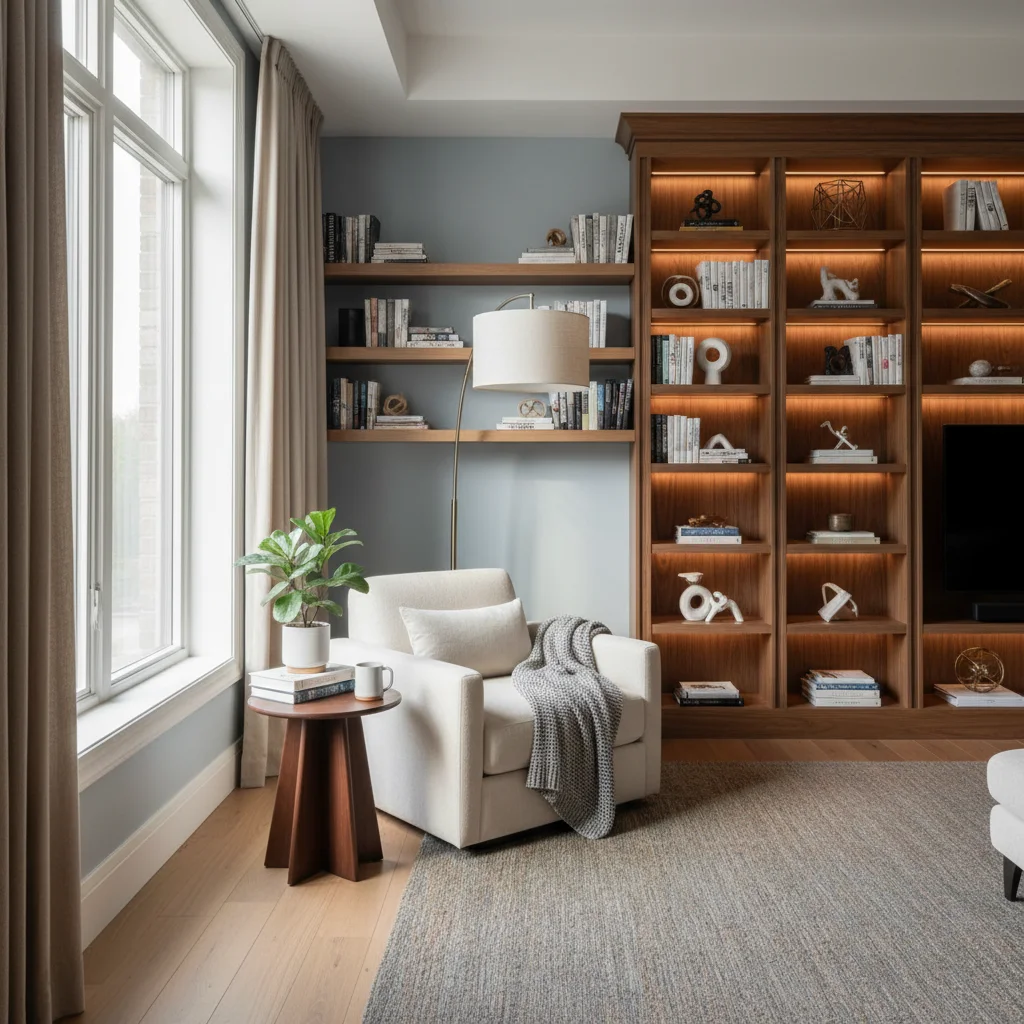
O Que Torna um Espaço de Leitura Dedicado Tão Especial?
Há algo profundamente satisfatório em um espaço projetado para um único propósito. Um cantinho de leitura sinaliza ao seu cérebro que é hora de desacelerar — ao contrário de um sofá na sala de estar, que frequentemente compete com televisão, conversas e telefones. O confinamento físico de um cantinho cria uma sensação de segurança psicológica que ambientes abertos simplesmente não conseguem replicar, promovendo uma conexão mais profunda com seu livro. Até mesmo um pequeno recesso com uma almofada macia e uma luminária perfeitamente posicionada muda a forma como você vivencia uma narrativa.
Estudos mostram que ambientes projetados para atividades específicas podem melhorar significativamente o foco e o bem-estar. Por exemplo, **68% das pessoas relatam níveis reduzidos de estresse quando têm uma "zona de descompressão" dedicada em casa**, como um cantinho de leitura. Não se trata apenas de escapar; é sobre viver intencionalmente. Os melhores cantinhos de leitura compartilham três qualidades fundamentais: boa iluminação (seja luz natural abundante ou luz artificial quente e bem direcionada), assento confortável em um ângulo ligeiramente reclinado e pelo menos uma superfície estável para uma bebida, uma pilha de livros ou um par de óculos de leitura. Todo o resto — prateleiras embutidas, vistas panorâmicas da janela, dosséis macios ou cortinas de privacidade — é um aprimoramento. Comece com esses três fundamentos e construa a partir deles para criar seu santuário literário pessoal.
Assentos em Nichos de Janela: O Retiro de Leitura Quintessencial
Um nicho de janela profundo é talvez o formato mais cobiçado para um cantinho de leitura. Se sua casa possui janelas salientes ou janelas recuadas com um parapeito de pelo menos quarenta centímetros de profundidade, você já tem a estrutura arquitetônica perfeita. Este espaço, frequentemente subutilizado, está pronto para ser transformado.
**Transformando Espaços de Janela Existentes:** Comece com uma almofada sob medida cortada precisamente para encaixar no parapeito. Opte por tecidos duráveis e resistentes a manchas, como misturas de linho, lona de algodão ou até um veludo macio para um luxo adicional. Por baixo, integre gavetas de armazenamento ou tampas articuladas para a base, transformando o espaço morto em um valioso local para cobertores, itens sazonais ou ainda mais livros. Algumas almofadas decorativas cuidadosamente escolhidas — variando em tamanho, textura e padrão — o convidarão a se aconchegar. Para um conforto de leitura ideal, oriente seu assento perpendicularmente à janela. Isso permite que a luz natural incida suavemente em suas páginas pela lateral, minimizando o brilho e o cansaço visual.
**Criando Profundidade Onde Não Existe:** Para janelas sem profundidade existente, um banco de plataforma construído a partir da parede para encontrar o caixilho da janela cria o mesmo efeito. Este é um projeto de carpintaria moderado, mas que muda dramaticamente a sensação e a funcionalidade de um cômodo. A plataforma não só define seu cantinho, mas também cria um armazenamento oculto inestimável por baixo, perfeito para organizar e eliminar a bagunça. A natureza embutida garante que o espaço modesto pareça arquitetonicamente intencional e permanente, em vez de um improviso. Para ajudar a visualizar como diferentes materiais e acabamentos ficariam, considere usar uma [ferramenta de design de cômodos gerada por IA](/blog/ai-generated-room-designs-realistic) como a Habitas para experimentar vários designs de plataforma e opções de estofamento antes de se comprometer. Isso pode economizar tempo significativo e potencial retrabalho.
Cavernas de Leitura Sob a Escada: Maximizando o Potencial Oculto
O espaço sob uma escada é frequentemente subutilizado, muitas vezes relegado a guardar um solitário cabideiro ou simplesmente acumular poeira. Converter este espaço frequentemente complicado em um cantinho de leitura é uma das transformações mais eficientes e encantadoras no design de casas. O teto baixo inerente e os três lados fechados criam um ambiente natural, semelhante a uma caverna, perfeito para a introspecção.
**Elementos de Design para Cantinhos Sob a Escada:** As dimensões típicas de uma área sob a escada podem variar, mas mesmo um espaço compacto (por exemplo, 90-120 cm de profundidade, 180-240 cm de comprimento) pode ser transformado. Adicione um banco feito sob medida, idealmente com gavetas de armazenamento por baixo para cobertores extras ou livros infantis. Prateleiras na parede de fundo, seguindo a inclinação da escada, maximizam o espaço vertical para sua coleção literária. Dada a falta de luz natural, a iluminação é primordial. Iluminação de fita LED embutida ao longo da borda do teto fornece um brilho ambiente, enquanto uma luminária de leitura flexível e direcional (talvez uma arandela de parede ou uma pequena luz de encaixe) garante iluminação de tarefa abundante para suas páginas.
**Aprimorando a Privacidade e a Ludicidade:** Cortinas de privacidade — um painel simples em uma haste de tensão ou um trilho decorativo sobre a abertura — podem elevar uma caverna de leitura sob a escada de divertida a genuinamente funcional, oferecendo um verdadeiro senso de retiro. As crianças são naturalmente atraídas por esses esconderijos secretos, mas os adultos que os experimentam raramente os abandonam. Para famílias, este pode ser um local maravilhoso e aconchegante para histórias de ninar. Este uso criativo do espaço é um exemplo brilhante de como abordar [soluções para formatos de cômodos estranhos](/blog/awkward-room-shape-solutions), transformando um desafio de design em uma característica valorizada.
Conversões de Armário: Seu Retiro de Leitura no Quarto
Um armário de quarto padrão, com suas portas removidas e cabideiros desocupados, pode ser reimaginado como um cantinho de leitura surpreendentemente íntimo e convidativo. As dimensões típicas de um armário embutido — geralmente de 60 a 75 cm de profundidade e de 90 a 150 cm de largura — são perfeitamente adequadas para um banco acolchoado confortável, prateleiras rasas nas paredes de fundo ou laterais para livros e decoração, e uma luminária pendente pendurada na caixa de teto existente.
**Tornando-o Intencional e com Design:** Para que essa conversão pareça intencional e sofisticada, em vez de temporária, considere pintar o interior do armário com uma cor contrastante ou complementar às paredes principais do quarto. Isso cria uma zona distinta e adiciona profundidade visual. Por exemplo, um tom de joia rico ou um verde floresta profundo dentro de um quarto neutro pode parecer incrivelmente luxuoso. Essa conversão é particularmente eficaz em casas onde um quarto possui dois armários; converter o menor em um cantinho de leitura, mantendo o maior para armazenamento, é um ganho líquido tanto para a função quanto para a experiência estética. O quarto ganha um destino além da cama, e a arquitetura se beneficia de uma profundidade em camadas que paredes planas e arranjos simples de móveis muitas vezes não possuem. Ao planejar sua paleta de cores, um [gerador de paletas de cores com IA](/blog/ai-color-palette-generator) pode ajudá-lo a explorar combinações harmoniosas.
Cantinhos de Canto em Salas de Estar e Quartos: Design com Intenção
Nem toda casa possui nichos convenientes, janelas salientes ou vazios sob a escada. Felizmente, um charmoso cantinho de leitura pode ser criado em qualquer lugar onde você tenha duas paredes perpendiculares. A chave reside no design intencional e na disposição cuidadosa dos móveis.
**O Cantinho de Canto Independente:** Comece posicionando uma única poltrona confortável ou uma pequena chaise longue em um ângulo de quarenta e cinco graus em relação ao canto. Essa colocação diagonal imediatamente sinaliza que este canto é uma zona distinta, operando com sua própria lógica separada do arranjo principal dos móveis. Defina ainda mais o espaço com um abajur de chão redondo que projeta um brilho suave e convidativo, uma pequena mesa lateral para itens essenciais e uma estante fina ou prateleiras flutuantes em uma das paredes adjacentes para sua coleção literária. Adicionar um pequeno e macio tapete de área sob a cadeira pode ancorar o espaço e adicionar calor.
**O Banco de Canto Embutido:** Para uma solução de assento mais integrada e maximizada, um banco de canto com retorno de noventa graus pode ser construído de forma relativamente barata usando MDF ou compensado. Esses bancos maximizam o assento dentro de uma pegada mínima e parecem ancorados e permanentes de uma forma que as cadeiras independentes não o fazem. Estofado o banco em um tecido durável e texturizado como bouclé, veludo ou um linho de trama apertada, que resistirá ao uso regular enquanto adiciona interesse visual. Adicione uma almofada rolo no canto para suporte essencial para as costas ao ler em uma posição relaxada e deitada. Incorporar armazenamento embutido sob o banco é uma maneira inteligente de manter um ambiente livre de bagunça. Para decoradores preocupados com o orçamento, um cantinho de canto oferece uma excelente oportunidade para aprimorar um espaço sem uma reforma completa, muitas vezes provando ser um dos projetos mais impactantes e [acessíveis para decorar apartamentos](/blog/apartment-decorating-budget).
Qual a Importância da Iluminação para um Cantinho de Leitura?
A iluminação é, sem dúvida, o elemento mais crítico em um cantinho de leitura, impactando diretamente o conforto, o foco e o ambiente. A leitura exige iluminação de tarefa — tipicamente 400 a 500 lux na superfície de leitura — ao mesmo tempo em que se beneficia do calor ambiente que faz o espaço parecer um refúgio, e não um home office. A configuração ideal combina com maestria uma luminária de leitura direcional com uma fonte ambiente mais suave e difusa.
**Estratégia de Iluminação de Dupla Finalidade:** Combine um abajur de chão com braço ajustável, uma arandela de parede ou uma luminária de encaixe para iluminação direta, garantindo que o feixe caia diretamente em seu livro. Para luz ambiente, considere LEDs quentes embutidos, uma luminária pendente elegante (especialmente eficaz em cantinhos de armário ou sob a escada) ou até mesmo luzes decorativas de corda para um toque divertido. O objetivo é fornecer brilho suficiente para uma leitura sem esforço, sem reflexos fortes.
**Temperatura de Cor e Dimerização:** A temperatura de cor importa mais em cantinhos de leitura do que em quase qualquer outro lugar em uma casa. Mantenha-se no espectro quente, entre 2700K e 3000K. Essa faixa imita a luz incandescente, reduzindo o cansaço visual e sinalizando o relaxamento noturno. Evite lâmpadas de luz fria acima de 4000K, que promovem o estado de alerta e podem interromper o ritmo circadiano natural do seu corpo. **Pesquisas indicam que o uso de iluminação em tons quentes (2700K-3000K) pode reduzir os sintomas de cansaço visual digital em até 25% em comparação com temperaturas mais frias.** Dimmers são essenciais para a versatilidade: luz brilhante para leitura focada e uma configuração mais baixa e quente para um relaxamento atmosférico, sinalizando uma transição suave para o sono. Essa estratégia de iluminação bem pensada torna o cantinho adaptável ao longo do dia e da noite.
Estilizando Seu Cantinho Pronto: Camadas de Conforto e Personalidade
Um cantinho de leitura ganha seu caráter através de camadas cuidadosamente planejadas, transformando um espaço funcional em um santuário convidativo. Resista à tentação de exagerar na decoração; em vez disso, selecione itens que aumentem o conforto e reflitam seu estilo pessoal.
**A Base do Conforto:** Comece com uma almofada substancial ou uma almofada de assento feita sob medida como seu estofamento principal. É aqui que o conforto realmente começa. Em seguida, introduza duas ou três almofadas decorativas, variando seus tamanhos, formas e texturas. Misture um tricô grosso com um veludo liso, ou um linho com uma pele sintética, para criar interesse visual e apelo tátil. Uma manta leve, artisticamente dobrada sobre uma extremidade do assento ou casualmente jogada, adiciona outra camada de calor e convite.
**Toques Pessoais e Praticidade:** Em qualquer prateleira ou mesa lateral, arrume de três a cinco livros com a lombada virada para fora. Estes devem ser livros que você está realmente lendo ou planeja ler em breve, contribuindo para a sensação de que o espaço é habitado. Além dos livros, adicione um ou dois objetos pessoais que lhe tragam alegria: uma pequena impressão emoldurada de uma obra de arte querida, uma caneca de cerâmica favorita, uma pequena escultura única ou uma vela perfumada. Incorporar uma pequena planta de baixa manutenção como uma espada-de-são-jorge ou uma jiboia pode adicionar um toque de design biofílico e ar fresco; para ideias, explore nosso guia sobre as [melhores plantas para design de interiores](/blog/best-plants-for-interior-design).
**A Arte da Perfeição Desfeita:** Os cantinhos de leitura mais bem-sucedidos parecem genuinamente seus — ligeiramente imperfeitos, confortavelmente usados e autenticamente curados. Os livros devem ser livros com os quais você realmente se envolve. A manta deve ser aquela que você instintivamente procura. A luz deve ser ajustada exatamente onde você gosta. Quando o espaço parece intuitivo e habitado, ele está fazendo sua mágica. Lembre-se, o objetivo final de um cantinho de leitura é proporcionar um refúgio dedicado que pareça profundamente pessoal e supremamente confortável, um lugar onde você pode realmente se desconectar e mergulhar em uma história.
Perguntas Frequentes
### Quanto custa construir um cantinho de leitura?
O custo de construção de um cantinho de leitura varia muito dependendo da complexidade do projeto e se você escolhe DIY (faça você mesmo) ou instalação profissional. Um cantinho de canto simples com uma nova poltrona, mesa lateral e luminária pode custar de $300 a $800. Um assento de janela embutido ou a conversão de um armário com carpintaria personalizada, almofadas e iluminação pode variar de $1.500 a $4.000 ou mais, especialmente se contratar um carpinteiro. As construções embutidas DIY usando madeira pré-cortada ou "hacks" da IKEA podem reduzir significativamente os custos, muitas vezes ficando na faixa de $500 a $1.500 para materiais.
### Quais são os elementos essenciais para um cantinho de leitura aconchegante?
Os elementos essenciais para um cantinho de leitura verdadeiramente aconchegante são assentos confortáveis (uma poltrona macia, um banco acolchoado ou um assento profundo na janela), boa iluminação (uma combinação de luz ambiente quente e iluminação de tarefa ajustável) e uma pequena superfície para uma bebida e um livro. Além disso, elementos como têxteis macios (almofadas decorativas, mantas), itens decorativos pessoais e uma sensação de confinamento (seja arquitetônico ou criado com móveis/cortinas) aumentam a sensação de aconchego e retiro.
### Como posso criar um cantinho de leitura em um apartamento pequeno?
Criar um cantinho de leitura em um apartamento pequeno foca em maximizar os espaços existentes e em escolhas inteligentes de móveis. Utilize áreas sob a escada, converta um armário raso ou designe um canto na sala de estar ou no quarto. Opte por móveis compactos e multifuncionais, como bancos com armazenamento oculto ou poltronas estreitas. Prateleiras montadas na parede e arandelas economizam espaço no chão. Empregue cores claras e espelhos para fazer a área parecer maior, e considere usar um papel de parede ou cor de tinta distinta dentro do cantinho para dar-lhe uma personalidade definida sem invadir o resto do cômodo.
### Qual a melhor forma de escolher móveis para um cantinho de leitura?
Ao escolher móveis para um cantinho de leitura, priorize o conforto e a escala. Para assentos, procure peças que permitam uma postura ligeiramente reclinada, bom suporte lombar e largura suficiente para cruzar as pernas. Considere uma poltrona com braços largos, uma chaise longue ou um banco feito sob medida. Para mesas laterais, certifique-se de que sejam altas o suficiente para alcançar confortavelmente do seu assento e grandes o suficiente apenas para seus itens essenciais. Evite móveis superdimensionados em cantinhos pequenos, pois isso pode fazer o espaço parecer apertado. Se optar por um móvel embutido, use ferramentas de IA como a Habitas para visualizar diferentes estilos e configurações de móveis em seu espaço antes de comprar.
### Uma ferramenta de design de interiores com IA pode me ajudar a planejar o meu cantinho de leitura?
Com certeza! Ferramentas de design de interiores com IA como a Habitas são incrivelmente úteis para planejar um cantinho de leitura. Você pode carregar uma foto do seu espaço existente – seja um nicho de janela, um canto vazio ou um armário vazio – e usar a IA para gerar conceitos de design. Isso permite que você experimente diferentes configurações embutidas, estilos de móveis, paletas de cores e luminárias virtualmente. É uma maneira eficiente de visualizar o resultado final, refinar suas ideias e até comparar diferentes opções de design sem se comprometer com mudanças físicas ou compras, economizando tempo e potenciais custos de reforma.
### Quais cores funcionam melhor para um cantinho de leitura para promover o relaxamento?
Para promover o relaxamento em um cantinho de leitura, opte por paletas de cores suaves e introspectivas. Tons suaves e apagados são geralmente os melhores. Pense em neutros quentes como brancos cremosos, cinzas claros ou beges sutis. Verdes e azuis terrosos (sálvia, musgo, azul marinho, azul empoeirado) são excelentes escolhas, pois evocam a natureza e promovem uma sensação de calma. Cores mais profundas e em tons de joia, como esmeralda, safira ou ameixa profunda, também podem criar uma sensação luxuosa e envolvente, especialmente em um espaço mais fechado como um armário ou cantinho sob a escada. Evite cores excessivamente brilhantes ou marcantes, que podem ser estimulantes em vez de calmantes.