Windowless Room Design: Transform Dark Spaces into Bright Sanctuaries
Unlock the secrets of windowless room design. Expert tips on lighting, color, mirrors, plants, and ventilation to make any room feel open, bright, and inviting. Includes basement design strategies.
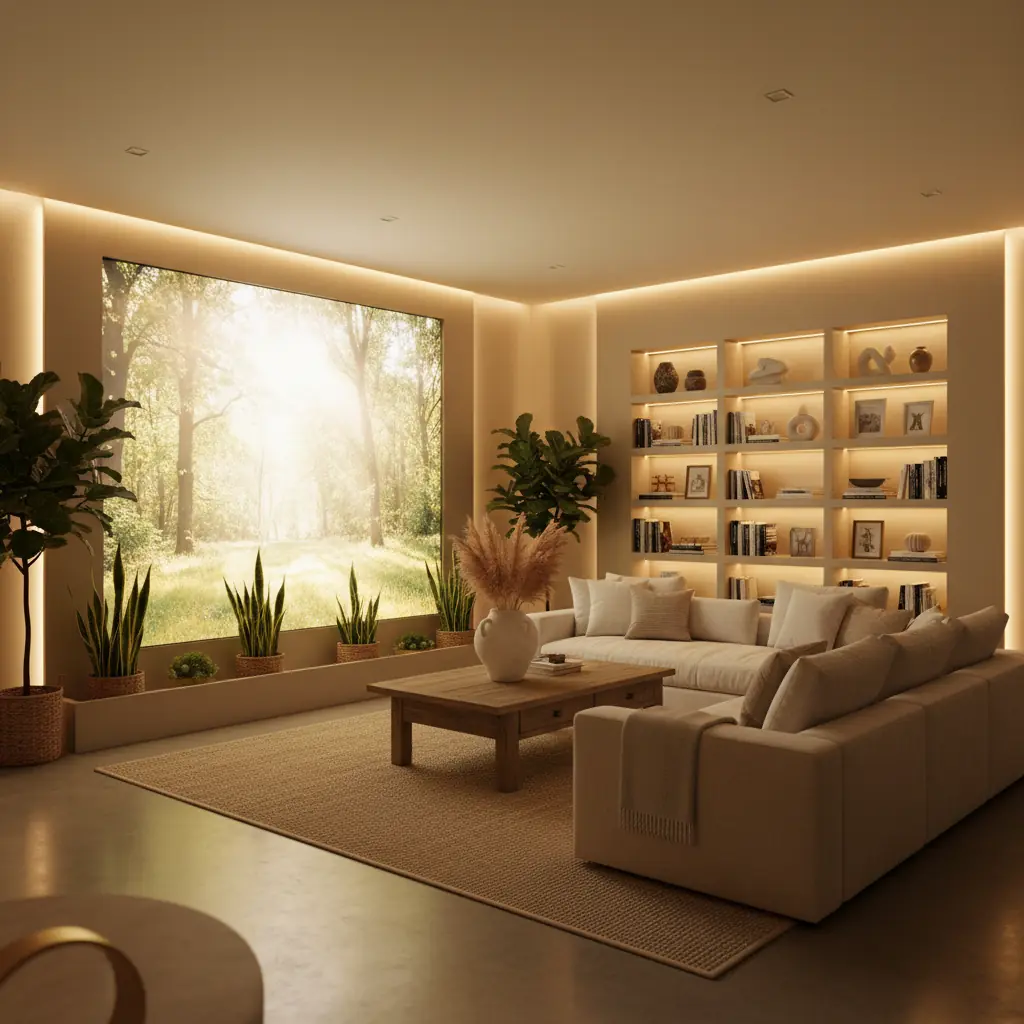
Why is layered lighting essential in a windowless room?
In a room with windows, natural light does the heavy lifting, establishing the mood and guiding our perception of time, while artificial light fills in the gaps. In a windowless room, artificial light is the entire system, tasked with creating all these effects from scratch. The most common and detrimental mistake is installing a single overhead fixture and calling it done. One light source creates flat, shadowless illumination that feels institutional — think office cubicle or hospital hallway – making the space feel enclosed and uninviting. The solution lies in a meticulously planned, layered lighting scheme that mimics the complexity of natural light.
To achieve this, layer your lighting across three fundamental levels:
1. **Ambient Lighting**: This is your foundational light, providing overall brightness and simulating the general glow of daylight. Flush-mount fixtures, recessed cans, or even strategically placed track lighting can serve this purpose. Aim for a color temperature of 4000-5000K (Kelvin) for daytime use, as this simulates the crisp, energizing light of a clear sky. For evening, you might shift to warmer tones. A well-designed ambient layer prevents dark corners and ensures the room feels adequately lit without feeling harsh. 2. **Task Lighting**: This focused illumination supports specific activities. Desk lamps for reading and working, under-cabinet strips in a kitchen or workspace, and reading lights beside a sofa or bed are all examples. Task lighting is crucial because it ensures functionality and prevents eye strain, adding a practical layer to your lighting strategy. 3. **Accent Lighting**: This layer adds warmth, depth, and visual interest, highlighting architectural features, artwork, or decorative elements. Wall sconces, picture lights, LED strips tucked behind crown molding or furniture, and uplights behind plants create pockets of light and shadow, preventing the room from feeling one-dimensional. This strategic use of light and shadow is what truly brings a windowless room to life, giving it character and dimension.
The combination of all three creates a room that feels naturally lit, dynamic, and inviting, even without a single window. Moreover, consider a circadian lighting setup with tunable bulbs and smart systems that can shift from cool daylight tones (5000K) in the morning to warmer, softer sunset tones (2700K) in the evening. This helps your body maintain its natural rhythm, which is especially important if the windowless room is a bedroom or home office. Studies show that poor or static lighting can reduce productivity by up to 15% and negatively impact sleep cycles, highlighting the importance of dynamic lighting in these spaces. Integrating smart home technology allows for automated transitions, enhancing both comfort and well-being.
What colors and finishes work best for rooms without natural light?
The right color strategy can dramatically impact how open and alive a windowless room feels. Light, warm colors are generally the safest and most effective choice. Soft cream, warm white, light sand, pale blush, or a delicate greige reflect the maximum amount of artificial light, helping to brighten the space and add a cozy warmth. These hues create an expansive feel by pushing the walls visually outward. Avoid stark pure white; without natural light to give it life, it often reads as clinical and sterile, like a doctor's office. Instead, opt for whites with subtle undertones – a hint of yellow, pink, or gray – to add softness.
However, a windowless room also offers a unique opportunity to embrace the dramatic. You can go dark and moody, but it requires commitment and careful execution. A windowless room painted in deep charcoal, rich navy, forest green, or even a sophisticated plum with abundant warm lighting can feel like a luxurious, cozy cocoon – think a high-end wine bar, an intimate home theater, or a sophisticated library den. The key is using enough varied light sources to prevent it from feeling like a cave. When opting for a dark palette, use matte finishes on the walls, which absorb light and create a velvety, sophisticated depth, rather than reflecting it harshly. Introduce warmth and contrast through natural wood tones, polished brass hardware, vibrant artwork, and richly textured textiles like velvet, wool, or faux fur. This juxtaposition of dark walls and warm, layered accents creates a sophisticated and intentional atmosphere. Habitas can help you visualize these bold [color schemes for living rooms](/blog/color-schemes-for-living-rooms) or any other space, allowing you to experiment with different shades and see how they interact with your chosen lighting before committing to paint.
How do mirrors and reflective surfaces enhance a windowless room?
Mirrors are absolutely non-negotiable in windowless rooms. A large mirror, or even a collection of smaller ones, reflects light from your artificial sources and creates the powerful illusion of depth, making the room appear to extend beyond its actual boundaries. Position mirrors strategically: directly across from or adjacent to your primary light sources for maximum light-bouncing effect. A full-length mirror leaned against a wall can add casual elegance, while a grid of smaller, framed mirrors can create architectural interest and a "faux window" effect. Strategically placed mirrors have been shown to make a room appear up to 50% larger, according to some design studies.
Beyond traditional mirrors, incorporate a variety of reflective materials throughout the space. Glass-topped tables, metallic light fixtures (polished chrome, brushed brass, copper), glossy ceramic vases, and lacquered furniture surfaces all contribute to the cumulative effect. Even small touches – a polished brass tray on a coffee table, a chrome lamp base, or decorative glass objects – bounce light around the room, fighting the flatness that often plagues windowless spaces. Consider using high-gloss paint on trim or a single accent wall to reflect light more actively, or incorporate mirrored furniture pieces that blend seamlessly while amplifying illumination. The goal is to create a dynamic interplay of light that dances around the room, preventing any single surface from feeling dull or stagnant.
What artwork makes a windowless room feel more open and alive?
Art selection matters more in windowless rooms than almost anywhere else, serving as a powerful visual anchor and a window to another world. Choose artwork with significant visual depth – expansive landscapes with distant horizons, serene seascapes that stretch to infinity, aerial photographs, or abstract pieces with layers and strong perspective. These types of imagery trick the brain into perceiving distance beyond the wall surface, partially compensating for the missing natural view. The brain naturally seeks out vanishing points and visual escapes, and well-chosen art can provide this crucial psychological relief.
The "horizon line trick" is a simple yet incredibly effective technique: mount a large landscape photograph or painting at eye level, roughly where a real window might be. This gives your brain a distant focal point to rest on, creating an immediate sense of openness and breaking the claustrophobic feeling of solid walls. Avoid claustrophobic imagery – tight close-ups, dark, dense abstract pieces, or busy patterns that make the walls feel like they are closing in. Instead, opt for pieces with light color palettes, open compositions, and a sense of movement or calm. Habitas can generate [realistic AI room designs](/blog/ai-generated-room-designs-realistic) with different art placements, allowing you to experiment with scale, subject matter, and position to see which pieces and configurations create the greatest sense of openness and connection to the outside world, even if it's just an illusion. You could even consider digital art frames displaying dynamic natural scenes, or specialized lightboxes that simulate natural light from a "virtual window."
How do ventilation and plants improve livability in a room without windows?
Ventilation is a critical functional concern that directly affects comfort, air quality, and overall well-being. Without windows, air exchange depends entirely on your HVAC system or dedicated mechanical ventilation. Stagnant air can quickly lead to stuffiness, odors, and an accumulation of airborne pollutants. A quality air purifier with a HEPA filter and activated carbon filter is an invaluable investment, effectively removing dust, allergens, pet dander, volatile organic compounds (VOCs) from furniture and paints, and common household odors. Indoor air can be 2-5 times more polluted than outdoor air, making good ventilation and filtration crucial for health in enclosed spaces.
Beyond filtration, a small fan (oscillating, tower, or ceiling-mounted) creates gentle air movement that prevents the room from feeling stagnant and can contribute to thermal comfort. If the windowless room connects to a hallway or another room, keep the door open whenever possible to allow passive air circulation. Consider a smart humidifier or dehumidifier to maintain optimal humidity levels (typically between 40-60%), preventing issues like dry air discomfort or mold growth in humid environments.
To truly bring a windowless room to life, integrate houseplants. Several species thrive in low or no natural light: pothos, ZZ plants, snake plants (Sansevieria), cast iron plants (Aspidistra elatior), peace lilies, and spider plants. These aren't just decorative; they add vibrant life, organic texture, and a touch of biophilic design that can counteract the entirely manufactured feel of a windowless space. While plants do offer some air-purifying benefits, their primary role here is aesthetic and psychological – connecting us to nature. To ensure their long-term health and vitality, use grow lights. Full-spectrum LED grow lights, often available as discreet strips or clip-on fixtures, can be set on a timer to provide the necessary light spectrum for photosynthesis. Even one or two healthy plants on a shelf with a small, hidden grow light can make a windowless room feel significantly more alive, vibrant, and welcoming. For more ideas, explore our guide on the [best plants for interior design](/blog/best-plants-for-interior-design).
Specific design challenges and solutions for basement rooms
Basement rooms present a unique set of challenges that go beyond mere windowlessness. These often include lower ceiling heights, exposed ductwork, concrete floors, and inherent moisture concerns. Rather than fighting these architectural realities, skilled design embraces them. For instance, with low ceilings and exposed joists or ducts, consider painting them and the ceiling in a uniform matte white or a sophisticated dark color like charcoal or black. This approach reads as intentional industrial design rather than unfinished construction, visually expanding the ceiling height by blurring the lines. [Using a tool like Habitas, you can experiment with different ceiling treatments or furniture arrangements to optimize your basement's layout before any heavy lifting.](/blog/ai-furniture-arrangement-tool)
Addressing the floor is also critical. Concrete floors can feel cold and uninviting. Cover them with luxury vinyl plank (LVP) or engineered wood flooring, both of which are moisture-resistant and offer warmth underfoot. Layering a large, soft area rug over these hard surfaces adds comfort, acoustic dampening, and defines zones within the open space. Moisture control is paramount in basements; a high-quality dehumidifier running continuously is non-negotiable to prevent that characteristic musty smell and inhibit mold growth, making the space feel genuinely fresh and welcoming. Regular maintenance and emptying (or plumbing to a drain) are crucial for its effectiveness.
Furniture selection plays a significant role in mitigating the "underground" feeling. Opt for pieces with exposed legs and a lighter visual profile to allow air circulation underneath and prevent the room from feeling too heavy or grounded. Multi-functional and modular furniture can maximize space in these often smaller or awkwardly shaped rooms. For additional guidance, consult our post on [awkward room shape solutions](/blog/awkward-room-shape-solutions).
If your basement has egress windows – those small, high-set windows near the ceiling required for safety – maximize every bit of light they offer. Keep window wells meticulously clean and free of debris. Use sheer or unlined window treatments that allow every photon of light to pass through. Position large mirrors on the opposite wall to bounce that precious, limited natural light deeper into the space. Even a small amount of natural light changes the character of a basement room entirely, making it feel less subterranean and more integrated with the rest of the home. The investment in proper basement finishing and design can significantly increase your home's usable square footage, with a typical basement remodel costing between $15,000 and $75,000, but offering a substantial return on investment in property value.
Frequently Asked Questions
### Can a windowless room be used as a bedroom?
Legally, a windowless room cannot be designated as a bedroom in many jurisdictions due to safety codes requiring an egress window for emergency exit. However, functionally, a room without a window can be designed as a comfortable sleeping space. To do so, prioritize excellent ventilation (air purifier, fan), layered lighting (especially circadian-friendly options), and a design that promotes calm and openness. Always check local building codes before converting a windowless space into a permanent bedroom.
### What are the best wall colors for a windowless bathroom?
For a windowless bathroom, light and bright colors are generally best to counteract the lack of natural light. Warm whites, soft greys, pale blues, and light greens work well, reflecting artificial light and creating a sense of cleanliness and spaciousness. Consider high-gloss or semi-gloss finishes on walls and tiles to maximize light reflection. If you prefer a moodier look, ensure you have ample, bright task lighting around the vanity and incorporate reflective materials like large mirrors and metallic fixtures.
### How can I improve air quality in a room without windows?
Improving air quality in a windowless room is crucial. Start with a high-quality air purifier featuring a HEPA filter and activated carbon to remove particles and odors. Ensure your HVAC system's filters are clean and regularly replaced. Consider adding an exhaust fan if practical, especially in bathrooms or kitchens. Strategically placed fans can also help circulate air. While plants contribute aesthetically, their air-purifying capabilities are often overstated compared to mechanical filtration.
### Are virtual windows a good investment for windowless spaces?
Virtual windows, which are typically LED screens or light panels displaying dynamic outdoor scenes, can be a worthwhile investment for creating an illusion of openness and natural light in windowless rooms. High-quality virtual windows can significantly enhance mood and well-being by providing visual stimulation and simulating daylight. While they can be a more significant initial expense (ranging from $500 to $5,000+ depending on size and features), many users find the psychological benefits and aesthetic enhancement to be well worth it, especially in home offices or therapeutic spaces.
### How do I choose the right grow lights for my plants in a windowless room?
When choosing grow lights for plants in a windowless room, opt for full-spectrum LED grow lights, as they mimic natural sunlight. Consider the size and light requirements of your plants – higher light-loving plants need stronger lights or longer exposure. Look for lights with timers to ensure consistent light cycles (e.g., 12-16 hours on, 8-12 hours off). Discreet strip lights, clip-on lamps, or fixtures integrated into shelves can provide necessary illumination without dominating the room's aesthetic.