Muebles Curvos: Suavizando Interiores y Abrazando el Diseño Moderno Orgánico
Descubre el encanto de los muebles curvos, la tendencia que está suavizando los interiores modernos. Aprende por qué las formas orgánicas están reemplazando los bordes afilados, cómo integrar piezas clave y lograr un hogar equilibrado y acogedor.
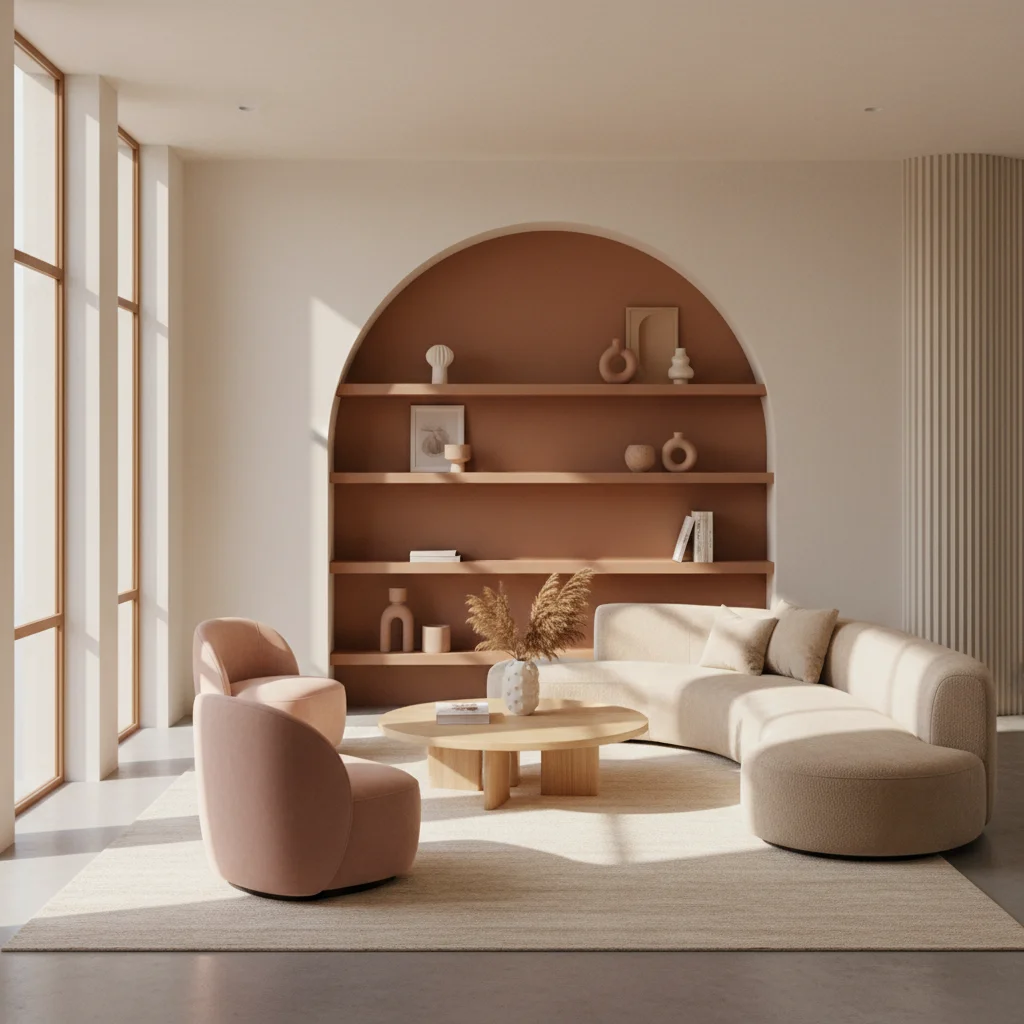
¿Por qué las curvas suaves definen ahora los interiores contemporáneos?
Durante más de una década, el diseño de interiores contemporáneo fue en gran parte sinónimo del ángulo recto y afilado. Imagina sofás con formas cuadradas, elegantes mesas de centro rectangulares, estanterías ortogonales y gabinetes con ángulos nítidos de 90 grados. Esta estética, si bien era limpia y rigurosamente arquitectónica, a menudo podía sentirse estéril y, francamente, agotadora. Producía fotografías impresionantes adecuadas para revistas de alta gama, pero las habitaciones resultantes a menudo se parecían más a vestíbulos de empresas tecnológicas o galerías de arte minimalistas que a hogares reales diseñados para la comodidad y la conexión humana.
El marcado cambio hacia los muebles curvos que se aceleró a principios de la década de 2020 no fue simplemente una tendencia fugaz; fue una corrección profunda. Las curvas son intrínsecamente más suaves a la vista e infinitamente más cómodas para vivir. Hacen referencia subconscientemente a las formas orgánicas que se encuentran en la naturaleza, los contornos del cuerpo humano y las formas reconfortantes de los objetos artesanales preindustriales. Un sofá generosamente curvo, por ejemplo, te invita a acomodarte, a relajarte y desconectar, de una manera que un sofá modular rígido y cuadrado a menudo no logra. Una mesa de comedor redonda o con forma orgánica fomenta una dinámica social más inclusiva y conversacional que su contraparte rectangular. Las curvas, en esencia, no solo están de moda, sino que están haciendo activamente que nuestras habitaciones se sientan de nuevo como hogares, cultivando una sensación de calma y bienvenida.
Este resurgimiento también está profundamente arraigado en un deseo colectivo de comodidad y autenticidad tras años de sobrecarga digital e incertidumbre global. Nuestros hogares se han convertido en santuarios, y la dureza de la geometría rígida comenzó a sentirse incongruente con esta necesidad. Los informes indican un aumento de casi el **40% en las búsquedas de 'sofá curvo' y 'muebles moderno orgánico'** en los últimos dos años, lo que señala un cambio significativo en el consumidor hacia estéticas más suaves y acogedoras.
El sofá curvo: La pieza central innegable del movimiento moderno orgánico
El sofá curvo —ya sea un arco suave, un círculo completo, una forma de S serpenteante o una atractiva forma orgánica de riñón— es, sin duda, la pieza más significativa que define el movimiento actual de los muebles curvos. Su impacto visual es inmediato y transformador: suaviza toda la habitación, guía naturalmente la circulación, crea un punto de reunión social íntimo y se percibe inconfundiblemente como deliberadamente contemporáneo.
Una de las ventajas prácticas más atractivas de un sofá en arco o circular es su inusual flexibilidad de ubicación, especialmente en salas de estar cuadradas desafiantes. A diferencia de los sofás modulares rígidos que exigen una esquina o una pared larga, un sofá curvo funciona igualmente bien flotando en el centro de una habitación, definiendo zonas, o anidado contra una pared, añadiendo una fluidez dinámica al espacio. Invita a la conversación, animando a los ocupantes a mirarse entre sí en lugar de mirar fijamente una pantalla.
La elección de telas para estos sofás protagonistas tiende hacia la riqueza sensorial y la comodidad. La tela _boucle_, con su textura anudada y táctil, se ha vuelto casi sinónimo de la tendencia, junto con terciopelos lujosos, chenillas suaves y linos texturizados suntuosos. Las telas de alto rendimiento con estas texturas suaves también están ganando popularidad, ofreciendo durabilidad sin sacrificar la estética acogedora. La combinación de la forma suave y atractiva del sofá y su material suntuoso crea espacios que no solo lucen acogedores, sino que realmente se sienten así. Los sofás curvos de _boucle_ fueron una de las imágenes de diseño más replicadas a principios de la década de 2020, pasando de sesiones editoriales de alta gama a la producción en masa con notable velocidad y una adopción generalizada.
¿Cómo realzan el espacio las mesas de comedor y auxiliares curvas?
Si bien la clásica mesa de comedor redonda siempre ha sido un elemento básico en el diseño del hogar, la tendencia actual expande la curvatura a una fascinante variedad de formas irregulares y orgánicas. Estamos viendo mesas de comedor con bordes suavemente ondulados, bases de pedestal escultóricas que se curvan delicadamente hacia afuera, y tableros que no son del todo circulares, ni del todo ovalados, y definitivamente no rectangulares. Estas piezas a menudo presentan materiales naturales como madera maciza, hormigón pulido o diversas piedras. Crean habitaciones que se sienten hechas a medida y moldeadas a mano en lugar de producidas en masa por una máquina, una cualidad cada vez más valorada como una reacción directa a la esterilidad visual del diseño industrial generalizado.
Las mesas auxiliares —incluyendo mesas laterales, mesas de centro y consolas— ofrecen el punto de entrada más asequible y flexible a la tendencia de los muebles curvos. Una mesa auxiliar de travertino en forma de tambor, una consola de ratán en forma de media luna, o una mesa de centro de mármol escultural con una forma biomórfica orgánica son excelentes maneras de introducir curvas. Estas piezas proporcionan un impacto visual significativo por metro cuadrado, permitiendo a los propietarios experimentar con la tendencia sin una inversión importante. Sirven como arte funcional, rompiendo las líneas de visión lineales y guiando la vista a través de un espacio.
Integrando arcos de puertas y curvas arquitectónicas
La tendencia de los muebles curvos se ha expandido elegantemente más allá de los objetos móviles, inspirando a propietarios y diseñadores a incorporar intervenciones arquitectónicas. Los arcos de puertas, ya sea logrados mediante la conversión de aberturas rectangulares existentes o integrados en nuevas construcciones, se encuentran entre los cambios arquitectónicos más transformadores disponibles. Un sencillo kit de arco, instalado en una abertura de puerta estándar, puede alterar fundamentalmente el carácter de un espacio a un costo sorprendentemente bajo, a menudo solo unos pocos cientos de dólares por el kit y un fin de semana de trabajo para un aficionado experto. Mientras que una renovación completa de la cocina podría costar entre $25,000 y $75,000, un kit de arco simple puede transformar un vano por tan solo **$300-$800**, haciendo que las curvas arquitectónicas sean notablemente accesibles.
Más allá de los arcos de puertas, los muebles empotrados curvos están regresando con fuerza. Nichos de estanterías arqueados, islas de cocina curvas y esquinas redondeadas en la carpintería están apareciendo en nuevas construcciones y proyectos de renovación a medida que crece la demanda de una arquitectura suavizada. Estas son inversiones más significativas que una pieza de mobiliario independiente, pero alteran fundamentalmente el carácter arquitectónico de un hogar de maneras que los muebles por sí solos no pueden. Imagina una isla de cocina con un extremo elegantemente curvo, en lugar de una esquina en ángulo recto y afilado. Este cambio no solo suaviza la lectura espacial de la cocina, sino que también hace que el espacio sea físicamente más seguro, especialmente en hogares con niños pequeños. Tales detalles introducen una sensación de elegancia atemporal que recuerda al diseño clásico y Art Decó, pero se sienten claramente modernos.
La psicología detrás de la curva: Por qué nuestros cerebros aman las formas suaves
La preferencia humana por las formas curvas no es solo estética; está profundamente arraigada en la psicología y la biología evolutiva. Los ángulos agudos y las líneas rectas, si bien son eficientes, pueden desencadenar una sensación de precaución o incluso amenaza. En la naturaleza, los bordes afilados a menudo significan peligro: rocas, espinas, dientes de depredadores. Por el contrario, las curvas se asocian con la seguridad, la comodidad y las formas naturales como ríos, colinas y el propio cuerpo humano. Este concepto a menudo se vincula con el diseño biofílico, que postula que los humanos tienen una tendencia innata a conectarse con la naturaleza. Un estudio reciente encontró que los espacios que incorporan formas curvilíneas se percibían como **un 25% más relajantes y acogedores** que aquellos dominados por ángulos agudos, lo que subraya el profundo impacto de la forma en nuestro bienestar emocional.
Incorporar curvas en nuestros interiores, por lo tanto, no se trata solo de seguir una tendencia; se trata de crear ambientes que fomenten subconscientemente una sensación de seguridad, relajación y bienestar emocional. Se trata de diseñar espacios que se sientan acogedores y suaves, proporcionando un antídoto muy necesario para las realidades a menudo duras del mundo exterior.
Más allá de la sala: Integrando curvas en cada espacio
Si bien la sala de estar a menudo ocupa un lugar central para los muebles curvos, la versatilidad de la tendencia permite enriquecer cada rincón del hogar.
- **Dormitorio:** Introduce suavidad con un cabecero curvo, una chaise lounge redondeada, o incluso una cómoda con esquinas suavemente redondeadas. Los espejos curvos también pueden añadir un toque de elegancia e interés visual, haciendo que la habitación se sienta más serena y envolvente. - **Comedor:** Como se mencionó, las mesas de comedor redondas o con formas orgánicas son clave. Combínalas con sillas de comedor que presenten respaldos curvos o patas redondeadas para realzar el flujo cohesivo. - **Baño:** Considera una bañera exenta con bordes suaves y redondeados, un tocador con un frente curvo o una mampara de ducha arqueada. Incluso un simple espejo arqueado puede elevar un baño de funcional a lujoso, creando un refugio tipo spa. Para más ideas de renovación, podrías [compararlo con el costo promedio de una renovación de baño](/blog/bathroom-renovation-cost-2026). - **Home Office:** Aunque a menudo son prácticos, los _home offices_ también pueden beneficiarse de las curvas. Un escritorio ergonómico con un borde sutilmente curvo, una silla auxiliar redondeada o incluso una estantería curva pueden hacer que el espacio se sienta menos rígido y más propicio para el pensamiento creativo y la comodidad.
¿Qué materiales y texturas realzan mejor la curvatura?
La elección de materiales y texturas es primordial para amplificar el impacto de los muebles curvos. La suavidad inherente de la forma a menudo se realza con materiales igualmente lujosos y táctiles:
- **Boucle:** La estrella indiscutible. Su textura anudada y de bucles añade al instante calidez, profundidad y una suavidad irresistible. - **Terciopelo y Chenilla:** Estas telas ricas y lujosas captan la luz maravillosamente, resaltando las curvas y añadiendo una sensación de opulencia y comodidad. - **Linos Texturizados y Mezclas de Lana:** Para una elegancia un poco más discreta, estas fibras naturales ofrecen una textura sutil y caen maravillosamente sobre formas redondeadas. - **Maderas Naturales:** Maderas de tonos claros como el roble o el fresno, a menudo con un acabado cepillado o natural, acentúan las curvas suaves en mesas, sillas y ebanistería. El _fluting_ o el _reeding_ en paneles de madera pueden añadir una textura vertical que contrasta hermosamente con una curva. - **Piedra (Travertino, Mármol, Caliza):** Estos materiales, particularmente cuando están pulidos, aportan una elegancia pesada a mesas curvas, pedestales y elementos arquitectónicos. El veteado natural y las imperfecciones sutiles realzan la sensación orgánica. - **Estuco Pulido:** Para curvas arquitectónicas como nichos arqueados o chimeneas, el estuco pulido crea un acabado escultórico y sin fisuras que es moderno y atemporal a la vez. - **Ratán y Mimbre:** Para un toque más ligero y bohemio, los muebles curvos en estos materiales tejidos añaden textura y una sensación aireada, perfectos para solarios o espacios informales.
Equilibrando las curvas en una habitación: Una guía para un diseño armonioso
El error más común al adoptar la tendencia de los muebles curvos es excederse. Una habitación llena únicamente de un sofá curvo, una mesa de centro redonda, una mesa de comedor con forma orgánica, un arco de puerta y accesorios redondeados corre el riesgo de pasar de acogedora a informe. Las curvas, paradójicamente, suelen lucir más dramáticamente —y de manera más agradable— cuando se colocan contra al menos algo de geometría ortogonal. Piénsalo como una tensión visual que crea interés.
Un enfoque práctico es elegir una o dos piezas curvas protagonistas por habitación. Por ejemplo, un sofá curvo escultural combinado con una mesa de centro rectilínea, o un arco de puerta enmarcando una mesa de comedor redonda con sillas de respaldo recto. El contraste hace que las curvas sean más visibles y más efectivas que si estuvieran rodeadas de otras curvas. Piensa en cada pieza curva como un signo de puntuación en una oración: utilizada selectivamente, crea énfasis y significado; utilizada indiscriminadamente, pierde su impacto.
Considera integrar elementos lineales a través de:
- **Alfombras geométricas:** Una alfombra rectangular puede asentar una disposición de asientos curvos. - **Obras de arte lineales:** Una pared de galería con grabados enmarcados o una gran pintura rectangular proporciona un contrapunto nítido. - **Accesorios de bordes afilados:** Libros, bandejas u objetos decorativos con ángulos definidos pueden equilibrar la suavidad. - **Estanterías empotradas:** Las estanterías rectangulares proporcionan un telón de fondo limpio para objetos decorativos curvos.
Herramientas como Habitas te permiten experimentar con diferentes disposiciones de muebles curvos y ver cómo interactúan con los elementos rectilíneos existentes en tu espacio, ayudándote a lograr ese equilibrio perfecto antes de realizar una compra. Utilizando plataformas de diseño de interiores con inteligencia artificial como Habitas, los propietarios pueden visualizar docenas de arreglos de muebles curvos en su espacio real en minutos, un proceso que tradicionalmente lleva entre **2 y 4 semanas y cuesta cientos de dólares** por renderizados profesionales. Esto permite tomar decisiones con confianza, asegurando que tus piezas curvas realcen, en lugar de abrumar, tu hogar.
Invierte a prueba de futuro en tus curvas: ¿Esta tendencia llegó para quedarse?
Si bien las tendencias de diseño van y vienen, la afinidad actual por los muebles curvos se siente diferente a una moda pasajera. Sus raíces se encuentran en la psicología humana fundamental: nuestra comodidad innata con las formas orgánicas, nuestro deseo de suavidad y cuidado, y un rechazo a los entornos excesivamente duros y estériles. Los expertos en diseño predicen que la tendencia de los muebles curvos, arraigada en principios ergonómicos y estéticos atemporales, perdurará durante al menos **otros 5-7 años, o incluso más**, a diferencia de las microtendencias fugaces.
Invertir en piezas curvas bien diseñadas, especialmente aquellas elaboradas con materiales naturales y duraderos, es probable que sea una decisión con un atractivo duradero. No son solo artículos de moda; son piezas que contribuyen a una sensación de comodidad duradera, calidez y estilo sofisticado en el hogar. Hablan de un cambio más amplio hacia el "modernismo orgánico", un estilo que celebra las formas naturales, la comodidad y el lujo discreto.
Abrazar la tendencia de los muebles curvos ofrece una emocionante oportunidad para transformar tu hogar en un santuario más acogedor, estéticamente agradable y psicológicamente reconfortante. Con una selección cuidadosa y un equilibrio reflexivo, estas formas elegantes no solo suavizarán tus interiores modernos, sino que también elevarán tu experiencia de vida. ¿Listo para explorar cómo las curvas pueden transformar tu espacio? Utiliza Habitas para visualizar estos emocionantes cambios y diseñar con confianza la casa de tus sueños.
Preguntas Frecuentes
### ¿Qué es la tendencia de los "muebles curvos"?
La tendencia de los muebles curvos es un movimiento de diseño de interiores contemporáneo caracterizado por el uso de formas redondeadas, orgánicas y curvilíneas en muebles y elementos arquitectónicos, reemplazando los ángulos afilados y las líneas rígidas que anteriormente dominaban el diseño moderno. Enfatiza la suavidad, la comodidad y una estética más natural y acogedora.
### ¿Por qué las curvas son populares en el diseño de interiores ahora mismo?
Las curvas son populares debido a un deseo colectivo de comodidad, calidez y bienestar psicológico en nuestros hogares. Después de años de estéticas minimalistas y de bordes afilados, la gente busca espacios que se sientan acogedores y reconfortantes. Las curvas imitan formas naturales, evocan una sensación de seguridad y promueven una mejor interacción social, haciéndolas atractivas en un mundo pospandemia.
### ¿Cómo puedo incorporar muebles curvos en un espacio pequeño?
En un espacio pequeño, céntrate en una o dos piezas curvas clave para evitar abrumar la habitación. Una única silla auxiliar curva, una mesa de centro redonda o una consola con bordes redondeados pueden introducir la tendencia de manera efectiva. Opta por piezas con bases más ligeras o superficies reflectantes (como el cristal) para mantener una sensación de amplitud. Los espejos curvos también pueden expandir visualmente una habitación pequeña mientras añaden suavidad. Puedes explorar cómo resolver otros [desafíos de formas de habitaciones complicadas](/blog/awkward-room-shape-solutions) con ingeniosas elecciones de mobiliario.
### ¿Qué materiales funcionan mejor para los muebles curvos?
Los materiales que realzan la suavidad y la calidad táctil de las curvas son ideales. Las opciones populares incluyen _boucle_, terciopelo, chenilla y linos texturizados para la tapicería. Para mesas y elementos arquitectónicos, materiales naturales como maderas pulidas (roble, nogal), diversas piedras (travertino, mármol) e incluso estuco pulido son excelentes. El ratán y el mimbre también funcionan bien para una sensación más ligera y orgánica.
### ¿Cómo equilibro los muebles curvos con piezas de líneas rectas existentes?
Para lograr el equilibrio, utiliza una mezcla de curvas y líneas rectas. Si tienes un sofá curvo protagonista, combínalo con una mesa de centro rectangular o una alfombra geométrica. Introduce elementos lineales a través de obras de arte, estanterías o luminarias elegantes. El contraste entre las curvas suaves y las líneas nítidas crea interés visual y evita que una habitación se sienta demasiado informe o excesivamente suave. Herramientas como Habitas pueden ayudarte a [visualizar estos cambios en la foto real de tu habitación](/blog/ai-generated-room-designs-realistic) para encontrar el equilibrio perfecto.