Diseña un Gimnasio en Casa: Eleva tu Espacio Fitness con Principios de Diseño de Interiores
Los gimnasios en casa que realmente se usan son aquellos en los que quieres pasar tiempo. Principios de diseño, elección de materiales y estrategias de distribución para crear un espacio fitness que se sienta como parte de tu hogar.
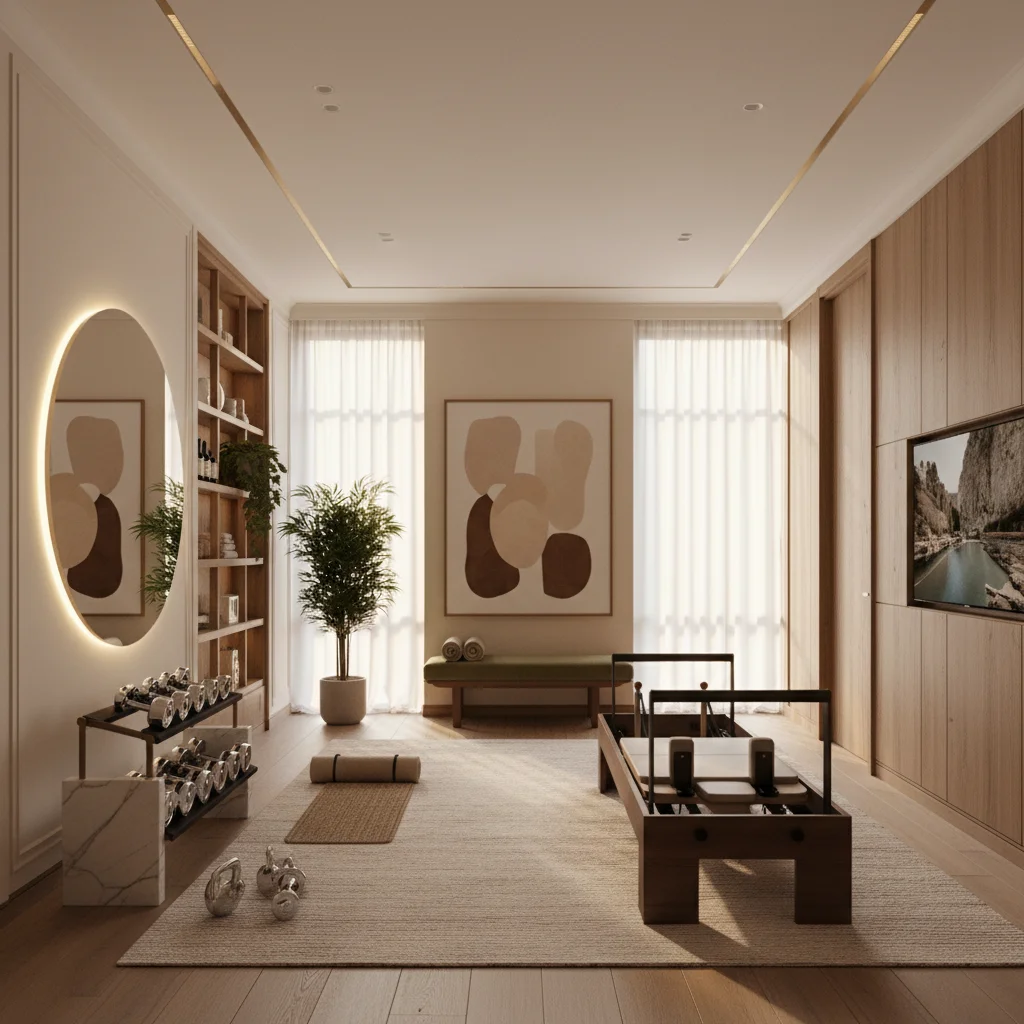
Por qué la mayoría de los gimnasios en casa se sienten mal y cómo solucionarlo
La mayoría de los gimnasios en casa se arman, no se diseñan. Llega una caminadora, luego un juego de mancuernas, luego un banco, luego un rack. Cada pieza se elige solo por su función y se coloca donde quepa. El resultado parece un cuarto de almacenamiento que casualmente contiene equipo de ejercicio, utilitario, estéticamente desconectado del resto del hogar y profundamente poco atractivo. La gente deja de usar estos gimnasios no porque carezca de disciplina, sino porque el espacio no les ofrece nada más allá del equipo en sí. De hecho, los estudios muestran que las señales ambientales impactan significativamente la formación de hábitos; un espacio visualmente atractivo y funcional puede aumentar la consistencia del entrenamiento hasta en un 40%.
Un gimnasio en casa bien diseñado funciona con los mismos principios que cualquier otra habitación en un hogar bien diseñado: tiene una paleta de materiales clara, iluminación consistente, almacenamiento bien pensado y una identidad estética que te invita a entrar. La diferencia es que la función es una restricción más exigente: el piso debe proteger contra la caída de pesas, los espejos deben estar colocados correctamente para verificar la postura, el almacenamiento debe acomodar equipos de múltiples tamaños. Un buen diseño trabaja dentro de estas restricciones en lugar de ignorarlas, transformando una mera área de ejercicio en una verdadera extensión de tu espacio vital.
¿Qué opciones de pisos elevan la estética y función de un gimnasio en casa?
El piso define el carácter visual de un gimnasio en casa más que cualquier otro elemento. La elección predeterminada —baldosas de goma entrelazadas en negro o gris— es funcional pero estéticamente monótona. Inmediatamente señala "esto es un gimnasio" y hace que el espacio se sienta separado del resto del hogar. Alternativas de pisos que funcionan igual de bien mientras se perciben como espacios diseñados:
- **Láminas de goma natural:** Disponibles en cálidos tonos terracota, verde bosque, azul profundo o incluso diseños moteados, esta opción ofrece una absorción de impacto y durabilidad superiores sin la sensación austera e institucional. A menudo se ve en gimnasios comerciales de alta gama y ofrece un aspecto uniforme. Opta por rollos que se puedan pegar para un acabado más permanente y refinado. - **Piso vinílico de lujo (LVP) efecto madera con subcapa de goma:** Esta combinación proporciona la calidez estética de la madera sin sacrificar la protección necesaria. El LVP en sí mismo es duradero y fácil de limpiar, mientras que una subcapa de goma de alta densidad (típicamente de 6-12 mm de grosor) proporciona una absorción de impacto crucial para las pesas y reduce la transmisión de ruido a otras áreas del hogar. Esta combinación puede costar alrededor de $5 a $10 por pie cuadrado para materiales e instalación, una inversión que vale la pena para un aspecto verdaderamente integrado. - **Piso de corcho:** Un material sostenible e inherentemente cálido, el corcho es excelente para áreas centradas en yoga, estiramientos o ejercicios con peso corporal. Ofrece amortiguación natural, es suave bajo los pies y proporciona un buen aislamiento acústico, amortiguando el sonido. Sus tonos terrosos se integran maravillosamente con los principios del diseño biofílico.
Considera zonificar el piso donde ocurran diferentes actividades. Un área dedicada para estiramientos y yoga en madera cálida o corcho, una plataforma de levantamiento de pesas en goma premium y un área de cardio que puede ser de concreto o baldosas estándar (la mayoría de los equipos de cardio tienen su propia absorción de vibraciones) crea diferenciación visual y funcional dentro del espacio. Estas zonas también ayudan a organizar la habitación espacialmente: las transiciones comunican en qué área te encuentras y para qué actividad es. Antes de instalar cualquier piso especializado, asegúrate de que tu contrapiso esté nivelado y debidamente preparado, ya que esto es fundamental para la longevidad y el rendimiento.
¿Cómo los espejos mejoran tanto la función como el diseño espacial en un gimnasio en casa?
Los espejos en un gimnasio cumplen un propósito técnico —verificar la postura durante los levantamientos y movimientos— pero su impacto en el diseño es igualmente significativo. Un espejo de altura completa a lo largo de una pared hace que cualquier habitación se sienta más grande, brillante y abierta. En un pequeño gimnasio en casa, una pared de espejos puede duplicar el volumen aparente del espacio, una ventaja crucial para huellas más pequeñas que a menudo se encuentran en conversiones domésticas. La pregunta es cómo hacer que los espejos se sientan diseñados en lugar de institucionales.
El enmarcado y la ubicación de los espejos marcan la diferencia. Los espejos montados en un marco de madera sustancial, o paneles de espejo colocados dentro de una cuadrícula de divisores delgados de roble o acero negro, se leen como elementos arquitectónicos en lugar de equipo de gimnasio. Un solo espejo sin marco de gran tamaño, en lugar de varios paneles más pequeños, tiene la calidad premium de una instalación de fitness de hotel en lugar de la calidad improvisada de una conversión doméstica. Asegúrate de que los espejos estén instalados de forma segura con el adhesivo adecuado para gimnasio y canales en J, especialmente si están cerca de áreas de levantamiento de pesas.
Coloca los espejos estratégicamente para reflejar la vista más agradable de la habitación: una ventana, una planta vibrante o una pared motivacional bien iluminada. Evita colocar espejos donde reflejen desorden o un ángulo poco favorecedor del equipo. Piensa en las líneas de visión desde las diferentes estaciones de entrenamiento. Herramientas como Habitas te permiten visualizar estas ubicaciones de espejos en las fotos reales de tu habitación, ayudándote a determinar la disposición más impactante antes de la instalación.
¿Cuáles son las mejores estrategias para la selección de equipos y el almacenamiento inteligente?
La decisión de equipo más importante para un gimnasio en casa que parece diseñado es elegir piezas con un lenguaje visual consistente. Equipos desparejos en diferentes colores y materiales es la forma más rápida de lograr una estética caótica. Elige un color principal para el equipo —negro, gris mate o madera cálida y cromo para un aspecto premium— y mantente fiel a él en todas las compras. Muchos fabricantes de equipos ahora ofrecen líneas estéticas premium específicamente para el mercado de gimnasios en casa que priorizan el diseño junto con la función. Por ejemplo, marcas como Tonal o Peloton integran diseños elegantes y huellas mínimas, combinándose perfectamente con interiores modernos.
Considera equipos multifuncionales que minimicen el desorden. Las mancuernas ajustables, los sistemas de gimnasio inteligentes que utilizan bandas de resistencia o cables, o los bancos plegables pueden ser excelentes opciones para maximizar el espacio sin comprometer la utilidad. Al seleccionar piezas más grandes como caminadoras o elípticas, prioriza modelos con perfiles aerodinámicos y pantallas integradas sobre mecanismos voluminosos y expuestos.
El almacenamiento es el elemento más descuidado en el diseño de un gimnasio en casa. Mancuernas en el suelo, bandas de resistencia colgadas sobre el equipo y rodillos de espuma apoyados contra las paredes crean un desorden visual que hace que incluso los espacios bien diseñados se sientan desorganizados. Invierte en un buen estante para mancuernas con un acabado consistente, un sistema de almacenamiento montado en la pared para accesorios más pequeños como bandas de resistencia, cuerdas para saltar y colchonetas de yoga, y estantes o gabinetes dedicados para artículos que se usan con menos frecuencia. Los muebles empotrados a medida pueden ocultar elegantemente una sorprendente cantidad de equipo, haciendo que la habitación se sienta como cualquier otra parte de tu hogar cuando no está en uso. Considera integrar un banco de almacenamiento que funcione como asiento o un puf con compartimentos ocultos para artículos más pequeños. Cuando el equipo está guardado, la habitación se lee como un espacio diseñado; cuando está disperso, se lee como un desorden, sin importar qué más se haya hecho. Para arreglos creativos, una [herramienta de organización de muebles con IA](/blog/ai-furniture-arrangement-tool) podría ayudarte a optimizar tu espacio tanto para equipos como para almacenamiento.
¿Cómo usar la iluminación por capas para motivación, concentración y recuperación?
La iluminación del gimnasio tiene dos propósitos diferentes que la iluminación residencial tradicional no suele necesitar equilibrar: debe ser lo suficientemente brillante para un ejercicio seguro y concentrado —necesitas ver tu postura claramente en los espejos, ver la pantalla del equipo— mientras también es ajustable para la luz más baja y cálida que requieren los estiramientos matutinos o el yoga de enfriamiento. La solución es la iluminación por capas con reguladores de intensidad.
- **Iluminación de tarea/general:** Instala iluminación brillante cenital (LED de 5000K a 6500K para energía y alerta) en un circuito. Los focos empotrados o la elegante iluminación de riel proporcionan una amplia iluminación sin ser visualmente intrusivos. Esta luz brillante y fría es ideal para entrenamientos de alta intensidad, promoviendo la concentración y la energía. - **Iluminación ambiental/de acento:** En un circuito separado, incorpora iluminación ambiental o de tiras más cálida (2700K a 3000K) para trabajos de recuperación, estiramientos o movimientos conscientes. Las tiras de LED ocultas en molduras, detrás de espejos o a lo largo de los zócalos pueden crear un brillo suave y acogedor. Los apliques de pared con reguladores de intensidad también pueden contribuir a una atmósfera serena. - **Luz natural:** La luz natural mejora drásticamente la experiencia de un gimnasio en casa. Un gimnasio con una ventana —incluso una pequeña— se siente fundamentalmente diferente de un gimnasio en un sótano o una habitación interior. La luz natural regula los ritmos circadianos y mejora el estado de ánimo. Si la luz natural no está disponible, los paneles de terapia de luz de espectro completo que simulan espectros de luz natural pueden sustituirla parcialmente, aunque suelen costar más de $100 por una unidad de calidad. Los tratamientos de ventanas como persianas enrollables translúcidas o vidrio inteligente pueden ofrecer privacidad mientras permiten que la luz difusa entre.
La temperatura de color y el brillo de la luz tienen efectos documentados sobre la energía, la concentración y el estado de ánimo durante el ejercicio; tratarla como un detalle de diseño posterior en lugar de un elemento central es una oportunidad perdida. La investigación indica que hacer ejercicio bajo una luz brillante y fría puede mejorar el rendimiento, mientras que una luz más cálida y suave es mejor para la relajación y la recuperación.
¿Cómo puedes integrar acústica y tecnología para una experiencia de entrenamiento superior?
Más allá de lo visual, la experiencia sensorial de tu gimnasio en casa impacta significativamente tu motivación y comodidad.
**Acústica:** La gestión del ruido es crucial, especialmente en espacios de vida compartidos. El ruido de impacto de las pesas que caen o la vibración de los equipos de cardio puede ser molesto.
- **Subcapa de piso:** Como se mencionó, una subcapa de goma de alta densidad debajo de tu piso principal absorberá una cantidad significativa de ruido de impacto. - **Tratamientos de pared:** Considera paneles acústicos, paneles de pared tapizados o incluso tapices gruesos para amortiguar el eco y absorber el sonido. Estos pueden diseñarse para integrarse perfectamente con tu decoración. - **Cortinas pesadas:** Si tienes ventanas, las cortinas pesadas pueden ayudar a absorber el sonido dentro de la habitación.
**Integración tecnológica:** Los gimnasios en casa modernos son cada vez más inteligentes.
- **Sistemas de sonido integrados:** Olvídate de los altavoces portátiles. Instala altavoces empotrados en el techo o en la pared que se conecten al sistema de audio de tu hogar para un sonido inmersivo durante los entrenamientos. Esto elimina el desorden visual y proporciona una calidad de audio superior. - **Pantallas inteligentes/televisores:** Un televisor inteligente montado en la pared o una pantalla de fitness dedicada (como las de Peloton o Tonal) se puede usar para entrenamientos guiados, clases virtuales o entretenimiento. Asegúrate de que el cableado esté oculto dentro de las paredes para una apariencia limpia. - **Integración con el hogar inteligente:** Conecta tu iluminación, control de temperatura y sistema de sonido a un centro de hogar inteligente. Esto te permite configurar "modos de entrenamiento" preprogramados que ajustan la iluminación, la temperatura y la música con un solo comando.
Hacer que el gimnasio se sienta parte del hogar: los toques finales
La consideración final es la continuidad con el resto de tu hogar. Un gimnasio en casa que podría pertenecer a cualquiera, en cualquier hogar, se siente menos como tuyo. Pequeños gestos de diseño que personalizan el espacio —una impresión enmarcada que te importa, una planta que introduce vida y forma orgánica, un sistema de altavoces integrado en la pared en lugar de colocado en el suelo, un objeto o fotografía motivacional— hacen que un gimnasio se sienta habitado en lugar de instalado. Los toques personales aumentan tu conexión emocional con el espacio, lo que a su vez impulsa el uso. De hecho, una encuesta reciente encontró que el 68% de los propietarios informaron usar su gimnasio en casa con más frecuencia cuando reflejaba su estilo personal.
El color en al menos una pared aleja el espacio de manera decisiva de lo institucional. Un color profundo y saturado —verde bosque, negro mate, azul marino oscuro o incluso un rico terracota— en la pared principal detrás del equipo principal se lee como una decisión de diseño. Combinado con una iluminación cálida, materiales naturales en el piso y accesorios guardados, esta única elección transforma el espacio de una habitación funcional con equipo en una habitación a la que realmente esperas entrar. Para inspirarte, explora diferentes [esquemas de color para salas de estar](/blog/color-schemes-for-living-rooms) que se pueden adaptar para un espacio de gimnasio. Para opciones personalizadas, un [generador de paletas de colores con IA](/blog/ai-color-palette-generator) puede ayudarte a encontrar tonos que complementen la estética existente de tu hogar.
Considera agregar elementos que promuevan el bienestar más allá del ejercicio: una silla pequeña y cómoda para estiramientos o meditación después del entrenamiento, un difusor para aceites esenciales o una estación de agua. Estas adiciones bien pensadas elevan el espacio de puramente funcional a un santuario de bienestar holístico, asegurando que tu gimnasio en casa no solo se use, sino que se aprecie.
Preguntas frecuentes
### ¿Cuál es el tamaño ideal para un gimnasio en casa funcional?
El tamaño ideal para un gimnasio en casa funcional varía según tus objetivos de fitness y el equipo. Generalmente se recomienda un espacio dedicado de al menos 8x8 pies (aproximadamente 2.4x2.4 metros, o 5.95 metros cuadrados) para equipos básicos como una colchoneta de yoga, mancuernas y un banco. Si planeas equipos más grandes como una caminadora, una elíptica o un power rack, busca 10x12 pies (aproximadamente 3x3.6 metros, o 11.15 metros cuadrados) o más para permitir un movimiento seguro y un uso cómodo. Recuerda considerar el espacio libre alrededor del equipo.
### ¿Cuánto cuesta diseñar un gimnasio en casa con estilo?
El costo de diseñar un gimnasio en casa con estilo puede variar ampliamente, desde unos pocos cientos de dólares para mejoras estéticas en equipos y pisos existentes, hasta más de $10,000 para una renovación completa con materiales de alta gama, almacenamiento personalizado y tecnología integrada. Un presupuesto de rango medio de $2,000 a $5,000 puede cubrir pisos de calidad, un juego básico de equipos estéticamente agradables e iluminación y soluciones de almacenamiento mejoradas. Los muebles empotrados a medida y los equipos inteligentes de gimnasio premium aumentarán la inversión significativamente.
### ¿Se puede integrar un gimnasio en casa en una habitación multiusos?
Absolutamente. Integrar un gimnasio en casa en una habitación multiusos, como un dormitorio de invitados o un home office, requiere una planificación estratégica. Concéntrate en equipos plegables u ocultos (por ejemplo, bancos plegables, mancuernas ajustables guardadas en un armario, sistemas de resistencia montados en la pared). Considera una opción de piso uniforme en toda la habitación, o usa una alfombra para definir la zona de entrenamiento. El almacenamiento inteligente que oculta el equipo cuando no está en uso es fundamental para mantener la función y la estética principal de la habitación.
### ¿Cuáles son los errores comunes a evitar al diseñar un gimnasio en casa?
Los errores comunes incluyen descuidar el piso adecuado para la absorción de impactos y la reducción de ruido, pasar por alto las soluciones de almacenamiento que conducen al desorden, no incorporar iluminación por capas y ajustable, y elegir equipos desparejos que crean caos visual. Otro error frecuente es aislar estéticamente el gimnasio del resto del hogar, haciéndolo sentir menos acogedor. Prioriza el diseño reflexivo sobre la simple acumulación de equipos.