Refúgios Analógicos: Projetando Seu Santuário Livre de Tecnologia para Foco e Calma
Fuja da sobrecarga digital com um espaço analógico. Descubra como projetar um ambiente livre de tecnologia para leitura, música, meditação e conexão genuína. Encontre sua calma.
A Revolução Silenciosa: Por Que Ambientes Livres de Tecnologia São o Novo Recurso Essencial para o Lar Conectado
Os lares inteligentes foram anunciados como o futuro definitivo da moradia: sistemas de iluminação controlados por voz, termostatos gerenciados por aplicativos, eletrodomésticos inteligentes e telas integradas em todas as superfícies imagináveis. E, de fato, para grande parte de nossas vidas diárias, essa conveniência tecnológica tornou-se indispensável. No entanto, em meio a essa realidade hiperconectada, uma fascinante contracorrente está ganhando um impulso significativo: a criação deliberada de "espaços analógicos". São zonas dedicadas dentro de casa onde a tecnologia, particularmente telas e distrações digitais, está intencionalmente ausente. Sem smart speakers, sem notificações, sem telas brilhantes onipresentes – apenas objetos físicos, sensações táteis e um silêncio profundo.
Esta não é uma postura anti-tecnologia. Muito pelo contrário. Muitos indivíduos que abraçam espaços analógicos estão na vanguarda do mundo digital, trabalhando em tecnologia ou dependendo muito de ferramentas digitais para seu sustento. Para eles, o ambiente analógico funciona como uma válvula de escape vital, uma declaração espacial que diz: "aqui é onde paro de estar disponível". É uma fronteira física que ajuda a solidificar as fronteiras mentais. Este movimento reflete uma aceitação cultural mais ampla da vida intencional: não uma rejeição total da tecnologia, mas um esforço consciente para colocá-la de forma apropriada, recuperando bolsões de calma e atenção focada em um mundo cada vez mais barulhento. Uma pesquisa recente indicou que **68% dos adultos procuram ativamente maneiras de reduzir o tempo de tela e praticar o "detox" digital regularmente**, destacando uma demanda significativa por esses espaços dedicados.
O Que Define um Espaço Analógico? De Cantos a Refúgios
O princípio central de um espaço analógico é a _subtração_. Em vez de adicionar recursos, o design gira em torno da remoção de estímulos que contribuem para a fadiga digital e a atenção fragmentada. As manifestações mais comuns de espaços analógicos incluem:
### Cantos de Leitura Aconchegantes: Um Santuário para a Palavra Escrita
Mais do que apenas uma cadeira e um livro, um verdadeiro canto de leitura é um refúgio intencional. É frequentemente definido por uma poltrona ou chaise lounge superdimensionada e extremamente confortável, posicionada estrategicamente perto da luz natural, idealmente uma janela com uma vista agradável. Companheiros essenciais incluem um abajur de chão com luz quente (nunca iluminação superior forte), uma pequena mesa lateral para uma xícara de chá ou um diário, e uma estante de livros selecionada ao alcance. A beleza reside na sua simplicidade e na ausência de interferência digital. Não há tomadas visíveis, nenhuma televisão e certamente nenhum carregador de celular, incentivando você a deixar seus aparelhos em outro lugar. Considere adicionar mantas macias, almofadas e um apoio para os pés para aumentar o conforto e incentivar a permanência. Para mais ideias sobre como criar zonas de leitura convidativas, explore nosso guia sobre [melhores plantas para design de interiores](/blog/best-plants-for-interior-design) para adicionar um toque de biofilia.
### Salas de Audição Imersivas: O Ritual do Som
Salas de audição dedicadas, particularmente aquelas centradas em discos de vinil ou sistemas de áudio de alta fidelidade, estão experimentando um ressurgimento significativo. A configuração é elegantemente esparsa: um toca-discos de qualidade, um par de caixas de som de estante ou de chão bem posicionadas, uma cadeira ou sofá confortável para audições prolongadas e uma coleção de discos. Essa é a essência. O ato de selecionar um álbum, limpar cuidadosamente o vinil, colocá-lo no prato e baixar a agulha é um ritual que exige uma qualidade de atenção diferente de simplesmente tocar uma playlist em um serviço de streaming. Isso promove uma apreciação mais profunda pela música e pelo momento. Considerações acústicas, como tapetes ou tapeçarias de parede estrategicamente posicionados, podem melhorar a qualidade do som e imergir ainda mais você na experiência auditiva.
### Cantos de Meditação Serenos: Cultivando a Paz Interior
Talvez o espaço analógico mais simples e, ainda assim, mais profundo seja o canto de meditação. Isso exige elementos físicos mínimos: uma almofada ou banco de meditação confortável, talvez uma pequena mesa ou prateleira baixa para uma vela, um difusor de óleos essenciais (operado manualmente, é claro), ou uma pequena planta. O design enfatiza o espaço livre, um ambiente desobstruído que visualmente apoia a desordem mental. O objetivo é criar uma atmosfera propícia à atenção plena, exercícios de respiração e introspecção, livre de quaisquer sons ou alertas externos. A intencionalidade por trás de sua criação transforma um canto simples em um poderoso santuário para a paz interior.
### Estúdios Criativos e Espaços para Diários: Desbloqueando a Expressão Analógica
Além do consumo tranquilo, os espaços analógicos podem ser adaptados para atividades criativas. Imagine uma pequena mesa com apenas materiais de arte – tintas, lápis, cadernos de desenho – ou um diário lindamente encadernado e uma seleção de canetas-tinteiro. Esses espaços convidam a um tipo diferente de engajamento, incentivando a criação física e a reflexão sem a distração de ferramentas digitais. Isso fomenta estados de fluxo, onde o tempo parece derreter e a criatividade pode florescer sem impedimentos.
Criando o Ambiente: Elementos Essenciais de Design para Espaços Analógicos
A atmosfera de um espaço analógico é primordial. Cada escolha de design deve contribuir para uma sensação de calma, foco e atemporalidade.
### O Abraço Suave da Iluminação Quente
A iluminação é talvez o elemento mais crítico. Lâmpadas fluorescentes de teto fortes, LEDs brancos frios (qualquer coisa acima de 3000K) e luzes de tarefa ofuscantes estão fora de questão. Em vez disso, adote um esquema de iluminação em camadas composto por abajures de mesa, luminárias de chão e arandelas equipadas com lâmpadas de tonalidade quente (2700K ou menos, ou até mesmo lâmpadas de filamento com tonalidade âmbar). Velas também são altamente recomendadas por seu brilho suave e tremeluzente. O objetivo é uma iluminação que não exija atenção, mas que, em vez disso, forneça uma iluminação ambiente suave que torne o ambiente aconchegante, íntimo e profundamente calmo. Isso cria um convite visual para o cérebro desacelerar, preparando-o para o relaxamento e o foco.
### Texturas Táteis e Materiais Orgânicos
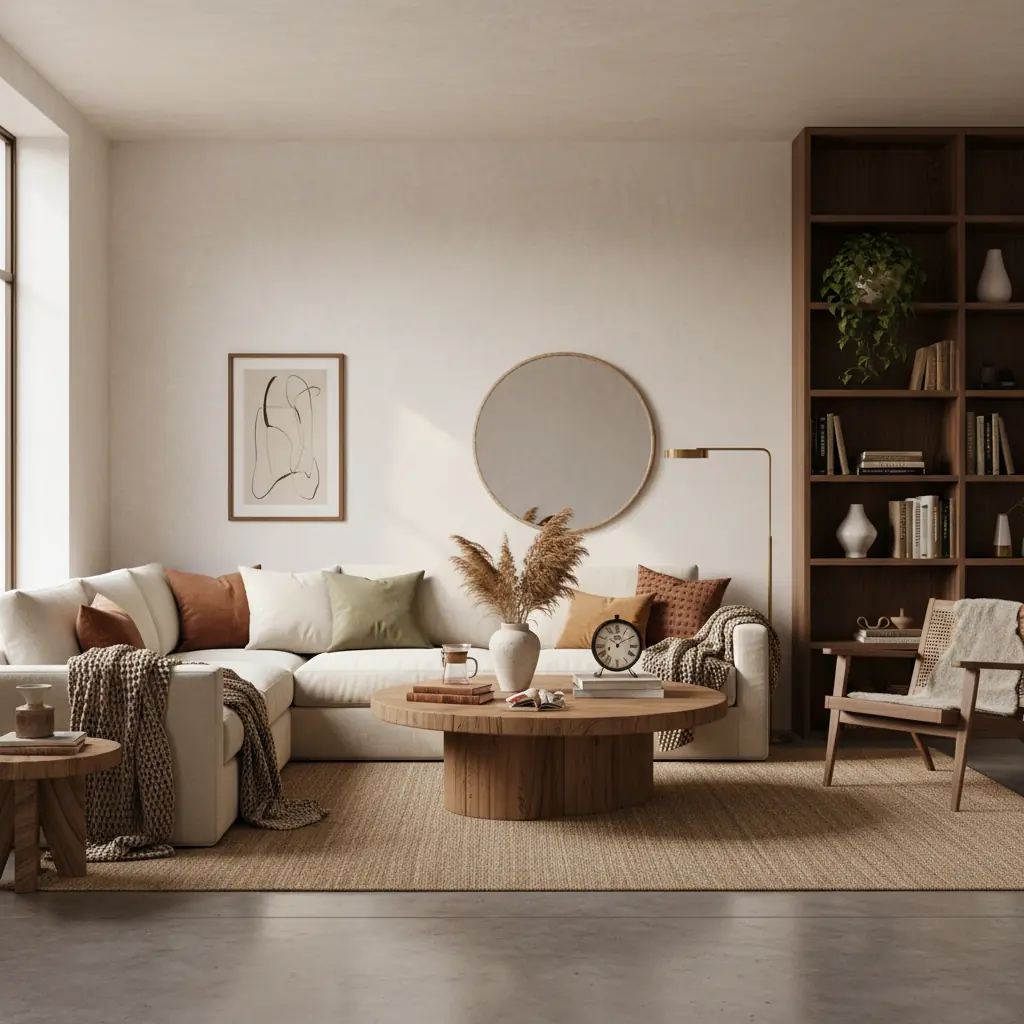
Em um espaço analógico, os sentidos são engajados de uma maneira diferente. Os materiais devem convidar ao toque, oferecendo uma rica experiência sensorial que as interfaces digitais muitas vezes não possuem. Pense em estofamento de linho, mantas de lã macias, prateleiras de madeira natural, vasos de cerâmica artesanais e o peso satisfatório de livros encadernados em couro. Esses materiais contrastam fortemente com as superfícies frias e lisas de vidro, plástico e alumínio dominantes nos produtos de tecnologia. Uma paleta de cores que tende a ser quente e suave – terracota, brancos cremosos, tons suaves de sálvia, nogueiras profundas e ocres suaves – reforça ainda mais essa conexão com a natureza e evita a estética de alto contraste e austera frequentemente associada à tecnologia moderna. Incorporar elementos de [design biofílico](/blog/biophilic-design-guide), como móveis de madeira natural ou plantas de interior, pode aprimorar essa conexão e reduzir ainda mais o estresse. Para mais informações sobre como selecionar tons harmoniosos, consulte nosso guia sobre [esquemas de cores para salas de estar](/blog/color-schemes-for-living-rooms).
### A Arte de Esconder: Eliminando Pistas de Tecnologia
Crucialmente, um espaço analógico deve estar desprovido de cabos _visíveis_, tomadas, bases de carregamento e, especialmente, telas. A mera presença dessas pistas visuais pode ativar sutilmente nosso cérebro digital, desencadeando uma expectativa subconsciente de notificações ou tarefas. Se um ambiente tem um suporte de TV existente, porta ethernet ou uma infinidade de tomadas, soluções criativas são necessárias. Cubra os suportes de parede com uma peça de arte marcante ou uma tapeçaria têxtil decorativa. Use móveis estrategicamente para obscurecer as tomadas, ou invista em soluções de armazenamento atraentes que escondam cabos e réguas de energia. A ausência intencional desses significantes tecnológicos é o que realmente permite que o cérebro se desconecte do reino digital e se instale em um estado de profunda calma e presença.
Como Criar Sua Zona Analógica em Qualquer Lar
Você não precisa de uma propriedade extensa ou de um quarto de hóspedes dedicado para criar um espaço analógico eficaz. Mesmo em apartamentos menores ou ambientes de vida em plano aberto, o princípio da demarcação intencional é fundamental.
### Identificando Seu Canto Analógico
Um canto de um quarto, uma seção tranquila de uma sala de estar delimitada por uma estante alta ou um divisor de ambientes, ou até mesmo um armário profundo transformado em um aconchegante refúgio de leitura podem servir lindamente. O fator crítico é uma fronteira física ou visual clara que distingue a zona analógica do restante de sua casa, habilitado digitalmente. Essa fronteira sinaliza tanto para você quanto para os membros de sua casa que este espaço serve a um propósito diferente.
### Uma Abordagem Passo a Passo para se Desconectar
1. **Desorganize e Remova:** Comece retirando tudo o que é digital: a televisão, o smart speaker, o tablet, o carregador de celular, até mesmo os smartwatches. Coloque-os em outro cômodo ou, idealmente, em uma caixa designada para 'tecnologia desligada' que você só acessa ao sair do seu espaço analógico. 2. **Defina Seu Propósito:** Qual atividade analógica você deseja ancorar neste espaço? Livros, discos, materiais de arte, um diário? Deixe este propósito guiar suas adições. 3. **Adicione Elementos Essenciais:** Introduza um assento confortável e convidativo. Garanta que você tenha iluminação adequada e quente. Traga os objetos físicos relacionados à sua atividade escolhida. 4. **Abrace a Tatilidade e o Conforto:** Adicione camadas com têxteis macios – um tapete de lã, almofadas de linho, uma manta de cashmere. Essas adições convidam ao relaxamento e tornam o espaço mais atraente. 5. **Personalize com Objetos Significativos:** Exiba objetos que lhe tragam alegria ou promovam a reflexão – uma peça de arte, uma coleção de pedras únicas, uma foto de família ou um vaso de cerâmica com flores frescas.
Visualizar essas mudanças pode ser desafiador, especialmente em um cômodo existente. Ferramentas como Habitas permitem que você carregue uma foto do seu espaço atual, descreva a atmosfera de "refúgio analógico" que você almeja e veja instantaneamente opções realistas. Quer esteja considerando um canto de meditação minimalista ou uma sala de audição completa, a Habitas pode gerar múltiplos conceitos de design, ajudando você a refinar sua visão antes mesmo de reorganizar um único móvel. Enquanto um design de interiores tradicional pode levar de 2 a 4 semanas para entregar conceitos detalhados de ambientes, uma plataforma de IA como a Habitas pode gerar múltiplas opções de design realistas para um espaço analógico em menos de 60 segundos, acelerando drasticamente seu processo de design. Para mais informações sobre planejamento eficiente de layouts, explore nossa [ferramenta de arranjo de móveis por IA](/blog/ai-furniture-arrangement-tool).
A Profunda Conexão com o Bem-Estar: Além do Detox Digital
A ascensão dos espaços analógicos é muito mais do que uma tendência passageira; é uma resposta direta a uma necessidade humana fundamental de foco, presença e descanso genuíno. Este movimento é robustamente apoiado por um crescente corpo de pesquisa sobre fadiga de tela, fragmentação da atenção e a profunda ligação entre nosso ambiente físico e nossa saúde mental, emocional e até mesmo física.
O estudo de 2025 da Universidade da Califórnia, que descobriu que participantes que passavam 30 minutos diários em um espaço designado sem telas relatavam **23% menos níveis de estresse** após quatro semanas, é apenas uma peça de um quebra-cabeça maior. Estudos adicionais indicam que empresas que adotam 'salas de foco' ou zonas de silêncio em seus escritórios relatam um **aumento de 15-20% na produtividade de trabalho profundo** entre os funcionários. Este princípio se traduz diretamente para o ambiente doméstico, sugerindo que espaços analógicos dedicados podem impulsionar o foco e a criatividade pessoal.
Os profissionais de design de interiores estão cada vez mais reconhecendo o espaço analógico como um componente essencial da vida moderna, passando de um luxo a uma necessidade. É como uma cozinha ou um banheiro – atende a uma exigência humana fundamental. A conversa mudou de "devo ter um?" para "onde ele se encaixa melhor?". Mesmo nos apartamentos mais compactos, a criação deliberada de uma zona livre de tecnologia atua como um poderoso sinal para o seu sistema nervoso. Ela comunica que o descanso, a contemplação e o engajamento profundo com o mundo físico não são apenas permitidos, mas intencionalmente integrados à própria arquitetura de sua casa. Além disso, casas que apresentam espaços dedicados ao bem-estar ou espaços flexíveis, incluindo ambientes analógicos cuidadosamente projetados, podem ter um aumento médio no valor percebido de **3-5%** para compradores exigentes que priorizam o bem-estar e a vida consciente.
Este investimento em sua paisagem mental traz benefícios tangíveis, incluindo a melhoria da qualidade do sono. Estudos mostram que remover telas do quarto e adotar uma rotina analógica pré-sono pode melhorar a qualidade do sono em até **25%**. Um espaço analógico torna-se um refúgio das constantes demandas do mundo digital, um lugar onde você pode recarregar suas energias mentais, fomentar a criatividade e se reconectar consigo mesmo e com seus entes queridos sem interrupção. É uma filosofia de design que defende a vida mais lenta, a presença intencional e o valor duradouro da experiência humana.
Perguntas Frequentes
### Por que os espaços analógicos estão se tornando tão populares em 2026?
Os espaços analógicos estão ganhando popularidade como uma contrarresposta direta à natureza digital predominante da vida moderna e dos lares inteligentes. As pessoas estão experimentando fadiga digital, fragmentação da atenção e um anseio por foco e presença genuínos. Esses espaços oferecem um refúgio deliberado, uma zona de "detox digital" que promove a calma, a criatividade e uma conexão mais profunda consigo mesmo e com os outros, refletindo uma mudança cultural mais ampla em direção a uma vida intencional e consciente.
### Quais são os princípios de design essenciais para criar um ambiente analógico eficaz?
O princípio de design fundamental para um ambiente analógico é a subtração – remover estímulos digitais em vez de adicionar recursos. Os elementos-chave incluem iluminação quente e difusa (abajures de mesa, arandelas, velas), materiais táteis e naturais (madeira, linho, lã, cerâmica), uma paleta de cores suaves e quentes e, o mais importante, a ausência completa de telas, cabos ou bagunça relacionada à tecnologia visíveis. O foco é criar um ambiente rico em sensações que estimule o relaxamento e o foco.
### Posso criar um espaço analógico em um apartamento ou casa pequena?
Com certeza. Você não precisa de um cômodo inteiro de sobra. Um espaço analógico pode ser eficazmente criado em um apartamento ou casa pequena utilizando um canto de um quarto, uma seção de uma sala de estar visualmente separada por uma estante ou biombo, ou até mesmo um armário transformado. A chave é estabelecer uma fronteira clara, tanto física quanto psicológica, que designe a área como uma zona livre de tecnologia. Comece desorganizando itens digitais e, em seguida, adicione assentos confortáveis, iluminação quente e objetos relacionados à sua atividade analógica escolhida.
### Como um espaço analógico contribui para o bem-estar e a saúde mental?
Os espaços analógicos são ferramentas poderosas para melhorar o bem-estar e a saúde mental, proporcionando um refúgio das constantes demandas digitais. Pesquisas indicam que eles podem reduzir significativamente os níveis de estresse, melhorar a qualidade do sono e aumentar o foco e a produtividade no trabalho profundo. Ao criar um ambiente dedicado e livre de notificações e telas, esses espaços incentivam a atenção plena, a introspecção e o relaxamento genuíno, ajudando a combater a fadiga de tela e a fragmentação da atenção inerentes ao nosso mundo hiperconectado.
### Que tipo de atividades são mais adequadas para um espaço analógico?
Os espaços analógicos são ideais para atividades que exigem atenção focada, contemplação tranquila ou engajamento prático sem distrações digitais. Atividades populares incluem ler livros físicos, ouvir discos de vinil, meditação, escrever em diários, desenhar, pintar, tricotar, tocar um instrumento musical (acústico) ou envolver-se em conversas profundas com outras pessoas. O objetivo é escolher atividades que o imerjam no momento presente e que promovam a criatividade ou o relaxamento.
### Como a Habitas pode me ajudar a projetar meu próprio espaço analógico?
A Habitas pode simplificar e acelerar significativamente o processo de design do seu espaço analógico. Ao carregar uma foto do seu cômodo existente ou de um canto que você deseja transformar, e descrever a atmosfera analógica desejada (por exemplo, "canto de leitura aconchegante", "espaço de meditação minimalista"), a plataforma de IA da Habitas pode gerar múltiplas opções de design realistas em segundos. Isso permite que você visualize instantaneamente diferentes layouts, arranjos de móveis, paletas de cores e escolhas de materiais, ajudando-o a refinar sua visão e tomar decisões de design informadas antes de fazer quaisquer alterações físicas. Você pode explorar designs potenciais para seu novo santuário com incrível velocidade e precisão.