Tendência de Móveis Curvos 2026: Por Que Formas Suaves Definem Interiores Modernos
Descubra por que os móveis curvos são a principal tendência de design de interiores de 2026. Explore a psicologia das formas suaves, peças-chave, dicas de estilo e como integrar formas orgânicas em sua casa com Habitas.
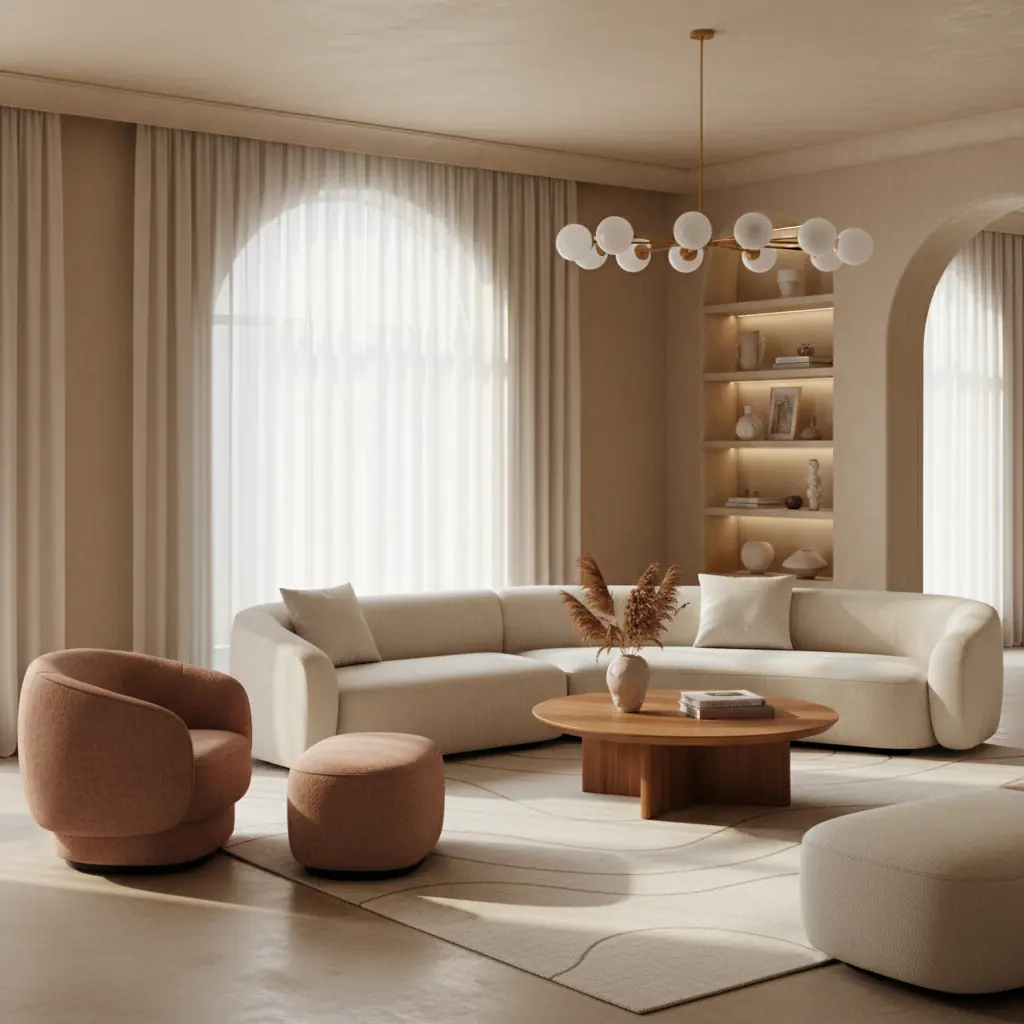
A Revolução Suave: De Ângulos Nítidos ao Fluxo Orgânico
Por mais de uma década, os interiores contemporâneos foram definidos por uma estrita adesão à geometria. Pense em linhas duras e limpas: sofás quadrados, mesas de centro retangulares, prateleiras minimalistas de borda reta e peças de destaque com cantos afiados. Essa era, caracterizada pela preferência por precisão e austeridade, está recuando graciosamente. Em 2026, uma estética mais suave e convidativa assumiu o centro do palco: as curvas estão por toda parte, remodelando nossos espaços de convivência com seu abraço gentil.
Isso é mais do que apenas uma mudança passageira; é uma profunda evolução do design. De sofás serpenteados que convidam ao descanso a mesas de jantar ovais que promovem a conexão, e de portas sutilmente arqueadas a mesas de centro divertidas em formato de rim, a transição do angular para o orgânico é inegável. Não se trata apenas de uma tendência cíclica, embora as oscilações do pêndulo do design entre extremos a cada 8-12 anos sejam certamente parte da equação. Pelo contrário, reflete um anseio cultural mais profundo por conforto, autenticidade e um afastamento da rigidez penetrante de nossas vidas digitais. Após anos otimizando cada aspecto de nossa existência – do tempo de tela e horários às métricas de produtividade – há um desejo coletivo por suavidade, calor e humanidade em nossos ambientes físicos. As curvas, com sua graça inerente, entregam isso sem sacrificar um pingo de sofisticação.
O resultado imediato? Interiores que parecem inerentemente acessíveis, verdadeiramente habitados e profundamente confortáveis, em vez de intimidantemente perfeitos ou estéril como um showroom. Um sofá curvo não apenas parece bom; ele estende um convite aberto para se aconchegar, relaxar e ficar por um tempo. Em contraste, uma peça rígida e retangular, embora talvez esteticamente agradável, muitas vezes comunica uma diretriz mais formal de "admirar à distância". Essa revolução suave marca um retorno a espaços que nutrem a alma tanto quanto agradam aos olhos.
A Psicologia Profunda Por Trás da Nossa Atração por Curvas
Além da mera estética, nossa inclinação por formas curvas está profundamente enraizada em nossa psicologia humana. Há um respaldo científico substancial para o porquê encontramos formas orgânicas tão atraentes. Estudos em psicologia ambiental demonstram consistentemente que as pessoas percebem espaços e móveis curvos como inerentemente mais acolhedores, seguros e significativamente mais relaxantes do que ambientes dominados por geometrias nítidas e angulares. Isso não é apenas uma questão de preferência; é um resquício evolutivo. Nossos cérebros primais associam ângulos agudos a ameaças potenciais – um predador à espreita, uma rocha irregular ou uma arma pontiaguda. As curvas, por outro lado, sinalizam conforto, abertura e segurança, reminiscentes de paisagens naturais, da forma humana ou do abraço protetor de um útero.
**Ponto de Dados 1:** Pesquisas publicadas no _Journal of Environmental Psychology_ descobriram que ambientes com predominância de móveis curvos foram avaliados, em média, como **20% mais atraentes e relaxantes** pelos participantes em comparação com seus equivalentes angulares.
Móveis curvos também desempenham um papel sutil, mas poderoso, no aprimoramento das dinâmicas sociais dentro de um espaço. Imagine um sofá retangular tradicional que força os ocupantes a uma linha reta, muitas vezes resultando em desconfortáveis torções de pescoço para manter o contato visual. Um sofá arredondado ou serpenteado, por seu próprio design, naturalmente direciona as pessoas umas para as outras, incentivando uma conversa mais íntima e promovendo um senso de conexão. Da mesma forma, uma mesa de jantar redonda é um equalizador social; ela elimina a hierarquia tradicional da "cabeça da mesa", garantindo que todos se sintam igualmente incluídos e tornando cada assento o melhor assento. Essas não são apenas pequenas distinções estéticas; são escolhas poderosas de design que moldam ativamente como as pessoas se comportam, interagem e se sentem dentro de um ambiente. Esse conforto subconsciente e o incentivo ao engajamento social são razões centrais pelas quais as formas orgânicas ressoam tão profundamente com nosso desejo por ambientes acolhedores.
A Conexão Biofílica: A Influência da Natureza no Design Curvo
O aumento da popularidade dos móveis curvos está intrinsecamente ligado ao crescente movimento do design biofílico. A biofilia, a tendência humana inata de se conectar com a natureza, encontra uma expressão perfeita nas formas orgânicas. A natureza raramente nos apresenta linhas retas perfeitas ou ângulos afiados; em vez disso, oferece as ondulações suaves de colinas, as curvas fluidas de rios, as formas arredondadas de pedras e o arco suave de um galho de árvore. Ao introduzir curvas em nossas casas, trazemos inconscientemente elementos do mundo natural para dentro, criando espaços que parecem mais harmoniosos, calmantes e profundamente conectados ao ambiente.
Essa conexão com a natureza vai além da forma. Ela influencia as escolhas de materiais, paletas de cores e até mesmo o design de iluminação, todos trabalhando em conjunto para criar uma experiência sensorial holística. Móveis curvos frequentemente combinam lindamente com materiais naturais como madeira, pedra, linho e lã, ampliando ainda mais o efeito biofílico. Integrar curvas em sua casa é uma maneira tangível de criar um "espaço analógico" – um refúgio do mundo digitalizado e áspero, promovendo uma sensação de paz e bem-estar. Para mais informações sobre como criar esses refúgios, explore nosso guia sobre [designing analog spaces](/blog/analog-spaces-tech-free-rooms).
**Ponto de Dados 2:** Estudos em neurociência ambiental indicaram que a exposição a formas e padrões naturais, incluindo curvas suaves, pode reduzir marcadores de estresse fisiológico em até **10%** e melhorar a função cognitiva, sublinhando os benefícios de bem-estar do design biofílico.
Destaque para Peças-Chave que Impulsionam a Tendência de Móveis Curvos
O renascimento das formas orgânicas é evidente em quase todas as categorias de móveis, com várias peças heroicas liderando o caminho.
### O Icônico Sofá Curvo
O sofá curvo é, sem dúvida, a peça central indiscutível desse movimento, agindo como um centro de gravidade para todo o design do ambiente. Não são apenas sofás tradicionais com bordas arredondadas; eles abrangem um espectro de designs, desde sutis crescentes até dramáticas serpentinas e arranjos modulares. Marcas como a atemporal Ligne Roset (cujo sofá Togo permanece um ícone de conforto orgânico), CB2, Article e até mesmo oficinas personalizadas, agora oferecem uma impressionante variedade de estilos. Você encontrará de tudo, desde sofás crescentes de peça única até seccionais expansivos e de vários segmentos que permitem configurações flexíveis. Os preços variam amplamente, tipicamente de $1.200 para um sofá curvo de destaque menor e bem projetado, a mais de $8.000 para peças modulares de design de alta qualidade. O ponto ideal para uma excepcional relação qualidade-preço, muitas vezes apresentando estofamento durável em uma estrutura de madeira maciça, geralmente fica na faixa de $2.000 a $3.500. Ao planejar seu layout, ferramentas como Habitas podem ajudá-lo a visualizar como diferentes configurações de sofá curvo se encaixarão em seu ambiente real, ajudando-o a tomar decisões informadas antes de comprar.
### Espelhos Arqueados: Grande Impacto, Baixo Compromisso
Se um sofá grandioso parece um salto muito grande, um espelho arqueado oferece um ponto de entrada de alto impacto, mas com relativamente baixo compromisso, na estética curva. Um único espelho de chão arqueado ($150-$600) pode instantaneamente suavizar os ângulos de todo um ambiente, refletindo a luz e adicionando uma sensação de altura elegante. Seja casualmente apoiado contra uma parede na sala de estar, agraciando uma entrada ou ancorando um quarto, esses espelhos transformam superfícies planas em elementos esculturais. Sua curva sutil introduz um detalhe arquitetônico clássico que complementa vários estilos de design.
### Mesas de Jantar Redondas: Promovendo a Conexão
A mesa de jantar redonda fez um retorno significativo, celebrada por sua capacidade de promover conversas íntimas e eliminar assentos hierárquicos. Marcas como West Elm, Crate & Barrel e reproduções de mesas Saarinen de meados do século oferecem uma ampla seleção, com preços que variam tipicamente de $800 a $3.000, dependendo dos materiais e do tamanho. Elas são particularmente eficazes em espaços de jantar menores, pois a ausência de cantos afiados pode fazer com que um ambiente pareça menos apertado e permita uma navegação mais fácil.
### Mesas de Centro em Formato de Rim e Orgânicas
Antes uma charmosa relíquia de meados do século, a mesa de centro em formato de rim (ou outras formas orgânicas e livres) está de volta com força total. As interpretações modernas apresentam materiais sofisticados como travertino cremoso, vidro canelado delicado, laca fosca elegante e nogueira quente. Essas mesas servem como pontos focais esculturais, injetando personalidade e uma sensibilidade artística em qualquer área de estar. Suas formas assimétricas proporcionam um contraponto suave a arranjos de assentos mais estruturados.
### Além das Grandes Peças: Integrando Curvas Menores
Para aqueles com orçamento mais apertado ou simplesmente testando as águas, começar com acessórios menores é uma excelente estratégia. Introduza a linguagem das curvas com almofadas redondas, vasos de cerâmica ou vidro lindamente curvos, e bandejas ovais ou circulares. Essas adições sutis introduzem formas orgânicas sem exigir um grande investimento em móveis, permitindo que você construa gradualmente seu conforto com a tendência.
Misturando Mundos: Combinando Curvas com Móveis de Linha Reta Existentes
Você absolutamente não precisa reformar sua casa inteira para abraçar a tendência de móveis curvos. Na verdade, alguns dos ambientes mais atraentes e visualmente interessantes combinam com maestria linhas retas e curvas. A chave é equilíbrio e intencionalidade. Uma regra prática útil é permitir que uma forma domine sutilmente – cerca de 60-70% de suas peças principais – e usar a outra como um contraste ponderado.
Imagine um sofá curvo impressionante posicionado contra uma estante elegante e de linha reta. Ou uma substancial mesa de jantar redonda fornecendo uma âncora suave em uma cozinha definida por armários lineares. Essas justaposições criam tensão visual e profundidade, evitando que um ambiente pareça muito rígido ou muito amorfo. Evite o erro comum de agrupar todas as suas peças curvas em uma área e todas as suas peças angulares em outra; em vez disso, distribua-as cuidadosamente para que o olhar flua suavemente pelo espaço. Um gracioso abajur de chão curvo ao lado de uma mesa lateral retangular, ou um espelho redondo pendurado acima de uma mesa console reta, estabelece um delicioso diálogo visual entre formas opostas. Essa integração harmoniosa impede que um espaço se torne monótono, convidando o olhar a explorar diferentes texturas e formas.
**Dica Habitas:** É aqui que as ferramentas de design digital se tornam inestimáveis. Habitas permite que você faça upload de fotos do seu ambiente real e posicione virtualmente diferentes peças curvas – sofás, espelhos, mesas – ao lado de seus móveis de linha reta existentes. Você pode experimentar várias combinações, visualizar como elas interagem e gerar renderizações realistas do seu espaço renovado antes de se comprometer com qualquer compra. Isso reduz significativamente o risco de erros de design caros e ajuda você a alcançar uma estética perfeitamente equilibrada.
Compreendendo o Investimento: O Que Esperar dos Preços
É uma consideração importante que os móveis curvos, devido às suas complexidades inerentes de fabricação, geralmente têm um preço ligeiramente mais alto do que peças equivalentes de linha reta. Em média, você pode esperar pagar **15-30% a mais** por um item curvo. Esse prêmio decorre de vários fatores: dobrar estruturas de madeira para especificações precisas, criar almofadas com formatos personalizados e adaptar painéis de estofamento curvos, tudo isso requer mão de obra, maquinário mais especializado e, muitas vezes, mais desperdício de material durante a produção. Por exemplo, um sofá de três lugares de linha reta de alta qualidade pode custar $1.500, enquanto uma versão curva comparável poderia ficar na faixa de $1.800-$2.000.
**Ponto de Dados 3:** A análise de mercado indica que, embora o prêmio de custo exista, ele está diminuindo. Impulsionados por um crescimento de **15% ano a ano** no interesse do consumidor por peças de móveis curvos desde 2024, os fabricantes estão investindo em novas ferramentas e processos, sugerindo que esses itens se tornarão mais acessíveis com o tempo.
O prêmio de custo está, no entanto, diminuindo gradualmente à medida que a demanda por formas orgânicas cresce e mais fabricantes equipam suas linhas de produção para designs curvos. Se o orçamento for uma preocupação primordial, uma abordagem estratégica é fundamental. Invista nas peças heroicas que realmente definem o ambiente – tipicamente o sofá ou a mesa de jantar – em suas iterações curvas. Para móveis secundários, como mesas laterais, consoles de mídia e mesas de trabalho, optar por formas mais simples e de linha reta pode ajudar a equilibrar seus gastos, ao mesmo tempo em que alcança um visual lindamente curado que se inclina para a estética curva. Lembre-se, o objetivo é a integração cuidadosa, não uma abordagem de tudo ou nada.
Escolhendo as Curvas Certas para o Seu Espaço
Integrar curvas de forma eficaz não se trata apenas de comprar um sofá arredondado; trata-se de entender a escala, a proporção e como essas formas interagem com as dimensões específicas do seu ambiente.
**Considere o Tamanho do Ambiente:** Em espaços maiores e de plano aberto, sofás serpenteados dramáticos ou múltiplos módulos curvos podem criar zonas distintas e guiar o fluxo. Em ambientes menores, no entanto, uma única cadeira de destaque curva e elegante, um espelho arqueado ou uma mesa de centro redonda podem introduzir suavidade sem sobrecarregar o espaço. Uma mesa de jantar redonda, por exemplo, muitas vezes parece menos volumosa do que uma retangular em uma área de jantar compacta.
**A Proporção é Fundamental:** Certifique-se de que as curvas que você introduz sejam proporcionais a outros elementos no ambiente. Um sofá curvo maciço e fortemente estofado pode sobrepujar um console delicado e de pernas retas. Por outro lado, um minúsculo pufe redondo pode se perder em um ambiente com arquitetura grandiosa e angular. Use ferramentas como Habitas para visualizar essas proporções e garantir que tudo pareça harmonioso.
**Fluxo de Tráfego:** As curvas são excelentes para melhorar o fluxo de um ambiente. Um sofá seccional curvo pode direcionar naturalmente o tráfego ao seu redor, criando um caminho mais intuitivo. Sem cantos afiados para navegar, o movimento parece mais suave e fluido, melhorando o conforto e a usabilidade geral do espaço.
Materiais e Texturas: Realçando a Suavidade das Curvas
A beleza dos móveis curvos é frequentemente amplificada pelos materiais e texturas escolhidos para seu acabamento. Essas escolhas desempenham um papel crucial no realce da suavidade inerente e da natureza convidativa das formas orgânicas.
**Estofamento:** Para sofás e cadeiras curvos, considere tecidos com texturas macias como _bouclé_, veludo, _chenille_ ou linhos ricamente texturizados. Esses materiais não só são luxuosos ao toque, mas também absorvem a luz de forma diferente, realçando os contornos suaves dos móveis. Evite tecidos excessivamente rígidos ou estampados que possam diminuir a fluidez das curvas.
**Acabamentos em Madeira:** A madeira natural, especialmente em tons mais claros como carvalho ou nogueira, complementa lindamente as formas curvas. Procure peças com estruturas de madeira dobrada expostas ou bordas arredondadas que destaquem os veios e o calor do material. Um acabamento fosco ou acetinado na madeira pode realçar ainda mais seu apelo orgânico, em contraste com uma superfície de alto brilho e reflexiva.
**Pedra e Metal:** Para mesas de centro, mesas laterais ou detalhes decorativos, pedras naturais como travertino, mármore ou ônix, com seus veios únicos e acabamentos suaves, adicionam um toque de luxo orgânico sofisticado. Metais macios e escovados, como latão ou bronze, também podem introduzir curvas sutis em luminárias ou bases de móveis sem parecerem frios ou industriais.
**Tapetes e Têxteis:** Estenda a estética curva ao seu piso com tapetes redondos ou de formato irregular. Tapetes macios e felpudos em fibras naturais irão ancorar o ambiente e adicionar outra camada de suavidade, realçando a experiência tátil geral.
Estilos de design Que Abraçam Formas Orgânicas
Embora a tendência de móveis curvos seja versátil o suficiente para se integrar a muitas estéticas, certos estilos de design prosperam particularmente com formas orgânicas:
- **Orgânico Moderno:** Este estilo é quase sinônimo de curvas, enfatizando materiais naturais, paletas terrosas e uma mistura perfeita de elementos internos e externos. As curvas são essenciais para alcançar sua sensação fluida e inspirada na natureza. - **Japandi:** Uma fusão do minimalismo japonês e do calor escandinavo, o design Japandi abraça a simplicidade, materiais naturais e curvas sutis para uma estética serena e funcional. Bordas suavemente arredondadas em móveis e linhas limpas e orgânicas são características. Para saber mais sobre essa tendência minimalista, explore [the best interior design styles of 2026](/blog/best-interior-design-styles-2026). - **Luxo Contemporâneo:** Caracterizado por materiais sofisticados, paletas de cores suaves e elegância discreta, o luxo contemporâneo frequentemente utiliza peças curvas esculturais como pontos focais para adicionar suavidade e fluidez a espaços que de outra forma seriam elegantes. - **Revival Art Deco:** Este opulento estilo histórico, conhecido por seus padrões geométricos, cores ricas e materiais luxuosos, também apresentava fortemente curvas e arcos elegantes, tornando-o um ajuste natural para a tendência atual. - **Design Biofílico:** Conforme discutido, essa abordagem defende a conexão com a natureza, tornando as formas orgânicas uma pedra angular.
A Longevidade da Tendência de Móveis Curvos: Moda Passageira ou Mudança Duradoura?
Com qualquer tendência de design proeminente, a pergunta inevitavelmente surge: É uma moda passageira, ou representa uma mudança duradoura na preferência estética? Embora a intensidade do "boom de móveis curvos" possa aumentar e diminuir, o apelo fundamental das formas orgânicas está profundamente enraizado e é improvável que desapareça completamente.
A mudança em direção às curvas não é apenas sobre novidade; é uma resposta aos desejos humanos fundamentais por conforto, conexão e um ambiente de vida mais gentil. Os benefícios psicológicos das curvas – promovendo relaxamento, segurança e interação social – são atemporais. À medida que nossas vidas se tornam cada vez mais digitais e exigentes, a necessidade de espaços que ofereçam descanso e uma conexão com a natureza só se tornará mais forte.
**Ponto de Dados 4:** Previsões da indústria indicam que, embora os móveis angulares sempre tenham seu lugar, a participação de mercado para designs orgânicos e curvos deve aumentar em **25-30% nos próximos cinco anos**, indicando um interesse sustentado em vez de temporário.
Essa tendência também é apoiada por um movimento mais amplo em direção a uma vida mais sustentável e consciente. As formas orgânicas muitas vezes se alinham com o artesanato e o uso de materiais naturais e duradouros, contribuindo para uma sensação de qualidade atemporal em vez de descartabilidade. Portanto, embora iterações específicas de móveis curvos possam evoluir, o princípio subjacente de integrar formas suaves e convidativas em nossas casas veio para ficar, consolidando as curvas como um elemento fundamental do design de interiores moderno por muitos anos.
Perguntas Frequentes
### O que é a tendência de móveis curvos no design de interiores?
A tendência de móveis curvos é uma mudança significativa no design de interiores em direção a formas suaves, orgânicas e arredondadas, afastando-se dos ângulos retos e linhas retas que dominaram na última década. Inclui tudo, desde sofás serpenteados e mesas de jantar redondas até espelhos arqueados e mesas de centro em formato de rim, com o objetivo de criar espaços mais acolhedores, confortáveis e visualmente fluidos.
### Por que formas orgânicas e curvas são populares no design de interiores atualmente?
Formas orgânicas e curvas são populares devido a uma combinação de fatores. Psicologicamente, os humanos percebem as curvas como mais acolhedoras e seguras, uma resposta evolutiva às formas da natureza. Culturalmente, há um anseio pós-digital por suavidade, conforto e uma conexão com a natureza (design biofílico) em nossas casas. As tendências de design também ciclam, com um balanço natural de volta à suavidade após um período de dominância angular.
### Como posso incorporar móveis curvos na minha casa com um orçamento limitado?
Incorporar curvas com um orçamento limitado é possível começando com peças menores e mais acessíveis. Considere almofadas redondas, vasos curvos, bandejas ovais ou um único espelho de chão arqueado. Procure mesas de centro em formato de rim vintage ou de segunda mão, ou considere projetos DIY para pequenos detalhes. Priorize uma peça curva chave, como uma poltrona de destaque, e use acessórios para reforçar o tema em todo o seu espaço.
### A tendência de móveis curvos é uma mudança duradoura no design ou uma moda passageira?
Embora a intensidade de qualquer tendência possa flutuar, a mudança para móveis curvos é amplamente considerada uma mudança duradoura, em vez de uma moda passageira. Seu apelo está enraizado na psicologia humana fundamental (conforto, segurança, conexão com a natureza) e em um desejo cultural mais amplo por espaços de vida mais suaves e autênticos. A versatilidade das curvas e sua integração em vários estilos de design sugerem sua presença contínua no design de interiores por muitos anos.
### Quais estilos de design melhor complementam móveis curvos?
Móveis curvos se integram lindamente com vários estilos de design. São a base do **Orgânico Moderno** e do **Design Biofílico**, realçando suas estéticas inspiradas na natureza. O **Japandi** (fusão japonês-escandinava) usa curvas sutis para um minimalismo sereno. O **Luxo Contemporâneo** frequentemente usa peças curvas esculturais para elegância sofisticada, e o **Revival Art Deco** naturalmente abraça o glamour inerente de arcos e formas orgânicas.
### Como misturar com sucesso móveis curvos e de linha reta em um ambiente?
A chave para misturar móveis curvos e de linha reta é o equilíbrio cuidadoso. Busque que um estilo domine ligeiramente (por exemplo, 60-70% curvas) e use o outro como um acento contrastante. Distribua as formas por todo o ambiente, em vez de isolá-las. Por exemplo, um sofá curvo pode contrastar lindamente com uma estante linear, ou uma mesa de jantar redonda pode suavizar uma cozinha com armários de linhas retas. Ferramentas de visualização como Habitas podem ajudá-lo a experimentar diferentes combinações para alcançar resultados harmoniosos.