Dominando a Iluminação em Camadas: Um Guia Cômodo por Cômodo para Sua Casa
Como usar iluminação ambiente, de tarefa e de destaque para cômodos que parecem bem planejados.
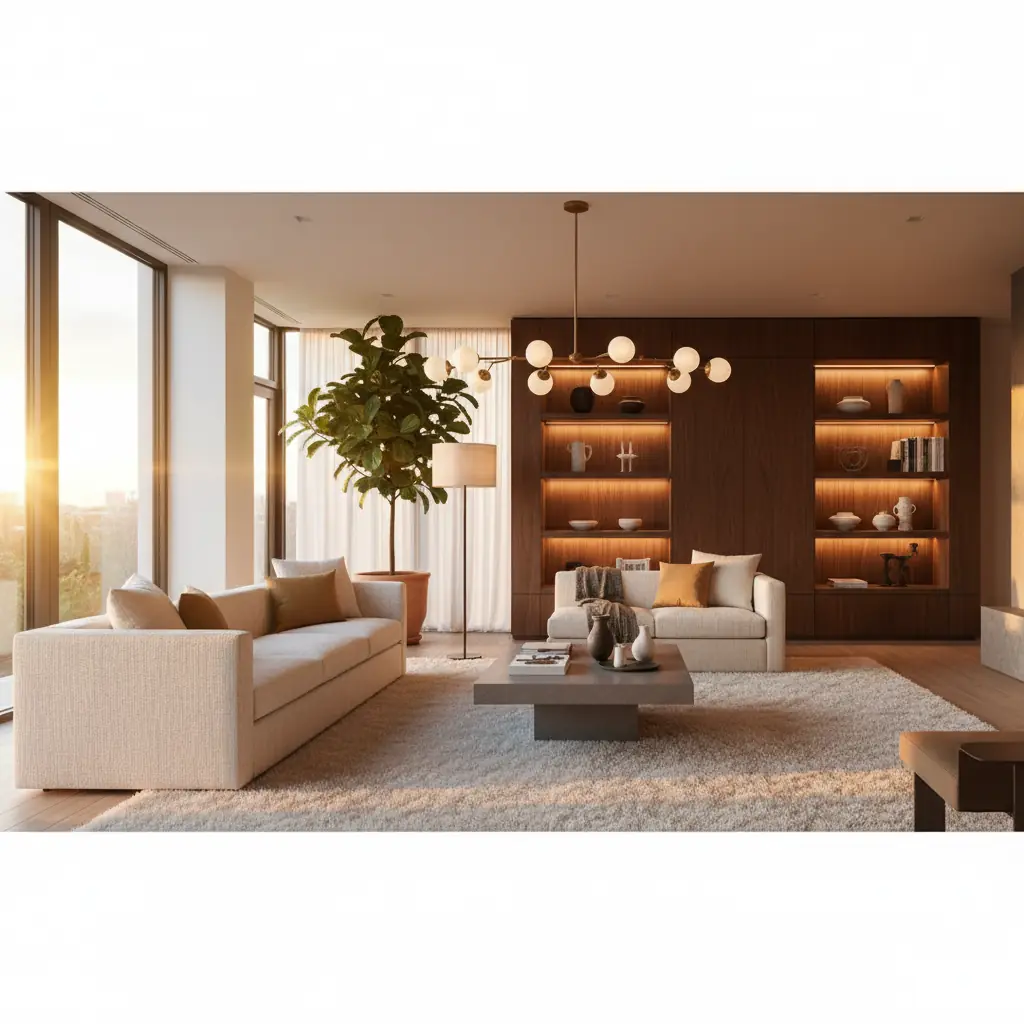
Por Que a Iluminação É o Elemento Mais Subestimado no design de Interiores?
Você pode investir nos móveis mais luxuosos, aplicar a [paleta de cores](/blog/ai-color-palette-generator) perfeita e curar uma decoração requintada, mas ainda sentir uma sutil insatisfação com um cômodo. O culpado, muitas vezes negligenciado? Iluminação inadequada. Uma única luminária de teto, forte e áspera, projeta uma luz plana e pouco lisonjeira que pode fazer até o espaço mais caro parecer pouco convidativo, quase institucional. Em contraste, a iluminação intencionalmente em camadas faz o mesmo cômodo parecer acolhedor, dinâmico e verdadeiramente mágico.
Isso não é apenas uma preferência estética; é um princípio fundamental do design de interiores profissional. Enquanto os proprietários geralmente alocam um orçamento mínimo para iluminação, designers profissionais frequentemente dedicam 10-15% do orçamento de um projeto apenas para soluções de iluminação abrangentes. Essa lacuna significativa é o maior diferencial entre resultados amadores e profissionais, impactando diretamente a funcionalidade, o humor e o valor percebido geral de um cômodo. Estudos mostram que casas com iluminação cuidadosamente projetada frequentemente alcançam um **valor percebido 5-10% maior** no mercado, atraindo mais potenciais compradores e criando uma experiência de vida mais positiva para os ocupantes.
Além da estética, a iluminação influencia profundamente nosso bem-estar. A má iluminação pode levar à fadiga ocular, dores de cabeça e até mesmo perturbar nossos ritmos circadianos, afetando o sono e o humor. Investir em um esquema de iluminação bem planejado é um investimento em seu conforto, produtividade e qualidade de vida geral dentro de sua casa.
Compreendendo o Sistema de Iluminação de Três Camadas
A pedra angular de qualquer design de iluminação eficaz é o "sistema de três camadas", que garante um ambiente equilibrado, funcional e esteticamente agradável. Imagine pintar com luz, adicionando profundidade e dimensão em vez de apenas inundar um espaço com brilho uniforme.
### 1. Iluminação Ambiente: A Fundação
A iluminação ambiente fornece a iluminação geral para um cômodo, definindo o clima geral e garantindo que você possa navegar no espaço com segurança e conforto. É a principal fonte de luz que impede que um cômodo pareça uma caverna.
**Luminárias Comuns:**
- **Iluminação Embutida (Downlights):** Integradas ao teto, oferecendo luz geral limpa e discreta. Melhor quando combinadas com outras camadas para evitar um efeito de "pista de pouso". - **Pendentes e Lustres:** Frequentemente servem como fontes de luz ambiente e pontos focais decorativos, particularmente em salas de estar, salas de jantar e entradas. - **Plafons e Semi-Plafons:** Bons para tetos mais baixos onde os pendentes podem ficar muito baixos, fornecendo luz difusa do teto. - **Abajures de Chão (com difusores):** Podem contribuir significativamente para a luz ambiente, especialmente em áreas de estar, criando poças de iluminação suave. - **Iluminação de Enseada (Cove Lighting) e Iluminação de Sanca (Valance Lighting):** Fontes de luz ocultas que refletem a luz no teto ou nas paredes, proporcionando um brilho suave e uniforme.
**Considerações Principais:**
- **Distribuição Uniforme:** Busque um nível consistente de luz em todo o cômodo, sem sombras fortes. - **Dimerização:** Crucial para ajustar o brilho geral para se adequar a diferentes horas do dia ou atividades.
### 2. Iluminação de Tarefa: Iluminando a Atividade
A iluminação de tarefa é uma iluminação focada projetada para ajudá-lo a realizar atividades específicas com segurança e eficiência, reduzindo a fadiga ocular e aumentando a produtividade. É aqui que a precisão e a praticidade entram em jogo.
**Luminárias Comuns:**
- **Luminárias de Mesa:** Essenciais para home offices e cantos de estudo, fornecendo luz direta nas superfícies de trabalho. - **Iluminação Sob Armários:** Uma virada de jogo em cozinhas, iluminando bancadas para a preparação de alimentos. - **Luminárias de Leitura (Abajures de Mesa e Arandelas):** Posicionadas ao lado de camas ou poltronas, oferecendo luz focada para leitura. - **Pendentes (sobre ilhas/mesas):** Quando posicionados corretamente, podem funcionar como iluminação de tarefa para cozinhar ou jantar. - **Spots Ajustáveis:** Podem ser direcionados para iluminar zonas de trabalho específicas.
**Considerações Principais:**
- **Posicionamento:** Diretamente sobre ou ao lado da área de trabalho, evitando sombras projetadas pelo seu corpo. - **Brilho:** Suficientemente brilhante para evitar fadiga ocular, geralmente mais brilhante do que a luz ambiente. - **Direcionalidade:** Deve ser ajustável ou precisamente direcionada.
### 3. Iluminação de Destaque: Adicionando Drama e Foco
A iluminação de destaque é a camada artística, usada para realçar características arquitetônicas específicas, obras de arte, plantas ou objetos decorativos. Ela cria interesse visual, adiciona drama e define pontos focais dentro de um cômodo. É aqui que um cômodo realmente começa a parecer "projetado".
**Luminárias Comuns:**
- **Luminárias de Quadro:** Projetadas especificamente para iluminar obras de arte de parede. - **Uplights:** Colocadas no chão para iluminar uma parede, planta ou coluna. - **Fitas de LED:** Versáteis para retroiluminação de TVs, prateleiras, sancas ou rodapés em cozinhas. - **Iluminação de Trilho (com spots):** Permite o direcionamento flexível para realçar vários elementos. - **Luzes Embutidas de Feixe Estreito:** Podem ser usadas para apontar características específicas.
**Considerações Principais:**
- **Foco:** Deve ser três vezes mais brilhante do que a luz ambiente na área circundante para efetivamente atrair o olhar. - **Ângulo:** O ângulo da luz pode mudar drasticamente o efeito (por exemplo, iluminar uma parede texturizada de raspão versus um foco direto). - **Sutileza:** Frequentemente funciona melhor quando a própria luminária está escondida, permitindo que o efeito da luz seja a estrela.
Todo cômodo bem projetado exige pelo menos duas dessas camadas, com os espaços mais sofisticados incorporando todas as três. A interação inteligente entre essas camadas cria profundidade, clima, flexibilidade e a sensação inegável de que um espaço foi meticulosamente projetado, em vez de meramente iluminado.
Guia de design de Iluminação Cômodo por Cômodo
Vamos mergulhar em estratégias específicas para cada área chave da sua casa, transformando-as de meramente funcionais para verdadeiramente extraordinárias.
### Iluminação da Sala de Estar: Crafting an Inviting Atmosphere
A sala de estar é frequentemente o coração da casa, um espaço para relaxamento, entretenimento e diversas atividades. Portanto, sua iluminação deve ser altamente adaptável.
- **Evite a Luminária Única no Teto:** Uma única luz suspensa é o arqui-inimiga de uma sala de estar aconchegante. Em vez disso, busque múltiplas poças de luz quente em alturas variadas. - **Ambiente:** Comece com uma luminária decorativa central, como um elegante [pendente ou lustre](/blog/best-interior-design-styles-2026) (com dimmer, sempre!) para iluminação geral. Complemente com um ou dois abajures de chão estrategicamente posicionados, talvez em um canto ou ao lado de um sofá, para proporcionar um brilho ambiente suave. As luzes embutidas com feixes amplos também podem contribuir para a luz ambiente geral, mas devem ser usadas com moderação e sempre com dimmers. - **Tarefa:** Incorpore abajures de mesa em mesas laterais e mesas de console. Estes não só fornecem luz focada para leitura ou conversas, mas também adicionam peso visual e calor. Se você tem um canto de leitura, um abajur de chão com braço ajustável dedicado é ideal. - **Destaque:** Use luminárias de quadro para iluminar obras de arte, fitas de LED atrás de uma TV para reduzir o cansaço visual e criar um ambiente moderno, ou uplights para realçar plantas internas ou paredes texturizadas. Mesmo um pequeno abajur de mesa em uma estante pode atuar como iluminação de destaque. - **O Controle É Fundamental:** Toda fonte de luz em sua sala de estar deve estar em um interruptor dimmer ou integrada a um sistema de casa inteligente. Isso permite que você transite sem esforço de uma iluminação brilhante e energética para reuniões sociais para uma iluminação suave e íntima para uma noite tranquila. Imagine transformar o clima da sua sala de estar com um único comando de voz, um recurso prontamente acessível através da integração moderna de casas inteligentes.
O objetivo é emular a atmosfera aconchegante e em camadas encontrada nos melhores lobbies de hotéis – múltiplos pontos de luz criando uma sensação de profundidade, calor e sofisticação.
### Iluminação da Cozinha: Brilho para a Criatividade Culinária
A cozinha é um espaço exigente, que requer tanto iluminação de tarefa forte para a preparação de alimentos quanto luz ambiente agradável para jantar e socializar.
- **Ambiente:** Downlights embutidos são comuns para a iluminação geral da cozinha, mas eles não devem ser a única fonte. Seu corpo frequentemente projeta sombras nas bancadas ao trabalhar diretamente sob eles. Complemente com pendentes decorativos sobre uma ilha ou península, que podem fornecer tanto luz ambiente quanto um ponto focal elegante. Plafons também podem ser eficazes para iluminação geral em cozinhas menores. - **Tarefa:** As **fitas de LED sob os armários** são a atualização de iluminação de cozinha de maior impacto. Elas iluminam as bancadas precisamente onde você trabalha, eliminando sombras e tornando a preparação de alimentos mais segura e agradável. Considere a iluminação interna de armários para armários com frente de vidro para exibir a louça lindamente, ou iluminação de rodapé para um efeito de luz noturna moderno e sutil. - **Destaque:** Fitas de LED também podem ser usadas acima dos armários para realçar detalhes arquitetônicos ou ao longo das prateleiras para fins decorativos. Pequenas luzes direcionais (puck lights) podem iluminar áreas específicas, como um cantinho de café embutido ou um nicho de exibição. - **Estatísticas e Estratégia:** Uma reforma de cozinha típica em 2026 pode variar de **$25.000 a $75.000** para uma remodelação abrangente. Alocar uma parte razoável desse orçamento para uma iluminação bem projetada aumenta significativamente a funcionalidade e o valor percebido, tornando-o um investimento inteligente. Lembre-se, uma boa iluminação pode fazer com que até uma cozinha modesta pareça de alta qualidade.
Para mais inspiração em atualizações práticas e elegantes para cozinhas, confira nosso guia sobre [ideias de reforma de banheiro](/blog/bathroom-remodel-ideas) – muitos princípios de iluminação se aplicam!
### Iluminação do Quarto: Seu Santuário Pessoal
Os quartos devem ser refúgios de descanso e relaxamento, e a iluminação desempenha um papel crucial na criação dessa atmosfera serena. Luzes de teto fortes nunca devem ser a principal fonte.
- **Ambiente:** Em vez de uma luminária central brilhante, opte por uma luz ambiente suave e indireta. Isso pode ser alcançado através de um abajur de chão com um abajur opaco, um plafon com um brilho difuso, ou até mesmo fitas de LED escondidas atrás de uma cabeceira ou sanca. - **Tarefa:** **A iluminação de cabeceira é primordial.** Arandelas de parede com braço ajustável são excelentes, pois liberam espaço na mesa de cabeceira e podem ser precisamente direcionadas. Alternativamente, abajures de mesa com cúpulas de tecido em tons quentes proporcionam uma luz suave e convidativa para leitura ou ambiente geral. - **Destaque:** Fitas de LED atrás da cabeceira criam um brilho suave e etéreo, perfeito para relaxar. Pequenos uplights realçando uma planta decorativa ou uma peça de arte podem adicionar um toque de sofisticação. - **A Temperatura de Cor Importa Imensamente:** Para quartos, priorize a luz branca quente, especificamente 2700K (Kelvin) ou menos. Lâmpadas de temperatura de luz diurna mais frias (3500K-5000K) podem suprimir a produção de melatonina, interferindo no seu ciclo natural de sono e dificultando o relaxamento. A luz quente sinaliza ao seu corpo que é hora de relaxar e se preparar para o descanso. - **Controle para Conforto:** Dimmers são inegociáveis no quarto. Ser capaz de ajustar a luz de brilhante o suficiente para encontrar meias para um brilho suave para relaxar é essencial. Considere lâmpadas inteligentes que permitem alterar a temperatura da cor ao longo do dia, aquecendo gradualmente à medida que a noite se aproxima.
### Iluminação da Sala de Jantar: Definindo o Clima para Reuniões
A sala de jantar é um espaço para refeições compartilhadas e conversas, e sua iluminação deve realçar tanto a comida quanto a companhia.
- **Ambiente e Ponto Focal:** Um pendente ou lustre imponente centrado sobre a mesa de jantar serve como a principal fonte de luz ambiente e um elemento decorativo crucial. Seu tamanho deve ser proporcional à mesa. **Sempre o coloque em um dimmer!** - **Tarefa (Sutil):** Embora a luminária central frequentemente lide com a maior parte da iluminação da mesa, adicionar pequenas luzes embutidas ou arandelas discretas pode ajudar a preencher quaisquer cantos escuros ou realçar um aparador. - **Destaque:** Luminárias de quadro em obras de arte ou arandelas decorativas podem adicionar calor e realçar a decoração do cômodo, criando uma atmosfera mais íntima e sofisticada. Considere iluminar um aparador ou armário de exibição com fitas de LED discretas.
### Iluminação do Banheiro: Funcionalidade Encontra Serenidade de Spa
A iluminação do banheiro precisa ser brilhante e funcional para a higiene pessoal, mas suave e relaxante para descontrair.
- **Ambiente:** Um plafon central ou luzes embutidas fornecem iluminação geral. Evite uma única luz de teto forte diretamente acima do espelho, que pode criar sombras pouco lisonjeiras. - **Tarefa:** **A iluminação da bancada é crítica.** Arandelas montadas ao nível dos olhos em ambos os lados do espelho (ou uma luminária horizontal acima do espelho que projeta luz uniformemente no rosto) são ideais para aplicação de maquiagem, barbear e cuidados com a pele. Procure luminárias que emitam luz difusa e uniforme, sem ofuscamento. - **Destaque:** Fitas de LED à prova d'água podem ser instaladas ao redor de um nicho de chuveiro, sob uma bancada flutuante, ou ao longo da borda de uma banheira de imersão para uma atmosfera luxuosa e semelhante a um spa. Pequenas luzes embutidas diretamente sobre a área do chuveiro ou banheira podem adicionar um toque dramático. - **Segurança:** Certifique-se de que todas as luminárias do banheiro sejam classificadas para locais úmidos ou molhados, dependendo de sua proximidade com a água.
### Iluminação do Home Office: Aumentando a Produtividade e o Bem-Estar
Com mais pessoas trabalhando em home office, um escritório bem iluminado é essencial para a produtividade, o foco e a prevenção da fadiga ocular.
- **Ambiente:** Uma fonte de luz geral no teto, como uma luminária de teto difusa ou iluminação embutida, fornece uma base confortável. Certifique-se de que seja brilhante o suficiente para banir sombras, mas não tão brilhante a ponto de causar ofuscamento. - **Tarefa:** Uma luminária de mesa de alta qualidade é inegociável. Ela deve fornecer luz focada e ajustável na sua superfície de trabalho, idealmente com opções de brilho e temperatura de cor. Posicione-a para evitar o brilho na tela do seu computador. Estudos mostram que a iluminação adequada em um home office pode aumentar a produtividade em até **15-20%**, tornando uma boa iluminação de tarefa um investimento claro. - **Destaque:** A iluminação de destaque mínima geralmente é suficiente aqui. Talvez uma pequena luminária de quadro sobre uma imagem motivacional ou um simples uplight em um canto para suavizar as bordas do cômodo. O foco aqui é na função.
### Iluminação de Corredores e Entradas: Um Caloroso Boas-Vindas em Casa
Esses espaços de transição definem o tom da sua casa e precisam ser acolhedores e seguros.
- **Ambiente:** Para entradas, um pendente ou lustre decorativo cria uma forte primeira impressão. Em corredores, uma série de plafons ou luzes embutidas espaçadas uniformemente fornece iluminação adequada sem sentir-se desordenada. - **Destaque:** Arandelas ao longo de um corredor podem adicionar interesse arquitetônico e um brilho suave. Luminárias de quadro ou luzes embutidas de feixe estreito podem realçar obras de arte ao longo do corredor, transformando um espaço utilitário em uma galeria.
Princípios Gerais de Iluminação para um Lar Harmonioso
Além dos cômodos específicos, vários princípios abrangentes se aplicam a todo o design de iluminação.
### O Poder da Temperatura de Cor (Escala Kelvin)
A temperatura de cor, medida em Kelvin (K), descreve o calor ou a frieza de uma fonte de luz.
- **Branco Quente (2200K-3000K):** Emite um brilho amarelado, semelhante a lâmpadas incandescentes ou luz de vela. Ideal para quartos, salas de estar e salas de jantar onde o relaxamento e o aconchego são desejados. - **Branco Frio / Branco Neutro (3500K-4500K):** Mais brilhante e mais energético, mais próximo da luz natural do dia. Bom para cozinhas, banheiros (especialmente áreas de bancada), home offices e áreas de serviço onde o desempenho da tarefa é fundamental. - **Luz do Dia (5000K-6500K):** Uma luz branca-azulada muito brilhante. Embora imite a luz natural do dia, pode parecer dura e clínica em ambientes residenciais. Melhor usada em áreas de tarefa muito específicas ou para aplicações terapêuticas, não para iluminação geral da casa.
Um erro comum é usar uma única temperatura de cor em toda a casa. A variação estratégica permite que você adapte o clima de cada espaço.
### O Indispensável Dimmer e o Crescimento da Iluminação Inteligente
Já mencionamos repetidamente, mas vale a pena repetir: **cada luminária em sua casa deve estar em um dimmer.** Dimmers proporcionam flexibilidade incomparável, permitindo que você ajuste instantaneamente a intensidade da luz para se adequar a qualquer atividade ou humor.
Indo um passo além, a **iluminação inteligente** oferece ainda mais controle. Com lâmpadas e interruptores inteligentes, você pode:
- Controlar as luzes por comandos de voz ou um aplicativo de smartphone. - Criar agendamentos (por exemplo, luzes diminuindo gradualmente antes de dormir). - Ajustar a temperatura de cor (lâmpadas brancas ajustáveis). - Agrupar luzes e criar "cenas" para diferentes atividades (por exemplo, a cena "Noite de Cinema" diminui a maioria das luzes, liga a retroiluminação da TV). - Mudar para a iluminação LED, especialmente as opções de LED inteligentes, pode reduzir o consumo de energia em até **80%** em comparação com as lâmpadas incandescentes tradicionais, levando a economias significativas na sua conta de eletricidade e a uma pegada ambiental reduzida.
### Estilos de Luminárias e Seu Impacto Estético
As luminárias não são apenas fontes de luz; elas são elementos decorativos cruciais que contribuem para a estética geral da sua casa.
- **Combine Seu Estilo:** Uma luminária de trilho elegante e minimalista parecerá deslocada em uma cozinha rústica de fazenda. Escolha luminárias que complementem sua decoração existente, seja [Art Deco](/blog/art-deco-interior-design), moderna, boêmia ou tradicional. - **Considere a Escala:** Um minúsculo lustre em uma sala de jantar cavernosa parecerá perdido, enquanto um pendente grande demais pode sobrecarregar uma pequena entrada. Sempre considere o tamanho da luminária em relação ao espaço que ela ocupa. - **Materialidade:** Os materiais das suas luminárias – metal, vidro, tecido, madeira – todos contribuem para a experiência sensorial do seu cômodo. Pense em como a luz interage com esses materiais: difundida através de uma cúpula de tecido, refletida por cromo polido ou cintilando através de vidro lapidado.
### Integrando a Luz Natural
Embora este guia se concentre na iluminação artificial, um esquema de iluminação verdadeiramente brilhante harmoniza e aprimora a luz natural do dia.
- **Maximize a Luz do Dia:** Posicione os móveis para evitar bloquear as janelas. Use superfícies claras e reflexivas para fazer a luz natural ricochetear mais profundamente em um cômodo. Cortinas translúcidas podem difundir a luz solar forte sem sacrificar o brilho. - **Complemente, Não Compita:** As luzes artificiais devem ser usadas para complementar a luz natural durante o dia, preenchendo cantos sombrios ou aumentando a iluminação em dias nublados. Ao cair da noite, a iluminação artificial assume gradualmente, garantindo uma transição perfeita.
Veja a Iluminação Transformar Seus Cômodos com Habitas
A complexidade de aplicar diferentes tipos de luz em camadas, selecionar temperaturas de cor apropriadas e escolher luminárias que se alinham com seu estilo pode ser avassaladora. É aqui que plataformas de design impulsionadas por IA como a Habitas realmente se destacam.
Quando você redesenha um cômodo com a Habitas, nossa IA não apenas sugere móveis e decoração; ela integra um plano de iluminação completo em cada design. O plano de execução detalhado especifica os tipos de luminárias (ambiente, tarefa, destaque), posições ideais e temperaturas de cor recomendadas para cada área do seu cômodo. Essa abordagem abrangente significa que você recebe um design de iluminação completo que a maioria dos proprietários só consegue contratando um design de interiores profissional.
Visualizar esses cenários de iluminação complexos, uma tarefa que tradicionalmente leva horas para designers profissionais, pode ser gerado em meros segundos usando plataformas de IA como a Habitas. Isso democratiza o design de alta qualidade, permitindo que você experimente diferentes conceitos de iluminação na foto real do seu cômodo antes de se comprometer com quaisquer compras. Explore as possibilidades e descubra como a Habitas torna o design de interiores de nível profissional acessível a todos. Confira como a IA pode transformar seu espaço com [designs de cômodos gerados por IA realistas](/blog/ai-generated-room-designs-realistic).
Perguntas Frequentes
### Quais são os três principais tipos de iluminação usados no design de interiores?
Os três principais tipos de iluminação são iluminação ambiente, de tarefa e de destaque. A iluminação ambiente fornece iluminação geral para um cômodo, a iluminação de tarefa foca em áreas de atividade específicas, e a iluminação de destaque realça características ou cria efeitos dramáticos. Um cômodo bem projetado habilmente combina essas três tipos para criar profundidade, funcionalidade e ambiente.
### Qual é a melhor temperatura de cor para diferentes cômodos da minha casa?
A "melhor" temperatura de cor depende da função do cômodo e do clima desejado. Para quartos, salas de estar e salas de jantar, a luz branca quente (2200K-3000K) é ideal para criar uma atmosfera aconchegante e relaxante. Para cozinhas, banheiros e home offices, a luz branca neutra ou branca fria (3500K-4500K) é geralmente preferida por sua qualidade mais brilhante e energética, que auxilia em tarefas e visibilidade.
### Quantas fontes de luz uma sala de estar deve ter?
Uma sala de estar deve ter idealmente pelo menos 5-7 fontes de luz para alcançar o zoneamento e a flexibilidade adequados. Isso geralmente inclui uma mistura de fontes ambiente (por exemplo, uma luminária de teto, abajures de chão), iluminação de tarefa (por exemplo, abajures de mesa para leitura) e iluminação de destaque (por exemplo, luminárias de quadro, fitas de LED). O segredo são múltiplos pontos de luz em diferentes alturas, todos controláveis por dimmers, para criar um espaço dinâmico e convidativo.
### Uma má iluminação pode afetar negativamente meu humor e saúde?
Sim, absolutamente. A má iluminação pode ter um impacto negativo significativo no humor, produtividade e saúde. A iluminação insuficiente pode levar à fadiga ocular, dores de cabeça e cansaço. A iluminação forte, fria ou excessivamente brilhante, especialmente em áreas destinadas ao relaxamento, pode perturbar os padrões de sono suprimindo a melatonina, levando a uma má qualidade do sono e afetando o bem-estar geral. Uma boa iluminação, por outro lado, pode melhorar o humor, aumentar a produtividade e apoiar ritmos circadianos saudáveis.
### Qual é a diferença entre lumens e watts ao comprar lâmpadas?
Watts medem a quantidade de energia que uma lâmpada consome, enquanto lumens medem a quantidade total de luz visível emitida pela lâmpada (seu brilho). No passado, as pessoas associavam brilho à potência, mas com lâmpadas LED eficientes em termos de energia, a potência não é mais um indicador preciso de brilho. Sempre procure por lumens ao comparar o quão brilhante uma lâmpada será; contagens de lumens mais altas significam uma luz mais brilhante, independentemente da potência.