Layouts para Salas Longas e Estreitas: 6 Disposições de Móveis por Especialistas
Seis layouts testados para salas de estar longas e estreitas que resolvem o problema do corredor de boliche e criam zonas funcionais.
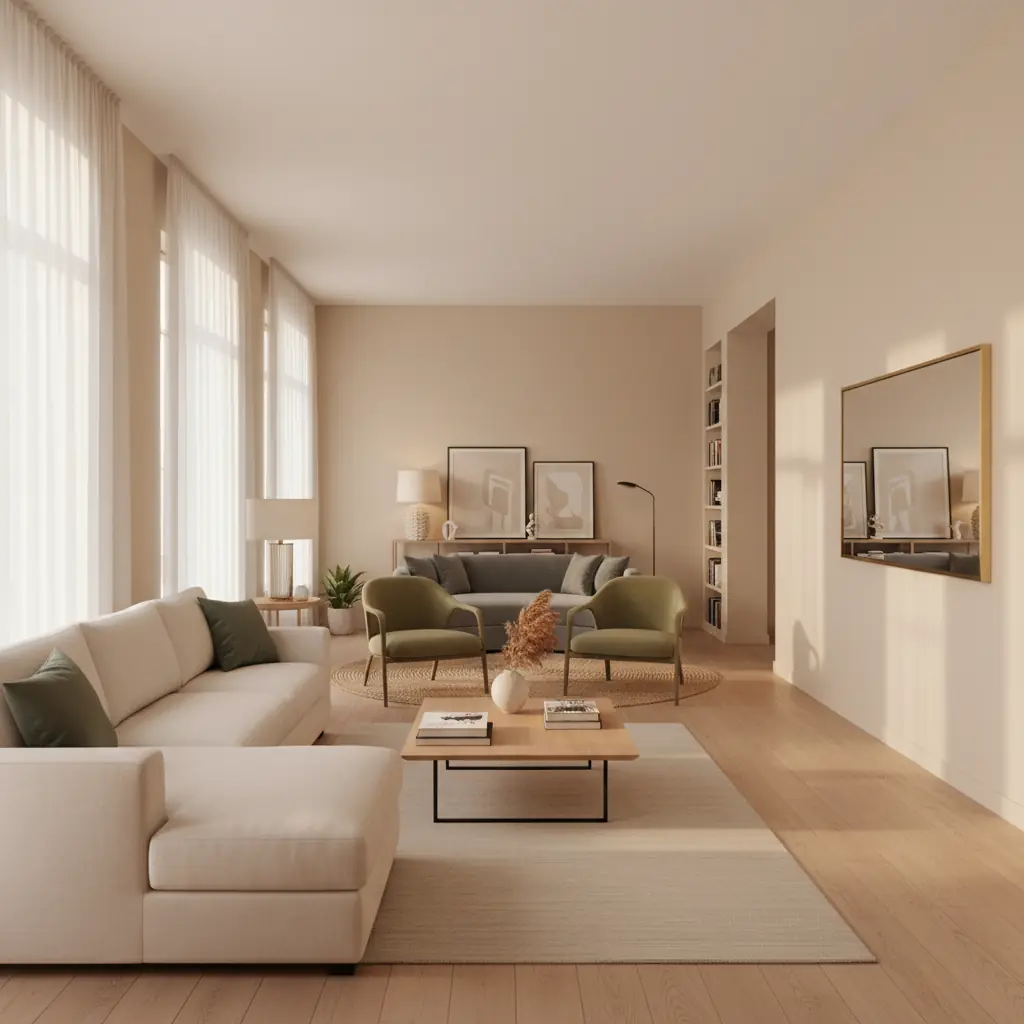
O Problema do Corredor de Boliche: Domando a Sala Longa e Estreita
Salas de estar longas e estreitas são um desafio de design persistente, frequentemente encontradas em apartamentos urbanos, casas geminadas e imóveis mais antigos. Elas apresentam o que os designers carinhosamente (ou nem tanto) chamam de "problema do corredor de boliche" – um espaço que se parece mais com um corredor do que com um local acolhedor para reunir pessoas. O instinto padrão e mais comum é empurrar todos os móveis contra as paredes mais longas, o que ironicamente apenas exacerba o efeito túnel. Um sofá encostado em uma parede longa, de frente para uma TV na parede oposta, cria um corredor visual que faz o ambiente parecer ainda mais estreito e menos convidativo.
A solução principal para esse dilema é contraintuitiva: em vez de empurrar tudo para a periferia, você deve afastar os móveis das paredes e criar zonas distintas ao longo do comprimento do ambiente. Pense em uma sala estreita de 3,60 m por 7,20 m não como um único espaço alongado, mas como duas zonas de 3,60 m por 3,60 m esperando para serem definidas, colocadas uma após a outra. Essa mudança de mentalidade – de uma sala longa para uma série de espaços menores conectados – é a base para um design de sala estreita bem-sucedido. Ela quebra a linearidade visual, melhora o fluxo de tráfego e aprimora a funcionalidade.
1. Duas Zonas Distintas: Definindo Propósito ao Longo do Comprimento
Esta é, sem dúvida, a abordagem mais versátil e frequentemente recomendada para espaços longos e estreitos, especialmente aqueles com três metros de largura ou mais. Ela envolve dividir o ambiente em uma área de estar principal e uma zona secundária complementar.
**Como funciona:**
- **Zona Principal:** Posicione seu sofá principal perpendicularmente a uma das paredes longas, de frente para um ponto focal natural em uma parede mais curta (por exemplo, uma lareira, uma janela grande ou seu centro de mídia). Essa orientação "corta" imediatamente o comprimento do ambiente, fazendo com que ele pareça menos um túnel. Adicione uma ou duas poltronas de frente para o sofá para completar um agrupamento conversacional. - **Zona Secundária:** A área atrás do sofá, muitas vezes delimitada por um aparador ou uma estante baixa e vazada, torna-se seu espaço secundário. Isso pode ser: - **Um Canto de Leitura:** Uma poltrona confortável, uma pequena mesa lateral e um abajur de piso criam um local convidativo para a contemplação tranquila. - **Um Espaço de Trabalho Compacto:** Uma escrivaninha fina e uma cadeira ergonômica podem transformar essa zona em um home office. Com o aumento do trabalho remoto, 42% dos proprietários agora priorizam espaços de home office dedicados, tornando esta uma adição altamente funcional. - **Uma Área de Conversa:** Um par de poltronas menores ou bancos com uma mesa lateral compartilhada fomenta discussões íntimas. - **Um Canto de Brincadeiras:** Para famílias, uma área designada para brinquedos e atividades.
**Principais considerações:**
- Cada zona deve ter seu próprio tapete de tamanho apropriado para reforçar a separação e ancorar os móveis dentro de sua área designada. - Garanta caminhos livres (com pelo menos 90 cm de largura) ao redor de ambas as zonas.
2. Ancoragem com Sofá em L: Criando um Recanto Instantâneo
Um sofá secional em L é uma ferramenta poderosa para definir o espaço em um ambiente estreito. Quando estrategicamente posicionado, ele cria um ponto de ancoragem natural e uma sensação de aconchego.
**Como funciona:** Posicione o lado mais longo do secional ao longo de uma das paredes compridas, com a parte mais curta se estendendo para dentro do ambiente. Essa seção saliente atua como uma barreira visual e física, "cortando" efetivamente o ambiente e formando um recanto de assento confortável. As costas da parte mais curta podem ser apoiadas por um aparador ou até mesmo um banco fino para fornecer assentos extras ou uma superfície de apoio.
**Principais considerações:**
- **Ponto Focal:** A TV pode ser colocada na parede longa oposta ou na parede curta no final do sofá, dependendo da visibilidade a partir do L. - **Mesa de Centro:** Opte por uma mesa de centro redonda ou de formato orgânico em frente ao secional. Formas redondas suavizam a angularidade do ambiente e evitam que ele ecoe as proporções retangulares, o que pode enfatizar a estreiteza. Evite mesas de centro retangulares aqui, pois elas tendem a reforçar o efeito túnel. - **Espaço Aberto:** A área além do secional (do lado da parte mais curta) permanece aberta, permitindo uma escrivaninha, uma pequena mesa de jantar ou um canto de leitura. Isso preserva uma passagem aberta e evita que o ambiente pareça completamente bloqueado. - **Opções Modulares:** Considere seccionais modulares, que oferecem flexibilidade para reconfigurar se suas necessidades ou futuras situações de vida mudarem.
3. Móveis Perpendiculares para Conversa Central: Quebrando o Comprimento
Este layout concentra-se em estabelecer uma área de conversa principal no centro do ambiente, usando móveis dispostos perpendicularmente às paredes longas.
**Como funciona:** Coloque dois sofás, ou um sofá e duas poltronas, um de frente para o outro ao longo da largura do ambiente. Uma mesa de centro ou um grande pufe fica entre eles. Essa disposição quebra imediatamente o comprimento visual do ambiente e cria uma zona de conversa autocontida e íntima. As extremidades do ambiente naturalmente se tornam espaços secundários que podem ser utilizados para outras funções.
**Principais considerações:**
- **Simetria:** Este layout geralmente cria uma sensação de equilíbrio e simetria, o que pode ser muito atraente. - **Passagens:** Garanta que haja passagens claras em ambos os lados do grupo de assentos perpendiculares. Essa configuração funciona melhor quando você tem um pouco mais de largura, permitindo fácil passagem sem se sentir apertado. - **Zonas Secundárias:** As áreas em cada extremidade desse agrupamento central podem se tornar desde uma zona de escritório dedicada a uma pequena área de jantar, um espaço de brincadeiras ou até mesmo assentos adicionais, menos formais.
4. A Ilha Flutuante: Espaço de Circulação e Fluxo
Embora frequentemente considerado uma variação das disposições perpendiculares, o conceito de "ilha flutuante" vai um passo além, posicionando o grupo de assentos principal verdadeiramente no centro do ambiente com espaço livre em _todos_ os lados. Isso é um divisor de águas para melhorar o fluxo e a amplitude percebida.
**Como funciona:** Em vez de colocar móveis contra qualquer parede, uma disposição de assentos principal (talvez um sofá com duas cadeiras, ou um secional menor) é centralizada no ambiente. Isso cria caminhos definidos em todos os quatro lados do agrupamento de móveis.
**Principais considerações:**
- **Largura do Ambiente:** Este layout é mais bem-sucedido em ambientes estreitos mais largos, idealmente com pelo menos 3,60 m a 4,20 m de largura. Requer espaço suficiente para passagens confortáveis (mínimo de 75-90 cm) ao redor de todo o agrupamento. - **Amplitude Surpreendente:** A capacidade de circular por toda a disposição dos móveis cria uma sensação incrivelmente espaçosa e aberta, alterando fundamentalmente a percepção do ambiente estreito. Também elimina "becos sem saída" e incentiva o movimento. - **Costas dos Móveis:** Preste atenção às costas do seu sofá se ele estiver visível. Escolha um sofá com encosto acabado ou use um aparador atrás dele para criar uma linha de visão atraente. A [ferramenta de organização de móveis com IA](/blog/ai-furniture-arrangement-tool) da Habitas pode ajudar você a visualizar como diferentes sofás ficam de todos os ângulos em seu ambiente específico.
5. Divisor Central com Caminhos Duplos: Maximizando a Funcionalidade e o Fluxo
Esta abordagem usa um móvel estratégico para criar uma quebra física e visual no comprimento do ambiente, mantendo fluxos de tráfego paralelos e claros.
**Como funciona:** Coloque uma estante grande e vazada, um aparador ou até mesmo um móvel de mídia baixo perpendicularmente às paredes longas, aproximadamente no meio do ambiente. Esta peça atua como uma "espinha dorsal" ou divisor. Flanqueie-o com dois sofás ou um sofá e duas poltronas, com as costas voltadas para o divisor. Isso cria duas zonas distintas em cada lado da unidade central e dois caminhos claros ao longo das paredes longas.
**Principais considerações:**
- **Interesse Visual:** O divisor central pode ser decorado com livros, plantas e objetos, adicionando interesse visual. - **Fluxo de Tráfego:** Este layout é explicitamente projetado para caminhos duplos, o que pode ser incrivelmente eficiente para residências maiores ou ambientes com múltiplos pontos de entrada/saída. - **Integração de Iluminação:** Considere um aparador com iluminação integrada ou coloque abajures de chão ao lado do divisor para iluminar ambas as zonas. - **Definição de Zona:** Um lado pode ser uma zona de TV, e o outro um lounge conversacional ou área de leitura.
6. Zonas Flexíveis e Modulares: Adaptabilidade para Necessidades em Evolução
Para a máxima adaptabilidade, particularmente em espaços muito estreitos ou multifuncionais, uma abordagem flexível e modular oferece vantagens significativas.
**Como funciona:** Em vez de se comprometer com peças grandes e fixas, use móveis menores e reconfiguráveis. Pense em cadeiras sem braço leves, sofás de dois lugares com perfil fino, pufes, otomanas e mesas de ninho. Essas peças podem ser facilmente movidas e reorganizadas para se adequar a diferentes atividades – desde um único e aconchegante local de leitura até uma reunião maior para convidados.
**Principais considerações:**
- **Móveis Leves:** Escolha móveis que sejam fáceis de mover. Peças com rodízios são um bônus. - **Peças Multifuncionais:** Pufes podem servir como assentos extras, apoios para os pés ou mesas de centro. Mesas de ninho podem ser espalhadas ou guardadas. - **Armazenamento Vertical:** Maximize o espaço vertical com estantes altas e finas ou prateleiras montadas na parede para manter a planta baixa livre. - **Visualização com IA:** Ao considerar peças modulares, é inestimável ver como elas se encaixam e podem ser reorganizadas. A Habitas pode gerar [designs de ambientes gerados por IA](/blog/ai-generated-room-designs-realistic) que ilustram várias configurações modulares em seu espaço específico, ajudando você a fazer escolhas informadas antes de comprar. Isso pode economizar tempo e dinheiro significativos, já que as consultorias de design tradicionais para revisões de layout podem adicionar 10-20% ao custo total do projeto.
Dimensionamento de Tapetes e Fluxo de Tráfego: Os Heróis Anônimos do Design Estreito
O dimensionamento de tapetes em ambientes estreitos é absolutamente crucial. Um tapete muito pequeno parece um selo postal e enfatiza desastrosamente as mesmas proporções que você está tentando corrigir.
**Regras para Tapetes:**
- **Ancore os Móveis:** O tapete deve ser grande o suficiente para ancorar o agrupamento de móveis. No mínimo, as pernas dianteiras de todas as principais peças de assento (sofá, poltronas) devem repousar sobre o tapete. Idealmente, todas as pernas de todos os móveis em um agrupamento devem estar sobre o tapete para um visual verdadeiramente coeso. - **Defina Zonas:** Em um layout de duas ou várias zonas, dois tapetes de tamanho apropriado funcionam muito melhor do que um tapete excessivamente longo tentando cobrir o ambiente inteiro. Um tapete típico de 2,40x3,00 m ou 2,70x3,60 m pode ancorar uma área de estar principal, enquanto um tapete de 1,50x2,10 m ou 1,80x2,70 m pode definir um canto de leitura ou um espaço de trabalho secundário. - **Passagens:** Mantenha pelo menos 90 cm de passagem livre ao longo da rota de tráfego principal. Em um ambiente estreito, isso geralmente significa um caminho designado ao longo de uma parede longa. Se você não consegue encaixar os móveis desejados e um caminho de 90 cm, o ambiente está inequivocamente dizendo para você usar menos ou peças menores. Sofás de perfil fino, cadeiras sem braço e mesas de ninho são inestimáveis quando cada centímetro importa. Para conselhos mais gerais sobre layouts desafiadores, confira nosso guia sobre [soluções para formatos de cômodos difíceis](/blog/awkward-room-shape-solutions).
Truques de Escala que Fazem Ambientes Estreitos Parecerem Mais Largos
Além da disposição dos móveis, vários elementos de design podem alterar poderosamente a percepção de espaço em um ambiente estreito.
- **Móveis Redondos:** Formas redondas e orgânicas são seus melhores amigos. Uma mesa de centro redonda, mesas laterais redondas e até mesmo um grande espelho redondo em uma parede longa interrompem a geometria linear de um ambiente retangular. O olho é encorajado a se mover em curvas, em vez de seguir linhas retas até um ponto de fuga percebido, expandindo visualmente o espaço. - **Espelhos para Profundidade e Luz:** Um grande espelho em uma das paredes longas é um truque clássico e altamente eficaz. Ele dobra visualmente a largura e a profundidade do ambiente. Se colocado em frente a uma janela, ele refletirá a luz natural pelo espaço, fazendo com que ele pareça mais claro e aberto. Estudos mostram que ambientes com ampla luz natural são percebidos como 15-20% maiores e podem até melhorar o humor. Considere um espelho orientado horizontalmente para enfatizar ainda mais a largura. - **Paleta de Cores Estratégica:** - **Paredes Longas Claras:** Mantenha a paleta de cores clara e arejada nas paredes longas. Cores claras recuam, fazendo as paredes parecerem mais distantes. - **Paredes Curtas Mais Escuras:** Use uma cor mais profunda e rica nas paredes curtas das extremidades. Cores mais escuras avançam, puxando visualmente essas paredes para mais perto e fazendo o ambiente parecer menos alongado e mais proporcional. Este truque sutil corrige significativamente as proporções de "túnel". - Explore diferentes tons com nosso [gerador de paleta de cores com IA](/blog/ai-color-palette-generator) para encontrar a combinação perfeita para o seu espaço. - **Elementos Verticais:** Direcionar o olhar para cima pode desviar a atenção da estreiteza de um ambiente. Estantes altas e finas, cortinas do chão ao teto (penduradas altas e largas) e instalações de arte verticais podem contribuir para esse efeito.
Estratégias de Iluminação para um Espaço Estreito Harmonioso
A iluminação em camadas é crucial em qualquer ambiente, mas especialmente em espaços estreitos onde pode alterar dramaticamente a percepção e a funcionalidade.
- **Evite Iluminação Superior Forte:** Uma única luz superior central pode projetar sombras fortes e enfatizar o comprimento do ambiente. Em vez disso, distribua as fontes de luz por todo o espaço. - **Iluminação em Camadas:** - **Iluminação Ambiente:** Luzes embutidas ou uma luminária de teto suave fornecem iluminação geral. - **Iluminação de Tarefa:** Abajures de chão ao lado de cadeiras de leitura, abajures de mesa em mesas laterais ou abajures de escrivaninha em um espaço de trabalho fornecem luz focada para atividades específicas. - **Iluminação de Destaque:** Luzes de quadros destacando obras de arte, arandelas nas paredes ou holofotes em plantas (confira nosso guia para as [melhores plantas para design de interiores](/blog/best-plants-for-interior-design)) adicionam profundidade e criam interesse visual, direcionando o olhar para características específicas, em vez de apenas ao longo do comprimento do ambiente. - **Dimmers:** Instale dimmers em todas as fontes de luz para controlar o humor e a intensidade, permitindo que você adapte a iluminação a diferentes horas do dia e atividades.
Acessórios e Toques Finais: Os Detalhes que Definem
Os acessórios certos podem fazer com que um ambiente estreito pareça curado e completo, em vez de simplesmente preenchido.
- **Disposição da Arte:** Em vez de espalhar pequenas peças, considere uma peça de arte grande e impactante em uma parede curta para atrair o olhar, ou uma parede de galeria cuidadosamente curada em uma parede longa que quebra a extensão sem sobrecarregá-la. - **Plantas e Vegetação:** Incorpore plantas de tamanhos variados. Plantas altas e esguias podem adicionar interesse vertical, enquanto plantas menores em prateleiras ou mesas trazem vida e textura. O design biofílico, que integra a natureza nos interiores, é conhecido por melhorar o bem-estar e o apelo visual. - **Armazenamento Inteligente:** Em espaços estreitos, a bagunça é inimiga. Opte por soluções de armazenamento fechado, como aparadores, consoles de mídia com gavetas ou estantes embutidas, sempre que possível. Se for usada uma estante aberta, mantenha o estilo minimalista e organizado para evitar um visual caótico.
Erros Comuns a Evitar no Design de Salas de Estar Estreitas
Mesmo com as melhores intenções, designers e proprietários de imóveis frequentemente caem em armadilhas comuns ao lidar com salas longas e estreitas.
1. **Empurrar Todos os Móveis Contra as Paredes:** Como discutido, este é o principal culpado por criar o efeito "corredor de boliche". Liberte-se do perímetro! 2. **Ignorar o Fluxo de Tráfego:** Não planejar para caminhos claros e desobstruídos leva a um espaço frustrante e ineficiente. Priorize o movimento. 3. **Usar Muitas Peças Pequenas:** Uma infinidade de itens pequenos e não relacionados pode fazer um ambiente parecer bagunçado e agitado, em vez de aconchegante. Em vez disso, escolha menos peças, mais substanciais, que sirvam a um propósito e contribuam para um design coeso. 4. **Móveis Superdimensionados:** Um sofá enorme de 2,30 m em um ambiente de 3 m de largura mal deixa espaço para uma mesa de centro ou uma passagem confortável. Meça duas vezes, visualize uma vez. Ferramentas como a Habitas permitem modelar com precisão a escala dos móveis em suas fotos reais do ambiente, garantindo que você selecione peças que se encaixem perfeitamente. Este passo crítico pode economizar milhares em fretes de devolução ou compras lamentáveis. 5. **Falta de Pontos Focais:** Sem um ponto focal definido (ou múltiplos pontos focais para diferentes zonas), o olho simplesmente percorre o comprimento do ambiente, enfatizando sua estreiteza. 6. **Má Iluminação:** Confiar apenas em uma única luz superior achata o espaço e enfatiza suas deficiências. Abrace a iluminação em camadas.
Dominar a sala de estar longa e estreita exige uma abordagem cuidadosa e estratégica que desafia a sabedoria convencional do design. Ao abraçar a setorização, o posicionamento estratégico dos móveis, o uso inteligente da escala e uma decoração bem pensada, você pode transformar esses espaços desafiadores em refúgios convidativos, funcionais e visualmente expansivos. Não deixe que um layout complicado o impeça – com as técnicas certas, e talvez uma pequena ajuda de plataformas de design com IA como a Habitas, sua sala de estar estreita pode se tornar um dos espaços mais queridos da sua casa.
---
Perguntas Frequentes
### Como organizar móveis em uma sala de estar muito estreita?
Para salas de estar muito estreitas (com menos de 3 metros de largura), concentre-se em criar zonas distintas e evitar arranjos tradicionais "face a face" ao longo da largura. Uma estratégia altamente eficaz é posicionar seu sofá principal perpendicularmente a uma parede longa, criando uma área de estar primária que corta o comprimento do ambiente. Atrás dele, defina uma zona secundária como um canto de leitura ou um pequeno espaço de trabalho. Use móveis de perfil fino, cadeiras sem braço e mesas de centro redondas para maximizar o espaço percebido e manter caminhos de tráfego claros ao longo das paredes longas.
### Qual o melhor tamanho de tapete para uma sala de estar longa e estreita?
O melhor tamanho de tapete depende da sua disposição dos móveis. Para uma única zona, o tapete deve ser grande o suficiente para que pelo menos as pernas dianteiras de todas as principais peças de assento (sofá, poltronas) repousem sobre ele. Idealmente, todas as pernas dos móveis devem estar sobre o tapete para um visual coeso. Em um layout de duas zonas, use dois tapetes de tamanho apropriado, um para cada zona, para defini-las visualmente. Por exemplo, um tapete de 2,40x3,00 m ou 2,70x3,60 m para a área de estar principal e um de 1,50x2,10 m ou 1,80x2,70 m para um recanto secundário funciona bem. Evite tapetes pequenos como "selos postais", pois eles só enfatizarão a estreiteza do ambiente.
### Como posso fazer um ambiente estreito parecer mais amplo?
Para fazer um ambiente estreito parecer mais amplo, empregue vários truques visuais. Coloque espelhos grandes (especialmente os horizontais) nas paredes longas para dobrar visualmente a largura do ambiente e refletir a luz. Use uma paleta de cores mais clara nas paredes longas, pois as cores claras recuam. Considere uma cor mais profunda e saturada nas paredes curtas das extremidades para trazê-las visualmente para mais perto, equilibrando as proporções. Incorpore móveis de formas redondas ou orgânicas, que quebram as linhas de visão. Por fim, garanta uma iluminação ampla e em camadas para clarear os cantos e expandir o espaço percebido.
### O sofá deve ficar na parede longa ou curta em uma sala de estar estreita?
Em uma sala de estar estreita, é frequentemente mais eficaz posicionar o sofá principal perpendicularmente a uma parede longa ou flutuá-lo no ambiente, em vez de empurrá-lo contra uma parede longa. Colocar um sofá perpendicular "quebra" o comprimento do ambiente, criando uma zona de assento distinta e fazendo o ambiente parecer mais amplo e menos um corredor. Se você precisar colocar um sofá em uma parede longa, certifique-se de que haja espaço suficiente oposto para outros móveis e um caminho livre, e complemente-o com uma extensão secional ou cadeiras perpendiculares para definir o espaço.
### Quais são os erros comuns a evitar no design de salas de estar estreitas?
O erro mais comum é empurrar todos os móveis contra as paredes longas, o que exagera o efeito "corredor de boliche". Outras armadilhas incluem negligenciar o fluxo de tráfego, levando a passagens apertadas; usar muitas peças de mobiliário pequenas e não relacionadas que criam desordem; escolher móveis superdimensionados que sobrecarregam o ambiente; depender de uma única e forte fonte de luz superior; e não estabelecer pontos focais claros, deixando o olho simplesmente traçar o comprimento do ambiente.
### Como as ferramentas de IA podem ajudar a projetar uma sala de estar estreita?
As ferramentas de IA, como a Habitas, são inestimáveis para projetar salas de estar estreitas, permitindo que você visualize diferentes layouts e móveis em seu espaço real antes de assumir qualquer compromisso. Você pode fazer upload de fotos do seu ambiente e experimentar várias disposições de móveis, tamanhos de tapetes, paletas de cores e até mesmo itens de decoração. Isso ajuda você a testar escala e proporção, identificar problemas de fluxo de tráfego e aperfeiçoar seu design virtualmente, economizando tempo, esforço e potenciais erros dispendiosos.