8 Truques Geniais de design Para Fazer Tetos Baixos Parecerem Mais Altos
Transforme cômodos opressivos com tetos baixos em refúgios arejados e espaçosos com estas 8 estratégias de design. Descubra truques com cortinas, ilusões de pintura, escolhas inteligentes de móveis e truques de iluminação inteligentes.
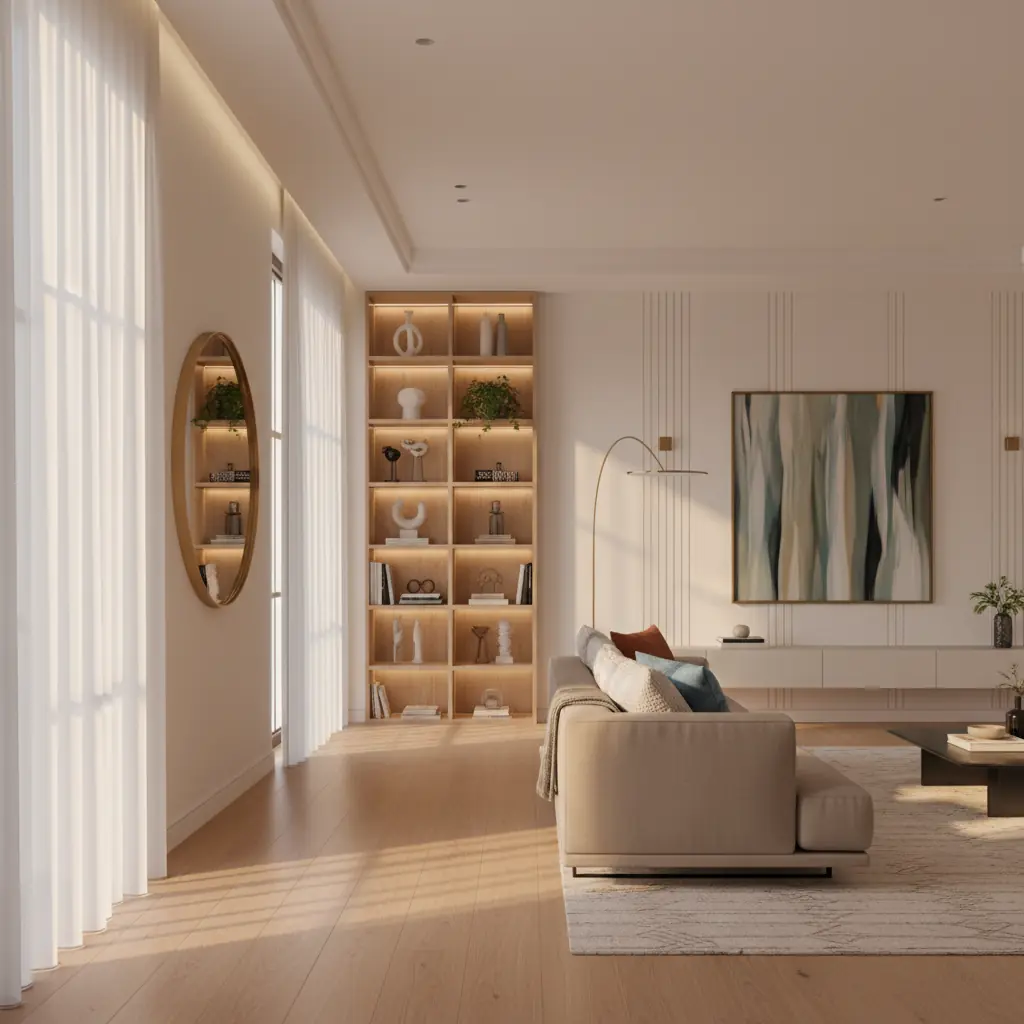
Por que tetos baixos parecem opressivos e como criar uma ilusão de altura
A altura padrão do teto em residências modernas geralmente varia de 2,4 a 2,7 metros, oferecendo uma confortável sensação de abertura. No entanto, muitos apartamentos antigos, porões e sótãos convertidos frequentemente apresentam tetos de 2,1 metros ou até mais baixos. Essa falta de 30 a 60 centímetros cria um efeito psicológico desproporcional. O cômodo pode parecer comprimido, pesado e até claustrofóbico de uma forma que a metragem quadrada real não explica totalmente. A razão é profunda: nossa percepção do tamanho do cômodo é frequentemente mais influenciada pelas proporções verticais do que pelas horizontais. Um cômodo de 18 metros quadrados com tetos de 3 metros parece inegavelmente espaçoso, até grandioso. O mesmo cômodo de 18 metros quadrados com tetos de 2,1 metros pode parecer uma caixa apertada.
Estudos em psicologia ambiental até indicaram que tetos mais altos podem melhorar o desempenho cognitivo e a sensação de liberdade. De fato, pesquisas publicadas no Journal of Environmental Psychology sugerem que cômodos com tetos mais altos estão associados a sentimentos de liberdade e criatividade, enquanto tetos mais baixos podem evocar sentimentos de restrição.
A boa notícia: enganar o olho para perceber mais altura é surpreendentemente fácil de conseguir. Cada técnica que exploraremos abaixo funciona desenhando o olhar para cima, borrando o limite físico entre parede e teto, ou criando fortes linhas visuais verticais que alongam sutilmente o cômodo. Usadas em conjunto, essas estratégias podem fazer um teto de 2,1 metros parecer muito mais próximo de 2,4 metros — uma diferença crucial que transforma o desconfortável em perfeitamente aceitável e até convidativo. Habitas permite que você experimente muitas dessas técnicas na foto real do seu cômodo, deixando você visualizar o impacto antes de fazer qualquer alteração.
Como cortinas do chão ao teto podem fazer um cômodo parecer mais alto?
Este é, sem dúvida, o truque de maior impacto para tetos baixos, e custa quase nada a mais em comparação com instalações de cortinas padrão. O princípio é simples, mas poderoso: pendure os varões das cortinas o mais próximo possível do teto — idealmente montados no próprio teto com sistemas de trilhos ou dentro de 5 a 7 centímetros da linha do teto. Em seguida, deixe as cortinas caírem até o chão (ou até mesmo formando uma pequena poça para um toque luxuoso). Quando as cortinas cobrem toda a altura da parede, o olho lê o tecido como uma linha vertical contínua e ininterrupta do chão ao teto, o que alonga dramaticamente a altura percebida da parede.
O erro comum que a maioria das pessoas comete é pendurar as cortinas na moldura da janela. Isso cria uma linha horizontal não intencional na parede na altura da janela (geralmente 1,8 a 2,1 metros), traçando efetivamente um limite visual que abaixa ainda mais o teto. Mesmo que as cortinas caiam até o chão, aquela proeminente linha horizontal do varão interrompe o fluxo vertical crucial. Ao montá-las no alto e deixá-las cair, o cômodo imediatamente parece mais alto. Para efeito máximo, escolha cortinas em uma cor semelhante à das suas paredes para que o tecido se misture perfeitamente com a parede, em vez de criar um bloco contrastante que interrompe o plano vertical.
Cortinas transparentes ou tecidos leves funcionam especialmente bem em cômodos com teto baixo porque permitem a passagem da luz natural, evitando que o espaço pareça pesado ou fechado, ao mesmo tempo em que criam aquela linha vertical essencial do chão ao teto. A translucidez evita que o tecido adicione peso visual a um espaço já comprimido, mantendo uma sensação arejada. Considere também usar uma [técnica de color drenching](/blog/color-drenching-technique) onde cortinas, paredes e até mesmo guarnições são pintadas ou escolhidas em tons muito semelhantes para borrar ainda mais os limites e aumentar a altura percebida.
Quais estratégias de pintura fazem um teto baixo parecer mais alto?
O uso estratégico da tinta é uma forma de baixo custo e alto impacto para manipular a percepção. Quando o teto é a superfície mais clara do cômodo, ele visualmente recua — o cérebro interpreta instintivamente cores mais claras como mais distantes. Pinte seu teto de um branco nítido e brilhante (ou o tom mais claro absoluto em sua paleta de cores escolhida), mesmo que suas paredes sejam de um tom médio. Esse contraste cria a ilusão de que o teto está flutuando acima das paredes, em vez de pressioná-las.
Para levar esse conceito adiante, estenda a cor do teto de 15 a 30 centímetros para baixo na parede. Essa técnica, muitas vezes chamada de "faixa de teto" ou "falsa moldura de gesso", borra o limite convencional entre parede e teto e engana o olho, fazendo-o ler o teto como maior (e, portanto, mais alto) do que realmente é. Por exemplo, se suas paredes são de um cinza médio, pinte os 20 a 25 centímetros superiores da parede no mesmo branco brilhante do teto. O ponto de transição entre a faixa branca e a cor da parede então é lido como a linha do teto, mesmo que o teto real seja mais baixo. É uma ilusão de ótica sutil, mas que inegavelmente funciona. Você pode explorar diferentes opções de [gerador de paleta de cores com IA](/blog/ai-color-palette-generator) para encontrar o tom claro perfeito para o seu teto.
Outra poderosa estratégia de pintura envolve listras verticais. Seja através de papel de parede, uma parede de destaque pintada ou estênceis sutis, as listras verticais são o equivalente em padrão das cortinas do chão ao teto. Elas criam fortes linhas visuais ascendentes que naturalmente alongam o cômodo. Para um efeito elegante e sofisticado, considere listras finas (2 a 5 centímetros de largura) em uma paleta sutil tom sobre tom — por exemplo, alternando listras foscas e semibrilho na mesma cor exata. Isso adiciona movimento vertical sem parecer agitado ou excessivamente dramático. Por outro lado, evite listras horizontais completamente em cômodos com teto baixo, pois elas alargam o cômodo, mas fazem os tetos parecerem ainda mais baixos.
Como a altura dos móveis impacta a percepção da altura do teto?
A altura dos móveis em relação à altura do teto determina criticamente a quantidade de espaço livre visível acima da linha dos seus móveis e, consequentemente, a sensação de amplitude do cômodo. Em um cômodo com tetos padrão de 2,4 metros, um sofá típico de 76 centímetros de altura deixa generosos 1,67 metros de parede visível acima dele, proporcionando bastante espaço para respirar. No entanto, em um cômodo com tetos de 2,1 metros, o mesmo sofá de 76 centímetros deixa apenas 1,37 metros, fazendo o cômodo parecer visivelmente abarrotado e comprimido. Mudar para um sofá de perfil baixo (cerca de 60-66 centímetros de altura) recupera instantaneamente 10 a 15 centímetros de parede visível, o que é perceptualmente significativo.
Aplique este princípio a cada peça de mobiliário no cômodo:
- **Camas:** Opte por camas tipo plataforma ou estrados de cama com cabeceiras baixas, em vez de altas e ornamentadas. - **Armazenamento:** Escolha cômodas de perfil baixo ou credenzas em vez de baús ou armários altos. - **Mesas:** Selecione mesas de centro com menos de 40 centímetros de altura, em vez do padrão de 45-50 centímetros. - **Prateleiras:** Evite estantes altas que se estendem perto do teto – elas efetivamente fecham a lacuna entre os móveis e o teto, exacerbando a sensação de compressão. Se as prateleiras forem necessárias, considere prateleiras abertas e flutuantes posicionadas mais baixas ou com espaçamento vertical significativo.
Para assentos, almofadas de chão, pufes e poltronas baixas (estilos de móveis de inspiração Japandi são excelentes aqui) reduzem ainda mais o centro de gravidade visual do cômodo. O cômodo parece mais espaçoso e arejado quando você está nele, sentado em um ponto de vista baixo com a quantidade máxima de parede e teto visíveis acima de você. Antes de fazer qualquer compra, use uma [ferramenta de arranjo de móveis com IA](/blog/ai-furniture-arrangement-tool) para testar diferentes alturas e configurações em seu espaço. Essa abordagem não apenas aumenta a sensação de altura, mas também promove uma estética mais aberta e desorganizada, essencial para cômodos menores ou mais baixos.
Como arte vertical e linhas visuais podem fazer um cômodo com teto baixo parecer mais alto?
A orientação e o posicionamento da sua decoração de parede desempenham um papel crucial em direcionar o olhar. Sempre pendure obras de arte na orientação vertical (retrato), em vez de horizontal (paisagem). Uma peça alta e estreita naturalmente atrai o olhar para cima, enfatizando a dimensão vertical do cômodo. Por outro lado, uma peça larga e curta enfatizará o horizontal, o que é exatamente o oposto do que você deseja em um espaço com teto baixo. Se você estiver criando uma parede de galeria, organize as peças em colunas verticais ou em uma composição vertical agrupada, em vez de fileiras horizontais estendidas.
Além da arte emoldurada, considere outros elementos que criam fortes linhas verticais:
- **Espelhos:** Um espelho alto e fino apoiado em uma parede ou pendurado verticalmente é incrivelmente eficaz. Ele não apenas atrai o olhar para cima, mas também reflete luz e espaço visual, aumentando ainda mais a sensação de abertura. Este é um truque clássico usado por designers para fazer os cômodos parecerem maiores em todas as dimensões. - **Painéis de Parede Verticais ou Lambris:** Se considerar detalhes arquitetônicos, shiplap vertical ou lambris podem adicionar textura e interesse enquanto criam fortes linhas ascendentes. Certifique-se de que o lambril não pare muito alto, o que poderia cortar a parede e visualmente abaixar o teto. - **Plantas Altas e Esbeltas:** Introduzir uma planta de casa alta e estreita, como uma Fiddle Leaf Fig ou uma Dracaena, em um canto pode atrair o olhar para cima sem adicionar volume. - **Prateleiras Verticais Abertas:** Em vez de armários fechados volumosos, opte por unidades de prateleiras abertas que sejam altas e estreitas. Elas criam linhas verticais e permitem que a parede atrás delas apareça, mantendo uma sensação aberta.
Essas escolhas deliberadas na arte e nos elementos decorativos ajudam a guiar continuamente o olhar do observador do chão para o teto, neutralizando a tendência natural de notar a baixa altura do teto.
Qual é a melhor iluminação para cômodos com tetos baixos?
A iluminação é uma ferramenta potente para manipular a percepção, e é onde muitas pessoas cometem erros críticos em cômodos com teto baixo. Pendentes e lustres que ficam 30 a 45 centímetros (ou mais) abaixo do teto são desastrosos. Eles efetivamente reduzem a altura do teto ao nível dos olhos, criam problemas de altura livre para a cabeça e fazem o cômodo parecer incrivelmente apertado e confuso.
A melhor estratégia para iluminação geral em cômodos com teto baixo é a **iluminação embutida** (spots ou plafons). Essas luminárias ficam niveladas com o teto, proporcionando ampla iluminação sem roubar altura preciosa ou adicionar bagunça visual. Se a iluminação embutida não for uma opção (comum em imóveis alugados ou casas antigas devido à complexidade e custo de instalação), **luminárias de sobrepor** que ficam diretamente contra o teto são a próxima melhor alternativa. Procure designs elegantes e minimalistas que proporcionem boa dispersão de luz.
No entanto, a verdadeira arma secreta para realçar a altura com iluminação é a **iluminação indireta para cima (uplighting)**.
- **Abajures de Chão com Uplight:** Posicionados nos cantos de um cômodo com teto baixo, os abajures de chão que direcionam a luz para cima no teto o banham com brilho. Isso cria uma percepção dramática de altura – o teto brilhantemente iluminado parece flutuar acima das paredes mais escuras. - **Arandelas de Parede com Luz para Cima:** Semelhantes aos abajures de chão, as arandelas de parede que lançam luz para cima criam linhas de luz verticais e iluminam as partes superiores das paredes e do teto. - **Luzes para Quadros/Luzes de Destaque:** Até pequenas luzes direcionadas estrategicamente para a borda superior das paredes ou da arte podem criar efeitos sutis de uplighting.
Combine o uplighting com a estratégia do teto pintado de claro, e o efeito se multiplica, fazendo o teto parecer significativamente mais alto. Habitas permite que você experimente diferentes arranjos de iluminação e móveis antes de comprar qualquer coisa — faça o upload do seu cômodo e gere variantes para ver qual combinação de móveis baixos, elementos verticais e iluminação lhe proporciona mais altura e amplitude. Em apenas minutos, você pode obter [designs de cômodos gerados por IA](/blog/ai-generated-room-designs-realistic) realistas para visualizar suas opções.
Espelhos e superfícies reflexivas podem fazer um cômodo com teto baixo parecer mais alto?
Absolutamente! Espelhos são um truque antigo de designers para expandir qualquer espaço, e são particularmente eficazes em cômodos com tetos baixos. Ao refletir luz, vistas e o próprio cômodo, os espelhos criam uma ilusão de profundidade e abertura que pode mitigar dramaticamente a sensação de compressão.
**Como usar espelhos de forma eficaz:**
- **Espelhos Altos e Verticais:** Conforme mencionado com obras de arte, um espelho grande pendurado verticalmente ou encostado em uma parede atrai imediatamente o olhar para cima. A reflexão do teto na parte superior do espelho estenderá visualmente a altura do teto. - **Posicionamento Estratégico:** Posicione espelhos em frente a janelas para refletir a luz natural e as vistas externas, tornando o cômodo mais claro e menos fechado. Colocar um espelho atrás de uma fonte de luz, como um abajur de chão com uplighting, também pode amplificar seu efeito. - **Móveis Espelhados:** Considere peças de mobiliário com detalhes espelhados, como uma mesa de centro espelhada ou uma cômoda com tampo espelhado. Essas reflexões sutis podem contribuir para a sensação geral de amplitude sem serem avassaladoras. - **Evite o Excesso:** Embora poderosos, muitos espelhos podem fazer um cômodo parecer desorientador. Algumas peças estrategicamente posicionadas são mais eficazes do que cobrir todas as paredes.
Além dos espelhos tradicionais, qualquer superfície reflexiva pode contribuir. Acabamentos de tinta de alto brilho nas paredes (embora muitas vezes evitados em favor do fosco para que os tetos recuem) ou móveis podem refletir a luz, ajudando um cômodo a parecer mais aberto e arejado.
O poder do armazenamento vertical e do design minimalista
A desordem é inimiga do espaço percebido, especialmente em cômodos com tetos baixos. Um cômodo bagunçado parece menor e mais comprimido, chamando a atenção para seus limites físicos. Adotar uma abordagem minimalista, onde cada item tem seu lugar e as superfícies são mantidas livres, pode aumentar significativamente a sensação de abertura.
**Soluções de Armazenamento Vertical:**
- **Armários Embutidos:** Se a reforma for uma opção, considere armários embutidos que se estendam até o teto. Ao contrário de estantes altas autônomas que podem quebrar o plano da parede, os embutidos criam uma linha vertical contínua que alonga visualmente a parede. - **Prateleiras Flutuantes:** Opte por prateleiras flutuantes em vez de unidades fechadas volumosas. Arrume-as verticalmente para guiar o olhar para cima. Certifique-se de que não estejam superlotadas, pois isso anula seu efeito arejado. - **Unidades Finas Montadas na Parede:** Escolha soluções de armazenamento finas e montadas na parede que não se projetem muito para dentro do cômodo, mantendo as linhas de visão claras. - **Evite Armários Suspensos:** Em cozinhas, por exemplo, considere prateleiras abertas ou menos armários superiores para evitar a sensação de uma linha de teto pesada e opressiva.
Ao priorizar o armazenamento vertical e manter uma estética minimalista, você evita que o "ruído" visual arraste o olhar para baixo. Isso aumenta o impacto de todos os outros truques para aumentar a altura. Para ideias econômicas sobre como organizar e maximizar o espaço, você pode encontrar inspiração em nosso guia sobre [decoração de apartamento com orçamento limitado](/blog/apartment-decorating-budget).
Usando portas e guarnições para realçar a verticalidade
Frequentemente negligenciado, o tratamento de portas e guarnições pode reforçar sutilmente a ilusão de altura. Batentes de portas padrão podem criar uma forte quebra horizontal a 2,03 metros, enfatizando ainda mais um teto baixo.
**Estratégias para portas e guarnições:**
- **Pinte as Portas da Mesma Cor das Paredes:** Pintar portas e seus batentes da mesma cor das paredes circundantes ajuda-os a se misturar, reduzindo interrupções visuais que cortam o plano vertical. Isso permite que o olho flua continuamente pela parede. - **Rodapés Altos:** Embora possa parecer contraintuitivo, optar por rodapés mais altos (15 a 20 centímetros ou mais) pode realmente fazer as paredes parecerem mais altas. Isso ocorre porque eles ancoram firmemente o cômodo ao chão, fazendo com que o espaço vertical acima deles pareça mais substancial em comparação. - **Estenda as Molduras das Portas:** Se possível durante uma reforma, estender as molduras das portas (arquitraves) para mais perto do teto ou até o teto pode criar uma abertura impressionante e grandiosa que eleva visualmente todo o cômodo. Esta é uma mudança mais complexa, mas pode ter um efeito dramático.
Ao tratar esses detalhes arquitetônicos com cuidado, você contribui para um fluxo vertical coeso que aumenta a percepção de altura sem chamar a atenção para a linha real do teto.
Integrando luz natural e conceitos abertos
Embora nem sempre seja uma opção em todos os cômodos com teto baixo (especialmente porões), maximizar a luz natural e adotar conceitos abertos pode aumentar significativamente a sensação de amplitude e altura.
- **Janelas Desobstruídas:** Mantenha as janelas o mais claras possível. Evite cortinas pesadas ou persianas que bloqueiem a luz. Use cortinas transparentes (como discutido) ou persianas simples que recolhem quando abertas. - **Superfícies Reflexivas:** Posicione móveis e decoração para que reflitam a luz natural pelo cômodo. Paredes e tetos brancos ou de cores claras são particularmente eficazes para amplificar a luz ambiente. - **Layouts de Conceito Aberto:** Se você tiver flexibilidade, uma área de estar em conceito aberto — onde as áreas de estar, jantar e cozinha fluem juntas sem paredes — pode criar uma sensação muito maior e mais arejada. Embora não eleve fisicamente o teto, as linhas de visão horizontais expandidas podem compensar a restrição vertical. No mercado atual, propriedades com layouts abertos são altamente desejáveis; uma pesquisa recente descobriu que **43% dos compradores de imóveis** classificam uma cozinha-sala de estar em conceito aberto como sua característica mais desejada.
Ao combinar essas estratégias, você não está apenas decorando; você está ativamente reengenharia a percepção visual do seu espaço. Lembre-se, um bom design para tetos baixos não é sobre ignorar o desafio, mas superá-lo engenhosamente. Ferramentas como Habitas podem ajudá-lo a visualizar essas transformações complexas instantaneamente, permitindo que você crie dezenas de variações de design em minutos, um processo que levaria semanas com designers tradicionais e **economizaria até 80% nos custos iniciais de design**.
---
Perguntas Frequentes
### O que é considerado uma altura de teto baixo?
Embora não haja uma definição universal rigorosa, tetos com menos de 2,4 metros são geralmente considerados baixos no design de interiores moderno. Muitas casas antigas, apartamentos e conversões de porões podem ter tetos tão baixos quanto 2,1 metros ou até 2,03 metros, o que impacta significativamente a sensação psicológica do cômodo. A construção moderna padrão geralmente visa de 2,4 a 2,7 metros, com casas de luxo frequentemente apresentando 3 metros ou mais.
### Devo pintar tetos baixos de branco?
Sim, absolutamente. Pintar tetos baixos de um branco brilhante e nítido é uma das maneiras mais eficazes de fazê-los parecer mais altos. O branco reflete a luz, fazendo o teto recuar visualmente e parecer mais distante. Cores mais claras, em geral, criam uma sensação de abertura. Você pode aprimorar ainda mais esse efeito estendendo a cor do teto alguns centímetros para baixo nas paredes.
### Espelhos realmente podem fazer um cômodo com tetos baixos parecer mais alto?
Sim, espelhos são incrivelmente eficazes. Um espelho alto e vertical não apenas atrai o olhar para cima, mas também reflete a luz e o espaço visual do cômodo, criando uma ilusão de profundidade e abertura. Colocar um espelho estrategicamente para refletir a luz natural ou uma vista interessante pode fazer um cômodo parecer significativamente maior e menos confinado.
### Que tipo de iluminação devo evitar em cômodos com tetos baixos?
Você deve definitivamente evitar pendentes, lustres ou qualquer luminária que pende significativamente abaixo da linha do teto. Esses tipos de luzes reduzem a altura efetiva do teto ao nível dos olhos, criando problemas de altura livre para a cabeça e fazendo o cômodo parecer apertado e visualmente desorganizado. Prefira luminárias de sobrepor ou, idealmente, iluminação embutida.
### Listras verticais são uma boa ideia para paredes em um cômodo com teto baixo?
Sim, listras verticais são uma excelente ideia. Assim como as cortinas do chão ao teto atraem o olhar para cima, as listras verticais criam fortes linhas visuais ascendentes que alongam o cômodo. Para um visual sofisticado, escolha listras sutis tom sobre tom (por exemplo, foscas e semibrilho na mesma cor), em vez de listras ousadas e contrastantes, que podem parecer muito agitadas em um espaço pequeno.