Mármore vs Quartzo: O Guia Definitivo de Bancadas para 2026
Uma comparação honesta lado a lado de bancadas de mármore e quartzo — custo, durabilidade, manutenção e valor de revenda.
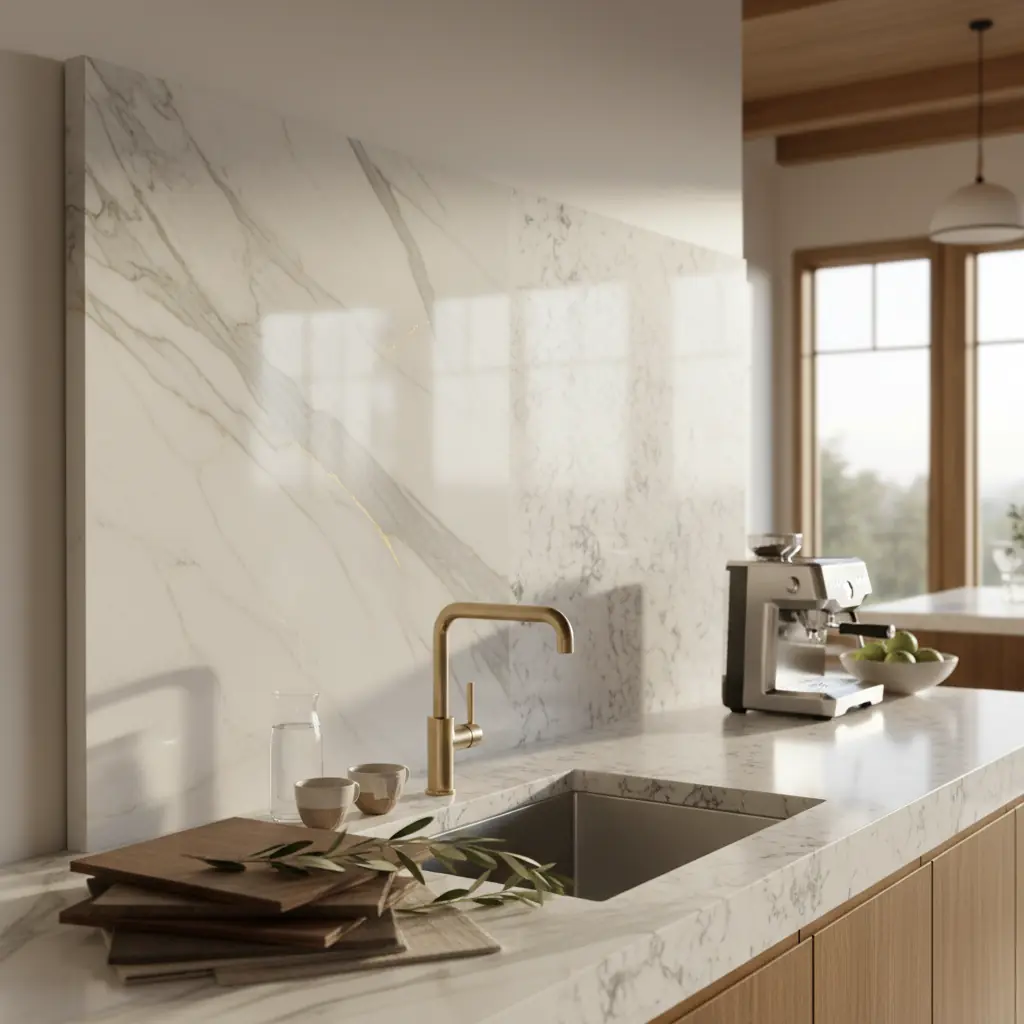
Quais são os custos reais das bancadas de mármore e quartzo?
Entender o investimento real necessário para novas bancadas vai além do preço do material por pé quadrado. Abrange a fabricação, instalação e, muitas vezes, a remoção de superfícies existentes. Uma reforma completa de cozinha geralmente varia de US$ 25.000 a US$ 75.000 em 2026, com as bancadas frequentemente representando 10-15% desse orçamento, tornando-se um ponto de decisão significativo.
As bancadas de mármore variam de US$ 50 a US$ 200 por pé quadrado instalado, com o preço determinado quase inteiramente pela raridade, origem e características dos veios da pedra específica. O mármore Carrara — a variedade mais comum com veios cinza suaves em um fundo branco — situa-se na extremidade inferior, tipicamente US$ 50 a US$ 100 por pé quadrado. Este clássico italiano é acessível e oferece elegância atemporal. O mármore Calacatta, conhecido por seus veios mais ousados e dramáticos e um fundo branco frequentemente mais brilhante, custa de US$ 100 a US$ 200 por pé quadrado. O Statuario, o mais raro dos brancos italianos com padrões cinza distintos e marcantes, pode ultrapassar US$ 200 por pé quadrado para chapas premium. Mármores exóticos de outras regiões, talvez com colorações únicas ou padrões incomuns, também podem elevar os preços para os níveis mais altos.
As bancadas de quartzo, em comparação, variam de US$ 50 a US$ 150 por pé quadrado instalado. O quartzo de entrada de marcas estabelecidas como Silestone ou LG Viatera começa em torno de US$ 50 a US$ 70 por pé quadrado, proporcionando uma opção durável e atraente para reformadores com orçamento limitado. Linhas premium de líderes da indústria como Caesarstone e Cambria, ou as cobiçadas coleções com aparência de mármore da MSI e Dekton, frequentemente chegam a US$ 100 a US$ 150. Estes produtos de quartzo de alta qualidade investem pesadamente em técnicas avançadas de fabricação para imitar a pedra natural com notável precisão. É importante notar uma tendência de mercado: os preços do quartzo caíram aproximadamente 15 a 20 por cento desde 2023, à medida que a escala de fabricação aumentou e a concorrência entre as marcas se intensificou, tornando as opções premium mais acessíveis do que nunca.
Além da matéria-prima, considere os custos de fabricação e instalação. Estes são comparáveis para ambos os materiais, geralmente variando de US$ 30 a US$ 50 por pé quadrado, mas podem aumentar para designs complexos. Elementos como perfis de borda especializados (por exemplo, ogee, cascata), recortes intrincados para pias de sobrepor, cooktops e tomadas retráteis, ou adições de _backsplash_ integrado, adicionam custo. Além disso, não se esqueça da despesa de remover e descartar suas bancadas antigas, o que pode adicionar várias centenas de dólares. Para uma cozinha típica com 40 pés quadrados de bancada, orce de US$ 3.200 a US$ 10.000 para mármore de qualidade ou de US$ 3.200 a US$ 8.000 para quartzo de qualidade — incluindo fabricação e instalação. Sempre obtenha múltiplos orçamentos e certifique-se de que sejam abrangentes, detalhando todos os aspectos, desde o gabarito até a vedação final.
Como o mármore e o quartzo se comparam em termos de durabilidade no dia a dia?
É aqui que a comparação se torna notavelmente desequilibrada. O quartzo, um material engenheirado, é composto por aproximadamente 90 a 94 por cento de minerais de quartzo naturais moídos, ligados com resinas poliméricas, pigmentos e aditivos. Esta engenharia precisa elimina a maioria das fraquezas inerentes da pedra natural, tornando-o excepcionalmente robusto para o uso diário.
- **Resistência a Manchas:** O quartzo não mancha. Sua superfície não porosa significa que substâncias como vinho tinto, café, suco de limão, azeite ou açafrão simplesmente ficam sobre ela. Limpe-as, e a superfície permanecerá inalterada, tornando-o uma escolha sem preocupações para cozinhas movimentadas. - **Resistência a Corrosão (Manchas Ácidas):** Substâncias ácidas que opacificariam ou "corroeriam" permanentemente uma superfície de mármore não têm efeito no quartzo. Isso significa que você não precisa entrar em pânico por vinagre derramado ou uma rodela de limão esquecida. - **Vedação:** O quartzo não precisa de vedação. Nunca. Esta é uma vantagem significativa para proprietários que buscam um material verdadeiramente de baixa manutenção. - **Resistência ao Calor:** Embora altamente resistente, o quartzo não é totalmente impermeável ao calor extremo. Colocar panelas extremamente quentes diretamente na superfície (acima de 150 graus Celsius) pode fazer com que a resina descolora ou queime, levando a danos permanentes. Sempre use bases de apoio para panelas. - **Resistência a Riscos e Lascas:** O quartzo é muito duro, tornando-o altamente resistente a riscos e lascas. No entanto, força extrema ou impactos fortes ainda podem causar danos.
O mármore, por outro lado, é uma pedra natural à base de cálcio, principalmente carbonato de cálcio, que reage quimicamente com ácidos. Esta propriedade fundamental dita seu desempenho em um ambiente de cozinha:
- **Corrosão (Manchas Ácidas):** Uma gota de suco de limão, um respingo de vinho ou até mesmo certos produtos de limpeza deixados por dez minutos corroerão a superfície — criando uma mancha opaca e mais clara que é permanente, a menos que seja polida profissionalmente. Essas corrosões não são manchas; são uma reação corrosiva à própria pedra. - **Manchas:** Vinho tinto, café, óleo e alimentos altamente pigmentados podem manchar o mármore em poucas horas se não forem limpos prontamente. Sua natureza porosa permite que esses líquidos penetrem na superfície, mesmo que selada. - **Vedação:** O mármore requer vedação regular, tipicamente a cada seis a doze meses, com um selador impregnante de qualidade. Isso ajuda a reduzir a porosidade e minimizar o risco de manchas, mas não protege contra a corrosão por substâncias ácidas. - **Resistência ao Calor:** O mármore é geralmente resistente ao calor, mas mudanças rápidas de temperatura podem causar choque térmico, potencialmente levando a rachaduras. - **Resistência a Riscos e Lascas:** O mármore é uma pedra mais macia que o quartzo e é mais suscetível a arranhões de facas ou materiais abrasivos. Lascas também podem ocorrer devido a impactos fortes.
A realidade prática é que as cozinhas de mármore exigem hábitos meticulosos (limpeza imediata, tábuas de corte sempre, porta-copos sempre) ou uma aceitação da pátina. Alguns proprietários realmente adoram a aparência vivida do mármore corroído e manchado — eles veem isso como caráter, como couro gasto, evoluindo com a história da casa. Outros acham isso estressante, lamentável e uma fonte constante de ansiedade. Seja honesto consigo mesmo sobre em qual grupo você se encaixa antes de escolher o mármore para uma área de alto tráfego como uma cozinha. Para aqueles que buscam durabilidade sem compromisso, o quartzo vence decisivamente.
Onde a beleza natural reina: Estética do Mármore vs. Quartzo?
Apesar de suas deficiências práticas, o mármore oferece algo que os fabricantes de quartzo passaram décadas tentando replicar: beleza orgânica e irrepetível. Cada chapa de mármore é única. Os padrões intrincados dos veios, as sutis variações de cor e a profundidade translúcida do mármore natural criam uma riqueza visual que nem mesmo o melhor quartzo projetado consegue igualar. Segure uma lanterna atrás de uma borda fina de mármore, e ela brilhará — essa translucidez única é impossível de engenheirar no quartzo. A maneira como a luz interage com a estrutura cristalina do mármore confere-lhe uma luminosidade e um "movimento" inerentes altamente valorizados. Isso é particularmente evidente em chapas _bookmatched_, onde duas chapas cortadas consecutivamente são abertas e espelhadas para criar um padrão dramático e contínuo, frequentemente usado para grandes ilhas ou paredes de destaque.
Dito isso, o quartzo diminuiu dramaticamente a lacuna estética. As mais recentes coleções de quartzo com aparência de mármore utilizam tecnologia avançada de impressão digital em chapa inteira para criar padrões de veios incrivelmente realistas que não se repetem em uma instalação típica de cozinha. Marcas como Caesarstone (Empira White, Statuario Maximus), Cambria (Brittanicca, Skara Brae) e MSI (Calacatta Laza, Calacatta Vicenza) produzem superfícies que enganam a maioria das pessoas à primeira vista. Elas oferecem uma paleta diversificada, desde brancos nítidos com veios cinza delicados até padrões mais ousados e dramáticos, e até mesmo cores que imitam pedras exóticas. A diferença reveladora é visível principalmente de perto e na forma como a luz interage com a superfície — o quartzo tende a ter uma aparência mais uniforme e ligeiramente mais plana em comparação com a profundidade tridimensional e a translucidez variada do mármore.
Ambos os materiais também vêm em vários acabamentos além do brilho polido tradicional. Acabamentos _honed_ (fosco), _leathered_ (fosco texturizado) e _brushed_ (escovado) são cada vez mais populares, oferecendo diferentes experiências táteis e efeitos visuais. Um mármore _honed_, por exemplo, pode ocultar a corrosão de forma mais eficaz do que o mármore polido, embora possa ser mais suscetível a manchas se não for devidamente selado. Da mesma forma, o quartzo com acabamento _honed_ pode aprimorar ainda mais sua imitação de pedra natural, proporcionando uma estética mais suave. Ao fazer sua seleção, considere como esses acabamentos complementam o seu design geral de cozinha e estilo de vida. Ferramentas como Habitas permitem que você [visualize diferentes opções de materiais em seu espaço real](/blog/ai-generated-room-designs-realistic), ajudando você a ver como um mármore Calacatta polido pode contrastar com um quartzo _honed_ antes de se comprometer.
Qual é o compromisso: Manutenção e cuidados a longo prazo?
A diferença nos cuidados a longo prazo entre mármore e quartzo é significativa e, muitas vezes, o fator decisivo para os proprietários.
A manutenção do quartzo é essencialmente zero, além da limpeza diária. Limpe com água e sabão ou qualquer limpador doméstico não abrasivo. Para derramamentos mais difíceis, uma esponja de esfregar não abrasiva pode ser usada. Evite colocar panelas extremamente quentes diretamente na superfície (como mencionado, a resina pode descolorir acima de 150 graus Celsius), mas, de resto, o quartzo é virtualmente livre de manutenção por sua vida útil de mais de 25 anos. Não requer produtos especiais, e sua natureza não porosa significa que você não precisa se preocupar com o crescimento de bactérias dentro do próprio material.
A manutenção do mármore, no entanto, é contínua e requer um regime consistente.
- **Vedação:** A superfície deve ser selada a cada 6 a 12 meses com um selador penetrante como Tenax Ager ou StoneTech BulletProof. Esta não é uma camada superficial, mas um líquido que penetra nos poros da pedra, tornando-a menos absorvente. O processo envolve limpar a superfície, aplicar o selador, deixá-lo penetrar e, em seguida, remover qualquer excesso. - **Limpeza Diária:** Limpe diariamente com um limpador de pedra com pH neutro. Crucialmente, evite limpadores ácidos ou alcalinos, como vinagre, Windex ou a maioria dos limpadores multiuso, que danificarão a superfície com o tempo, levando à corrosão e opacidade. Use panos ou esponjas macias. - **Lidando com a Corrosão (Manchas Ácidas):** Para pequenas corrosões, pó de polimento de mármore (geralmente à base de óxido de estanho) pode ser aplicado com um pano úmido em movimentos circulares para polir levemente a mancha opaca. Para corrosões mais profundas ou generalizadas, pode ser necessário um repolimento profissional. - **Manchas Profundas:** Manchas profundas podem exigir um cataplasma — uma pasta de um material absorvente (como bicarbonato de sódio ou terra diatomácea) misturada com um agente químico (como peróxido de hidrogênio para manchas orgânicas ou acetona para manchas à base de óleo) aplicada durante a noite sob filme plástico. Isso extrai a mancha da pedra.
O ônus da manutenção é a maior razão pela qual os proprietários mudam do mármore para o quartzo durante as reformas de cozinha. Não é que a manutenção do mármore seja difícil — é que ela é constante e implacável. Uma rodela de limão esquecida, uma marca de taça de vinho ou um momento de desatenção, e você terá uma marca permanente, a menos que intervenha de forma rápida e correta. De acordo com relatórios da indústria, a satisfação do cliente com as bancadas de quartzo decorre em grande parte da sua baixa manutenção, com mais de 85% dos proprietários relatando a facilidade de cuidado como um benefício chave.
E quanto ao valor de revenda e percepção do comprador?
Tanto o mármore quanto o quartzo são considerados materiais de bancada premium por compradores e avaliadores de imóveis. Optar por qualquer um dos materiais eleva significativamente o valor percebido de uma cozinha em comparação com laminados ou superfícies sólidas de entrada. De acordo com um estudo recente da Houzz, as reformas de cozinha consistentemente geram um dos maiores ROIs para melhorias residenciais, sendo as bancadas atualizadas um fator chave citado por 80% dos proprietários.
O mármore tem uma ligeira vantagem em termos de luxo e prestígio percebidos. A palavra "mármore" em uma descrição de anúncio frequentemente desencadeia uma associação imediata com acabamentos de alto padrão e elegância clássica, criando um verdadeiro fator _wow_, especialmente se a pedra for bem mantida e exibida. No entanto, compradores experientes (e seus inspetores de imóveis) também sabem que o mármore requer manutenção e manuseio cuidadoso, o que pode ser um ponto negativo para compradores que desejam uma casa pronta para morar e sem estresse. Para alguns, a ideia de vedação contínua e potencial corrosão pode diminuir seu apelo.
O quartzo se tornou o material "padrão de cozinha atualizada" em novas construções e reformas, especialmente em casas de médio a alto padrão, o que significa que ele consistentemente atende às expectativas do comprador sem necessariamente superá-las. Sua reputação de durabilidade, higiene e baixa manutenção o torna uma característica altamente desejável para estilos de vida modernos. Aproximadamente 65% dos potenciais compradores de imóveis listam uma cozinha atualizada como uma característica "muito importante" ou "essencial" ao procurar uma nova casa, e o quartzo muitas vezes se alinha perfeitamente com essas expectativas.
A diferença de revenda entre os dois é frequentemente marginal. Em um mercado de luxo de alto padrão onde a estética do design e a proveniência do material são primordiais, um mármore bem escolhido e impecavelmente mantido pode gerar um prêmio de talvez 1 a 2 por cento do valor do imóvel. Em mercados de médio porte, os benefícios práticos do quartzo geralmente superam o luxo percebido do mármore, tornando a diferença de revenda desprezível. Em última análise, ambos os materiais contribuem positivamente para o valor do imóvel, tornando a escolha mais uma questão de preferência pessoal e estilo de vida do que um diferenciador financeiro significativo.
Por que considerar uma abordagem híbrida: Usando ambos estrategicamente?
A abordagem mais inteligente para muitos proprietários é usar cada material onde ele tem o melhor desempenho, aproveitando os pontos fortes tanto do mármore quanto do quartzo para criar um espaço bonito e funcional. Este emparelhamento estratégico permite que você desfrute da beleza incomparável da pedra natural sem sacrificar a praticidade necessária para o dia a dia.
Considere as seguintes aplicações:
- **Bancadas de Cozinha:** Quartzo para as bancadas principais da cozinha, especialmente ao redor da pia e das áreas de cocção, onde durabilidade, resistência a manchas e baixa manutenção são mais importantes. Isso garante uma superfície livre de preocupações para o preparo de refeições e derramamentos diários. - **Ilha de Cozinha ou Estação de Panificação:** Mármore para uma ilha de cozinha dedicada, uma estação de panificação ou uma seção menos usada do perímetro. A superfície naturalmente fresca do mármore é ideal para trabalhos com massas, e uma ilha pode ser um ponto focal deslumbrante. Se não estiver sujeita a derramamentos pesados de cozimento, o ônus da manutenção é significativamente reduzido. - **Pias de Banheiro:** Mármore para bancadas de banheiro, onde alimentos e bebidas ácidas são menos preocupantes, e a superfície geralmente tem um uso mais suave. A sensação luxuosa do mármore em um banheiro pode criar um refúgio semelhante a um spa. Para aqueles que consideram uma reforma completa do banheiro, entender os [custos típicos de uma reforma de banheiro em 2026](/blog/bathroom-renovation-cost-2026) pode ajudar a orçar para materiais tão premium. - **Backsplash:** Um _backsplash_ de mármore na cozinha oferece a beleza da pedra natural em uma aplicação vertical onde manchas e corrosão são preocupações mínimas. Isso permite incorporar os veios requintados do mármore sem o risco de uma superfície de alto tráfego. - **Peças de Destaque:** Uma mesa de destaque com tampo de mármore, um carrinho de bar ou um revestimento de lareira proporciona a estética de luxo sem a vigilância constante exigida para bancadas de alto tráfego.
Esta abordagem híbrida permite flexibilidade de design, otimização de custos e um estilo de vida equilibrado. Se você está planejando uma reforma e deseja visualizar como diferentes materiais de bancada e combinações ficarão em sua cozinha ou banheiro específico, Habitas permite que você faça upload de fotos do seu espaço real e veja prévias realistas com diferentes opções de materiais — incluindo várias variações de mármore e quartzo — antes de visitar uma única marmoraria. Ferramentas de visualização de design com IA como Habitas podem gerar designs de ambientes realistas em minutos, uma redução dramática em relação às 2-4 semanas que levaria para obter conceitos iniciais de um designer tradicional, tornando seu processo de decisão muito mais eficiente.
Em última análise, a decisão entre mármore e quartzo não é sobre qual material é objetivamente melhor em todos os aspectos. O quartzo é inegavelmente mais prático e durável para áreas de alto tráfego. O mármore é mais bonito em sua forma natural e bruta, oferecendo uma estética única que muitos designers e proprietários adoram. Sua escolha deve refletir seu estilo de vida, sua tolerância à manutenção e se você acha a pátina do mármore charmosa ou estressante. Nenhuma das respostas está errada, e com um planejamento cuidadoso, ambos os materiais podem contribuir para um lar deslumbrante e funcional.
Perguntas Frequentes
### O quartzo é melhor que o mármore para cozinhas?
Para a maioria das cozinhas modernas, o quartzo é geralmente considerado "melhor" devido à sua durabilidade superior e baixa manutenção. Sua superfície não porosa o torna altamente resistente a manchas e corrosão por ácidos comuns de cozinha, e nunca precisa de vedação. O mármore, embora bonito, é mais macio e reativo a ácidos, exigindo cuidados meticulosos e vedação regular para evitar danos permanentes. No entanto, se a singularidade estética e a pátina natural forem primordiais, o mármore pode ser preferido.
### Qual é a principal desvantagem das bancadas de mármore?
A principal desvantagem das bancadas de mármore é sua suscetibilidade à corrosão e manchas. Sendo uma pedra à base de carbonato de cálcio, o mármore reage quimicamente com substâncias ácidas (como suco de limão, vinho ou vinagre), causando manchas opacas ou "corrosões" que são difíceis de remover. É também poroso e pode absorver óleos e líquidos pigmentados, levando a manchas se não for limpo imediatamente e selado regularmente. Isso exige um nível mais alto de vigilância e manutenção em comparação com materiais engenheirados.
### Quanto tempo duram as bancadas de mármore e quartzo?
Ambas as bancadas de mármore e quartzo são altamente duráveis e podem durar décadas, frequentemente excedendo 25-50 anos com os devidos cuidados. O quartzo, sendo engenheirado, oferece desempenho consistente contra manchas e arranhões durante toda a sua vida útil. O mármore, se bem mantido e selado regularmente, também pode durar indefinidamente; no entanto, sua aparência pode mudar ao longo do tempo à medida que desenvolve uma pátina única devido à corrosão e ao desgaste menor, o que alguns consideram parte de seu charme.
### Você pode colocar panelas quentes diretamente no quartzo ou mármore?
Geralmente, não é recomendado colocar panelas extremamente quentes diretamente em bancadas de quartzo ou mármore. Para o quartzo, as resinas poliméricas que ligam as partículas de quartzo podem queimar ou descolorir quando expostas a temperaturas acima de aproximadamente 150°C (300°F), levando a danos permanentes. Para o mármore, embora naturalmente resistente ao calor, mudanças bruscas e extremas de temperatura podem causar choque térmico, potencialmente levando a rachaduras. Sempre use bases de apoio para panelas ou protetores térmicos sob utensílios de cozinha quentes para proteger suas bancadas.
### O mármore ainda está em alta para cozinhas em 2026?
Sim, o mármore continua sendo um material muito procurado e elegante para cozinhas em 2026, especialmente para aqueles que buscam uma estética luxuosa e atemporal. Sua beleza natural, veios únicos e apelo clássico garantem que ele nunca saia de moda. Embora o quartzo tenha crescido em popularidade por sua praticidade, o mármore continua sendo uma escolha premium em design de alto padrão, frequentemente usado para ilhas de destaque ou em combinação com materiais mais duráveis para criar um espaço equilibrado, elegante e funcional.