Design de Quartos Multifuncionais: Domine Seu Espaço de Tripla Função com Estilo
Crie um quarto que sirva perfeitamente a múltiplos propósitos – de escritório a quarto de hóspedes, de academia a sala de jogos. Obtenha estratégias de especialistas para móveis transformáveis, separação visual e armazenamento inteligente.
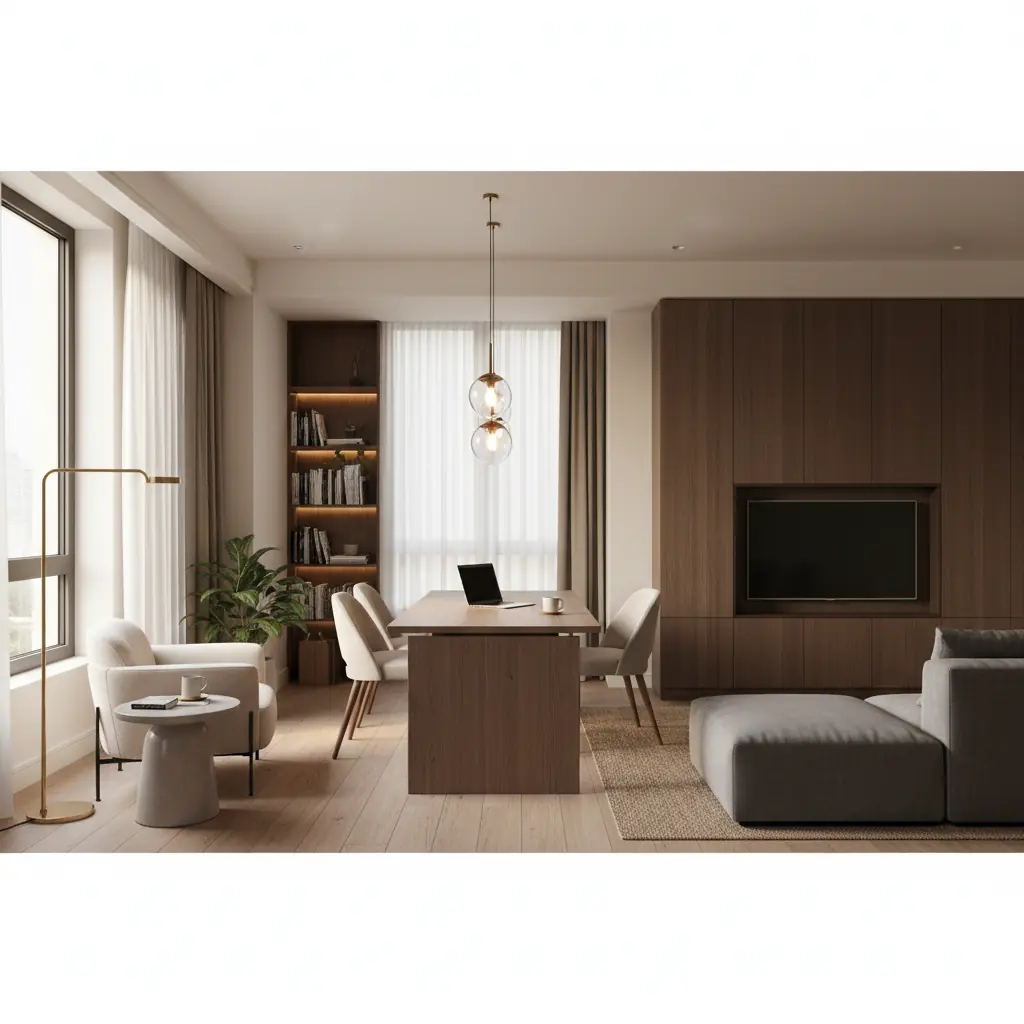
A Ascensão do Quarto de Tripla Função: Por que Sua Casa Precisa Ser Mais Versátil
Nossas casas estão evoluindo, impulsionadas por mudanças nos estilos de vida e pelo custo crescente do espaço. Longe vão os dias em que um quarto de hóspedes ficava ocioso, esperando por visitas que chegavam apenas algumas vezes ao ano. Hoje, esse mesmo quarto é provavelmente um **home office** movimentado, um canto de leitura tranquilo e um refúgio confortável para visitantes. A sala de estar pode se transformar de um espaço elegante para receber em uma animada sala de jogos a qualquer momento.
Isso não é apenas uma tendência; é uma necessidade. Um estudo recente descobriu que **aproximadamente 35% da força de trabalho global agora trabalha remotamente pelo menos meio período**, aumentando significativamente a demanda por soluções eficientes de **home office**. Enquanto isso, com o custo médio do metro quadrado residencial em grandes áreas metropolitanas frequentemente excedendo US$ 500, otimizar cada centímetro de sua casa é mais crucial do que nunca. O desafio não é apenas fazer um quarto ter múltiplas funções — é fazê-lo ter múltiplas funções _bem_, sem que nenhuma delas pareça um improviso ou crie uma sensação avassaladora de desordem.
As combinações multifuncionais mais comuns que encontramos são o escritório-mais-quarto de hóspedes, a sala de jogos-mais-sala de estar e a academia-mais-quarto. Embora cada combinação tenha demandas únicas, todas prosperam nos mesmos princípios fundamentais: móveis transformáveis, separação visual inteligente, armazenamento inteligente e oculto, e uma clara hierarquia de funções. Vamos nos aprofundar em como você pode criar um quarto de tripla função verdadeiramente versátil e harmonioso.
Móveis Que Transformam Seu Quarto com Facilidade
A pedra angular de qualquer espaço multifuncional bem-sucedido são os móveis que podem se adaptar, desaparecer ou mudar seu propósito com mínimo esforço. Não se trata dos sofás-cama desajeitados de décadas passadas; os móveis transformáveis modernos são elegantes e altamente práticos.
### O Poder das Camas Murphy
Para uma combinação de escritório-mais-quarto de hóspedes, uma cama Murphy (ou cama de parede) é, sem dúvida, o melhor investimento individual. Os **design**s modernos estão muito distantes de seus antecessores desajeitados. Elas dobram-se rentes à parede, integrando-se perfeitamente à arquitetura do quarto. Muitos modelos contemporâneos incluem prateleiras integradas, uma escrivaninha dobrável no painel exterior ou até mesmo um sofá embutido, criando uma elegante área de estar quando a cama está guardada.
Quando a cama está levantada, você tem um **home office** completo e sem compromissos ou um segundo espaço de convivência. Quando os hóspedes chegam, o quarto se converte em questão de segundos. A qualidade do colchão também melhorou muito, com a maioria agora acomodando colchões de espuma de memória padrão de até vinte e cinco centímetros de espessura, garantindo que seus hóspedes durmam confortavelmente. Os custos de instalação para uma cama Murphy básica podem variar de US$ 1.500 a US$ 5.000, mas a funcionalidade adicionada e o espaço quadrado preservado tornam-na um investimento que vale a pena.
### Além da Cama de Parede: Outros Heróis Conversíveis
- **Mesas Conversíveis:** Procure mesas que dobram de uma unidade de parede, rolam para longe ou até se transformam em uma penteadeira ou mesa de console. Estas são perfeitas para combinações de escritório-mais-quarto, fornecendo um espaço de trabalho dedicado que pode desaparecer quando é hora de relaxar. - **Mesas Ninhas:** Um conjunto de mesas ninhas oferece uma versatilidade incrível. Elas podem se expandir para fornecer várias superfícies para entretenimento ou projetos, depois se encaixar perfeitamente para liberar espaço no chão para brincadeiras ou exercícios. - **Pufes e Bancos de Armazenamento:** Estas são maravilhas multitarefas. Um pufe resistente pode servir como assento extra, uma mesa de centro (especialmente com uma bandeja) e – crucialmente – uma solução de armazenamento discreta para brinquedos, cobertores ou equipamentos de ginástica. - **Sofás-Cama e Camas de Dia:** Para cenários de quarto de hóspedes onde uma cama Murphy completa não é viável, um sofá-cama de alta qualidade ou uma cama de dia com gaveta oferece arranjos confortáveis para dormir que servem como assento durante o dia. Invista em um bom colchão para o sofá-cama; os dias de barras desconfortáveis acabaram em grande parte com mecanismos mais recentes. - **Unidades de Prateleiras Modulares:** Sistemas que permitem reconfigurar prateleiras, adicionar superfícies de mesa ou até incorporar armários são incrivelmente flexíveis. Eles podem se adaptar conforme suas necessidades mudam, suportando diferentes funções do quarto ao longo do tempo.
Para combinações de academia-mais-quarto, o objetivo é manter o equipamento de **fitness** invisível quando não estiver em uso. Considere um banco de exercícios dobrável que se guarda em um armário, faixas de resistência bem penduradas em ganchos de parede atrás de uma porta e um tapete de yoga que rola para debaixo da cama. Até um conjunto de halteres ajustáveis pode ser guardado em um pufe de armazenamento. O princípio aqui é simples: se exigir uma transformação complicada, não será usado.
Separação Visual Estratégica e Zoneamento para Espaços Multiuso
Mesmo em um espaço pequeno, cada função em um quarto multifuncional se beneficia de ter uma zona definida. Não se trata de construir novas paredes; trata-se de criar limites psicológicos e visuais que ajudam na transição entre atividades e na manutenção da ordem.
### Criando "Salas Dentro de Uma Sala"
- **Tapetes de Área:** A ferramenta mais simples e eficaz para zoneamento. Um tapete distinto sob a área da mesa e outro diferente sob a área de estar ou cama cria instantaneamente duas "salas" dentro de uma. Isso define o propósito e agrupa os móveis. - **Cortinas e Divisórias de Ambiente:** Uma cortina em um trilho de teto oferece uma flexibilidade incrível. Ela pode esconder a configuração do escritório completamente quando os hóspedes estão dormindo, ou quando você quer que o quarto pareça menos orientado para o trabalho. Escolha um tecido que complemente sua **design** — transparente para separação sutil, opaco para ocultação total. Alternativamente, [soluções para formatos de cômodo irregulares](/blog/awkward-room-shape-solutions) frequentemente incluem biombos autônomos, painéis deslizantes ou até divisórias de madeira ripada para uma sensação de divisão mais permanente, mas ainda assim aberta. - **Estantes Abertas e Armazenamento em Cubos:** Não são apenas para livros; elas são excelentes divisórias de ambiente. Quando posicionada perpendicularmente a uma parede, uma estante com fundo aberto permite a passagem de luz, ao mesmo tempo em que cria uma barreira visual. Você pode usar cestos decorativos de um lado para brinquedos e livros do outro para um escritório. - **Paredes de Destaque ou Zonas de Pintura:** Uma cor de tinta diferente, papel de parede ou até mesmo um elemento textural em uma parede pode sutilmente definir uma zona sem qualquer barreira física. Por exemplo, um tom relaxante na parede atrás da cama e uma cor mais estimulante no canto do escritório. - **Arranjo de Móveis:** Posicione os móveis para criar caminhos e limites naturais. Um sofá virado para longe de uma área de mesa sinaliza claramente uma mudança de função. Uma mesa de console atrás de um sofá também pode atuar como divisória.
**Dica Habitas:** Visualizar essas diferentes configurações é crucial. Com a Habitas, você pode enviar uma foto do seu quarto e testar se uma cama Murphy funciona melhor na parede norte ou na parede leste, ou como uma divisória de estante ficaria dividindo o espaço. Nossa [ferramenta de arranjo de móveis com IA](/blog/ai-furniture-arrangement-tool) permite que você experimente layouts e veja resultados imediatos e realistas antes de mover um único móvel.
A Arma Secreta: Soluções Inteligentes de Armazenamento
Quartos multifuncionais notoriamente falham quando a evidência de uma função se espalha para outra. Papéis de escritório visíveis da cama de hóspedes, brinquedos espalhados pelo espaço de convivência adulto ou equipamentos de ginástica bagunçando o chão do quarto podem rapidamente anular todos os outros esforços de **design**. É aqui que o armazenamento inteligente se torna o fator decisivo. Pesquisas sugerem que **um ambiente desordenado pode reduzir a produtividade em até 20% e aumentar significativamente os níveis de estresse**, destacando a importância de um armazenamento cuidadoso.
### Estratégias para Armazenamento Sem Emendas
- **Armários Embutidos:** Armários feitos sob medida são o padrão ouro para espaços multifuncionais. Eles podem ser projetados para se misturar perfeitamente com as paredes, oferecendo armazenamento do chão ao teto que parece intencional e integrado. Podem abrigar qualquer coisa, desde arquivos e papel de impressora até roupas de cama para hóspedes e equipamentos de ginástica, mantendo tudo fora da vista. - **Móveis de Armazenamento Fechado:** Opte por cômodas, aparadores e consoles de mídia com portas e gavetas em vez de prateleiras abertas, se você quiser esconder a desordem. Essas peças podem ser elegantes enquanto fornecem armazenamento oculto essencial. - **Armazenamento Vertical:** Não subestime o poder de suas paredes. Unidades de prateleiras do chão ao teto, armários montados na parede e painéis perfurados podem maximizar o armazenamento sem ocupar espaço precioso no chão. - **Armazenamento Oculto:** - **Armazenamento sob a cama:** Gavetas embutidas na estrutura da cama ou recipientes planos e rolantes podem guardar roupas de cama, roupas sazonais ou brinquedos. - **Pufes e bancos de armazenamento:** Como mencionado, são inestimáveis para arrumações rápidas. - **Móveis ocos:** Algumas mesas de centro ou mesas laterais são projetadas com compartimentos ocultos. - **Organizadores sobre a porta:** Ótimos para itens pequenos como faixas de resistência, materiais de escritório ou produtos de higiene pessoal para hóspedes. - **Caixas e Cestas Rotuladas:** Dentro de seus armários ou prateleiras, use caixas e cestas atraentes e uniformes para categorizar e conter itens. Etiquetas garantem que tudo tenha um lugar, tornando mais fácil guardar as coisas e encontrá-las mais tarde. Este sistema significa que cada função pode ser guardada completamente quando outra função tem prioridade. - **Desorganização Digital:** Para espaços de escritório, utilize armazenamento em nuvem e documentos digitais para minimizar a desordem de papel físico. Um scanner pode transformar documentos físicos em arquivos digitais, liberando um espaço de armazenamento significativo.
Priorizando e Agendando o Espaço: Vivendo com Flexibilidade
Um quarto multifuncional perfeitamente projetado ainda precisa de uma estratégia operacional clara. Todo quarto desse tipo precisa de uma função principal – aquela que ele serve na maioria das horas da semana. Essa função recebe o melhor lugar: a luz natural, os móveis mais confortáveis e permanentes, e a configuração mais proeminente. As funções secundárias se adaptam a ela.
### Definindo a Hierarquia do Seu Quarto
- **Função Principal Primeiro:** Se você trabalha em **home office** diariamente, mas recebe hóspedes trimestralmente, o escritório é claramente a função principal. Sua mesa deve ser um acessório permanente, talvez perto de uma janela. A configuração da cama de hóspedes, então, é a que se dobra. Se sua sala de estar é principalmente para relaxamento adulto, mas precisa acomodar brincadeiras diárias, os assentos principais e o **design** devem refletir a estética adulta, com elementos infantis facilmente acessíveis, mas guardáveis. - **O "Ritual de Reinício":** Para famílias que compartilham uma sala de jogos-sala de estar, o agendamento é imensamente importante. As caixas de brinquedos saem durante o dia e são guardadas em um horário específico todas as noites. O ritual de transição — arrumar, diminuir as luzes, mudar do modo de brincadeira para o modo adulto, talvez até acender uma vela — torna-se uma rotina doméstica em vez de uma batalha constante contra a desordem. Projete o armazenamento para tornar essa transição rápida e sem atritos, e ela realmente acontece. Este ritual também se aplica à transição de escritório para quarto de hóspedes, garantindo que seu espaço de hóspedes seja acolhedor e não pareça um improviso de escritório.
Aprofundamento: Arquétipos Específicos de Quartos Multifuncionais
Vamos explorar combinações comuns com soluções de **design** mais personalizadas.
### 1. A Dupla Dinâmica: Escritório-Mais-Quarto de Hóspedes
Este é talvez o desafio multifuncional mais comum. A chave é garantir que nenhuma função comprometa a outra.
- **Considerações de Layout:** Se possível, posicione a mesa principal perto da luz natural, mas certifique-se de que a área de dormir do hóspede não esteja diretamente exposta a um sol forte da manhã. Uma cama Murphy com acessório de mesa pode ser posicionada ao longo de uma parede mais longa. Considere uma mesa menor e menos obstrutiva se o quarto for realmente compacto. - **Conectividade:** Certifique-se de que haja tomadas elétricas amplas disponíveis perto da área da mesa e da cabeceira da cama para carregar dispositivos. Considere integrar portas USB em móveis ou usar réguas de energia inteligentes. - **Conforto do Hóspede:** Quando o quarto estiver no "modo hóspede", certifique-se de que as superfícies estejam limpas para seus pertences pessoais. Forneça uma pequena mesa de cabeceira (até uma mesa de ninho pode servir), uma luminária de leitura e acesso a um armário ou gaveta vazia. [**Design**s de quartos gerados por IA realistas](/blog/ai-generated-room-designs-realistic) para quartos de hóspedes frequentemente incluem toques atenciosos como uma pequena chaleira e caneca para o café da manhã. - **Acústica:** Se o escritório for usado para chamadas de vídeo, considere adicionar painéis acústicos ou cortinas grossas para ajudar a absorver o som, prevenindo ecos e mantendo a privacidade para ambas as funções. - **Personalização vs. Neutralidade:** Mantenha o **design** geral relativamente neutro para agradar a vários gostos de hóspedes, enquanto incorpora toques pessoais que são facilmente removidos ou escondidos quando os hóspedes chegam.
### 2. O Hub Familiar: Sala de Jogos-Mais-Sala de Estar
Este espaço exige durabilidade, flexibilidade e organização inteligente para equilibrar a sofisticação adulta com a diversão infantil.
- **Materiais Duráveis e Tecidos Laváveis:** Escolha tecidos de estofamento que sejam resistentes a manchas e fáceis de limpar (por exemplo, tecidos de desempenho, couro). Tapetes devem ser duráveis e laváveis. Pisos de madeira ou laminados são frequentemente preferidos ao carpete para facilitar a limpeza. - **Armazenamento Integrado Amigo das Crianças:** Em vez de caixas de brinquedos de plástico dominando o quarto, integre o armazenamento de brinquedos em móveis adultos. Pense em pufes de armazenamento, aparadores baixos com caixas decorativas ou assentos de janela embutidos com armazenamento com tampa elevatória. - **Segurança em Primeiro Lugar:** Certifique-se de que todos os móveis estejam ancorados à parede para evitar tombamento. Use bordas arredondadas em mesas sempre que possível. Mantenha as tomadas elétricas cobertas. - **Design Que Cresce:** Opte por móveis que podem se adaptar à medida que as crianças crescem. Uma estante baixa pode guardar brinquedos agora e exibir livros ou **design** mais tarde. Uma mesa versátil pode ser usada para artesanato, lição de casa ou jogos de tabuleiro em família. - **Designar uma Zona de Brincadeira:** Mesmo sem uma divisória física, um tapete grande e colorido pode definir a área de brincadeira das crianças, deixando claro onde os brinquedos pertencem e de onde devem ser arrumados.
### 3. O Refúgio de Bem-Estar: Santuário de Academia-Mais-Quarto
Transformar um quarto em uma academia exige planejamento cuidadoso para manter um ambiente de sono sereno enquanto acomoda o uso ativo.
- **Espaço para Movimento:** Certifique-se de que há espaço livre suficiente no chão para seus exercícios pretendidos quando a academia estiver em uso. Isso pode significar que a cama é estilo plataforma, sem estrutura estendendo-se além do colchão, ou que outros móveis sejam facilmente móveis. - **Ventilação e Iluminação:** Uma boa circulação de ar é crucial para os treinos. Se possível, posicione sua zona de treino perto de uma janela. Iluminação brilhante e focada na tarefa é necessária para o exercício, enquanto uma iluminação mais suave e ambiente é essencial para o sono. Dimmers são fundamentais aqui. - **Equipamento Oculto:** Isso é primordial. Escolha equipamentos compactos e dobráveis. Prateleiras montadas na parede para tapetes de yoga, faixas de resistência e pesos pequenos podem ser colocadas atrás de uma porta ou dentro de um armário. Considere equipamentos de **home gym** inteligentes que dobram ou se misturam ao **design**. - **Posicionamento do Espelho:** Um espelho de corpo inteiro é útil para verificar a forma durante os treinos. Posicione-o estrategicamente para que não reflita a cama ou crie desordem visual quando o quarto estiver no "modo quarto". - **Isolamento Acústico:** Se possível, considere elementos que absorvam o som, como tapetes grossos ou cortinas pesadas, para minimizar a perturbação para outras pessoas na casa durante os treinos.
Além do Básico: Elementos de Design Ignorados para Quartos Multifuncionais
Um **design** multifuncional de sucesso vai além de apenas móveis e armazenamento. Esses elementos frequentemente negligenciados podem elevar seu espaço de funcional a verdadeiramente inspirador.
### Design de Iluminação em Camadas
A iluminação é talvez a ferramenta mais poderosa para definir zonas e humores.
- **Iluminação de Tarefa:** Luz brilhante e focada para sua mesa (modo escritório) ou penteadeira (modo quarto). - **Iluminação Ambiente:** Luz geral e suave para a iluminação geral do quarto (quarto de hóspedes, sala de estar). - **Iluminação de Destaque:** Iluminação decorativa para realçar obras de arte ou características arquitetônicas, adicionando calor e personalidade. - **Dimmers e Iluminação Inteligente:** Absolutamente essencial. Dimmers permitem ajustar a intensidade para diferentes atividades. Sistemas de iluminação inteligente podem ser programados com cenas para "modo trabalho", "modo hóspede" ou "modo relaxar", mudando a temperatura da cor e o brilho com um toque.
### Cores e Materiais Que Definem e Unificam
- **Zoneamento de Cores:** Use sutis mudanças na paleta de cores para delimitar áreas. Por exemplo, um tom ligeiramente mais escuro na zona do escritório ou um tom calmo e suave na área de dormir. Não exagere; a continuidade ainda é importante. - **Materiais Duráveis e de Fácil Manutenção:** Para áreas de alto tráfego ou espaços que se transformam frequentemente, selecione pisos robustos (como madeira engenheirada ou ladrilhos de grande formato) e tecidos de desempenho para estofamento que possam resistir ao desgaste. - **Coerência Sensorial:** Garanta que, embora cada zona sirva a um propósito diferente, a paleta geral de materiais e o esquema de cores pareça coesa e integrada, não desarticulada.
### Integração de Tecnologia Inteligente
A tecnologia pode aprimorar espaços multifuncionais sem adicionar desordem visual.
- **Cabos Ocultos:** Invista em soluções de gerenciamento de cabos para manter os fios organizados e fora da vista. - **Carregamento Integrado:** Móveis com portas USB embutidas ou bases de carregamento sem fio são um divisor de águas para quartos de hóspedes e escritórios. - **Sistemas de Casa Inteligente:** Controle iluminação, temperatura e até persianas a partir de um único aplicativo, simplificando as transições entre as funções do quarto.
### O Poder da Boa Acústica
Em um quarto onde uma atividade barulhenta (como um treino ou crianças brincando) pode se sobrepor a uma tranquila (trabalhar ou dormir), a acústica importa.
- **Móveis Estofados:** Tapetes, cortinas pesadas, móveis estofados e almofadas absorvem o som. - **Estantes:** Uma estante cheia pode atuar como um amortecedor de som. - **Arte de Parede:** Arte de parede à base de tecido ou até painéis acústicos (agora disponíveis em **design**s elegantes) podem ajudar.
Armadilhas Comuns a Evitar no Design de Quartos Multifuncionais
Mesmo com as melhores intenções, é fácil cometer erros que comprometem a eficácia do seu quarto multifuncional.
1. **Excesso de Desordem:** O maior inimigo. Tentar enfiar muitos itens ou funções em um espaço pequeno sem armazenamento adequado levará inevitavelmente a ruído visual e estresse. Menos é frequentemente mais. 2. **Ignorar a Função Principal:** Não deixe que as funções secundárias ofusquem o uso principal. Se é principalmente um escritório, certifique-se de que funcione otimamente como escritório primeiro. 3. **Má Iluminação:** Confiar em uma única luz de teto para todas as funções levará a um espaço de trabalho mal iluminado ou a uma área de dormir excessivamente brilhante. 4. **Falta de Flexibilidade:** Escolher móveis difíceis de mover ou reconfigurar tornará as transições diárias onerosas, levando a recursos subutilizados. 5. **Subestimar as Necessidades de Armazenamento:** Sempre assuma que você precisa de mais armazenamento do que pensa. Em caso de dúvida, adicione mais armazenamento fechado. 6. **Negligenciar a Personalização:** Embora a versatilidade seja fundamental, não faça o espaço parecer estéril. Incorpore toques pessoais que reflitam seu estilo e tragam alegria.
Conclusão: Libere Todo o Potencial da Sua Casa
Projetar um quarto multifuncional é mais do que apenas encaixar as coisas; trata-se de criar um ambiente dinâmico e adaptável que realmente melhora sua vida diária. É ser estratégico, atencioso e criativo com cada centímetro de sua casa. Ao abraçar móveis transformáveis, armazenamento inteligente e zoneamento intencional, você pode transformar um espaço comum em um centro extraordinário que transita perfeitamente de um espaço de trabalho produtivo para um refúgio tranquilo para hóspedes, ou de uma sala de jogos vibrante para uma área de convivência sofisticada.
Com ferramentas como a Habitas, você não precisa mais adivinhar como essas mudanças ficarão. Nossa plataforma permite que você carregue fotos do seu quarto real, experimente diferentes layouts, tipos de móveis e técnicas de separação visual, fornecendo [**design**s de quartos gerados por IA realistas](/blog/ai-generated-room-designs-realistic) em minutos. Isso pode economizar inúmeras horas e milhares de dólares, permitindo que você aprimore sua visão multifuncional até que ela esteja perfeita. Casas que são cuidadosamente projetadas para maximizar o espaço e a funcionalidade podem ter um aumento médio de **10-15% no valor percebido e atrair compradores 25% mais rápido** se vendidas, provando que o **design** inteligente realmente compensa. Aceite o desafio e libere todo o potencial da sua casa!
---
Perguntas Frequentes
### Como tornar um quarto pequeno multifuncional sem que pareça apertado?
A chave para tornar um quarto pequeno multifuncional sem que pareça apertado é o planejamento estratégico e a priorização. Concentre-se em móveis transformáveis (como camas Murphy ou mesas ninhas), soluções de armazenamento vertical (prateleiras do chão ao teto, unidades montadas na parede) e criação de zonas distintas usando tapetes ou mudanças sutis de cor. Evite móveis volumosos, opte por cores mais claras e garanta iluminação abundante para fazer o espaço parecer maior e mais aberto. O armazenamento oculto é vital para manter a desordem fora da vista.
### Quais são os melhores móveis para um quarto multiuso?
Os melhores móveis para um quarto multiuso são adaptáveis, compactos e frequentemente oferecem armazenamento oculto. As principais escolhas incluem: camas Murphy (camas de parede), sofás-cama ou camas de dia de alta qualidade com gavetas, pufes de armazenamento, mesas ninhas, mesas dobráveis, sistemas de prateleiras modulares e bancos com armazenamento interno. Procure peças que sirvam a pelo menos duas funções e possam ser facilmente movidas, dobradas ou guardadas quando não estiverem em uso.
### Como posso separar visualmente zonas em um quarto multifuncional de conceito aberto?
A separação visual em um quarto multifuncional de conceito aberto pode ser alcançada através de vários métodos não permanentes. Use tapetes de área grandes para definir diferentes zonas, posicione estrategicamente estantes abertas ou mesas de console como divisórias sutis, ou instale cortinas montadas no teto que podem ser puxadas para ocultar uma área. Paredes de destaque com diferentes cores de tinta ou papel de parede também podem criar uma distinção visual sem barreiras físicas. O objetivo é criar um senso de propósito distinto para cada área sem bloquear a luz ou o fluxo.
### Qual é o maior erro que as pessoas cometem ao projetar um quarto multifuncional?
O maior erro que as pessoas cometem é subestimar suas necessidades de armazenamento e falhar em priorizar uma função principal. Sem armazenamento suficiente, de fácil acesso e frequentemente oculto, o quarto rapidamente fica desordenado, com a "evidência" de uma função invadindo a outra. Além disso, se um quarto não tem um propósito principal claro, ou se as funções secundárias são muito difíceis de configurar ou guardar, o quarto parecerá caótico e, em última análise, não cumprirá seu propósito pretendido de forma eficaz.