Layouts Inteligentes para Cozinhas Estreitas que Funcionam em 2026
Estratégias de layout inteligentes para cozinhas estreitas e em corredor — cobrindo configurações de uma parede e duas paredes, armazenamento vertical, iluminação e otimização de bancadas.
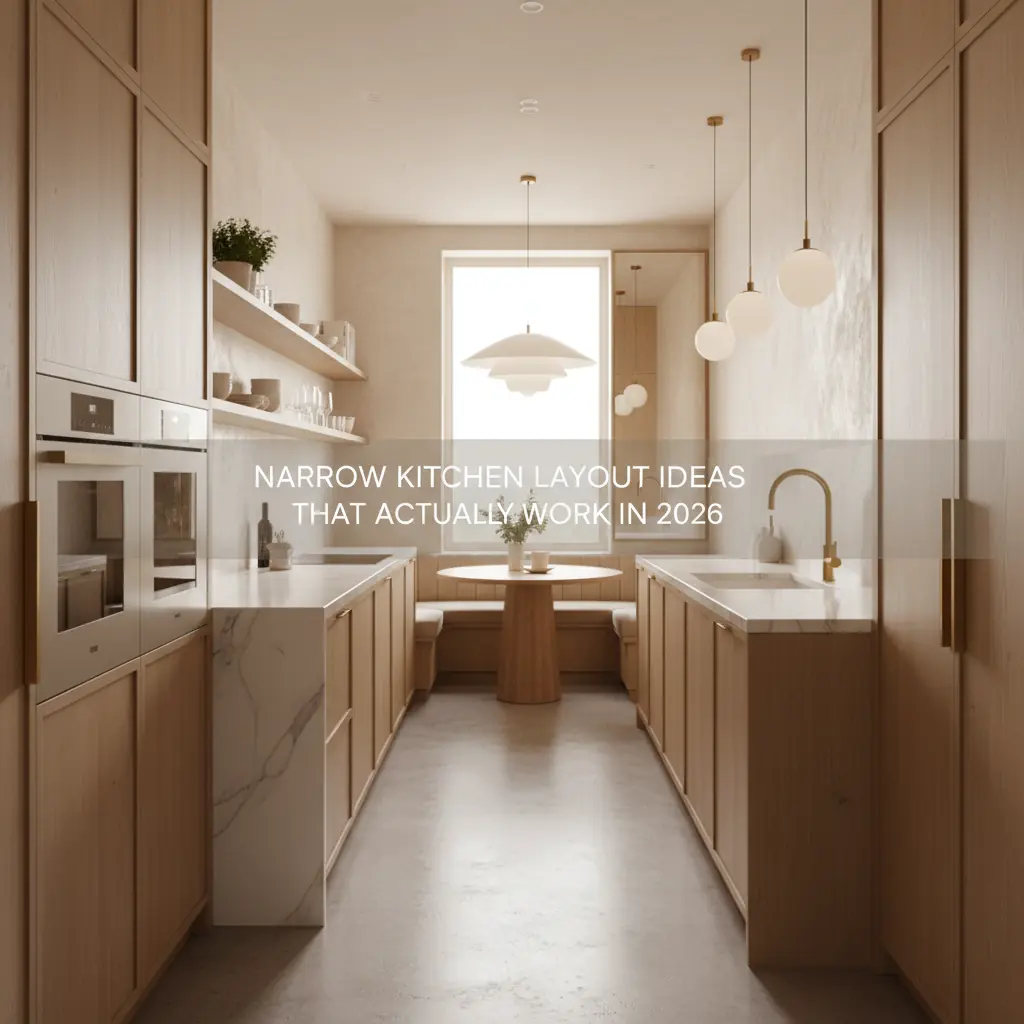
Entendendo Seu Tipo de Cozinha Estreita: Corredor vs. Uma Parede
Navegar pelas restrições de uma cozinha estreita não significa sacrificar estilo ou funcionalidade. Na verdade, uma cozinha estreita bem projetada pode ser excepcionalmente eficiente e surpreendentemente bonita. Para casas com menos de 1,500 sq ft, é comum que as cozinhas tenham menos de 80 sq ft, ressaltando a importância dessas estratégias de economia de espaço. A chave para liberar todo o potencial da sua cozinha estreita reside em identificar com precisão sua configuração e compreender as estratégias exclusivas aplicáveis a ela. De modo geral, cozinhas estreitas se enquadram em dois tipos principais: a cozinha em corredor (galley) e a cozinha de uma parede (one-wall).
**Cozinhas em corredor (galley)** apresentam bancadas e armários em ambos os lados de uma passagem central, criando um espaço semelhante a um corredor. Este layout é reverenciado por sua eficiência, muitas vezes espelhando cozinhas de restaurantes profissionais onde cada ferramenta e ingrediente está ao alcance. O desafio aqui é garantir que a passagem permaneça funcional e desobstruída.
**Cozinhas de uma parede (one-wall)**, por outro lado, consolidam todos os componentes essenciais — pia, fogão, geladeira e armários — ao longo de uma única parede. O lado oposto geralmente é aberto para uma área de jantar, sala de estar ou uma passagem livre. Essa configuração se destaca por promover uma sensação aberta e arejada, mas exige soluções engenhosas para maximizar o armazenamento e o espaço de bancada dentro de sua área limitada.
A medida crítica que influencia todas as decisões de design é a **largura da sua passagem**. Embora os códigos de construção geralmente exijam um mínimo de 36 inches de passagem livre em uma cozinha residencial, 42-48 inches é onde o espaço começa a parecer confortável para um único cozinheiro. Se duas pessoas frequentemente compartilham a cozinha, 48 inches é o mínimo realista para um movimento confortável. Antes de tomar qualquer decisão de layout, pegue uma fita métrica. Esta dimensão crucial ditará se você pode acomodar bancadas opostas, uma pequena ilha, ou se uma configuração de um lado é a sua melhor aposta.
Se a passagem da sua cozinha em corredor atual estiver abaixo de 36 inches com armários em ambos os lados, vale a pena considerar seriamente a conversão para um layout de uma parede. Embora perder metade do espaço de bancada possa parecer assustador, os benefícios psicológicos e práticos de uma passagem funcional e a maior abertura muitas vezes fazem a cozinha parecer o dobro do tamanho e muito mais agradável de usar. Isso não é apenas sobre utilidade; é sobre transformar um espaço apertado em um confortável, um componente crítico do smart interior design, como explorado em nosso guia sobre [soluções para formatos de cômodos estranhos](/blog/awkward-room-shape-solutions).
Maximizando a Cozinha em Corredor: Eficiência em um Corredor
O layout em corredor, apesar de sua estreiteza, é na verdade celebrado por ser um dos design de cozinha mais eficientes do ponto de vista do fluxo de trabalho. Sua natureza linear permite um triângulo de trabalho compacto – a colocação estratégica da pia, fogão e geladeira – garantindo que tudo o que você precisa esteja a um ou dois passos. É por isso que cozinhas profissionais frequentemente adotam um layout similar e altamente otimizado. Em uma cozinha em corredor típica, o triângulo de trabalho geralmente posiciona a pia e o fogão de um lado (otimamente compartilhando encanamentos e linhas de gás), com a geladeira na parede oposta.
**Espaço de Bancada é Ouro:** Cada inch de espaço de bancada em uma cozinha em corredor estreita é preciosa. Você precisa de zonas de apoio práticas: almeje pelo menos 15 inches de bancada em cada lado do fogão para apoiar panelas quentes, e um mínimo de 18 inches em um dos lados da pia para um escorredor ou área de preparo dedicada. Se bancadas padrão de 25 inches de profundidade tornarem sua passagem desconfortavelmente apertada, considere um compromisso estratégico: reduza a profundidade da bancada para 22 inches de um lado. Este pequeno ajuste sacrifica 3 inches de superfície de preparo, mas lhe concede 3 inches a mais em sua passagem, o que pode parecer transformador e melhorar significativamente o fluxo. Este tipo de planejamento preciso é onde ferramentas como Habitas podem ser inestimáveis, permitindo que você visualize dimensões exatas e seu impacto antes de se comprometer com mudanças caras. Usar uma plataforma de AI como Habitas pode reduzir o tempo de visualização do design de semanas para minutos, economizando taxas de design que podem variar de $500 a $5,000 para um único cômodo, permitindo que os proprietários testem ideias rapidamente.
**Otimizando as Pontas:** As paredes curtas em cada extremidade de uma cozinha em corredor são frequentemente negligenciadas, mas apresentam excelentes oportunidades para maximizar a utilidade. Em vez de deixá-las em branco, considere adicionar:
- Uma prateleira estreita montada na parede para livros de receitas ou itens decorativos. - Um suporte magnético para facas, mantendo as facas guardadas com segurança e as bancadas livres. - Um porta-temperos montado na parede, colocando temperos usados com frequência exatamente onde você precisa. - Uma escrivaninha fina montada na parede ou uma mesa dobrável que pode ser levantada para uma refeição rápida.
Esses acréscimos colocam armazenamento e função exatamente onde você precisa, sem invadir a preciosa passagem.
Desvendando o Potencial em Cozinhas de Uma Parede
Embora muitas vezes percebido como menos funcional, o layout de cozinha de uma parede oferece uma vantagem distinta: abertura. Ao consolidar todos os elementos principais em uma única parede, ele libera o espaço ao redor, tornando-o ideal para a vida em conceito aberto. O desafio aqui é fazer com que essa única parede trabalhe mais e de forma mais inteligente.
**Criando Zonas:** Mesmo em uma parede, você pode definir sutilmente diferentes zonas de trabalho. Posicione a pia centralmente, com a máquina de lavar louça adjacente. Flanqueie-a com espaço de bancada suficiente para preparo. A geladeira geralmente ancora uma extremidade, e o fogão a outra, criando um fluxo lógico. Se o espaço permitir, integrar despensas deslizantes ou armários para eletrodomésticos inteligentemente projetados pode melhorar vastamente a funcionalidade sem consumir espaço adicional.
**A Ilusão de Profundidade:** Como você não tem bancadas opostas, concentre-se em materiais e elementos de design que criam profundidade. Um backsplash contínuo que percorre todo o comprimento da parede, mesmo que se estenda ligeiramente ao redor do canto se encontrar uma parede perpendicular, atrai o olhar e faz a parede parecer mais longa. Incorpore prateleiras abertas em uma extremidade para aliviar a carga visual e exibir itens decorativos, ou use armários com portas de vidro.
**Adicionando Extensões Funcionais:**
- **Ilhas Móveis:** Uma ilha fina e independente com rodas pode fornecer um valioso espaço adicional para preparo ou um local temporário para refeições. Ela pode ser movida para fora do caminho quando não estiver em uso, oferecendo a flexibilidade que uma ilha fixa não pode. - **Extensões de Península:** Se sua cozinha de uma parede estiver no final de um cômodo, considere estender a bancada em uma península. Isso oferece espaço extra de bancada, assentos e pode definir sutilmente a área da cozinha em relação ao espaço de convivência sem uma parede completa. Explore como a AI pode ajudá-lo com a [ferramenta de arranjo de móveis com IA](/blog/ai-furniture-arrangement-tool) para testar essas ideias de layout.
Armazenamento Vertical e a Questão dos Armários Superiores
Em qualquer cozinha estreita, pensar verticalmente é inegociável. No entanto, armários superiores, embora ofereçam armazenamento valioso, podem criar um "efeito túnel" visual, fazendo com que um ambiente já apertado pareça ainda mais restrito e claustrofóbico. A tendência moderna de design de remover completamente os armários superiores funciona lindamente em cozinhas estreitas – mas apenas se seus armários de base e despensa puderem compensar adequadamente.
**Alternativas Inteligentes para Armários Superiores:** Se você não pode se dar ao luxo de perder o armazenamento, várias soluções de compromisso funcionam bem:
- **Prateleiras Abertas:** Substituir armários superiores com portas sólidas por prateleiras abertas reduz imediatamente o volume visual, permitindo que o olhar viaje mais longe. Isso também incentiva exibições curadas, forçando você a manter as coisas arrumadas. - **Armários com Portas de Vidro:** Estes oferecem um meio-termo, proporcionando armazenamento fechado enquanto ainda abrem visualmente o espaço. Use-os para louças ou copos atraentes. - **Armários Rasos:** Se o espaço for extremamente limitado, considere instalar armários superiores mais rasos (10-12 inches de profundidade em vez do padrão de 14 inches) em um dos lados de uma cozinha em corredor, especialmente para itens como copos ou temperos.
**Reaproveitando Espaços Mortos:** Cada canto e fresta pode ser uma oportunidade de armazenamento:
- **Dentro das Portas dos Armários:** Instale porta-temperos, ganchos para xícaras de medição ou organizadores de produtos de limpeza na parte interna das portas dos armários. - **Despensas Deslizantes:** Uma despensa deslizante alta e estreita (6-9 inches de largura) pode caber em pontos surpreendentemente apertados, como entre a geladeira e uma parede. Estes são perfeitos para temperos, óleos, produtos enlatados ou armazenamento de vassouras. - **Paneleiros Suspensos no Teto:** Estes mantêm os utensílios de cozinha acessíveis sem usar o precioso espaço dos armários. Em cozinhas estreitas, eles geralmente funcionam melhor posicionados nas extremidades do corredor ou acima de uma zona de cozimento dedicada, em vez de no centro, onde podem impedir o movimento. - **Sistemas de Pegboard ou Trilhos Montados na Parede:** Sistemas como o KUNGSFORS da IKEA instalados no backsplash entre armários superiores e inferiores fornecem armazenamento ajustável e visível para utensílios, pequenas panelas e ferramentas usadas com frequência. Isso mantém as bancadas abençoadamente livres – um objetivo crítico em uma cozinha onde cada centímetro quadrado de espaço de bancada importa.
Iluminação que Amplia o Espaço e Aprimora o Ambiente
Cozinhas estreitas frequentemente sofrem por parecerem escuras e apertadas, em grande parte devido a uma iluminação inadequada ou mal planejada. Uma única luminária de teto central projeta sombras precisamente onde você mais precisa de luz – nas suas bancadas. A iluminação estratégica pode não apenas clarear o espaço, mas também criar a ilusão de largura e profundidade.
**Atualizações de Iluminação de Alto Impacto:**
- **Fitas de LED Sob Armários:** Estas são, sem dúvida, a atualização de iluminação de maior impacto para qualquer cozinha estreita. Elas iluminam diretamente suas superfícies de trabalho, eliminam sombras projetadas pelos armários superiores e adicionam um brilho ambiente quente e convidativo que instantaneamente faz o espaço parecer maior e mais acolhedor. - **Luzes de Teto Embutidas:** Para iluminação geral, luzes de teto embutidas de 4 inches (spots) espaçadas uniformemente ao longo do centro da passagem fornecem luz uniforme e discreta, sem luminárias penduradas que possam rebaixar visualmente o plano do teto. - **Pendentes (Usados com Moderação):** Se a altura do seu teto for generosa (8 feet ou mais), um par de pendentes pequenos e visualmente leves pode adicionar interesse visual sobre uma zona específica, como um pequeno balcão de café da manhã no final de um corredor ou uma área de preparo designada. Posicione-os cuidadosamente para evitar obstruir a passagem. - **Iluminação de Rodapé (Toe-Kick):** Fitas de LED sutis instaladas sob os armários de base podem criar um brilho suave ao longo do chão, fazendo com que os armários pareçam flutuar e adicionando uma camada inesperada de profundidade e sofisticação.
**Aproveitando a Luz Natural:** Se sua cozinha estreita tiver uma janela, priorize mantê-la desobstruída. Tratamentos de janela simples, como persianas rolô ou cortinas romanas translúcidas, são preferíveis a cortinas pesadas. Se a luz natural for limitada, incorporar iluminação de tarefa e superfícies reflexivas torna-se ainda mais crucial.
Truques de Cores e Materiais para Ampliar a Percepção
O impacto das escolhas de cores e materiais no espaço percebido não pode ser subestimado em uma cozinha estreita. Cores claras nas paredes e armários são um truque bem estabelecido para fazer os ambientes parecerem mais amplos, mas a aplicação específica é importante. Estudos mostram que cozinhas de cores claras podem sentir-se até 20% maiores do que aquelas com paletas escuras, um ganho visual significativo em espaços apertados.
**Magia Monocromática:** Se você pintar paredes e armários da mesma cor clara – pense em branco nítido, cinza pálido, sálvia suave ou um off-white cremoso – as fronteiras entre esses elementos se dissolvem. A cozinha então é lida como um espaço contínuo e fluido, em vez de uma coleção de caixas separadas. Este "truque da mesma cor" é um dos expansores visuais mais eficazes disponíveis. Considere explorar diferentes tons com um [gerador de paleta de cores com IA](/blog/ai-color-palette-generator). Para um visual clássico e brilhante, você também pode encontrar inspiração em [dicas de design para ambientes totalmente brancos](/blog/all-white-room-design-tips).
**Piso para Fluxo:**
- **A Direção Importa:** Assente réguas (madeira ou LVT) ou ladrilhos retangulares perpendicularmente ao eixo longo da cozinha (através da dimensão estreita) para atrair visualmente o olhar através do cômodo, fazendo-o parecer mais largo. - **Ladrilhos de Grande Formato:** Usar ladrilhos de piso maiores (por exemplo, 12x24 inches ou maiores) reduz o número de linhas de rejunte, minimizando a desordem visual e contribuindo para uma sensação mais expansiva. - **Piso Contínuo:** Se sua cozinha se abre para um cômodo adjacente, usar o mesmo material de piso contínuo conectando os espaços de forma harmoniosa elimina a quebra visual que muitas vezes faz uma cozinha estreita parecer um corredor separado e apertado.
**Superfícies Reflexivas para Profundidade:**
- **Backsplashes Brilhantes:** Materiais como azulejos tipo metrô brilhantes, porcelanato polido ou ladrilhos de vidro refletem a luz, a espalhando pelo ambiente e criando uma sensação de profundidade. - **Backsplashes Espelhados:** Embora audacioso, um backsplash espelhado pode dramaticamente dobrar a largura percebida de uma cozinha estreita, especialmente quando posicionado para refletir uma janela ou fonte de luz. - **Aço Inoxidável:** Eletrodomésticos e backsplashes de aço inoxidável também oferecem propriedades reflexivas e uma estética moderna e elegante que reduz a desordem visual.
**Habitas para Visualização:** É aqui que a Habitas realmente brilha. Você pode carregar uma foto da sua cozinha atual e, com alguns cliques, visualizar como diferentes combinações de materiais e cores ficariam. Compare uma variante de armário escuro com uma clara, teste diferentes opções de piso ou veja o impacto de um backsplash reflexivo para realmente entender a diferença no _seu espaço específico_ antes de tomar qualquer decisão cara. É assim que este poderoso [design de interiores com IA funciona](/blog/ai-interior-design-how-it-works) na prática.
Otimização do Espaço de Bancada: Maximizando Cada Superfície
Em uma cozinha estreita, a desordem na bancada é mais do que apenas desagradável; ela diminui ativamente seu espaço de trabalho disponível e faz o ambiente parecer menor e mais caótico. O objetivo é eficiência implacável e utilização inteligente de cada centímetro quadrado.
**A Regra dos Eletrodomésticos:** Adote uma regra estrita: apenas os itens que você usa diariamente (por exemplo, cafeteira, bloco de facas, talvez uma torradeira) ganham um lugar permanente na bancada. Tudo o mais – batedeira, liquidificador, processador de alimentos, máquina de waffle – vai para um armário ou despensa e sai apenas quando necessário.
**Superfícies de Trabalho Flexíveis:**
- **Carrinhos de Tábua de Açougueiro Portáteis:** Um robusto carrinho de tábua de açougueiro com rodas serve como um valioso espaço extra de bancada durante o cozimento. Ele pode ser empurrado para o centro de uma cozinha em corredor para preparo e depois encostado em uma parede ou em uma área de jantar adjacente quando não for necessário. Procure carrinhos de cerca de 24x18 inches – estreitos o suficiente para caber sem obstruir a maioria das passagens. - **Tábuas de Corte Sobre a Pia:** Estas tábuas de corte feitas sob medida se encaixam diretamente sobre sua pia, criando um espaço temporário e altamente conveniente para preparo, exatamente onde você precisa. Elas geralmente dobram-se ou armazenam-se verticalmente, tornando-as ideais para pequenas cozinhas. - **Soluções Integradas:** Considere ter uma tábua de corte personalizada projetada para deslizar sobre uma lixeira deslizante ou um compartimento designado para tábuas de corte dentro de seus armários.
**Elementos de Dupla Finalidade:**
- **Mesas Dobráveis de Parede ou Extensões Drop-Leaf:** No final de uma cozinha em corredor ou de uma cozinha de uma parede, uma mesa dobrável de parede pode fornecer uma opção de refeição muito necessária sem ocupar permanentemente o espaço do chão. Quando dobradas, elas podem ter apenas 3-4 inches de profundidade, rentes à parede. Quando estendidas, podem acomodar confortavelmente duas pessoas para o café da manhã ou uma refeição rápida. Esta abordagem de dupla utilização é o que realmente torna as cozinhas estreitas habitáveis e funcionais, não apenas práticas. - **Armários para Eletrodomésticos (Appliance Garages):** Se você tem armários de base mais profundos ou pode construir um, um "appliance garage" é uma seção de armário com uma porta retrátil (como uma porta de enrolar) que mantém pequenos eletrodomésticos guardados, mas facilmente acessíveis quando necessários, preservando o precioso espaço da bancada.
Uma reforma menor na cozinha geralmente rende um ROI de 70-80% na revenda, tornando as escolhas de design inteligentes um investimento valioso, especialmente considerando que o custo médio de uma reforma de cozinha nos EUA varia de $20,000 a $60,000. Investir em design inteligente e que economiza espaço não é apenas sobre a conveniência diária; é sobre maximizar o valor da sua casa.
Perguntas Frequentes
### Qual é o melhor layout para uma cozinha estreita?
O "melhor" layout depende das dimensões específicas da sua cozinha e de como ela se conecta a outros cômodos. Para máxima eficiência, um **layout em corredor (galley)** com eletrodomésticos formando um triângulo de trabalho compacto (pia, fogão, geladeira) é frequentemente superior, especialmente para um único cozinheiro. Se a cozinha se abre para um espaço de convivência, um **layout de uma parede (one-wall)** oferece maior abertura psicológica, liberando a parede oposta para circulação ou integração com a área de jantar. Priorize uma largura de passagem suficiente (pelo menos 36-42 inches) acima de tudo.
### Como posso fazer uma cozinha estreita parecer maior?
Vários truques de design podem melhorar drasticamente a percepção de espaço em uma cozinha estreita. Use um esquema de cores monocromático com **cores claras** (branco, cinza pálido, tons pastel suaves) para paredes, armários e até bancadas para criar uma sensação contínua e expansiva. Incorpore **superfícies reflexivas** como backsplashes brilhantes, armários com portas de vidro ou até mesmo um grande espelho no final de um corredor para refletir a luz e adicionar profundidade. Assente **réguas de piso perpendicularmente** ao eixo longo do ambiente e use piso contínuo da cozinha para espaços adjacentes. Otimize a iluminação com LEDs sob os armários e luzes de teto embutidas para iluminar cada canto.
### É possível colocar uma ilha em uma cozinha estreita?
Geralmente, uma ilha tradicional e fixa **não é recomendada** para cozinhas realmente estreitas, pois pode obstruir severamente a passagem essencial. Para manter uma folga confortável e em conformidade com o código (mínimo de 36-42 inches em todos os lados), a maioria das cozinhas estreitas simplesmente não tem a largura. No entanto, você pode usar **carrinhos de tábua de açougueiro móveis com rodas** ou **ilhas finas e rolantes** (frequentemente com 18-24 inches de profundidade) que podem ser movidas para o local de preparo e depois empurradas para o lado quando não estiverem em uso. Uma **extensão de península** a partir de uma cozinha de uma parede é outra opção viável que oferece funcionalidade semelhante a uma ilha sem exigir espaço central no chão.
### Quais são as melhores soluções de armazenamento para uma cozinha pequena e estreita?
Maximizar o espaço vertical e incorporar gavetas deslizantes inteligentes são cruciais. Considere **despensas deslizantes altas e estreitas** (6-9 inches de largura) para temperos ou produtos enlatados. Instale **suportes magnéticos para facas** e **sistemas de trilhos montados na parede** para utensílios e ferramentas usadas com frequência para manter as bancadas livres. Use **organizadores internos nas portas dos armários** para temperos, produtos de limpeza ou xícaras de medição. Substitua alguns armários superiores por **prateleiras abertas ou armários com portas de vidro** para reduzir o volume visual enquanto mantém o armazenamento. Paneleiros suspensos (colocados estrategicamente) e acessórios de pia multifuncionais também ajudam a liberar espaço.
### Qual é a largura mínima de passagem para uma cozinha funcional?
Os códigos de construção geralmente exigem um **mínimo de 36 inches** de passagem livre em uma cozinha residencial. No entanto, este é o mínimo absoluto. Para um uso confortável por um único cozinheiro, almeje **42 inches**. Se duas pessoas forem cozinhar frequentemente ao mesmo tempo, **48 inches** é o mínimo realista para permitir movimento, abertura de portas de eletrodomésticos e passagem sem colisão. Sempre meça cuidadosamente a largura da sua passagem existente ou planejada antes de finalizar seu layout.