Design de Sala de Estar em Conceito Aberto: Estratégias Maestras de Zoneamento
Desvende o potencial da sua sala de estar em conceito aberto. Aprenda estratégias de especialistas para definir zonas distintas usando móveis, tapetes, iluminação e cores para um espaço coeso e intencional.
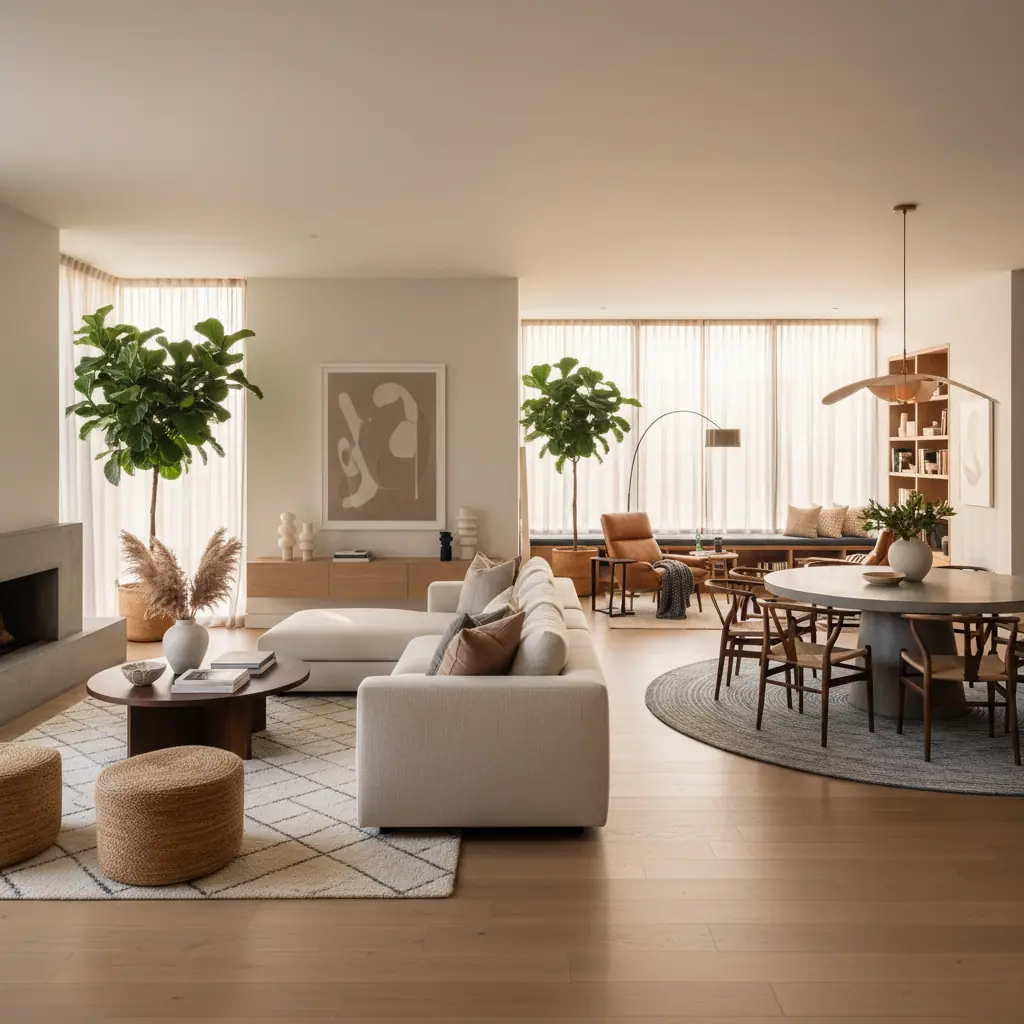
Qual é o paradoxo da planta aberta no design de interiores?
Plantas abertas são celebradas por sua amplitude, abundante luz natural e fluxo contínuo, características muito cobiçadas na vida moderna. No entanto, essa própria abertura apresenta um desafio de design único: sem paredes tradicionais para delinear os cômodos, como criar áreas distintas que pareçam propositais, íntimas e funcionais? Este é o "paradoxo da planta aberta". Um espaço aberto subdesenvolvido pode facilmente parecer um showroom de móveis expansivo e sem foco – uma coleção de itens em vez de um lar coeso.
A verdadeira solução reside em dominar a _arquitetura invisível_ – a arte de usar elementos de design como móveis, tapetes, iluminação e cores para estabelecer limites psicológicos. Esses limites guiam o movimento, definem zonas e criam uma sensação de estrutura e intenção sem as barreiras físicas das paredes. O objetivo não é fragmentar o espaço, mas dar a cada área sua própria identidade e propósito, mantendo o fluxo harmonioso que torna as plantas abertas tão atraentes.
Como os móveis podem definir zonas sem paredes?
Os móveis são inegavelmente a ferramenta mais poderosa para criar zonas distintas em uma sala de estar em conceito aberto. Pense em peças grandes não apenas como assentos ou armazenamento, mas como elementos arquitetônicos que esculpem seu espaço.
As costas de um sofá, por exemplo, são um divisor de ambiente instantâneo. Posicione um sofá modular substancial ou um par de sofás de frente para um ponto focal como uma lareira ou TV, com suas costas intencionalmente orientadas para a área de jantar ou cozinha. Isso imediatamente cria uma zona de estar dedicada. Para aprimorar essa separação e adicionar funcionalidade, considere colocar uma mesa console estreita ou uma estante baixa e aberta atrás do sofá. Isso cria uma quebra visual limpa, oferece espaço de superfície adicional para luminárias ou objetos decorativos e reforça o limite sem bloquear a luz ou as linhas de visão.
Além dos sofás, outras peças de mobiliário se destacam como divisores sutis:
- **Estantes e Unidades de Prateleiras Abertas:** Estes são campeões da funcionalidade dupla. Estantes altas e de fundo aberto podem separar fisicamente os espaços, permitindo a passagem da luz e mantendo aquela sensação arejada. Estantes baixas ou aparadores fornecem uma quebra visual ao nível dos olhos, oferecendo valioso espaço de armazenamento ou exibição. Eles efetivamente separam uma área da outra sem isolá-la completamente. - **Aparadores e Buffets:** Posicionado estrategicamente, um aparador pode marcar a transição entre a área de jantar e a sala de estar, fornecendo armazenamento para louças enquanto ancora visualmente a zona de jantar. - **Bancos de Destaque ou Pufes:** Um banco longo posicionado na borda de uma área de estar pode sutilmente sugerir um limite, especialmente quando combinado com um tapete. - **Mesas Flutuantes ou Estações de Trabalho:** Em um espaço aberto multifuncional, uma mesa flutuante elegante pode definir um canto compacto para home office.
Ao selecionar móveis, considere sua escala e proporção em relação a todo o espaço aberto. Peças excessivamente volumosas podem sobrecarregar, enquanto muitos itens pequenos podem fazer a área parecer bagunçada. A chave é selecionar peças que tenham tamanho e disposição apropriados para apoiar sua zona designada sem interromper o fluxo geral. Para ajudar a visualizar esses arranjos, ferramentas como a [ferramenta de arranjo de móveis com IA](/blog/ai-furniture-arrangement-tool) podem ser inestimáveis, permitindo que você experimente layouts virtualmente.
Como os tapetes ajudam a definir zonas distintas em um conceito aberto?
Os tapetes são os heróis desconhecidos do design de conceito aberto, definindo zonas no plano do chão com notável eficácia. Pense neles como "paredes de chão" macias e flexíveis que sinalizam uma nova área para o cérebro sem interromper as linhas de visão.
A estratégia é simples, mas impactante: cada zona principal deve receber seu próprio tapete. Um tapete de área grande e de tamanho apropriado ancora a área de estar principal, garantindo que pelo menos as pernas dianteiras de todas as principais peças estofadas (sofá, poltronas) repousem sobre ele. Isso cria uma "ilha" unificada para conversação e relaxamento. Um passadeiro pode então delinear um caminho, um ponto de entrada ou um corredor de transição. Para a zona de jantar, um tapete grande o suficiente para acomodar a mesa de jantar e todas as cadeiras (mesmo quando puxadas para fora) define claramente o espaço de refeições. Um tapete menor e decorativo pode marcar um canto de leitura ou um canto de meditação dedicado.
Para uma estética coesa em toda a planta aberta, é crucial manter a harmonia nas suas escolhas de tapetes. Embora cada tapete defina uma área distinta, eles devem ainda se sentir conectados. Isso pode ser alcançado por:
- **Família de Cores:** Mantendo tapetes dentro da mesma paleta de cores, talvez variando tons ou saturações. - **Coesão Material:** Usando tapetes feitos de fibras naturais semelhantes (por exemplo, juta, lã) ou com texturas comparáveis. - **Repetição/Contraste de Padrões:** Empregando tapetes com padrões sutis e complementares ou optando por uma mistura de sólidos e padrões que compartilham um tema de cor.
O objetivo é que as mudanças no plano do chão sinalizem "nova área" sem fazer com que o espaço geral pareça desconectado. Os tapetes devem trabalhar juntos como uma sinfonia, não uma cacofonia. Estudos mostram que um espaço bem definido, mesmo sem paredes físicas, melhora muito a capacidade do proprietário de apreciar e utilizar seu ambiente. Estima-se que 82% dos agentes de compradores dizem que a encenação de uma casa, que muitas vezes inclui o posicionamento estratégico de tapetes para definir áreas, torna mais fácil para um comprador visualizar a propriedade como uma futura casa.
Como a iluminação estratégica cria atmosfera e define zonas?
Diferentes iluminações em cada zona são, sem dúvida, a maneira mais sofisticada de criar separação e adaptar o humor dentro de um espaço de planta aberta. A iluminação oferece flexibilidade incomparável, transformando o ambiente de brilhante e energético durante o dia para aconchegante e íntimo à noite, tudo com o toque de um interruptor.
Cada zona deve ter seu próprio esquema de iluminação dedicado, compreendendo uma mistura de iluminação ambiente, de tarefas e de destaque:
- **Iluminação Ambiente:** Fornece iluminação geral para o espaço. Em uma planta aberta, a iluminação embutida ou uma luminária central de teto podem fornecer luz geral, mas zonas específicas se beneficiarão de suas próprias fontes de luz ambiente. - **Iluminação de Tarefas:** Essencial para atividades dentro de uma zona. Uma luminária pendente ou lustre sobre a mesa de jantar, um abajur de chão ou de mesa ao lado de uma cadeira de leitura na área de estar, ou iluminação sob os armários em uma zona de cozinha são exemplos primários. - **Iluminação de Destaque:** Destaca características arquitetônicas, obras de arte ou elementos decorativos, adicionando profundidade e interesse visual. Pense em luzes de imagem sobre obras de arte ou uplights estrategicamente posicionados para plantas.
Considere estas aplicações específicas:
- **Área de Estar:** Concentre-se no calor e conforto. Combine iluminação suave no teto com vários abajures de chão e de mesa para criar focos de luz que convidam ao relaxamento. - **Área de Jantar:** Um pendente ou lustre de destaque sobre a mesa de jantar não só fornece iluminação de tarefas essencial, mas também serve como uma âncora visual, atraindo o olhar e marcando claramente a zona de refeições. - **Canto de Trabalho:** A iluminação de tarefas é primordial aqui. Uma luminária de mesa focada, possivelmente combinada com uma pequena luz no teto, garante produtividade sem espalhar luz forte para as zonas adjacentes. - **Entrada:** Uma luminária de teto decorativa ou um par de arandelas de parede pode definir o espaço de transição, oferecendo uma recepção calorosa.
Dimmers não são apenas um luxo; são essenciais em plantas abertas. Eles concedem controle preciso sobre a intensidade da luz em cada zona, permitindo diminuir as luzes da cozinha durante o jantar, iluminar a área de estar para conversas ou criar um brilho suave e convidativo em todo o espaço. Essa capacidade de manipular a luz permite criar foco e humor que as paredes, de outra forma, proporcionariam, mudando fundamentalmente como o espaço se sente e funciona ao longo do dia e da noite. A integração de sistemas de iluminação inteligente pode aprimorar ainda mais esse controle, permitindo cenas predefinidas e ajustes automatizados. Para inspiração em esquemas de cores e iluminação coesos, explore recursos como o [gerador de paleta de cores com IA](/blog/ai-color-palette-generator).
Unificando com Paletas de Cores e Materiais: Coesão e Contraste
Enquanto móveis, tapetes e iluminação definem zonas individuais, uma paleta de cores e materiais bem pensada age como o fio condutor, tecendo todo o espaço de planta aberta em um todo harmonioso. O objetivo é criar uma sensação de coesão que permita ao olho fluir sem esforço de uma área para a próxima, enquanto ainda usa variações sutis para delinear zonas.
### Criando uma Base Harmoniosa
Comece com uma paleta de cores base consistente – tipicamente neutros como brancos, cremes, cinzas ou tons terrosos suaves – aplicada na maioria das paredes e peças de mobiliário maiores. Essa camada fundamental cria continuidade visual e evita que o espaço pareça desarticulado. Dentro dessa base, você pode introduzir mudanças sutis:
- **Tons Variados:** Use tons ligeiramente mais escuros ou mais claros do mesmo neutro em zonas adjacentes. Por exemplo, um branco cremoso e quente na sala de estar pode transitar para um bege ligeiramente mais profundo na área de jantar. - **Paredes de Destaque (Aplicadas com Discernimento):** Uma única parede de destaque em uma zona chave, como atrás do sofá ou dentro de um canto de leitura, pode adicionar definição sem sobrecarregar a abertura. Escolha uma cor que complemente sua paleta base. - **Elementos Repetidos:** Incorpore uma cor de destaque específica ou um material característico (por exemplo, madeira quente, metal frio, linho texturizado) em pequenas doses em diferentes zonas através de itens decorativos, têxteis ou detalhes de móveis. Isso cria um ritmo visual que conecta os espaços.
### Materialidade para Definição
Assim como a cor unifica, a textura e as escolhas de materiais podem sutilmente definir. Imagine uma mesa de centro de madeira rústica na área de estar complementada por uma elegante mesa de jantar de metal na zona adjacente. Ambas são distintas, mas se compartilharem um elemento comum, como um acabamento de madeira quente ou um determinado acento metálico em seus acessórios, elas mantêm a conexão.
- **Piso:** Embora um material de piso consistente (madeira, porcelanato de grande formato) em toda a planta aberta seja ideal para um fluxo contínuo, mesmo aqui, os tapetes introduzem uma "quebra" material que ajuda a definir. - **Acabamentos de Móveis:** Uma mistura de tons de madeira, metais polidos e vários tecidos de estofamento adiciona profundidade. Certifique-se de que haja um elemento recorrente – talvez uma estrutura de metal preto usada em prateleiras e pés de cadeiras – para amarrar tudo. - **Têxteis:** Introduza diferentes texturas dentro de cada zona – um sofá de veludo macio na sala de estar, cortinas de linho nítidas na área de jantar, uma manta de tricô volumosa em um canto de leitura. Essas diferenças táteis contribuem para a identidade única de cada espaço.
Ao selecionar e aplicar cuidadosamente suas paletas de cores e materiais, você cria um conceito aberto que se sente distinto em suas partes e coeso como um todo, falando a uma sofisticada sensibilidade de design.
Acessórios e Decoração Estratégicos: Reforçando a Identidade da Zona
Acessórios e decoração são os toques finais que trazem personalidade e propósito a cada zona definida em uma sala de estar em conceito aberto. Enquanto elementos maiores como móveis e tapetes estabelecem os limites, itens menores reforçam a identidade e a funcionalidade de cada área.
Pense nos acessórios como iniciadores de conversa para zonas individuais:
- **Área de Estar:** Agrupe itens decorativos em mesas de centro e mesas laterais que convidem ao relaxamento e à conversa. Isso pode incluir uma pilha de livros de design, uma vela perfumada, uma tigela escultural ou uma pequena coleção de lembranças pessoais. A arte na parede deve realçar a atmosfera confortável e convidativa. - **Área de Jantar:** Peças centrais na mesa de jantar, seja um vaso de flores frescas, uma tigela de frutas ou um elegante arranjo de velas, estabelecem firmemente este como um lugar para reuniões e refeições. A arte de parede aqui pode ser mais energética ou artística, complementando a experiência gastronômica. - **Canto de Trabalho:** Mantenha os acessórios funcionais e inspiradores. Um elegante porta-canetas, uma pequena planta, uma impressão motivacional emoldurada ou uma seleção curada de livros podem personalizar o espaço de trabalho e contribuir para o foco. - **Entrada:** Um espelho decorativo, um porta-chaves, uma pequena peça de arte ou uma planta acolhedora podem definir a zona de entrada, fornecendo elementos práticos enquanto estabelecem o tom para a casa.
A chave é manter uma _linguagem de design_ consistente em todo o espaço aberto, mesmo ao diferenciar com acessórios. Por exemplo, se seu estilo geral é minimalista, seus acessórios devem refletir essa simplicidade. Se é eclético, garanta que o ecletismo pareça curado, não caótico. Repetir certos materiais (por exemplo, detalhes em latão, cerâmica texturizada) ou cores em diferentes zonas através de acessórios ajuda a conectá-los visualmente. No entanto, cada zona também deve ter algumas peças únicas que realmente falem ao seu propósito. Esse equilíbrio cria interesse e evita que o espaço pareça estéril ou excessivamente temático.
Otimizando o Fluxo de Tráfego e Caminhos em Plantas Abertas
Um dos aspectos mais críticos, mas frequentemente negligenciados, do design de uma sala de estar em conceito aberto é garantir um fluxo de tráfego ideal. Sem paredes, os caminhos podem se tornar ambíguos, levando a uma navegação desajeitada ou gargalos. O posicionamento cuidadoso dos móveis é fundamental para guiar o movimento de forma natural e sem esforço.
Considere as rotas principais que as pessoas percorrerão em seu espaço aberto:
- **Da Entrada às Áreas Principais:** Existe um caminho claro e desobstruído da porta da frente para a área de estar, sala de jantar e cozinha? - **Entre as Zonas:** É possível mover-se facilmente da sala de estar para a sala de jantar, ou da cozinha para um canto de trabalho, sem ter que se espremer entre os móveis? - **Ao Redor dos Móveis:** Certifique-se de que há espaço suficiente ao redor de sofás, mesas e cadeiras. Uma regra geral é permitir pelo menos 75-90 cm para os caminhos principais e 45-60 cm para os caminhos secundários (por exemplo, entre uma mesa de centro e um sofá).
**Estratégias para caminhos claros:**
- **Móveis "Flutuantes":** Em vez de empurrar todos os móveis contra as paredes, flutue estrategicamente peças maiores (como sofás) no centro do ambiente para criar passarelas distintas atrás delas. - **Zonas de Ancoragem:** Posicione as maiores peças de mobiliário (sofá, mesa de jantar) para ancorar suas respectivas zonas, e então organize itens menores ao redor delas, deixando amplo espaço para movimento. - **Evite Obstruções:** Tenha cuidado ao colocar plantas altas, luminárias de chão ou biombos decorativos diretamente nas vias de tráfego principais. - **Dicas Visuais:** Tapetes também podem servir como dicas visuais para os caminhos. Um passadeiro pode naturalmente atrair o olhar e guiar o movimento ao longo de uma rota específica. - **Considere Portas e Janelas:** Certifique-se de que a disposição dos móveis não obstrua o acesso a portas externas ou bloqueie a luz natural das janelas.
Um fluxo de tráfego deficiente pode fazer com que mesmo o espaço aberto mais bem projetado pareça desconfortável e ineficiente. Ao planejar e visualizar cuidadosamente seus padrões de movimento, você pode criar um conceito aberto que não seja apenas visualmente deslumbrante, mas também altamente funcional e intuitivo de navegar. Plataformas de design com IA, como a Habitas, podem ajudar a visualizar esses caminhos e possíveis obstruções, permitindo que você refine layouts antes de fazer qualquer alteração física. Isso é particularmente útil, pois um processo de design de interiores tradicional pode levar semanas ou até meses para revisões de plantas baixas, enquanto a visualização por IA pode gerar designs de ambientes realistas e ajustes de layout em menos de 60 segundos.
Gerenciando Ruído e Acústica em um Conceito Aberto
Embora as plantas abertas se destaquem na promoção da conexão e da luz, elas frequentemente apresentam um desafio significativo: o controle de ruído. O som viaja livremente sem paredes, o que significa que conversas, televisão, música ou atividades de cozinha podem facilmente vazar entre as zonas, impactando o conforto e a privacidade. Uma pesquisa descobriu que 60% dos proprietários com plantas abertas identificaram o controle de ruído como um desafio significativo. No entanto, o design estratégico pode mitigar esses problemas acústicos.
Veja como introduzir a "arquitetura acústica" em seu conceito aberto:
- **Têxteis São Seus Amigos:** Móveis macios absorvem as ondas sonoras, reduzindo o eco e a reverberação. - **Tapetes de Área:** Quanto mais tapetes, melhor. Tapetes grandes e grossos (especialmente de lã ou de pelo alto) sob cada zona são incrivelmente eficazes. - **Cortinas/Draperias Pesadas:** Cortinas do chão ao teto feitas de tecidos substanciais podem amortecer drasticamente o som, especialmente em torno das janelas. - **Móveis Estofados:** Sofás, poltronas e pufes com estofamento abundante são melhores absorvedores de som do que móveis elegantes e de superfície dura. - **Almofadas e Mantas:** A sobreposição desses elementos macios nos assentos contribui para a absorção sonora. - **Painéis Acústicos e Arte:** Painéis acústicos modernos não são mais apenas para estúdios de gravação. Painéis elegantes revestidos de tecido podem ser integrados à arte da parede ou até mesmo a tratamentos de teto, oferecendo tanto apelo estético quanto propriedades significativas de amortecimento de som. - **Posicionamento Estratégico de Plantas:** Plantas grandes e frondosas (como Ficus lyrata ou Monstera) podem ajudar a quebrar as ondas sonoras e adicionar um toque de design biofílico. Agrupar várias plantas grandes pode criar uma barreira acústica sutil. - **Divisórias de Ambiente e Telas:** Embora o objetivo seja evitar paredes, telas decorativas, partições de madeira ripada ou até mesmo estantes abertas altas podem oferecer um certo grau de difusão sonora e privacidade visual sem fechar completamente um espaço. - **Materiais que Absorvem o Som:** Ao selecionar acabamentos, considere materiais como pisos de cortiça, papel de parede acústico ou até mesmo certos tipos de gesso texturizado para as paredes.
Ao incorporar conscientemente elementos que absorvem o som e posicionamentos estratégicos, você pode transformar seu espaço em conceito aberto em um ambiente que se sente expansivo e acusticamente confortável, permitindo que diferentes atividades coexistam harmoniosamente.
O Poder da Verticalidade: Trazendo Altura e Interesse
Em um espaço em conceito aberto, onde a expansão horizontal é um dado, introduzir níveis variados de verticalidade é crucial. Sem paredes para interromper as linhas de visão, a falta de interesse vertical pode fazer um cômodo parecer plano, indiferenciado e avassalador. O uso estratégico da altura atrai o olhar para cima, cria intriga visual e define ainda mais as zonas.
Considere estes elementos para construir camadas verticais:
- **Luminárias de Destaque:** Um lustre dramático sobre a mesa de jantar, um pendente oversized na sala de estar ou um abajur de chão escultural podem atuar como uma âncora aérea para uma zona, atraindo o olhar para cima e marcando claramente seus limites. - **Estantes ou Armários Embutidos do Chão ao Teto:** Estantes altas, sejam sob medida ou autônomas, fornecem não apenas imenso armazenamento, mas também significativa definição vertical. Elas podem servir como fundos impressionantes, armazenar coleções ou até mesmo abrigar um setup de home office escondido. - **Plantas e Árvores Altas:** Grandes plantas de interior são fantásticas para adicionar altura e textura orgânica. Um Ficus lyrata imponente ou uma elegante oliveira podem quebrar grandes extensões de parede, preencher cantos vazios e adicionar um toque de design biofílico, tornando um espaço mais vibrante e vivo. - **Móveis com Encosto Alto:** Embora a maioria dos móveis defina zonas horizontalmente, um sofá ou poltrona com um encosto particularmente alto pode oferecer um elemento vertical sutil, criando uma sensação de aconchego sem bloquear completamente a vista. - **Características Arquitetônicas:** Se o seu espaço permitir, considere adicionar molduras decorativas, lambris ou até mesmo uma mudança sutil na altura do teto (por exemplo, um teto bandeja) para delinear zonas de uma forma mais permanente e arquitetônica. - **Disposição da Arte:** Pendurar obras de arte em alturas variadas, ou escolher peças de tamanho grande, pode atrair o olhar através de diferentes planos verticais. Uma parede de galeria que se estende para cima pode adicionar peso visual a uma zona.
Ao incorporar cuidadosamente elementos que trazem altura e interesse visual, você evita o efeito de "showroom de móveis" e cria uma sala de estar em conceito aberto que se sente dinâmica, convidativa e em camadas. Essa atenção cuidadosa ao design vertical garante que, embora o espaço permaneça aberto, ele também possua uma profundidade e personalidade ricas.
Adotando Seu Estilo em um Conceito Aberto: Coesão Através da Linguagem de Design
Uma concepção errônea comum é que um espaço em conceito aberto força um único e monolítico estilo de design. Pelo contrário, embora a coesão seja fundamental, uma planta aberta permite uma exploração matizada da sua estética pessoal, desde que haja uma linguagem de design subjacente que una tudo. O desafio é permitir que cada zona se expresse sem conflitar com suas vizinhas.
Veja como manter a consistência do estilo, permitindo o caráter individual de cada zona:
- **Defina Seu Estilo Principal:** Antes de mergulhar nos detalhes, identifique o estilo de design abrangente que você prefere para sua casa (por exemplo, Minimalista Moderno, Eclético Boêmio, Aconchego Scandinavian, Chic Industrial). Este estilo central será seu princípio orientador. - **Elementos Consistentes:** - **Paleta de Cores:** Como discutido, uma paleta de cores base unificada é fundamental. Você pode introduzir cores de destaque que variam ligeiramente por zona, mas ainda pertencem ao mesmo esquema abrangente. - **Materialidade:** Decida sobre 2-3 materiais primários (por exemplo, madeira clara, metal preto fosco, tecidos de linho) que aparecerão consistentemente em todas as zonas, mesmo que em diferentes formas. - **Detalhes Arquitetônicos:** Se houver quaisquer elementos arquitetônicos fixos (por exemplo, lareira, vigas expostas), garanta que suas escolhas de design os complementem. - **Variações Sutis Dentro das Zonas:** - **Formas dos Móveis:** Embora o _estilo_ geral dos móveis deva ser alinhado, você pode variar as _formas_. Para uma estética moderna, você pode ter um sofá elegante e de perfil baixo na sala de estar e uma mesa de jantar com pernas esculturais na zona de jantar. - **Jogo de Acessórios:** É aqui que a personalidade individual da zona pode realmente brilhar. Uma sala de estar boêmia pode apresentar têxteis e plantas de inspiração global, enquanto uma área de jantar adjacente pode ter cerâmicas artesanais e uma luminária pendente única, tudo isso compartilhando um pano de fundo neutro comum e elementos de madeira natural. - **Arte:** A arte em cada zona pode ser distinta, mas ainda deve se encaixar no clima geral e na história de cores. Por exemplo, peças abstratas na sala de estar e gravuras botânicas na área de jantar, todas dentro de um estilo de moldura semelhante. - **Peças de Transição:** Empregue móveis ou decoração que naturalmente unem estilos ou zonas. Uma grande peça de arte abstrata que incorpora cores tanto da sala de estar quanto da área de jantar pode servir como um elo visual.
Lembre-se, o objetivo não é uma uniformidade estrita, mas um diálogo cuidadoso entre os espaços. Seu conceito aberto deve contar uma história coesa sobre sua estética, permitindo que cada capítulo (ou zona) tenha sua própria voz. Se você está com dificuldades para visualizar como diferentes estilos podem funcionar juntos em seu espaço, a Habitas pode ajudar. Carregue uma foto do seu espaço aberto e veja-o redesenhado com definição de zona adequada, estilo coeso e disposição de móveis que dão vida ao seu estilo escolhido. Isso permite que você experimente vários estilos e veja [designs de ambientes gerados por IA de forma realista](/blog/ai-generated-room-designs-realistic) antes de se comprometer com quaisquer mudanças. Casas com encenação profissional, que define meticulosamente as zonas e o estilo coerente, vendem 25% mais rápido em média, ressaltando o poder da intenção espacial clara.
Veja Sua Planta Aberta Redesenhada com Habitas
O design de planta aberta, com suas inúmeras possibilidades e potenciais armadilhas, pode ser incrivelmente difícil de visualizar a partir de uma mera planta baixa ou até mesmo de um mood board. A interação de móveis, tapetes, iluminação e cores, combinada com considerações de fluxo de tráfego e acústica, requer uma visão holística que muitas vezes é difícil de alcançar sem ferramentas especializadas.
É precisamente aqui que a Habitas transforma o processo de design. Em vez de adivinhar como um novo sofá modular pode definir sua área de estar ou qual tapete melhor ancora seu espaço de jantar, você pode carregar uma foto do seu espaço aberto real para a Habitas. Nossa plataforma com IA então fornece redesenhos instantâneos e realistas. Veja seu espaço reimaginado com definição de zona ideal, estilo coeso e a disposição precisa dos móveis que torna as plantas abertas não apenas funcionais, mas verdadeiramente espetaculares. Esteja você experimentando diferentes layouts de móveis, explorando novas paletas de cores ou tentando refinar sua estética escolhida, a Habitas oferece uma solução visual imediata. Descubra [como funciona o design de interiores com IA](/blog/ai-interior-design-how-it-works) e capacite-se para criar uma casa em conceito aberto lindamente zoneada, proposital e convidativa.
Perguntas Frequentes
### Quais são os principais benefícios de uma sala de estar em conceito aberto?
Salas de estar em conceito aberto oferecem inúmeros benefícios, principalmente maior luz natural, melhor fluxo e conectividade entre os espaços, e uma maior sensação de amplitude. Elas promovem a interação social, tornando mais fácil para as famílias se conectarem enquanto realizam diferentes atividades. Plantas abertas também podem fazer uma casa menor parecer maior e mais expansiva. Estudos mostram que layouts em conceito aberto podem aumentar o valor percebido de uma casa em 7-10%, refletindo sua popularidade entre os compradores de imóveis.
### Como tornar uma sala de estar em conceito aberto aconchegante?
Tornar um conceito aberto aconchegante envolve equilibrar sua amplitude inerente com elementos que convidam à intimidade e ao calor. Use tapetes de área grandes e macios para definir zonas e adicionar textura aconchegante. Incorpore muitos móveis macios, como sofás estofados, almofadas e mantas. Camadas de iluminação, utilizando dimmers para iluminação ambiente e de destaque para criar focos de luz quentes. Escolha uma paleta de cores quentes e convidativas e introduza materiais naturais como madeira e lã. Por fim, adicione toques pessoais, como obras de arte, livros e plantas, para fazer o espaço parecer habitado e confortável.
### Quais móveis são melhores para uma planta aberta?
Para plantas abertas, escolha móveis que sirvam a múltiplos propósitos ou que possam atuar como divisórias de ambiente sutis. Sofás modulares são excelentes para definir uma área de estar, enquanto mesas console colocadas atrás de sofás adicionam definição e espaço de superfície. Estantes baixas e abertas ou aparadores fornecem armazenamento e separação visual sem bloquear a luz. Opte por peças que tenham escala apropriada para o tamanho geral do ambiente – muito pequenas, e elas se perderão; muito grandes, e elas sobrecarregarão. Considere móveis com acabamento nas costas se eles forem flutuar no ambiente. Investir em peças fundamentais de qualidade para um conceito aberto, como um grande sofá modular ou um tapete de destaque, pode variar de US$2.000 a US$10.000+, mas são cruciais para um zoneamento eficaz.
### Como lidar com o ruído em uma sala de estar em conceito aberto?
Gerenciar o ruído é um desafio fundamental em salas de estar em conceito aberto. As melhores estratégias envolvem a incorporação de materiais que absorvem o som. Use abundância de móveis macios: tapetes de área grandes e espessos, cortinas ou draperias pesadas e móveis estofados. Introduza painéis acústicos de parede, que vêm em vários estilos decorativos. Plantas altas e frondosas também podem ajudar a difundir as ondas sonoras. O posicionamento estratégico dos móveis pode criar barreiras "suaves" que absorvem parte do ruído. Por fim, considere adicionar divisórias decorativas de ambiente ou telas ripadas que ofereçam separação visual e acústica parcial sem fechar completamente os espaços.
### É possível ter diferentes estilos de design em uma sala de estar em conceito aberto?
Sim, é absolutamente possível ter diferentes estilos de design dentro de uma sala de estar em conceito aberto, mas a chave é garantir um senso subjacente de coesão. Comece com uma paleta de cores base consistente e selecione 2-3 materiais primários (por exemplo, madeira clara, latão, linho) que reapareçam em todo o espaço. Permita que cada zona expresse uma nuance estilística ligeiramente diferente através de acessórios, obras de arte e formas de móveis específicas, desde que todas falem a mesma "linguagem de design" do seu estilo principal. Por exemplo, uma sala de estar Modern Farmhouse poderia ter uma área de jantar de inspiração Industrial, unida por um uso consistente de madeira de demolição e um esquema de cores neutras. Isso cria interesse e profundidade sem fazer o espaço parecer desarticulado.