Tendências de Design de Interiores de Restaurantes 2026: Criando Experiências Que Cativam Clientes
Descubra as principais tendências de design de interiores de restaurantes para 2026: elementos biofílicos, iluminação quente em camadas, cozinhas abertas e soluções acústicas essenciais. Atraia mais clientes com uma atmosfera de destaque.
O Efeito Instagram no design de Restaurantes: Além da Parede de Selfie
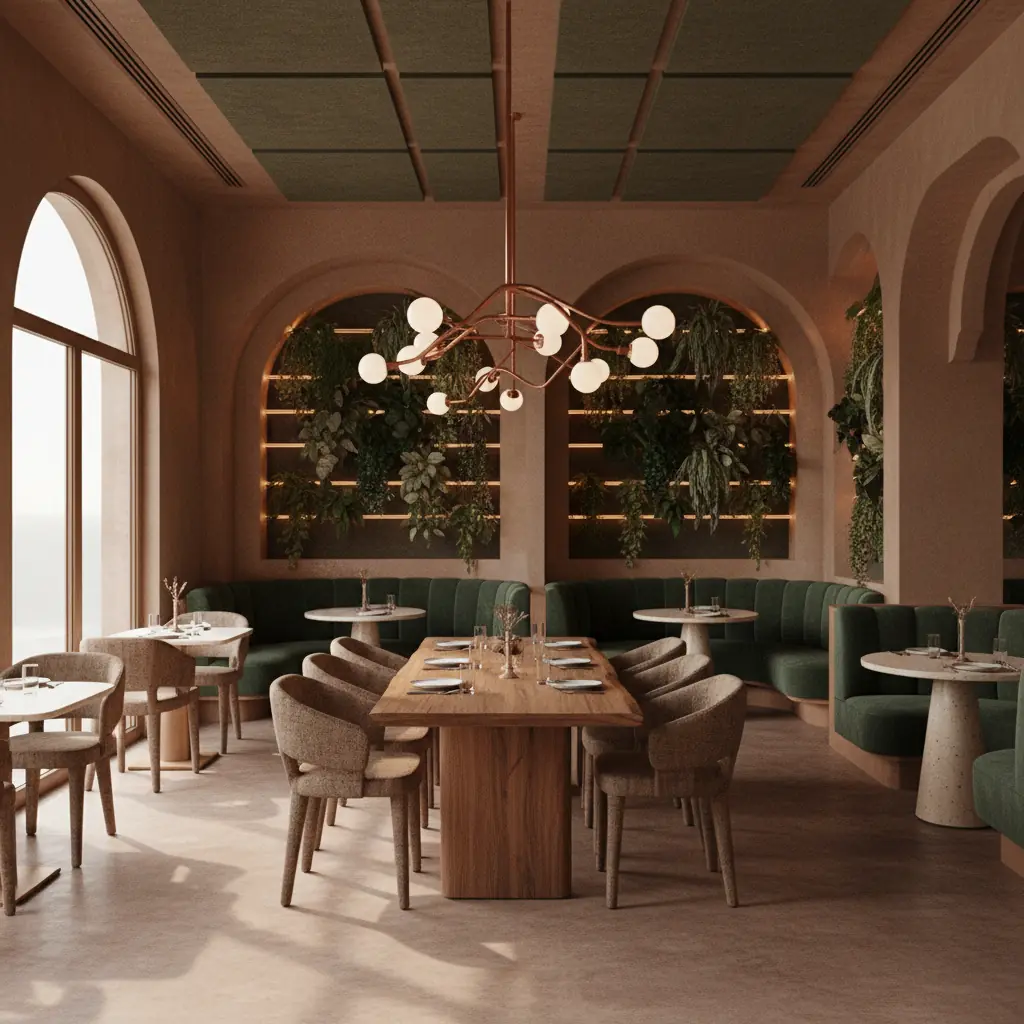
A relação entre mídias sociais e design de restaurantes amadureceu significativamente desde o início da era Instagram, com seus letreiros de neon e paredes de "avocado toast". Em 2026, os interiores de restaurantes mais bem-sucedidos são habilmente projetados para uma atmosfera genuína e uma experiência autêntica, em vez de oportunidades óbvias de fotos em um único ponto. Os clientes ainda compartilham fotos, é claro – mas eles compartilham espaços que parecem organicamente bonitos e convidativos, em vez de meramente "instagramáveis" de forma performática. A mudança é de cenários fabricados para um ambiente tão cuidadosamente elaborado que cada ângulo oferece um visual cativante.
Restaurantes que investem em qualidade consistente de materiais, iluminação bem planejada em camadas e uma linguagem de design coesa, descobrem que os clientes compartilham mais fotos — e, crucialmente, fotos mais autênticas — do que estabelecimentos que instalam um único pano de fundo fotogênico em paredes de outra forma sem graça. O próprio design se torna o conteúdo. Pesquisas indicam que restaurantes com uma estética coesa e de alta qualidade frequentemente registram até **30% a mais de engajamento nas mídias sociais**, levando a um aumento do alcance orgânico e a um poderoso marketing boca a boca. Não se trata mais de uma "parede de selfie"; trata-se de um salão de jantar que consistentemente conta uma história através de seu design, convidando os clientes a se imergirem e compartilharem naturalmente sua experiência.
Refeições Biofílicas: Trazendo o Exterior para Dentro
O design biofílico evoluiu de um conceito de nicho para uma força dominante e indispensável nos interiores de hospitalidade. Essa tendência não se resume a adicionar algumas plantas em vasos; trata-se de integrar perfeitamente elementos e padrões naturais ao ambiente construído para promover uma conexão com a natureza. Paredes de plantas vivas, floreiras suspensas intrincadas, árvores em vasos e até mesmo hortas de ervas integradas (às vezes fornecendo diretamente à cozinha — imagine "seu tempero estava crescendo na parede há cinco minutos") criam ambientes que parecem vivos, dinâmicos e profundamente relaxantes.
Materiais naturais são a base do design biofílico. Mesas de madeira rústica, detalhes de madeira de borda natural, balcões de pedra bruta, paredes de gesso de argila tátil, cadeiras de vime e guardanapos de linho orgânico reforçam essa conexão vital com a natureza. Além da mera estética, essa tendência é sustentada por robustos princípios psicológicos. Estudos mostram consistentemente que elementos biofílicos em ambientes de refeição aumentam a percepção da qualidade dos alimentos, prolongam o tempo de permanência (o que muitas vezes se traduz em maior receita por mesa) e melhoram significativamente os índices de satisfação do cliente. Além disso, as plantas melhoram naturalmente a qualidade do ar interno, filtrando toxinas, e fornecem excelente absorção de som, abordando dois desafios práticos críticos simultaneamente.
Para cafés e restaurantes menores, a implementação do design biofílico não exige uma reformulação completa. Adições modestas podem ser altamente eficazes: algumas plantas em vasos estrategicamente posicionadas com folhas texturizadas, uma parede de destaque revestida com madeira natural recuperada, bancadas de pedra ou concreto e azulejos de terracota ou cerâmica terrosa. A chave é a autenticidade: escolha materiais reais que envelhecem graciosamente e contam uma história, em vez de plantas artificiais ou superfícies de vinil com aparência de madeira que podem parecer baratas e temporárias. Para aprofundar a incorporação de elementos naturais, explore nossos guias sobre [princípios de design biofílico](/blog/biophilic-design-guide) e as [melhores plantas para design de interiores](/blog/best-plants-for-interior-design).
A Iluminação como Elemento Heroico: Criando Atmosfera com Iluminação
A iluminação é, sem dúvida, o elemento de design mais importante em restaurantes, exercendo imenso poder para moldar o humor, a percepção e o conforto. O consenso para 2026 é claro: a iluminação deve ser quente, suave e meticulosamente em camadas. A temperatura de cor alvo (CCT) é de no máximo 2700K – qualquer tom mais frio, e o espaço corre o risco de parecer clínico, estéril ou até mesmo com uma fluorescência agressiva. Muitos restaurantes de alta qualidade estão optando por temperaturas ainda mais quentes, até 2400K, criando um brilho convidativo de "golden hour" que torna a comida mais apetitosa, os tons de pele mais saudáveis e os interiores intrinsecamente mais luxuosos.
Iluminação em camadas significa combinar estrategicamente várias fontes em diferentes alturas e intensidades. Isso inclui:
- **Luminárias pendentes** sobre mesas individuais ou áreas de bar, proporcionando iluminação focada. - **Arandelas de parede** na altura dos olhos, oferecendo luz ambiente e interesse visual. - **Velas ou pequenos abajures** diretamente nas mesas, criando um brilho íntimo e pessoal. - **Fitas de LED ocultas** para destaque arquitetônico, retroiluminando prateleiras ou banhando paredes com luz suave. - **Iluminação ascendente** para chamar a atenção para características arquitetônicas ou superfícies texturizadas.
O objetivo final é eliminar completamente a iluminação geral dura e de fonte única. Dimmers em cada circuito são inegociáveis; o serviço de almoço exige um ambiente mais claro e revigorante do que um jantar íntimo. Os restaurantes mais fotogênicos e bem-sucedidos dominaram a arte de fazer com que cada assento pareça ter seu próprio foco de luz quente e lisonjeira perfeitamente calibrado. O design de iluminação estratégico, especialmente o uso de temperaturas mais quentes (2400K-2700K) e fontes em camadas, pode estender o tempo médio de permanência do cliente em **15-20%**, impactando diretamente a receita por mesa. Além disso, a atualização para iluminação LED em espaços comerciais pode reduzir o consumo de energia em até **75%**, oferecendo economias operacionais significativas juntamente com um ambiente aprimorado.
Teatro de Cozinha Aberta e Paletas de Cores em Evolução
### A Arte da Cozinha Aberta
A cozinha aberta evoluiu significativamente. O que começou como uma declaração de transparência ("veja como somos limpos") amadureceu para se tornar uma característica de design sofisticada e um poderoso elemento de entretenimento. Em 2026, as melhores cozinhas abertas são emolduradas como um palco culinário – um balcão ou passagem distinto separando a área de refeições da cozinha, luminárias pendentes cuidadosamente escolhidas destacando a ação e, muitas vezes, assentos no balcão que proporcionam vistas privilegiadas da arte dos chefs. A energia visual da culinária, o brilho das chamas e o burburinho organizado da cozinha adicionam uma atmosfera dinâmica que uma cozinha fechada simplesmente não pode proporcionar. Deve-se ter cuidado com a ventilação, o controle de ruído na área da cozinha e a limpeza visual das estações de preparo para garantir que o 'teatro' aprimore, em vez de prejudicar, a experiência gastronômica.
### Calor na Cor: Tons Terrosos e Detalhes Vibrantes
As paletas de cores no design de restaurantes de 2026 inclinam-se fortemente para tons terrosos orgânicos e reconfortantes. Terracota, argila quente, verde sálvia, verde-oliva profundo, areia, cogumelo e tons sutis de ferrugem dominam, criando espaços que se sentem enraizados, convidativos e inerentemente sofisticados. Essas cores fundamentais são lindamente complementadas por detalhes estratégicos em tons de joia – azul-petróleo profundo, laranja queimado intenso ou um luxuoso vermelho-vinho – frequentemente encontrados em estofados de pelúcia, azulejos estampados ou peças de arte impactantes.
Essa mudança marca um afastamento decisivo das paletas de branco puro e cinza industrial que caracterizaram a era de 2015 a 2020. Os clientes modernos buscam calor, conforto e autenticidade. Essas paletas orgânicas ressoam com a tendência biofílica, criando ambientes coesos que se sentem elegantes e profundamente acolhedores. Ao considerar a paleta de cores do seu restaurante, ferramentas como o [gerador de paleta de cores de IA](/blog/ai-color-palette-generator) da Habitas podem ajudá-lo a visualizar como esses tons interagirão em seu espaço específico, fornecendo inspiração e garantindo harmonia. Para mais inspiração, explore nossos insights sobre as [melhores cores de tinta para 2026](/blog/best-paint-colors-2026).
O Problema do Ruído: Dominando o design Acústico para o Conforto do Cliente
O ruído é consistentemente classificado como a principal reclamação entre os clientes de restaurantes. Crucialmente, este é um problema de design, não meramente um problema de volume. Superfícies duras e refletoras – como pisos de concreto, paredes de tijolos expostos, tetos de metal e grandes janelas de vidro – refletem as ondas sonoras, amplificando a conversa até que todos estejam gritando para serem ouvidos. O resultado é uma experiência gastronômica que pode parecer energética por fora, mas é muitas vezes exaustiva e frustrante para qualquer pessoa que tenta ter uma conversa genuína.
A solução reside em um tratamento acústico inteligente, e ele absolutamente não precisa ser feio ou utilitário. As soluções acústicas modernas integram-se perfeitamente com design de interiores sofisticado. Considere:
- **Painéis acústicos de feltro:** Disponíveis em uma vasta gama de cores e formas arquitetônicas, podem ser organizados como arte de parede impressionante ou elementos de teto. - **Banquettes e cadeiras estofadas:** Assentos revestidos de tecido absorvem significativamente mais som do que cadeiras duras e bancos de madeira. - **Defletores ou nuvens acústicas de tecido no teto:** Estes são discretamente pendurados, absorvendo o som sem serem visualmente obstrusivos. - **Painéis de madeira perfurada ou gesso acústico:** Oferecendo estética natural enquanto proporcionam excelente absorção sonora. - **Cortinas pesadas e tapetes:** Mobiliário macio adiciona calor e absorve o som. - **Plantas densas penduradas:** Como mencionado no design biofílico, estas servem a um propósito duplo.
A regra geral para o equilíbrio acústico é simples: cada superfície dura e reflexiva em um restaurante deve ser equilibrada por uma superfície macia e absorvente próxima. Um piso de concreto polido precisa de uma parede de assentos estofados. Um teto de metal precisa de painéis de tecido estrategicamente colocados ou plantas densas penduradas. O ruído é consistentemente citado como a principal reclamação dos clientes de restaurantes, com estudos mostrando que ambientes acústicos confortáveis aumentam a satisfação do cliente em mais de **25%** e incentivam visitas repetidas. A implementação de soluções acústicas eficazes pode reduzir os níveis de ruído ambiente em **5-10 decibéis**, melhorando significativamente o conforto do cliente sem sacrificar uma atmosfera energética.
Dicas de design para Pequenos Restaurantes e Cafés: Maximizando Cada Metro Quadrado
Pequenos espaços, tipicamente com menos de 140 metros quadrados, apresentam desafios de design únicos. Cada metro quadrado deve valer a pena, e o ambiente pode parecer apertado se o design não for cuidadosamente considerado. O objetivo é criar uma ilusão de amplitude, mantendo a funcionalidade e o charme.
- **Uso Estratégico de Espelhos:** Espelhos são os melhores amigos de um designer em espaços pequenos. Colocados em frente a janelas ou em corredores estreitos, eles duplicam visualmente o espaço e amplificam a luz natural. Considere espelhos antigos ou com molduras personalizadas para um visual elevado. - **Móveis Multifuncionais e Reconfiguráveis:** Escolha móveis que se adaptam. Mesas para dois que podem ser facilmente unidas para grupos maiores, cadeiras empilháveis para noites de eventos, ou mesas de parede dobráveis para horários de pico são inestimáveis. Banquetas embutidas com armazenamento oculto também são excelentes para eficiência. - **Maximização do Espaço Vertical:** Olhe para cima! Utilize prateleiras altas para exibição ou armazenamento, instale plantas altas e esbeltas, ou pendure elementos decorativos para atrair o olhar para cima e criar uma sensação de grandeza. - **Soluções Inteligentes de Armazenamento:** Armários integrados, armazenamento sob os assentos e prateleiras discretas mantêm a desordem sob controle, o que é crucial para manter uma sensação de amplitude.
Em cafés, a experiência no balcão é primordial. Esta zona – que abrange a vitrine de doces, o quadro de menu e a área de pedidos – é frequentemente a primeira impressão do cliente e uma memória duradoura. Invista desproporcionalmente nesta área: melhor iluminação de tarefa, materiais premium para bancadas e vitrines, sinalização clara e esteticamente agradável, e espaço suficiente para que a fila não bloqueie os clientes sentados ou crie um gargalo.
Para ambos os restaurantes e cafés, especialmente durante a fase crucial de planejamento, plataformas como Habitas podem ser incrivelmente valiosas. A utilização de uma plataforma impulsionada por IA como a Habitas permite que os proprietários experimentem inúmeros layouts, paletas de cores e combinações de materiais virtualmente, economizando tempo significativo e reduzindo erros dispendiosos durante a construção física, que são difíceis e caros de reverter. Explore soluções para [formas de cômodo complicadas](/blog/awkward-room-shape-solutions) e [decoração de apartamento com orçamento limitado](/blog/apartment-decorating-budget) para mais inspiração sobre utilização inteligente do espaço.
Além do Salão Principal: Aprimorando Espaços Auxiliares
Enquanto a área de refeições principal ocupa o centro do palco, o design dos espaços auxiliares impacta profundamente a experiência geral do hóspede. Negligenciar essas áreas pode minar até mesmo o salão de jantar mais bonito.
### design de Banheiros: Um Reflexo Crucial da Qualidade
Os banheiros são frequentemente um ponto de contato negligenciado, mas crítico. Um banheiro limpo e bem projetado fala muito sobre a atenção do restaurante aos detalhes e sua qualidade geral. Invista em acessórios de qualidade, iluminação bem pensada (tons quentes semelhantes aos do salão de jantar) e talvez um pequeno elemento biofílico, como uma planta em vaso ou um detalhe de musgo preservado. Boa ventilação e sabonetes de mão de alta qualidade e fragrância podem elevar a experiência de meramente funcional para genuinamente luxuosa. A experiência deve ser coesa, da chegada à partida.
### Entrada e Áreas de Espera: A Primeira Impressão
O momento em que um cliente entra pela porta define o tom. Uma entrada bem projetada deve ser acolhedora, clara em sua navegação e oferecer uma área de espera confortável e atraente, se necessário. Assentos cuidadosamente escolhidos, iluminação adequada e um balcão de anfitriões que seja funcional e esteticamente agradável contribuem para uma primeira impressão positiva. Esta é uma oportunidade para sugerir sutilmente a narrativa de design que se desenrola no espaço principal de refeições.
### Jantar ao Ar Livre: Estendendo a Experiência
Com as mudanças nas preferências de refeição e o desejo por ar fresco, os espaços para refeições ao ar livre são mais importantes do que nunca. O design deve criar uma transição perfeita do interior para o exterior. Isso significa integrar elementos de design semelhantes, assentos confortáveis (resistentes às intempéries, é claro), proteção eficaz contra o clima (guarda-chuvas, toldos) e talvez sistemas integrados de aquecimento ou resfriamento. Iluminação estratégica e toques biofílicos sutis podem fazer com que um pátio externo pareça uma extensão natural do interior do restaurante.
Sustentabilidade e Fornecimento Ético: Design com Propósito
Os clientes modernos, especialmente as gerações mais jovens, estão cada vez mais conscientes do impacto ambiental e das práticas éticas. Integrar a sustentabilidade no design de restaurantes não é mais apenas uma tendência; é uma expectativa.
- **Materiais:** Priorize materiais reciclados, recuperados ou de origem local sempre que possível. Isso inclui madeira recuperada, vidro reciclado, tintas com baixo teor de COV (Compostos Orgânicos Voláteis) e linóleo natural. - **Eficiência Energética:** Além da iluminação LED, considere sistemas HVAC energeticamente eficientes, termostatos inteligentes e eletrodomésticos com altas classificações de energia. - **Conservação da Água:** Torneiras e vasos sanitários de baixo fluxo, juntamente com lava-louças eficientes no consumo de água, contribuem para um design responsável. - **Redução de Resíduos:** Projete com a durabilidade em mente para reduzir a necessidade de substituições frequentes. Adquira móveis e decoração de empresas comprometidas com práticas trabalhistas éticas.
Ao escolher conscientemente elementos sustentáveis e de origem ética, os restaurantes não apenas contribuem positivamente para o planeta, mas também constroem uma imagem de marca mais forte que ressoa com um segmento crescente de sua base de clientes.
O Futuro é Flexível: Espaços Adaptáveis para Necessidades em Evolução
O cenário dos restaurantes é dinâmico, e designs bem-sucedidos em 2026 incorporam flexibilidade. Espaços projetados para uso multiuso — transicionando perfeitamente de um local de brunch vibrante e movimentado para um ambiente de jantar aconchegante e íntimo, ou até mesmo hospedando eventos privados e co-working durante horários de menor movimento — oferecem o máximo retorno sobre o investimento.
Essa tendência é facilitada por:
- **Divisórias móveis:** Telas deslizantes ou cortinas que podem reconfigurar uma sala grande em zonas menores e mais privadas. - **Móveis reconfiguráveis:** Mesas que podem ser facilmente rearranjadas para diferentes tamanhos de grupos e unidades de assentos modulares. - **Controles de iluminação inteligentes:** Cenas pré-programadas que mudam instantaneamente o humor e a funcionalidade de um espaço.
Projetar com flexibilidade em mente garante que um restaurante possa se adaptar às mudanças nas demandas do mercado e maximizar sua utilidade ao longo do dia e da semana, garantindo sua relevância e lucratividade por muitos anos.
Perguntas Frequentes
### Como o design de um restaurante pode melhorar a retenção de clientes?
O design de um restaurante impacta significativamente a retenção de clientes, criando uma experiência memorável e confortável. Um espaço bem projetado promove uma atmosfera acolhedora que incentiva tempos de permanência mais longos e visitas repetidas. Elementos chave incluem assentos confortáveis, iluminação estratégica que valoriza tanto a comida quanto os clientes, soluções acústicas eficazes que permitem uma conversa confortável e consistência estética que reforça a identidade da marca do restaurante. Quando os clientes se sentem física e emocionalmente confortáveis, são mais propensos a retornar e recomendar o estabelecimento.
### Quais são os erros comuns de design a evitar em um restaurante?
Erros comuns de design incluem negligenciar a acústica, resultando em uma experiência de jantar barulhenta e desagradável; usar iluminação dura e pouco lisonjeira (especialmente luzes de teto muito frias ou brilhantes); escolher móveis desconfortáveis ou impraticáveis; criar um layout que impede o fluxo de clientes ou a eficiência da equipe; e a falta de uma identidade de marca ou tema coeso que faz o espaço parecer genérico. Além disso, ignorar o design de banheiros e entradas pode deixar uma impressão negativa duradoura.
### Quanto um restaurante deve orçar para design de interiores e reforma?
O orçamento para o design de interiores e reforma de um restaurante pode variar enormemente com base na localização, tamanho, escopo e nível de acabamentos. Uma instalação completa para um pequeno café pode variar de **US$ 50.000 a US$ 150.000**, enquanto a reforma de um restaurante de médio porte pode facilmente custar entre **US$ 200.000 e US$ 750.000**. Construções de alto padrão ou do zero para estabelecimentos maiores podem exceder **US$ 1 milhão**. Aproximadamente 10-20% do orçamento total deve ser alocado especificamente para serviços de design de interiores e acabamentos de qualidade, separadamente dos custos de construção e equipamentos.
### Quais são os elementos chave de um design biofílico eficaz para restaurantes?
Um design biofílico eficaz para restaurantes integra elementos naturais para melhorar o bem-estar e a conexão com a natureza. Os elementos chave incluem paredes de plantas vivas, floreiras suspensas ou árvores em vasos; o uso de materiais naturais como madeira, pedra e argila; maximização da luz natural ou uso de iluminação que imita ciclos naturais; incorporação de padrões e texturas naturais; e garantia de boa qualidade do ar. O objetivo é criar um ambiente calmo e revigorante que reduza sutilmente o estresse e melhore o humor.
### Como cafés pequenos podem fazer seus interiores parecerem mais espaçosos e convidativos?
Cafés pequenos podem maximizar o espaço usando espelhos estratégicos para refletir a luz e criar profundidade, selecionando móveis multifuncionais ou reconfiguráveis, utilizando o espaço vertical para prateleiras ou elementos suspensos e mantendo um ambiente livre de bagunça. Uma paleta de cores coesa de tons mais claros e quentes também pode fazer um espaço parecer maior, enquanto a iluminação cuidadosa pode criar zonas distintas e evitar uma sensação de aperto. Investir em uma experiência de balcão atraente também é vital, pois muitas vezes é o ponto focal.
### Por que o design acústico é tão importante em restaurantes modernos?
O design acústico é crucial porque o ruído excessivo é a principal reclamação entre os clientes de restaurantes, impactando diretamente a satisfação e a retenção do cliente. Uma acústica ruim dificulta a conversa, cria um ambiente exaustivo e pode dissuadir a repetição de visitas. Um design acústico eficaz, através do uso estratégico de materiais que absorvem o som e layouts bem pensados, garante uma experiência de jantar confortável onde os hóspedes podem relaxar e conversar, aprimorando seu prazer tanto da comida quanto da companhia.