Design de Quartos Sem Janelas: Transforme Espaços Escuros em Santuários Iluminados
Descubra os segredos do design de quartos sem janelas. Dicas de especialistas em iluminação, cores, espelhos, plantas e ventilação para fazer qualquer cômodo parecer aberto, iluminado e convidativo. Inclui estratégias de design para porões.
Por que a iluminação em camadas é essencial em um quarto sem janelas?
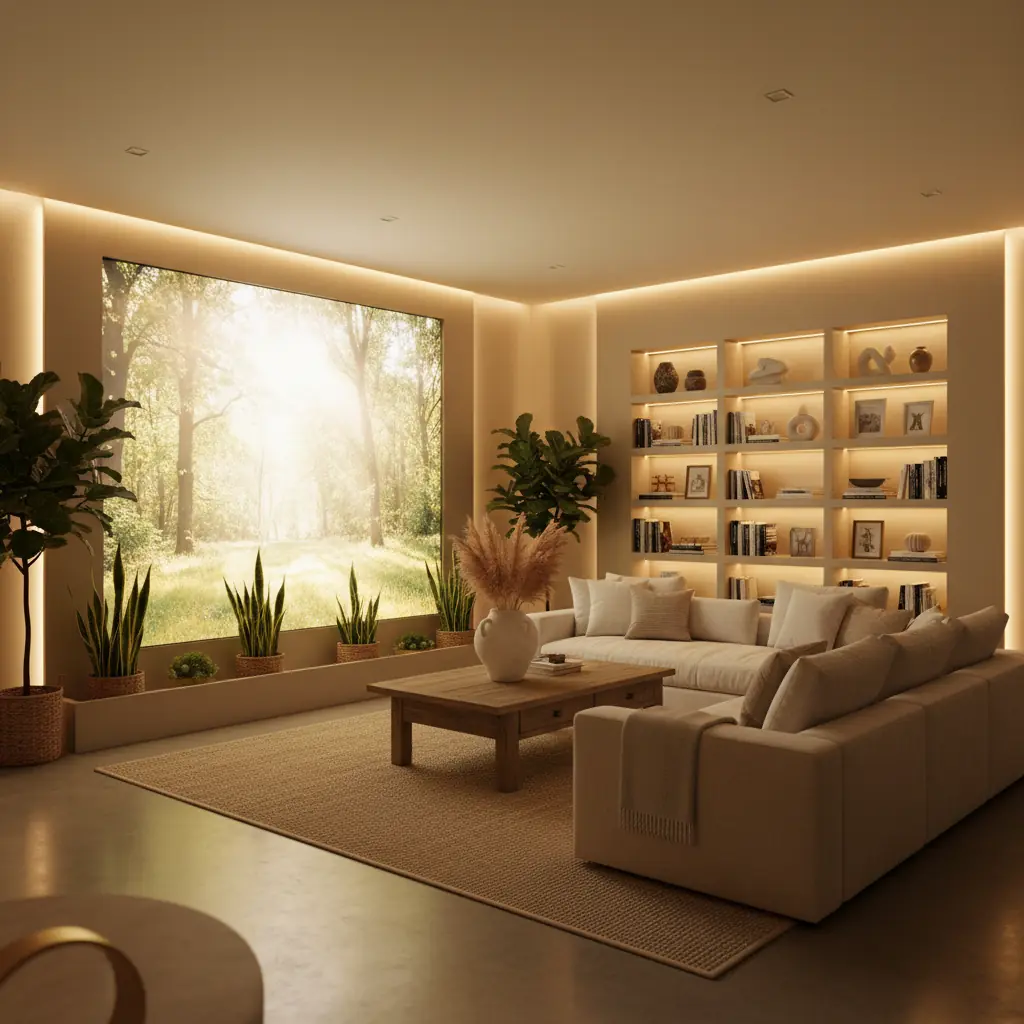
Em um quarto com janelas, a luz natural faz o trabalho pesado, estabelecendo o humor e guiando nossa percepção do tempo, enquanto a luz artificial preenche as lacunas. Em um quarto sem janelas, a luz artificial é todo o sistema, encarregada de criar todos esses efeitos do zero. O erro mais comum e prejudicial é instalar uma única luminária de teto e considerar o trabalho feito. Uma única fonte de luz cria uma iluminação plana e sem sombras que parece institucional — pense em um cubículo de escritório ou corredor de hospital – tornando o espaço fechado e pouco convidativo. A solução reside em um esquema de iluminação em camadas meticulosamente planejado que imita a complexidade da luz natural.
Para conseguir isso, organize sua iluminação em três níveis fundamentais:
1. **Iluminação Ambiente**: Esta é sua luz fundamental, fornecendo brilho geral e simulando o brilho comum da luz do dia. Luminárias de embutir, spots embutidos ou até mesmo trilhos de iluminação estrategicamente posicionados podem servir a esse propósito. Mire em uma temperatura de cor de 4000-5000K (Kelvin) para uso diurno, pois isso simula a luz nítida e energizante de um céu claro. Para a noite, você pode mudar para tons mais quentes. Uma camada ambiente bem projetada evita cantos escuros e garante que o ambiente pareça adequadamente iluminado sem ser áspero. 2. **Iluminação de Tarefas**: Esta iluminação focada apoia atividades específicas. Abajures de mesa para leitura e trabalho, fitas de LED sob armários em uma cozinha ou área de trabalho, e luzes de leitura ao lado de um sofá ou cama são todos exemplos. A iluminação de tarefas é crucial porque garante funcionalidade e previne a fadiga ocular, adicionando uma camada prática à sua estratégia de iluminação. 3. **Iluminação de Destaque**: Esta camada adiciona calor, profundidade e interesse visual, destacando características arquitetônicas, obras de arte ou elementos decorativos. Arandelas de parede, luzes para quadros, fitas de LED escondidas atrás de sancas ou móveis, e uplights atrás de plantas criam bolsões de luz e sombra, impedindo que o cômodo pareça unidimensional. Esse uso estratégico de luz e sombra é o que realmente dá vida a um quarto sem janelas, conferindo-lhe caráter e dimensão.
A combinação dos três cria um quarto que parece naturalmente iluminado, dinâmico e convidativo, mesmo sem uma única janela. Além disso, considere uma configuração de iluminação circadiana com lâmpadas ajustáveis e sistemas inteligentes que podem mudar de tons de luz diurna frios (5000K) pela manhã para tons de pôr do sol mais quentes e suaves (2700K) à noite. Isso ajuda seu corpo a manter seu ritmo natural, o que é especialmente importante se o quarto sem janelas for um quarto ou `home office`. Estudos mostram que uma iluminação inadequada ou estática pode reduzir a produtividade em até 15% e impactar negativamente os ciclos de sono, destacando a importância da iluminação dinâmica nesses espaços. A integração da tecnologia de `smart home` permite transições automatizadas, melhorando tanto o conforto quanto o bem-estar.
Quais cores e acabamentos funcionam melhor para ambientes sem luz natural?
A estratégia de cores correta pode impactar drasticamente o quão aberto e vivo um quarto sem janelas se sente. Cores claras e quentes são geralmente a escolha mais segura e eficaz. Creme suave, branco quente, areia clara, blush pálido ou um cinza delicado (greige) refletem a quantidade máxima de luz artificial, ajudando a iluminar o espaço e adicionar um calor aconchegante. Esses tons criam uma sensação de amplitude, empurrando visualmente as paredes para fora. Evite o branco puro e rígido; sem luz natural para lhe dar vida, ele muitas vezes parece clínico e estéril, como um consultório médico. Em vez disso, opte por brancos com subtons sutis – um toque de amarelo, rosa ou cinza – para adicionar suavidade.
No entanto, um quarto sem janelas também oferece uma oportunidade única para abraçar o dramático. Você pode optar por um visual escuro e temperamental, mas isso exige comprometimento e execução cuidadosa. Um quarto sem janelas pintado em carvão profundo, azul marinho rico, verde floresta, ou até mesmo um ameixa sofisticado com iluminação quente abundante pode parecer um casulo luxuoso e aconchegante – pense em um bar de vinhos de alta qualidade, um cinema em casa íntimo ou uma sofisticada biblioteca. A chave é usar fontes de luz variadas o suficiente para evitar que pareça uma caverna. Ao optar por uma paleta escura, use acabamentos foscos nas paredes, que absorvem a luz e criam uma profundidade aveludada e sofisticada, em vez de refleti-la bruscamente. Introduza calor e contraste através de tons de madeira natural, ferragens de latão polido, obras de arte vibrantes e têxteis ricamente texturizados como veludo, lã ou pele sintética. Essa justaposição de paredes escuras e acentos quentes e em camadas cria uma atmosfera sofisticada e intencional. A Habitas pode ajudar você a visualizar esses ousados [esquemas de cores para salas de estar](/blog/color-schemes-for-living-rooms) ou qualquer outro espaço, permitindo que você experimente diferentes tons e veja como eles interagem com a iluminação escolhida antes de se comprometer com a pintura.
Como espelhos e superfícies reflexivas melhoram um quarto sem janelas?
Espelhos são absolutamente inegociáveis em quartos sem janelas. Um espelho grande, ou mesmo uma coleção de menores, reflete a luz de suas fontes artificiais e cria a poderosa ilusão de profundidade, fazendo o quarto parecer se estender além de seus limites reais. Posicione os espelhos estrategicamente: diretamente em frente ou adjacentes às suas principais fontes de luz para o máximo efeito de reflexão. Um espelho de corpo inteiro encostado na parede pode adicionar elegância casual, enquanto uma grade de espelhos menores e emoldurados pode criar interesse arquitetônico e um efeito de "janela falsa". Espelhos estrategicamente posicionados demonstram fazer um cômodo parecer até 50% maior, de acordo com alguns estudos de `design`.
Além dos espelhos tradicionais, incorpore uma variedade de materiais reflexivos em todo o espaço. Mesas com tampos de vidro, luminárias metálicas (cromo polido, latão escovado, cobre), vasos de cerâmica brilhantes e superfícies de móveis laqueados contribuem para o efeito cumulativo. Mesmo pequenos toques – uma bandeja de latão polido em uma mesa de centro, uma base de luminária cromada ou objetos de vidro decorativos – refletem a luz pelo ambiente, combatendo a uniformidade que muitas vezes assola os espaços sem janelas. Considere usar tinta de alto brilho em guarnições ou em uma única parede de destaque para refletir a luz de forma mais ativa, ou incorpore peças de mobiliário espelhadas que se integram perfeitamente enquanto amplificam a iluminação. O objetivo é criar uma interação dinâmica de luz que dança pelo cômodo, evitando que qualquer superfície pareça opaca ou estagnada.
Que tipo de obra de arte faz um quarto sem janelas parecer mais aberto e vivo?
A seleção de arte importa mais em quartos sem janelas do que em quase qualquer outro lugar, servindo como uma poderosa âncora visual e uma janela para outro mundo. Escolha obras de arte com profundidade visual significativa – paisagens expansivas com horizontes distantes, marinhas serenas que se estendem ao infinito, fotografias aéreas ou peças abstratas com camadas e forte perspectiva. Esses tipos de imagens enganam o cérebro para perceber a distância além da superfície da parede, compensando parcialmente a falta de vista natural. O cérebro busca naturalmente pontos de fuga e escapes visuais, e uma arte bem escolhida pode fornecer esse crucial alívio psicológico.
O "truque da linha do horizonte" é uma técnica simples, mas incrivelmente eficaz: monte uma grande fotografia ou pintura de paisagem ao nível dos olhos, aproximadamente onde uma janela real poderia estar. Isso dá ao seu cérebro um ponto focal distante para descansar, criando uma sensação imediata de abertura e quebrando a sensação claustrofóbica de paredes sólidas. Evite imagens claustrofóbicas – close-ups apertados, peças abstratas escuras e densas, ou padrões agitados que fazem as paredes parecerem que estão se fechando. Em vez disso, opte por peças com paletas de cores claras, composições abertas e uma sensação de movimento ou calma. A Habitas pode gerar [`designs` realistas de ambientes com IA](/blog/ai-generated-room-designs-realistic) com diferentes arranjos de arte, permitindo que você experimente escala, tema e posição para ver quais peças e configurações criam a maior sensação de abertura e conexão com o mundo exterior, mesmo que seja apenas uma ilusão. Você pode até considerar molduras de arte digital exibindo cenas naturais dinâmicas, ou caixas de luz especializadas que simulam a luz natural de uma "janela virtual".
Como a ventilação e as plantas melhoram a habitabilidade em um quarto sem janelas?
A ventilação é uma preocupação funcional crítica que afeta diretamente o conforto, a qualidade do ar e o bem-estar geral. Sem janelas, a troca de ar depende inteiramente do seu sistema HVAC ou de ventilação mecânica dedicada. O ar estagnado pode rapidamente levar a abafamento, odores e acúmulo de poluentes transportados pelo ar. Um purificador de ar de qualidade com filtro HEPA e filtro de carvão ativado é um investimento inestimável, removendo eficazmente poeira, alérgenos, pelos de animais de estimação, compostos orgânicos voláteis (COVs) de móveis e tintas, e odores domésticos comuns. O ar interior pode ser 2 a 5 vezes mais poluído do que o ar exterior, tornando uma boa ventilação e filtragem cruciais para a saúde em espaços fechados.
Além da filtragem, um pequeno ventilador (oscilante, torre ou de teto) cria um movimento suave do ar que evita que o ambiente pareça estagnado e pode contribuir para o conforto térmico. Se o quarto sem janelas se conecta a um corredor ou outro cômodo, mantenha a porta aberta sempre que possível para permitir a circulação passiva do ar. Considere um umidificador ou desumidificador inteligente para manter os níveis ótimos de umidade (tipicamente entre 40-60%), prevenindo problemas como desconforto causado pelo ar seco ou crescimento de mofo em ambientes úmidos.
Para realmente dar vida a um quarto sem janelas, integre plantas de interior. Várias espécies prosperam com pouca ou nenhuma luz natural: jiboias (pothos), plantas ZZ, espadas-de-São-Jorge (Sansevieria), plantas-ferro (Aspidistra elatior), lírios-da-paz e clorofitos (plantas-aranha). Elas não são apenas decorativas; adicionam vida vibrante, textura orgânica e um toque de `design` biofílico que pode contrariar a sensação completamente artificial de um espaço sem janelas. Embora as plantas ofereçam alguns benefícios de purificação do ar, seu papel principal aqui é estético e psicológico – conectando-nos à natureza. Para garantir sua saúde e vitalidade a longo prazo, use luzes de cultivo. Luzes de cultivo LED de espectro total, frequentemente disponíveis como fitas discretas ou luminárias de encaixe, podem ser programadas com um temporizador para fornecer o espectro de luz necessário para a fotossíntese. Mesmo uma ou duas plantas saudáveis em uma prateleira com uma pequena luz de cultivo escondida podem fazer um quarto sem janelas parecer significativamente mais vivo, vibrante e acolhedor. Para mais ideias, explore nosso guia sobre as [melhores plantas para design de interiores](/blog/best-plants-for-interior-design).
Desafios e soluções de `design` específicos para quartos de porão
Quartos de porão apresentam um conjunto único de desafios que vão além da mera ausência de janelas. Estes frequentemente incluem alturas de teto mais baixas, dutos expostos, pisos de concreto e preocupações inerentes à umidade. Em vez de lutar contra essas realidades arquitetônicas, um `design` hábil as abraça. Por exemplo, com tetos baixos e vigas ou dutos expostos, considere pintá-los e o teto em um branco fosco uniforme ou uma cor escura sofisticada como carvão ou preto. Essa abordagem se assemelha a um `design` industrial intencional, em vez de uma construção inacabada, expandindo visualmente a altura do teto ao desfocar as linhas. [Usando uma ferramenta como a Habitas, você pode experimentar diferentes tratamentos de teto ou arranjos de móveis para otimizar o layout do seu porão antes de qualquer esforço físico.](/blog/ai-furniture-arrangement-tool)
Abordar o piso também é crucial. Pisos de concreto podem parecer frios e pouco convidativos. Cubra-os com piso vinílico de luxo (LVP) ou piso de madeira engenheirada, ambos resistentes à umidade e que oferecem calor sob os pés. Colocar um tapete grande e macio sobre essas superfícies duras adiciona conforto, amortecimento acústico e define zonas dentro do espaço aberto. O controle da umidade é primordial em porões; um desumidificador de alta qualidade funcionando continuamente é inegociável para prevenir aquele cheiro característico de mofo e inibir o crescimento de bolor, tornando o espaço verdadeiramente fresco e acolhedor. Manutenção regular e esvaziamento (ou conexão a um ralo) são cruciais para sua eficácia.
A seleção de móveis desempenha um papel significativo na mitigação da sensação de "subterrâneo". Opte por peças com pernas expostas e um perfil visual mais leve para permitir a circulação de ar por baixo e evitar que o ambiente pareça muito pesado ou "preso" ao chão. Móveis multifuncionais e modulares podem maximizar o espaço nesses cômodos frequentemente menores ou com formatos estranhos. Para orientação adicional, consulte nossa postagem sobre [soluções para formatos de cômodos estranhos](/blog/awkward-room-shape-solutions).
Se o seu porão possui janelas de saída – aquelas janelas pequenas e altas perto do teto exigidas por segurança – maximize cada pedacinho de luz que elas oferecem. Mantenha os poços das janelas meticulosamente limpos e livres de detritos. Use cortinas transparentes ou sem forro que permitam a passagem de cada fóton de luz. Posicione grandes espelhos na parede oposta para refletir essa luz natural preciosa e limitada mais profundamente no espaço. Mesmo uma pequena quantidade de luz natural muda completamente o caráter de um quarto de porão, fazendo-o parecer menos subterrâneo e mais integrado com o resto da casa. O investimento em acabamento e `design` adequados do porão pode aumentar significativamente a área útil da sua casa, com uma reforma típica de porão custando entre $15.000 e $75.000, mas oferecendo um retorno substancial no investimento em valor de propriedade.
Perguntas Frequentes
### Um quarto sem janelas pode ser usado como quarto?
Legalmente, um quarto sem janelas não pode ser designado como dormitório em muitas jurisdições devido aos códigos de segurança que exigem uma janela de saída para emergência. No entanto, funcionalmente, um cômodo sem janela pode ser projetado como um espaço de dormir confortável. Para isso, priorize excelente ventilação (purificador de ar, ventilador), iluminação em camadas (especialmente opções circadianas) e um `design` que promova calma e abertura. Sempre verifique os códigos de construção locais antes de converter um espaço sem janelas em um quarto permanente.
### Quais são as melhores cores de parede para um banheiro sem janelas?
Para um banheiro sem janelas, cores claras e brilhantes são geralmente as melhores para neutralizar a falta de luz natural. Brancos quentes, cinzas suaves, azuis pálidos e verdes claros funcionam bem, refletindo a luz artificial e criando uma sensação de limpeza e amplitude. Considere acabamentos de alto brilho ou semi-brilho nas paredes e azulejos para maximizar a reflexão da luz. Se preferir um visual mais temperamental, garanta que você tenha bastante iluminação de tarefa brilhante ao redor da bancada e incorpore materiais reflexivos como grandes espelhos e luminárias metálicas.
### Como posso melhorar a qualidade do ar em um quarto sem janelas?
Melhorar a qualidade do ar em um quarto sem janelas é crucial. Comece com um purificador de ar de alta qualidade com filtro HEPA e carvão ativado para remover partículas e odores. Certifique-se de que os filtros do seu sistema HVAC estejam limpos e sejam substituídos regularmente. Considere adicionar um exaustor se for prático, especialmente em banheiros ou cozinhas. Ventiladores estrategicamente posicionados também podem ajudar a circular o ar. Embora as plantas contribuam esteticamente, suas capacidades de purificação do ar são frequentemente exageradas em comparação com a filtragem mecânica.
### Janelas virtuais são um bom investimento para espaços sem janelas?
Janelas virtuais, que são tipicamente telas de LED ou painéis de luz exibindo cenas externas dinâmicas, podem ser um investimento valioso para criar uma ilusão de abertura e luz natural em quartos sem janelas. Janelas virtuais de alta qualidade podem melhorar significativamente o humor e o bem-estar, fornecendo estimulação visual e simulando a luz do dia. Embora possam representar um custo inicial mais significativo (variando de $500 a $5.000+ dependendo do tamanho e recursos), muitos usuários consideram que os benefícios psicológicos e a melhoria estética valem a pena, especialmente em `home office`s ou espaços terapêuticos.
### Como escolho as luzes de cultivo certas para minhas plantas em um quarto sem janelas?
Ao escolher luzes de cultivo para plantas em um quarto sem janelas, opte por luzes de cultivo LED de espectro total, pois elas imitam a luz solar natural. Considere o tamanho e as necessidades de luz de suas plantas – plantas que amam mais luz precisam de luzes mais fortes ou exposição mais longa. Procure luzes com temporizadores para garantir ciclos de luz consistentes (por exemplo, 12-16 horas ligadas, 8-12 horas desligadas). Fitas de luz discretas, luminárias de encaixe ou luminárias integradas em prateleiras podem fornecer a iluminação necessária sem dominar a estética do ambiente.