AI Interior Design vs. Hiring a Designer: A Comprehensive Cost & Value Guide
A transparent cost breakdown comparing AI interior design tools, online design services, and traditional interior designers to help you choose the right option for your budget and needs.
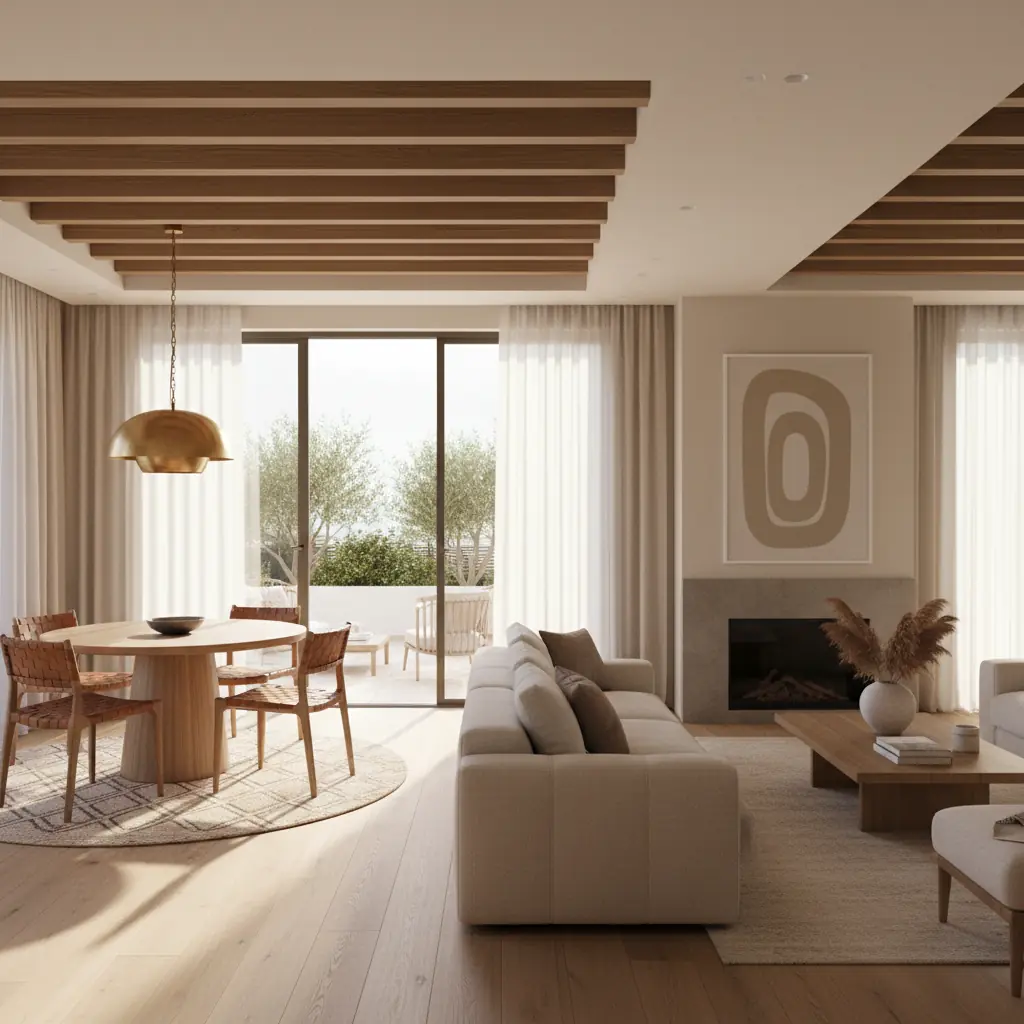
What is the true cost of hiring a traditional interior designer?
Hiring a traditional, full-service interior designer represents the premium tier of design assistance, offering a deeply personalized and hands-on experience. The costs reflect this comprehensive service, typically ranging between $2,000 and $15,000 _per room_, though this can escalate significantly for entire homes or complex renovations. Factors influencing this wide range include your geographic market (designers in major metropolitan areas often charge more), the designer's experience level and reputation, and the complexity of your project.
Most traditional designers employ one of three common fee structures:
- **Flat Fee:** A fixed price for the entire project or a specific room. This offers cost predictability but requires a clear scope from the outset. - **Hourly Rate:** Charging between $100 and $350+ per hour. This is often used for smaller projects, consultations, or when the scope might evolve. - **Percentage of Project Spend:** Typically 15-25% of the total budget for furniture, materials, and contractor services. This aligns the designer's incentive with a larger, high-quality project.
Beyond their professional fee, you'll also be responsible for the cost of furniture, fixtures, and materials. Designers often add a markup on these items, usually 20-35% above retail. This markup compensates them for their time spent sourcing, managing orders, and handling potential returns or damages, as well as providing access to exclusive trade-only vendors that offer unique pieces unavailable to the public.
### The hidden costs and extended timelines
The financial outlay isn't the only consideration. The timeline for traditional design projects adds both tangible and intangible costs. Expect an initial phase of 4 to 8 weeks from the first consultation to the final concept presentation, involving extensive meetings, site visits, and detailed design work. Following concept approval, procurement and installation can take another 8 to 16 weeks, sometimes longer depending on custom orders or supply chain issues. During this extended period, you might be living with a half-finished space, incurring additional expenses like temporary storage, or even paying rent on an unused property. For a full-home renovation, the total investment, including design fees and all materials, frequently exceeds $50,000, and often reaches into the six figures for high-end projects.
### What genuine value does a traditional designer provide?
Despite the significant investment, a skilled traditional interior designer brings indispensable value that extends far beyond aesthetics:
- **Expert Space Planning:** Optimizing layouts for flow, function, and ergonomics, often identifying solutions you wouldn't have considered. - **Trade-Only Access:** Unlocking exclusive vendors, custom fabricators, and unique materials that elevate a space beyond mass-market options. - **Project Management:** Overseeing contractors, managing budgets, adhering to timelines, and acting as your advocate throughout the construction or renovation process. This alone can save clients countless hours and stress. - **Experienced Eye & Problem Solving:** Preventing expensive mistakes through foresight and deep industry knowledge, ensuring cohesive design and functional longevity. They can anticipate issues with lighting, scale, or material compatibility. - **Custom Solutions:** Designing bespoke furniture, built-ins, or architectural details tailored specifically to your home and lifestyle. - **Emotional Connection:** A great designer takes the time to truly understand your personality, lifestyle, and aspirations, translating them into a space that feels deeply personal and reflective of you.
The question isn't whether designers are "worth it" – for the right project, they unequivocally are. It's about discerning whether _your specific project_ demands this level of bespoke investment and hands-on involvement. For instance, a complex kitchen renovation, which on average costs between $25,000 and $75,000 in 2026, often benefits immensely from a designer's expertise in layout, material selection, and contractor coordination to ensure a functional and beautiful outcome that avoids costly errors.
Online design services: A flexible middle ground
Online design services emerged to bridge the gap between expensive full-service designers and the daunting task of DIY. Platforms like Havenly ($159-$599 per room) and Decorilla ($599-$1,899 per room for their highest tiers) connect you with remote designers who create 2D mood boards, 3D renderings, and curated shopping lists based on your photos, measurements, and style preferences. These services exploded in popularity by offering professional guidance at a fraction of the cost of traditional designers.
### The online value proposition and its limitations
The core value proposition of online design is compelling: you receive professional visual guidance, specific product recommendations, and a cohesive room layout without the extensive time commitment or cost of a traditional designer. Turnaround times are typically much faster, often 1 to 2 weeks for initial concepts. This model is particularly appealing for single-room refreshes, furnishing an empty apartment, or getting a quick style update without structural changes.
However, the experience can feel impersonal due to the remote nature of the collaboration. Designers often juggle multiple clients simultaneously, and the lack of in-person site visits means they rely entirely on the information and photos you provide. This can sometimes lead to misinterpretations of scale, lighting, or architectural quirks. Revisions are usually limited (typically 2-3 rounds), pushing you to finalize decisions quickly. The designs, while professional, can sometimes lean towards safe, catalog-style aesthetics rather than truly personalized, one-of-a-kind spaces, especially if the designer isn't deeply familiar with your local market's unique offerings or design sensibilities.
Online services are best suited for individuals who are comfortable with digital communication, have relatively straightforward design needs, and are prepared to handle the purchasing and installation themselves. They excel at helping you visualize a coordinated look across a single room and overcome decision fatigue when selecting furniture and decor.
AI interior design tools: Instant vision, unbeatable affordability
AI design tools represent the newest and most disruptive tier in the interior design landscape. Ranging from free basic versions to around $29 per month for premium features, these platforms leverage artificial intelligence to generate photorealistic redesigns in seconds, not weeks. With tools like Habitas, you simply upload a photo of your existing room, select a desired style (e.g., [Bohemian Bedroom Ideas](/blog/bohemian-bedroom-ideas) or [Art Deco Interior Design](/blog/art-deco-interior-design)), or provide a text prompt describing your vision. Within moments, you receive multiple variants of your space transformed, allowing you to compare different directions before committing to any purchases.
### The strengths and strategic applications of AI design
The advantages of AI interior design are clear and game-changing:
- **Unrivaled Speed:** Results are generated in under a minute, drastically reducing the time from inspiration to visualization. For instance, AI visualization takes approximately 60 seconds to generate multiple design concepts, compared to 2-4 weeks for initial concepts from a traditional designer. - **Cost-Effectiveness:** It's a fraction of the cost of any other design option, democratizing access to professional-grade visualizations. This makes it ideal for exploring [apartment decorating on a budget](/blog/apartment-decorating-budget). - **Iteration Freedom:** You can experiment with dozens of styles, layouts, and color palettes without incurring additional fees for each revision. Want to see your living room in mid-century modern, then minimalist, then cozy maximalist? AI makes it possible and free (or nearly free) to explore. - **Pre-visualization:** It helps you test bold hypotheses. Instead of spending $3,000 on a consultant to find out you don't actually like a specific style in your living room, you can test that hypothesis for free with AI and save your budget for the furniture itself. - **Staging & Rentals:** For landlords or real estate agents, AI tools can quickly generate stunning staged visuals of empty properties, helping potential buyers or renters visualize the space's potential. Studies show that homes with professional staging sell 25% faster and for 6-7% more on average. - **Problem Solving:** Tackle [awkward room shapes](/blog/awkward-room-shape-solutions) or challenging layouts by quickly generating optimized furniture arrangements and visual solutions.
The primary limitation of AI tools is that they don't currently source specific products for you (though some are integrating this functionality) or manage contractor relationships. They excel at providing vision, direction, and inspiration, but the execution — purchasing, project management, and physical installation — remains your responsibility. For budget-conscious homeowners, renters, or anyone seeking rapid visual inspiration, AI tools have entirely changed the calculus of what's possible in interior design.
When to use which interior design option
Choosing the right design service depends on a careful evaluation of your budget, project scope, desired level of involvement, and the complexity of the changes you envision.
- **Opt for AI tools** when your primary need is direction, inspiration, or experimentation. If you know something needs to change but aren't sure which style, color palette, or layout would work, AI is your fastest and most affordable starting point. They're perfect for: - Rental apartments where you're making cosmetic changes, not structural ones. - Testing bold ideas (e.g., "What if I tried a [black accent wall](/blog/black-accent-walls)?"). - Getting a quick visual before a minor refresh. - If your total room budget for furniture and decor is under $2,000, spending a significant portion of that on a designer's fee simply doesn't make financial sense. Tools like [Habitas](/blog/ai-interior-design-how-it-works) allow you to refine your vision without breaking the bank.
- **Choose an online design service** when you want a curated shopping list and professional coordination for the look and feel of an entire room, especially if you struggle with decision fatigue or pulling disparate elements together. They are best for: - Single rooms where you're willing to invest $5,000-$15,000 in new furniture and decor and want help selecting pieces that work cohesively. - Busy individuals who appreciate a clear plan and product links, but are comfortable managing the purchasing and installation themselves. - Remote projects where an in-person visit isn't feasible or necessary.
- **Hire a full-service traditional designer** when your project involves structural work (moving walls, reconfiguring kitchens, building additions), when the total budget for design fees, furniture, and renovation exceeds $25,000, or when you need someone to manage contractors, budgets, and complex timelines. Their expertise is invaluable for: - Major home renovations, custom builds, or historic property restorations. - Luxury budgets where bespoke solutions and exclusive trade access are paramount. - Clients who want a completely hands-off experience and trust a professional to oversee every detail from concept to installation. - Projects where intricate technical knowledge, permit navigation, or custom fabrication is required.
The hybrid approach: AI vision, human execution for optimal value
In 2026, the smartest and most cost-effective approach for many homeowners combines the speed and affordability of AI exploration with selective human expertise. This hybrid model empowers you to take control of your initial vision while strategically leveraging professional help where it matters most.
Here's how it works:
1. **Start with AI for Rapid Exploration:** Use an AI tool like Habitas to rapidly test various design directions for your space. Upload a photo of your room and generate mockups in 5-10 different styles, experiment with [AI color palette generators](/blog/ai-color-palette-generator), or try different [AI furniture arrangement tools](/blog/ai-furniture-arrangement-tool). This phase costs almost nothing and prevents the most expensive mistake in design: committing to a direction you'll regret. You'll build confidence in your preferences and solidify a clear vision. 2. **Refine and Decide on Execution:** Once you have a clear AI-generated vision that excites you, decide what level of human help you need for execution. - For straightforward rooms (e.g., a guest bedroom refresh), your AI-generated mockups combined with a curated shopping list from an online service or even self-sourcing might be enough. You might then check out [AI interior design apps compared in 2026](/blog/ai-interior-design-apps-compared-2026) for further assistance. - For more complex projects, bring your refined AI-generated vision to a traditional designer. This saves them (and you!) hours of back-and-forth during the initial conceptualization phase, because you arrive with a clear understanding of what you want. Many designers now welcome clients who arrive with AI mockups, as it streamlines the most frustrating part of the process – figuring out the client's elusive tastes. This collaboration ensures that the designer can focus their high-value time on the technical details, project management, and sourcing unique elements that AI cannot yet provide.
This synergistic approach offers immense value. You leverage AI's ability to quickly visualize and iterate, saving significant design fees on the conceptual stage. Then, you bring in human designers for their invaluable expertise in project management, trade access, and problem-solving for the execution phase. This combination provides both cost efficiency and bespoke quality, making high-end design more accessible.
The bottom line on cost and value in 2026
Here's the honest math on interior design options today:
- **AI Tools** give you 80% of the design direction and inspiration at 1% of the cost. They are unparalleled for rapid visualization and experimentation. [Are AI-generated room designs realistic](/blog/ai-generated-room-designs-realistic)? Increasingly so, making them incredibly valuable for initial ideation. - **Online Services** give you approximately 90% of the design direction with curated product recommendations at 10-20% of the full-service cost. They are a solid choice for guided room refreshes. - **Traditional Designers** provide 100% of the design experience, including bespoke solutions, project management, trade access, and accountability, but at full price. Their value increases dramatically with project complexity and budget.
None of these options is universally "best." The right choice depends entirely on your budget, the complexity and scope of your project, and how much of the work you're willing and able to do yourself.
What's fundamentally changed in 2026 is that the barrier to _good design vision_ is no longer solely money – it's initiative. Anyone with a phone camera and an internet connection can now see exactly what their space _could_ look like, exploring countless possibilities with a click. This democratization of vision, powered by tools like Habitas, is worth more than any single tool or service, empowering individuals to take an active, informed role in shaping their living environments like never before. The future of interior design is collaborative, intelligent, and more accessible to everyone.
Frequently Asked Questions
### Is AI interior design really accurate and realistic?
Yes, AI interior design tools have advanced significantly and can generate incredibly photorealistic and accurate visualizations of rooms. By leveraging advanced algorithms and vast datasets of design styles, materials, and furniture, AI can transform your actual room photos into stunning representations of potential redesigns. While the AI provides the visual concept, the realism of the final executed project still depends on the quality of furniture and materials you ultimately choose. For examples, you can check out [AI interior design before and after](/blog/ai-interior-design-before-and-after) comparisons.
### Can AI design tools truly save me money on a design project?
Absolutely. AI design tools offer substantial cost savings primarily by eliminating or reducing the need for expensive preliminary design consultations and revisions. You can experiment with countless styles, layouts, and color schemes for free or a low monthly fee, identifying your preferences _before_ investing in a human designer or purchasing furniture. This prevents costly mistakes and ensures you're confident in your direction, saving thousands in potential rework or misaligned purchases.
### How much should I budget for an interior design project?
The budget for an interior design project varies dramatically based on the scope, the level of service, and the quality of materials and furniture. For a full-service traditional designer, budget $2,000-$15,000 _per room_ for fees, plus furniture and materials. Online design services might cost $159-$1,899 per room for concepts. AI tools are the most affordable, typically $0-$29 per month. A good rule of thumb for a full room refresh (furniture, decor, paint) is to allocate 10-20% of your home's value, or more specifically, $5,000-$20,000 per room for a mid-range overhaul.
### When is it _not_ worth hiring a traditional interior designer?
It's generally not worth hiring a traditional, full-service interior designer for minor cosmetic updates, single-room refreshes with a tight budget (under $5,000 for everything), or projects where you enjoy handling product sourcing and project management yourself. If you're decorating a rental, planning to move soon, or simply need inspiration rather than comprehensive project oversight, AI tools or online design services offer a more cost-effective and suitable solution. For those interested in a deeper dive, consider reading our post on [AI vs Human Interior Designer](/blog/ai-vs-human-interior-designer).
### What's the best way to visualize new furniture and layouts in my room?