Interior Design Cost in 2026: Your Ultimate Pricing Guide
A complete guide to interior design pricing in 2026 — hourly rates, flat fees, per-room costs, and how AI tools compare.
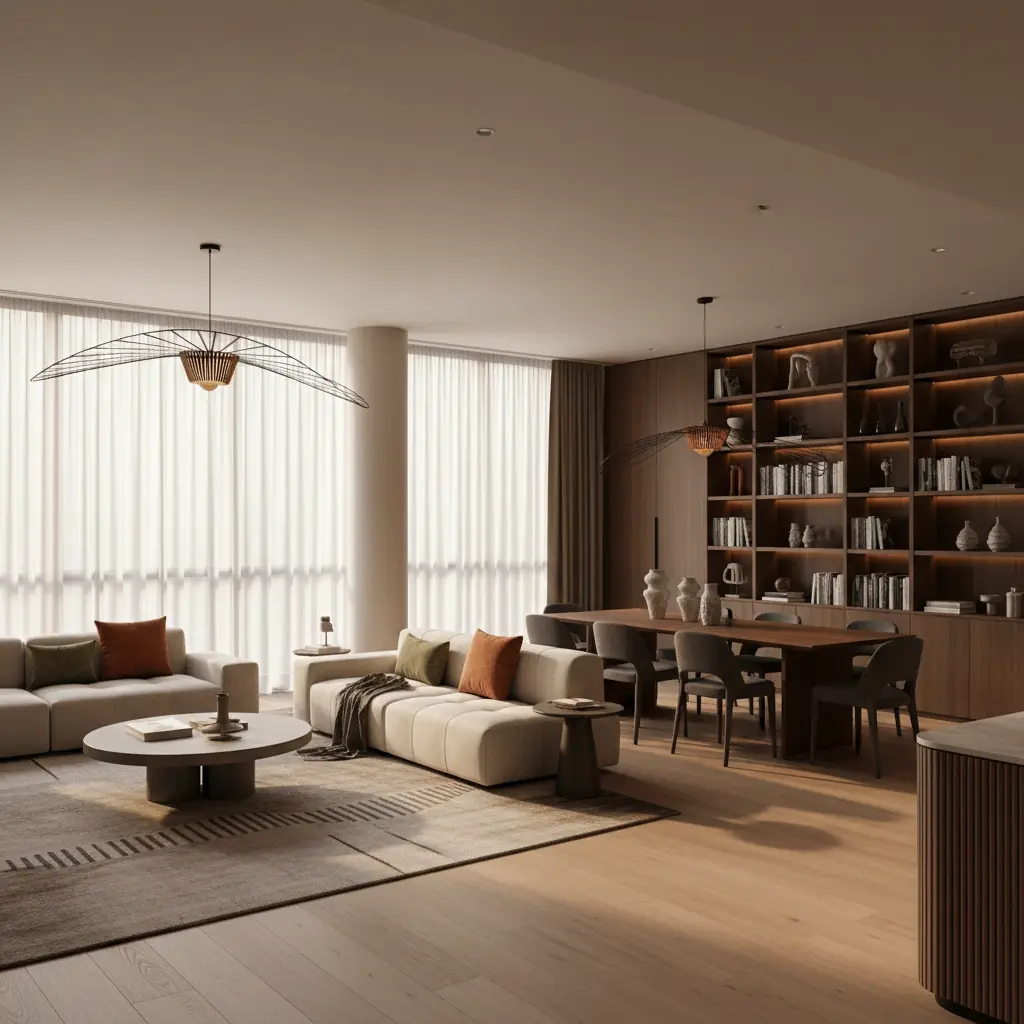
What are the main interior design pricing models in 2026?
Embarking on an interior design project can feel like navigating a labyrinth of choices, especially when it comes to budgeting. Understanding interior design pricing is the first step towards a successful, stress-free renovation. Design costs vary wildly because professionals use different billing structures depending on their experience, location, and the specific scope of your project. The four primary models you'll encounter are hourly rates, flat fees (which can be per-room or per-project), cost per square foot, and the increasingly popular online design packages, including cutting-edge AI tools.
In 2026, the average American homeowner can expect to spend anywhere between $2,000 and $12,000 on interior design services for a single room. This broad range encapsulates everything from a simple refresh involving a new paint palette and furniture rearrangement to a complex, full-gut renovation with custom millwork and integrated smart home technology. Your final cost hinges on the complexity of the work, the reputation and demand of the designer you choose, and your geographical location.
It’s not just about aesthetics; professional interior design adds tangible value. Homes with professional interior design or staging can sell up to **15-20% faster and for 5-10% more on average**, making it a strategic investment, not just an expense.
Hourly rates: When do designers charge by the hour?
Hourly billing is one of the most common pricing structures, particularly favored by independent designers, smaller firms, and for projects with an undefined or evolving scope. In 2026, rates typically range from $50 per hour for a junior designer or e-designer (often working remotely) to $450 or more for a highly sought-after, well-known designer in major metropolitan areas such as New York, Los Angeles, or Miami. The national average for an experienced interior designer generally sits around $150 to $200 per hour.
**When hourly billing makes sense:**
- **Consultations:** For initial meetings, specific advice sessions, or brainstorming. - **Shopping trips:** If you want a designer to accompany you to showrooms or help with material selection. - **Small, specific tasks:** Such as creating a lighting plan, selecting a color palette, or re-arranging existing furniture. - **Unforeseen challenges:** When a project's scope might change due to unexpected structural issues or client decision-making.
The primary risk with hourly billing is scope creep—the tendency for projects to expand beyond their initial estimates. A project initially estimated at 20 hours can easily stretch to 40 or more if decisions are delayed, if the client frequently changes their mind, or if the designer needs additional sourcing and coordination time. To mitigate this risk, always ask for an estimated hour range upfront and request weekly or bi-weekly time reports to monitor progress and costs.
For a single-room redesign, a designer typically allocates 15 to 40 hours of their time. This puts the total design fee between $2,250 and $8,000 at average rates. This allocation usually covers an initial in-depth consultation, concept development, mood boards, sourcing furniture and finishes, drafting floor plans, purchasing management, and overseeing the final installation.
What is a flat fee, and how does per-room pricing work?
Flat-fee pricing has gained significant popularity because it offers homeowners budget certainty upfront. This model ensures you know the exact design cost before the project even begins, regardless of the hours spent by the designer.
Designers typically charge flat fees based on the room's size, complexity, and the level of service required:
- **Basic room redesign:** Expect to pay $2,000 to $5,000. This usually includes a furniture plan, color palette development, sourcing recommendations, and a shopping list. It's often ideal for clients who are comfortable handling purchasing and project management themselves. - **Full-service room transformation:** For a more comprehensive approach, flat fees can range from $8,000 to $15,000 per room. This package typically includes everything from concept development, detailed drawings, material specifications, custom furniture design, procurement, project management, contractor liaison, and final installation oversight. It’s a hands-off approach for the client, offering a complete turnkey solution.
**Per-square-foot pricing** is another flat-fee variation, commonly used for larger projects like whole-home designs or commercial spaces. For design services alone (excluding furniture, fixtures, and construction costs), you can expect to pay $5 to $15 per square foot. For example, designing a 2,000 square foot home at $10 per square foot would incur $20,000 in design fees before purchasing a single item or starting any construction. This model provides clarity but requires a very accurate initial assessment of the project's scope.
Beyond the Design Fee: Project Management & Markups
It's crucial to understand that design fees are just one part of your overall budget. Many traditional interior designers also charge for **project management** and may include markups on furniture and material purchases.
- **Project Management Fees:** For larger, full-service projects, designers often charge an additional fee for managing contractors, coordinating deliveries, and overseeing installations. This can be an hourly rate (e.g., $75-$150/hour), a flat fee, or a percentage of the total project cost (e.g., 10-20% of construction and furnishings). This ensures a smooth process and frees you from the complexities of juggling multiple vendors. - **Retail Markups:** It's a common industry practice for designers to purchase furniture, lighting, and accessories at a trade discount and then sell them to clients at either retail price or a slightly discounted price (e.g., 10-25% over their cost). This markup compensates them for their time spent sourcing, purchasing, tracking, and handling any issues with vendors. Always clarify a designer's policy on product markups before signing a contract. A transparent designer will outline these fees clearly in their proposal.
Online design services and AI tools: A new era of affordability and speed
The digital age has revolutionized access to interior design, creating new, more affordable price tiers. Online interior design services and AI-powered platforms offer compelling alternatives to traditional designers, especially for those on a tighter budget or with a DIY inclination.
Traditional online design services like Havenly and Decorilla typically charge between $159 and $2,099 per room. These services pair you with a remote designer who creates a 2D mood board, 3D rendering, and a shopping list. While they offer significant savings compared to local designers, the trade-off can be less personalized attention, longer turnaround times (often several weeks for initial concepts), and sometimes a less hands-on approach to problem-solving specific to your unique space.
Enter AI-powered design tools like Habitas, which have created an entirely new paradigm for accessibility and efficiency. These platforms allow you to upload a room photo, describe your preferences, and receive photorealistic redesigns with actionable execution plans in minutes, not weeks. The cost is a fraction of traditional services, often a low monthly subscription or a small per-design fee.
The key difference with AI tools is unparalleled speed, iteration, and cost-effectiveness. A traditional designer might present two or three concepts over several weeks, involving multiple revisions and additional charges. An AI tool, however, generates multiple variations instantly, allowing you to experiment freely with different styles, layouts, and furniture arrangements before committing any significant budget to execution. For example, AI visualization takes **60 seconds vs 2-4 weeks with a traditional designer** for initial concepts. This allows for rapid exploration of ideas, such as exploring [AI color palette generator](/blog/ai-color-palette-generator) options or experimenting with [AI furniture arrangement tool](/blog/ai-furniture-arrangement-tool) ideas, ensuring you find a look you truly love.
This shift means you no longer have to spend weeks and thousands of dollars on a single design concept. Instead, you can explore dozens of styles in minutes and get a detailed plan for implementation, from purchasing links to material specifications. By 2028, it's projected that over **40% of interior design projects will leverage AI tools for initial concept development and visualization**, underscoring their growing importance.
How much does interior design cost by room type?
The cost of designing a room isn't just about its size; it’s also about its function, the number of elements involved, and the complexity of any required construction.
- **Living Rooms:** Typically the most expensive space to design, ranging from $3,000 to $15,000 in design fees. This is because they are often the largest public-facing room, requiring a cohesive furniture layout, multiple seating options, extensive lighting, storage solutions, and decorative elements. There’s also the potential for custom built-ins, media centers, and complex window treatments, all of which drive up design time. - **Bedrooms:** Average $2,000 to $8,000 for design services. While often simpler than living rooms, bedrooms still require careful consideration of comfort, storage, lighting, and personalization. Master bedrooms tend to be on the higher end due to size, often including seating areas or integrated workstations. For a detailed breakdown, check out our guide on [bedroom redesign cost breakdown](/blog/bedroom-redesign-cost-breakdown). - **Bathrooms:** Design fees range from $2,500 to $10,000. These spaces, though often small, are technically complex due to plumbing, electrical, tiling, and waterproofing requirements. Material selection is critical for durability and moisture resistance, and even minor layout changes can significantly impact structural and mechanical systems. A comprehensive bathroom design often includes fixtures, finishes, lighting, and custom vanity designs. For renovation details, see our [bathroom renovation cost 2026](/blog/bathroom-renovation-cost-2026) article. - **Kitchens:** The priciest rooms for design alone, typically $5,000 to $20,000. Kitchens involve extensive cabinetry, appliance integration, plumbing, electrical work, specialized lighting, and durable surfacing. Design includes workflow optimization, storage solutions, material specification for countertops and backsplashes, and often custom millwork. A typical kitchen renovation, including design fees, labor, and materials, usually costs **$25,000 to $75,000 in 2026**, depending on the scope and finishes. - **Home Offices:** Surged in demand since 2020, home offices typically cost $1,500 to $5,000 for design services. Key considerations include ergonomic furniture, efficient storage, lighting for productivity, and acoustic treatments. The design focuses on creating a functional and inspiring workspace within the home environment. - **Dining Rooms and Entryways:** These spaces tend to be the most affordable, ranging from $1,000 to $4,000. They involve fewer pieces of furniture and less technical complexity compared to kitchens or bathrooms. Design focuses on creating an inviting atmosphere, selecting appropriate dining furniture, lighting, and art, or crafting a welcoming entry point with console tables, mirrors, and storage.
Key factors influencing your total interior design cost
Beyond the chosen pricing model and room type, several other critical factors will significantly impact your overall investment in interior design. Understanding these will help you set a realistic budget.
- **Location, Location, Location:** Design fees, like real estate, are heavily influenced by geography. Designers in high-cost-of-living areas (e.g., major cities like San Francisco, New York, London) command higher rates than those in smaller towns or rural areas. This reflects overheads, market demand, and the local cost of skilled labor. - **Designer Experience and Reputation:** A seasoned designer with a portfolio of high-profile projects or specialized expertise (e.g., historic restorations, sustainable design) will naturally charge more than an emerging designer. Their expertise often translates into more innovative solutions, better project management, and potentially fewer costly mistakes. - **Scope and Complexity of the Project:** - **Full Renovation vs. Decorative Refresh:** A project involving structural changes, custom millwork, or new plumbing/electrical will inherently be more expensive than one focused solely on furniture, paint, and accessories. - **Custom vs. Off-the-Shelf:** Custom furniture, built-ins, or bespoke art pieces require more design time, specialized fabrication, and higher material costs compared to purchasing ready-made items. - **Level of Finish:** High-end materials (e.g., rare marbles, custom hardwoods, designer fabrics) and premium finishes will escalate costs significantly compared to standard-grade options. - **Project Management & Procurement:** If you require the designer to handle all aspects of sourcing, purchasing, tracking orders, coordinating deliveries, and overseeing contractors, these additional services will be factored into the cost (either as part of a flat fee or separate project management fees). A designer taking on this responsibility saves you immense time and potential headaches, but it comes at a price. - **Client Engagement & Decision-Making:** Surprisingly, how quickly and decisively you make decisions can impact hourly costs. Frequent changes of mind, prolonged approval processes, or a lack of clear direction from the client can lead to increased billable hours as the designer revisits plans, reschedules, or re-sources.
How to save on interior design costs without compromising style
Investing in professional interior design doesn't have to break the bank. With a strategic approach and a clear understanding of your priorities, you can significantly reduce costs.
1. **Start with a clear vision and communicate it:** Before hiring anyone, spend time crystallizing your aesthetic preferences, functional needs, and budget boundaries. The more decisions you can make independently—style direction, preferred color palettes, must-keep existing items, desired feeling for the room—the fewer billable hours your designer will need for exploratory phases. Use AI visualization tools like Habitas to experiment with styles and narrow your preferences on your actual room photos before a paid consultation. This clarity reduces design iterations and ensures the designer is aligned with your vision from day one. 2. **Consider a hybrid approach:** Many homeowners find success by combining professional expertise with DIY execution. Hire a designer for the high-impact, critical decisions: layout, custom built-ins, lighting plans, and overall material selection. Then, handle the accessorizing, shopping for non-custom items, and final styling yourself. Many designers offer consultation-only packages, ranging from $500 to $1,500, where they provide a comprehensive plan, including mood boards, floor plans, and a sourcing list, which you then execute on your own timeline. This approach is excellent for those who enjoy the process but need expert guidance. 3. **Phase your renovation strategically:** Don't feel pressured to tackle your entire home at once. Begin by addressing one room at a time, perhaps starting with the space you use most or the one that gives you the most anxiety. This not only spreads costs over months or even years rather than requiring a massive upfront investment but also allows you to learn from each completed room. You'll gain a better understanding of your preferences, what works functionally, and how to optimize your budget for subsequent spaces. 4. **Embrace "e-design":** For purely decorative projects or smaller rooms, e-design services (including many AI platforms) offer a very cost-effective solution. They provide professional design concepts and shopping lists entirely remotely, often for a flat fee per room. While they don't include in-person site visits or hands-on project management, they are excellent for getting a polished look without the full cost of a traditional designer. For a comparison, consider our article on [AI vs. human interior designer](/blog/ai-vs-human-interior-designer). 5. **Be flexible with materials and furniture:** While a designer might suggest high-end pieces, be open to discussing more budget-friendly alternatives. Sometimes, a high-quality, mid-range sofa can be just as effective as a custom designer piece, especially when paired with thoughtful accessories. Remember, a recent industry report indicates that **65% of homeowners prioritize functionality and comfort over pure aesthetics**, so communicate your practical needs and budget constraints clearly. 6. **DIY where you can:** If you're handy, consider tackling tasks like painting, simple furniture assembly, or hanging art yourself. These labor costs can add up, and personal involvement can shave a significant amount off the total project price.
Frequently Asked Questions
### Is hiring an interior designer worth the cost?
Yes, for many homeowners, hiring an interior designer is absolutely worth the cost. While it's an investment, a good designer brings expertise that saves you time, prevents costly mistakes, and ultimately creates a more functional, aesthetically pleasing, and valuable home. They can navigate complex renovations, source exclusive materials, manage contractors, and design spaces tailored precisely to your lifestyle, often increasing your property's resale value and enhancing your daily living experience. They also have access to trade discounts that can offset a portion of their fees.
### What is the difference between an interior designer and an interior decorator?
The terms are often used interchangeably, but there's a significant distinction. An **interior designer** is typically trained and often certified to handle the structural and functional aspects of a space, including space planning, kitchen and bathroom design, lighting plans, material specifications, and working with architects and contractors on renovations. They require knowledge of building codes, safety regulations, and construction processes. An **interior decorator**, on the other hand, focuses on the aesthetic elements—selecting furniture, fabrics, colors, accessories, and art to enhance a room's appearance. Decorators generally do not perform structural work or redesign floor plans.
### How can I accurately estimate my interior design project budget?
To estimate your budget accurately, start by defining your project's scope: are you redesigning one room or a whole house? Do you need a decorative refresh or a full renovation? Research average costs for each element (design fees, furniture, materials, labor). Get quotes from 2-3 designers using your defined scope to compare pricing models. Always include a contingency fund of 10-20% for unexpected expenses. Using AI design tools like Habitas can also help you visualize different concepts and get a realistic sense of material costs before engaging a human designer, allowing you to fine-tune your vision and budget.
### Can I hire an interior designer for just a few hours of consultation?
Absolutely! Many interior designers offer consultation-only services, often referred to as "designer-for-a-day" or hourly consultations. This is a popular and cost-effective option for homeowners who need professional guidance but want to handle the bulk of the project themselves. During these sessions, you can get advice on layout, color palettes, furniture selection, styling dilemmas, or even help with a tricky design problem. Rates for these consultations typically range from $150 to $450 per hour or come as a flat package for a few hours.
### When should I consider using AI for my interior design project?
You should consider using AI for your interior design project if you're looking for rapid visualization, budget-friendly concept exploration, and extensive style experimentation. AI tools are ideal for:
- **Getting initial ideas:** Quickly generating multiple design concepts for any room. - **Budget planning:** Visualizing designs before investing in costly consultations or purchases. - **DIY projects:** Providing actionable plans and shopping lists for self-execution. - **Exploring new styles:** Instantly seeing how different aesthetics (e.g., Japandi, Mid-Century Modern) look in your actual space. - **Testing layouts:** Experimenting with furniture arrangement without physical effort.
AI design is particularly valuable at the start of any project to clarify your vision and gather inspiration efficiently, serving as a powerful co-designer or a complete design solution for simpler projects.