Apartment Decorating on a Budget: Your Complete 2026 Renter's Guide
Practical, renter-friendly tips for decorating your apartment without breaking the bank — room-by-room budget breakdowns, store recommendations, and high-impact hacks.
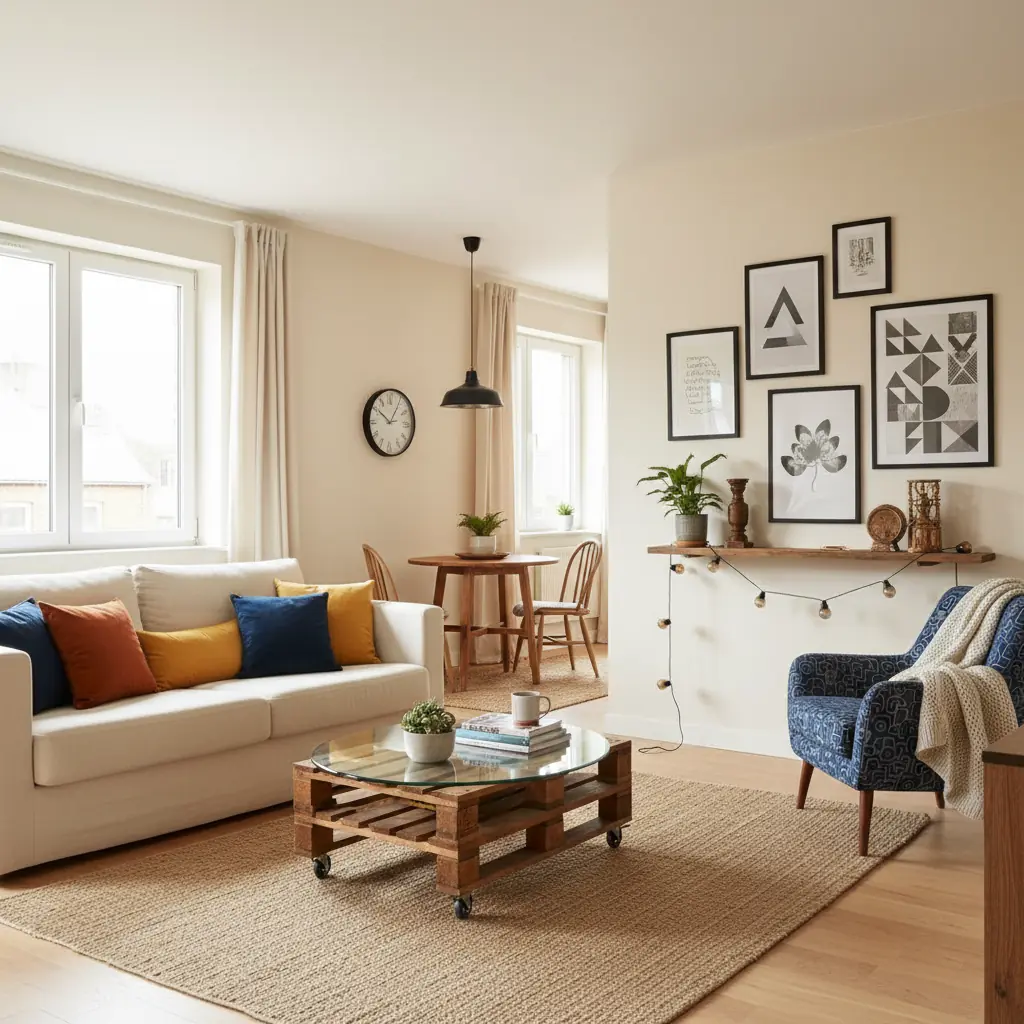
How to Decorate a Rental Apartment Without Losing Your Deposit?
Before spending a dollar, internalize this fundamental truth: every design change you make in a rental apartment should be fully reversible without jeopardizing your security deposit. This constraint isn't a limitation; it's a catalyst for creativity, pushing you towards innovative and impermanent solutions. Forget the days of resigning yourself to beige-walled purgatory; with the right approach and a little ingenuity, your rental can reflect your personal style while keeping your landlord happy.
Renter-friendly solutions abound in 2026. Think removable wallpaper, industrial-strength Command Strips (they can hold surprising weight!), peel-and-stick tiles, versatile tension rods, and strategic furniture arrangements that define spaces without permanent fixtures. The beauty of these options is their zero-cost undoing. Before you even pick up a measuring tape, thoroughly document your apartment's existing condition with clear, timestamped photos and videos. This provides undeniable proof of the baseline and protects your deposit from unfair deductions. A staggering **30% of security deposit disputes** arise from disagreements over property damage, so be proactive!
Next, shift into observation mode. Note which walls receive ample natural light (perfect for statement art or mirrors), which corners feel underutilized (prime candidates for a tall plant or floor lamp), and how traffic naturally flows through the space. Good design, especially on a budget, starts with understanding your environment, not with impulse shopping.
How to Allocate Your Apartment Decorating Budget by Room?
If your total decorating budget is $2,000 – a realistic starting point for a well-appointed one-bedroom apartment – here’s a strategic allocation to achieve maximum impact. The percentages below reflect where your money will likely make the biggest visual difference:
- **Living Room: $800 (40%)** This is often the largest space, where you spend the most time, entertain guests, and where the first impression of your home is formed. Invest in key pieces that define the room's comfort and style, such as a quality area rug, layered lighting, and comfortable throw pillows. - **Bedroom: $500 (25%)** Your sanctuary deserves comfort. Prioritize excellent bedding (sheets, duvet, pillows), soothing lighting, and perhaps a stylish headboard that can be freestanding or attached with Command Strips. - **Kitchen/Dining: $400 (20%)** Small, thoughtful changes here can have an outsized impact on functionality and aesthetic. Think peel-and-stick backsplashes, improved lighting, and clever storage solutions. - **Bathroom: $200 (10%)** Focus on accessories and textiles: a new shower curtain, bath mat, hand towels, and smart storage. These immediately elevate the space. - **Entryway: $100 (5%)** Often overlooked, a well-defined entryway, even a small one, creates a welcoming first impression. A simple hook rack, a small mirror, and a durable mat can transform a bare wall into a functional and stylish landing zone.
If your budget is tighter, say $500 total, focus exclusively on the living room and bedroom. Prioritize impact-per-dollar over completing every single room. For example, a $150 set of coordinating throw pillows, a $50 modern floor lamp, and a $30 set of blackout curtains can transform a living room far more than any single piece of inexpensive furniture. In the bedroom, new, high-quality bedding ($100-$150) instantly elevates the entire feel of the room.
Before making any purchases, visualize your choices. Upload a photo of your current space into an AI tool like Habitas. Experiment with various design styles, color palettes, and furniture arrangements. This approach helps you identify which specific changes (e.g., a specific rug, a particular lighting fixture, or a new wall color via removable wallpaper) will create the biggest visual impact. This prevents the most common budget mistake: buying items that look great individually but don't harmonize, leading to wasted money. You can even explore [AI furniture arrangement solutions](/blog/ai-furniture-arrangement-tool) to test layouts before committing.
Where to Find the Best Affordable Furniture & Decor for Apartments?
Navigating the world of affordable home decor in 2026 requires a keen eye and strategic shopping. Here's a breakdown of the best resources:
**New Furniture & Decor:**
- **IKEA:** Still the reigning champion for affordable, well-designed apartment furniture. Focus on their modular storage solutions (KALLAX shelving, BILLY bookcases), versatile lighting (TERTIAL work lamps, HEKTAR floor lamps), and textiles (curtains, throws, bedding). Skip the cheapest flat-pack particleboard dressers if durability is a concern, as they rarely survive a move. Explore IKEA hacks online to personalize standard pieces. - **Wayfair:** Known for its vast selection and frequent sales. Their "Way Day" sales (typically April and October) offer deep discounts, often 50-70% off quality pieces. Be sure to read reviews and filter by customer photos to assess actual product quality. - **Target (Threshold & Studio McGee):** These lines consistently punch above their price point for decor, smaller furniture pieces, and accessories. They excel at offering on-trend aesthetics at accessible prices. Their seasonal collections are particularly strong for refreshing your space without a huge investment. - **Amazon (Basics, Warehouse Deals):** For essentials like basic shelving, lighting, and organizational items, Amazon Basics offers reliable, no-frills solutions. Amazon Warehouse Deals can be a goldmine for open-box or lightly used items at significant discounts.
**Secondhand & Vintage Finds:**
- **Facebook Marketplace & Craigslist:** These are unparalleled resources in metro areas. People moving out of apartments frequently sell near-new furniture, artwork, and decor at 60-80% off retail. For best results, search for specific items (e.g., "mid-century modern dresser," "velvet accent chair") rather than just browsing. Be prepared to pick up items quickly. - **Estate Sales:** Check EstateSales.net for local listings. These are often secret weapons for finding high-quality accent furniture, unique art, and decorative items at thrift-store prices. Arrive early for the best selection. - **Habitat for Humanity ReStores:** These non-profit stores carry donated building materials, appliances, and furniture at steep discounts. Inventory varies wildly but can include solid wood pieces perfect for a DIY glow-up. - **Thrift Stores (Goodwill, Salvation Army):** Patience is key here, but you can find hidden gems like ceramic vases, vintage frames, and unique textiles. Don't be afraid of minor imperfections; a little paint or fabric cleaner can go a long way. **Over 60% of Gen Z and Millennials** report purchasing secondhand furniture, reflecting a growing trend towards sustainable and budget-friendly decor.
**Online Clearance & Art:**
- **Overstock & Houzz:** Similar to Wayfair, these retailers offer a broad selection with frequent sales. Check their clearance and flash deal sections regularly. - **CB2 & West Elm Clearance:** Many higher-end retailers sell last-season or returned items at 40-60% off. The quality is identical to their full-price items, only the trend cycle has moved on. It's a fantastic way to introduce a few high-quality pieces. - **Art (Society6, Desenio, Etsy):** For affordable, impactful wall art, these platforms offer quality prints for $15-$40. Frame them affordably with IKEA's RIBBA frames (under $30) or find vintage frames at thrift stores. You can also use an [AI color palette generator](/blog/ai-color-palette-generator) to ensure your art choices perfectly complement your room's scheme.
Why is Lighting the Most Impactful Budget Decor Change?
Most rental apartments come equipped with abysmal overhead lighting – harsh, flat ceiling fixtures (often dubbed "boob lights") that make every room feel like an office or an operating theatre. The single most impactful budget change you can make is adding layered lighting. This instantly transforms the mood and functionality of any space.
For under $150, you can completely overhaul a room's ambiance:
- **One Floor Lamp ($40-$80):** Provides ambient light, often diffusing upwards or outwards. - **One Table Lamp ($25-$50):** Offers task lighting and adds a warm glow at eye level. - **A Set of Warm LED Bulbs ($12):** Crucial for setting the right tone.
The immediate difference is astounding. Swapping every bulb in your apartment to 2700K warm white LEDs (not the sterile 5000K daylight bulbs) costs around $20 and provides an instant, calming transformation. Research indicates that **warm, dimmable lighting can improve mood by up to 20%** and reduce eye strain compared to harsh overhead lighting.
For added ambiance, consider LED strip lights ($15-$25) placed behind a TV, along the back of a bookshelf, or under cabinets. These add depth and a modern glow without requiring any installation. Edison-style string lights ($20-$35) aren't just for dorms or patios; strung on Command-strip hooks, they can create a warm, inviting canopy effect in a bedroom or define a cozy reading nook.
If your lease allows and you're comfortable with basic DIY, swapping out builder-grade light fixtures can be incredibly rewarding. A simple, stylish pendant light ($30-$60) can replace an unattractive flush-mount fixture in minutes with just a screwdriver. Remember to save the original fixture in a closet and swap it back when you move out to keep your deposit intact. You can view various [AI interior design before and after](/blog/ai-interior-design-before-and-after) transformations that highlight the dramatic effect of upgraded lighting.
Are Removable Wallpaper and Peel-and-Stick Tiles Really Renter-Friendly?
In 2026, removable wallpaper has evolved far beyond its early, often disappointing iterations. Brands like Tempaper, Chasing Paper, and Spoonflower now offer peel-and-stick options that are virtually indistinguishable from traditional wallpaper in terms of texture and design quality. They are generally easy to apply and, crucially, peel off cleanly without damaging walls or leaving sticky residue.
An accent wall typically costs $50-$120 depending on the pattern and wall size. Focus on creating one statement wall per room – usually behind the sofa in the living room, the headboard in the bedroom, or a focal wall in the dining area. This creates a high-impact design element without overwhelming the space or your budget. Consider exploring [best interior design styles for 2026](/blog/best-interior-design-styles-2026) to find patterns that align with current trends.
Peel-and-stick backsplash tiles ($30-$80 for a standard kitchen backsplash) are a renter's absolute best friend for covering dated or bare drywall in the kitchen or bathroom. They offer the look of real tile without the grout, mess, or permanence. Similarly, peel-and-stick floor tiles can effectively cover ugly linoleum in a bathroom or kitchen for $50-$150. While they can look incredibly professional, installation does require patience and precision to ensure clean lines and a seamless appearance. For countertops or shelves, consider high-quality peel-and-stick contact paper that mimics marble, wood, or solid colors, instantly updating surfaces. Always test a small, inconspicuous area first to ensure clean removal.
What Decor Changes Offer the Best Impact Per Dollar?
Having guided countless apartment dwellers through transformations, the hierarchy of impact-per-dollar is crystal clear. This framework helps prioritize your spending for the most noticeable results:
**Tier 1: Highest Impact, Lowest Cost** These changes fundamentally alter the feel of a room for minimal investment.
- **Lighting Changes:** Layered lighting (floor lamps, table lamps, warm LED bulbs) instantly creates ambiance. - **Accent Wall:** Removable wallpaper or a bold paint color (if allowed and easily reversible) on one wall adds depth and personality. - **New Curtains:** Replace flimsy blinds with stylish, floor-length curtains. They add texture, control light, and make windows appear larger. - **Quality Area Rug:** A rug anchors a space, adds warmth, defines zones, and introduces color/pattern. It's often the single most impactful item in a living room.
**Tier 2: Mid-Impact, Moderate Cost** Once Tier 1 is addressed, these items layer on comfort and personalization.
- **Throw Pillows and Blankets:** These are excellent for introducing color, texture, and comfort. They're also easy to swap out seasonally or when your style evolves. - **Wall Art or Gallery Wall:** Personalized art brings character. Mix high-quality prints with personal photos or thrifted pieces for an eclectic look. Consider a cohesive [best paint colors 2026](/blog/best-paint-colors-2026) palette to tie a gallery wall together. - **Plants (Real or High-Quality Faux):** Introduce life and natural elements. Even a few well-placed plants can dramatically improve a room's aesthetic. - **New Bedding:** A fresh duvet cover, sheets, and pillows elevate your bedroom into a true sanctuary.
**Tier 3: Significant Impact, Higher Cost** These involve more substantial investments and are best made _after_ Tier 1 and 2 are optimized.
- **Strategic Furniture Replacement:** Instead of a whole new living set, consider replacing one outdated piece – perhaps a worn coffee table with a modern one, or adding a stylish accent chair. - **Shelving and Storage:** Open shelving or elegant storage units (like IKEA's KALLAX) can both organize and display decor. - **Hardware Swaps:** Replacing generic cabinet pulls or doorknobs with more stylish options can update a kitchen or bathroom without permanent commitment (just save the originals!).
The most common mistake budget decorators make is jumping straight to Tier 3 – buying an expensive new couch or bed frame – before addressing fundamental elements like lighting or texture. A $400 couch in a room with warm layered lighting, an accent wall, and coordinated textiles will always look more inviting and expensive than a $2,000 couch under a bare overhead bulb in a stark white box. Work the tiers in order, and stop when you're happy. You don't need to complete every single tier to have a space that feels personal, comfortable, and truly like home. Remember, **staged homes, even self-staged, sell 25% faster on average**, a testament to the power of thoughtful design on perception.
Frequently Asked Questions
### How can I decorate my apartment without losing my security deposit?
Focus on reversible changes. Use Command Strips instead of nails, removable peel-and-stick wallpaper or tiles, tension rods for curtains, and freestanding furniture. Avoid permanent alterations like painting walls (unless explicitly allowed and you commit to repainting to the original color), drilling large holes, or removing fixtures without landlord approval. Always document the apartment's condition with photos and videos before moving in.
### What are the best stores for affordable apartment decor?
For new items, IKEA, Target (especially their Threshold and Studio McGee lines), and Wayfair (during sales) are top choices. For secondhand treasures, explore Facebook Marketplace, Craigslist, local estate sales (EstateSales.net), and Habitat for Humanity ReStores. Online, check Amazon Warehouse deals and the clearance sections of higher-end retailers like CB2 and West Elm for discounts.
### How much should I budget for apartment decorating?
A realistic budget for a one-bedroom apartment can range from $500 for essential high-impact changes to $2,000 for a more comprehensive overhaul. Allocate funds strategically: prioritize the living room (40% of budget) and bedroom (25%), then kitchen/dining (20%), bathroom (10%), and entryway (5%). For tighter budgets, focus entirely on the living room and bedroom for maximum impact per dollar.
### Can AI help me decorate my rental apartment on a budget?
Yes, AI platforms like Habitas are incredibly valuable for budget decorating. You can upload photos of your actual space and experiment with various design styles, furniture layouts, color palettes, and decor items virtually before buying anything. This helps you visualize the impact of changes, prevents costly mistakes, and allows you to optimize your spending by focusing on elements that create the biggest visual transformation. AI tools can save you significant time and money, with AI visualization taking **minutes compared to the 2-4 weeks** a traditional designer might require for initial concepts.
### What are some high-impact decor changes for renters?
The highest impact changes for renters include: upgrading lighting (floor lamps, table lamps, warm LED bulbs), adding a quality area rug, hanging new curtains, and applying removable wallpaper to an accent wall. These elements dramatically transform a room's mood and aesthetic for a relatively low cost, laying a strong foundation before you consider larger furniture purchases.