Costos de Remodelación de Baños 2026: La Guía Definitiva para Propietarios
Desglose completo de los costos de remodelación de baños — desde actualizaciones estéticas hasta renovaciones completas, con división de mano de obra, datos de ROI y consejos de expertos.
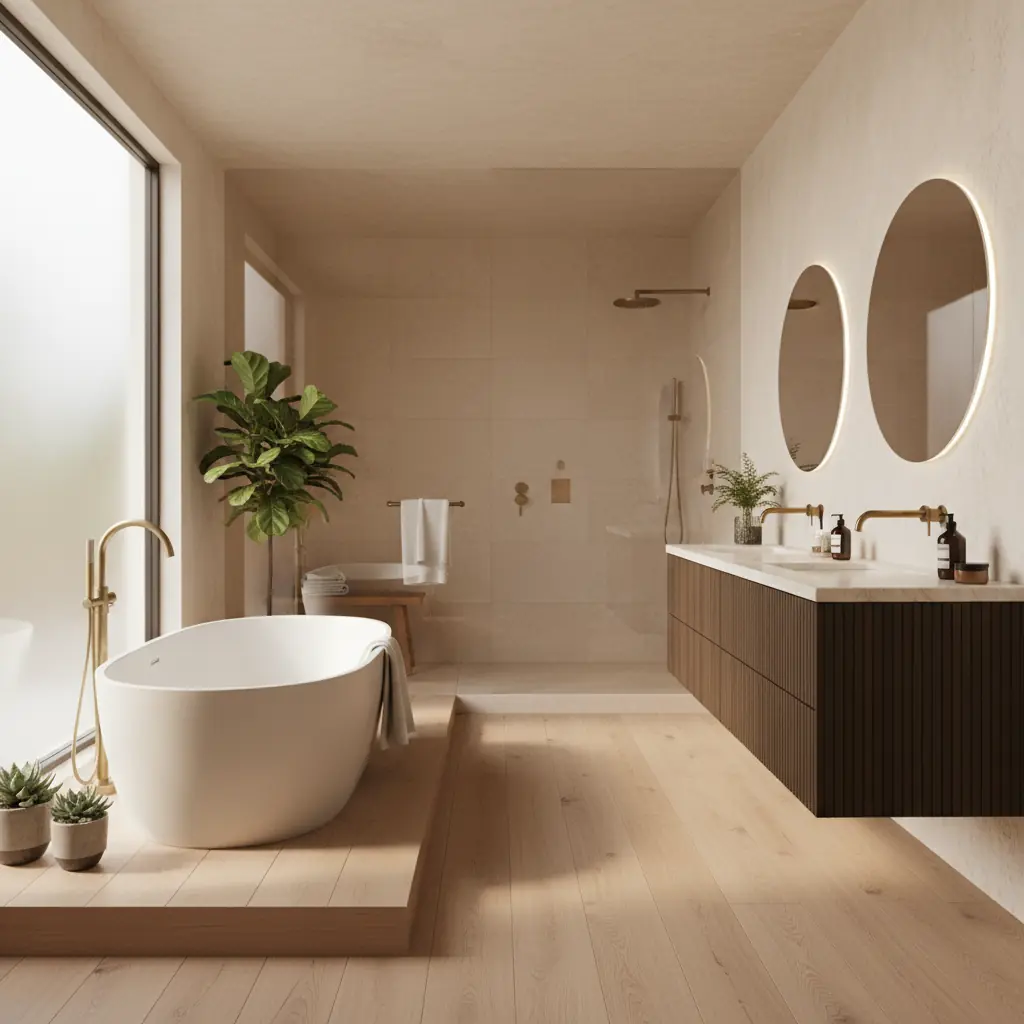
¿Por qué las Remodelaciones de Baños Son Tan Caras?
Los baños se encuentran constantemente entre las habitaciones más costosas de renovar por metro cuadrado, a menudo superando incluso a las cocinas en complejidad y eficiencia de costos. Si bien un baño típico puede abarcar solo entre 4 y 6 metros cuadrados, una remodelación de rango medio puede costar fácilmente entre $10,000 y $20,000. La razón principal de esta importante inversión radica en la compleja infraestructura que se concentra en un espacio tan pequeño.
A diferencia de una sala de estar que requiere principalmente actualizaciones cosméticas, un baño es un laberinto de sistemas interconectados: plomería para el suministro y drenaje de agua, impermeabilización sofisticada para prevenir fugas catastróficas, trabajos eléctricos precisos para iluminación y ventilación, instalación intrincada de azulejos y ventilación especializada para controlar la humedad. Cada uno de estos componentes requiere profesionales con licencia en la mayoría de las jurisdicciones, lo que significa que usted está pagando por mano de obra altamente especializada y el cumplimiento de estrictos códigos de construcción. Una renovación completa de un baño típico implica al menos 5 a 7 oficios diferentes, incluyendo demolición, plomería, electricidad, carpintería, alicatado y pintura, lo que aumenta significativamente la complejidad de la coordinación y los costos de mano de obra. Esta densidad de oficios técnicos, combinada con la necesidad de materiales duraderos y resistentes a la humedad, convierte a los baños en una inversión sustancial.
El promedio nacional para una renovación completa de un baño principal en 2026 se estima entre $15,000 y $25,000, mientras que un baño secundario o de visitas más pequeño podría oscilar entre $8,000 y $15,000. Sin embargo, estas cifras son solo puntos de partida. Las variaciones regionales son drásticas; por ejemplo, las renovaciones en áreas con alto costo de vida como la Bahía de San Francisco o el área metropolitana de Nueva York pueden fácilmente ser entre un 40 y un 60 por ciento más altas que los promedios nacionales, a veces superando los $50,000 para una renovación integral. Comprender estos costos fundamentales es el primer paso para establecer un presupuesto realista para el baño de sus sueños.
Opción 1: El Retoque Estético – Modernizando con un Presupuesto Reducido ($1,000 a $3,000)
Un retoque estético es su arma secreta para hacer que un baño anticuado se sienta actual sin el dolor de cabeza ni el gasto de una demolición. Este enfoque mantiene meticulosamente toda la plomería existente y el diseño general intactos, centrándose puramente en transformaciones visibles a nivel de superficie. Es ideal para baños donde la estructura principal está en buen estado y usted está generalmente contento con la distribución, pero desea una estética más contemporánea.
**Lo que típicamente se incluye en un retoque estético:**
- **Repintado:** ($150 a $300) Una nueva capa de pintura resistente a la humedad es quizás el cambio más impactante por el menor costo. Opte por tonos claros y neutros para hacer que el espacio se sienta más grande y brillante, o considere una pared de acento atrevida para agregar personalidad. - **Reemplazo de Espejo de Vanitory:** ($100 a $400) Cambiar un espejo de constructor por una opción elegante, enmarcada o retroiluminada puede elevar instantáneamente el área del vanitory. Considere un espejo grande y redondo para un toque moderno. - **Actualización de Lámparas:** ($100 a $300) Las luces "boob" anticuadas o las tiras de vanitory amarillentas se pueden reemplazar por luminarias LED contemporáneas que ofrecen mejor iluminación y eficiencia energética. Las opciones de iluminación inteligente pueden agregar comodidad. - **Instalación de Grifo Nuevo:** ($150 a $400) Un nuevo grifo elegante con un acabado moderno (negro mate, níquel cepillado o cromo pulido) puede actualizar drásticamente el área de su lavamanos. Asegúrese de que sea compatible con la configuración existente de su lavamanos. - **Cambio de Herrajes y Toalleros:** ($50 a $150) Reemplazar los tiradores de cajones, pomos de gabinetes, toalleros y portarrollos de papel higiénico con herrajes modernos a juego crea un aspecto cohesivo y actualizado. - **Actualización de Accesorios:** ($100 a $300) Invertir en una nueva cortina de ducha, una alfombrilla de baño de felpa, toallas frescas y accesorios decorativos puede unir todo el aspecto renovado. - **Reparación o Pintura de Azulejos:** ($300 a $800) Si sus azulejos existentes están estructuralmente sanos pero visualmente poco atractivos, una reparación profesional o pintura especializada para azulejos puede transformar su apariencia sin el desorden y el costo de la remoción. Esto es particularmente efectivo para los revestimientos de ducha o azulejos de piso que son de un solo color uniforme.
Esta estrategia brilla cuando la distribución de su baño es completamente funcional y sus azulejos y vanitory existentes están en condiciones aceptables. El objetivo no es una transformación estructural dramática, sino una modernización sofisticada de los acabados para crear un espacio cohesivo y acogedor. Un retoque estético bien ejecutado puede fácilmente hacer que un baño anticuado se sienta diez años más nuevo, extendiendo su vida útil y aumentando su atractivo, especialmente si está preparando una casa para la venta con un cronograma ajustado. Antes de comprometerse con un esquema de color o nuevos accesorios, incluso puede utilizar plataformas como Habitas para visualizar diferentes colores de pintura, estilos de espejos y ubicaciones de accesorios en una foto de su baño real, asegurándose de que sus elecciones se alineen con su visión.
Opción 2: La Remodelación de Rango Medio – Impacto Significativo, Inversión Calculada ($10,000 a $20,000)
Una remodelación de rango medio logra un equilibrio entre una actualización superficial y una renovación total. Este nivel se enfoca en reemplazar todas las superficies y accesorios visibles, brindando un impacto visual dramático, pero crucialmente, mantiene los principales componentes de plomería (inodoro, ducha, desagües del lavamanos) en sus ubicaciones existentes. Evitar el costo y la complejidad de mover las líneas de plomería es el principal diferenciador y ahorro de costos en este nivel. La mano de obra suele representar del 40 al 50 por ciento del costo total aquí, lo que refleja el trabajo de demolición, instalación y acabado involucrado.
**Componentes clave de una remodelación de rango medio:**
- **Nuevo Vanitory con Cubierta:** ($800 a $2,500) Esto a menudo incluye un mueble semi-personalizado con lavamanos integrado o una cubierta separada (cuarzo, mármol cultivado o superficie sólida son opciones populares) y un grifo nuevo. - **Nuevo Piso y Revestimiento de Ducha:** ($2,000 a $5,000 instalados) Aquí es donde su presupuesto puede escalar rápidamente. Optar por baldosas de porcelana de gran formato (por ejemplo, 24x24 o 12x24 pulgadas) en un tono neutro puede crear una sensación moderna y espaciosa, y son más rápidas de instalar que las baldosas de mosaico pequeñas, lo que podría ahorrar entre un 15% y un 20% en costos de mano de obra de alicatado. Para la ducha, considere azulejos tipo metro o cerámicas de formato más grande. - **Inodoro Nuevo:** ($300 a $700) Actualizar a un modelo más eficiente en el uso del agua, de altura cómoda o de doble descarga puede mejorar tanto la funcionalidad como la estética. - **Nuevos Accesorios de Ducha:** ($400 a $1,000) Esto incluye la regadera, la válvula y el embellecedor. Considere una regadera tipo lluvia o una ducha de mano para un lujo adicional. - **Iluminación y Ventilador Actualizados:** ($300 a $800) Más allá de la iluminación básica, considere la iluminación de tareas alrededor del vanitory y un ventilador de ventilación de alta calidad y silencioso (con o sin sensor de humedad) para prevenir problemas de moho y humedad. - **Espejo y Botiquín Nuevos:** ($200 a $600) Un espejo elegante y un botiquín funcional (empotrado o de superficie) brindan tanto atractivo estético como almacenamiento. - **Pintura Fresca:** ($150 a $300) Una capa final de pintura une los nuevos elementos.
La restricción estratégica de mantener la plomería donde está hace que este nivel sea rentable. Mover un inodoro, ducha o lavamanos a una nueva ubicación puede agregar entre $2,000 y $5,000 adicionales solo en trabajos de plomería debido a la rotura de concreto, el redireccionamiento de tuberías y la garantía de pendientes de drenaje adecuadas. Si su diseño actual es funcional, una actualización de superficies y accesorios ofrece un impacto visual dramático sin incurrir en los costos sustanciales asociados con la reconfiguración de la infraestructura. Según una encuesta reciente, el 78% de los compradores de vivienda en 2026 priorizan un baño moderno y funcional, lo que convierte a las actualizaciones de rango medio en una inversión inteligente.
Para inspirarse en diseños y combinaciones de materiales para una remodelación de rango medio, explore varias [ideas de remodelación de baños](/blog/bathroom-remodel-ideas) para ver qué se alinea con su gusto y presupuesto.
Opción 3: La Renovación Completa – El Baño Soñado, una Inversión Significativa ($25,000 a $40,000+)
Una renovación completa de baño es la transformación definitiva, que implica desmantelar el espacio hasta los cimientos y reconstruirlo desde cero. Este enfoque integral permite cambios completos en el diseño, mejoras estructurales y la instalación de acabados premium y personalizados. Es ideal para propietarios que buscan crear un verdadero refugio tipo spa, abordar problemas subyacentes significativos o reconfigurar completamente un espacio anticuado o disfuncional.
**Lo que implica una renovación completa:**
- **Demolición y Trabajo Estructural:** Remoción completa de todos los accesorios, acabados existentes y potencialmente paredes no portantes. Esto podría incluir la instalación de un nuevo contrapiso y el refuerzo de las vigas del piso. - **Nueva Impermeabilización:** Crucial para la longevidad, especialmente en las duchas. Esto implica membranas impermeabilizantes modernas detrás de los azulejos. - **Instalación Básica de Plomería:** Potencialmente mover las líneas de suministro y drenaje a nuevas ubicaciones para un diseño completamente rediseñado (por ejemplo, mover un inodoro, agregar una bañera exenta o crear una ducha a ras de suelo más grande). - **Realambrado Eléctrico:** Actualizar el cableado para cumplir con los códigos actuales, agregar nuevas tomas, reguladores de intensidad y circuitos dedicados para pisos con calefacción o toalleros calefactados. - **Extenso Trabajo de Azulejos:** Azulejos en todo el espacio, incluyendo pisos, paredes de la ducha y potencialmente zócalos o paredes de acento. Esto a menudo implica patrones más complejos o materiales de gama alta como piedra natural. - **Vanitory Personalizado o Semi-Personalizado:** Gabinetes de alta calidad adaptados a su espacio, a menudo con encimeras premium y soluciones de almacenamiento integradas. - **Accesorios Premium:** Grifos de alta gama, sistemas de ducha de diseño (por ejemplo, múltiples regaderas, rociadores corporales), e inodoros inteligentes. - **Pisos con Calefacción:** ($500 a $1,500) Un sistema de calefacción radiante eléctrica debajo de los azulejos proporciona un calor lujoso, especialmente en climas fríos. - **Mampara de Ducha de Cristal sin Marco:** ($1,200 a $3,000) Un cerramiento elegante y moderno que crea una sensación de amplitud y apertura. - **Expansión del Espacio:** Potencialmente tomar espacio de un armario o pasillo adyacente para agrandar la huella del baño, lo que requiere cambios estructurales menores. - **Permisos y Contratista General:** Las renovaciones completas casi siempre requieren múltiples permisos (plomería, electricidad, construcción) y la experiencia de un contratista general para coordinar de manera eficiente los diversos oficios especializados.
El cronograma para una renovación completa suele ser de 4 a 8 semanas, durante las cuales el baño es completamente inutilizable. Esto requiere una planificación cuidadosa para arreglos alternativos. También es imperativo presupuestar un fondo de contingencia adicional del 10 al 20 por ciento para problemas inesperados, como descubrir daños significativos por agua detrás de las paredes, cableado anticuado de tipo "perilla y tubo" o tuberías de hierro fundido corroídas que necesitan reemplazo.
Mientras que un diseñador tradicional puede tardar semanas en finalizar un plan de renovación completa, las plataformas de diseño impulsadas por IA como Habitas pueden optimizar significativamente la fase de ideación, permitiéndole visualizar múltiples diseños, combinaciones de materiales y acabados premium en minutos en lugar de semanas. Esto puede ayudar a prevenir cambios costosos a mitad del proyecto. Para una inmersión más profunda en cómo se compara esto, considere explorar el tema del [diseño de interiores con IA vs. costo de contratación](/blog/ai-interior-design-vs-hiring-cost).
Planificación Estratégica: El Fundamento de una Renovación Exitosa
Independientemente del alcance, una planificación minuciosa es primordial para una renovación de baño exitosa y dentro del presupuesto. Esto implica más que simplemente elegir azulejos bonitos; se trata de definir sus necesidades, comprender las regulaciones y crear una hoja de ruta detallada.
**Definiendo Su Visión y Necesidades:** Comience evaluando qué funciona y qué no funciona realmente en su baño actual.
- **Funcionalidad:** ¿Necesita más almacenamiento? ¿Una ducha más grande? ¿Mejor iluminación? - **Estética:** ¿Qué estilo visualiza (moderno, tradicional, minimalista, tipo spa)? Reúna inspiración de revistas, Pinterest y sitios web de diseño. - **Experiencia del Usuario:** ¿Quién usa este baño? ¿Cuáles son sus necesidades específicas (por ejemplo, características de accesibilidad, elementos aptos para niños)?
**Investigación e Inspiración:** Antes incluso de pensar en derribar paredes, sumérjase en la inspiración de diseño. Explore diferentes estilos, paletas de materiales y opciones de accesorios. Herramientas como Habitas pueden ser invaluable aquí, permitiéndole generar y visualizar varios diseños de habitaciones en su espacio real, ayudándole a refinar sus preferencias estéticas y requisitos prácticos. Esta visualización temprana puede reducir significativamente la fatiga por decisiones y los cambios costosos más adelante.
**Asignación Presupuestaria y Contingencia:** Una vez que tenga una visión más clara, cree un presupuesto detallado. No solo contabilice materiales y mano de obra; incluya partidas para permisos, demolición, eliminación de residuos y ese fondo de contingencia crucial del 10 al 20%. Según una encuesta reciente, más del 60% de los propietarios admiten exceder el presupuesto en la remodelación de su baño, siendo los problemas inesperados y las mejoras de materiales los principales culpables. Un fondo de contingencia sólido es su mejor defensa contra el estrés financiero.
Errores Presupuestarios Comunes a Evitar
Incluso con una planificación cuidadosa, las renovaciones de baños son conocidas por sus costos inesperados. Estar al tanto de las trampas presupuestarias comunes puede ayudarle a navegar el proceso de manera más fluida.
- **Cambiar de Opinión a Mitad de Proyecto:** Esto es, sin duda, el principal destructor de presupuestos. Una vez que los azulejos han sido pedidos y la plomería está preinstalada, cambiar el diseño o las opciones de materiales puede agregar entre $3,000 y $8,000 en materiales desperdiciados, tarifas de reabastecimiento y mano de obra adicional. Finalice cada decisión, desde los patrones de azulejos hasta los acabados de los grifos, _antes_ de que comience la demolición. Utilice herramientas de visualización y muestras de forma exhaustiva para evitar dudas de último minuto. - **Subestimar los Costos de los Azulejos:** El precio del azulejo en sí es a menudo solo el comienzo. Un hermoso azulejo de porcelana puede costar $5 por pie cuadrado, pero la instalación, que incluye materiales costosos como placas de soporte, membranas impermeabilizantes, mortero de capa delgada, lechada y mano de obra calificada, típicamente agrega otros $8 a $15 por pie cuadrado. Un revestimiento de ducha que inicialmente parece costar $500 en azulejos puede fácilmente ascender a $2,500 o más una vez instalado. - **Omitir la Actualización del Ventilador de Extracción:** Esta es una falsa economía que puede llevar a problemas mucho más costosos a largo plazo. Un ventilador de extracción de calidad, silencioso y con una clasificación adecuada de pies cúbicos por minuto (CFM) y sensor de humedad ($150 a $300 por la unidad, más instalación) es fundamental para prevenir moho, hongos y daños por humedad en placas de yeso, pintura y elementos estructurales. La remediación del moho puede costar miles, lo que convierte a un buen ventilador en una inversión no negociable. - **Daños por Agua Ocultos:** Detrás de azulejos viejos o debajo del contrapiso, podría descubrir podredumbre, moho o daños estructurales por fugas pasadas. Estos problemas son casi imposibles de predecir y pueden añadir costos de reparación y retrasos significativos al proyecto. - **Sorpresas con los Permisos:** No obtener los permisos necesarios o subestimar su costo y el tiempo requerido para las inspecciones puede llevar a multas, retrasos o incluso la exigencia de rehacer el trabajo nuevo. Siempre consulte con su municipio local. - **Sobreestimación del "Hágalo Usted Mismo":** Si bien algunas tareas como pintar o instalar accesorios pueden ser fáciles de hacer uno mismo, abordar trabajos complejos de plomería, electricidad o azulejos sin la experiencia y las licencias adecuadas puede llevar a errores costosos, violaciones de códigos o incluso peligros de seguridad. Conozca sus límites y contrate profesionales para oficios técnicos.
ROI en Remodelaciones de Baños: Qué Esperar al Revender
Más allá del disfrute personal, muchos propietarios consideran el retorno de la inversión (ROI) al emprender una remodelación importante. Según el Informe Cost vs. Value 2026 de Remodeling Magazine, una remodelación de baño de rango medio en EE. UU. suele recuperar aproximadamente del 60 al 65 por ciento de su costo al momento de la reventa. Esto significa que si gasta $15,000, podría ver un aumento de $9,000 a $9,750 en el valor de reventa de su hogar.
Una remodelación de lujo, si bien ofrece más lujo y características personalizadas, tiende a recuperar un poco menos, alrededor del 55 por ciento. Esto se debe a que los acabados de alta gama son más personales y pueden no alinearse perfectamente con las preferencias de cada comprador o las expectativas del vecindario.
**Consideraciones clave para maximizar el ROI:**
- **Armonice con su Vecindario:** El ROI más alto a menudo proviene de actualizar un baño visiblemente anticuado a los estándares actuales que se alineen con los valores de las viviendas de su vecindario. Si el precio promedio de las viviendas de su vecindario es de $400,000, gastar $40,000 en un solo baño es poco probable que aumente su precio de venta en una cantidad equivalente. Mejorar demasiado para su mercado puede generar rendimientos decrecientes. - **Enfoque en el Atractivo General:** Para la reventa, priorice diseños atemporales y neutrales sobre opciones altamente personalizadas o de moda. Líneas limpias, paletas de colores neutros y materiales duraderos y de bajo mantenimiento tienen un atractivo más amplio. - **Funcionalidad Primero:** Los compradores priorizan los baños funcionales y bien mantenidos. Abordar problemas como una ventilación deficiente, accesorios anticuados o almacenamiento limitado ofrecerá un mejor retorno que las mejoras puramente estéticas si existen problemas subyacentes. - **Disfrute a Largo Plazo vs. Venta Rápida:** Si planea quedarse en su casa durante diez años o más, el disfrute personal y la funcionalidad mejorada que obtiene de una renovación de lujo pueden superar un ROI financiero ligeramente menor en el momento de la venta. Invierta en lo que disfrutará diariamente. - **El Poder del Antes y Después:** Las renovaciones de alta calidad, aunque no se recuperen totalmente dólar por dólar, pueden mejorar significativamente la comercialización de una vivienda. Un baño fresco y moderno puede ser un gran punto de venta, haciendo que una propiedad se destaque. Para obtener más información sobre el impacto de las transformaciones, consulte nuestra [guía de transformación de habitaciones antes y después](/blog/before-after-room-transformation-guide).
Maximizando el Valor y el Disfrute
En última instancia, una renovación de baño es una inversión en su hogar y su calidad de vida. Al comprender los factores que impulsan los costos, planificar meticulosamente y ser realista con su presupuesto y expectativas, puede crear un espacio que no solo mejore su rutina diaria, sino que también agregue valor duradero a su propiedad. Ya sea que opte por un simple retoque estético o una lujosa remodelación a gran escala, las decisiones inteligentes y la orientación experta son sus mejores herramientas para el éxito.
Preguntas Frecuentes
### ¿Cuánto tiempo lleva una remodelación de baño típica?
La duración de una renovación de baño varía significativamente según el alcance. Un retoque estético, que no implica demolición ni cambios de diseño, a menudo puede completarse en 2 a 5 días. Una remodelación de rango medio, que implica nuevos accesorios y superficies pero mantiene la plomería en su lugar, generalmente toma de 2 a 3 semanas. Una renovación completa, que incluye demolición, cambios estructurales y movimiento de plomería, puede llevar de 4 a 8 semanas, a veces más, dependiendo de los procesos de permisos, los tiempos de entrega de materiales y la disponibilidad del contratista.
### ¿Necesito permisos para una remodelación de baño?
Para un retoque estético, generalmente no se requieren permisos. Sin embargo, para remodelaciones de rango medio y completas, los permisos son casi siempre necesarios. Cualquier trabajo que involucre cambios estructurales, movimiento o alteración de líneas de plomería, o trabajos eléctricos significativos (como agregar nuevos circuitos) requerirá permisos de su municipio local. No obtener los permisos necesarios puede resultar en multas, dificultades para vender su casa o incluso la obligación de rehacer el trabajo nuevo. Siempre consulte con su departamento de construcción local antes de comenzar.
### ¿Cuáles son las mejoras más impactantes para un baño pequeño?
Para baños pequeños, maximizar el espacio y la luz es clave. Las mejoras de alto impacto incluyen un vanitory flotante o lavamanos de pedestal para liberar espacio en el piso, una mampara de ducha de cristal sin marco (o una cortina de ducha sencilla) para abrir el área de la ducha, azulejos de gran formato para minimizar las líneas de lechada y crear una sensación de amplitud, y abundante iluminación (incluyendo una luz de vanitory y luces empotradas en el techo). Usar colores de pintura claros y neutros y un espejo grande también ayuda a que un baño pequeño se sienta mucho más grande.
### ¿Cuánto debo presupuestar para mano de obra versus materiales?
Generalmente, la mano de obra representa una parte significativa de los costos de remodelación de baños. Para una remodelación de rango medio, la mano de obra puede ser del 40-50% del presupuesto total, mientras que para una renovación completa, puede subir al 50-60% o incluso más. Esta división varía según la región, las tarifas del contratista y la complejidad del trabajo. Las tareas altamente especializadas, como el trabajo intrincado de azulejos o la reubicación compleja de plomería, inclinarán fuertemente la balanza hacia los costos de mano de obra. Siempre obtenga presupuestos detallados que desglosen tanto los gastos de materiales como los de mano de obra.
### ¿Qué características de hogar inteligente se pueden integrar en un baño moderno?
Los baños modernos pueden incorporar una variedad de características de hogar inteligente para una mayor comodidad y conveniencia. Las opciones populares incluyen espejos inteligentes con pantallas integradas y tecnología antivaho, sistemas de iluminación inteligentes (como LED sintonizables o luces con sensor de movimiento), ventiladores de extracción con Wi-Fi y sensores de humedad, duchas inteligentes que permiten un control preciso de la temperatura y el flujo, e incluso inodoros inteligentes con funciones de bidé, asientos calefactados y capacidades de descarga automática. Estas características pueden elevar significativamente la experiencia del usuario.