Bohemian Bedroom Ideas: Your Ultimate Guide to Layered & Personal Style
Transform your bedroom into a bohemian sanctuary with expert tips on textiles, color, plants, lighting, and curated decor. Learn to create a space that feels deeply personal, not cluttered.
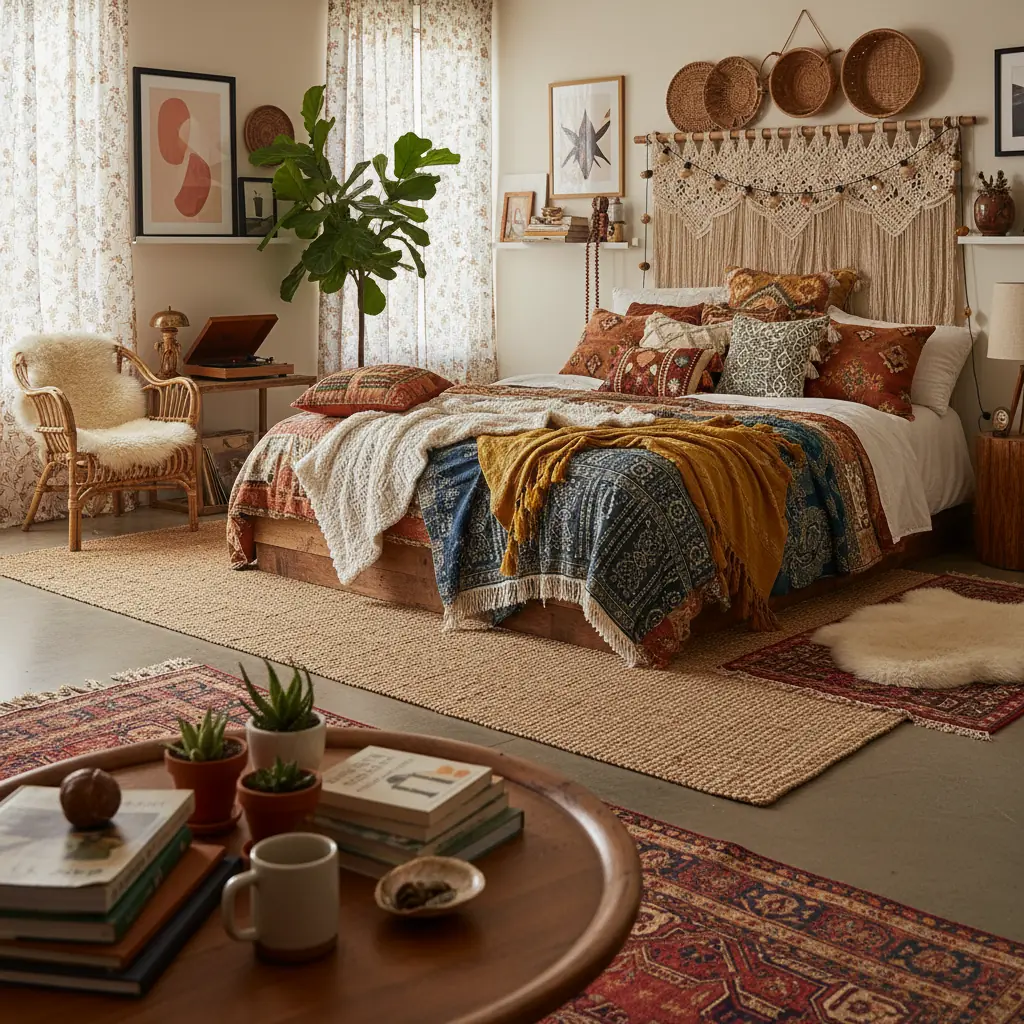
What makes boho different from messy? The Art of Intentional Abundance
Bohemian style has an image problem. Search for boho bedrooms online and you will find two extremes: magazine-styled rooms with a single macrame wall hanging that barely qualify as bohemian, and overstuffed spaces drowning in pillows, tapestries, and trinkets that feel more like a cluttered storage unit than a designed room. Authentic boho lives in the tension between abundance and intention. It's not just about collecting items; it's about carefully curating a collection that tells a story, your story.
The difference between a bohemian bedroom and a messy bedroom is curation. In a truly boho room, every textile, object, and plant is chosen with purpose — not just accumulated. There is a cohesive color story holding everything together, even if subtle. Patterns mix, but they share a common thread: similar warmth, complementary scales, or a connecting accent color that unifies the visual landscape. The room feels collected over time, as if each piece has a narrative, because ideally it does. Imagine a sun-drenched bazaar where every stall holds unique treasures; a boho bedroom mirrors this with a sense of discovery and thoughtful selection.
The practical framework is this: boho uses more layers, textures, and colors than minimalist styles, but each layer serves a distinct purpose — visual interest, functional comfort, or emotional connection. If you cannot articulate why something is in the room, it is clutter, not boho. This intentional approach ensures your space feels inviting and curated, not chaotic.
The Textile Foundation: Layering Comfort and Pattern
Textiles are the backbone of a bohemian bedroom, forming a rich tapestry of comfort and visual interest. Start with the bed, the undeniable focal point. Opt for linen sheets in a natural or warm tone, such as muted terracotta, sage green, or an earthy beige ($80-150 for a quality linen set from Quince or Cultiver). These provide a breathable, lived-in feel. Layer with a textured duvet cover or quilt – think a block-print cotton, a natural indigo dye, or a soft, organic gauze. Finish with two to four accent pillows mixing patterns — a kilim-style print, a mudcloth-inspired geometric, a solid velvet in a rich jewel tone, or an embroidered kantha pillow. The key is mixing textures (linen, velvet, wool, cotton, jute) rather than matching patterns exactly. Focus on how the different fabrics feel and how their varying textures catch the light.
A woven throw at the foot of the bed ($30-70 for handwoven options from Etsy artisans or World Market) adds another texture layer and invites coziness. Macrame — whether a wall hanging above the headboard ($25-80 depending on size) or a plant hanger by the window — introduces the quintessential boho craft element. While the oversized, wall-spanning macrame trend has cooled, a medium-sized piece with interesting knotwork or a smaller set of framed macrame art reads as more current and sophisticated.
On the floor, layer rugs to create visual richness and practical warmth simultaneously. This is one of the signature boho moves. Begin with a large base rug in a neutral tone (jute, sisal, or a low-pile wool, $150-350 for an 8x10) anchored under the bed, extending out on either side. Overlap this with a smaller vintage kilim or Persian-style rug ($60-200 for a 3x5 from a vintage dealer or Ruggable) placed alongside the bed where your feet land in the morning. This technique adds depth, defines the sleeping area, and softens the overall feel of the room. A full bedding and rug refresh, including these foundational textile elements, typically ranges from $400 to $800, creating a significant impact without breaking the bank.
The Bohemian Color Approach: Earthy Base with Jewel Tone Accents
The boho color strategy starts with an earthy, neutral base that prevents the room from feeling chaotic when you introduce more vibrant accent colors. Think warm whites, creamy ivories, sandy beiges, and terracotta on walls, large furniture pieces, and the most expansive textiles. These foundational hues create a grounding backdrop, allowing the richer tones to truly pop. For inspiration on finding the perfect foundational shades, explore articles like our guide to [best paint colors for 2026](/blog/best-paint-colors-2026).
Jewel tone accents are the signature of a vibrant boho space: deep mustard yellow, rich burgundy or wine, teal or peacock blue, burnt orange, and dusty rose. These colors evoke a sense of global travel and artisanal craft. Pick two or three of these as your primary accent palette and distribute them thoughtfully through pillows, throws, art, and small decor objects. The common mistake people make is using too many accent colors at full saturation — the result is visual noise and a cluttered appearance. Limit yourself to three accent tones and let them repeat across the room to create visual rhythm and a cohesive, yet eclectic, feel. For instance, if you choose mustard and teal, ensure these colors appear in at least three different elements within the space. Studies show that incorporating warm color palettes can significantly enhance feelings of comfort and relaxation, making them ideal for a bedroom sanctuary.
Warm metallics — brass, gold, and copper — are the boho neutral metals. A brass table lamp, a gold-framed mirror, or a copper planter ties metallic moments together without introducing the coolness of silver or chrome. Look for antiqued and patinated finishes; they feel more authentic and collected than shiny, polished brass. Habitas's [AI Color Palette Generator](/blog/ai-color-palette-generator) can help you experiment with different earthy bases and jewel-tone accents, visualizing how they'll look in your specific room before you commit to purchasing any items.
Wall Art, Gallery Walls, and Vertical Interest
The boho gallery wall is not a rigid grid of matching frames — it is an asymmetric, organic collection that intentionally mixes media, materials, and styles. Think framed art prints (botanical illustrations, abstract pieces in your accent colors, or travel photography), a woven basket or two hung on the wall, a small round mirror, a textile piece or tapestry, and perhaps a pressed botanical in a floating frame. Vary frame materials to enhance the collected feel: natural wood, rattan, brass, and matte black can all coexist harmoniously in a boho arrangement.
The arrangement should feel natural and effortless. Start with the largest piece slightly off-center, then build outward, mixing sizes and orientations. Keep spacing tight (2-3 inches between pieces) for a collected, abundant feel, rather than the airy spacing of a minimalist gallery wall. Command strips and picture-hanging wire make this fully rental-friendly. A thoughtfully curated gallery wall adds an estimated $150-$500 to a bedroom's decor budget, depending on the number and quality of pieces.
Beyond gallery walls, consider a textile headboard as a powerful alternative to a traditional upholstered headboard. A large woven wall hanging, a vintage quilt, a macrame installation, or even a beautiful flat-weave rug mounted behind the bed can instantly transform a basic bedroom into an unmistakably bohemian sanctuary. This single swap creates a significant focal point and injects warmth and texture. Habitas can show you how different gallery wall arrangements and textile headboards would look in your specific space before you commit to hanging anything, ensuring your vision comes to life seamlessly.
Plants and Lighting as Atmosphere Builders
Plants are non-negotiable in bohemian bedrooms. They are not mere accessories — they are foundational elements that bring life, purify the air, and enhance the overall sense of tranquility. A trailing pothos or string of pearls in a macrame hanger by the window, a large snake plant or monstera in a woven basket planter on the floor, and a small succulent or two on the nightstand create a living, breathing quality that no amount of inanimate decor can replicate. Studies indicate that incorporating indoor plants can reduce stress by 37% and improve air quality, making them perfect for a restful bedroom. For more ideas on how to integrate greenery, check out our guide to the [best plants for interior design](/blog/best-plants-for-interior-design).
The boho plant approach emphasizes abundance without chaos: group plants at varying heights (floor, shelf, hanging) near the window or in a dedicated corner to create a lush, mini-jungle effect. Woven basket planters ($10-25 each), terracotta pots, and ceramic planters in earthy tones keep the containers within the aesthetic. Avoid glossy white or black modern planters — they often read as minimalist and can disrupt the warm, organic flow of a bohemian space.
Lighting defines the boho mood more than any other single element. Overhead, a rattan pendant light or a woven drum shade ($40-120) casts warm, patterned shadows on the ceiling and walls, creating an inviting glow. String lights — not the multicolored party variety, but warm white fairy lights in copper wire ($10-20) draped along a canopy, headboard, or bookshelf — create the dreamy, ethereal ambiance that boho bedrooms are known for. On nightstands, a Moroccan-style punched metal lantern, a ceramic lamp with a linen shade, or even a salt lamp provides warm, localized light for reading or winding down. The critical rule is warm color temperature (2700K or below) exclusively; cool white light instantly destroys the soft, inviting atmosphere essential to boho. Layering these different light sources allows you to adjust the mood of the room throughout the day and evening.
Furniture Choices that Ground the Look
Beyond textiles and decor, the right furniture pieces are crucial for grounding the bohemian aesthetic. Embrace natural materials and handcrafted forms. Rattan, bamboo, and woven wicker pieces are quintessential boho, adding texture and lightness. Consider a rattan headboard or a woven accent chair that invites relaxation. Solid wood furniture, especially pieces made from teak, mango wood, or reclaimed timber, brings warmth and a sense of history. Look for items with carved details or a slightly distressed finish that suggest a storied past.
Low-slung furniture profiles often characterize bohemian spaces, contributing to a relaxed, lounge-like atmosphere. A platform bed, a floor cushion grouping, or a low-profile dresser can enhance this inviting feel. Vintage and handcrafted pieces are highly valued, as they inherently carry the "collected over time" narrative. A hand-carved coffee table, an antique chest used as a nightstand, or a unique screen divider can serve as anchor pieces that define your room's character. When sourcing, prioritize quality and unique design over mass-produced items, even if it means fewer pieces. This approach ensures your furniture contributes to the curated, personal feel rather than just filling space.
Bohemian on a Budget vs. Curated Bohemian: Investing in Your Sanctuary
Budget boho ($200-500) leans into thrifting, DIY projects, and strategic, affordable purchases. Thrift stores, flea markets, and estate sales are goldmines for boho treasures: vintage frames, brass objects, woven baskets, and eclectic ceramics often cost $2-15 each at secondhand shops. The secondhand market is projected to grow 127% by 2026, offering incredible value and sustainability. A DIY macrame wall hanging requires only about $15 in cord and a YouTube tutorial. Layered thrifted textiles on the bed — a vintage quilt, a couple of mismatched patterned pillows — cost a fraction of retail and look more authentically collected than anything new. This approach allows for maximum personalization and unique finds. For more budget-friendly ideas, consult our guide to [apartment decorating on a budget](/blog/apartment-decorating-budget).
Curated boho ($1,000-3,000+) invests in anchor pieces and artisan-made items that will last and truly define the space. This might include a high-quality linen bedding set, a genuine vintage or artisan-made area rug (which can be a significant investment but also a cherished heirloom), a statement rattan light fixture, and a few investment art pieces. The difference is not simply _more_ stuff, but _better_ stuff. One handmade Oaxacan textile ($80-200) communicates more character and cultural richness than ten mass-produced boho pillows. A genuine vintage kilim rug carries decades of character and craftsmanship that no reproduction can match. While a complete bedroom redesign can range from $1,000 to $5,000 depending on the scope and quality of materials, focusing on these key investment pieces ensures longevity and authentic style. For a full breakdown, see our article on [bedroom redesign cost breakdown](/blog/bedroom-redesign-cost-breakdown).
Regardless of budget, the bohemian bedroom should tell your story. Travel souvenirs, inherited objects, artwork by people you know, photographs from meaningful moments — these personal elements are what separate a bohemian bedroom from a mere boho-themed display. Using an AI design tool like Habitas can generate room visualizations in minutes, compared to the 2-4 weeks a traditional designer might take for initial concepts. Whether you're starting from scratch or refining an existing space, Habitas can transform your design process. Our [AI-generated room designs](/blog/ai-generated-room-designs-realistic) allow you to test out various boho layouts, color schemes, and furniture arrangements in seconds, complete with diverse textiles and plant groupings. This means less guesswork and more confidence in creating a space that truly reflects your vision and budget. Layer in your own collected pieces to make the space genuinely yours, creating a sanctuary that is as unique as you are.
Frequently Asked Questions
### What is the difference between boho and maximalist design?
While both bohemian and maximalist styles embrace abundance, the key difference lies in their underlying philosophy and aesthetic. Maximalism deliberately uses bold patterns, a wide array of colors, and a high density of objects to create an eclectic, often opulent, and sometimes whimsical sensory overload. It's about more of _everything_. Bohemian style, in contrast, prioritizes natural materials, earthy textures, and a collected-over-time feel. Its abundance is rooted in global influences, comfort, and a connection to nature, often with a more cohesive (though still layered) color story. Boho aims for "intentionally full," while maximalist aims for "joyfully overflowing."
### How do I keep a boho bedroom from looking cluttered?
The secret to a non-cluttered boho bedroom is thoughtful curation and strategic layering. Every item should have a purpose, be it functional, aesthetic, or sentimental.
1. **Start with a clean slate:** Even in boho, decluttering is crucial. Remove anything you don't love or use. 2. **Use a cohesive color palette:** Stick to an earthy base with 2-3 accent colors to unify diverse pieces. 3. **Vary texture, not just objects:** Instead of adding more "stuff," introduce different textures through textiles (linen, velvet, macrame) and natural materials (wood, rattan). 4. **Embrace vertical space:** Utilize walls for art and shelves for displaying smaller collections, keeping surfaces clear. 5. **Smart storage:** Incorporate woven baskets or antique chests that double as storage and decor.
### What are the best colors for a bohemian bedroom?
The best colors for a bohemian bedroom revolve around an earthy, warm foundation combined with vibrant jewel-toned accents.
- **Base Colors:** Think warm whites, cream, sand, terracotta, olive green, or muted rust for walls and large furniture. These provide a calming, natural backdrop. - **Accent Colors:** Introduce pops of color with rich burgundy, deep mustard yellow, teal, peacock blue, burnt orange, dusty rose, or emerald green. Distribute these through pillows, throws, art, and small decor items. - **Metallics:** Warm metals like brass, copper, and gold serve as neutral accents that add a touch of sophisticated shimmer.
### What kind of lighting is best for a boho room?
Layered, warm lighting is paramount for creating the cozy, inviting atmosphere of a bohemian bedroom.
- **Ambient Lighting:** A rattan pendant light, woven drum shade, or a chandelier with natural elements for general room illumination. - **Task Lighting:** Nightstand lamps with ceramic bases and linen shades, or Moroccan-style punched metal lanterns that cast beautiful patterns. - **Accent Lighting:** Warm white fairy lights draped over a headboard or window, or string lights along a shelf. - **Color Temperature:** Always opt for warm white bulbs (2700K or lower) to create a soft, inviting glow. Avoid harsh, cool-toned lighting.
### Can I create a bohemian bedroom on a small budget?
Absolutely! Boho is one of the most budget-friendly styles to achieve because it celebrates thrifted, handmade, and collected items.
1. **Thrift and DIY:** Hit up secondhand stores for vintage frames, brass objects, unique ceramics, and textiles. DIY macrame or wall art is very affordable. 2. **Focus on textiles:** Layering blankets, throws, and pillows from various sources can transform a basic bed into a boho oasis without expensive furniture. 3. **Embrace plants:** Houseplants are relatively inexpensive and add immense life and color. 4. **Strategic purchases:** Spend a little more on one or two impactful pieces like a unique rug or a statement light fixture, and fill in with budget finds.
### What types of plants work well in a boho bedroom?
Plants are essential for bringing the outdoors in and enhancing the serene, natural vibe of a bohemian bedroom.
- **Trailing Plants:** Pothos, Philodendron, String of Pearls, or Ivy look fantastic in macrame hangers or trailing from shelves. - **Statement Floor Plants:** Larger plants like a Monstera Deliciosa, Snake Plant (Sansevieria), Fiddle Leaf Fig, or Bird of Paradise add dramatic height and lushness. - **Small Accent Plants:** Succulents, ZZ Plants, or small ferns on nightstands, dressers, or windowsills. - **Containers:** Use woven basket planters, terracotta pots, or ceramic planters in earthy tones to maintain the aesthetic. Ensure plants chosen are suitable for indoor, low-light (if applicable) conditions and are safe for pets if you have them.