Maximalist Interior Design: Layering Without Clutter
Maximalism is not the opposite of good design — it is a different discipline. Learn the principles of intentional layering, pattern mixing, and curation that define successful maximalist interiors.
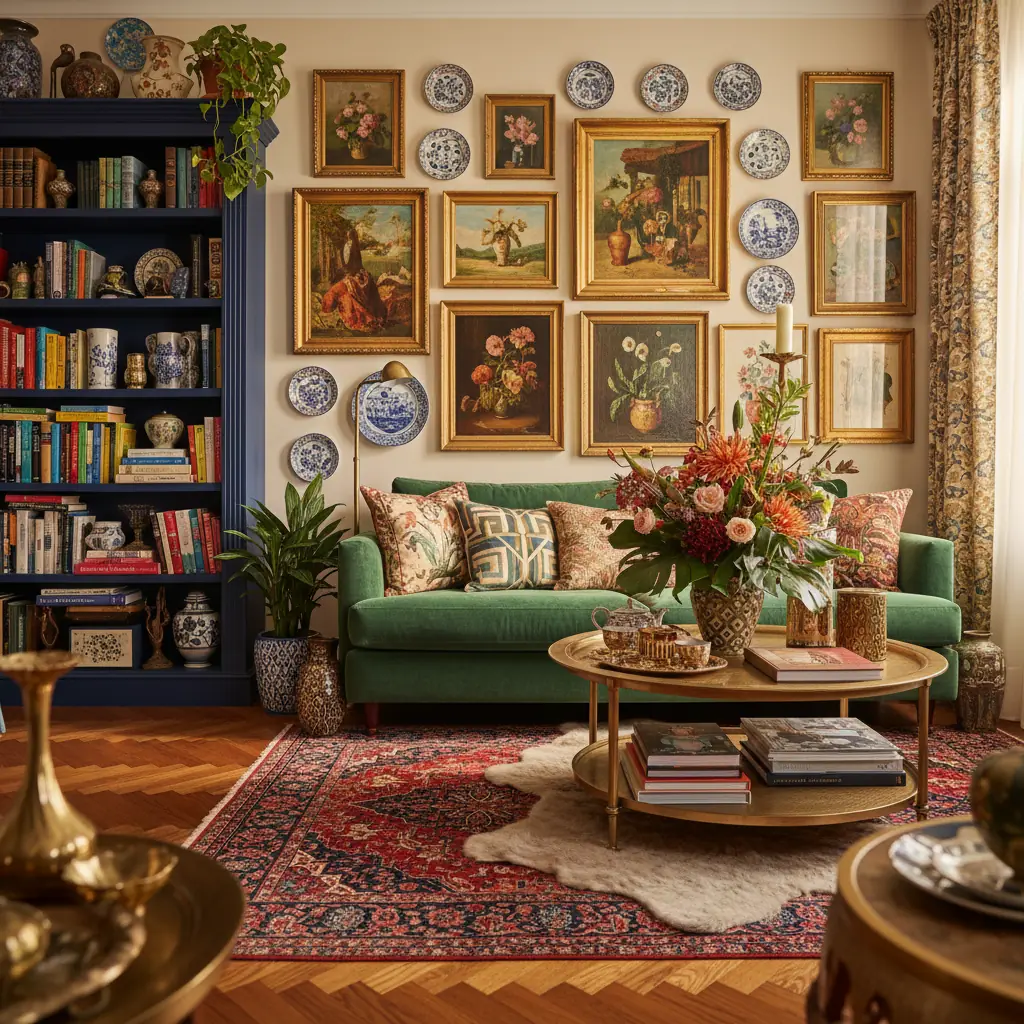
Maximalism is curation, not accumulation: A deliberate art
The most common misconception about maximalist design is that it means "more of everything." True maximalism is as deliberate as minimalism — it is simply deliberate in a different direction. A successful maximalist room contains many things, but every one of those things was chosen with intention. The effect is richness, not chaos. The feeling is abundance, not overwhelm. The distinction between a maximalist interior and a cluttered one is precisely this intentionality.
Maximalist designers think about their rooms like they think about a cabinet of curiosities: each object has a reason to be there, a story, a relationship to the objects around it. Think of your maximalist space as a deeply personal autobiography told through objects, textures, and hues. The layering is orchestrated. Patterns interact by design. Colors relate to each other across the room even when they seem chaotic up close. If you approach maximalism as curation — as an editor who includes everything relevant and nothing arbitrary — the results are always coherent and deeply personal. An astute editor doesn't just cut; they strategically place and emphasize, ensuring every element serves the story. This is precisely the mindset for maximalist design, where emotional connection to each piece is paramount.
Color in maximalist interiors: why confidence is the rule
Maximalist rooms commit to color. Tentative half-measures — a muted sage sofa in an otherwise beige room — produce neither the calm of minimalism nor the energy of maximalism. They produce ambiguity. The maximalist approach is to choose a dominant color and use it confidently: a deeply saturated wall, a jewel-toned velvet sofa, a patterned rug that brings two or three colors into dialogue with each other. This conviction in color choice is what gives maximalist spaces their vibrant energy and depth.
The technical principle that prevents maximalist color from becoming overwhelming is the use of a consistent value range. Even in rooms with five or six distinct colors, professional maximalist designers tend to use colors that share a similar saturation and lightness level. Imagine a symphony orchestra; while many instruments play, they often harmonize within a specific tonal range. Similarly, successful maximalist color schemes often thrive when colors share a consistent depth or brightness. This means pairing vibrant emeralds with rich sapphire and ruby tones, or soft lavenders with gentle buttercup yellows and muted mints. The contrast comes from the _hue_, not the _intensity_. It is the mixing of very dark, very light, and very bright in the same room that tends to feel unresolved. Studies show that thoughtfully chosen color palettes can increase perceived home value by up to 5-10%, underscoring the power of confident color application. You can even explore these combinations with an [AI color palette generator](/blog/ai-color-palette-generator) to visualize possibilities.
Pattern mixing: mastering the three-scale rule
Maximalist interiors are defined by their patterns, and pattern mixing is the skill that separates professional-looking maximalist rooms from amateur ones. The three-scale rule is the most reliable framework: combine a large pattern, a medium pattern, and a small pattern in the same room, often using the same color family across all three scales. A large floral on curtains, a medium geometric on a chair, and a small stripe on cushions — all in a connected palette of ochre, terracotta, and cream — creates richness without conflict.
Beyond florals, geometrics, and stripes, consider introducing an animal print, an abstract watercolor, or a traditional damask. The key isn't to match styles, but to connect through shared colors. For example, a grand Persian rug (large scale) featuring deep blues and creams could anchor a velvet sofa with a medium-scale brocade in cream and a throw pillow with a small, delicate blue floral motif. The styles differ wildly, but the common color thread creates cohesion. Patterns that share a common color are the structural connective tissue of maximalist design. They can be from completely different visual families — organic versus geometric, traditional versus modern — and still work together if they share even one or two colors. The pattern connection is always more important than pattern style compatibility. Use this principle to mix periods, cultures, and aesthetics freely, anchored by color. Don't overlook texture as a "pattern" in itself either. A chunky knit throw, a rough-hewn wooden table, or a sleek metallic sculpture all add visual interest and tactile depth, contributing to the layered effect without adding more print. This approach allows for a rich tapestry of visual experiences, aligning with the [best interior design styles of 2026](/blog/best-interior-design-styles-2026) that embrace individuality.
Furniture in maximalist rooms: navigating scale, finish, and eclecticism
Maximalist rooms benefit from furniture at the extremes of scale — a very large sofa, a very substantial dining table, generously scaled armchairs — because large, confident furniture pieces create the structural anchor that smaller decorative elements orbit around. Furniture that is too small in a maximalist context disappears, and the room reads as cluttered rather than layered. An oversized sectional sofa or a grand, ornately carved armoire can anchor a maximalist living room, creating a visual weight that allows other, smaller elements to be layered around it without the room feeling top-heavy or cluttered. Conversely, a collection of delicate side tables might replace one large coffee table, offering multiple surfaces and varied visual heights.
The deliberate mixing of furniture from different periods and origins is central to maximalist identity. A Victorian button-back armchair beside a low-slung Danish modern sofa beside a Moroccan cedar side table — when united by color, finish, and the curatorial intelligence of the room around them — creates the sense of a life accumulated with taste over time. This is the maximalist aspiration: a room that tells a rich personal story through its objects. Imagine a mid-century modern credenza serving as a vibrant backdrop for a collection of antique ceramic vases, or a plush Art Deco armchair paired with a rustic, reclaimed wood coffee table. This juxtaposition, when expertly executed, speaks volumes about a well-traveled life and an appreciative eye for craftsmanship across eras. Tools like Habitas let you visualize different furniture combinations and arrangements in your actual room photo, making it easier to experiment with scale and style before making any purchases. Investing in quality, versatile furniture can add an average of 15-20 years to a room's aesthetic relevance, reducing the need for frequent overhauls.
The gallery wall: maximalism in two dimensions
Gallery walls are the most accessible maximalist statement available. A well-executed gallery wall takes otherwise blank wall space and turns it into the most personal and visually rich element of a room. The principles: use a consistent mat color (white or cream) if frames are different, or use consistently colored frames with varied mat dimensions. Mix photography, illustration, and abstract art freely. Include objects alongside framed pieces — a small shelf, a decorative plate, a sconce.
Beyond framed art, consider integrating decorative mirrors, sconces, small floating shelves displaying curated objects (think miniature sculptures, collected shells, or unique ceramics), framed textiles, or even small, intricately carved wall panels. The goal is to create a dynamic narrative that unfolds across the wall. Gallery walls should not be perfectly symmetrical. The organic, slightly imperfect arrangement that develops as you add pieces over time has more life than a precisely measured grid. Start with one or two anchor pieces – perhaps a large painting or a striking mirror – then build outwards. Play with varying distances between pieces; not everything needs to be equidistant. Sometimes a tight cluster of small frames beside a larger, isolated piece creates intriguing tension. The arrangement should feel like it grew rather than was installed. Leave space for new additions — a maximalist gallery wall is never quite finished, and that ongoing openness to new objects is part of its character, much like a [before and after room transformation guide](/blog/before-after-room-transformation-guide) showing evolution.
What are the essential elements for a maximalist foundation?
Every maximalist room needs a robust starting point – a visual anchor that establishes the room's overarching personality. This could be a dramatic, large-scale patterned wallpaper that wraps the entire room, a deeply patterned Persian rug that covers most of the floor, or a singular, monumental piece of art that dictates the color story. Choosing a foundational element allows you to build layers upon it without the design becoming arbitrary. For instance, a vintage Moroccan rug with its rich hues and intricate patterns can inspire the entire room's palette and textural direction, providing a warm, inviting base. Similarly, a striking [best paint colors 2026](/blog/best-paint-colors-2026) choice for your walls can set a bold tone. This foundational piece acts as the gravitational center, around which all other elements orbit, ensuring cohesion despite the abundance.
How can I incorporate biophilic design into maximalist interiors?
Plants, with their organic shapes and vibrant greens, are natural complements to the maximalist aesthetic. They add a living, breathing layer of texture and color, breaking up dense patterns and softening hard lines. Think beyond a single potted plant; envision cascading philodendrons from high shelves, a lush collection of varied succulents on a coffee table, or a dramatic, tall fiddle leaf fig anchoring a corner. Integrating biophilic elements, which connect us to nature, can create a sense of calm amidst the visual richness. Large, leafy plants can serve as living sculptures, filling vertical space and introducing a fresh, natural element that contrasts beautifully with man-made patterns and objects. Studies show that integrating biophilic elements into home design can improve air quality by 30% and reduce stress levels by up to 15%, making them a valuable addition to any maximalist space seeking balance. Explore more in our [biophilic design guide](/blog/biophilic-design-guide).
Layering light: How does lighting enhance maximalist spaces?
In maximalist design, lighting fixtures are not just functional objects; they are sculptural elements, contributing to the overall visual tapestry. Think tiered chandeliers, quirky floor lamps with unique shades, and an array of task lighting. The goal is to create multiple pools of light at various heights, adding depth and allowing different layers of the room to be highlighted. A grand chandelier might be the dramatic centerpiece, while a collection of vintage table lamps with fringed shades adds intimacy and specific focal points. Wall sconces can highlight art, and strategically placed spot lighting can draw attention to a treasured collection. The interplay of light and shadow created by diverse fixtures adds another dimension to the maximalist experience, emphasizing textures and colors. Thoughtful layered lighting can increase the perceived spaciousness of a room by up to 20% and significantly boost mood and productivity. Experimenting with different lighting arrangements and fixtures can be challenging, but an AI-powered platform like Habitas can help you visualize how various lighting choices will impact the ambiance and highlights within your maximalist design.
Editing a maximalist room: the necessary discipline
Even in maximalist design, editing is required. The discipline is different from minimalist editing — you are not asking "do I need this?" but "does this earn its place?" An object earns its place if it is beautiful, meaningful, or both. It does not earn its place if it is simply present out of habit or inertia.
Walk through a maximalist room looking for objects that you would not consciously choose to add today. These are candidates for removal. A practical approach is the 'love it or leave it' exercise. Systematically go through each item. If it doesn't evoke joy, have significant sentimental value, or contribute meaningfully to the room's aesthetic or function, it's a candidate for removal or relocation. Think of a quarterly 'curatorial review' where you reassess your space. A maximalist room should feel like it contains everything you have intentionally included; it should not feel like it contains everything you have not yet gotten around to removing. The line between those two things is the line between richness and clutter, and walking that line deliberately is the true discipline of maximalist design. Homeowners who regularly declutter and refine their spaces report a 40% increase in perceived well-being and satisfaction with their living environment, a testament to the power of mindful editing.
Frequently Asked Questions
### What is the difference between maximalist and cluttered?
The fundamental distinction between maximalism and clutter lies in intentionality and curation. Maximalist spaces are meticulously designed, with every object, pattern, and color chosen to contribute to a deliberate aesthetic narrative and personal story. Clutter, conversely, is characterized by arbitrary accumulation, a lack of organization, and objects that don't serve a specific purpose or bring joy, resulting in a disorganized and overwhelming feeling rather than one of abundance.
### Can a maximalist room feel calming or serene?
Absolutely. While often associated with vibrant energy, maximalism can also be incredibly calming and serene, especially when built around a consistent, comforting color palette (like deep blues and greens, or warm earthy tones) and natural, inviting textures. The richness comes from depth and layered comfort rather than high-contrast stimulation. It's about enveloping a space in beauty and meaning, which, for many, can be profoundly tranquil and personal.
### How do I start decorating in a maximalist style without being overwhelmed?
Begin with a single statement piece – a bold wallpaper, an oversized rug, or a striking piece of art – to anchor your room's design and establish a foundational color story. Then, gradually layer in patterns, textures, and objects that share a common color family or theme. Use design tools like Habitas to visualize these layers on your own space, allowing you to experiment before committing. Remember the "three-scale rule" for patterns and focus on collecting items that genuinely resonate with you and tell your personal story.
### What are common maximalist color palettes?
Maximalism embraces a vast spectrum of color, but common successful palettes often feature jewel tones (emerald, sapphire, ruby, amethyst), rich earth tones (terracotta, ochre, deep greens, warm browns), or vibrant, unexpected combinations (think fuchsia with tangerine, or teal with mustard). The key is often a consistent _saturation_ or _value_ range within your chosen hues, ensuring they coexist harmoniously and create a cohesive, deliberate visual impact rather than clashing.
### Is maximalist interior design a fleeting trend?
Maximalism, at its core, is a timeless approach to interior design that emphasizes personal expression, storytelling, and the art of curation. While specific iterations of maximalism may trend (e.g., grandmillennial, eclectic bohemian), the underlying philosophy of intentional layering and embracing "more is more" (when done thoughtfully) has always been present in design history. It's less a fleeting trend and more an enduring design philosophy that prioritizes personality, depth, and the richness of a collected life over stark simplicity.