Design de Banheiro Japandi: Crie um Refúgio Sereno com Estilo Spa
A estética Japandi se traduz perfeitamente em banheiros. Aprenda os materiais, cores, louças e princípios de layout que criam um refúgio de banheiro genuinamente sereno.
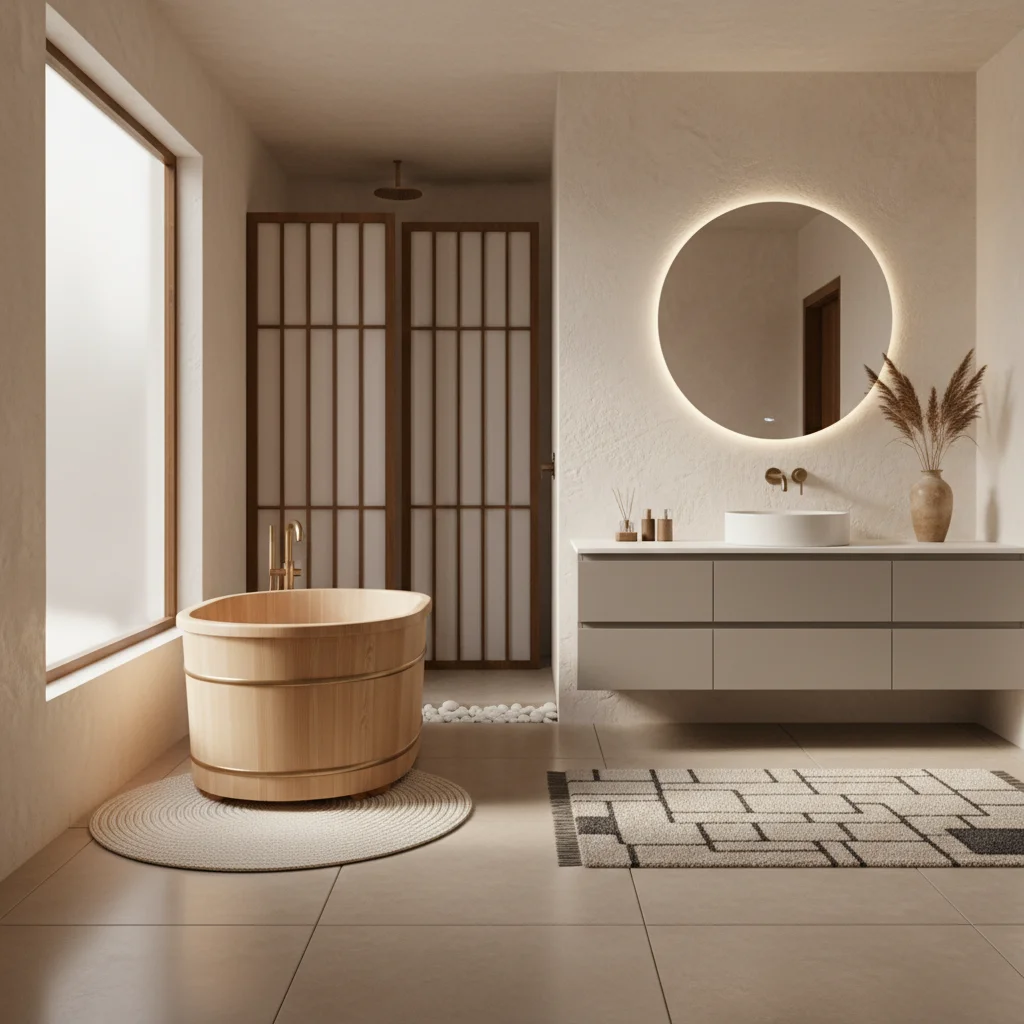
Por Que o Japandi Funciona Tão Bem em Banheiros
O banheiro é, sem dúvida, o cômodo mais ritualístico de uma casa. É onde nos preparamos para enfrentar o dia e relaxamos de suas demandas. A qualidade dessas transições diárias influencia sutilmente nosso bem-estar geral. Essa conexão profunda torna a filosofia Japandi — uma mistura harmoniosa do calor funcional Scandinavian e da apreciação japonesa wabi-sabi pelas imperfeições naturais — particularmente adequada para o **design** de banheiros. Ambas as tradições elevam o ato de tomar banho de mera higiene a uma experiência meditativa e consciente.
O resultado é um banheiro que não apenas parece bom, mas que se sente profundamente restaurador. Ao contrário do minimalismo muitas vezes frio e de alto brilho de um hotel de luxo, ou do calor por vezes desorganizado de um banheiro rural tradicional, o Japandi encontra um equilíbrio sublime. Ele abraça materiais com textura e calor inerentes, geometrias que são simples, mas convidativas, e um senso deliberado de amplitude que garante que o ambiente pareça cuidadosamente editado, nunca vazio. De fato, estudos mostram que investir em um banheiro cuidadosamente projetado pode aumentar o valor de revenda de uma casa em **até 70% do custo da renovação**, tornando uma transformação Japandi um investimento inteligente tanto no estilo de vida quanto no valor da propriedade.
A Paleta de Cores do Banheiro Japandi: Cultivando a Calma
Os banheiros Japandi são caracterizados por uma paleta de neutros naturais contida e profundamente pensada. A cor base geralmente se inclina para um branco-quente, um bege pedra suave ou um tom de massa relaxante – evitando conscientemente brancos nítidos e frios que podem parecer clínicos. Esses tons fundamentais criam um pano de fundo tranquilo, convidando o olhar ao repouso.
Tons secundários expandem esse esquema calmante com cinzas quentes, verdes envelhecidos e suaves (pense em sálvia, musgo ou eucalipto) e sutis pretos quentes ou carvão. Essas cores não são declarações ousadas, mas sim sussurros sofisticados que adicionam profundidade sem sobrecarregar. Crucialmente, os tons de madeira natural de armários, prateleiras e acessórios desempenham um papel vital, ancorando toda a paleta com calor orgânico e evitando que os elementos de pedra e cerâmica pareçam frios ou pouco convidativos.
Uma característica definidora da aplicação de cores Japandi é que os tons de destaque são quase exclusivamente derivados da profundidade cromática inerente dos próprios materiais, e não de superfícies pintadas. Imagine o sutil veio orgânico em uma laje de mármore polido, as variações de grão nuances em uma peça de carvalho branco, ou as pintinhas minerais em uma bacia de cerâmica fosca. Essa abordagem fala do princípio wabi-sabi de encontrar beleza na textura natural e na variação discreta. Ela enfatiza que a verdadeira cor Japandi vem da seleção de materiais com profundidade intrínseca e permitindo que sua beleza natural fale por si. Ao escolher sua paleta, ferramentas visuais como a Habitas podem ajudar você a [gerar paletas de cores com IA](/blog/ai-color-palette-generator) que se alinham perfeitamente com a estética Japandi, garantindo um espaço harmonioso e equilibrado antes de se comprometer.
Quais Materiais Funcionam Melhor para Interiores Japandi?
A contenção de materiais é um pilar do **design** Japandi, particularmente no banheiro. O princípio orientador é selecionar uma paleta limitada de três ou quatro materiais primários e, em seguida, usá-los de forma consistente e ponderada por todo o espaço. Isso cria uma sensação coesa, fundamentada e luxuosa.
- **Pedra:** Mármore polido, arenito, travertino ou ardósia são escolhas exemplares para pisos e paredes. Ao contrário da pedra polida, um acabamento polido ou fosco realça a textura natural do material e suas variações sutis, alinhando-se com a estética wabi-sabi. Um grande formato de azulejo de pedra ou até mesmo uma única laje de mármore lindamente veada usada em uma parede de destaque pode definir o espaço com elegância discreta. A escolha da pedra muitas vezes informa o humor de todo o ambiente; um travertino claro traz calor e leveza, enquanto uma ardósia mais escura introduz uma profundidade terrosa e aterradora. Ao selecionar a pedra, considere sua porosidade e requisitos de manutenção para garantir longevidade em um ambiente úmido. - **Madeira:** Madeiras quentes como teca, hinoki (cipreste japonês) ou carvalho branco são indispensáveis. Elas podem ser encontradas em bases de bancadas, prateleiras abertas, acessórios e até mesmo em vigas estruturais expostas, se aplicável. A teca, com sua resistência natural à água e rico grão, é particularmente adequada para ambientes de banheiro úmidos. Hinoki é celebrado na cultura japonesa por seu aroma e propriedades antibacterianas. O carvalho branco oferece uma sensação mais leve e contemporânea, mantendo o calor. A madeira deve ser geralmente deixada em seu acabamento natural ou levemente oleada para preservar sua textura e cor orgânicas, novamente alinhando-se com o princípio da beleza inerente. Aproximadamente **65% dos **designers** de interiores priorizam materiais naturais** como madeira e pedra em seus projetos por suas qualidades estéticas e táteis. - **Cerâmica:** A cerâmica fosca é a escolha preferida para louças, como cubas e, quando aplicável, azulejos de parede. A ausência de alto brilho reforça a sensação de calma e discrição. Cerâmicas feitas à mão, com suas sutis irregularidades e formas imperfeitas, incorporam lindamente o princípio wabi-sabi, adicionando um toque artesanal único. As cores devem ecoar a paleta neutra – brancos-quentes, cinzas-quentes ou até mesmo tons terrosos sutis. - **Metal:** Ferragens e acessórios devem apresentar metais escovados em vez de acabamentos polidos e brilhantes. Latão quente ou aço escurecido são excelentes escolhas, oferecendo um contraste sutil sem serem excessivamente decorativos. Esses acabamentos envelhecem graciosamente, desenvolvendo uma pátina que adiciona caráter ao longo do tempo, outra referência ao wabi-sabi. Encanamentos expostos em um acabamento complementar podem até se tornar um elemento de **design** intencional.
A qualidade de cada material suplanta a quantidade. Uma única cuba de pedra requintadamente trabalhada ou uma bancada de madeira meticulosamente acabada contribuem mais para a estética Japandi do que uma abundância de materiais díspares e de menor qualidade. A filosofia de **design** japonesa frequentemente faz referência ao _ma_, a pausa significativa ou o espaço negativo entre os elementos. Em termos materiais, isso se traduz em usar menos materiais com mais confiança, permitindo que cada elemento escolhido 'respire' verdadeiramente e carregue seu peso dentro do **design**. Esse processo de seleção deliberado garante que cada superfície contribua para a sensação geral de tranquilidade e autenticidade.
Louças: A Banheira Freestanding e a Cuba de Apoio
Duas escolhas de louças definem predominantemente o banheiro Japandi: a banheira freestanding e a cuba de apoio ou de pedra. Essas escolhas não são apenas funcionais, mas esculturais, atuando como pontos focais que incorporam a estética.
Uma banheira de imersão profunda e oval, idealmente em branco fosco ou compósito de pedra natural, serve como a âncora visual e experiencial do banheiro. Ela faz referência direta à tradição japonesa _ofuro_, onde um banho profundo e curto é usado para contemplação tranquila, e não para limpeza. Sua natureza freestanding confere ao ambiente uma qualidade escultural e, crucialmente, deixa o piso circundante amplamente visível, o que contribui significativamente para tornar o espaço expansivo e desobstruído. Considere materiais como compósitos de superfície sólida por sua sensação suave e quente ao toque e facilidade de limpeza, ou até mesmo ferro fundido com um esmalte fosco para uma presença mais tradicional e aterradora.
A cuba de apoio – uma cuba que fica graciosamente sobre uma bancada ou laje simples e plana, em vez de embutida – é a assinatura Japandi para a área da bancada. Essa escolha eleva imediatamente a estética, transformando a cuba em um objeto artístico. Combine-a com uma torneira de parede, posicionada diretamente acima ou ao lado, para manter o espaço da bancada completamente livre, exceto pela própria cuba. Essa abordagem minimalista reforça o **design** desobstruído e intencional. Uma cuba de pedra natural em travertino, mármore ou pedra de rio, ou uma cuba de cerâmica feita à mão em uma forma orgânica e irregular, introduz aquela sutil imperfeição wabi-sabi que evita que o espaço pareça estéril ou excessivamente clínico. Para mais ideias gerais sobre reformas de banheiro, você pode explorar nossas [ideias de reforma de banheiro](/blog/bathroom-remodel-ideas).
Iluminação em Camadas para Ritual e Descanso
A iluminação de banheiro Japandi evita a iluminação forte e brilhante em favor do calor, sutileza e camadas estratégicas. O objetivo é criar um ambiente que suporte o relaxamento e as rotinas conscientes.
A principal fonte de luz deve ser sempre ambiente – muitas vezes um grande luminária de teto minimalista, ou luzes embutidas discretas, todas em um interruptor dimmer e ajustadas para uma temperatura de cor quente de 2700K (kelvin). Isso cria um brilho geral suave que imita a luz natural ao amanhecer ou ao entardecer.
Adicione iluminação de tarefa no espelho, que é crítica para o cuidado diário. Arandelas de parede, colocadas na altura do rosto em cada lado do espelho (em vez de acima dele), são ideais. Materiais como latão escovado, preto fosco ou até mesmo um toque de madeira natural complementam a paleta Japandi. As arandelas montadas lateralmente eliminam as sombras desfavoráveis projetadas pelas luzes de espelho suspensas, fornecendo iluminação uniforme e suave.
Onde as condições arquitetônicas permitem, a luz natural é o elemento mais potente em um banheiro Japandi. Uma claraboia fosca ou uma janela cuidadosamente posicionada que inunda um piso de pedra com luz natural difusa e indireta é inestimável, oferecendo uma conexão com o mundo exterior enquanto mantém a privacidade. Para banheiros sem opções diretas de luz natural, soluções inovadoras podem replicar seu efeito. Fitas de LED quentes, sutilmente escondidas sob uma bancada flutuante, ao longo da base de uma banheira freestanding, ou mesmo dentro de nichos de parede embutidos, podem criar um efeito de 'brilho por baixo' que sinaliza uma atmosfera de spa sem ser excessivamente teatral. Sistemas de iluminação inteligentes que permitem sequências de escurecimento programadas podem aprimorar ainda mais o aspecto ritualístico do banheiro, transitando de uma luz brilhante da manhã para um brilho suave da noite com facilidade.
A Edição Japandi: O Que Remover para Máxima Serenidade
Um banheiro Japandi é tanto sobre o ato ponderado de remover quanto sobre adicionar elementos cuidadosamente selecionados. O objetivo é alcançar um estado de vazio sereno, onde cada objeto ganha seu lugar.
Comece com a superfície mais visível: a bancada. Limpe tudo. Isso significa guardar todas as garrafas, ferramentas, maquiagens e acessórios diários em gavetas, armários fechados ou dentro de uma bandeja simples e elegante de bambu ou cerâmica que possa ser guardada. Os únicos objetos permitidos na bancada são aqueles que contribuem para a estética ou ritual sem criar desordem visual – talvez uma única barra de sabonete artesanal em um prato de pedra ou madeira, um porta-escovas de dentes minimalista, ou uma pequena planta cuidadosamente escolhida, como um musgo pendente, uma suculenta delicada ou uma pequena orquídea. Cada outro produto deve residir em armazenamento dedicado e fora da vista.
Em seguida, aborde as paredes. Remova quaisquer ganchos de toalha utilitários que visualmente interrompam a calma. Substitua-os por um único toalheiro de madeira em estilo escada, posicionado cuidadosamente em um canto ou contra uma parede lisa, permitindo que as toalhas caiam elegantemente. Considere substituir espelhos volumosos de armário de remédios por um espelho simples e sem moldura ou um com uma moldura fina de madeira natural. A redução intencional do ruído visual permite que o banheiro literalmente respire, mudando imediatamente sua atmosfera para a qualidade calma e ponderada que define a estética Japandi. Esse processo de edição não custa nada, mas produz mudanças imediatas e profundas na percepção e experiência do espaço.
Projetando para o Fluxo: Princípios de Layout para um Banheiro Japandi
O layout de um banheiro Japandi é fundamental para alcançar sua sensação característica de calma e amplitude. Não se trata apenas do que você coloca, mas de como você o organiza para otimizar o movimento e a tranquilidade visual. O princípio central é o espaço aberto e as linhas de visão claras, incorporando o conceito japonês de _ma_ em um sentido espacial.
Comece avaliando o fluxo natural do ambiente. Você consegue criar um caminho claro da porta para as louças principais (bancada, vaso sanitário, chuveiro, banheira) sem obstrução? Elementos freestanding, como a banheira de imersão, devem ser colocados onde possam ser apreciados esculturalmente, muitas vezes no centro ou contra uma parede de destaque, em vez de amontoados em um canto. Ao deixar espaço ao redor da banheira, ela se torna uma peça de arte em si mesma, enfatizando sua importância no ritual do banho.
Considere as bancadas flutuantes. Montar a bancada fora do chão cria instantaneamente uma ilusão de maior espaço e leveza, fazendo com que o ambiente pareça maior e mais fácil de limpar. Isso se alinha perfeitamente com o minimalismo Japandi. Se for necessária uma bancada dupla, opte por duas unidades flutuantes separadas em vez de uma peça monolítica, ou uma única unidade flutuante com amplo espaço negativo abaixo.
Chuveiros, se separados da banheira, devem ser tipo walk-in e sem moldura, com painéis de vidro transparente que desaparecem visualmente. Uma entrada de chuveiro sem desnível cria uma transição perfeita do piso principal do banheiro, aumentando ainda mais a sensação de abertura. Integre um banco de chuveiro simples e minimalista ou um nicho esculpido diretamente na parede, usando a mesma pedra de outras superfícies, para evitar elementos estranhos. Ferramentas como Habitas podem ajudar você a [visualizar seus **designs** de ambientes gerados por IA de forma realista](/blog/ai-generated-room-designs-realistic), permitindo que você experimente layouts e veja como diferentes posicionamentos de louças impactam o fluxo geral antes de fazer qualquer alteração física. Isso pode reduzir significativamente o tempo de **design**; onde os processos de **design** tradicionais podem levar de 2 a 4 semanas para aprovações de layout, a visualização por IA oferece feedback quase instantâneo.
Detalhes Sutis: Têxteis, Acessórios e Toques Biofílicos
Embora a contenção de materiais e as superfícies limpas sejam essenciais, os banheiros Japandi não são desprovidos de calor. Adições sutis de têxteis, acessórios cuidadosamente escolhidos e elementos naturais completam a imagem serena.
**Têxteis:** Opte por toalhas de fibras naturais de alta qualidade em tons neutros e terrosos – pense em linho não tingido, algodão orgânico ou bambu. Esses materiais não são apenas funcionais, mas adicionam uma textura suave e maciez que contrasta lindamente com a pedra e a madeira. Guarde-as cuidadosamente dobradas em prateleiras abertas ou em uma cesta de vime, abraçando a beleza de sua simplicidade. Um tapete de banho simples em um material natural como juta ou um tapete de algodão macio e de pelo baixo pode adicionar conforto sob os pés sem criar desordem visual.
**Acessórios:** Cada acessório deve ser escolhido com intenção. Recipientes de cerâmica feitos à mão para cotonetes ou sais de banho, um banquinho de madeira lindamente modelado ao lado da banheira ou um delicado porta-velas feito de pedra são exemplos perfeitos. Esses itens são arte funcional, adicionando caráter e calor sem serem decorativos apenas por decorar. Uma regra chave é "menos é mais"; uma peça requintada é melhor do que várias medíocres.
**Toques Biofílicos:** Introduzir vegetação é uma maneira simples, mas poderosa, de trazer vida para um banheiro Japandi, conectando o interior com a natureza, um princípio central do **design** biofílico. Escolha plantas que prosperam em alta umidade e pouca luz, se necessário. Uma alta planta-cobra em um vaso de cerâmica simples, um pothos pendurado em uma prateleira alta ou uma delicada samambaia podem adicionar um elemento orgânico vibrante. Os vasos devem ser tão discretos quanto as próprias plantas – cerâmica fosca, terracota não esmaltada ou pedra simples. Lembre-se da regra do _ma_; uma única planta bem colocada causa uma impressão mais forte do que uma coleção aglomerada. Para mais ideias sobre como incorporar a natureza, consulte nosso [guia de **design** biofílico](/blog/biophilic-design-guide).
Orçamento para Serenidade: Investimento em um Banheiro Japandi
Criar um banheiro Japandi não significa necessariamente um orçamento exorbitante, mas enfatiza a qualidade em vez da quantidade. O foco em materiais naturais e duráveis geralmente se traduz em um investimento inicial maior em comparação com alternativas sintéticas, mas essas escolhas oferecem longevidade e apelo atemporal.
Por exemplo, enquanto uma reforma completa de banheiro nos EUA pode variar de **US$ 20.000 a US$ 60.000**, dependendo do tamanho e escopo, priorizar elementos Japandi-chave pode ajudar a gerenciar os custos. Investir em uma bela cuba de pedra ou em uma banheira freestanding de qualidade pode ser onde uma parte significativa do orçamento é direcionada. No entanto, você pode equilibrar isso optando por porcelanatos de grande formato e mais econômicos que imitam pedra natural em paredes menos proeminentes, em vez de cobrir todas as superfícies com mármore genuíno.
Acentos de madeira podem ser obtidos localmente ou reutilizados para reduzir despesas. Em vez de uma bancada feita sob medida, uma bancada flutuante de alta qualidade e pronta para uso em carvalho branco ainda pode alcançar a estética desejada. Da mesma forma, enquanto a instalação profissional é recomendada para trabalhos complexos de pedra ou encanamento, soluções de armazenamento simples, como um toalheiro em forma de escada ou cestas de vime, são econômicas. A fase de "edição", onde você remove a desordem, não custa nada e eleva instantaneamente o espaço. Em última análise, um banheiro Japandi é sobre curadoria cuidadosa e **design** atemporal, tornando-o um investimento valioso a longo prazo. Se você está planejando uma grande reforma, nosso [guia de custo de reforma de banheiro para 2026](/blog/bathroom-renovation-cost-2026) pode oferecer um detalhamento detalhado.
Mantendo a Estética Japandi: Hábitos Diários
Um banheiro Japandi não se trata apenas do **design** inicial; trata-se de um estilo de vida de manutenção consciente. O vazio deliberado e a ênfase em materiais naturais significam que os hábitos diários desempenham um papel crucial na preservação da atmosfera serena e de spa.
**Desorganização Consistente:** Isso não é negociável. Após cada uso, certifique-se de que todos os produtos sejam devolvidos ao seu armazenamento designado e fora da vista. Isso significa que loções vão para gavetas, escovas de dentes são guardadas e toalhas são penduradas de forma organizada para secar ou colocadas em um cesto de roupa suja. O objetivo é que bancadas e superfícies abertas permaneçam consistentemente limpas.
**Cuidado com os Materiais:** Materiais naturais como pedra e madeira exigem cuidados específicos. As superfícies de pedra devem ser limpas com produtos de limpeza com pH neutro para evitar corrosão, e muitas podem exigir vedação periódica para manter sua aparência e resistência à umidade. As superfícies de madeira devem ser limpas a seco regularmente e ocasionalmente tratadas com um óleo adequado para nutri-las e protegê-las, especialmente em um ambiente úmido. Seguir as diretrizes do fabricante para todos os materiais prolongará sua vida útil e beleza.
**Simplicidade no Reabastecimento:** Ao comprar novos sabonetes, loções ou acessórios, sempre considere se eles se encaixam na estética Japandi. Opte por produtos com embalagens minimalistas, ingredientes naturais e aromas sutis que se alinham com a ética da calma. Dispensadores recarregáveis de cerâmica ou vidro são preferíveis a garrafas plásticas descartáveis.
Ao integrar esses hábitos simples, seu banheiro Japandi permanece um santuário consistentemente restaurador, refletindo a filosofia de vida consciente em sua essência.
---
Perguntas Frequentes
### O que define um banheiro Japandi?
Um banheiro Japandi é caracterizado por uma mistura de minimalismo japonês e calor Scandinavian. Elementos chave incluem uma paleta de cores serena e neutra (brancos quentes, cinzas, verdes suaves), materiais naturais como madeira (teca, carvalho branco) e pedra (travertino, mármore polido), louças minimalistas como banheiras freestanding e cubas de apoio, iluminação quente em camadas e uma forte ênfase na desorganização. Prioriza funcionalidade, texturas naturais e uma sensação de calma e amplitude, muitas vezes incorporando elementos de wabi-sabi (beleza na imperfeição).
### Quais cores são melhores para um banheiro Japandi?
As melhores cores para um banheiro Japandi são neutras profundamente pensadas. Os tons dominantes incluem brancos-quentes, beges de pedra e massas suaves. As cores secundárias apresentam cinzas quentes, verdes sálvia ou eucalipto suaves e pretos quentes sutis. As cores de destaque geralmente vêm das variações naturais dentro dos próprios materiais — como os veios no mármore ou o grão na madeira — em vez de superfícies pintadas vibrantes. A paleta geral é projetada para evocar tranquilidade e uma conexão com a natureza.
### Como posso fazer meu banheiro parecer mais um spa com elementos Japandi?
Para criar uma sensação de spa, foque na qualidade do material, no **design** minimalista e na iluminação cuidadosa. Incorpore pedra natural no piso ou em uma parede de destaque, escolha uma banheira de imersão profunda freestanding e use uma cuba de apoio com torneiras de parede. Camada sua iluminação com fontes de luz ambiente quentes e arandelas laterais funcionais. Crucialmente, desentulhe todas as superfícies, guarde os itens essenciais fora da vista e introduza elementos biofílicos sutis, como uma única planta bem colocada. A ênfase é em criar um vazio deliberado que convida ao relaxamento.
### Quais são as louças comuns em um banheiro Japandi?
As louças comuns em um banheiro Japandi incluem uma banheira de imersão freestanding, muitas vezes em um compósito de pedra ou branco fosco, que serve como um ponto focal escultural. As cubas de apoio, que ficam sobre uma bancada simples, combinadas com torneiras de parede, são outra assinatura. Os chuveiros são tipicamente walk-in com vidro sem moldura e uma entrada sem desnível para manter uma sensação de abertura. As ferragens geralmente são em acabamentos escovados como latão ou aço escurecido, evitando cromo de alto brilho.
### Um banheiro pequeno pode ser projetado no estilo Japandi?
Absolutamente. O estilo Japandi é particularmente adequado para banheiros pequenos devido à sua ênfase no minimalismo, linhas limpas e uso intencional do espaço. Bancadas flutuantes, louças de parede e telas de chuveiro transparentes sem moldura maximizam o espaço do piso e criam uma sensação de abertura. Limitar a paleta de materiais e desorganizar as superfícies são ainda mais críticos em um espaço pequeno, garantindo que cada elemento contribua para uma atmosfera serena e desobstruída sem sobrecarregar o ambiente.