Ideas para Salas de Estar Costeras Modernas Más Allá del Azul y Blanco
Deja atrás los clichés de la decoración costera: sin anclas ni letreros de "casa de playa". Diseño costero moderno basado en materiales naturales, texturas y formas orgánicas.
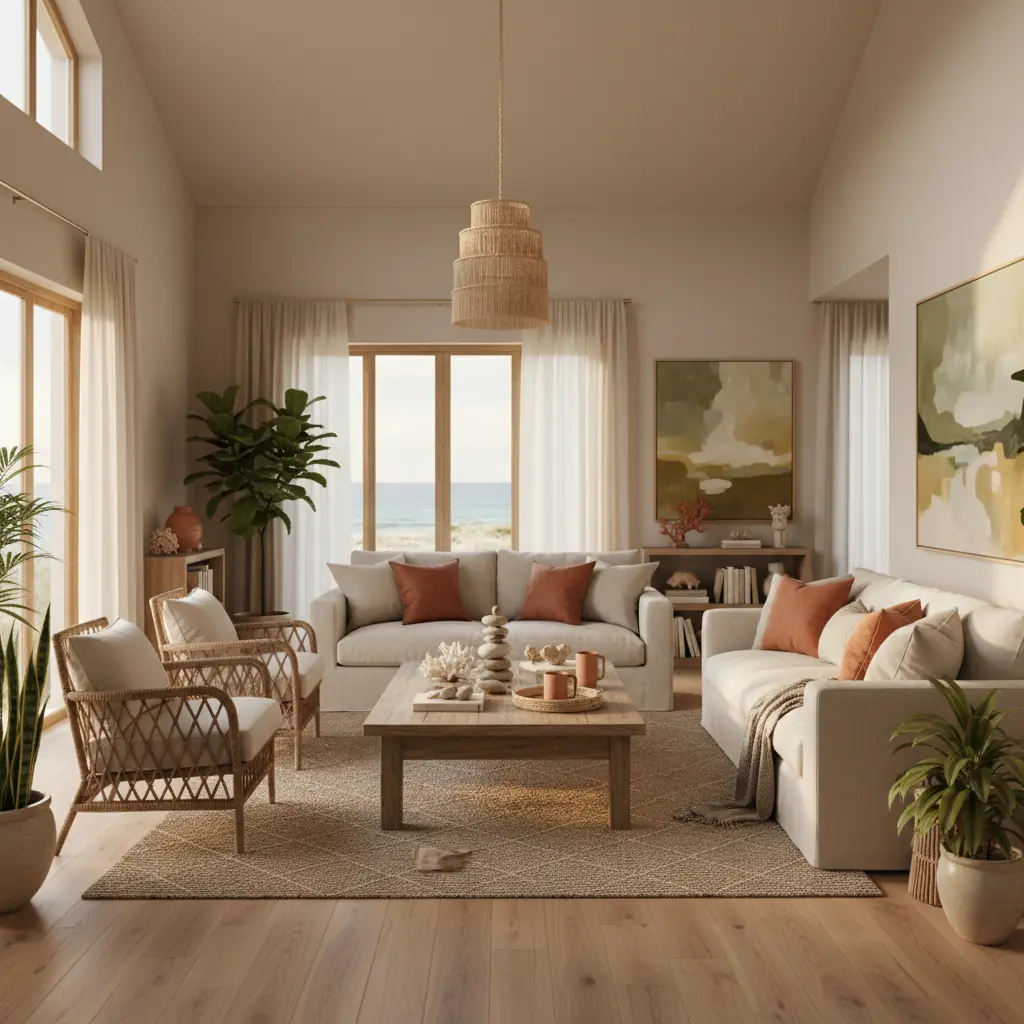
Más Allá del Cliché: Redefiniendo el Estilo Costero Moderno
En algún momento, el diseño de interiores costero fue secuestrado por las tiendas de souvenirs. Cojines decorativos con estampados de anclas, letreros de madera flotante que decían "La vida es mejor en la playa", todo envuelto en cuerda y paredes pintadas del color de una piscina se convirtieron en el sello distintivo de lo costero. El resultado son espacios que parecen lobbies de hoteles temáticos en lugar de hogares genuinos y acogedores. La vida costera real —la forma en que las personas que viven cerca del océano diseñan sus casas— no se parece en nada a esto. Es hora de recuperar la autenticidad del diseño junto al mar.
El diseño costero moderno se inspira en el entorno en lugar de ilustrarlo literalmente. No representa el océano; evoca la sensación de estar cerca de él. Este enfoque se traduce en una filosofía de diseño arraigada en la experiencia sensorial: la calidez de la madera blanqueada por el sol, la textura áspera de la arena bajo los pies, los tonos suaves del vidrio de mar y la sensación expansiva de un horizonte abierto. La paleta proviene de la arena, la piedra, la madera erosionada y la luz suave y difusa de una mañana costera, en lugar de una plantilla de rayas azul marino y blanco. Las texturas imitan lo que se encuentra en un paseo por la playa: ásperas, tejidas, blanqueadas, orgánicas. El resultado es una sala de estar que se siente tranquila, abierta y conectada con la naturaleza sin una sola concha marina a la vista. De hecho, la investigación demuestra que los espacios habitables diseñados con elementos naturales pueden reducir significativamente el estrés y mejorar el bienestar, y los principios de diseño biofílico conducen a un aumento del 15% en la productividad y creatividad de los ocupantes.
Este enfoque refinado también significa que el estilo costero funciona en cualquier lugar, no solo en casas frente al mar. Una sala de estar en Denver o Detroit puede sentirse inherentemente costera a través de elecciones de materiales bien pensadas y una paleta de colores específica, sin que parezca que intenta fingir estar en un lugar que no es. Se trata de crear una atmósfera, un ambiente, más que un tema.
¿Cuál es la Paleta de Colores Costera Moderna?
Olvida la fórmula del azul marino y blanco. El estilo costero moderno comienza con neutros arenosos: paredes blancas cálidas (Benjamin Moore Simply White o Swiss Coffee son excelentes opciones por sus suaves y acogedores matices), pisos en un tono pálido de madera flotante y muebles grandes en lino natural o crema suave. Estos son los tonos base —crean la base etérea y bañada por el sol sobre la que se construye el resto de la habitación. Piensa en ellos como el lienzo que refleja la luz natural, expandiendo el espacio percibido y ofreciendo un telón de fondo sereno. Para más ideas sobre cómo aprovechar los neutros claros, explora nuestra guía sobre [tips de diseño para habitaciones completamente blancas](/blog/all-white-room-design-tips).
Desde esa base neutra, añade color en capas contenidas. El gris madera flotante (en un mueble de TV, un sillón auxiliar o una estantería empotrada) introduce profundidad sin peso visual. El verde espuma de mar —el azul-verde apagado del vidrio de mar real, no el turquesa brillante de una postal caribeña— aparece con moderación en uno o dos cojines decorativos, un jarrón de cerámica o una pieza de arte abstracto. El azul marino entra como un acento marcado, nunca un color dominante: un solo cojín azul marino, una pila de libros con lomos azul marino o una impactante pieza de arte abstracto azul profundo. La proporción debe ser aproximadamente 70% neutros arenosos, 20% tonos de madera flotante y piedra, y 10% acentos azul-verde o azul profundo. Esta sutil superposición evita que el espacio se sienta austero mientras mantiene su elegancia discreta.
Los colores que debes evitar activamente: turquesa brillante, azul primario, coral dulce y blanco puro y clínico. Estos son los tonos de la decoración costera temática que gritan "casa de playa". Los espacios costeros reales son tenues porque el sol intenso y los elementos blanquean y suavizan naturalmente todo; la paleta refleja ese proceso de desgaste orgánico, creando una sensación de atemporalidad y autenticidad. Si te cuesta encontrar la combinación perfecta, un [generador de paletas de colores con IA](/blog/ai-color-palette-generator) puede ofrecerte sugerencias personalizadas basadas en tus elementos existentes.
Materiales Naturales: La Piedra Angular del Diseño Costero
Los materiales hacen el trabajo pesado en el diseño costero moderno porque la paleta es intencionadamente sutil. Traen la historia del entorno al interior.
- **Alfombras de Yute y Sisal:** Estas proporcionan la base textural bajo los pies. Su tejido áspero y orgánico ($150-400 para 8x10, Safavieh y NuLoom ofrecen opciones sólidas) inmediatamente se asocia con lo costero. Son duraderas, sostenibles y aportan arraigo. Superpón una alfombra más pequeña de tejido plano con un patrón desvanecido si quieres introducir una sutil complejidad visual y suavidad bajo los pies. - **Ratán y Mimbre Tejido:** Estos aparecen en muebles y accesorios, introduciendo calidez y artesanía sin peso visual. Considera un sillón auxiliar de ratán ($200-450), una lámpara colgante tejida ($60-150), un mueble de TV con puertas de mimbre ($400-800), o incluso solo un juego de cestas tejidas para almacenamiento ($30-60 por un juego de tres). El ratán de tonos claros y el mimbre natural son los objetivos —evita el ratán teñido oscuro, que se asocia más con lo tropical o colonial que con lo costero moderno. - **Lino:** Este es el textil costero por excelencia. Las cortinas de lino en tonos naturales o blanco ($40-80 por panel) filtran la luz maravillosamente y se mueven con cualquier brisa, reforzando la sensación de frescura y apertura. Las fundas removibles de lino para sofás y sillas ($200-500 para fundas personalizadas) son prácticas (lavables, perfectas para un estilo de vida relajado) y hermosas —sus arrugas naturales son una característica, no un defecto, en esta estética. - **Madera Blanqueada o Decapada:** En una mesa de centro, estantería o marco de fotos, esto añade el elemento de madera flotante sin ser madera flotante real. Transmite edad, desgaste y una conexión con la naturaleza. - **Concreto y Piedra:** Aunque menos comunes, las aplicaciones sutiles de concreto en un tono claro y arenoso (quizás una mesa auxiliar o maceta) o los acentos de piedra de río pulida pueden introducir un elemento de terrosidad cruda y orgánica. El uso del [concreto en el diseño de interiores](/blog/concrete-in-interior-design) es una tendencia emergente que complementa perfectamente la sensación terrosa del estilo costero moderno. Estos materiales también son increíblemente duraderos, con una vida útil promedio de más de 50 años para la piedra natural y el concreto, lo que los convierte en una opción sostenible.
Por Qué la Textura es la Protagonista de la Habitación
Debido a que la paleta costera utiliza un rango de colores limitado, la textura se convierte en la principal fuente de interés visual y profundidad. Una habitación con seis texturas diferentes en el mismo rango tonal es mucho más atractiva y sofisticada que una habitación con seis colores y una sola textura. Piensa en cada superficie como una oportunidad de textura:
- Un sofá de lino rústico invita al tacto. - Un jarrón de cerámica liso proporciona contraste. - Una alfombra de yute áspera asienta el espacio. - Una mesa auxiliar de ratán tejido añade un toque artesanal. - Una mesa de centro de madera blanqueada cuenta una historia. - Una manta de algodón suave o de tejido grueso ofrece confort.
La jerarquía textural es importante. La superficie más grande —el sofá— debe tener una textura media y atractiva (lino, bouclé o una tela de alto rendimiento con un tejido visible). La capa del suelo añade una textura áspera y que da arraigo a través de la alfombra de yute o sisal. Los accesorios y acentos introducen elementos tanto lisos (cerámica, vidrio, piedra pulida) como altamente texturizados (cestas tejidas, tapices de macramé, mantas de punto grueso). Esta variación bien pensada crea la profundidad que el color proporcionaría en otros estilos de diseño, haciendo que la habitación se sienta rica y estratificada sin estar visualmente recargada.
Una de las intervenciones de textura costera más efectivas es una pared de acento texturizada. El revestimiento de madera tipo "shiplap" ($3-6 por pie cuadrado para paneles de MDF) pintado del mismo blanco cálido que las paredes circundantes añade dimensión y sombra sin introducir color. Alternativamente, un papel tapiz de fibras naturales ($40-80 por rollo) en un tono arenoso o blanco cálido proporciona una sutil textura orgánica que se ve hermosa en fotos y se siente inconfundiblemente costera. Para un enfoque más sutil, considera un acabado de estuco veneciano o una aplicación de pintura a la cal, ambos ofrecen texturas suaves y mates que imitan superficies erosionadas.
Elección de Mobiliario y Formas Orgánicas: Abrazando la Comodidad
El mobiliario costero moderno prioriza la comodidad, la facilidad y las formas orgánicas sobre las líneas geométricas nítidas. El objetivo es una atmósfera acogedora y relajada que invite a quedarse.
El sofá debe ser de asiento profundo, idealmente con fundas removibles de lino o una tela de alto rendimiento, con un perfil bajo y brazos suavemente redondeados. Marcas como Sixpenny, Pottery Barn y Maiden Home ofrecen sofás con fundas removibles en el rango de $1,500-3,000 que definen perfectamente el estilo costero moderno. Un sofá con funda removible transmite instantáneamente una elegancia informal, habitabilidad y un ambiente relajado —exactamente el espíritu costero.
Las mesas auxiliares y mesas de centro se inclinan hacia formas orgánicas: ovaladas, irregulares o suavemente redondeadas en lugar de rectángulos afilados. Una mesa de centro redonda de madera blanqueada o natural ($200-500) es un elemento básico. Las mesas auxiliares de pedestal de concreto blanco o tono arena ($80-150) añaden interés escultórico. Evita las mesas con tapa de cristal —tienden a leerse como contemporáneas o glamurosas en lugar de costeras. La tendencia hacia el [diseño de muebles curvos](/blog/curved-furniture-design-trend) se alinea perfectamente con esta estética, introduciendo suavidad y fluidez en la habitación.
Los sillones auxiliares de fibras naturales —ratán, mimbre o asientos de cuerda tejida— aportan el elemento artesanal que diferencia lo costero de lo neutro genérico. Una silla de comedor o un sillón auxiliar de cuerda tejida ($150-300 cada uno) es una de las piezas más versátiles en una sala de estar costera. Combina dos flanqueando una mesa auxiliar cerca de una ventana para un rincón de lectura que se sienta como si perteneciera a una casa junto al mar. Herramientas como Habitas te permiten visualizar estos diferentes arreglos de muebles y combinaciones de materiales en la foto real de tu habitación antes de comprometerte con un estilo, asegurando el equilibrio adecuado de comodidad y carácter costero para tu espacio específico. Esto puede ahorrar mucho tiempo, considerando que el diseño de interiores tradicional a menudo toma de 2 a 4 semanas para paneles de inspiración (mood boards) y renders 3D, mientras que la visualización con IA puede proporcionar opciones en minutos.
Iluminación y Accesorios: Iluminando Tu Refugio Costero
Más allá de los principales muebles y materiales, una iluminación pensada y accesorios cuidadosamente seleccionados realmente completan la sala de estar costera moderna.
### Maximizando la Luz Natural
La esencia de la vida costera es la luz y la apertura. Prioriza maximizar la luz natural. Las cortinas de lino o algodón transparentes permiten que la luz del día se filtre suavemente, creando un resplandor difuso y etéreo que imita la luz solar reflejándose en el agua. Coloca espejos estratégicamente frente a las ventanas para que la luz rebote más profundamente en la habitación. Mantén los tratamientos de ventana simples y despejados, evitando cortinas pesadas que bloqueen la preciosa luz.
### Iluminación Artificial en Capas
Para las noches, la iluminación en capas es clave para crear una atmósfera cálida y acogedora.
- **Iluminación Ambiental:** Una lámpara colgante tejida grande ($100-300) o un plafón empotrado de un material natural como madera o concha de capiz proporciona iluminación general sin aspereza. - **Iluminación de Tarea:** Lámparas de pie con pantallas de lino o lámparas de mesa con bases de cerámica (en tonos arenosos o verde espuma de mar) ofrecen luz focalizada para leer o conversar. Busca lámparas con formas orgánicas o materiales naturales. - **Iluminación de Acento:** Apliques de pared o pequeñas lámparas que resalten el arte pueden añadir calidez y profundidad.
### Accesorios Pensados, No Desorden
Aquí es donde la regla de "sin clichés" es más crucial. Los accesorios costeros modernos se tratan de textura, forma y referencias sutiles a la naturaleza, no de interpretaciones literales.
- **Arte:** El arte abstracto en azules, verdes y tonos arenosos apagados, o la fotografía de paisajes a gran escala que evoque espacios abiertos, funciona maravillosamente. Evita los paisajes marinos muy detallados a menos que sean interpretaciones abstractas. - **Jarrones y Cerámica:** Elige jarrones de cerámica con formas orgánicas y acabados mate, que van desde el beige arenoso hasta el verde espuma de mar apagado o el índigo profundo. Estos pueden contener hierbas secas, flores blancas sencillas o servir como elementos escultóricos por sí solos. - **Libros:** Una pila cuidadosamente seleccionada de libros de mesa sobre viajes, arte o arquitectura (especialmente aquellos con lomos neutros o azules) añade una sensación sofisticada y vivida. - **Objetos Encontrados:** Una pieza única de madera flotante bellamente formada (si es genuinamente encontrada y artística), una concha grande (de nuevo, si es artística y no parte de una colección), o piedras lisas pueden servir como acentos escultóricos. La clave es la moderación –una o dos piezas bien elegidas, no una exhibición. - **Acentos Textiles:** Más allá de la manta del sofá, considera cojines decorativos con texturas variadas como lino, tejido grueso, o incluso patrones sutiles que recuerden al coral o las olas, todo dentro de tu paleta neutral y de acento establecida.
Recuerda, cada accesorio debe sentirse elegido intencionalmente por su forma, textura o color, contribuyendo a la sensación general serena y orgánica. Excederse con los accesorios puede cambiar rápidamente la estética de costero moderno a desorden temático.
¿Funciona el Diseño Costero Lejos de la Costa?
La pregunta que la gente siempre hace: ¿puedo aplicar el estilo costero en una ciudad sin salida al mar sin que parezca absurdo? Sí —enfáticamente sí. Esto se debe a que el estilo costero moderno se trata de materiales y ambiente, no de geografía explícita. Una sala de estar con cortinas de lino, una alfombra de yute, muebles de madera blanqueada y una paleta neutra arenosa se siente tranquila y orgánica dondequiera que exista. No hace referencia directa al océano; en cambio, captura las cualidades sensoriales —luz, aire, calidez, textura— que la gente asocia con la vida costera.
Los ajustes para ubicaciones no costeras son sutiles pero importantes. Evita cualquier referencia literal —nada de corales, colecciones de conchas ni elementos náuticos. Inclínate ligeramente hacia una paleta más cálida (más arena, menos verde espuma de mar) para que la habitación no parezca que está fingiendo tener vista al mar. Incorpora materiales orgánicos locales junto con los básicos costeros: un cuenco de piedra de un artesano local, hierbas secas o botánicos preservados de tu región, o cerámica en tonos tierra que conecten con tu paisaje real. Esto arraiga el diseño en su entorno inmediato mientras conserva la esencia costera.
Las plantas de interior juegan un papel más importante en las habitaciones costeras sin salida al mar porque proporcionan la conexión con la naturaleza que una vista al océano normalmente ofrecería. Una gran ave del paraíso o una palma alta en una cesta tejida, una "cadena de perlas" colgante en un estante y algunas pequeñas suculentas en la mesa de centro crean esa cualidad viva y verde que completa la atmósfera costera, independientemente de tu código postal. Seleccionar las [mejores plantas para el diseño de interiores](/blog/best-plants-for-interior-design) es crucial para mejorar esta conexión biofílica. Con herramientas impulsadas por IA como Habitas, puedes visualizar fácilmente cómo estos elementos, desde la ubicación de las plantas hasta la disposición de los muebles, transformarán tu habitación específica antes de realizar cualquier compra, asegurando que tu espacio refleje verdaderamente la belleza serena y natural de la vida costera moderna.
Preguntas Frecuentes
### ¿Qué define el diseño de interiores costero moderno?
El diseño de interiores costero moderno va más allá de los temas náuticos tradicionales para centrarse en evocar la sensación de estar junto al océano a través de materiales naturales, una paleta de colores apagada inspirada en la arena y el mar, y formas orgánicas. Prioriza la textura, la comodidad y una atmósfera etérea y llena de luz, evitando clichés como anclas o conchas marinas.
### ¿Qué colores son los mejores para una sala de estar costera moderna?
La base de una sala de estar costera moderna son los neutros arenosos, incluyendo blancos cálidos, cremas y tonos pálidos de madera flotante. Los colores de acento se introducen con moderación, utilizando verde espuma de mar apagado, grises suaves y azul marino profundo en pequeñas dosis. Los colores primarios brillantes como el turquesa o el coral dulce generalmente se evitan para mantener una estética natural y blanqueada por el sol.
### ¿Cómo puedo hacer que mi sala de estar se sienta costera sin vivir en la playa?
Para lograr una sensación costera moderna en una zona sin salida al mar, enfócate en materiales naturales (yute, lino, ratán, madera blanqueada), una paleta de colores neutros y texturas orgánicas. Evita la decoración náutica literal. En su lugar, incorpora elementos que evoquen la naturaleza, como grandes plantas de interior, objetos naturales esculturales y arte que sugiera paisajes abiertos o escenas acuáticas abstractas.
### ¿Qué tipo de mobiliario es mejor para el estilo costero moderno?
El mobiliario costero moderno enfatiza la comodidad, los perfiles bajos y las formas orgánicas. Los sofás de asiento profundo suelen tener fundas removibles de lino, y los sillones auxiliares están hechos de fibras naturales como ratán o cuerda tejida. Las mesas de centro y auxiliares suelen tener formas redondeadas o irregulares y están hechas de madera blanqueada o concreto natural, promoviendo una atmósfera relajada y acogedora.
### ¿Son buenas las alfombras de yute para una sala de estar?
Sí, las alfombras de yute son excelentes para una sala de estar costera moderna. Proporcionan una textura natural fundamental que es duradera y estéticamente agradable. Su tejido orgánico conecta inmediatamente el espacio con la naturaleza, y son lo suficientemente versátiles como para combinarlas con otras alfombras más suaves para mayor comodidad e interés visual.