How to Mix Patterns in Interior Design Without Clashing
Learn the professional rules for mixing patterns in your home — the 3-pattern rule, shared color threads, safe starting combos, and room-by-room examples.
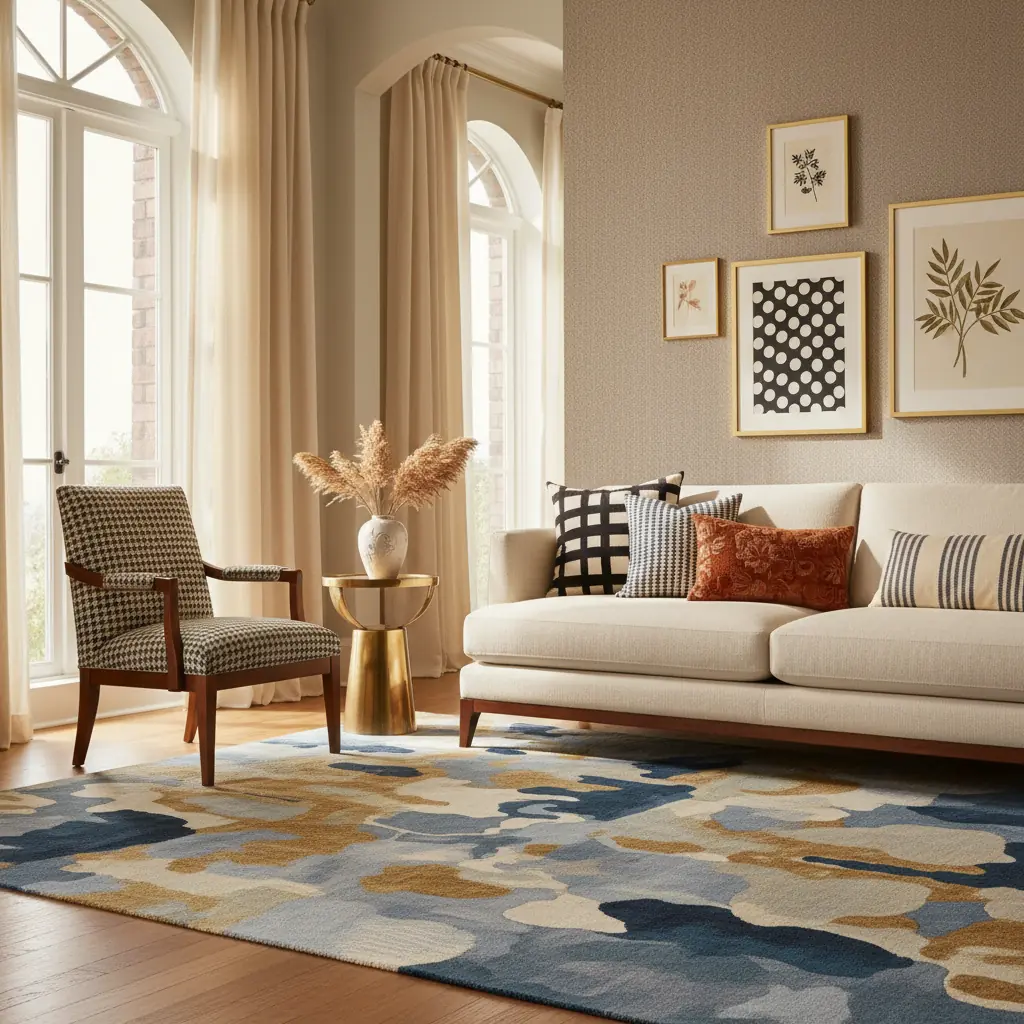
The Foundational 3-Pattern Rule: Mastering Scale for Visual Harmony
The most crucial secret to mixing patterns without creating visual cacophony is the "rule of three scales." This principle dictates that you select patterns with distinct visual weights: one large-scale, one medium-scale, and one small-scale pattern. This variation in size is what prevents patterns from competing directly; instead, they layer gracefully, allowing your eye to process each as a distinct element contributing to a unified whole.
Imagine a room where all patterns are the same size – your eye would dart frantically, unable to find a resting point or discern a focal point. By varying scale, you create a visual hierarchy. The large-scale pattern often acts as the anchor, the medium-scale introduces secondary interest, and the small-scale provides intricate detail or texture, pulling everything together.
Let’s break down how this works:
- **Large-Scale Pattern:** This is your room's statement piece, often spanning a significant area. Think bold florals on curtains, a dramatic ikat print on a large area rug, or a striking geometric wallpaper. Its primary role is to define the mood and inject a powerful dose of character. - **Medium-Scale Pattern:** This pattern provides a bridge between the large and small, offering a transitional visual interest. It might appear on throw pillows, an accent chair, or a duvet cover. A classic stripe, a subtle trellis, or a simple plaid works wonderfully here, complementing the dominant pattern without overpowering it. - **Small-Scale Pattern:** These are the delicate details, often perceived as texture from a distance. Consider a tiny polka dot, a subtle herringbone weave, a delicate paisley, or even a solid fabric with a rich, tactile surface like bouclé or linen. These patterns add richness and depth, often playing a supporting role to the larger elements.
**Example Application:** Picture a living room. Your large-scale pattern could be a vibrant, oversized botanical print on full-length curtains. Next, introduce a medium-scale pattern with abstract geometric designs on a pair of throw pillows on the sofa. Finally, a small-scale, tightly woven pinstripe rug grounds the space, adding subtle texture without competing. The variation in scale ensures each pattern has its moment, contributing to a layered, interesting room that feels thoughtfully curated rather than chaotic. The key is that each pattern operates at a different visual frequency, so they coexist rather than clash.
If three patterns feel intimidating, especially for beginners, start with two. Pair one prominent pattern with a solid textured fabric, or two patterns that are very different in scale and type. Textured solids like linen, bouclé, corduroy, or even a subtle herringbone weave count as patterns in terms of visual interest but are far more forgiving than printed patterns, easing you into the art of layering.
The Unifying Power of a Shared Color Thread
While scale provides structure, a shared color thread is the invisible glue that binds disparate patterns into a cohesive narrative. This is non-negotiable for successful pattern mixing. Every pattern in a room must share at least one common color. This shared hue doesn't have to be the dominant color in every pattern; it just needs to be present, even in a subtle capacity, to create a harmonious connection.
This technique is often what separates a professionally designed space from a well-intentioned but haphazard attempt. The human eye naturally seeks continuity. When patterns share a color, they feel like they belong together, even if their motifs and scales are vastly different.
**Practical Approaches to Finding Your Color Thread:**
1. **Start with Your Hero Pattern:** Pick your most important pattern first—this is usually the largest or most impactful, such as a large area rug, a bold wallpaper, or your main curtain fabric. This "hero" pattern will often contain several colors. 2. **Extract a Secondary Color:** From your hero pattern, pull a secondary or accent color. This color will become the dominant color in your next pattern choice. For instance, if your floral curtain has hints of navy, sage green, and cream on a white background, you might choose navy as your shared thread. 3. **Build Out Your Palette:** Now, introduce solid navy throw pillows and perhaps a navy-and-white striped accent chair. The navy consistently connects everything while each piece retains its unique identity. This creates depth without relying on a monochromatic scheme. 4. **Consider Neutrals:** Often, the shared color thread can be a neutral tone present in all patterns – a creamy white, a soft grey, or a warm beige. These neutrals provide a quiet background that allows bolder colors and patterns to shine without overwhelming the space.
A common mistake is trying to match the exact same shade across all patterns. Instead, focus on the _tone_ or _family_ of the color. A dusty blue in one pattern can beautifully complement a brighter azure in another, as long as the underlying blue hue is present. Using a [Habitas AI color palette generator](/blog/ai-color-palette-generator) can be incredibly helpful here, allowing you to extract and experiment with color schemes directly from your chosen patterns.
Decoding Pattern Types: Safe Combinations and Stylistic Pairings
Patterns fall into diverse categories, and understanding these classifications helps in creating pleasing contrasts and connections.
Here are the broad categories and how to approach combining them:
1. **Geometric Patterns:** These include stripes (classic, pinstripe, awning), chevrons, plaids, trellises, grids, diamonds, and polka dots. They are structured, orderly, and often bring a sense of modernity or traditional elegance depending on their color and scale. 2. **Organic/Botanical Patterns:** Florals, botanicals, leaves, vines, animal prints (zebra, leopard, ocelot), and anything inspired by nature. These patterns tend to be more fluid, expressive, and can introduce softness, a touch of whimsy, or an exotic flair. 3. **Abstract Patterns:** Watercolors, brushstrokes, freeform designs, splatters, tie-dye, and non-representational motifs. Abstracts are excellent for adding artistic flair, modern edge, and often a sense of movement or emotion without specific imagery. 4. **Textural Patterns:** While not always printed, woven fabrics, knits (cable knit), embossed surfaces (damask, brocade), slubby linens, bouclé, and even subtle tone-on-tone prints create visual pattern through their surface quality. These are the unsung heroes of pattern mixing, adding immense depth without visual loudness. 5. **Ethnic/Global Patterns:** Ikats, paisleys, suzanis, block prints, kilim, tribal motifs. These patterns often have rich histories and intricate designs, bringing a global, bohemian, or artisanal feel to a space. 6. **Novelty Patterns:** Whimsical prints depicting objects, animals, or specific themes (e.g., dog breeds, teacups, cityscapes). These are great for injecting personality and a playful touch, often in smaller doses.
**Safest Combinations:**
The safest and most effective combinations pair patterns from different categories. This creates pleasing contrast between structured and free-flowing, traditional and modern, or bold and subtle.
- **Stripe + Floral:** A classic designer combination that almost never fails. The linearity of the stripe provides a stable backdrop or counterpoint to the organic flow of the floral. - **Geometric + Organic:** Creates pleasing tension and balance—the precision of a geometric print (e.g., a plaid) can ground the exuberance of a botanical print. - **Plaid + Toile:** A traditional and elegant pairing. The rustic, ordered nature of plaid complements the intricate, narrative scenes of toile. - **Animal Print + Almost Anything:** Animal prints are often considered a neutral in small doses. A leopard print pillow can add a sophisticated edge to florals, geometrics, or even abstract art. - **Abstract + Solid Texture:** An abstract pattern (especially if colorful) works beautifully alongside a textured solid, allowing the abstract piece to be the star while the texture provides depth.
**Combinations to Approach with Caution:**
Avoid pairing two patterns from the same category at the same scale, especially if their intensity is similar. Two medium-scale florals with similar color palettes or two similarly sized geometrics will fight for attention, resulting in a busy and confusing look. If you must combine patterns from the same category, ensure their scales are vastly different (e.g., a large floral with a tiny ditzy floral print) and their colors are harmonized.
Understanding [different interior design styles](/blog/best-interior-design-styles-2026) can also guide your pattern choices, as certain styles have inherent pattern preferences. For instance, a bohemian room thrives on mixing various ethnic prints, while a minimalist space might focus on subtle textures and a single geometric accent.
Strategic Introduction: Starting with Low-Commitment Pieces & The 60-30-10 Rule
If pattern mixing feels daunting, start with the most easily swapped and least expensive elements. This allows you to experiment, build confidence, and discover what truly resonates with your style without significant financial outlay or permanent changes.
**Low-Commitment Starting Points:**
1. **Throw Pillows:** These are the lowest commitment. You can buy, test, and replace them for as little as $20-$50 each. A typical living room might need 3-5 pillows to introduce a new pattern combination. This is the perfect playground for trying out new scales and color threads. 2. **Throws and Blankets:** Draped over a sofa or armchair, a patterned throw can introduce a medium to large-scale pattern and be easily moved or swapped. 3. **Table Linens:** A patterned tablecloth, placemats, or a runner can dramatically change the feel of a dining area or coffee table, offering a contained space to experiment. 4. **Small Accessories:** Decorative trays, vases with patterned motifs, or even a framed piece of patterned fabric can subtly introduce a new print.
Once you are comfortable with small-scale pattern mixing, graduate to larger, moderately committed pieces:
- **Curtains or Blinds:** Window treatments make a significant pattern statement. They define a vertical plane and can introduce a bold, large-scale pattern. While more effort than pillows, they can still be swapped with moderate effort and cost. - **Area Rugs:** A rug is a foundational investment that defines the entire room. It's often the "hero" pattern and can anchor your color scheme. Choosing a patterned rug is a commitment, but it's typically less permanent than wallpaper. - **Accent Chairs or Ottomans:** An upholstered accent chair can introduce a medium-scale pattern beautifully. If you love a pattern, an accent piece is a great way to showcase it without committing to a full sofa.
**High-Commitment Pattern Choices:**
- **Wallpaper:** This is a high-commitment choice, covering an entire wall or room. A well-chosen patterned wallpaper can be breathtaking, but consider using tools like Habitas to visualize how a bold print will look on your walls _before_ committing. AI visualization can take seconds, saving you the 2-4 weeks a traditional designer might take for a similar rendering, and avoiding costly mistakes. - **Upholstered Furniture (Sofa/Main Seating):** Upholstering a large piece like a sofa in a bold pattern is a significant investment (a custom sofa re-upholstery could cost upwards of $1,500 - $5,000 depending on fabric and size). Save these for patterns you have lived with on smaller pieces and are absolutely confident about.
**The 60-30-10 Ratio Rule:**
To keep things grounded and prevent pattern overwhelm, designers often adhere to a modified version of the 60-30-10 rule:
- **60 percent solid colors:** This forms the calm foundation of your room (walls, large furniture like sofas, large areas of flooring). - **30 percent subtle pattern or texture:** This might be a medium-scale print on an accent chair, a textured rug, or subtly patterned curtains. - **10 percent bold pattern:** This is your "wow" factor – a vibrant throw pillow, a striking piece of art, a small but impactful wallpaper section.
This ratio ensures that patterns add interest and energy without overwhelming the space. A room that is entirely patterned feels exhausting; a room with strategically placed pattern feels dynamic and expertly designed.
Advanced Pattern Play: Elevating Your Design with Nuance
Beyond the fundamental rules, a few advanced considerations can elevate your pattern mixing from good to exceptional:
- **Consider the Room's Function:** High-traffic, shorter-stay rooms (like a powder room or dining room) can handle bolder, more energetic patterns. Bedrooms or living rooms, where you spend extended, relaxing periods, often benefit from a more subdued mix. - **Balance Contrast:** Pattern mixing thrives on contrast, but it needs to be balanced. Contrast in scale, color, and pattern type is essential. Too much similarity leads to flatness; too much dissimilarity leads to chaos. Aim for a harmonious push and pull. - **Introduce Metallics and Reflective Surfaces:** While not patterns themselves, metallic accents (gold, silver, brass) and reflective surfaces (mirrors, glass) can act as neutral "pauses" between patterns, adding glamour and allowing the eye a moment of rest. They also beautifully pick up and reflect the colors and light of the patterns around them. - **Embrace Imperfection:** Sometimes, the most interesting rooms have a slightly unexpected or "off" pattern pairing that works because of its unique personality. Don't be afraid to break a rule once you understand it, especially if it brings joy to your space.
Room-by-Room Pattern Mixing: Inspiring Examples for Every Space
Let's apply these principles to specific areas of your home:
### Living Room: The Art of Layered Comfort
In a living room, where conversation and relaxation happen, focus on a comfortable, layered feel. Try a large-scale botanical print on the curtains as your primary pattern. Introduce a medium-scale geometric on two accent pillows on your solid-colored sofa (perhaps a shade pulled from the curtain pattern). Finally, ground the space with a small-scale textured weave on the rug, which reads as subtle pattern. You might also add a small-scale abstract print in a throw draped over an armchair. According to a recent study by the National Association of Realtors, a well-designed living room significantly increases perceived home value by up to 10-15%.
### Bedroom: Sanctuary with Style
Bedrooms benefit from patterns that promote calm and softness, but with a touch of personality. A bold patterned headboard or a subtle, tone-on-tone wallpaper accent wall behind the bed can be your large-scale pattern. Pair this beautifully with striped or subtly patterned bedding (like a herringbone duvet cover or delicate floral sheets) as your medium-scale. Solid-color curtains that pick up an accent color from the headboard or bedding complete the look, while a plush, small-scale patterned throw on the foot of the bed adds texture. Consider how patterns contribute to your overall [bedroom redesign cost breakdown](/blog/bedroom-redesign-cost-breakdown).
### Dining Room: Engaging Elegance
Dining rooms can handle bolder pattern choices because you spend less continuous time in them; they're often for shorter, more energetic gatherings. A statement wallpaper (large-scale), patterned chair cushions (medium-scale geometric or botanical), and a simple, textured table runner (small-scale) create significant visual interest for dinner parties without the fatigue that might come from living with those same bold choices in a room you occupy all day. A beautifully patterned serving dish or charger plates can add another small, temporary layer of pattern.
### Bathroom: A Pop of Personality in a Small Space
Bathrooms, being smaller, offer a contained environment for bold pattern experimentation. A dramatic patterned tile (large-scale) on a feature wall or a vibrant patterned shower curtain can be your main statement. Pair it with solid-colored towels that pick up an accent from the pattern and a textured bath mat (small-scale) to keep the small space lively without overwhelming it. Even a small abstract patterned hand towel can add a chic touch. For more ideas, explore [bathroom remodel ideas](/blog/bathroom-remodel-ideas).
### Home Office: Focused Flair
In a home office, patterns can inspire creativity while maintaining a sense of calm. A large-scale abstract art print or a geometric rug can be your anchor. Introduce a medium-scale pinstripe or subtle plaid on an upholstered office chair. A small-scale patterned desk organizer or a textured planter adds thoughtful detail. Ensure patterns here aren't too distracting, focusing on those that evoke focus and sophistication.
Common Pitfalls to Avoid in Pattern Mixing
Even with the rules in hand, some mistakes are common. Being aware of them can help you steer clear:
1. **Ignoring Scale:** The biggest culprit. As discussed, patterns of the same scale will compete, creating a flat, restless environment. 2. **Lack of a Shared Color Thread:** Without that unifying color, even perfectly scaled patterns will feel disconnected and random. 3. **Too Many Dominant Patterns:** Every pattern can't be a hero. You need stars and supporting actors. If every pattern screams for attention, the room becomes overwhelming. 4. **Mixing Too Many Design Styles:** While eclectic mixing can work, trying to force highly disparate styles (e.g., traditional French toile with stark industrial geometrics) without a unifying element can feel jarring. 5. **Forgetting Texture:** Texture is a vital, subtle form of pattern. Neglecting it means missing out on a crucial layer of depth and interest, especially in rooms where bold prints aren't desired. 6. **Over-Patterning Small Spaces:** While small rooms can handle bold patterns, ensure you maintain enough solid space or neutral ground to prevent the room from feeling claustrophobic.
Unleash Your Creativity with Habitas
The journey to mastering pattern mixing is one of experimentation and discovery. With the principles of scale, color, and type in mind, you're well-equipped to transform your home. But what if you could see your pattern choices come to life before making any commitment?
This is where AI-powered interior design platforms like Habitas truly shine. Instead of guessing or relying solely on small fabric swatches, you can upload a photo of your actual room and use Habitas to visualize different patterned wallpapers, rugs, curtains, and upholstered furniture. You can instantly swap out a large-scale floral for a bold geometric, test various color threads, and see how the 3-pattern rule plays out in _your_ unique space.
Habitas significantly reduces design anxiety and the risk of costly mistakes. While a professional interior designer might charge an average of $50-$200 per hour for design consultations, using an AI tool allows you to iterate endlessly on your own time and budget, with high-quality, realistic renderings. This empowers you to make confident design decisions, ensuring your mixed patterns are not just trendy, but perfectly tailored to your vision. Ready to experiment? Start creating beautiful, clash-free pattern combinations in your home with Habitas today!
---
Frequently Asked Questions
### How many patterns are too many in one room?
While the "rule of three" is a great starting point for distinct scales, you can technically incorporate more patterns by treating some as subtle textures or by ensuring they are very small-scale and neutral in color. The key isn't a strict number, but rather ensuring each pattern has enough "breathing room," that scales vary, and that a shared color thread connects them. A general guideline is to have no more than 3-5 _noticeable_ patterns, with others being textural or highly subtle.
### Can I mix patterns from different design styles, like modern and traditional?
Yes, absolutely! Mixing patterns from different design styles can create a rich, eclectic, and unique look. The secret lies in using a strong shared color thread and maintaining varied scales. For example, a modern geometric can be beautifully paired with a traditional floral if they share a background color or a key accent hue. This approach adds depth and personality, preventing a room from feeling one-dimensional or overly themed.
### What is the easiest way for a beginner to start mixing patterns?
For beginners, the easiest approach is to start small and with low-commitment items. Begin with two throw pillows: one with a medium-scale geometric pattern and another with a small-scale organic or textured pattern, ensuring they share at least one color (or a neutral background). Place them on a solid-colored sofa. This allows you to experiment with scale and color harmony without making a large investment. Once comfortable, you can gradually introduce a third pattern on a throw blanket or small accessory.
### Does texture count as a pattern in interior design?
Yes, texture absolutely counts as a pattern in interior design. While it might not involve a printed motif, the visual and tactile variations in materials like bouclé, linen, cable knits, shiplap, or even raw concrete create visual interest and repetition, which is the essence of a pattern. Incorporating diverse textures is crucial for adding depth and warmth to a space, especially when working with a limited color palette or fewer printed patterns.
### How do you use patterns effectively in a small room?
In a small room, use patterns strategically to avoid overwhelming the space. Opt for patterns that are proportional to the room's size – a large-scale pattern can actually make a small room feel grander if used sparingly (e.g., on one accent wall or large rug). Balance bold patterns with plenty of solid, lighter colors. Use small-scale patterns or textures for depth, and always ensure a consistent color thread. Vertical stripes can also make a room feel taller. Consider using mirrors to reflect patterns, doubling their impact without adding more physical pattern.