Guía del Diseñador: Estilismo de Estanterías y Libreros para un Look Curado
Descubre la fórmula profesional para estilizar estanterías y libreros. Domina la organización de libros, objetos, plantas y espacio negativo con la técnica del triángulo para un interior curado y de alto nivel.
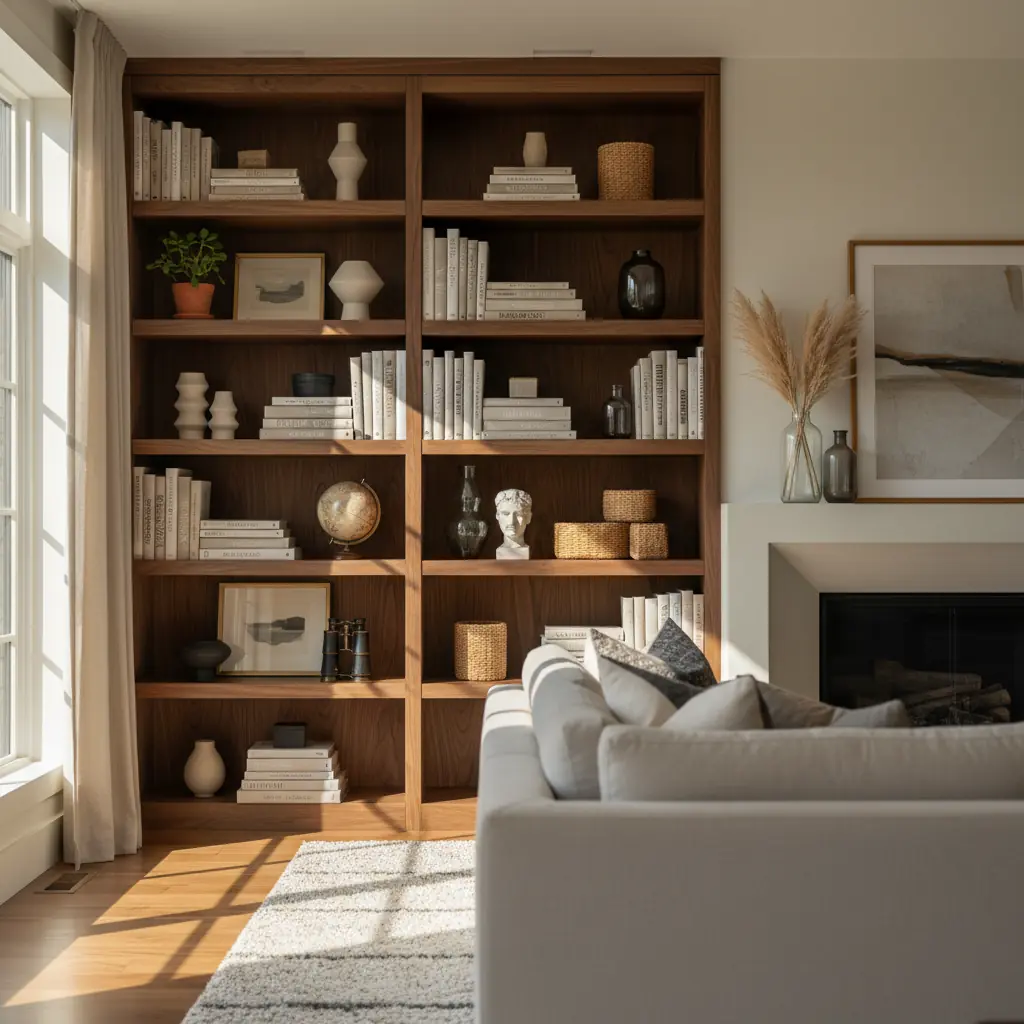
Por qué es Importante el Estilismo de Estanterías: El Impacto de un Espacio Cuidadosamente Curado
Una estantería o un librero bellamente estilizado no es solo cuestión de estética; se trata de contar una historia, reflejar personalidad y elevar el ambiente general de una habitación. En el diseño de interiores, estas superficies ofrecen una oportunidad crucial para infundir calidez, carácter e interés visual en tu hogar. Por el contrario, las estanterías descuidadas o abarrotadas pueden hacer que un espacio se sienta desorganizado, caótico e incluso más pequeño. Piensa en tus estanterías como mini-galerías, cada viñeta un momento curado diseñado para atraer la vista y evocar una sensación de sofisticación tranquila.
Aunque el concepto pueda parecer desalentador, especialmente si estás lidiando con libros desbordados o una colección de objetos dispares, la verdad es que el estilismo de estanterías a nivel profesional sigue una fórmula clara y repetible. Es una mezcla de arte y ciencia, que aprovecha los principios de equilibrio, escala y ritmo para crear exhibiciones que lucen elegantemente chic sin esfuerzo. Y con herramientas innovadoras como Habitas, incluso puedes visualizar diferentes enfoques de estilismo en la foto real de tu habitación antes de mover un solo artículo, asegurando que tu visión cobre vida perfectamente.
La Fórmula Central del Diseñador: Libros, Objetos, Plantas y Espacio
Cada librero o conjunto de estanterías abiertas bellamente estilizado, desde el minimalista moderno hasta el bohemio ecléctico, se adhiere a la misma receta fundamental: libros para sustancia intelectual y calidez, objetos para personalidad y textura visual, plantas para un toque de energía viva y espacio negativo para el necesario respiro. Estos cuatro elementos, cuando se combinan en las proporciones correctas y se organizan cuidadosamente, transforman un almacenamiento ordinario en una exhibición extraordinaria que se siente intencionalmente curada y profundamente personal.
El error más frecuente que comete la gente es ver las estanterías únicamente como soluciones de almacenamiento en lugar de como principales oportunidades de exhibición. Un librero atestado de libros de pared a pared, aunque funcional, tiende a evocar un archivo de biblioteca en lugar de un espacio habitable acogedor. Por el contrario, una estantería que solo presenta objetos decorativos puede sentirse impersonal, similar a una exhibición minorista. La verdadera magia reside en la mezcla matizada, y quizás aún más importante, en los elementos estratégicos que eliges _omitir_. Este equilibrio es crucial; estudios demuestran que las casas bien presentadas, que inherentemente incluyen estanterías cuidadosamente estilizadas, se venden en promedio un 25% más rápido que las propiedades no presentadas, lo que subraya el impacto tangible de la presentación visual.
Paso 1: Despejar y Reiniciar – Comenzando tu Viaje de Estilismo de Estanterías Frescamente
Antes de comenzar la emocionante parte de la organización, el primer paso y el más crucial es despejar completamente tu lienzo. Retira cada uno de los artículos de tus estanterías. Esto puede parecer extremo, pero es esencial para un verdadero reinicio. Una vez vacías, limpia a fondo las estanterías. El polvo y la suciedad se acumulan de maneras que pasan desapercibidas cuando están ocultos por objetos, y una base impecable prepara el escenario para un aspecto final pulido.
Con tus estanterías relucientes, la siguiente fase es crítica: la curación honesta. Coloca cada artículo que estés _considerando_ devolver a las estanterías en el suelo frente al librero. Esta vista panorámica te ayuda a evaluar tu colección objetivamente. Sé honesto contigo mismo:
- **Lo Sentimental vs. Lo Estético:** ¿Ese recuerdo de un viaje que apenas recuerdas realmente añade valor estético, o solo está ocupando espacio? - **Reconocimientos Obsoletos:** Esos premios de un trabajo que dejaste hace cinco años pueden tener recuerdos, pero ¿encajan con la estética actual de tu hogar? - **Libros No Leídos:** Los libros que nunca volverás a leer pueden ser donados, liberando valioso espacio visual para lecturas preciadas o elementos decorativos.
Agrupa artículos similares: libros en una pila, objetos decorativos en otra, fotos y marcos en una tercera. Ver todo a la vez te ayuda a identificar con qué realmente tienes que trabajar, reconocer cualquier vacío que desees llenar y, lo más importante, practicar el arte de la edición reflexiva. Solo este paso de despejar puede reducir el estrés visual y hacer que tu espacio se sienta significativamente más tranquilo. De hecho, las investigaciones sugieren que despejar puede reducir el desorden doméstico hasta en un 40%, contribuyendo directamente a una mayor sensación de bienestar y armonía visual en tu entorno de vida.
Paso 2: Colocando tus Libros con Intención – Más Allá de Solo Apilar
Los libros son innegablemente la columna vertebral de cualquier librero, proporcionando estructura, personalidad y un sentido de historia. Sin embargo, _cómo_ los organizas es tan impactante como _qué_ libros eliges exhibir. El objetivo es crear ritmo e interés visual, evitando una pared monolítica de lomos.
**Variando la Orientación:** Una técnica clave es mezclar secciones verticales con pilas horizontales. Las pilas horizontales, que suelen comprender de tres a cinco libros, tienen múltiples propósitos:
- Crean plataformas naturales para pequeños objetos decorativos, actuando como mini pedestales. - Rompen eficazmente la monotonía de una disposición totalmente vertical, guiando la vista a través de las estanterías. - Introducen tensión visual y movimiento dinámicos.
**Agrupación Estratégica:** Al organizar secciones verticales, ve más allá de la estricta organización alfabética o por género. Para una estética más pulida, considera estos enfoques:
- **Por Tamaño:** Agrupa libros de alturas similares. Una fila de libros de arte o novelas de tamaño similar crea un aspecto cohesivo y ordenado. También puedes crear un arco suave colocando los libros más altos en los extremos de una sección, disminuyendo gradualmente hacia libros más cortos en el medio. - **Por Rango de Color:** Esto no significa un bloqueo de color extremo, a menos que esa sea tu estética específica. En cambio, piensa en _rangos de color_ cohesivos. Por ejemplo, una sección de libros con azules, verdes y grises tenues puede verse mucho más pulida que un surtido aleatorio de colores de lomo que chocan. Si encuentras que algunos libros tienen lomos particularmente vibrantes o chocantes, puedes girarlos para que las páginas miren hacia afuera para un aspecto más tenue y textural, ¡solo asegúrate de que aún puedas identificarlos fácilmente si planeas leerlos! Para obtener más orientación sobre cómo integrar el color de manera efectiva, explora nuestra publicación sobre [esquemas de color para salas de estar](/blog/color-schemes-for-living-rooms). - **Por Textura o Material:** Agrupar libros con cubiertas de lino o calidades de papel similares puede añadir una dimensión táctil.
Recuerda, no todas las estanterías necesitan estar completamente llenas. De hecho, algunas de las exhibiciones más impactantes presentan espacio negativo. Una sola pila horizontal de tres libros hermosos en una estantería por lo demás vacía puede crear un poderoso "momento de calma", haciendo que las estanterías más llenas cercanas se vean más intencionales y curadas, en lugar de simplemente abarrotadas.
Paso 3: Integrando Objetos y Elementos Orgánicos – Añadiendo Personalidad y Vida
Una vez que tus libros estén cuidadosamente colocados, es hora de infundir personalidad e interés visual con objetos decorativos y el toque vibrante de la naturaleza.
**El Arte de la Colocación de Objetos:** Coloca objetos decorativos junto a tus arreglos de libros y encima de ellos, utilizando las pilas horizontales como pedestales naturales. La regla cardinal aquí es la **variación de altura**. Los objetos a diferentes alturas crean ritmo visual y evitan que la vista se quede estancada.
- Un jarrón de cerámica alto que se alza orgulloso junto a una pila corta de libros. - Una escultura o un objeto de arte de altura media en otra estantería. - Una pequeña foto enmarcada apoyada contra el lomo de un libro, añadiendo un toque personal. - Considera la "regla de tres" para los objetos: los grupos de tres (o cualquier número impar) son inherentemente más atractivos visualmente y equilibrados que los números pares. Agrupa elementos más pequeños en una bandeja decorativa o en un cuenco para crear una viñeta única y más impactante.
**Añadiendo Vida Orgánica:** Para realmente dar vida a tus estanterías, incorpora al menos una planta o elemento orgánico por cada dos o tres estanterías. Esto no es solo estética; se trata de conectar con la naturaleza, un principio fundamental del [diseño biofílico](/blog/biophilic-design-guide).
- **Plantas Colgantes:** Un pothos o filodendro cayendo grácilmente de una estantería superior añade suavidad y movimiento. - **Plantas Erguidas:** Una pequeña planta de serpiente (Sansevieria) o ZZ en una estantería intermedia proporciona interés arquitectónico. - **Pequeñas Suculentas:** Son perfectas para condiciones de poca luz o espacios más pequeños. - **Botánicos Secos:** Si las plantas reales no son prácticas debido a las condiciones de luz o el mantenimiento, los botánicos secos de alta calidad como tallos de eucalipto, hierba de la Pampa o flores secas ofrecen textura y belleza natural sin el cuidado. Aprende más sobre cómo seleccionar las [mejores plantas para diseño de interiores](/blog/best-plants-for-interior-design) para adaptarse a tu espacio e iluminación.
Estos elementos vivos (o preservados) introducen una suavidad y una cualidad dinámica que ninguna cantidad de cerámica y libros por sí solos puede replicar, creando un ambiente más acogedor y armonioso.
Paso 4: Dominando la Técnica del Triángulo y el Poder del Espacio Negativo
Estas dos técnicas avanzadas son los secretos profesionales que realmente elevan el estilismo de estanterías de un simple arreglo a un diseño intencional, creando exhibiciones cohesivas y visualmente atractivas.
**La Técnica del Triángulo:** Esta es la fuerza invisible que hace que tus estanterías se sientan compuestas profesionalmente a lo largo de toda su altura. El concepto es simple: coloca tres elementos similares –que compartan un color, material, forma o hilo temático común– en una disposición triangular a través de diferentes estanterías.
- **Triángulos de Color:** Por ejemplo, tres objetos azules: un jarrón cobalto en la estantería superior izquierda, una pequeña pila de libros azul marino en el centro de una estantería intermedia y un cuenco de cerámica con detalles azules en la parte inferior derecha. - **Triángulos de Material:** Considera tres elementos de madera o latón, estratégicamente posicionados. - **Triángulos de Forma:** Tres objetos redondos, o tres piezas angulares, distribuidos para crear un flujo visual.
Tu ojo conecta inconscientemente estos puntos, creando una sensación de composición equilibrada y guiando la mirada del espectador sin esfuerzo a través de todo el librero. Esta técnica crea armonía y evita que cualquier estantería individual se sienta aislada del conjunto.
**El Rol Indispensable del Espacio Negativo:** Finalmente, y quizás lo más crucial, abraza el espacio negativo. Esto se refiere a las áreas vacías en tus estanterías. Una buena regla general es dejar aproximadamente el **30 por ciento de la superficie de tu estantería vacía**. Esto no es espacio desperdiciado; es lo que hace que todo lo demás sea visible, permitiendo que cada elemento cuidadosamente elegido brille.
- **Claridad y Calma:** Si cada centímetro está lleno, nada destaca, y el efecto general es un desorden abrumador. El espacio negativo actúa como una pausa visual, permitiendo que la vista descanse y aprecie las piezas individuales. - **Sofisticación:** Los diseñadores profesionales entienden que menos es a menudo más. La vacuidad estratégica transmite una sensación de sofisticación e intencionalidad. - **La Prueba de la "Edición":** Después de colocar cada elemento, retrocede y pregúntate: "¿Esta estantería se ve mejor con este elemento o sin él?" En caso de duda, déjalo fuera. Esta disciplina es esencial para lograr un aspecto verdaderamente curado.
Al integrar la técnica del triángulo con un enfoque consciente del espacio negativo, tus estanterías se transformarán en puntos focales dinámicos, equilibrados y estéticamente agradables que realzarán toda tu habitación. Y recuerda, herramientas como Habitas te permiten experimentar con diferentes arreglos virtualmente, asegurando que tus estanterías reflejen tu visión perfecta sin interminables reordenamientos físicos.
Más Allá de lo Básico: Técnicas de Estilismo Avanzadas para el Diseñador Astuto
Una vez que domines la fórmula principal, considera estas técnicas avanzadas para añadir aún más profundidad y un acabado profesional a tus exhibiciones en estanterías.
**1. Creando una Narrativa o Tema:** En lugar de solo una colección de cosas bonitas, considera si tus estanterías pueden contar una historia. Tal vez un tema de viajes con artefactos globales y guías de viaje, o un tema monocromático que utilice varias texturas dentro de una única paleta de colores. Una narrativa cohesiva hace que tus estanterías se sientan profundamente personales e intencionales. Por ejemplo, una colección de cerámica de diferentes regiones junto con libros sobre artesanías puede crear una historia convincente sobre tus intereses.
**2. Capas para Profundidad:** La profundidad es clave para que las estanterías luzcan ricas y acogedoras. Evita colocar todos los elementos en una sola línea al frente de la estantería. En su lugar, crea capas de objetos:
- Coloca una obra de arte más grande o un plato decorativo en posición vertical en la parte trasera de la estantería. - Apoya una foto enmarcada o una pequeña impresión contra ella. - Posiciona un objeto más pequeño (como una vela o una roca única) al frente. Esto crea una sensación de descubrimiento y hace que la exhibición se sienta más dinámica.
**3. Iluminación Integrada:** Considera cómo la iluminación puede realzar tus exhibiciones. Tiras de LED integradas debajo de las estanterías, pequeñas luces de disco a pilas o incluso una pequeña lámpara de tarea estratégicamente colocada pueden resaltar objetos preciados, crear iluminación ambiental y añadir una capa inesperada de sofisticación, especialmente por las noches. Esto a menudo se pasa por alto, pero puede cambiar drásticamente el valor percibido de tu exhibición.
**4. El Poder del Fondo:** La parte trasera de tus estanterías ofrece otro lienzo. Para las estanterías empotradas, considera pintar la pared trasera con un color contrastante, aplicar un papel tapiz interesante o incluso colocar un espejo para mayor profundidad y reflejo de luz. Para las unidades de estanterías abiertas, piensa en lo que hay detrás: una pared de acento audaz puede hacer que tus artículos destaquen. Si estás considerando un cambio sutil pero impactante, explora ideas para un [diseño de habitación totalmente blanco](/blog/all-white-room-design-tips) para un fondo limpio, o una técnica de [inmersión de color](/blog/color-drenching-technique) más dramática para una sensación cohesiva y envolvente.
**5. Repetición con Variación:** Si bien la uniformidad es un error, la repetición estratégica de ciertos elementos (color, material, forma) _con variación_ en tamaño o forma puede crear una poderosa cohesión. Por ejemplo, un acento metálico recurrente (candelabros de latón, una foto enmarcada en oro, un pequeño cuenco de latón) distribuido a través de las estanterías puede unir toda la exhibición sin ser monótono. Esta técnica refuerza sutilmente tu estética elegida.
Abasteciendo tu Estilo de Estanterías: Dónde Encontrar tus Tesoros
Encontrar las piezas adecuadas para tus estanterías es parte de la diversión y puede ser un viaje continuo. Una estantería verdaderamente curada mezcla artículos de diversas fuentes, reflejando tu gusto personal y tus aventuras.
- **Tiendas de Antigüedades y Mercados de Pulgas:** Son tesoros para piezas únicas, irrepetibles, con historia y carácter. Busca jarrones interesantes, bustos, sujetalibros o cerámica vintage. La emoción de la búsqueda a menudo produce los hallazgos más singulares. - **Artesanos Locales y Ferias de Artesanía:** Apoyar a los artistas locales no solo trae piezas distintivas y hechas a mano a tu hogar, sino que también cuenta una historia. Busca cerámica, esculturas o arte textil. - **Souvenirs de Viaje:** En lugar de baratijas genéricas, busca artículos de fabricación local cuando viajes. Una hermosa pieza de cerámica de Italia o un animal de madera tallado a mano de África guarda recuerdos y añade un toque global. - **Mercados en Línea:** Sitios como Etsy para productos hechos a mano, o incluso eBay y Facebook Marketplace para hallazgos vintage, pueden ofrecer una vasta selección. - **Galerías y Tiendas de Arte:** Invertir en pequeñas esculturas u objetos de arte únicos puede elevar tus estanterías a una verdadera exhibición de arte. - **Mezcla de Alto y Bajo:** No temas mezclar piezas de inversión de alta gama con hallazgos asequibles. Una antigüedad invaluable junto a un libro elegante y económico puede crear un aspecto sofisticado y accesible. La clave es la calidad y el atractivo estético, no el precio. - **Naturaleza:** Recoge piedras interesantes, madera flotante o hojas secas únicas para incorporar elementos orgánicos y gratuitos en tu exhibición.
Abastecer tus artículos con el tiempo, en lugar de comprar todo de una vez, permite que tus estanterías evolucionen orgánicamente con tu estilo personal y tus experiencias, haciéndolas verdaderamente un reflejo de ti.
Errores Comunes y Soluciones Rápidas en el Estilismo de Estanterías
Incluso con la fórmula en mano, es fácil caer en trampas comunes. Reconocer estos escollos y conocer las soluciones rápidas puede mejorar significativamente tus resultados.
**1. Abarrotamiento:**
- **Error:** Este es el error de estilismo número uno. Si no puedes ver la parte trasera de la estantería entre objetos, o si los artículos se tocan entre sí, tienes demasiado. El principio de "espacio para respirar" está siendo ignorado. - **Solución Rápida:** Retira artículos, luego retira uno más. En serio. Quita todo lo que no mejore inmediatamente la exhibición. Cada pieza necesita espacio para ser apreciada.
**2. Uniformidad y Simetría:**
- **Error:** Todo a la misma altura, espaciado uniformemente, perfectamente simétrico en todas las estanterías. Esto se lee como rígido, estático y predecible en lugar de dinámico y curado. - **Solución Rápida:** Introduce una ligera asimetría y variación de altura. Compensar grupos, variar el número de artículos en cada estantería y crear intencionalmente tensión visual hará que la exhibición sea más atractiva. Equilibrio no significa simetría perfecta; significa equilibrio visual.
**3. Demasiados Artículos Pequeños:**
- **Error:** Una proliferación de objetos diminutos esparcidos individualmente por las estanterías crea ruido visual y desorden, haciendo que la vista salte sin encontrar un punto focal. - **Solución Rápida:** Agrupa los objetos pequeños en una pequeña bandeja, en un cuenco decorativo o encima de una pila horizontal de libros. Esto los consolida en una viñeta única y más impactante.
**4. Colocación Centrada:**
- **Error:** Colocar cada objeto o grupo perfectamente centrado en cada estantería puede sentirse estático y sin inspiración. - **Solución Rápida:** Experimenta con la colocación descentrada. Ancla los artículos a un lado u otro, o usa la "regla de los tercios" – imaginando cada estantería dividida en tres secciones y colocando los artículos en las intersecciones. Esto se ve más dinámico e intencional.
**5. Ignorar la Escala y la Proporción:**
- **Error:** Usar objetos que son demasiado pequeños (se pierden) o demasiado grandes (abruman la estantería y los artículos circundantes) para las dimensiones de la estantería. - **Solución Rápida:** Varía la escala de tus objetos, pero asegúrate de que sean apropiados para la estantería. Mezcla piezas grandes de anclaje con artículos de acento medianos y pequeños. Asegúrate de que ningún artículo individual domine desproporcionadamente. Aquí es donde una [herramienta de organización de muebles con IA](/blog/ai-furniture-arrangement-tool) puede ser invaluable, ayudándote a visualizar la escala antes incluso de llevar los artículos a home office.
Al abordar activamente estos errores comunes, puedes refinar rápidamente el estilismo de tus estanterías y lograr un aspecto profesional y curado que realce la estética de tu hogar.
Preguntas Frecuentes
### ¿Cómo suelen estilizar los diseñadores de interiores las estanterías?
Los diseñadores de interiores abordan el estilismo de estanterías como una forma de arte curada, no solo como almacenamiento. Siguen una fórmula que incorpora libros (tanto en pilas verticales como horizontales), objetos decorativos (con alturas y texturas variadas), plantas (para dar vida y suavidad) y el esencial espacio negativo (aproximadamente un 30% vacío). Las técnicas clave incluyen el uso de la "técnica del triángulo" para crear un flujo visual a través de las estanterías, agrupando artículos similares y mezclando intencionalmente escalas y texturas para evitar la uniformidad. El objetivo es crear viñetas que cuenten una historia y reflejen la personalidad del propietario, manteniendo al mismo tiempo el equilibrio visual y la sofisticación.
### ¿Qué se debe poner en las estanterías además de libros?
Además de libros, las estanterías son ideales para exhibir una variedad de artículos decorativos y personales que añaden carácter y textura. Considera jarrones de cerámica únicos, objetos escultóricos, fotografías enmarcadas o pequeñas obras de arte, recuerdos intrigantes de viajes, velas, cajas decorativas y pequeñas colecciones (por ejemplo, cerámica o vidrio específicos). Los elementos orgánicos como plantas colgantes, suculentas o elegantes botánicos secos son cruciales para añadir vida. La clave es seleccionar artículos que varíen en altura, material y peso visual para crear interés y evitar un aspecto plano y abarrotado.
### ¿Cómo hago para que mis estanterías se vean caras o de alta gama?
Para que tus estanterías luzcan de alta gama, concéntrate en la calidad sobre la cantidad y en una curación cuidadosa. Incorpora una mezcla de texturas (por ejemplo, metal pulido, madera natural, cerámica rugosa), usa una paleta de colores cohesiva e introduce elementos de lujo sutiles como sujetalibros de piedra pulida o piezas artesanales únicas. Abraza el espacio negativo para dar a cada artículo espacio para respirar, evitando una apariencia abarrotada. Utiliza la técnica del triángulo para un equilibrio visual sofisticado. Evita los plásticos de aspecto barato o las baratijas producidas en masa. Incluso los artículos económicos pueden verse de alta gama cuando se organizan meticulosamente y se combinan con unas pocas piezas destacadas bien elegidas.
### ¿Todos mis libros deben estar orientados hacia adelante?
Aunque tradicionalmente los libros se colocan con los lomos hacia adelante para facilitar su identificación, los diseñadores a menudo varían esto por razones estéticas. Para un aspecto más suave, más textural y menos visualmente "recargado", algunos optan por girar una parte de los libros para que sus páginas miren hacia afuera. Esto crea un fondo neutro y uniforme, enfatizando la textura de las páginas en lugar de los colores de los lomos que chocan. Es una elección estética que funciona particularmente bien en espacios minimalistas o de temática neutra, pero hace que encontrar títulos específicos sea más desafiante. Un enfoque equilibrado podría implicar orientar la mayoría de los libros hacia adelante, con algunas pilas o secciones cuidadosamente seleccionadas giradas para interés visual.
### ¿Con qué frecuencia debo reestilizar mis estanterías?
No hay una regla estricta sobre la frecuencia con la que se deben reestilizar las estanterías, pero generalmente, una actualización cada 6-12 meses es una buena práctica. Esto te permite rotar la decoración estacional, incorporar nuevas adquisiciones o simplemente ajustar el arreglo para reflejar gustos y experiencias en evolución. También podrías considerar un pequeño ajuste cada vez que sientas que tu espacio necesita un cambio o si las estanterías comienzan a sentirse abarrotadas. Piensa en ello como una oportunidad para "comprar en tu propia casa" y redescubrir artículos que ya posees, dándoles un nuevo protagonismo. Herramientas como Habitas incluso pueden ayudarte a visualizar rápidamente nuevos arreglos antes de comprometerte con el cambio físico, haciendo que el proceso sea más rápido y divertido.